




by Redazione 26/03/2026



Categories: Exhibitions / Disclaimer
Palazzo Grassi and Punta della Dogana present from March 2026 major exhibitions dedicated to Michael Armitage, Amar Kanwar, Lorna Simpson and Paulo Nazareth, including painting, multimedia installations and conceptual practices that investigate contemporary social, political and identity issues.

Palazzo Grassi and Punta della Dogana in Venice open to the public a cycle of exhibitions that extends from March 2026 through early 2027, presenting a selection of international artists whose production addresses political, social and identity issues with rigor and complexity. The exhibitions in the spaces of the Pinault Collection, curated by Jean-Marie Gallais, Emma Lavigne, and Fernanda Brenner, respectively, showcase a broad and diverse panorama of contemporary art practice, in which painting, installation, multimedia, and performance dialogue with history, memory, and global conflicts.
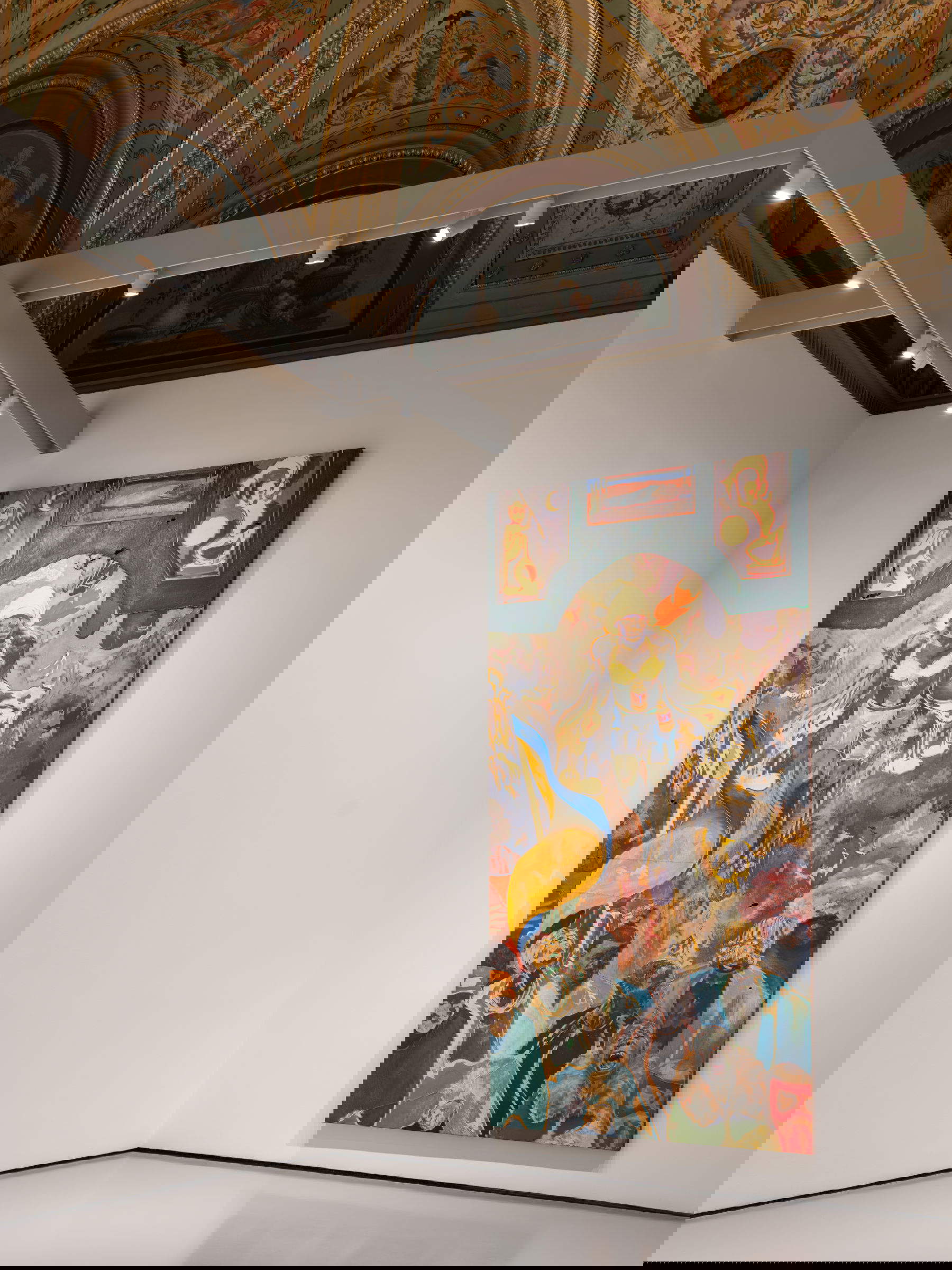
At Palazzo Grassi, from March 29, 2026, to January 10, 2027, Michael Armitage takes center stage with the exhibition The Promise of Change, a retrospective, curated by Jean-Marie Gallais, that includes forty-five paintings and more than one hundred preparatory studies. The Kenyan-British artist, born in Nairobi in 1984, develops a painting practice that interweaves realism and dreamlike vision, addressing issues of global significance such as conflicts, migration crises and sociopolitical tensions. The works in the exhibition, created in oil on fabric made from bark according to Ugandan and Indonesian traditions, show layered compositions and chromatic intensity, in which real and imaginary figures overlap with literary, cinematic and historical references.


Subjects range from accounts of election violence in Kenya in 2017 to themes of global confinement in 2020-2021, through symbolic portraits and mythological narratives. The exhibition leads visitors through landscapes inhabited by ambiguous presences and emotionally complex situations, where violence is intertwined with gentleness, and historical memory confronts subjective interpretation. The catalog in collaboration with Marislio Arte (Venice) accompanies the exhibition with texts by Jean-Marie Gallais, Manthia Diawara, Salman Rushdie and Ocean Vuong, and an interview by Hans-Ulrich Obrist with the artist, while the cultural program includes a concert by the Ugandan group Nakibembe Xylophone Troupe on May 7.
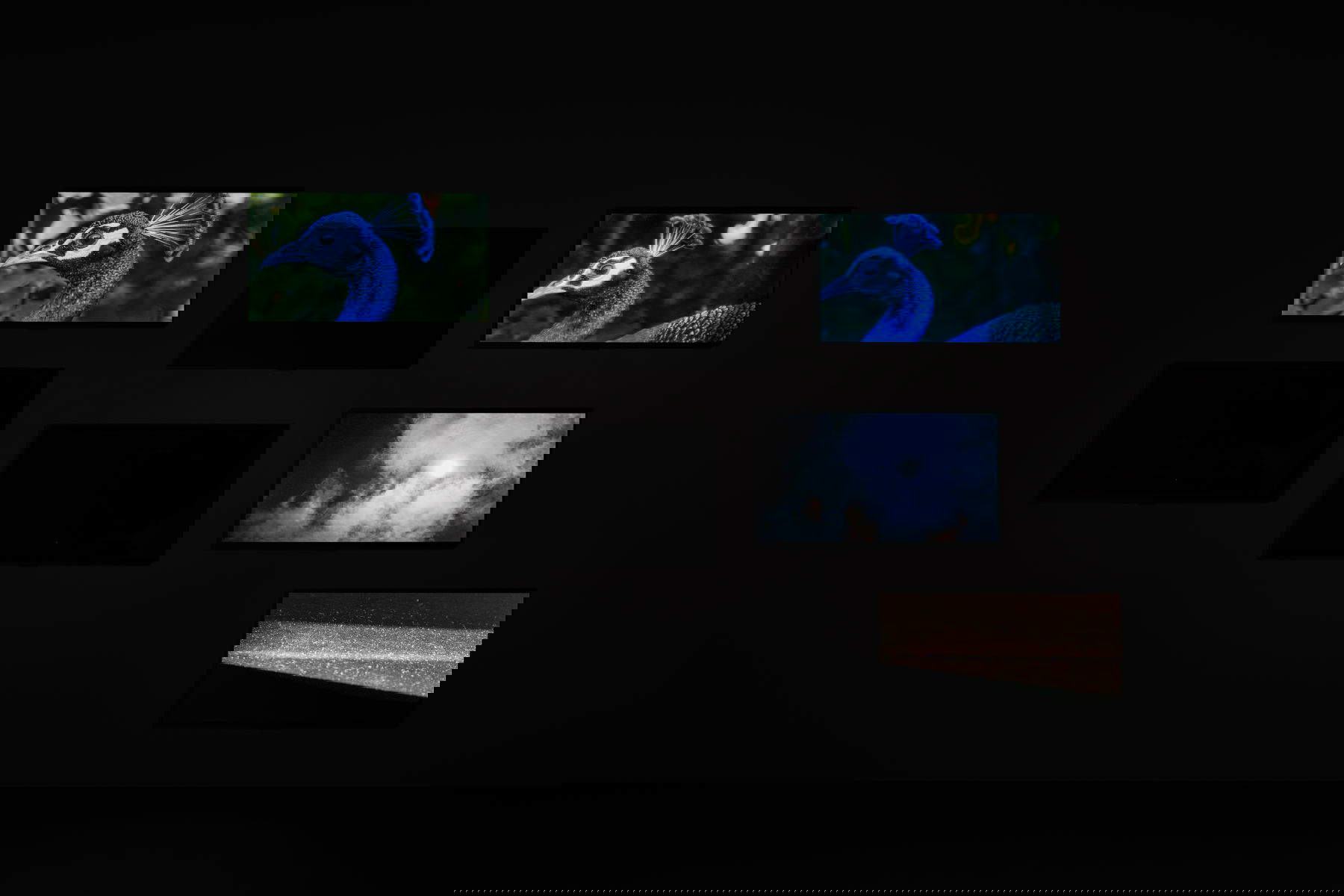
In the same space, from March 29, 2026, to Jan. 10, 2027, Amar Kanwar offers the exhibition Co-travellers, curated by Jean-Marie Gallais, which brings together two multimedia installations 20 years apart in their making. The Indian artist, born in 1964 in New Delhi, develops works that combine documentation and poetic narrative, emphasizing issues of justice, resistance, and political violence. The Torn First Pages (2004-2008) documents the struggle for democracy in Burma through the use of archives and video, while The Peacock’s Graveyard (2023) explores the cycle of life and death through seven screens that evoke visual choreography accompanied by raga (melodic Indian classical music) performed by pianist Utsav Lal.
Kanwar’s works transcend direct reporting to produce layered narratives in which images and texts combine to stimulate reflection on violence, power and morality. The cultural program includes screenings open to the public in September 2026 and a meeting between artist and curator at Palazzo Grassi’s Teatrino. Accompanying the exhibition is a catalog, published in collaboration with Marsilio Arte (Venice), which includes the text of the work The Peacock’s Graveyard by Amar Kanwar.
At Punta della Dogana, from March 29 to November 22, 2026, Lorna Simpson presents the exhibition Third Person, curated by Emma Lavigne and produced in partnership with the Metropolitan Museum of Art, New York. The exhibition is the U.S. artist’s most important European presentation since 2015, including about fifty works including paintings, collages, sculptures, installations and films, with previously unseen works created specifically for the Venetian spaces. Simpson, born in 1960, in the United States, explores the construction of the image and the tensions between memory, representation and stereotypes through a conceptual language that integrates painting, photography and collage.
The exhibition is divided into three nuclei: figurative compositions that evoke political and social tensions, arctic panoramas in shades of blues and grays that convey suspension and uncertainty, and a gallery of female portraits that interrogate identity and perception. The exhibition includes forty collages in which the artist experiments with juxtapositions and shifts in meaning, exploring states of matter and natural phenomena such as water, fire and ice. The cultural program includes a concert by esperanza spalding on May 9 and a fall talk by pianist and composer Jason Moran. The exhibition is accompanied by a catalog, published in collaboration with Marsilio Arte (Venice), which includes a text by Emma Lavigne along with section texts and annotated captions.
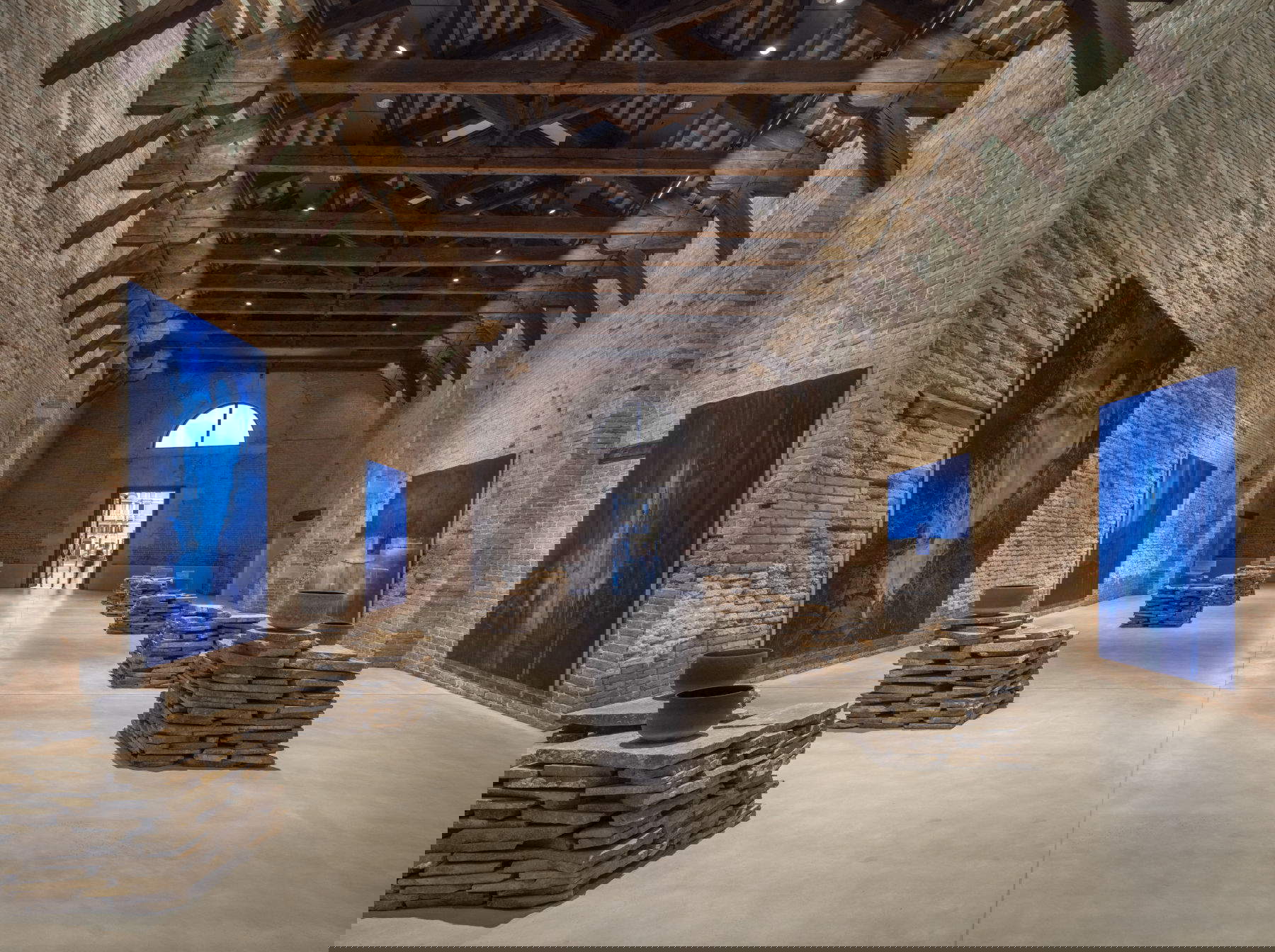
Also at Punta della Dogana, from March 29 to November 22, 2026, Brazilian artist Paulo Nazareth presents the exhibition Algebra, curated by Fernanda Brenner. The exhibition brings together more than two decades of artistic practice, including previously unseen works and works in the Pinault Collection. The title refers to the Arabic etymology of the term algebra, al-jabr, interpreted as the process of recomposing what is fractured. Nazareth addresses themes related to structural and colonial violence, migration and cultural boundaries, developing a research method based on walking and direct experience of places. The installation transforms the former customs space into a continuum of stations that evoke the traces of slave ships and unrecorded power relations, where photographs, texts and objects document the overlap of identity, history and fiction.
The exhibition also includes a dialogue between the city of Venice and its Brazilian namesake in the state of Minas Gerais, creating a reflection on geographies and systems of historical recording. A catalog published in collaboration with Marsilio Arte (Venice) accompanies the exhibition with texts by Fernanda Brenner, Gabriela de Matos, Johny Pitts, and Philippe Rekacewicz, while the cultural program includes performances open to the public, including a talk at the Teatrino di Palazzo Grassi on May 8.
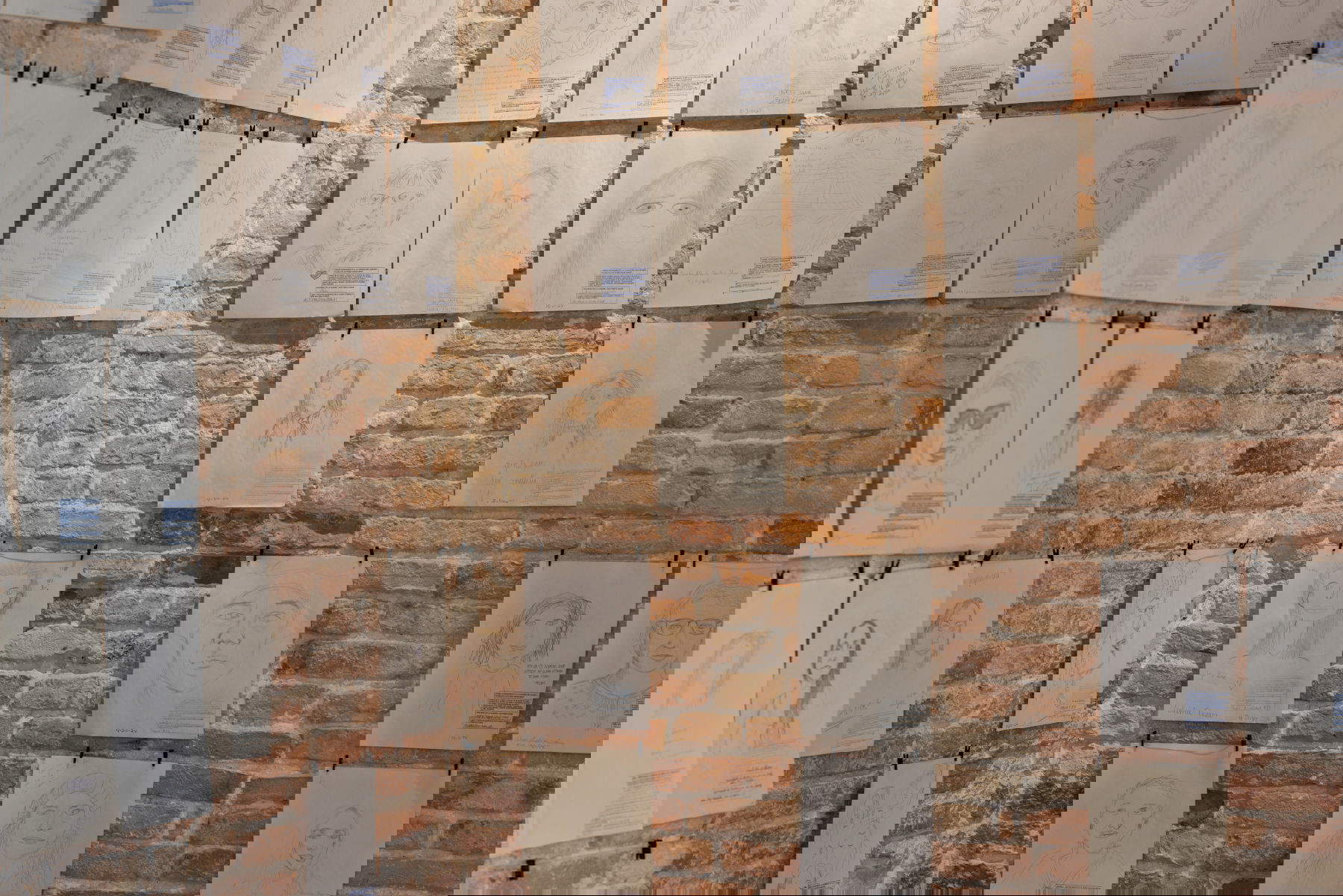
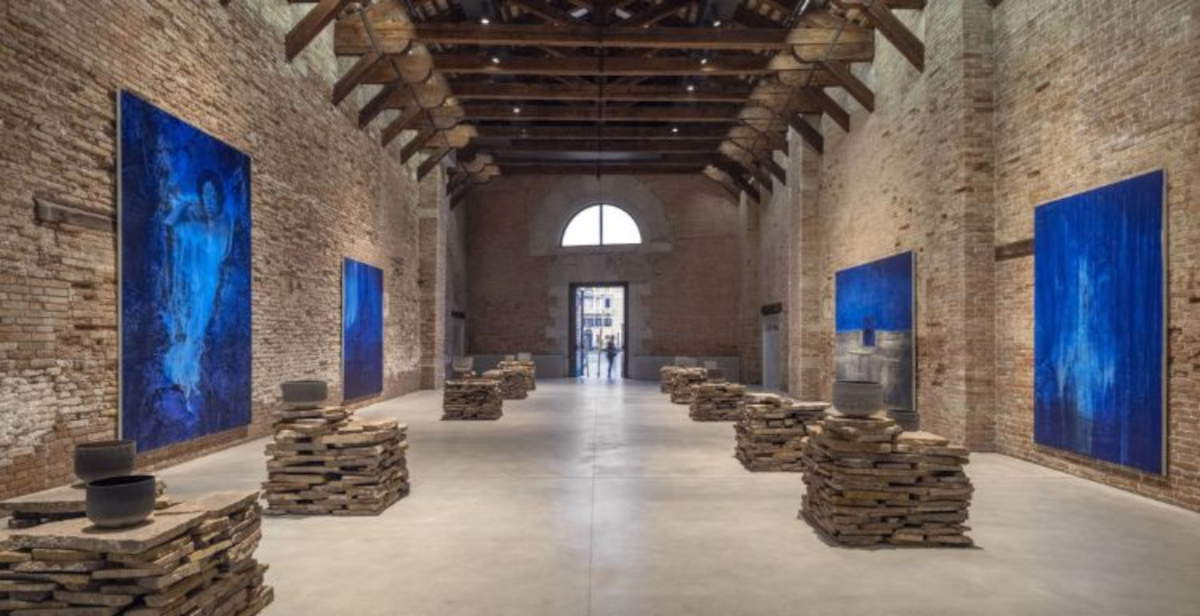
The Pinault Collection exhibitions in Venice thus present an articulated picture of international contemporary art production, in which painting, installation, multimedia and conceptual practices dialogue with global issues and reflections on history, memory and identity.
 |
| Four new exhibitions for the Pinault Collection in Venice: Armitage, Kanwar, Simpson and Nazareth |
Warning: the translation into English of the original Italian article was created using automatic tools. We undertake to review all articles, but we do not guarantee the total absence of inaccuracies in the translation due to the program. You can find the original by clicking on the ITA button. If you find any mistake,please contact us.