





From June 14 to September 6, 2026, the Municipal Museum of Modern Art in Ascona, Switzerland, is hosting a retrospective dedicated to Luisa Figini (Mendrisio, 1954). The exhibition, curated by Carla Burani and Paola Tedeschi-Pellanda, offers a selection of works considered central to the development of the artist’s career, who since the 1980s has elaborated a personal language from the assimilation of practices and experiments related to European contemporary art.
The exhibition LUISA FIGINI. ANTOLOGICA marks the resumption of the museum’s programming after the winter break, during which the facility was equipped with an internal elevator designed to ensure accessibility to all floors. The exhibition project focuses on eight large works, placed in as many rooms of the museum, conceived as autonomous nuclei capable of restoring the complexity of Figini’s work and its evolution through different materials and media.
The artist’s path develops from his first experiences with ceramics, understood as a direct confrontation with the material and its expressive limits. Later, the research opens up to installations made with natural and artificial materials, including waxes, hair, guts, paper and wire mesh, alongside video and audio works, until reaching hybrid solutions in which moving images are integrated with painting, watercolor and drawing. The result is work in which languages are layered and interact according to complex dynamics.
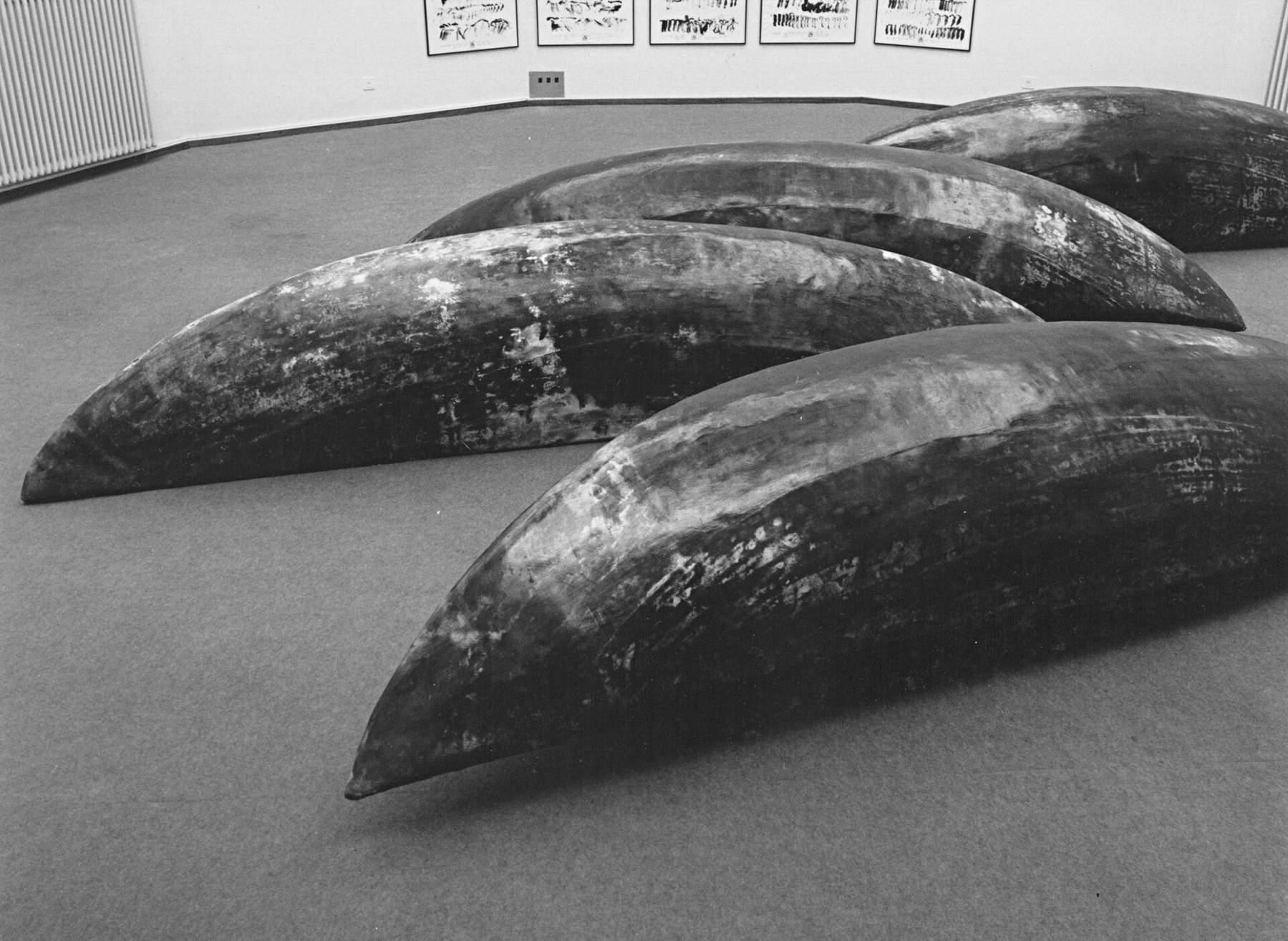
Among the works in the exhibition is Tales of a Ferryman (1991), in which large inverted canoes, with surfaces resembling the skin of a whale, define the exhibition space as primordial structures, suspended between full and empty, interior and exterior, light and darkness. The work constructs an environment that recalls archaic forms of containment, in which the perception of space becomes a central element of experience.
In Porta di vento (1993) the form recalls prehistoric burial structures and also refers to some Arte Povera research. The large slit across the surface introduces an idea of threshold, transforming the object into a symbolic passage between opposite conditions: inside and outside, protection and exposure, familiarity and the unknown.
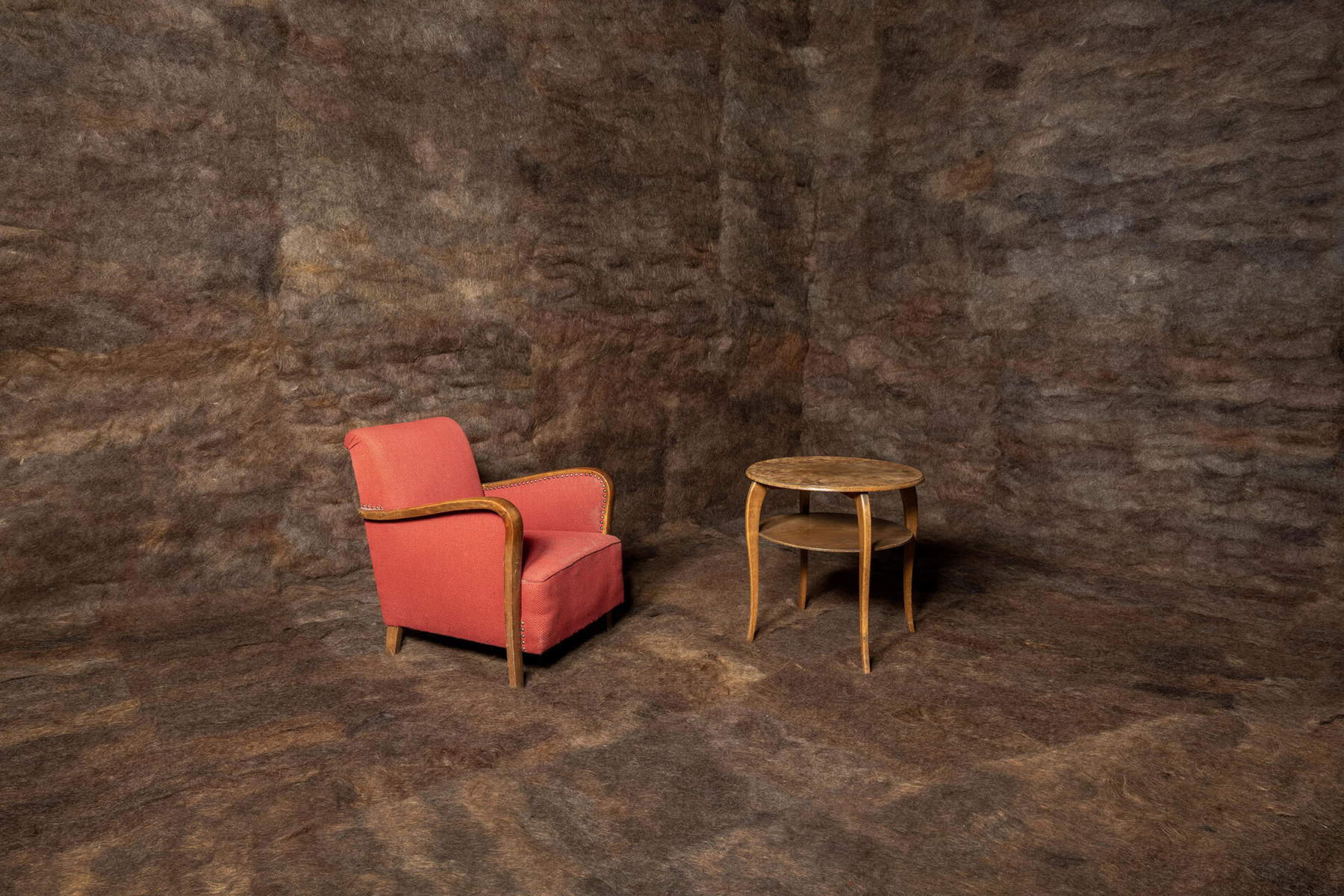
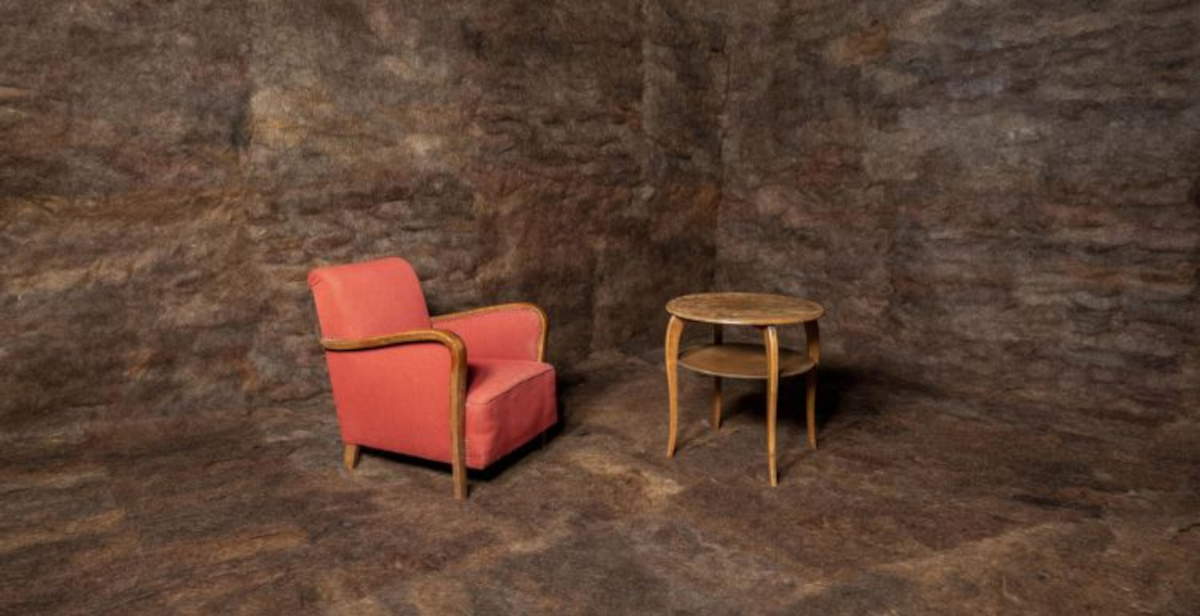
Installation (2000) presents a domestic environment composed of furniture entirely covered with human hair. The work builds a relationship between everyday objects and memory, transforming the space into a presence suspended between life and absence. The materials used recall a symbolic dimension related to the permanence of the trace and the layering of individual and collective memory.
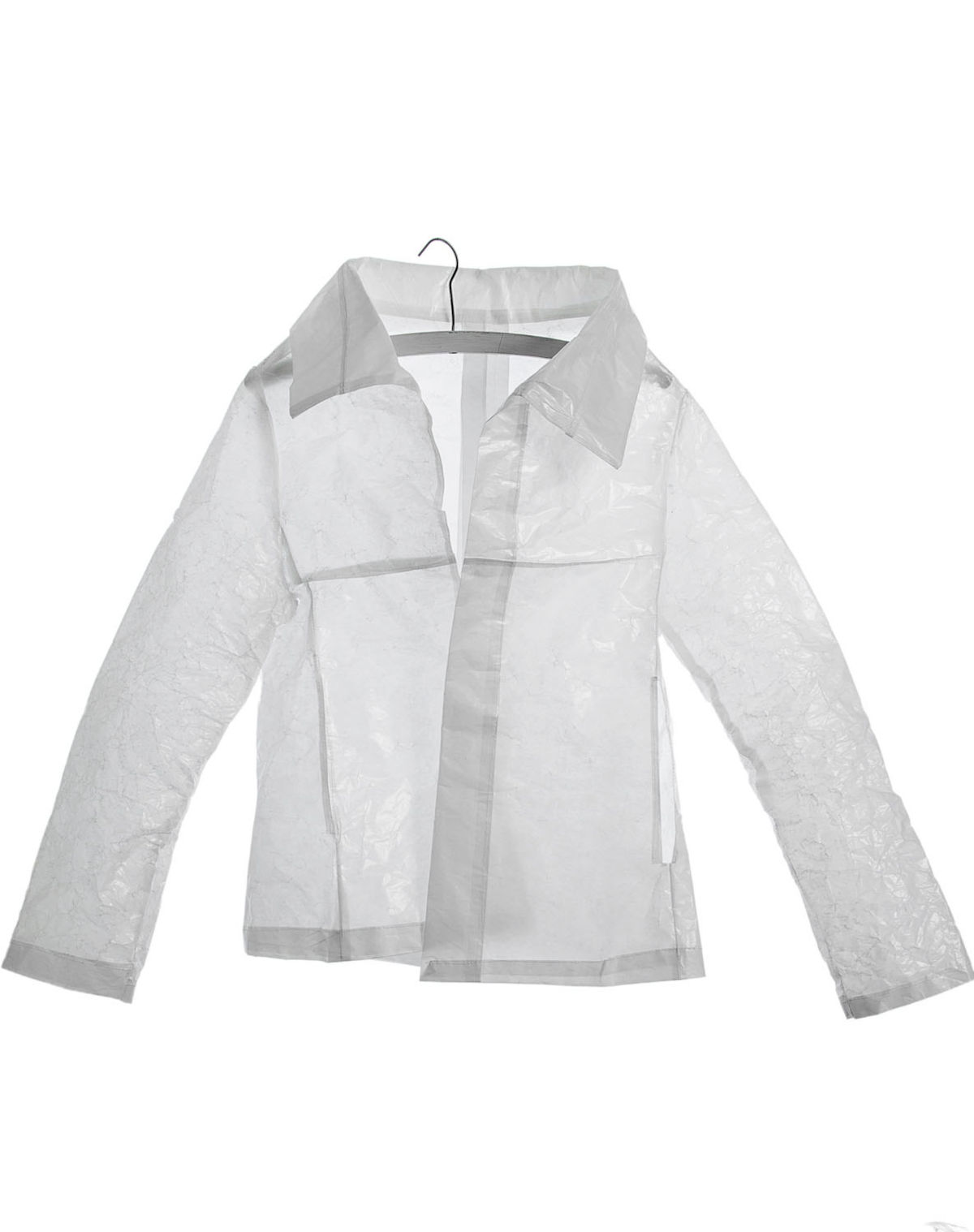
The themes of death and memory also emerge in House (2004-2025), where the idea of dwelling overlaps with that of a funerary container, and in Hand Luggage (2013-2014), which proposes a contemporary trousseau composed of personal objects made of white parchment paper, including clothes, shoes, a radio and a cup. The ensemble suggests a reflection on the loss and persistence of objects as remnants of identity.
The artist’s video research, developed from her training at the Haute école d’art et de design in Geneva, is represented by works such as Fiorire (2002), in which floral self-portraits emerge and disappear among petals, and Sonar(2006/2007), made in a physiotherapy pool at the Geneva psychiatric hospital. In the latter, suspended bodies define an intermediate condition between abstraction and figuration, between immersion and detachment.
The path closes with Con passo d’infanzia (2025), a series of watercolors inspired by family photographs that rework domestic scenes and childhood memories, from everyday places to objects and images of family life. The work introduces an autobiographical dimension that is intertwined with artistic practice, expanding the relationship between personal experience and visual construction.
The exhibition is accompanied by an exhibition guide. The first extensive monograph dedicated to Luisa Figini’s work, edited by Carla Burani and Paola Tedeschi-Pellanda, and published by Scheidegger&Spiess of Zurich, is also scheduled for publication in fall 2026.
Born in Mendrisio in 1954, Luisa Figini has exhibited continuously in Switzerland and abroad since 1985. Between 1981 and 1983 she attended the École des Beaux-Arts in Bourges, where she studied with artist and ceramist Jacqueline Lerat; she then continued her training at the Haute école d’art et de design (HEAD) in Geneva from 1998 to 2002. During this period she also collaborated with sculptor Carmen Perrin and, between 2004 and 2007, received a commission as an invited artist.
In 2008-2009 she obtained a second-level master’s degree in “Research Methodology in Education” at the University of Trento-Rovereto. From 2002 to 2014, she teaches at the Alta scuola pedagogica, later DFA-SUPSI, in Locarno, while between 2012 and 2019 she teaches at the Centro scolastico per le industrie artistiche (CSIA) in Lugano. Since 2019 he has devoted himself exclusively to artistic practice and exhibition activity.
 |
| Luisa Figini in Ascona: matter, memory and video art at the Museum of Modern Art |

Warning: the translation into English of the original Italian article was created using automatic tools. We undertake to review all articles, but we do not guarantee the total absence of inaccuracies in the translation due to the program. You can find the original by clicking on the ITA button. If you find any mistake,please contact us.

























 IT
IT FR
FR DE
DE ES
ES CN
CN


