





On the occasion of Design Week 2026, the Milan office of Pandolfini Casa d’Aste is hosting the solo exhibition Giardino Alchemico by French artist Julie Hamisky, created in collaboration with Mitterrand gallery. The exhibition, scheduled from April 22 to 26 in the spaces of Via Manzoni 45 in Milan, is part of the calendar of the Milan Furniture Fair, consolidating the dialogue between contemporary art and design within the event.
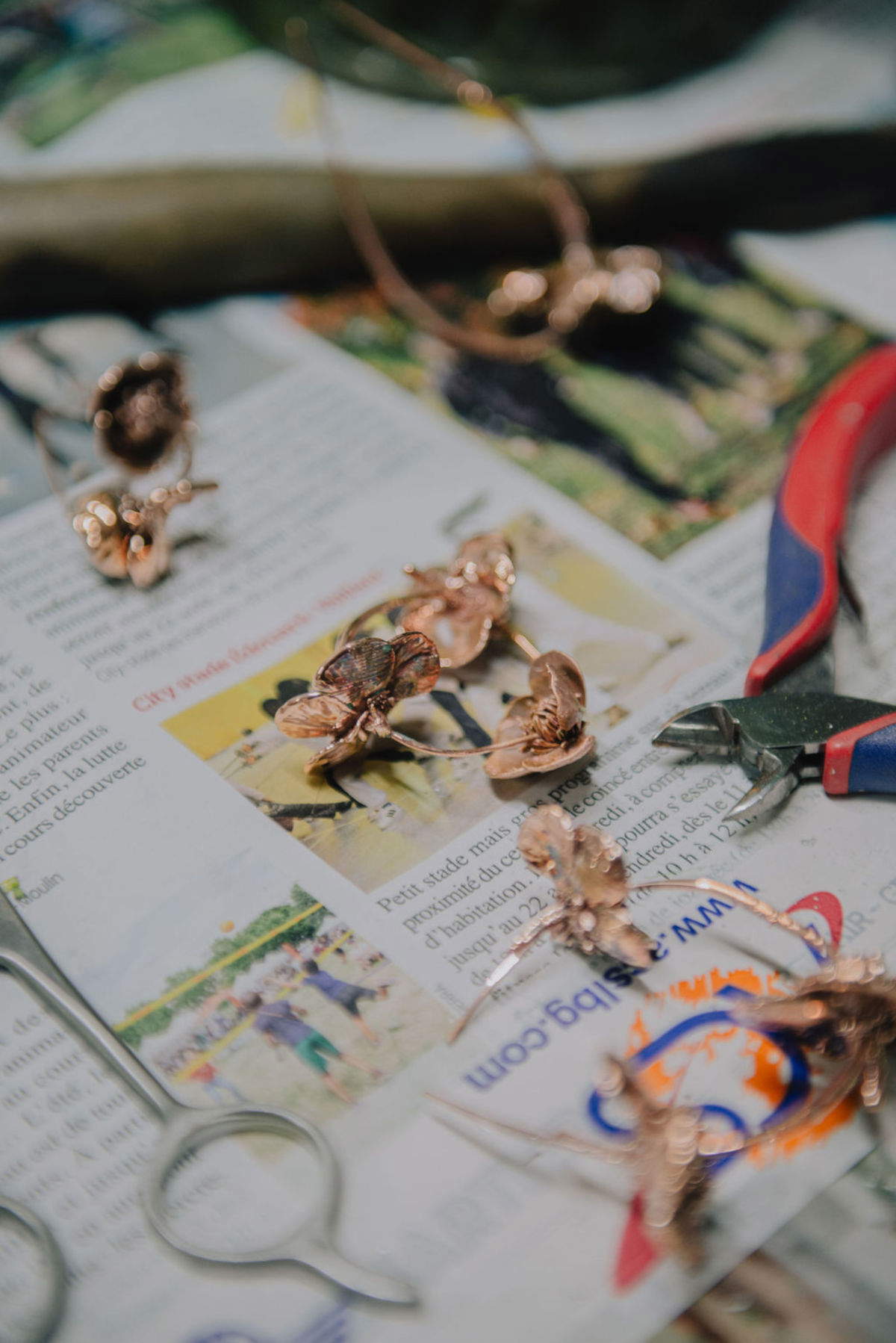
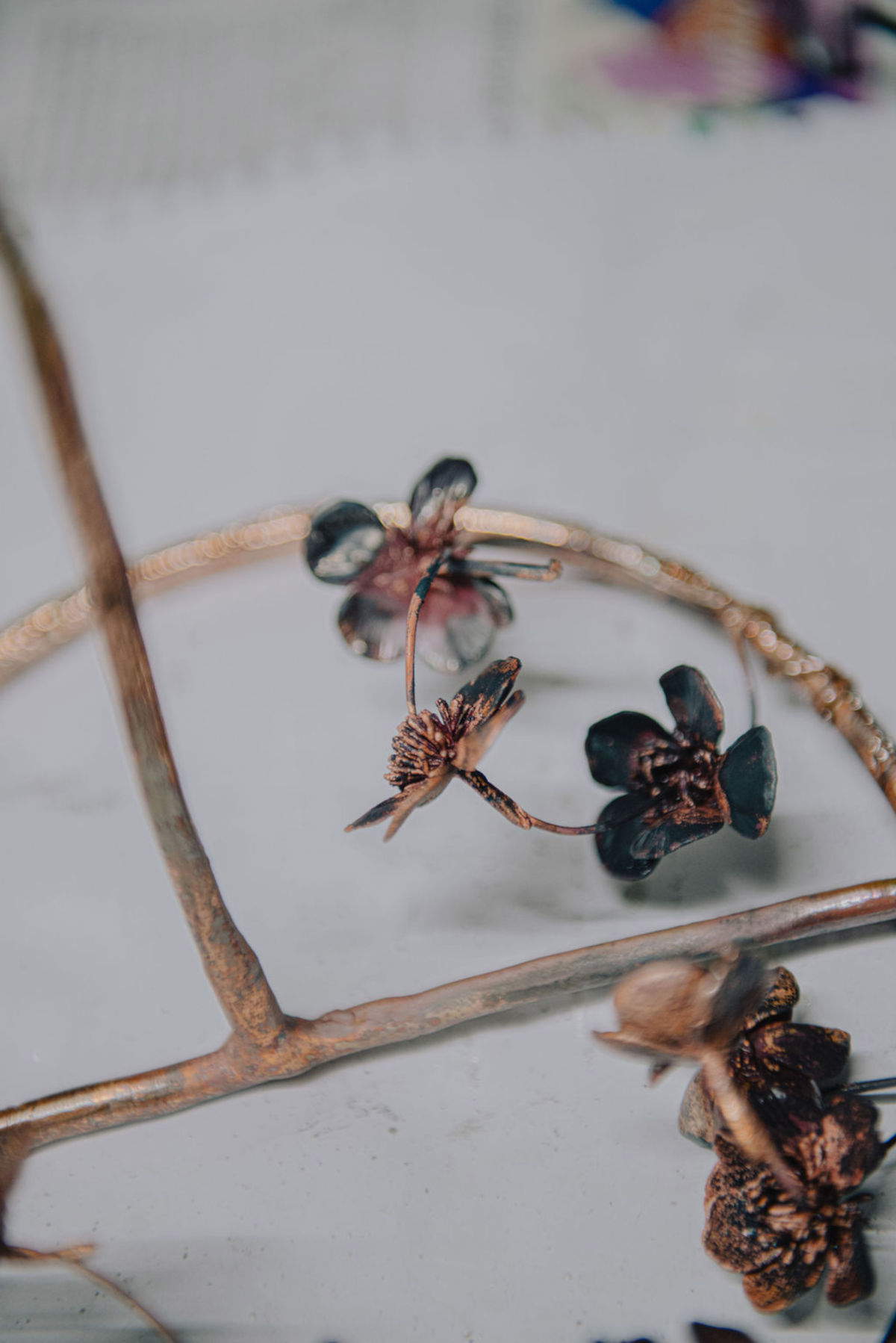
The exhibition brings together a selection of sculptures and works that summarize the artist’s research, based on the transformation of organic matter into permanent forms. The technical process behind the works iselectroplating, which involves the immersion of flowers, leaves and plant elements in a galvanic bath traversed by electric current. Through this process, Hamisky preserves and fixes in metal the most minute characteristics of living matter, from veins to folds to the most fragile textures, crystallizing the instant before natural decay.
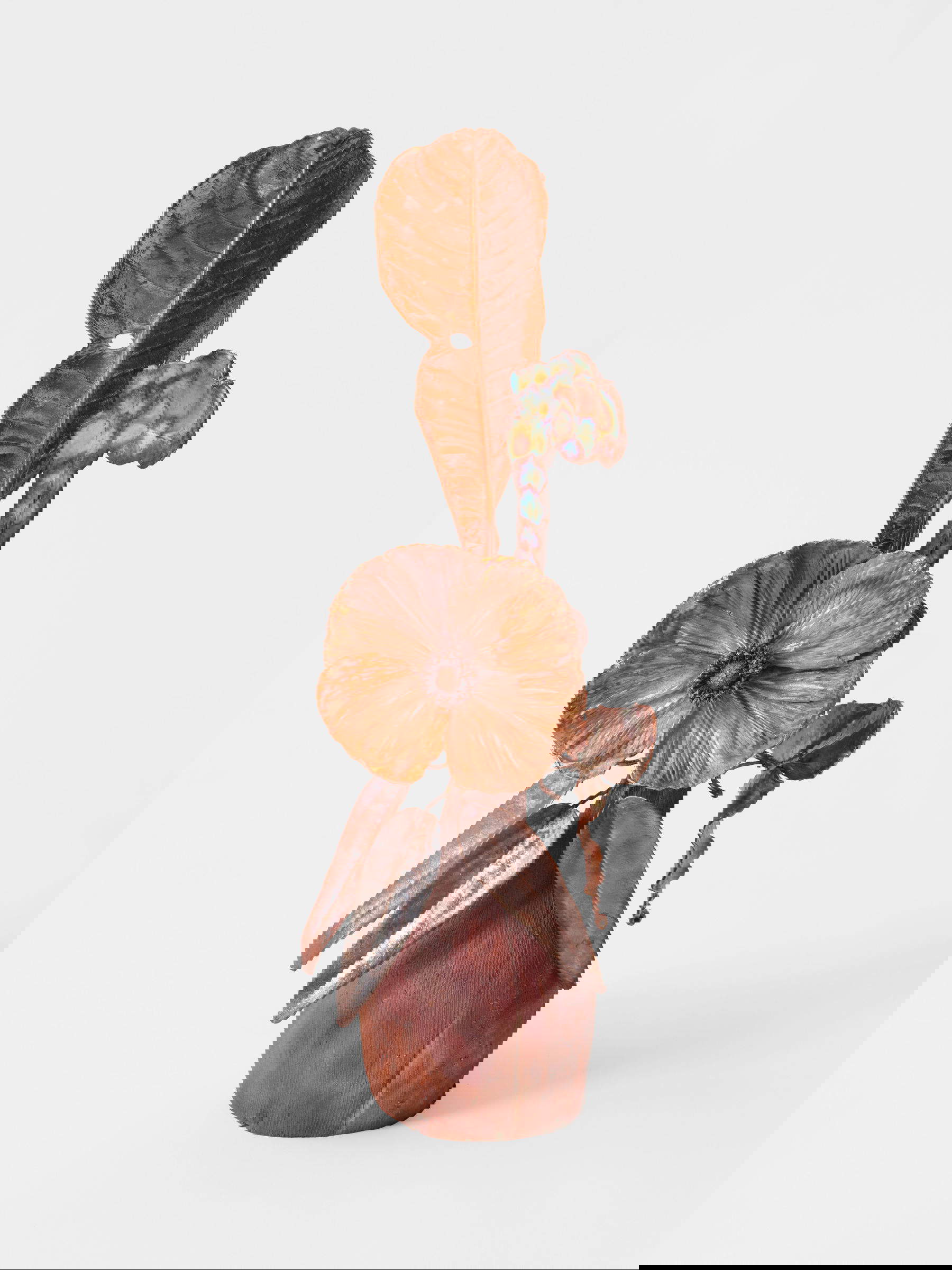
The exhibition itinerary takes the form of an artificial garden in which works of different scales coexist. Among the works presented is La Géante (2024), a poppy enlarged to near-architectural dimensions, where botanical precision is combined with a marked plastic presence. This is joined by Aqua (2024), a chandelier composed of galvanized plant elements that transforms the natural structure into a luminous device. Completing the selection are works such as Bloom, Volcano and the Still Life series, which further develop the relationship between ornament, function and formal autonomy.
The exhibition also includes a selection of jewelry, in which individual flowers and botanical fragments are preserved in their original scale. These works are conceived as wearable objects, made with the same electroplating technique and designed to establish a direct interaction with the body, which becomes a support and a space for relating to a suspended nature. Hamisky’s practice lies in a border territory between art and design, where the creative process takes on the characters of a race against time that begins with the choice of a fresh flower. The result remains partly unpredictable, as it is linked to the variables of the technical process and the response of organic matter to galvanic treatment. The creation of the exhibition and the collaboration with the Mitterrand gallery stem from a precise initiative of Pietro De Bernardi, Pandolfini’s managing director, who identified in the artist’s work a synthesis of contemporary art, design and traditional craftsmanship.
“Making our venue available for initiatives like this means transforming it into a living place of encounter and discovery,” De Bernardi says. “We want Pandolfini to be not only a reference point for the art market, but also a cultural place where different disciplines and visions can meet and generate new connections.”
“Variations in current, duration and temperature produce subtle color modulations, from deep greens and electric blues to lilacs and warm copper tones,” says the artist. “Oxidation and fire complete the transformation, leaving thin metallic shells that retain every fold and grain of organic origin. You never really know what result electroplating will yield; it’s always a surprise. Sometimes the decay highlights a specific feature, other times it completely transforms it.”
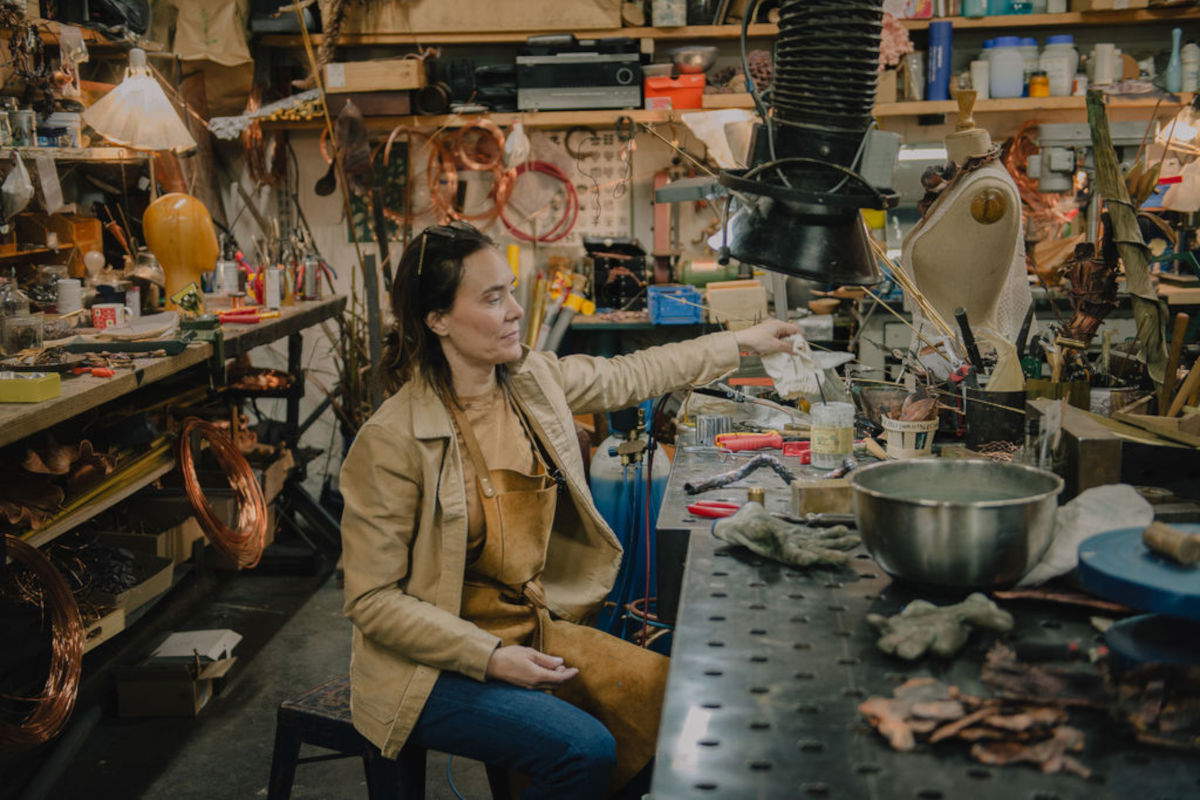
Julie Hamisky, born in 1975, works between art and design with research focused on the relationship between sculpture, ornament, and the body. Her childhood was spent in Fontainebleau and the countryside south of Paris, a context that fostered an early contact with matter. In the studio of his father, sculptor Kim Hamisky, he learned the first techniques of working with plaster, developing a sensitivity to form and structure.
His training continued in Paris, where he attended ESAG Penninghen and ATEP, École d’Art et de Communication Visuelle. A period of study in Michoacán, Mexico, marks a decisive transition: here he delves into techniques such as lost-wax casting, traditional goldsmithing, jewelry making, and ironwork, under the guidance of sculptors James Metcalf and Ana Pellicer. The experience helps define a practice founded on technical rigor and attention to material.
A descendant of a family of artists, granddaughter of Claude Lalanne and François-Xavier Lalanne, she returned to France in 1999 to work in their atelier. There he acquired an in-depth knowledge of the processes and sculptural vision that characterize their production. His specialization focuses on electroforming and electroplating, techniques that allow the fragility of botanical forms to be fixed in metal. Leaves, flowers, and organic fragments thus maintain their original characteristics, transforming into durable structures balanced between lightness and solidity.
The production lies between contemporary art and craftsmanship, transcending the decorative dimension. The jewelry takes on the value of small-scale sculptures, conceived in relation to volume, surface and light. The execution process, characterized by precision and control, allows the natural ephemeral to be translated into permanent configurations. Julie Hamisky lives and works in Montreuil. Her activity is part of the continuity of a family tradition that interweaves nature, craftsmanship and sculpture, while defining an autonomous research traceable to the contemporary context.
|
| Pandolfini presents Julie Hamisky's "Alchemical Garden" at Design Week 2026 |

Warning: the translation into English of the original Italian article was created using automatic tools. We undertake to review all articles, but we do not guarantee the total absence of inaccuracies in the translation due to the program. You can find the original by clicking on the ITA button. If you find any mistake,please contact us.



















 IT
IT FR
FR DE
DE ES
ES CN
CN


