





The Museo d’arte della Svizzera italiana in Lugano opens the 2026 exhibition season with K-NOW! Korean Video Art Today, a project dedicated to the contemporary scene in South Korea through the language of video art. The exhibition, on view from March 8 to July 19, 2026, is curated by Francesca Benini and Je Yun Moon and offers a survey of an artistic production that in recent years has become increasingly prominent on the international scene, while developing in a relatively circumscribed territorial context.
The itinerary is set up in the underground hall of the LAC and brings together eight positions among new generation artists, artists and collectives: Chan-kyong Park, Jane Jin Kaisen, Ayoung Kim, 업체eobchae, Sungsil Ryu, Heecheon Kim, Onejoon Che and Sojung Jun. These are authors who grew up in a country still scarred by the absence of a peace treaty formally ending the Korean War and traversed by rapid economic and technological transformations. The works presented, while rooted in South Korean history and reality, address issues that affect the global present: the relationship between technology and the body, the tensions between history, memory and tradition, migration phenomena, and the redefinition of work in a system based on acceleration and performance.
“At a time when cultural geographies are intertwining and the boundaries between local and global are becoming increasingly fluid, what emerges from the works on view at MASI is not only the transversality of themes common to contemporary societies, but alsothe transnational power of video art as a tool for perception, memory and narrative of the contemporary,” explain project curators Francesca Benini (MASI) and Je Yun Moon, former deputy director of Seoul’s Art Sonje Center. "K-NOW! Korean Video Art Today also offers a valuable opportunity to confront the different modes through which video in art can be enjoyed today, from traditional projections to virtual reality viewers. This variety reflects the evolution of a global medium, profoundly transformed by technological innovations that continue to redefine its boundaries and expressive possibilities. A comparison with the video art scene in Korea today can stimulate reflection on the geographies of the contemporary. At a time when many countries tend to close themselves off, these video works remind us how ’seeing’ is not a neutral act: it can imply a change of perspective, a widening of gaze, the possibility of interweaving our experience with that of others."
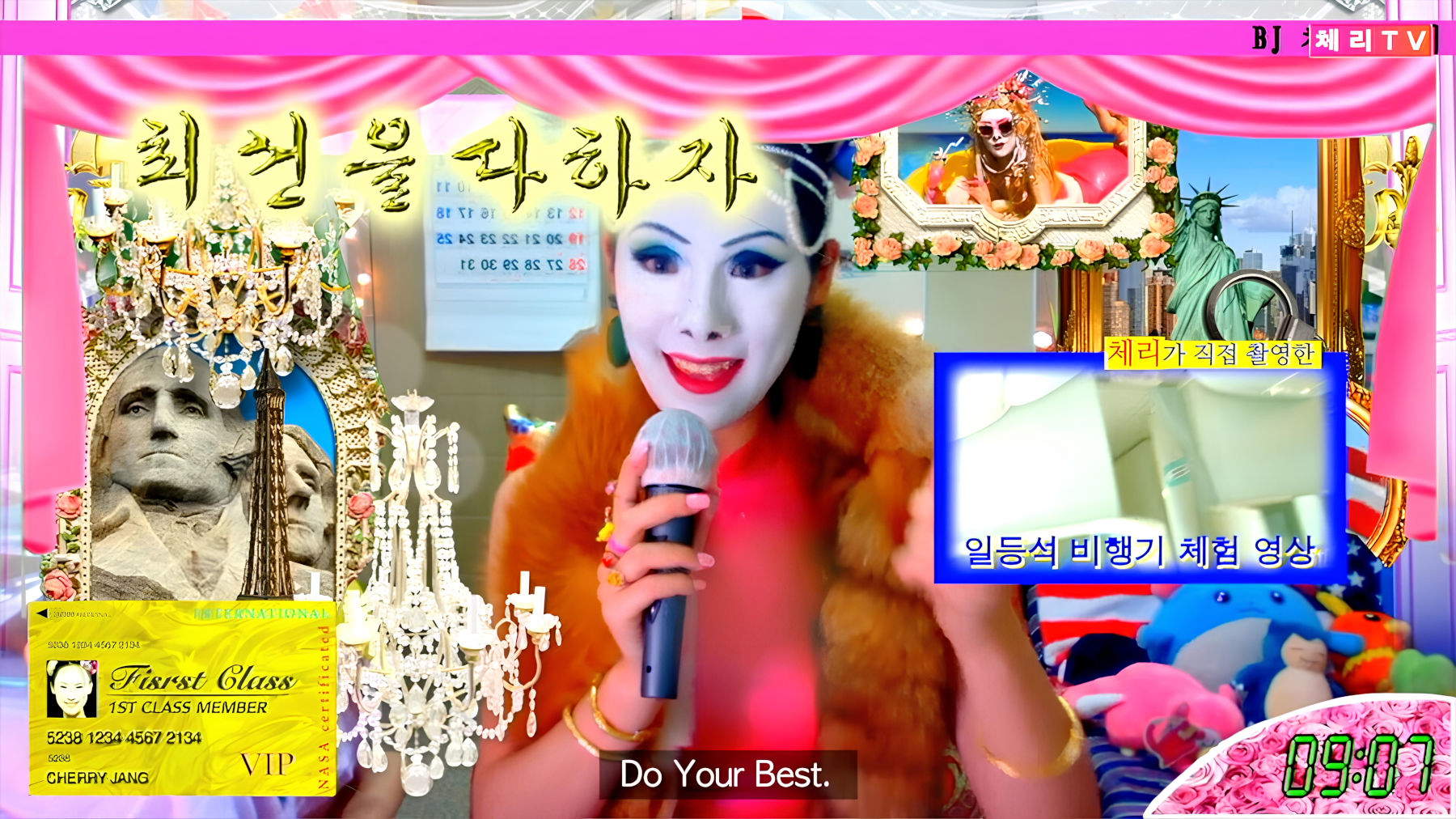
The exhibition unfolds as a fluid itinerary, alternating different times and registers. It opens with Citizen’s Forest (2016) by Chan-kyong Park, a multi-channel video installation with an elongated panoramic format that recalls the horizontality of the scrolls of traditional Asian painting. Interwoven in a suspended dimension are ceremonies of folk shamanism and commemorations of traumatic events in recent history, including the sinking of the Sewol ferry in 2014. The work relates rituality and civic memory, suggesting tradition as a possible tool for critical reinterpretation of the past.
Closing the journey are the videos Offering (2023) and Wreckage (2024) by Jane Jin Kaisen, presented in double projection. The works are linked to Jeju Island and the submerged memories that run through it, such as the massacre of civilians by the South Korean army in 1948. Kaisen also recalls the culture of the Haenyeo, the freedwomen fishermen who represent a historical form of female resistance.
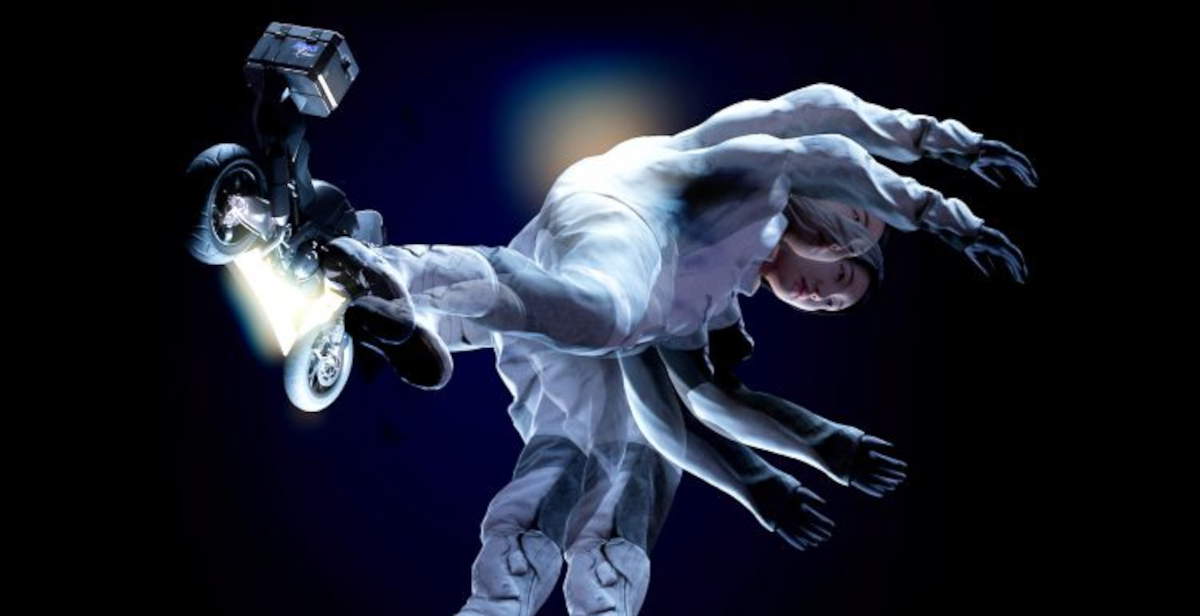
Alongside the memorial dimension, the exhibition devotes ample space to speculative narratives and post-technological visions. In Ayoung Kim’s Delivery Dancer’s Sphere (2022), broadcast on a monumental LED wall in the center of the exhibition space, a young courier rides a motorcycle through a Seoul transformed into an algorithmic landscape. Created during the pandemic of COVID-19, the work reflects on the gig economy, an employment system based on temporary assignments, digital monitoring and constant pressure to productivity.
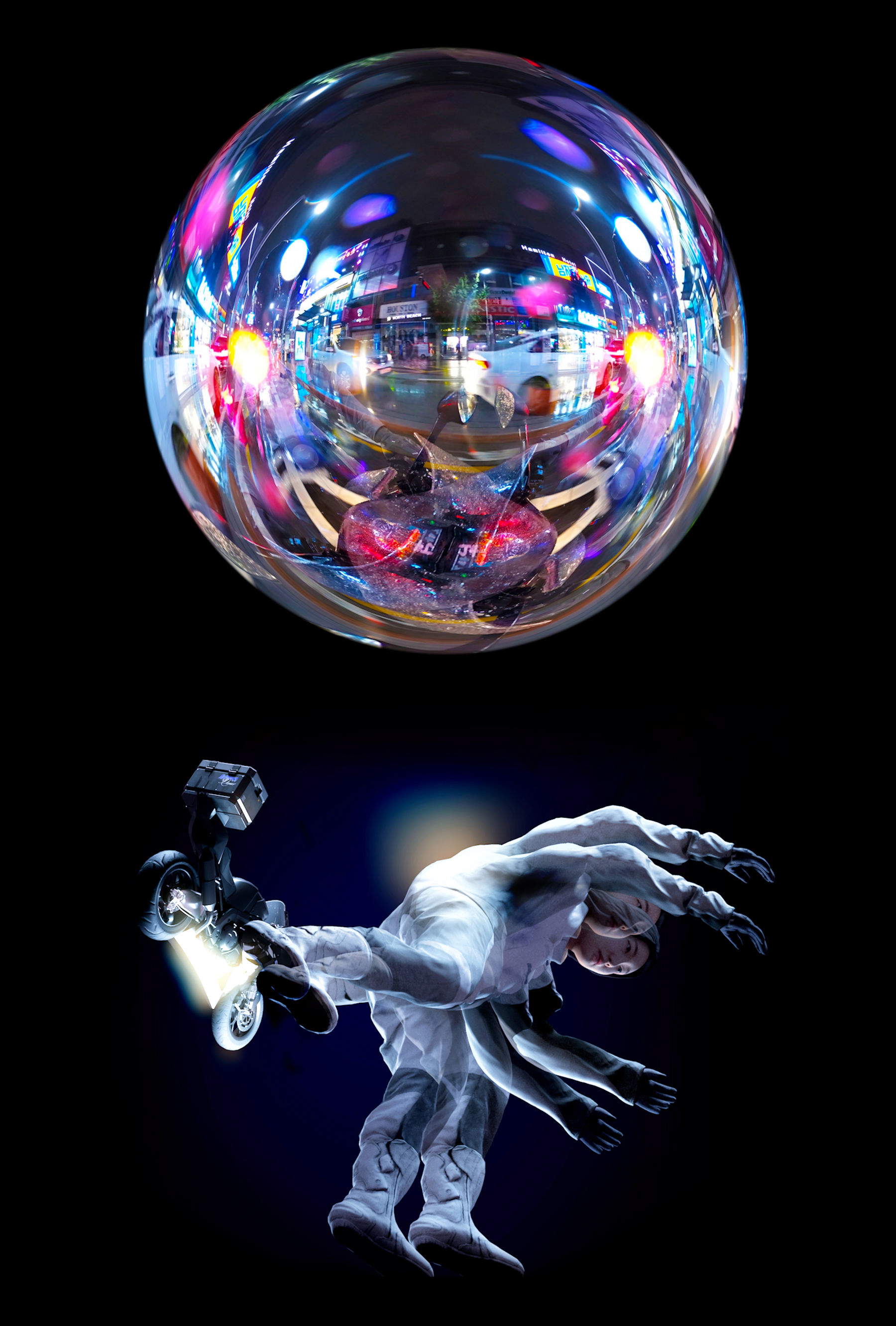
The audiovisual collective 업체eobchae, founded in Seoul in 2017 by Nahee Kim, Cheonseok Oh, and Hwi Hwang, in turn observes dominant economic models and technological transformations to outline speculative scenarios. ROLA ROLLS(2024) imagines a future devoid of fossil resources and chronicles the transformation of the character “R,” an emblem of the oil industry, into a member of an ecological sect that converts humans into self-sufficient hybrid systems. The character’s evolutionary stages are summarized in the sculpture TREE OF ROLA (2024), displayed in dialogue with the video.
Social critique also runs through Sungsil Ryu’s (2018), centered on a fictional virtual streamer who promises “first-class citizenship” for a fee. The work stages a dynamic of desire and belonging that reflects the hierarchies and ambiguities of a competitive society. The audience can symbolically purchase such status by scanning a QR code embedded in the exposed wallpaper, an element that extends the work into real space.
The relationship between technology, perception and identity is the focus of Heecheon Kim’s Ghost1990 (2021), which can be enjoyed via VR viewer. The viewer assumes the point of view of an injured athlete and enters a dimension marked by vulnerability and tension toward control of the body. The experience interrogates the obsession with physical performance and the digital construction of presence.
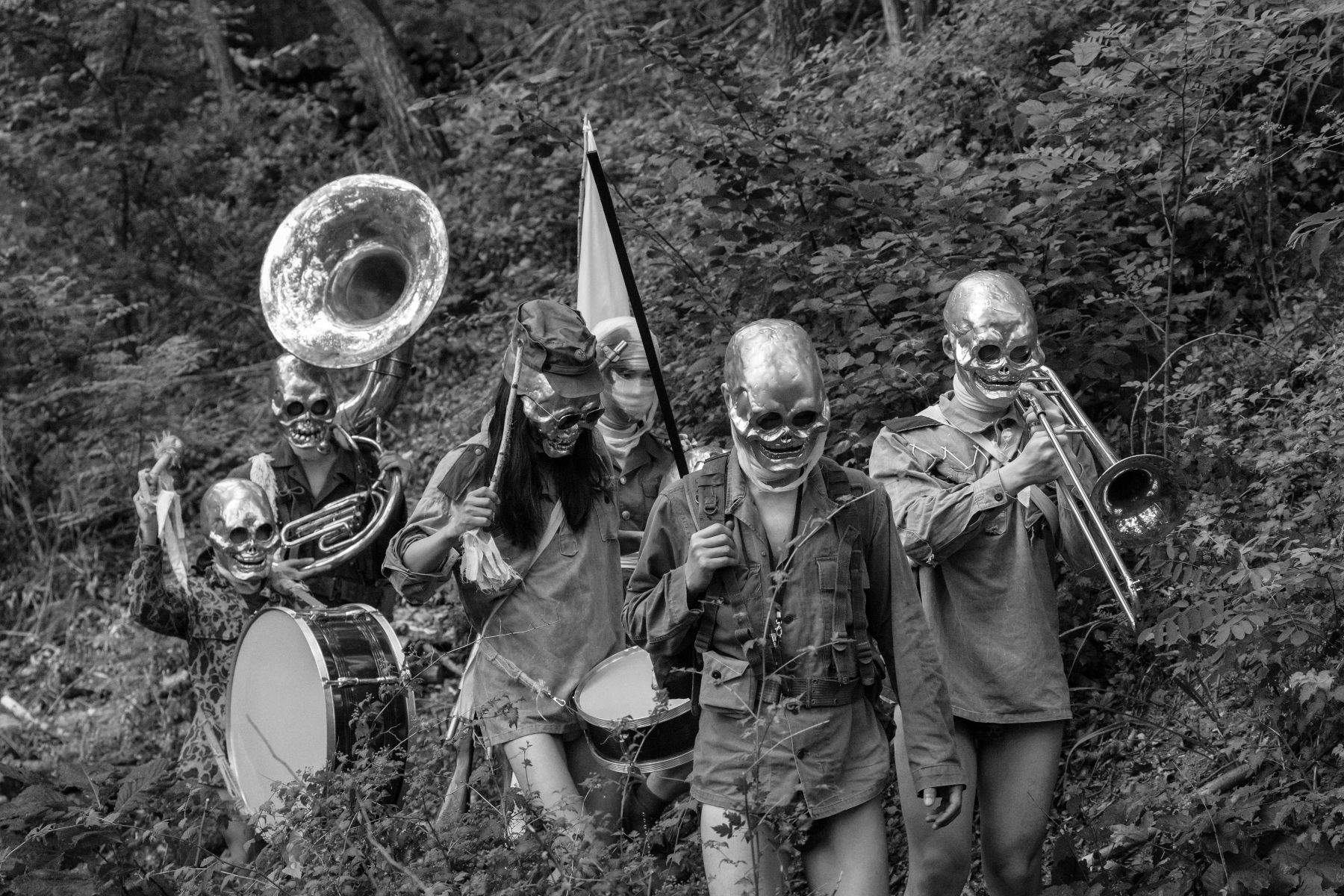
Onejoon Che uses the video format as a tool for investigating communities and boundaries. Made in Korea (2021), made with Nigerian musician Igwe Osinachi, adopts the language of the music video clip to address the theme of African migration to Korea. Presented on a screen embedded in a wall installation with two rows of LP covers, the work observes the territory’s social transformations and related contradictions.
Finally, the political dimension of places emerges in Green Screen (2021) by Sojung Jun, presented in the museum’s Hall. The video was shot along the Demilitarized Zone between the two Koreas and returns a landscape charged with historical and symbolic tensions, where nature has recaptured once militarized spaces.
The works in the exhibition range in length from five to twenty-six minutes; a full visit takes about an hour and forty minutes. The exhibition is accompanied by an illustrated catalog published by Mousse Publishing in a bilingual Italian-English edition, with critical essays by curators Francesca Benini and Je Yun Moon and Adeena Mey, a foreword by Tobia Bezzola, and eight interviews with the participating artists. The press conference will be held on Friday, March 6, at 11 a.m. In attendance will be the 업체eobchae collective, represented by Nahee Kim, Cheonseok Oh and Hwi Hwang, Sun A Moon representing Onejoon Che, Heecheon Kim and Sungsil Ryu.
 |
| South Korean video art on display at MASI in Lugano with "K-NOW! Korean Video Art Today" |

Warning: the translation into English of the original Italian article was created using automatic tools. We undertake to review all articles, but we do not guarantee the total absence of inaccuracies in the translation due to the program. You can find the original by clicking on the ITA button. If you find any mistake,please contact us.





















 IT
IT FR
FR DE
DE ES
ES CN
CN


