








Kurdish-Turkish artist Ahmet Güneştekin (Batman, 1966) returns to Italy with a new solo exhibition following his recent show at the National Gallery of Modern and Contemporary Art in Rome. Entitled Sessizlik / Silence and curated by Sergio Risaliti, the exhibition (which can be visited from May 6 to Nov. 1, 2026), coincides with the start of the Güneştekin Foundation’s cultural activities at Palazzo Gradenigo, in the Castello district of Venice, a building purchased and restored by the artist after a lengthy conservation project. The exhibition unfolds in the halls of the palace in parallel with the Venice Art Biennale 2026, establishing a direct dialogue with Koyo Kouoh’s curatorial project In Minor Keys, dedicated to the marginal, invisible and repressed experiences of contemporaneity.
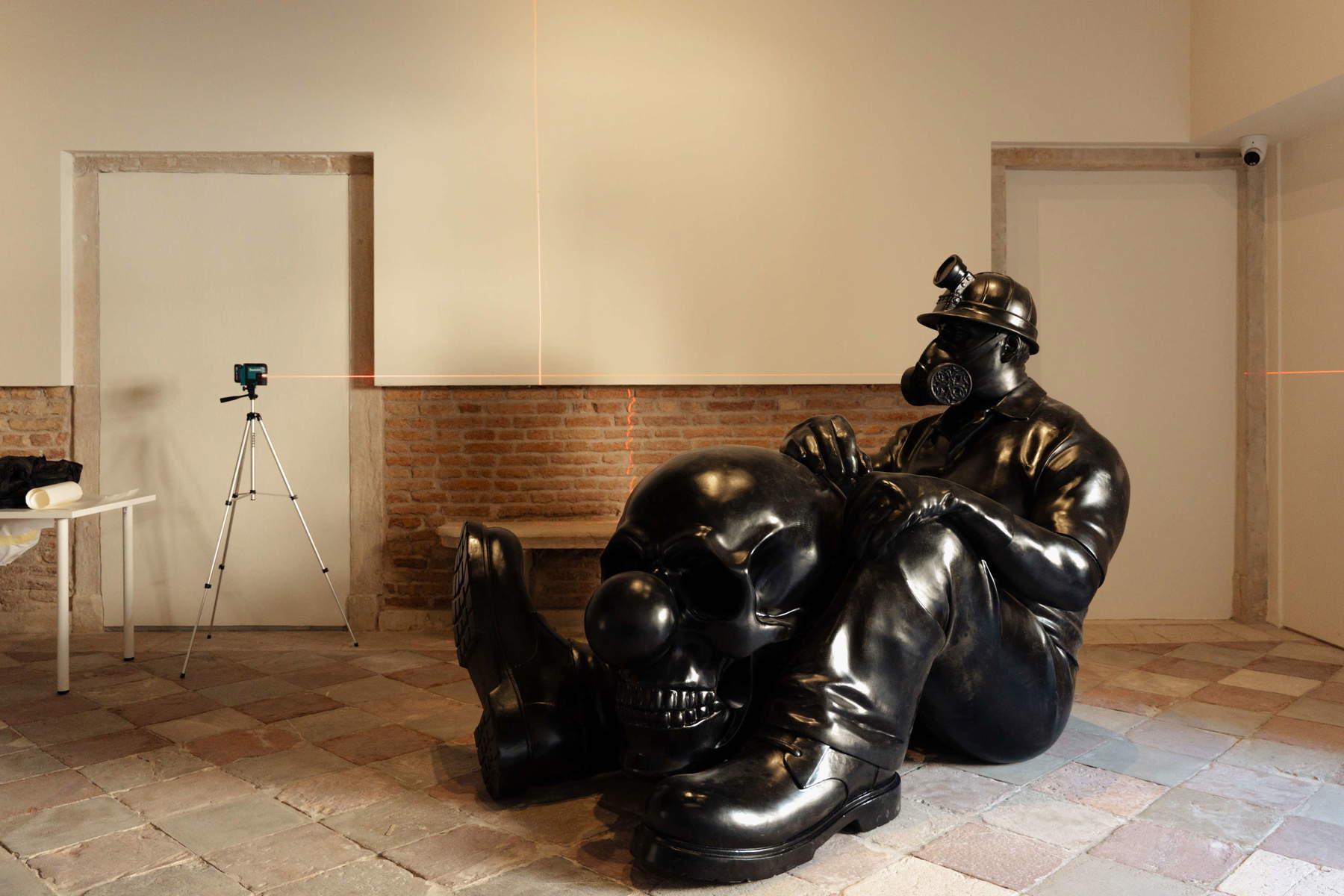
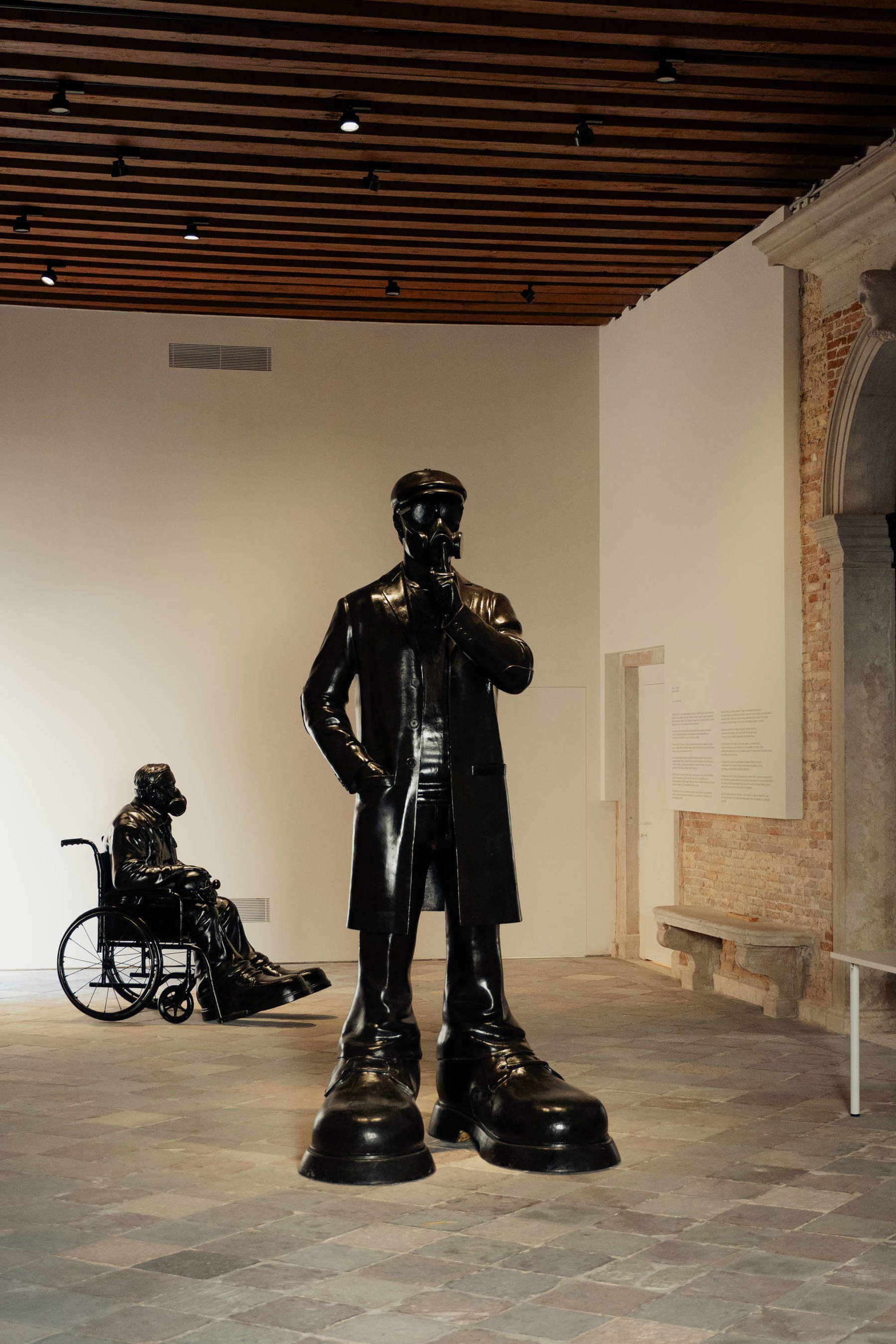
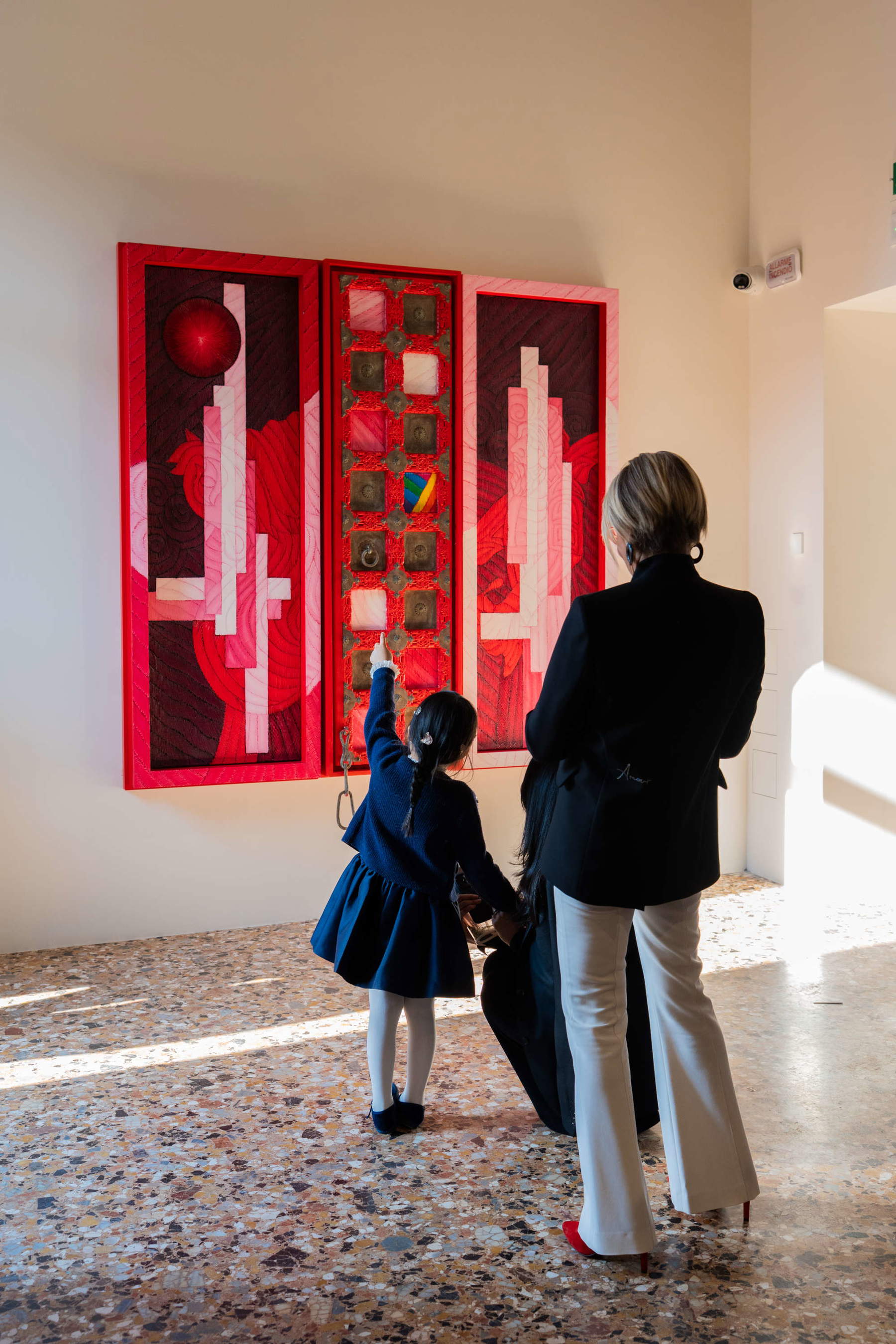
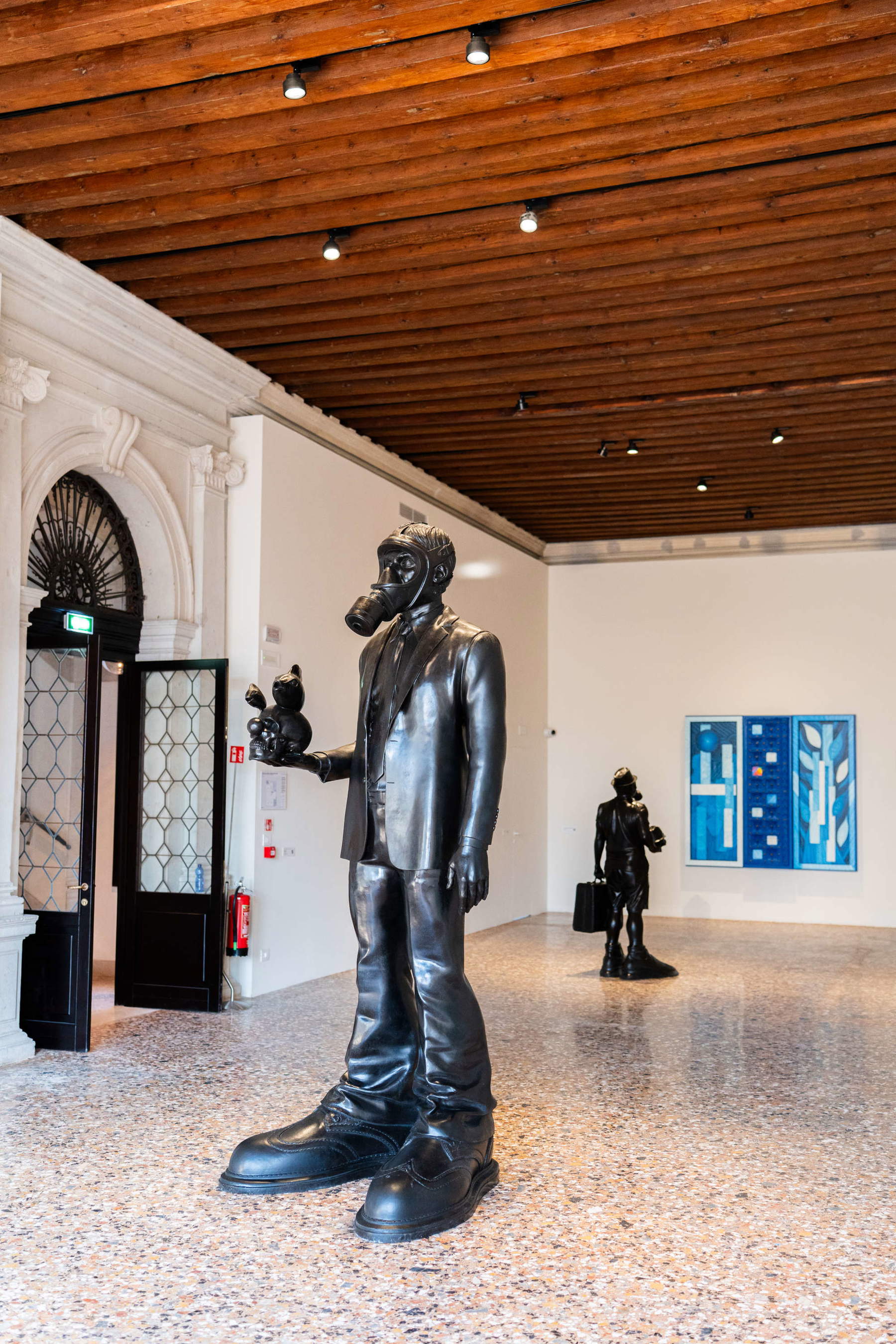
For Güneştekin, silence represents a space of memory and resistance. Works scattered among the building’s interior and exterior spaces, centuries-old doors, monumental bronze figures, masks and installations build a path that addresses the relationship between shared memory, historical removal and human frailty. Migrants, workers, people uprooted or left on the margins thus become the symbolic center of the entire exhibition project: presences that restore the weight of contemporary tragedies and stories excluded from the great official narratives.
Born in 1966 in Batman, a city in Turkey positioned in the southeastern Anatolia region, Güneştekin has developed over the years a multidisciplinary research that blends myth, orality, archaeology of memory and historical counter-narrative. Through painting, video, installation, and sculpture, his work addresses themes of belonging, migration, conflict, and cultural identity, often transforming the work into an immersive and perceptive space.
In this interview, made during the opening days of the Biennale, Ahmet Güneştekin delves into the meaning of Sessizlik / Silence as a philosophical, political and sensory experience, dwelling on the role of the artist in the present and the need to make visible memories left on the margins. Silence, in his words, becomes a threshold through which repressed narratives, lost languages and fragile lives that contemporary society tends to ignore emerge. The figures in the exhibition, migrants, workers, people with disabilities, uprooted individuals, are bearers of a memory that directly interrogates the visitor.
The artist also reflects on the relationship between myth, sacred sciences and contemporaneity, describing the exhibition as a mental and perceptual space in which the audience is called to experience an emotional and intellectual crossing. Through symbols, silent figures and memory-laden materials, Güneştekin builds a dialogue about the weight of absences, historical removal and the possibility of art still transforming itself into an instrument of testimony, consciousness and resistance. Here is what he shared with us.
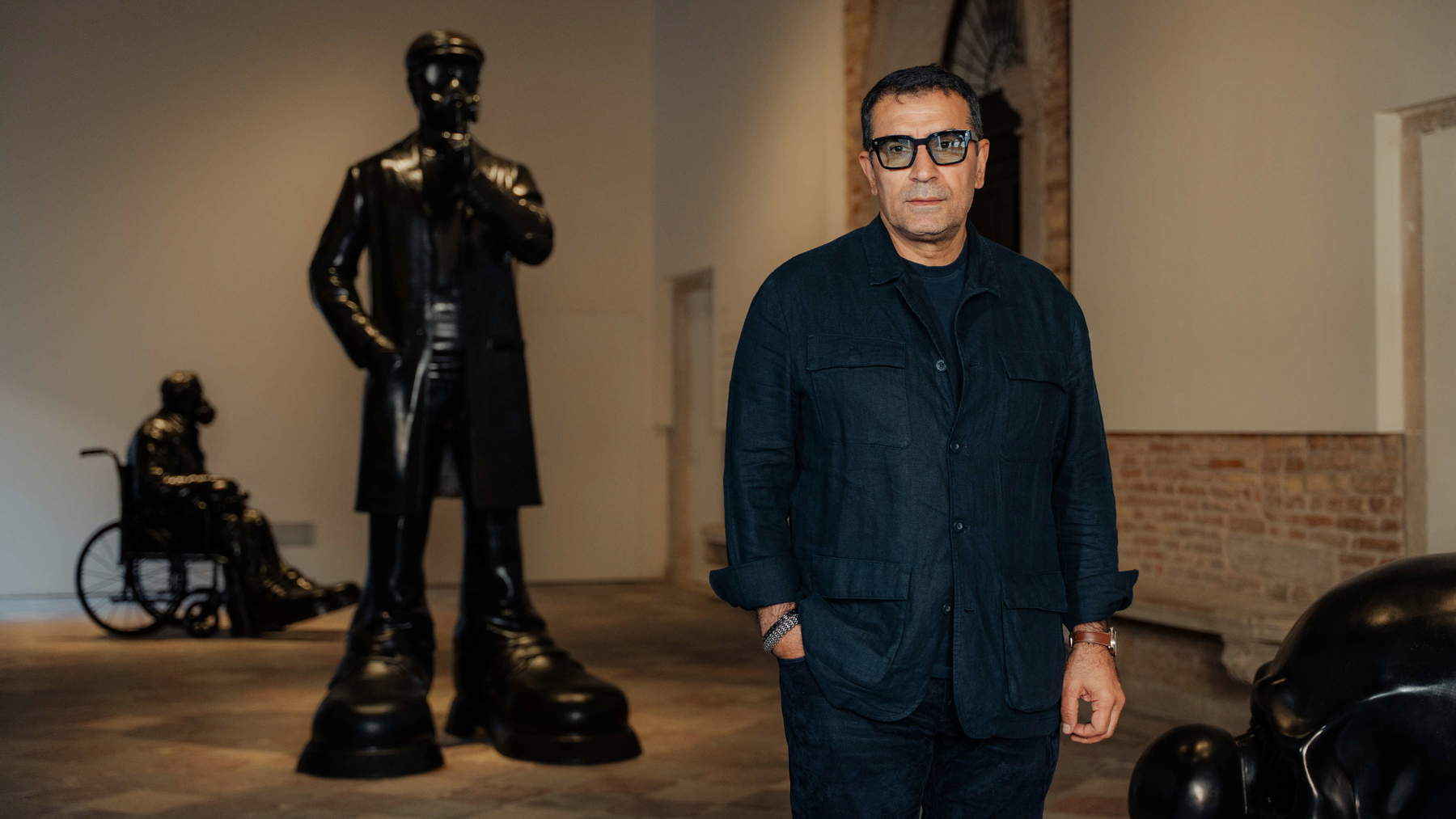
NC. How does your presence in Venice during the 2026 Art Biennale with the project Sessizlik / Silence contribute to redefining the role of the artist in the contemporary context?
AG. The exhibition was a significant experience for me that opened a new reflection on the role of the artist in the contemporary world. Today the artist’s task is not only to produce works; it is to make memory visible, to create space for repressed histories, and to bring consciousness to one’s time. This project, carried out at Palazzo Gradenigo, has become an international visibility for memories left in silence. In this sense, it takes the artist beyond the figure that simply produces aesthetics; toward a testimony that builds a bridge between history, society and the memory of humanity. Through secular doors, bronze figures, masks, and silent sculptures, I actually pose this question: what does a society talk about, what does it choose to be silent about, and in what silence does truth continue to live? Today, contemporary art is no longer just a space to observe; it is a space of experience to face, feel and enter intellectually. Sessizlik / Silence also invites the audience not only to an exhibition, but to a shared experience of memory and consciousness.
What is the meaning of the exhibition hosted at Palazzo Gradenigo, and how does the dimension of silence become a philosophical and political device within the itinerary?
The central theme of the exhibition Sessizlik / Silence is to confront the ways in which memory is silenced and to make visible the invisible language guarded by silence. Here silence is not a mute passivity; on the contrary, it is a powerful form of expression that carries historical, political and human weight. Sometimes the greatest cry of a society is hidden precisely in what it fails to say. Along the exhibition route, the visitor does not only move among the works; he also crosses repressed memories, lost languages, forgotten narratives and stories left in silence. This is why the centuries-old doors, bronze figures, masks and silent sculptures are not simply aesthetic objects; they are bearers of memory bearing witness to time. The concept of silence here becomes a philosophical space, because it leaves the visitor alone before the invisible layers of truth. It also becomes a political tool, because it makes visible again what has been silenced, made invisible and repressed. For me, this exhibition investigates the staying power of silence within a noisy age. Because sometimes the truth does not scream; it simply continues to exist in silence.
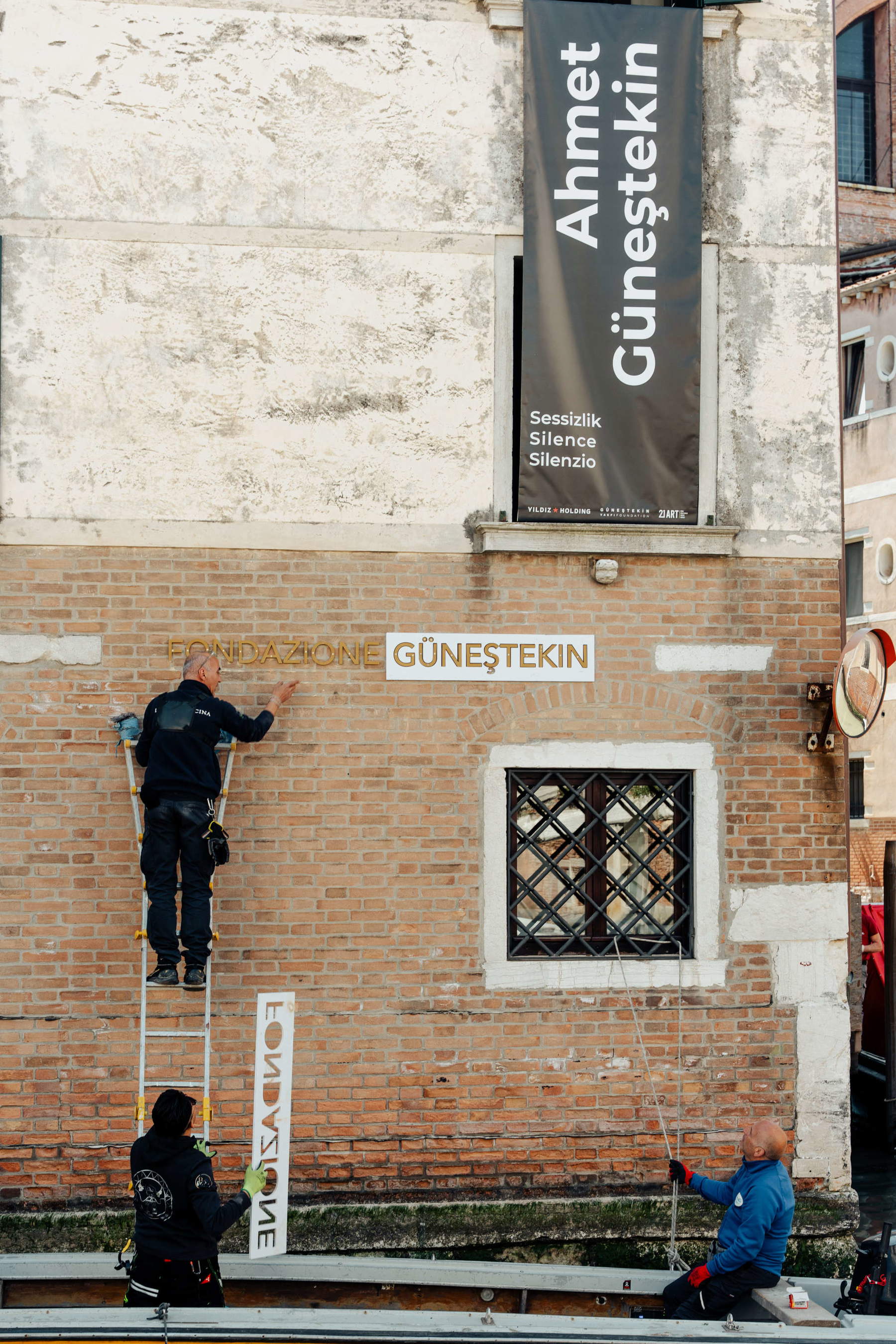
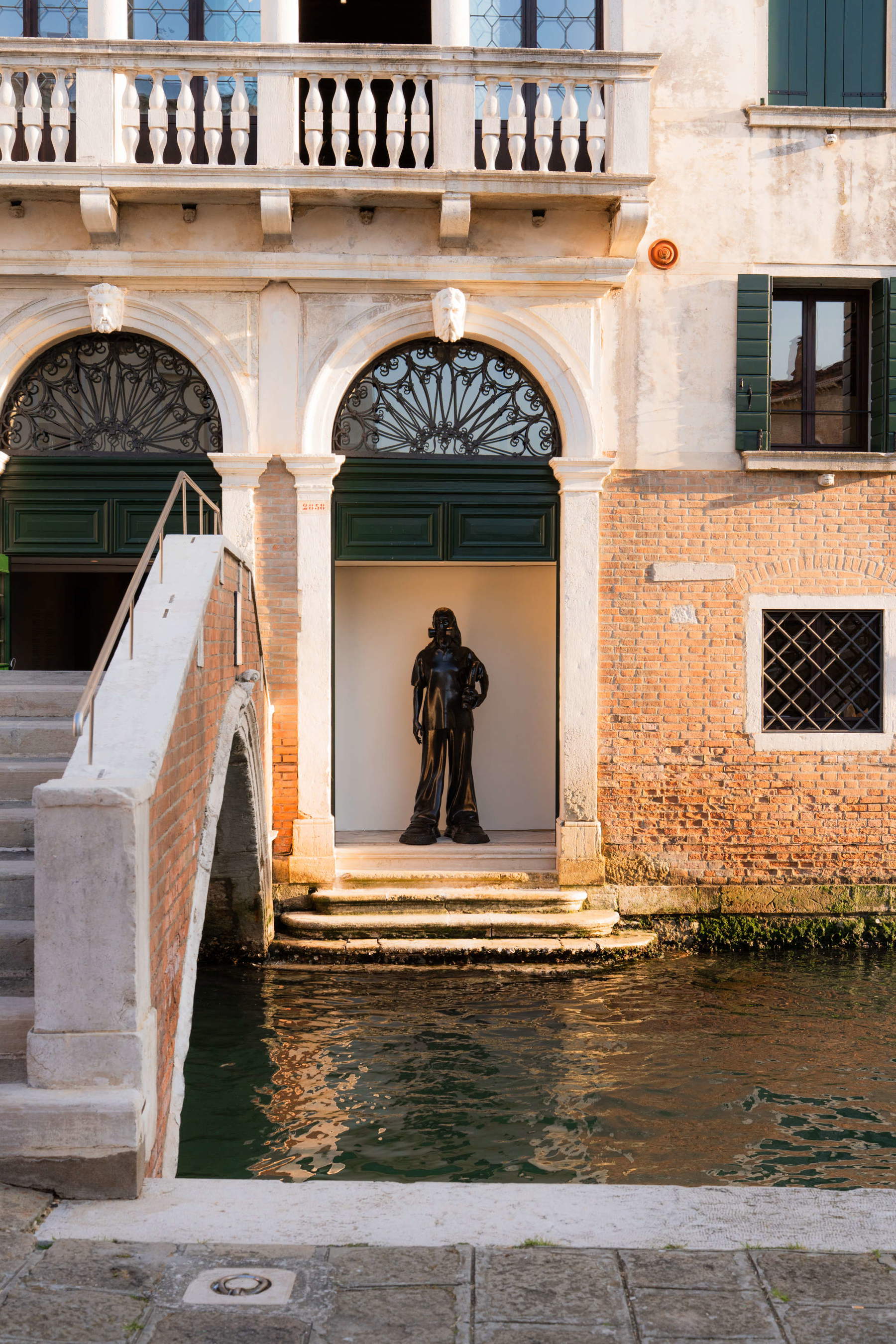
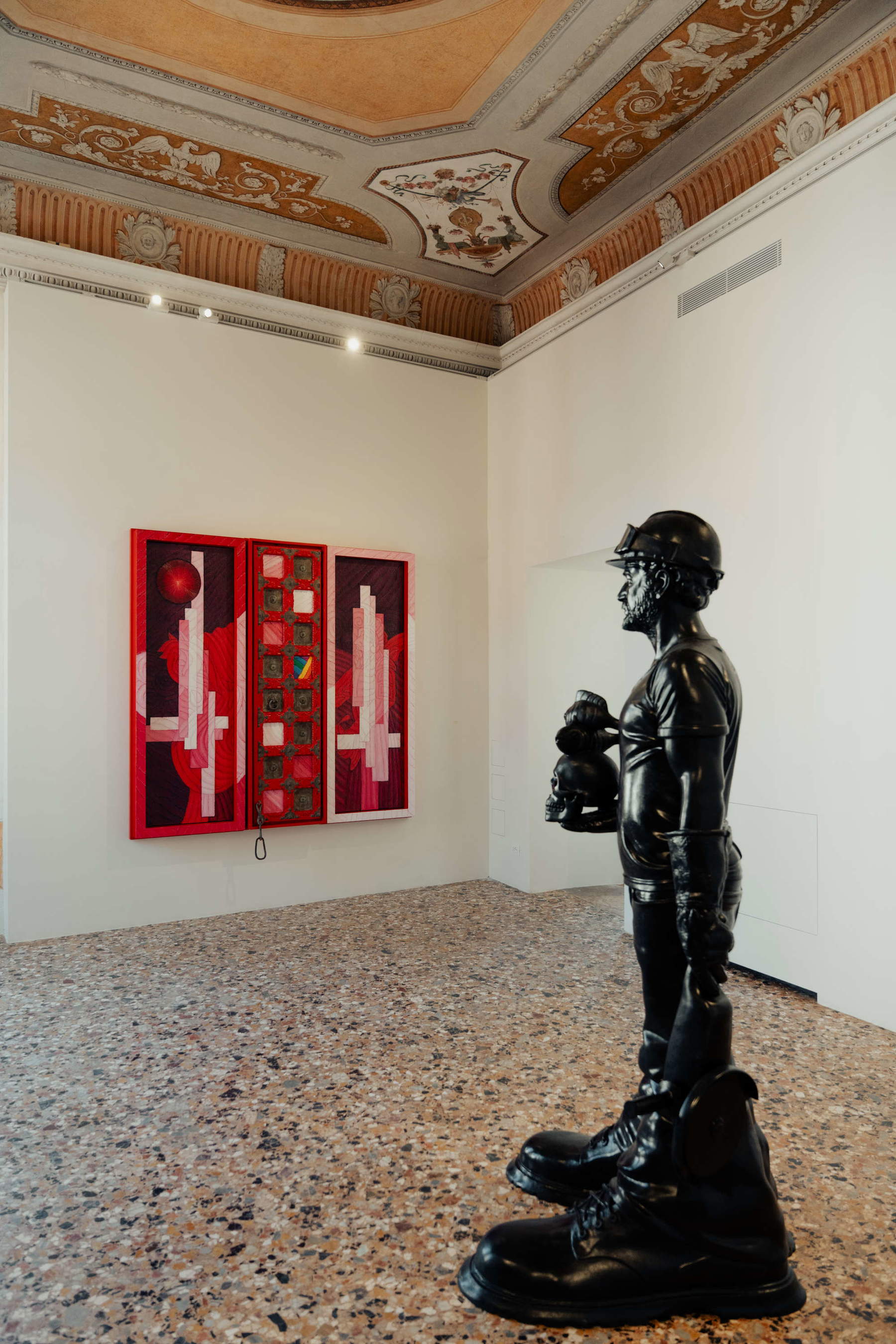
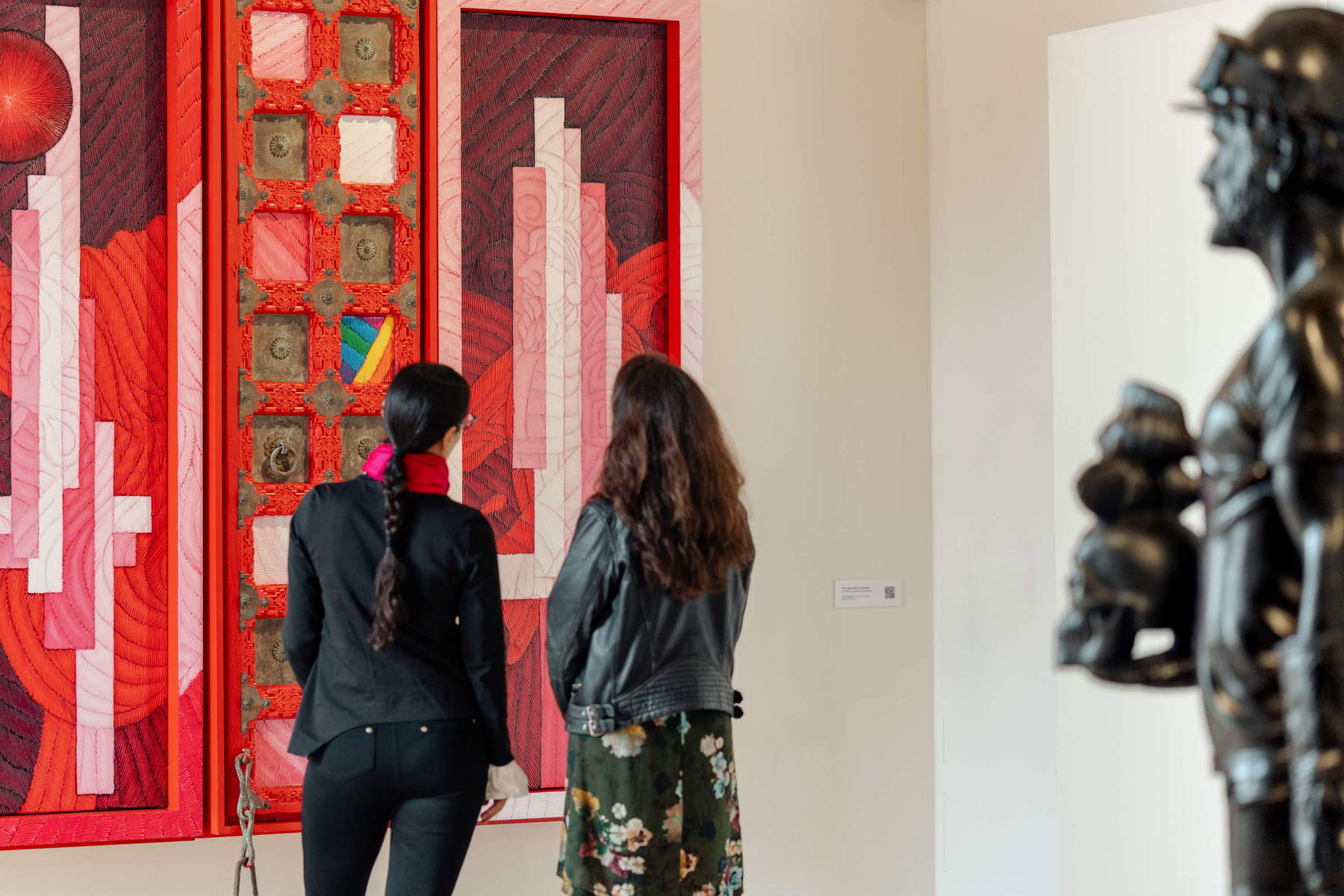
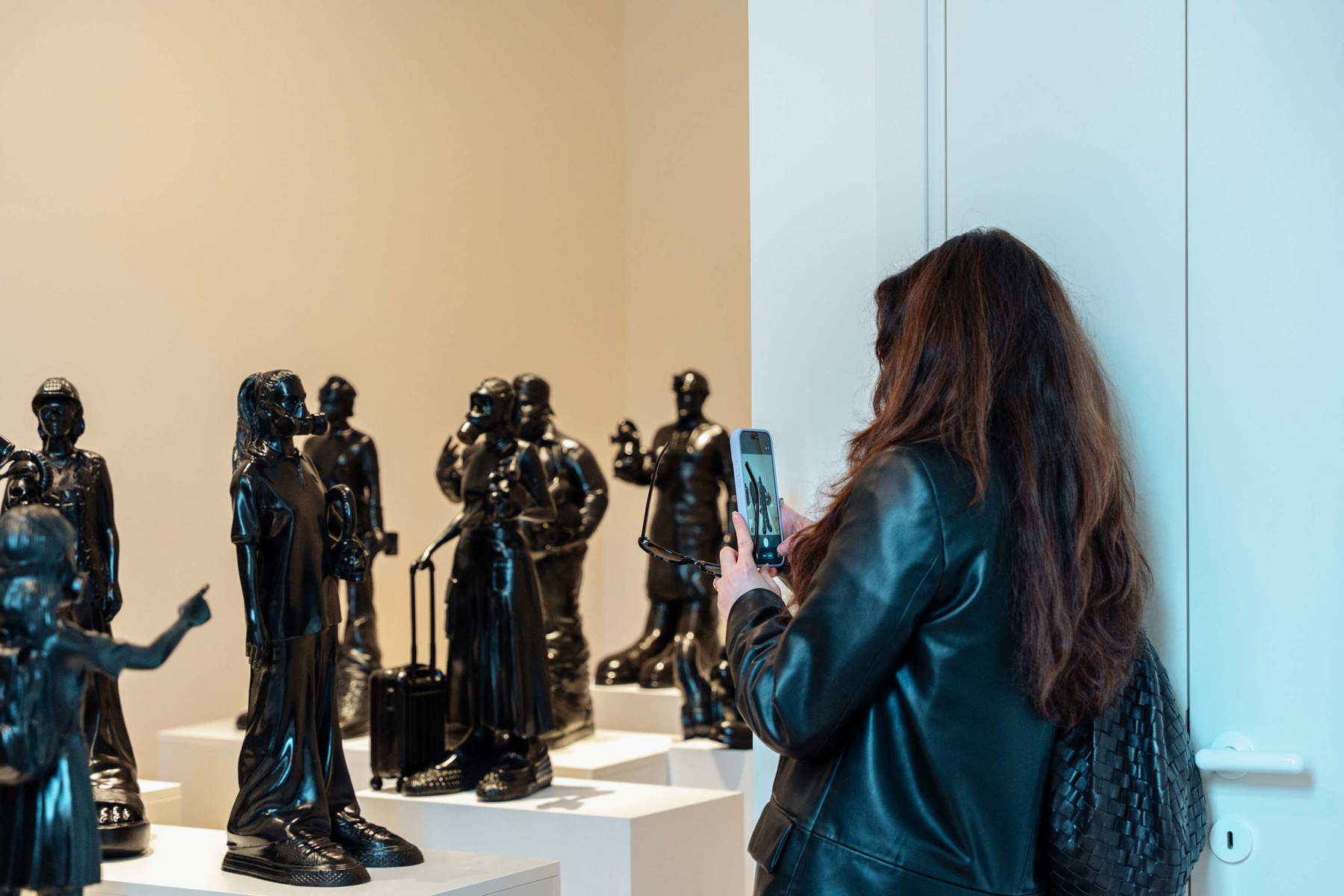
What did the figures represented in the sculptures - migrants, workers, disabled people, individuals in unstable conditions - bring to the narrative and symbolic construction of the entire exhibition project?
They are not only represented figures, but the main bearers of memory that constitute the moral framework of the exhibition. For me, these people are not “the other”; they are the invisible center left on the margins by the modern world. Much of the greatest tragedies of our time are manifested in their bodies, their faces and their silences. This is why the figures in the sculptures stop being individual portraits and turn into a collective narrative of humanity. The weight carried by a migrant, the physical fatigue of a worker, the invisible struggle of a person with disabilities or the loss of belonging of an uprooted individual build, in the symbolic structure of the exhibition, a common language of memory. It is precisely here that silence gains importance. For fragile lives are often the least heard. The suffering that societies choose to ignore mostly grows in silence. The weight of the bronze figures, the nullified face of the masks, and the historical traces guarded by the centuries-old doors remind us that these fragile lives belong not only to the present, but to the very history of humanity. I believe that one of the tasks of art is to make visible what is invisible. And that is exactly what the figures in this exhibition do: they bring back lives left in silence into the collective memory of humanity.
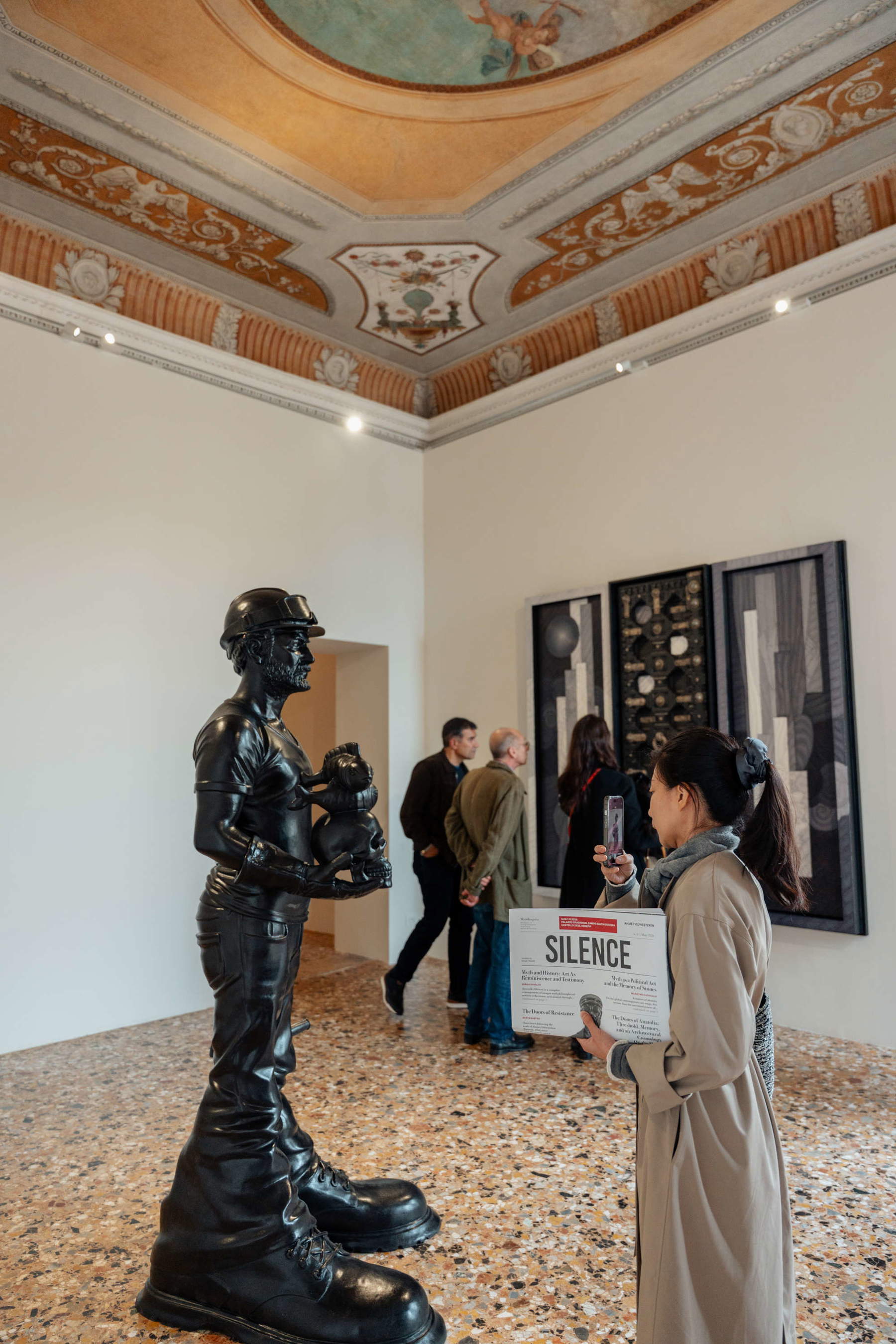
What should visitors expect as they traverse the spaces distributed between the interior and exterior of the palace, and what perceptual and mental experience should emerge from the dialogue between myth, sacred science and the contemporary?
From the moment they enter Palazzo Gradenigo, visitors will not simply pass through an exhibition: they will enter a layered journey between time, memory and human conditions. The installations spread throughout the interior and exterior spaces of the palace transform the visitor not into a spectator of a linear narrative, but into part of an emotional, intuitive and mental experience. Each door, each bronze figure, each mask and each silent face functions as an open threshold between past and present. This is precisely where the relationship between mythology, sacred sciences and contemporary reality comes into play. For even as human history changes, fears, migration, the search for belonging, mourning, power, memory and forms of silence continue to exist by transforming. What interests me is to reveal the invisible links between ancient narratives and the fragile reality of the present. Therefore, in the exhibition, mythological images are not simply references to the past; they become symbolic tools that seek to understand the spiritual and social condition of contemporary human beings. Instead, the references to the sacred sciences are intended to make us reflect on the profound relationship that human beings build with the universe, time and their own existence. In this way, the exhibition stops being just a visual experience and turns into a mental and perceptual space. It is important to me that the visitor leaves the space sometimes feeling inside a ritual, sometimes confronting the weight of a historical memory, and sometimes encountering their own inner silence. Because Sessizlik/Silence was ultimately conceived not as a space to look at only, but as a space to enter, to feel and to experience intellectually.
What connection exists between Sessizlik / Silence and the curatorial project of the Venice Biennale 2026?
Between Sessizlik / Silence and the Venice Biennale 2026 there is not only a temporal relationship, but also a strong conceptual link. The title chosen by Venice Biennale 2026 curator Koyo Kouoh, In Minor Keys, focuses precisely on invisible, repressed experiences that exist in low voices but are capable of leaving deep traces in humanity’s memory. This approach is naturally intertwined with the conceptual framework of Sessizlik / Silence. Because for me silence has never been empty or a passive absence of voice; on the contrary, it has always been a space that guards the invisible, protects memory and deepens truth. The migrants, workers, uprooted people, fragile lives, secular doors and silent figures in the exhibition represent precisely those invisible human conditions to which the approach of In Minor Keys refers. Koyo Kouoh’s curatorial approach opens space not for grand narratives, but for more fragile, more poetic and more human layers. Sessizlik / Silence, likewise, works not through loud representation, but through whispers, traces of memory, symbols and silent testimonies. This is why the exhibition at Palazzo Gradenigo establishes an organic relationship with the conceptual atmosphere of the Biennale. Mythology, collective memory, migration, belonging, mourning, and lives made invisible find a common correspondence in both the Biennale’s curatorial approach and the spirit of Sessizlik / Silence. For me what matters is that art can still touch the inner world of human beings and the collective consciousness. That is why Sessizlik / Silence proposes an experience of memory and humanity that proceeds on the same frequency as the conceptual space opened by the Biennale towards the contemporary world.


The author of this article: Noemi Capoccia
Originaria di Lecce, classe 1995, ha conseguito la laurea presso l'Accademia di Belle Arti di Carrara nel 2021. Le sue passioni sono l'arte antica e l'archeologia. Dal 2024 lavora in Finestre sull'Arte.Warning: the translation into English of the original Italian article was created using automatic tools. We undertake to review all articles, but we do not guarantee the total absence of inaccuracies in the translation due to the program. You can find the original by clicking on the ITA button. If you find any mistake,please contact us.


















 IT
IT FR
FR DE
DE ES
ES CN
CN