







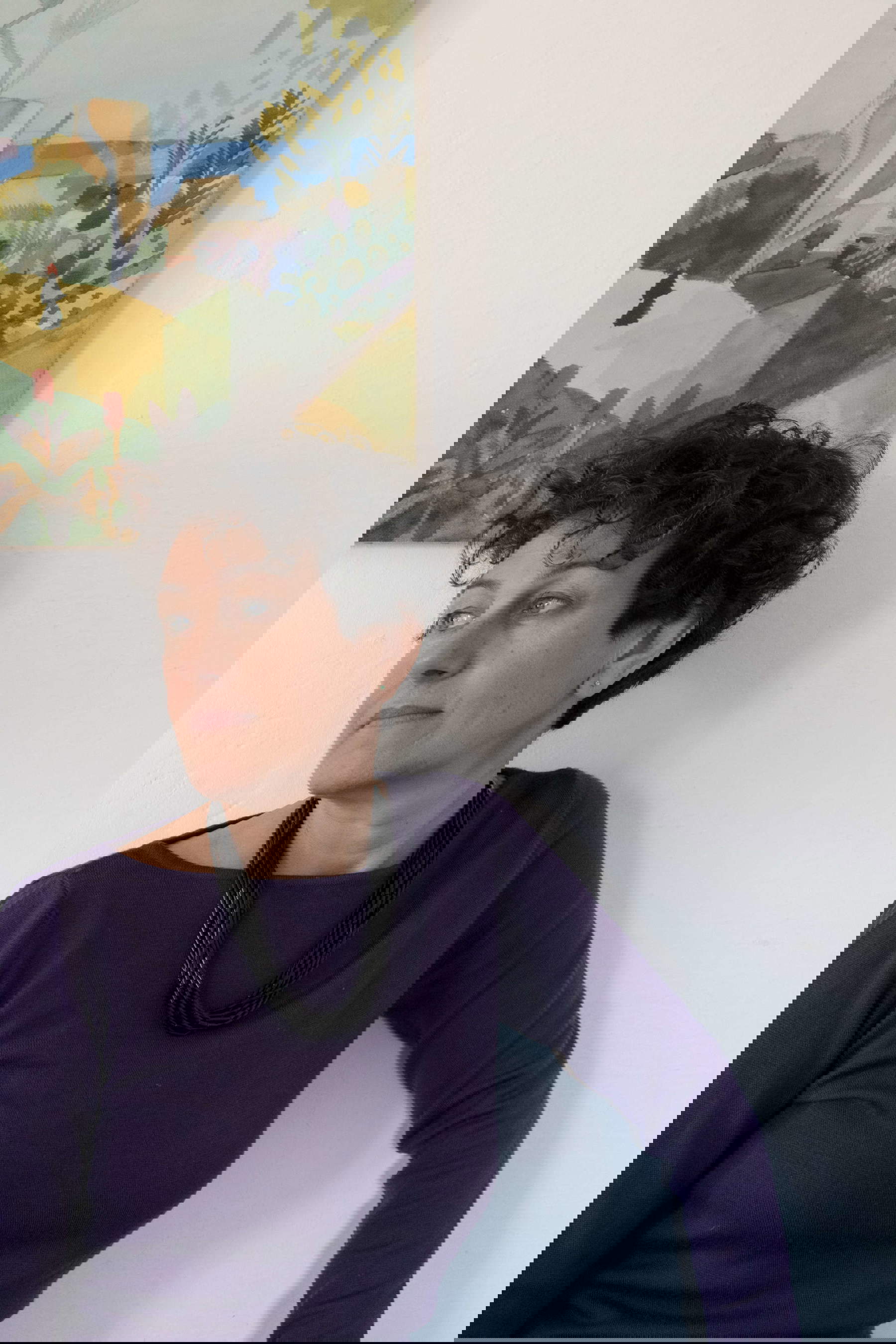
Always interested in an investigation of the idea of sculpture declined in open forms, which also uses different media such as photography, drawing and words, Manuela Cirino (Carate Brianza, 1962) talks about her art in this conversation with Gabriele Landi. Cirino graduated from the Brera Academy of Fine Arts with Luciano Fabro in 1987. In 1988 she took part in an exhibition project, curated by the artists, titled Politics, of the for or concerning the citizen in Novi Ligure, while from 1990 to 1993 she worked on a collective project with Piero Almeoni, Maurizio Donzelli and Roberto Marossi also exhibiting at Care of and at Galleria Massimo Minini. He has held numerous solo exhibitions including: Valeria Belvedere, Milan in 1997, Galleria Neon, Bologna in 1998, Galleria Ciocca, Milan(Secondo tentativo, in 2000; Infiniti in 2005 and Il catalogo delle cose in 2009). In 2000 he participated in a project organized by Atlantic Center for the Arts, Miami with William Kentridge in Civitella Ranieri. In 2012-2013 he presented the project L’Immagine Negata at Galleria Martano and in 2014-15 at Galleria Milano. Since 2023 he has collaborated with Galleria Montrasio Arte holding two solo shows in Monza and Milan. The exhibition project comparing his work with that of Leoncillo, realized in the rooms of the MACC Museum in Torgiano, Perugia, is from 2025. Group exhibitions include Gallery 102, Düsseldorf in 1994; Domestic Violence, Giò Marconi, 1994; Art Fiction, Stadtgalerie Kiel, 1998; Il Guardiano e il Passero, Gallery 101, Ottawa, Canada 2003; Attraversamenti, Mar & Partners, Turin, 2007; Terra!,Palazzo Botton, Castellamonte, in 2016 and Galleria Francesca Antonini, 2018, Memorie per dopodomani, AF Gallery, Bologna 2023 and Premio Treviglio, 2025.
GL. How important is physicality in your work and how does it dialogue with geometry?
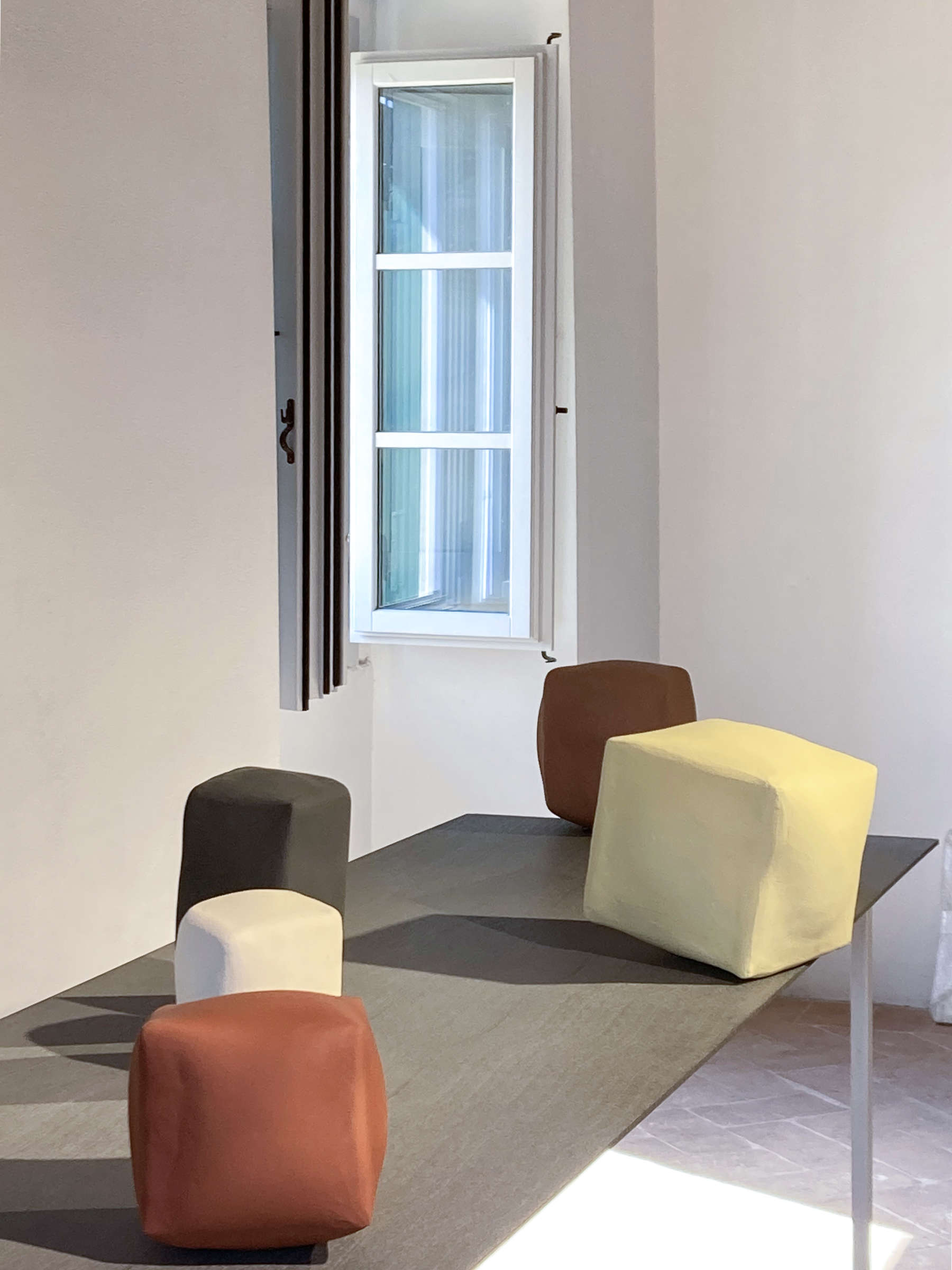
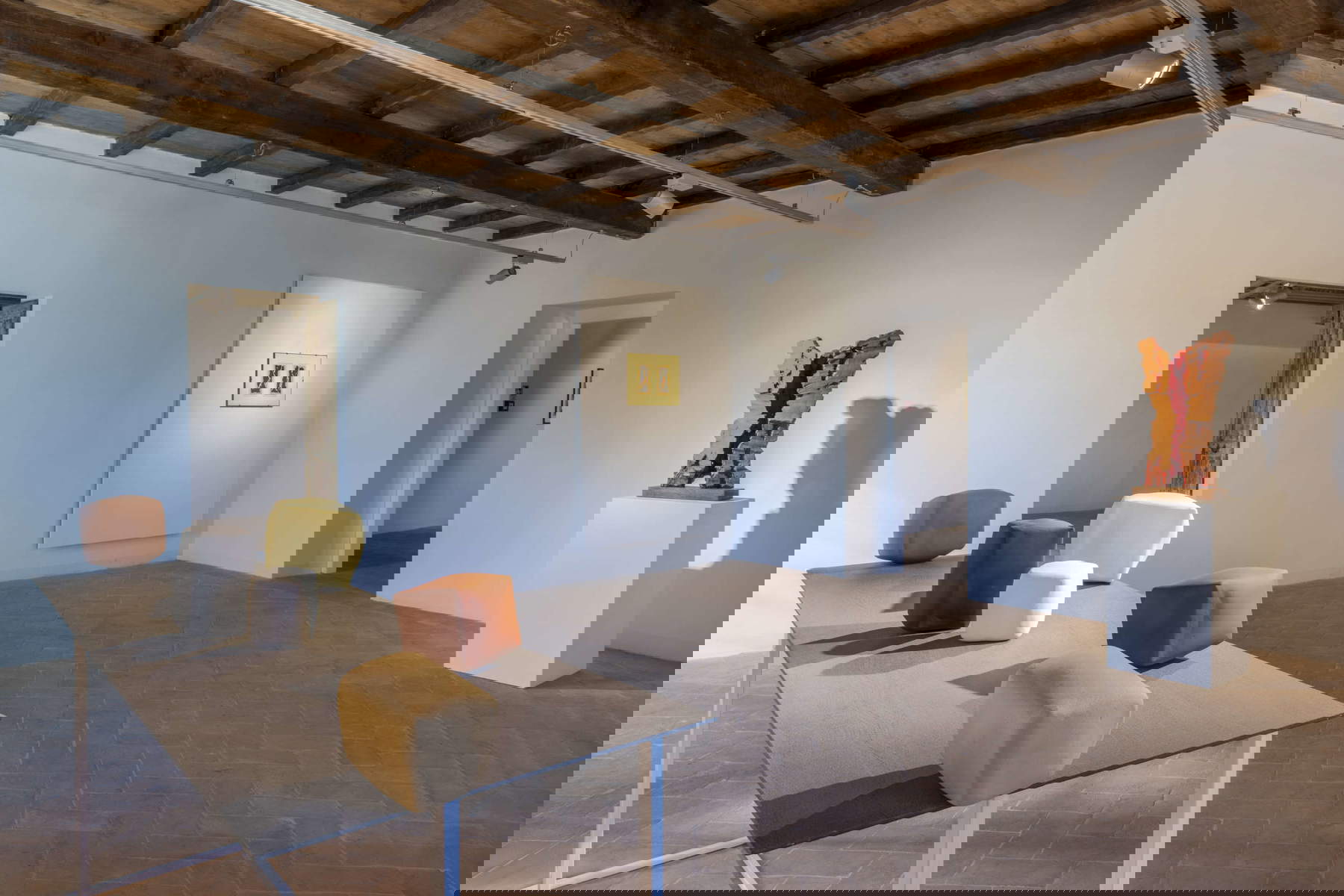
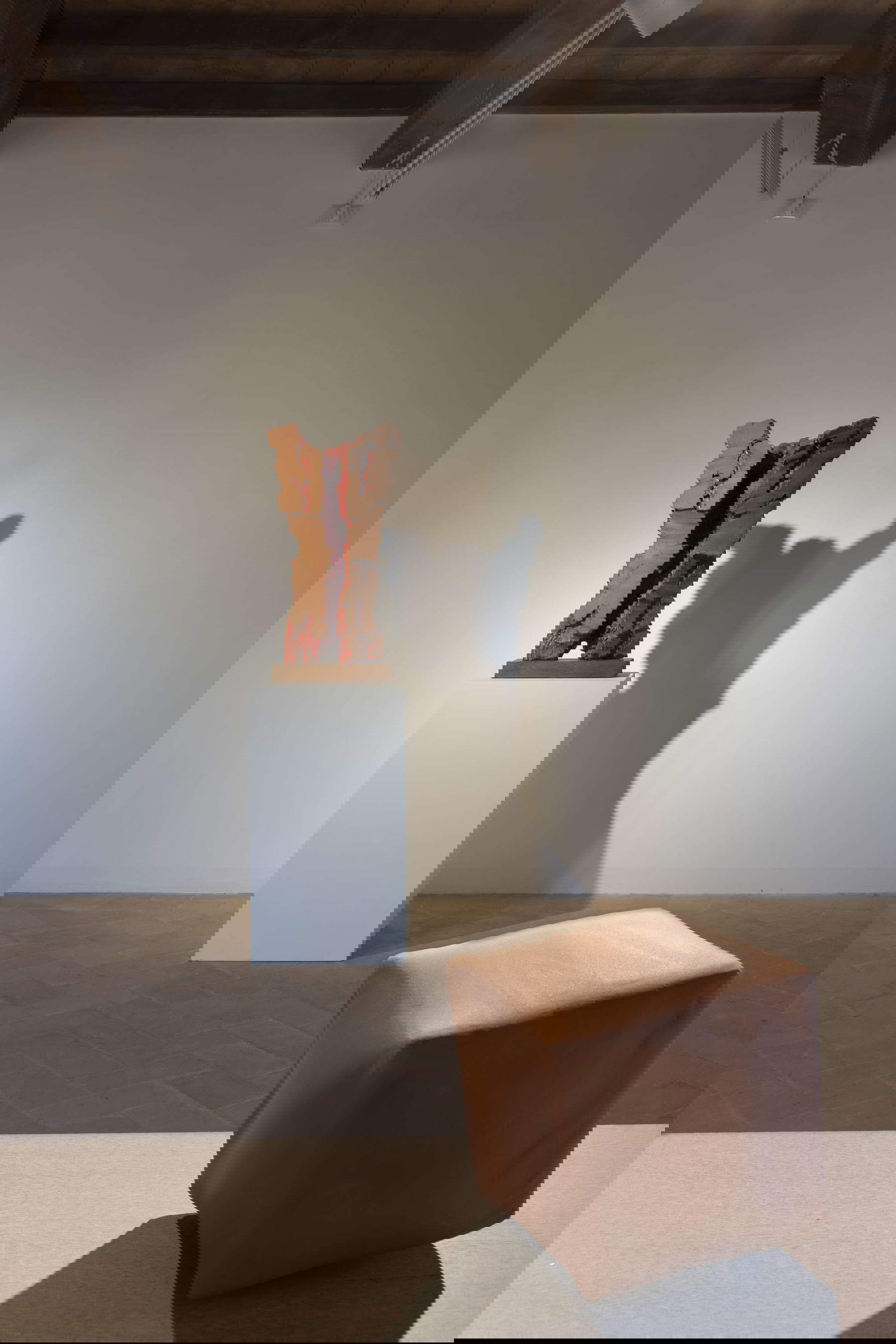
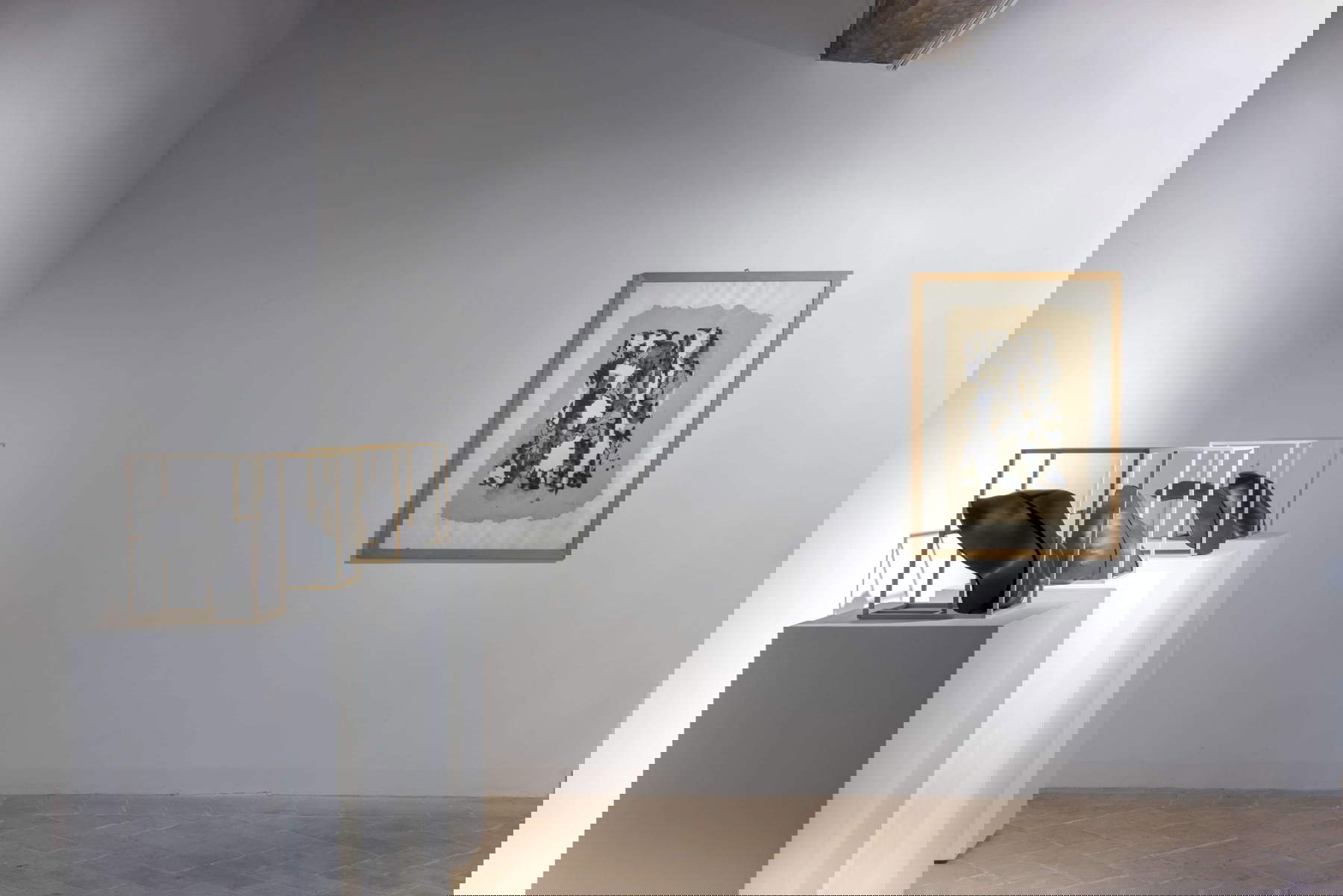
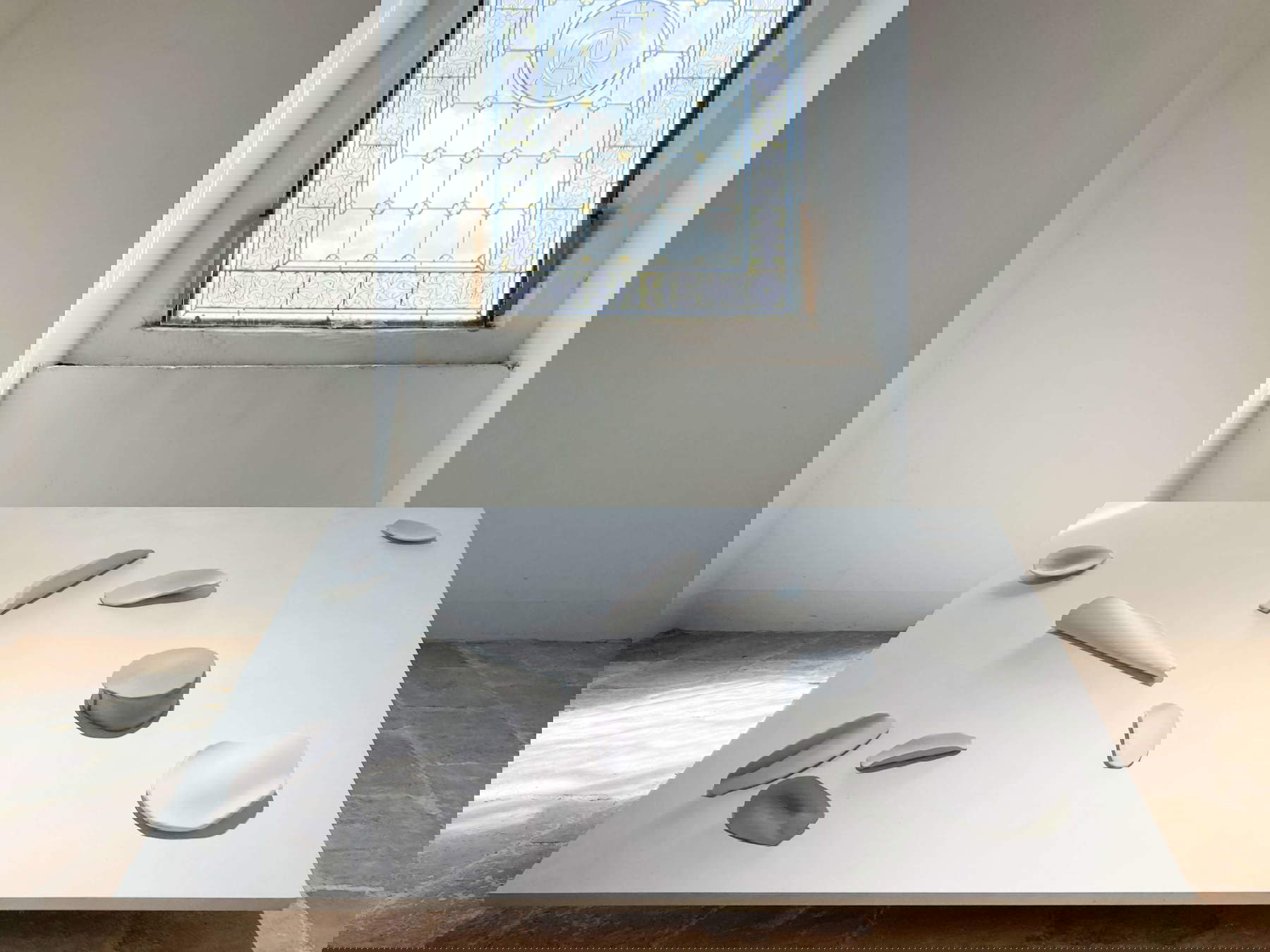
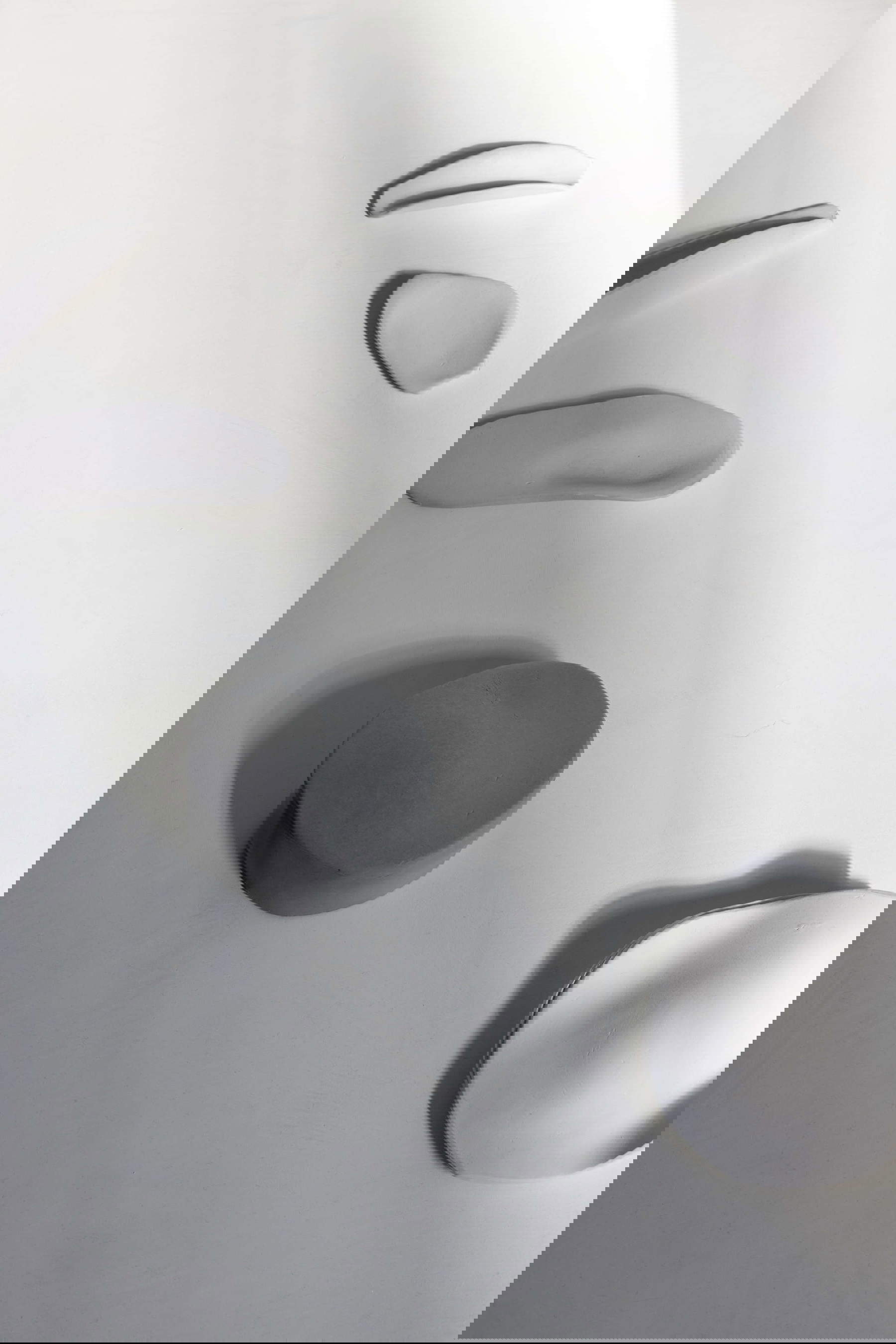
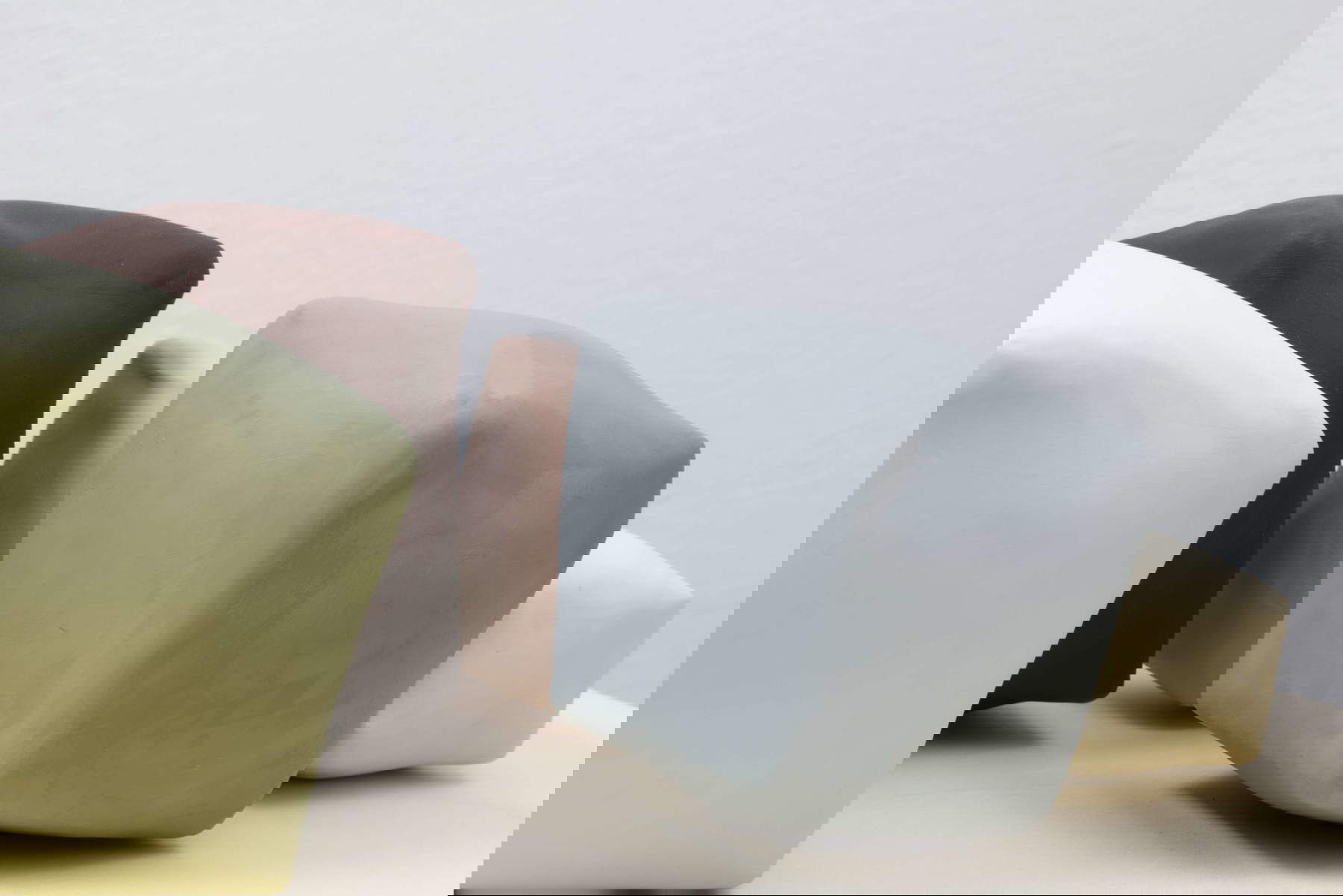
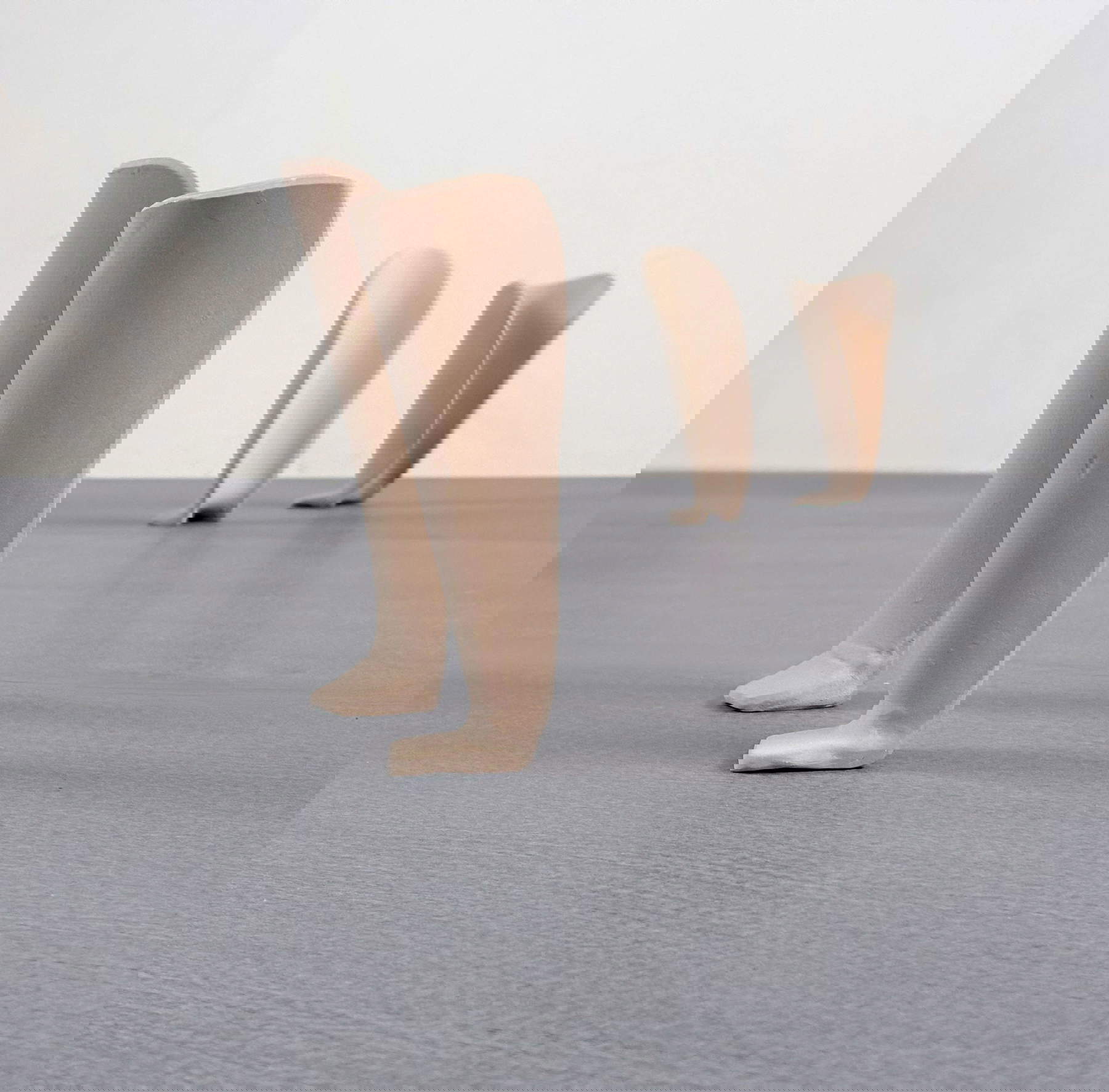
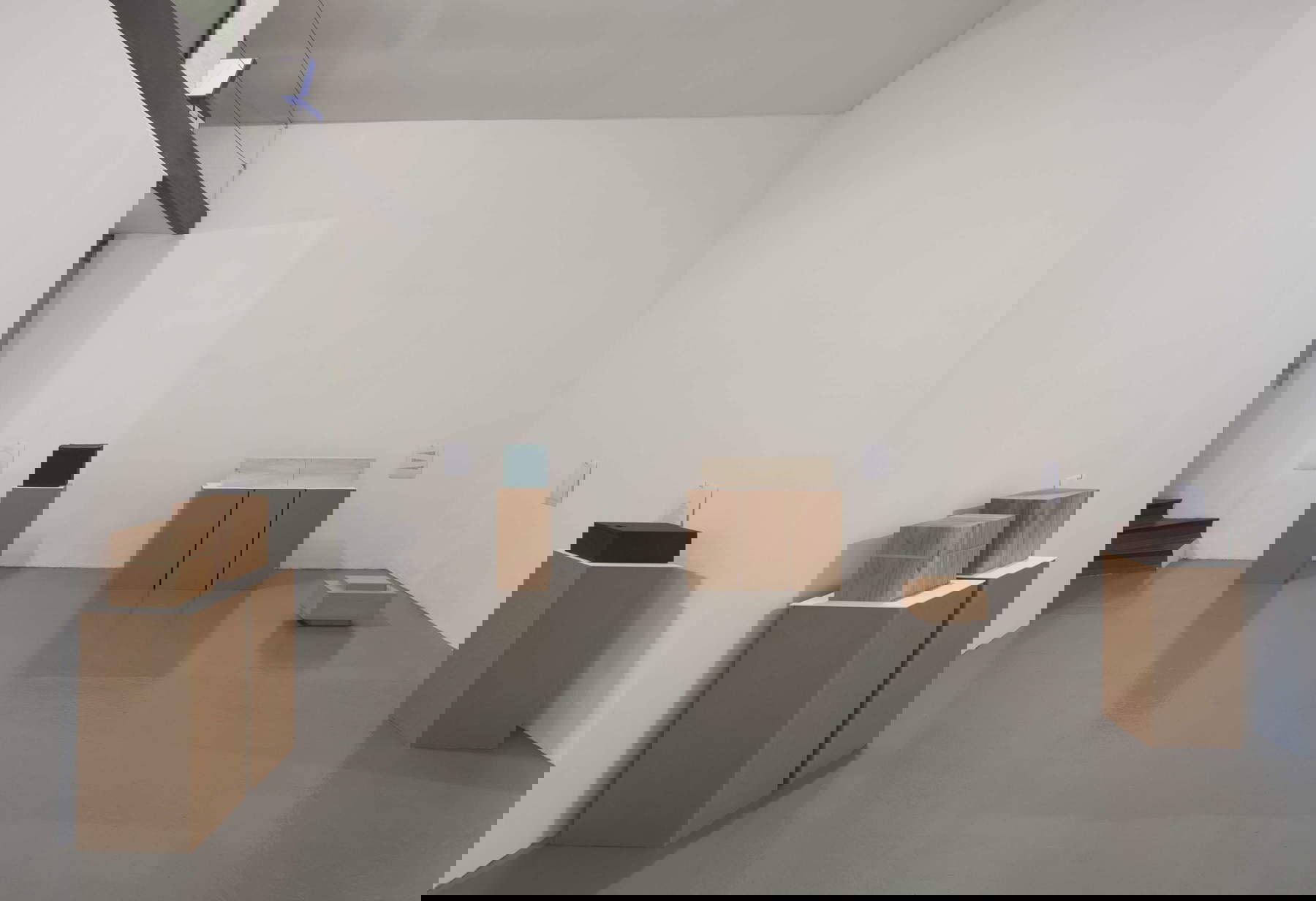
MC. If by physicality we mean consistency of matter, for me it is as important as the more I can highlight its mutability, its being interdependent and connected with the context in which it fits. In the more specific case of ceramics, of which I have made extensive use in recent years, this material interests me the more it allows me to deny its physicality in order to evoke physical consistencies other than the most obvious and taken for granted, to suggest meanings of the broadest possible reading, other than those to which our gaze normally remains anchored. A physicality that is sometimes metaphorical, that can also disprove itself, transform itself or highlight the evanescence of reality. In my last exhibition occasion, for example, I happened to confront the physicality of matter of an artist, Leoncillo, who in many ways is distant from me, both in his use of sculptural language and in his search for an expressive, often dramatic or lacerating potential found in it. At the same time, both researches, which start from the same earth, from clay, have sometimes common movements and conceptual paths, paths of openness toward the consciousness of a material that reflects its own time, in two centuries that bring, each, epochal changes(L’instabilité, 2024). Very often, in the paths I follow, the work in its unfolding tends to relate several elements, as if to reveal the communicative and meaning-making potential of the different components. Other times the relationship is symbiotic and interdependent: the unforeseen, intuited aspect needs to enter into relationship with the more structured and rational part. Then the relationship with geometry, as a device for ordering the manifold, the multiform, becomes necessary and allows the coexistence of the different linguistic forms (the research on the Apparatuses and Sequence III of 2020-2025).
Can you talk more extensively about these cycles of work you just named?
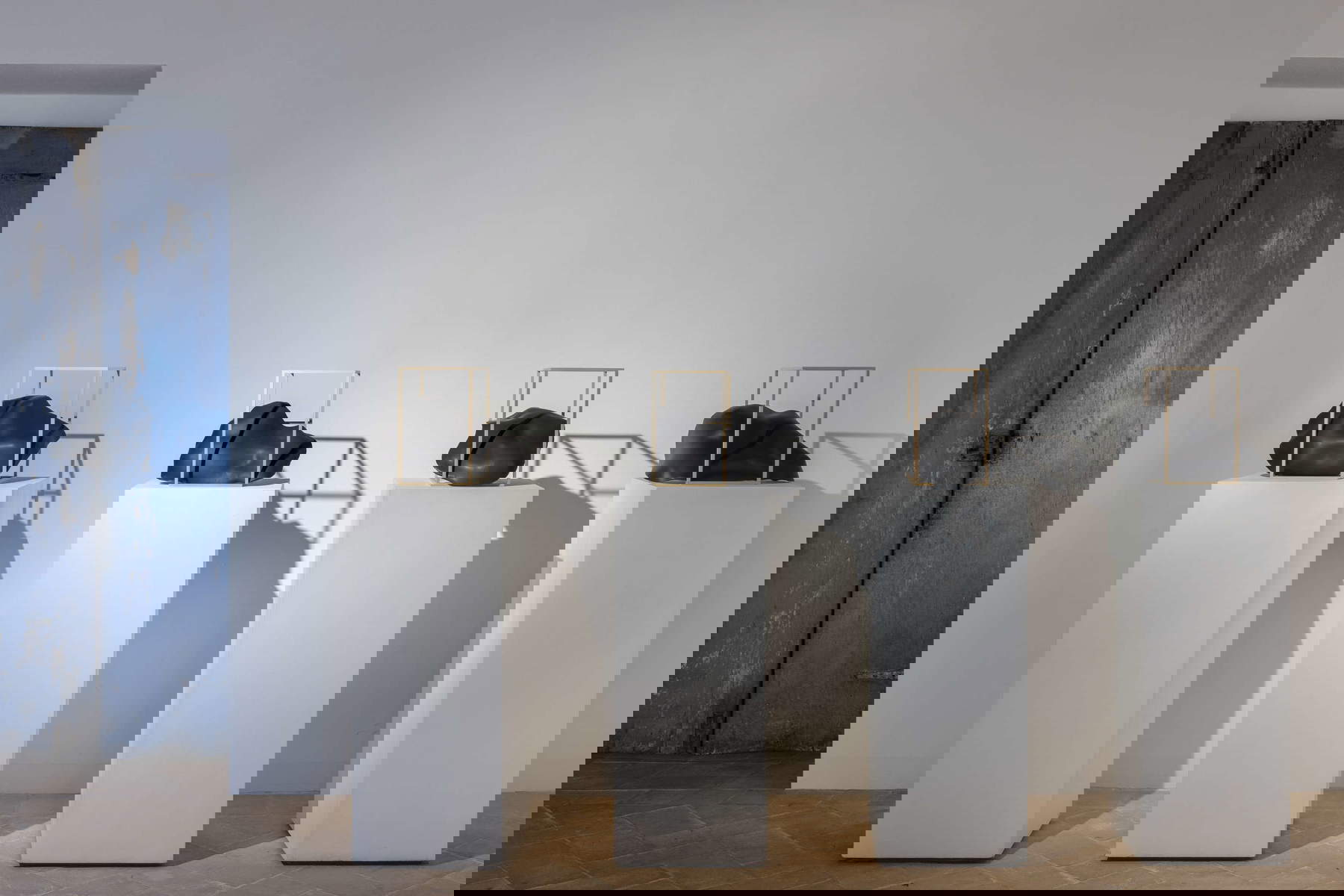
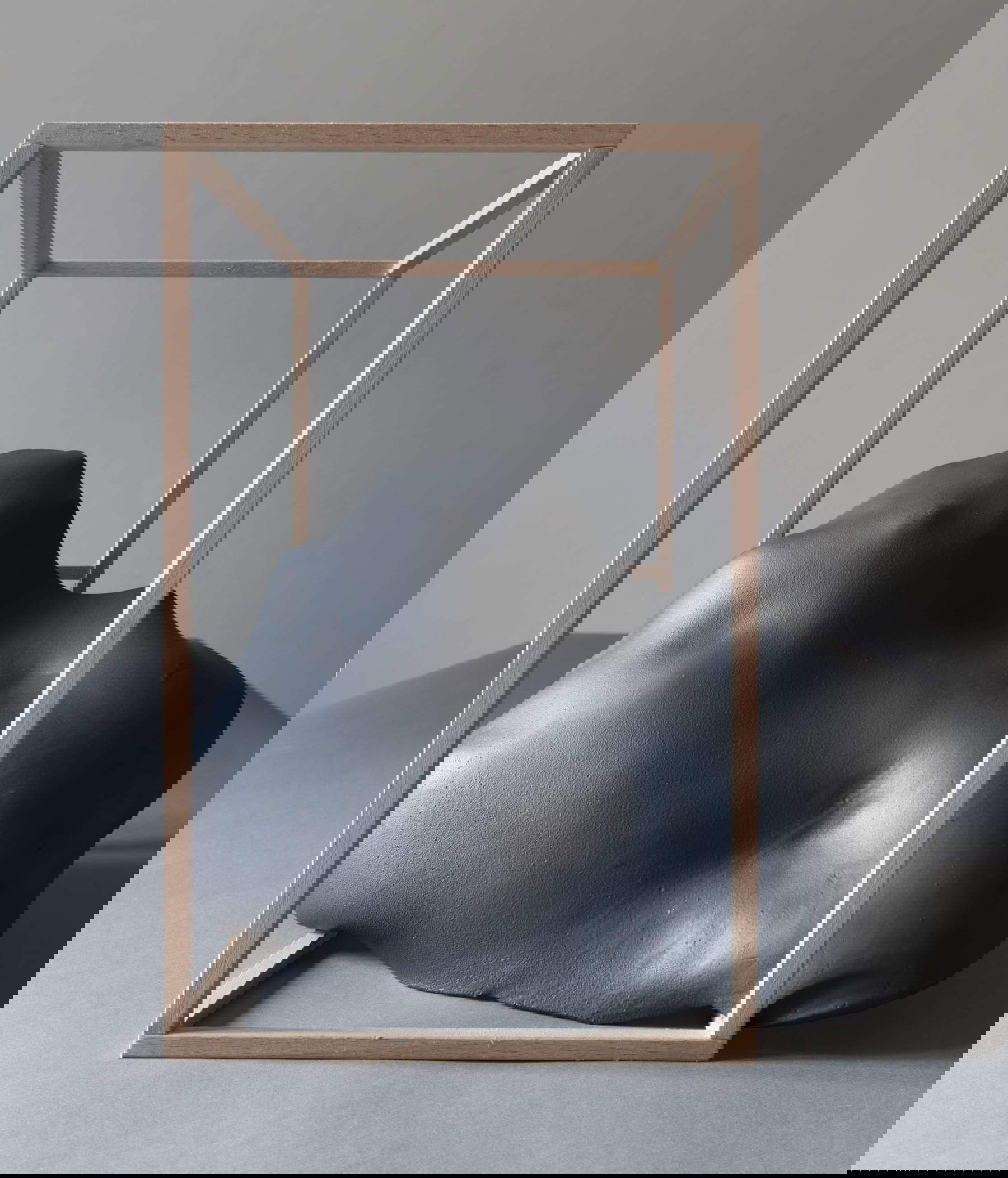
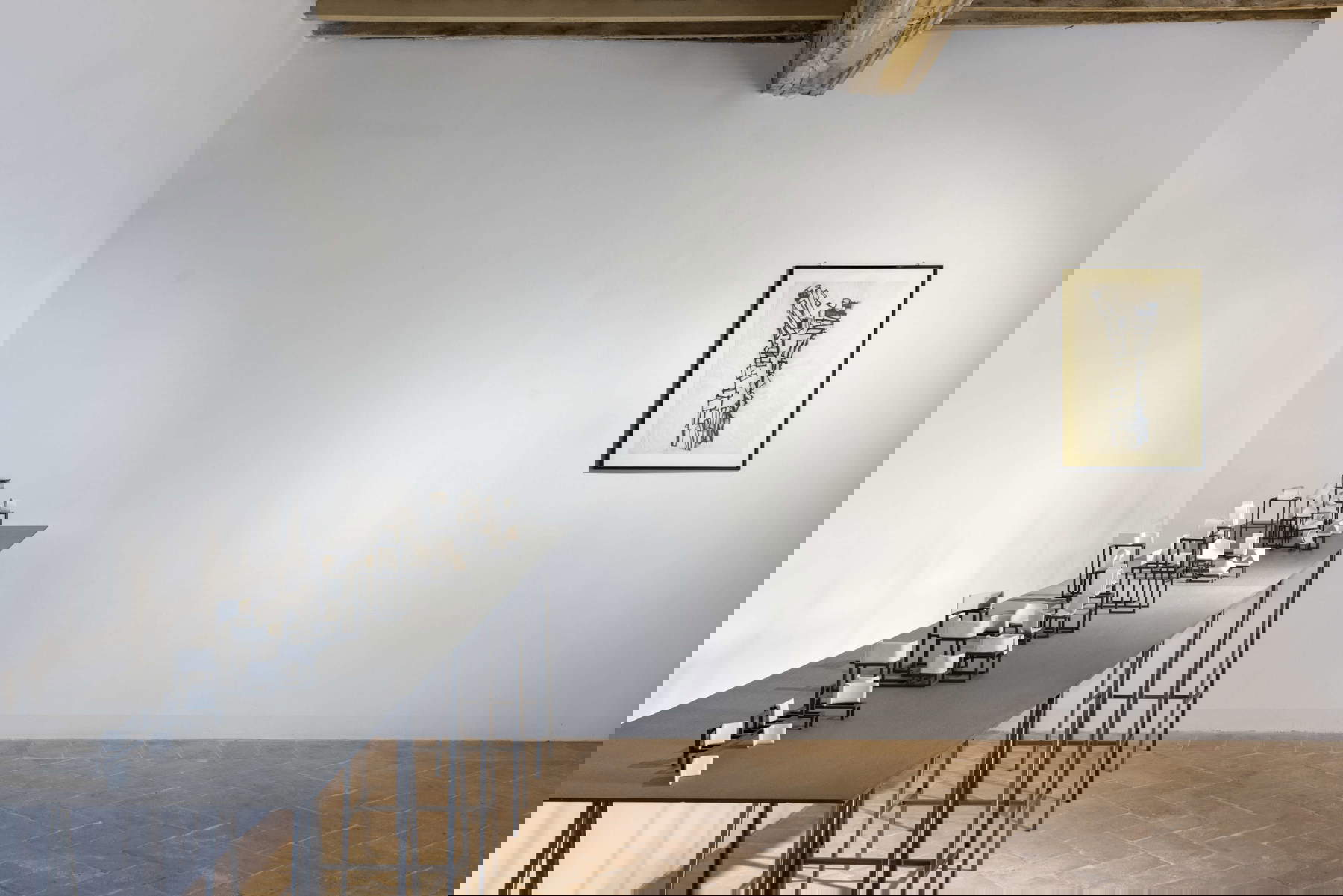
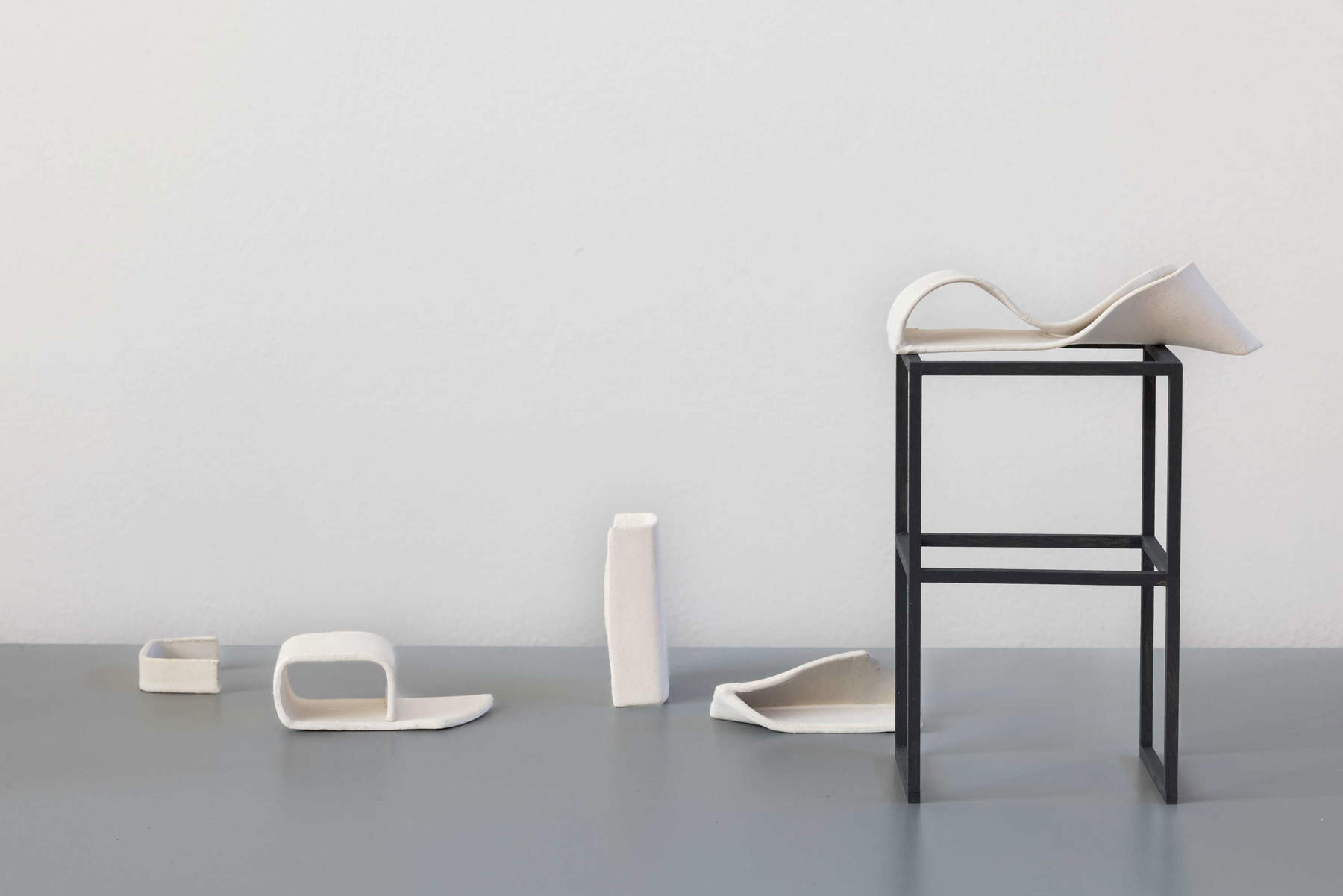
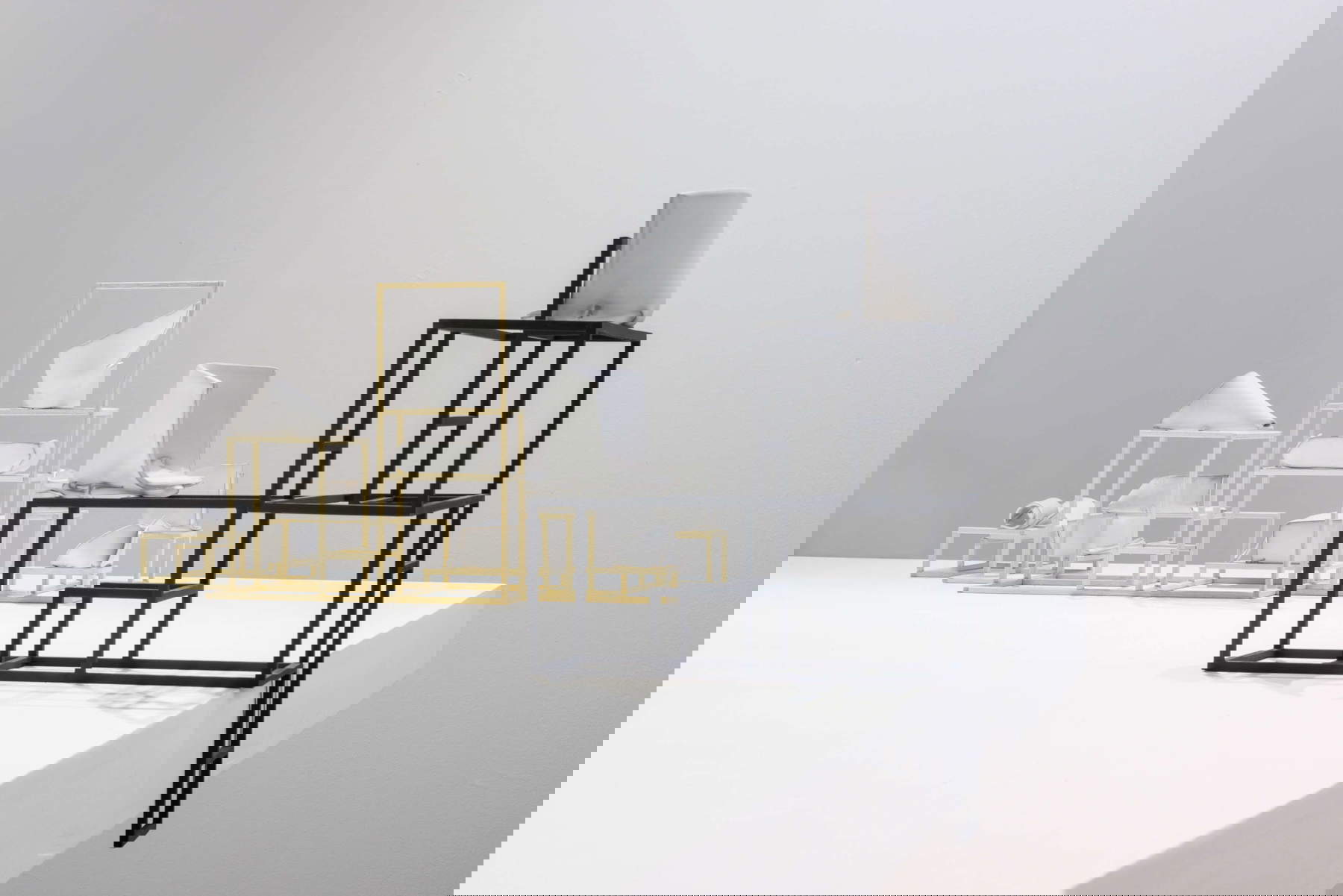
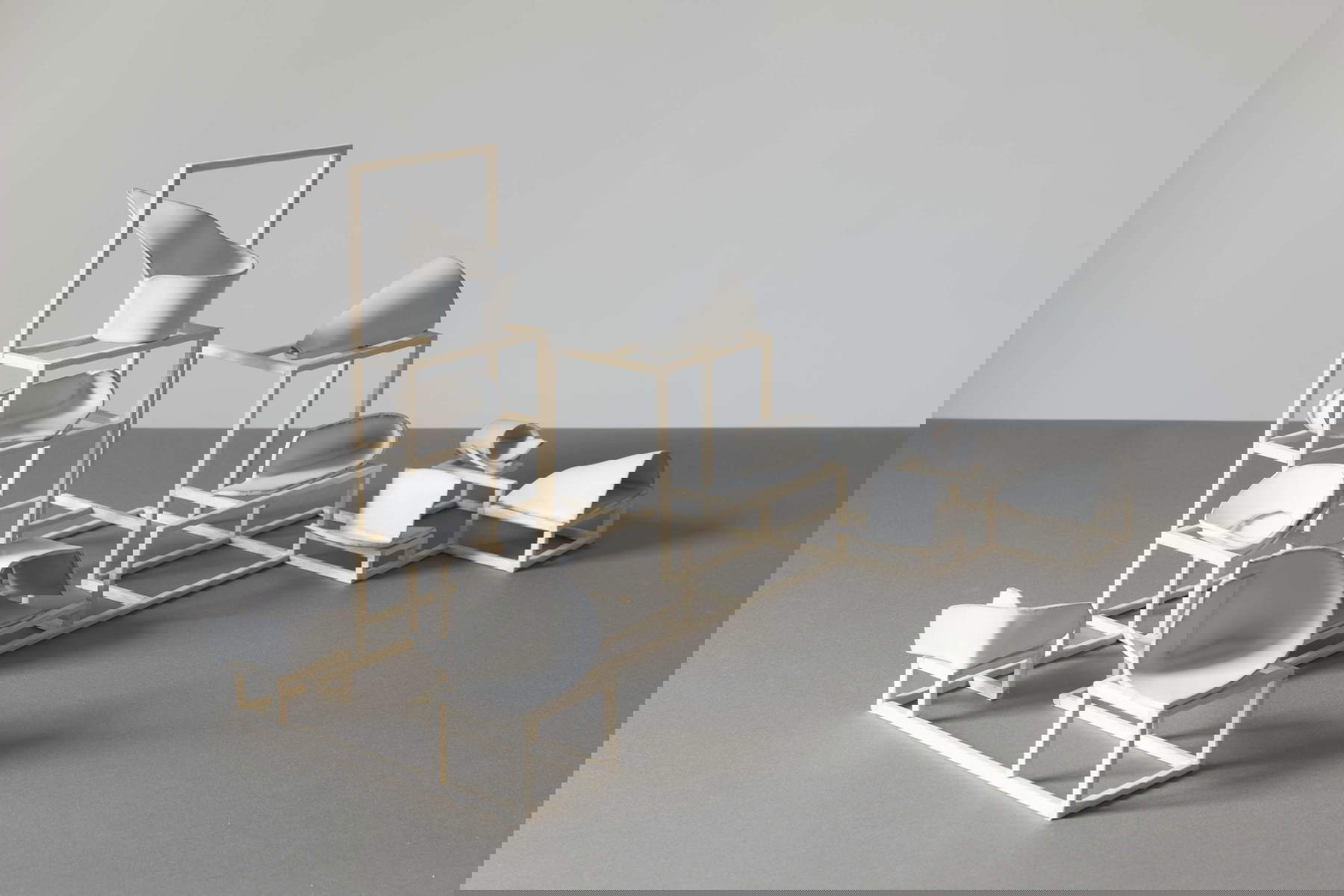
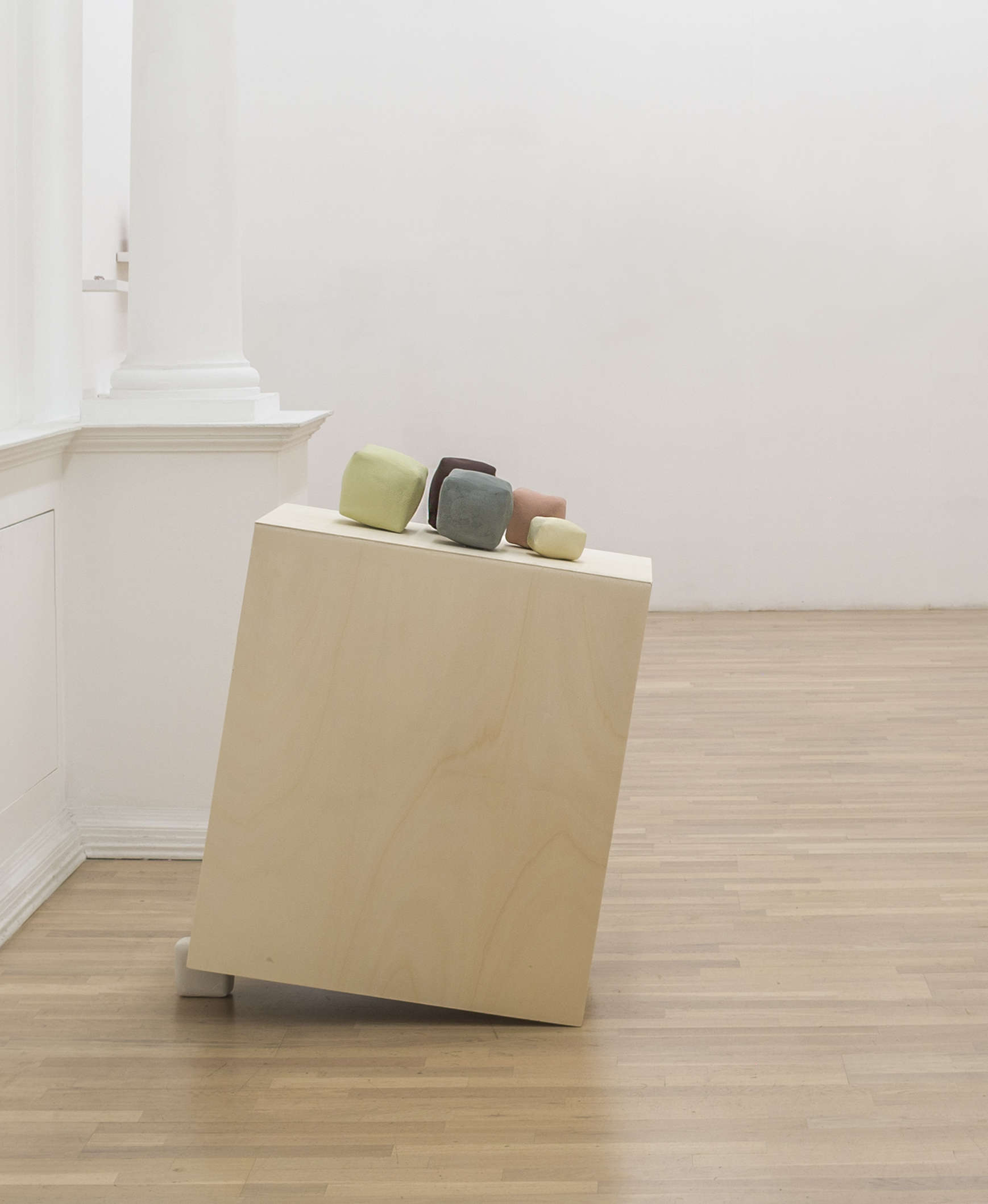
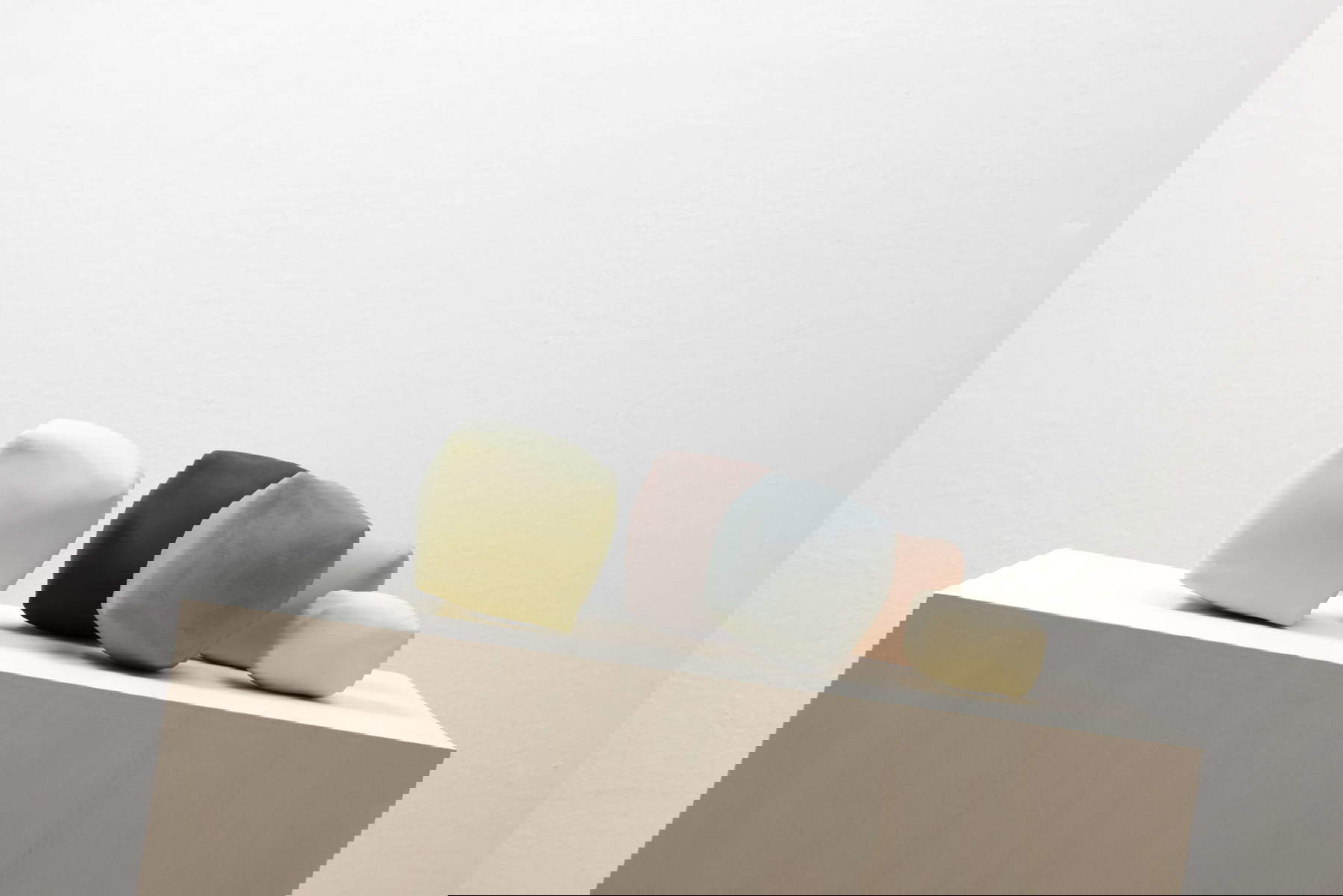
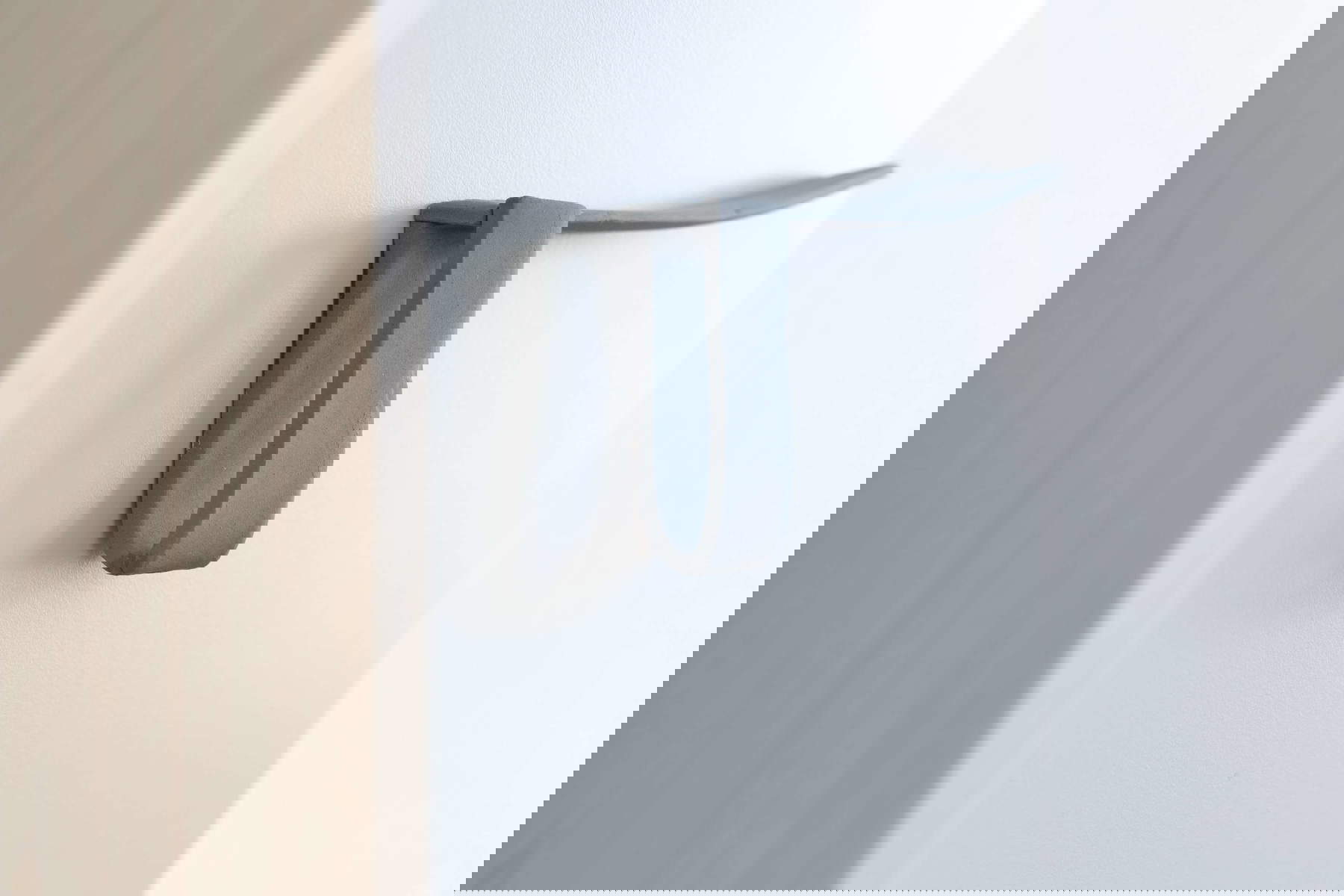
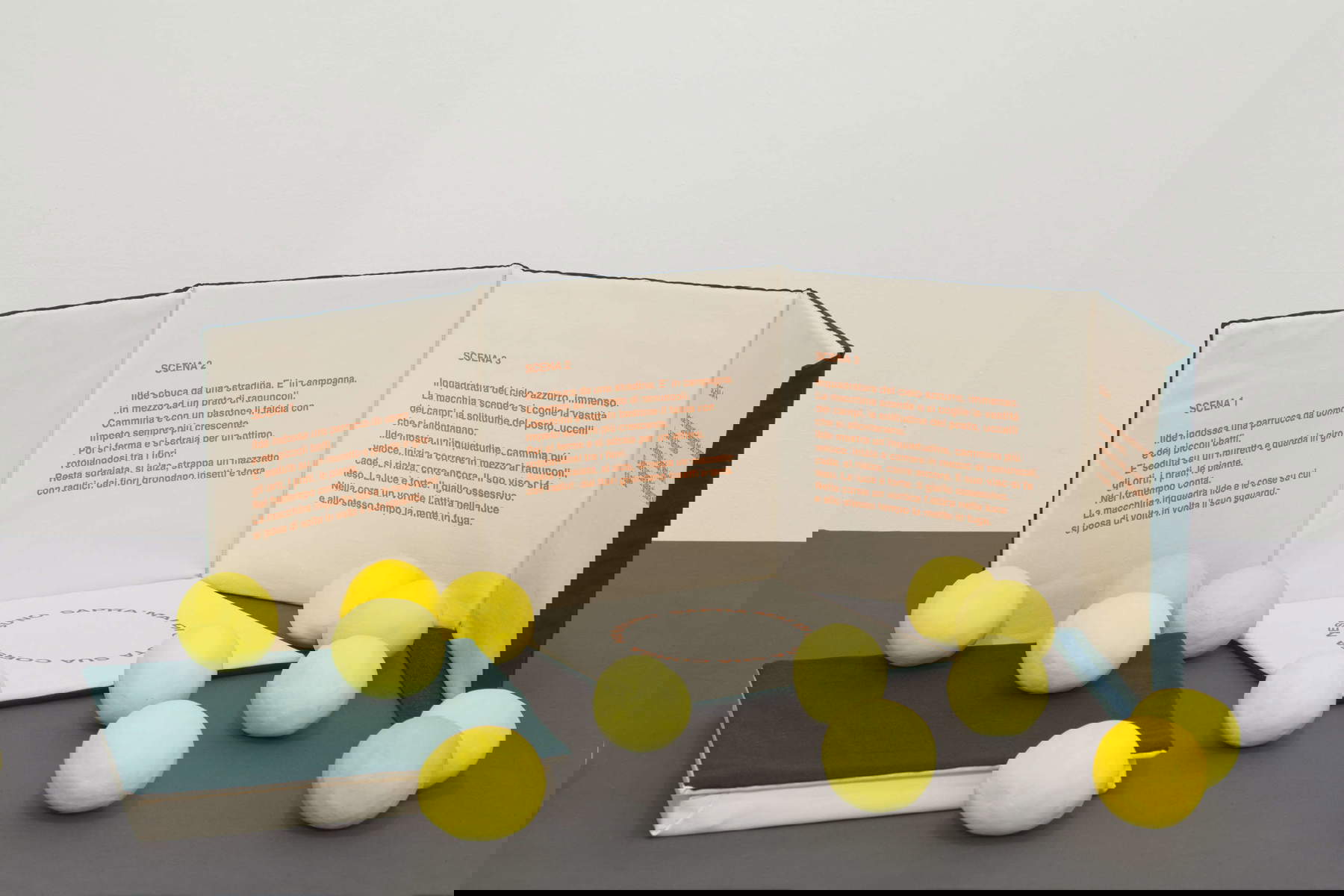
Let’s look at Apparatus, a research that began in 2020. Dall’opaco, the title of one of the first works in this cycle, is also a writing by Italo Calvino. As is often the case with my works, the text ignites a spark and starts a constructive process. The sculpture thickens spaces, articulating them as a language articulates sounds and signs. The forms present themselves thanks to a structure without which they could not coexist and would be confused. Lines, on the other hand, order them, making a mapping through high low, east and west, front and back. Precise relationships are created that can be traversed by the eye. The physicality of the work is reduced and understood all at a glance. In this way, the contained size allows the sculpture to be approached with the eyes of the mind rather than those of the body. In the latest research, the use of this type of gaze is prevalent and affects all sculptures whose dimensions are always reduced, placed in a physical area that cannot be experienced with the body. Ceramics, although accompanied by other materials in a journey that has now lasted more than twenty years, continues to take on the substantial character of expression, capable of modulating itself as if it were voice. And it is precisely on the voice that the work Sequence III is built, which takes its cue from Luciano Berio’s work of the same name, a composition written in 1965 for Cathy Berberian. The intent here, as in many of my other works, is a linguistic challenge: how to transpose concepts, thoughts or constructs from one language to another? In transposition of course there are transformations, translations and even betrayals. Something is lost and something, perhaps, gained. Things take another course and become differentiated, connoting new meanings. In the musical composition Berio completely deconstructs a text (“Give me a few words for a woman to sing a truth allowing us to build a house without worrying before night comes”) to recompose it without this respecting a temporal consequentiality. Fragments of the human voice slowly reconstruct a melodic idea. In Sequence III , the emphasis is on the sonic symbolism of vocal and sometimes visual gestures, the “shadows of meaning” that accompany them, and the associations and conflicts they suggest. L’instabilité draws its origin from an earlier work from 2023, Tilting the Horizon. Both are investigations that involve elements such as time, transformation, precariousness, and in a broader way, a sense of danger. I look at the planes on which objects rest, immobile forms: a Morandi painting. Those objects rest on a spatial plane connoting it in a particular way but above all they define a specific temporal dimension in which there seems to be no before and after. Light and matter exist there, from time immemorial. Without memory, in fact. Now, I imagined that the plane that houses the objects and thus defines a horizon of stability could change by suddenly losing its adherence to the vast, though bounded, idea of horizontality, to tilt, as if the balance of things could suddenly break and stability questioned in its innermost substance. Then that unchanging time is transformed into a here and now, into a happening that brings everything close, close to me who looks on and involves me with an action that calls me into the picture. It demands that I participate in the time in which it manifests. When the order of things is broken, so to speak, when the death of still life is interrupted, everything comes alive again, is redefined, and not only are relationships disrupted but the very form of objects is called into question. The objects I am talking about in my case are molded in clay, forms that seem to have their own organicity that animates them from the inside, pulsing and therefore in constant transformation. Instabilité therefore places precisely the emphasis on a broken eternal time, when still anything can happen, when change becomes a subject, a subject along with me who observes change. In my eyes I also have the figures of the Italian painting tradition, colored masses that push themselves, create movements, surfaces that hint at the presence of an internal body that imparts an impulse. I think of Giotto’s Kiss of Judas, that yellow cloak.
Are you interested in the idea of staging the work?
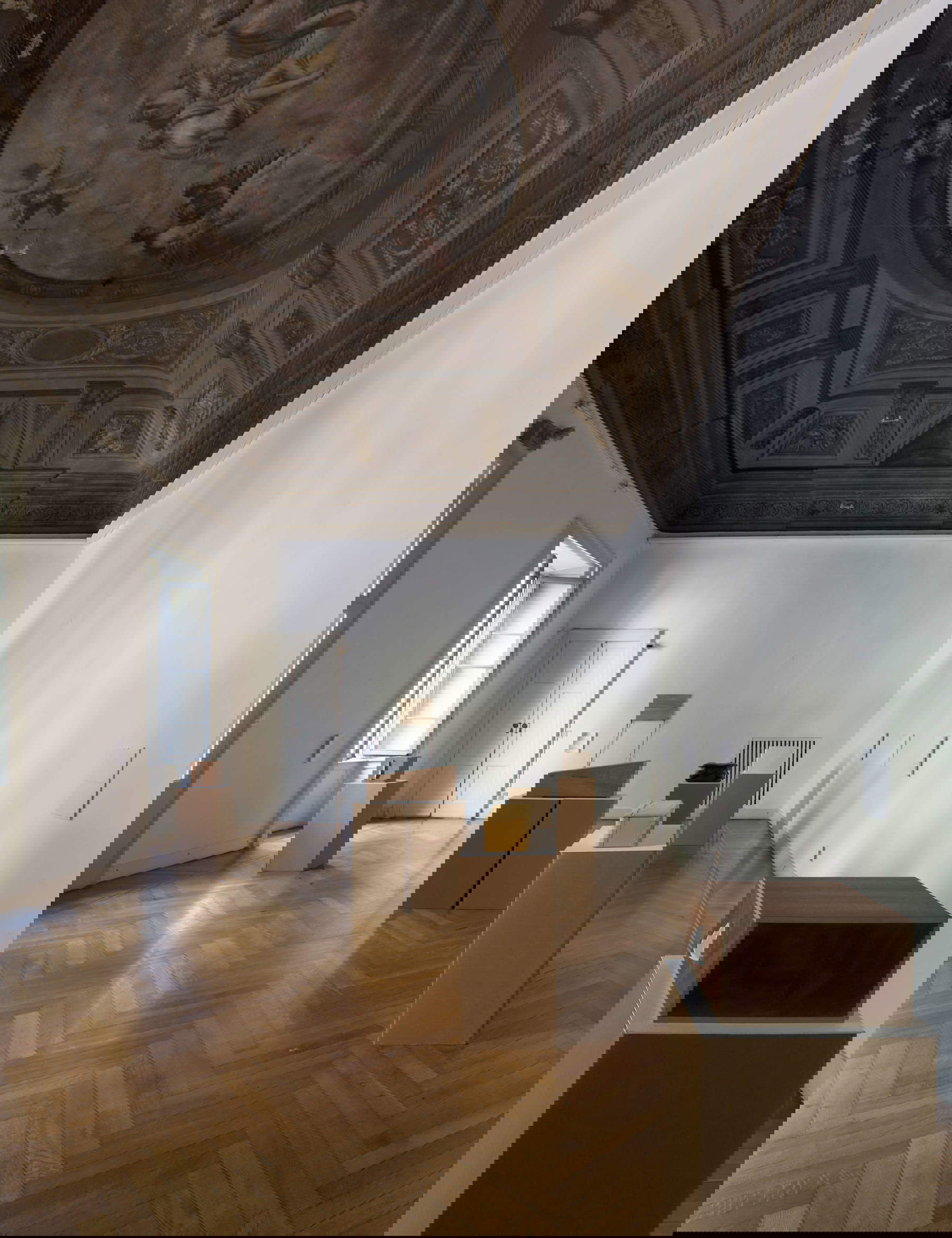
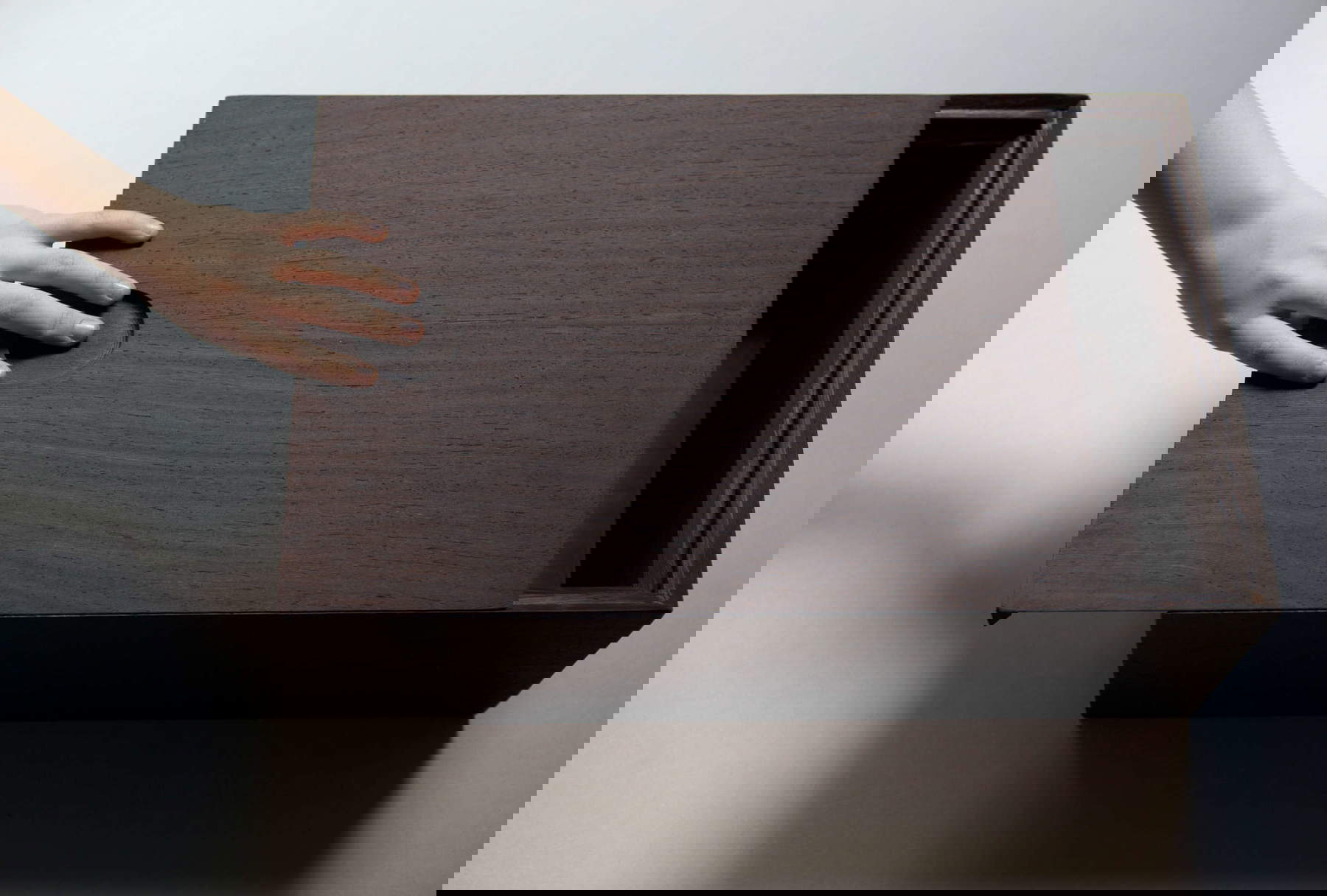
No, the idea of staging as such does not interest me; rather, I am interested in the action of arranging. Very often my work is constituted as a collection of elements. This implies that each element becomes significant to the extent that it enters into close relationship with the others, and when the relationship becomes visible as prevailing among all the variables for greater density of interest, then the elements are structured as a language. This process is particularly important in the work of recent years even though it was already present, in a different form, in my research of the past decade, when I worked on the project The Image Denied. At that time I was very interested in investigating the act of seeing, an act that is constantly redefining itself and especially after the advent of the digital, but which in those years (2012-2015) seemed to me particularly challenged by the obsessive bombardment of images. I therefore reflected on the significance of the moment of exhibition, when the work, from the private environment of the studio, becomes public, subjected to the gaze of the viewer. It normally happens that the moment of enjoyment of the work is relegated to a few moments, when in one of the places set aside for exhibitions, whether public or private, we run our eyes over the object-work for a few seconds. The project The Image Denied was developed in two phases. In the first, the works were visible in the gallery in a closed “version,” revealing to the viewer only certain aspects of the work. Visitors interested in having a complete and total view could do so by choosing to host the work for the duration of a month, free of charge. Viewing the work thus took place in a deferred time and in a private manner. The viewer was able to live with the work in the way they chose and most preferred. The first element to highlight is the process of waiting. There is a lack of coincidence between the moment of encounter with the work and its full viewing. The anticipation that arises from the moment the viewer decides to host the work until he or she can welcome it into his or her home creates a path of desire that becomes an integral part of the experience of looking. The gaze becomes charged with a special participation and the act of seeing takes on a more conscious character. Instead, in the mechanism that is normally triggered, the risk of “suffering” the work because it is not understood or misunderstood is set aside, and unforeseen personal paths originate that result only from living with it. These works, at any rate, also “open up,” and often their component parts can be arranged as if each of them were a small exhibition.
Does the fact that unforeseen personal paths can be generated and derived only from the coexistence between user and work bother you?
No, it does not bother me because this does not change the nature of the works but rather amplifies their reading possibilities, which is then what I hope for all works. Moreover, this project mainly aims to reflect on the act of seeing and the even political aspects involved in looking at art, rather than being a participatory art operation.
I would ask you to explain more fully what you mean by “political aspects” that come into play when looking at art...
I was simply interested in observing the process of art fruition in the absence of hierarchies of meaning, in observing what the gaze means in the private dimension versus the public dimension. For example, I think about what is involved in the fact that contemporary art somehow always needs to be explained. This channels everything onto the binomial “understood/not understood.” Instead, if one is not pressed by the need for understanding, the gaze changes, is renewed, and in this sense new paths can be opened.
How does your work process work?
My work process works rather unevenly. However, there are some phases that occur consistently. At first, even in the absence of intention or plan there is a phase of gathering, listening and observing. As when one moves inside a landscape and collects elements, essences, observes its functioning, lights, spaces, listens to noises. Then all these elements are deposited in an inner room, a space for working and gathering. From this nourishment starts an impulse, a reflection, a thought that is added to another until it becomes necessary to move to concrete forms. In the process, the most important thing is not to stubbornly stick to a project but to leave it as open as possible, with a state of mind that takes nothing for granted. The unexpected and the unexpected can reveal themselves and substantiate the construction process. Within the landscape within which one now moves, (which is the studio and the mind at the same time) it is often necessary to leave the road taken and take side detours. Sometimes it works, other times you get nowhere.
Are your work times generally long? As you work do you cultivate doubt about what you are doing?
Yes, my working times are generally long, and this inevitably means that there is more room for doubt and second thoughts, which I consider fundamental in the making of a research.
In the dynamics of the work does drawing play a role if so in what ways?
Drawing in recent years has a function for me very similar to the word: it serves to jot down insights, small reflections, cues to deepen. These are mainly drawings that visualize ideas and bring back to the paper what is formed in the mind’s eye. Now that you question me with this question, however, I realize that I long for drawing as a daily practice....
It is interesting this idea of nostalgia, it seems to me that it is a condition that has its own centrality in being an artist. Nostalgia often goes together with melancholy, is that the case for you as well?
It’s true, I think too that nostalgia is a condition that is very much about being an artist, even though there are artists who are not at all concerned or involved with it. Nostalgia for me presupposes a tension toward something that is not present and is somewhere else, in a different time. Melancholy, on the other hand, a feeling that I find useful and interesting, is a state very much like a high degree of concentration, a being somewhat outside of time. There were eras, for example in Elizabethan England, when it was a very common feeling even in music, and it allowed the creation of works of great universal value. I consider melancholy to be a transversal state, if you can call it that, because it seems to me to be present in so many spheres and so many cultures with aspects also common to contemplation and meditation. On the subject of the tension toward something that is not present, I like to recall a short passage by Italo Calvino, from The Invisible Cities, which I often go back to reread, so that I always have it clearly in my daily life: “The hell of the living is not something that will be; if there is one, it is the one that is already here, the hell that we inhabit every day, that we form by being together. Two ways are there not to suffer from it. The first succeeds easily for many: accepting hell and becoming part of it to the point of no longer seeing it. The second is risky and demands continuous attention and learning: seeking and knowing how to recognize who and what, in the midst of hell, is not hell, and making it last, and giving it space.”

The author of this article: Gabriele Landi
Gabriele Landi (Schaerbeek, Belgio, 1971), è un artista che lavora da tempo su una raffinata ricerca che indaga le forme dell'astrazione geometrica, sempre però con richiami alla realtà che lo circonda. Si occupa inoltre di didattica dell'arte moderna e contemporanea. Ha creato un format, Parola d'Artista, attraverso il quale approfondisce, con interviste e focus, il lavoro di suoi colleghi artisti e di critici. Diplomato all'Accademia di Belle Arti di Milano, vive e lavora in provincia di La Spezia.Warning: the translation into English of the original Italian article was created using automatic tools. We undertake to review all articles, but we do not guarantee the total absence of inaccuracies in the translation due to the program. You can find the original by clicking on the ITA button. If you find any mistake,please contact us.













 IT
IT FR
FR DE
DE ES
ES CN
CN