





The Park of the Tombs of Virgil and Leopardi, located in the Mergellina neighborhood of Naples, was reopened to the public on April 17, 2025, after the completion of an extensive redevelopment project. The site, which is among the cultural sites managed by the Campania Regional Directorate of National Museums, benefited from significant funding from the National Recovery and Resilience Plan (PNRR), enabling the renovation and restoration of the historic green space after a prolonged period of closure.
The area, known for its literary, historical, mythological and naturalistic values, now stands as a crossroads where archaeology, poetry, myth and nature dialogue harmoniously, offering an authentic and fully inclusive experience.
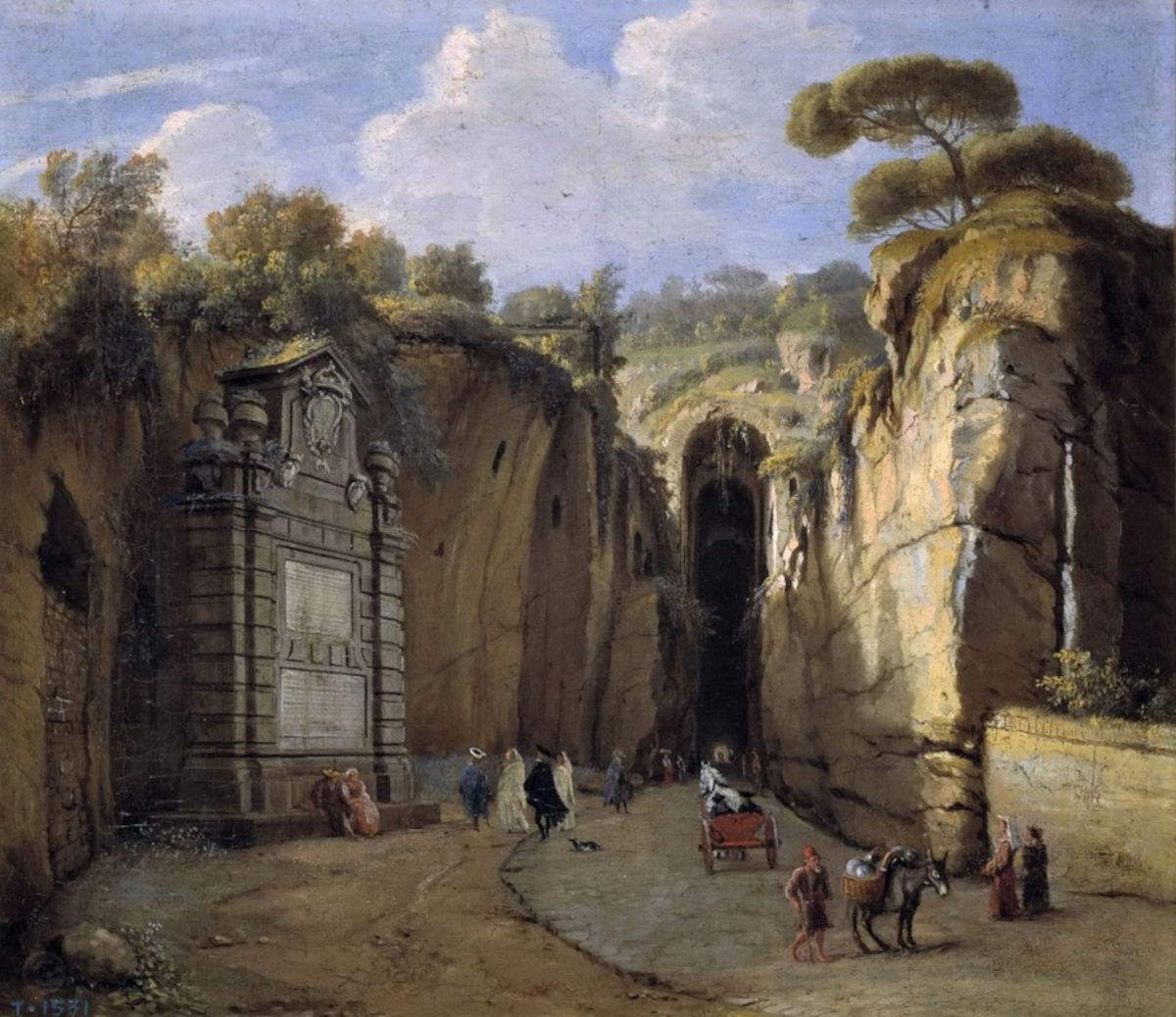
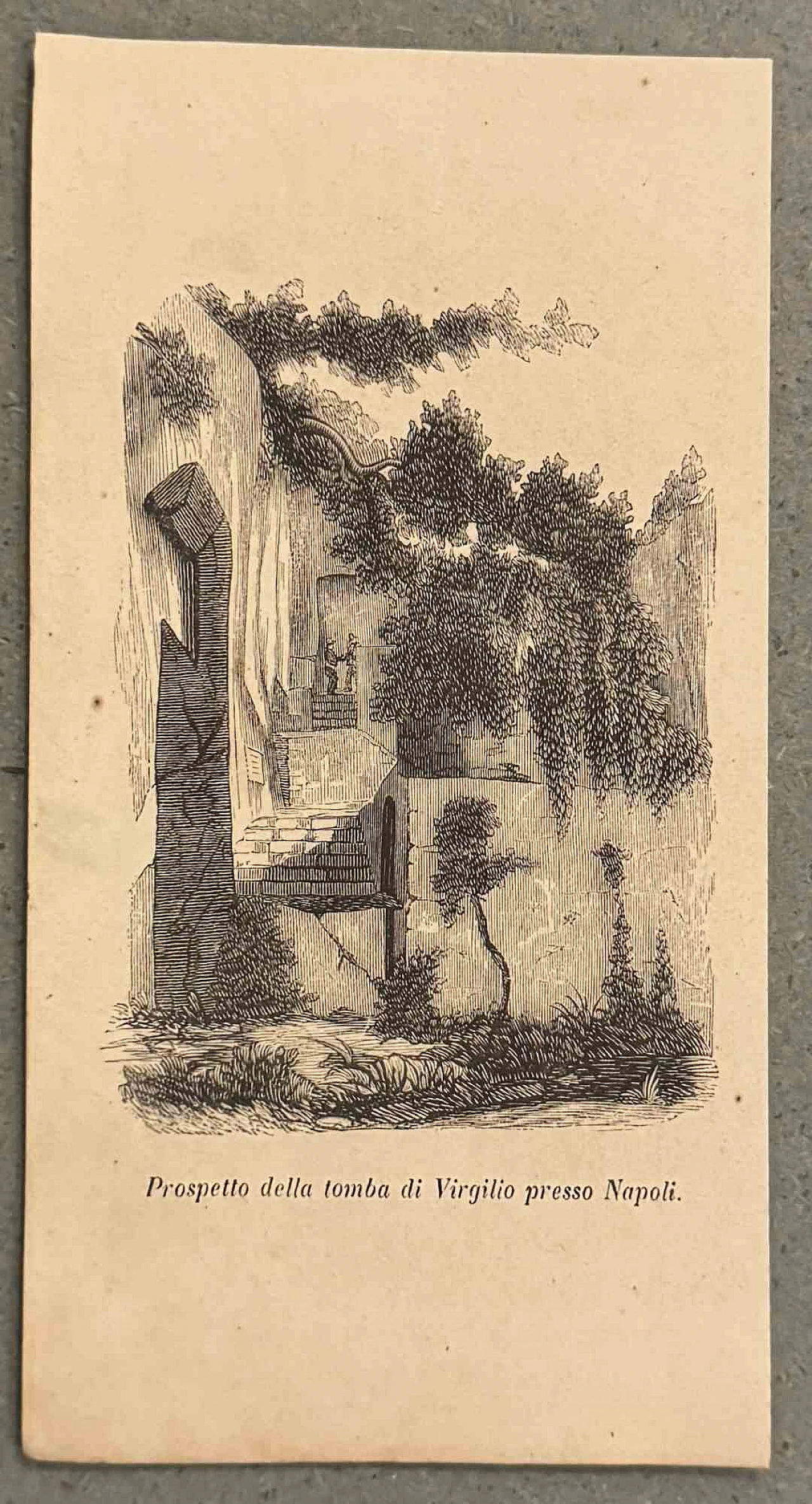
The Park’s name originates from the attribution of the Roman tomb found there to the Latin poet Publius Virgilius Maron. Since ancient times, about a hundred years after Virgil’s passing, the place became in a sacred site and a pilgrimage destination for illustrious admirers, including Statius, Pliny the Younger and Silio Italico, who used to travel here on October 15 to commemorate the anniversary of the poet’s birth. In later centuries, literati, chroniclers and travelers such as Petrarch, Boccaccio and Cino da Pistoia visited and carefully described the Virgilian tomb.
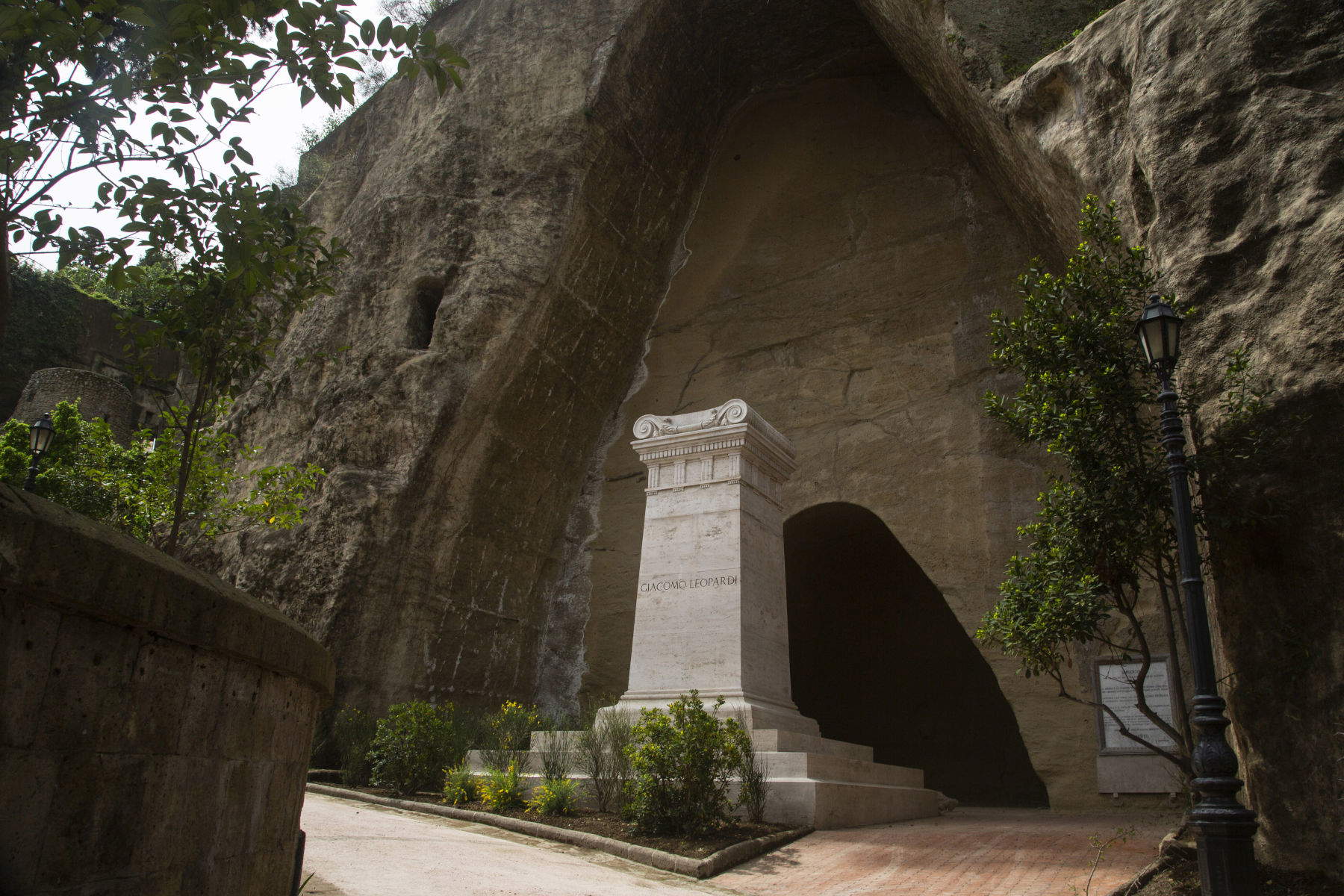
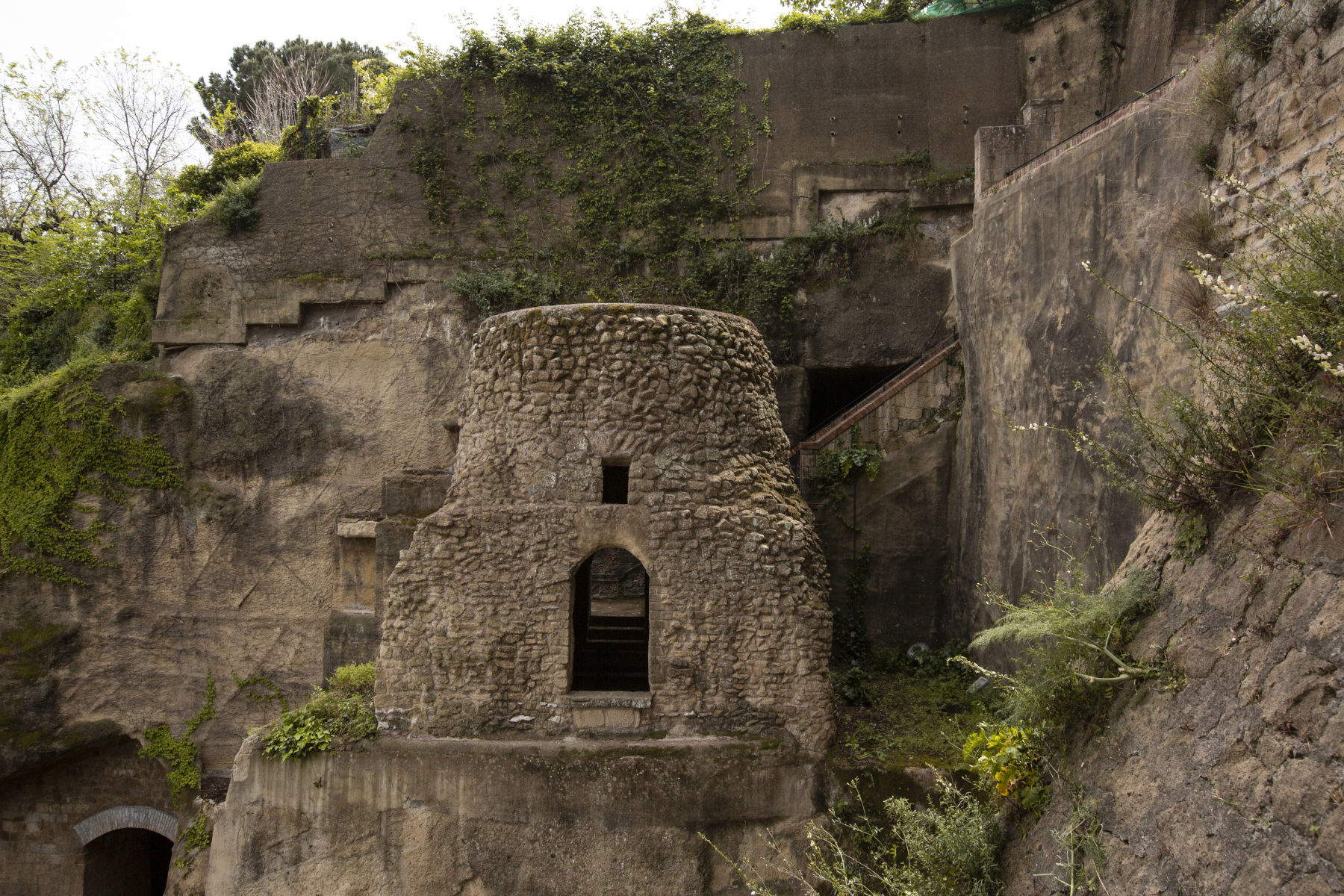
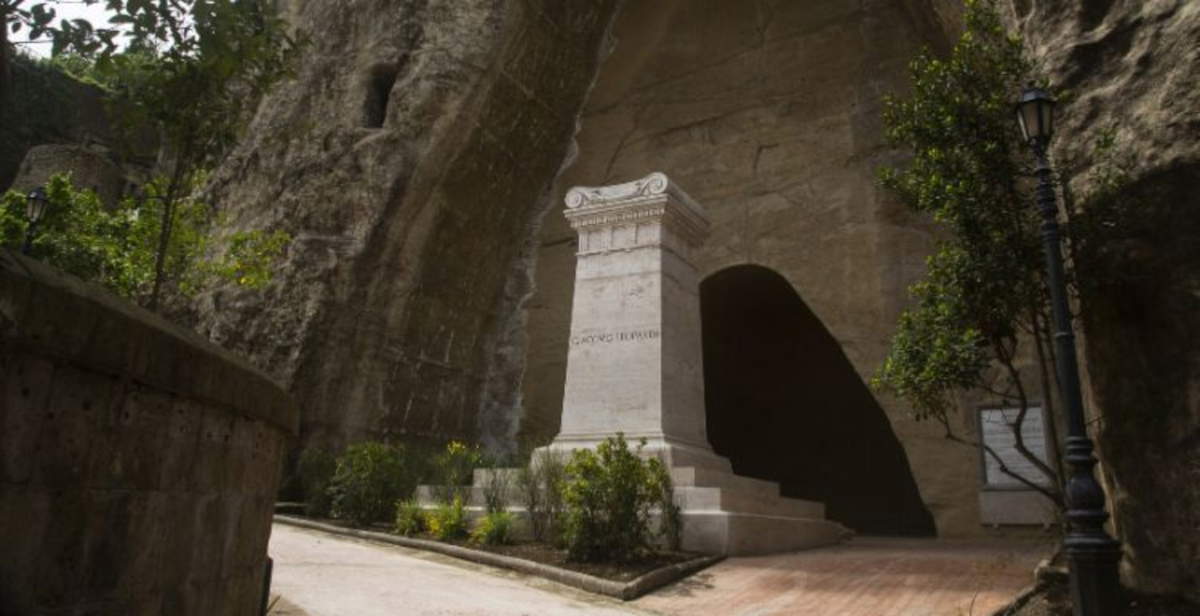
Beginning in the 12th century, popular tradition consolidated the mythical character of the place, to the point that, in the 14th-century Chronicle of Parthenope, the mausoleum is unhesitatingly identified as the eternal home of Virgil, revered as the divine protector of Naples and the magical creator of the Crypta Neapolitana below. Legend has it that, during the Norman conquest, the poet’s remains were transferred and hidden in Castel dell’Ovo, to protect it from possible raids or theft. The Park was officially inaugurated in 1930 by Superintendent Amedeo Maiuri, following a major renovation and consolidation project that defined its landscape physiognomy, which is still visible today. To complete the site, the mausoleum dedicated to Giacomo Leopardi was built in 1939, intended to house his remains moved from the ancient Church of San Vitale in Fuorigrotta.
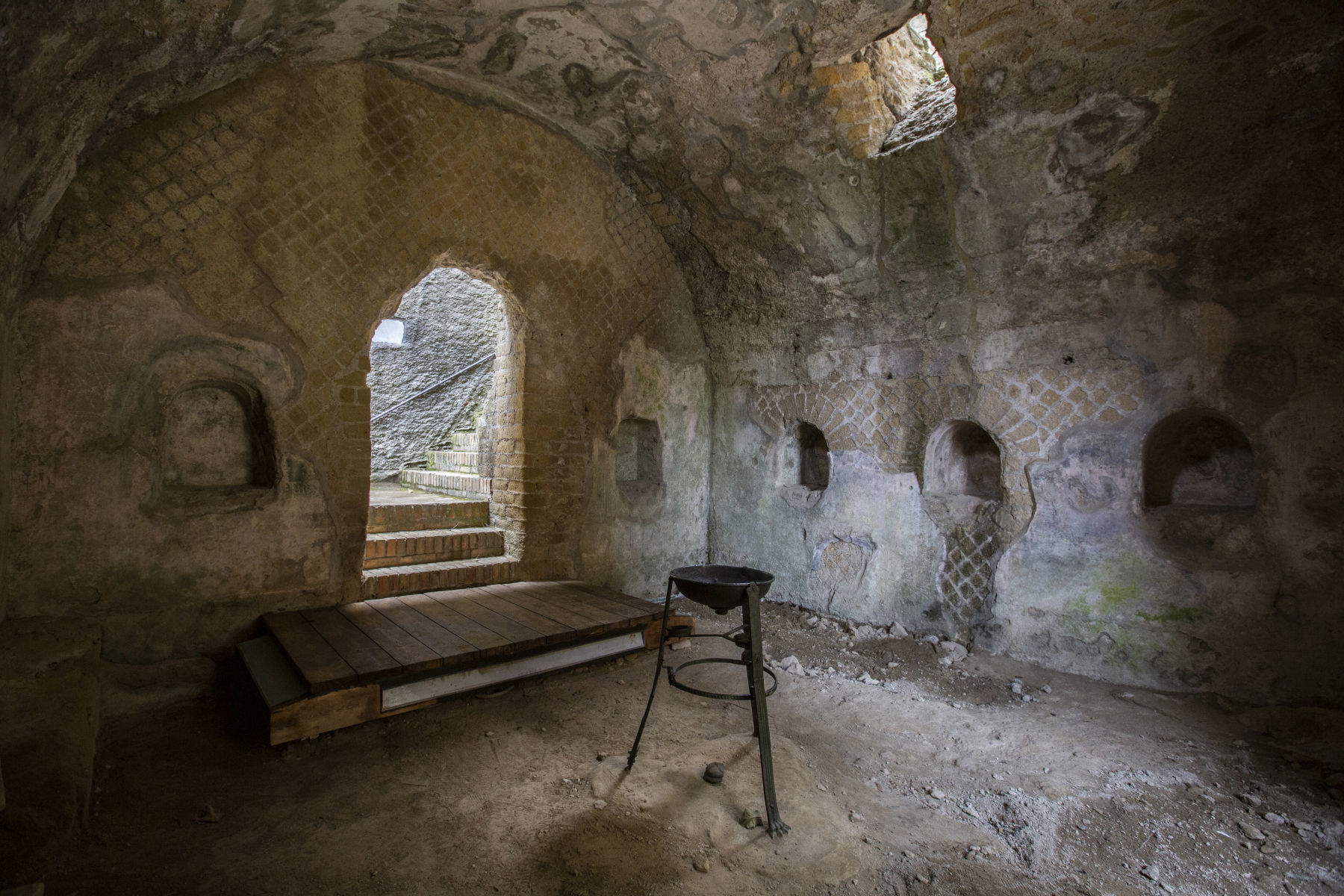
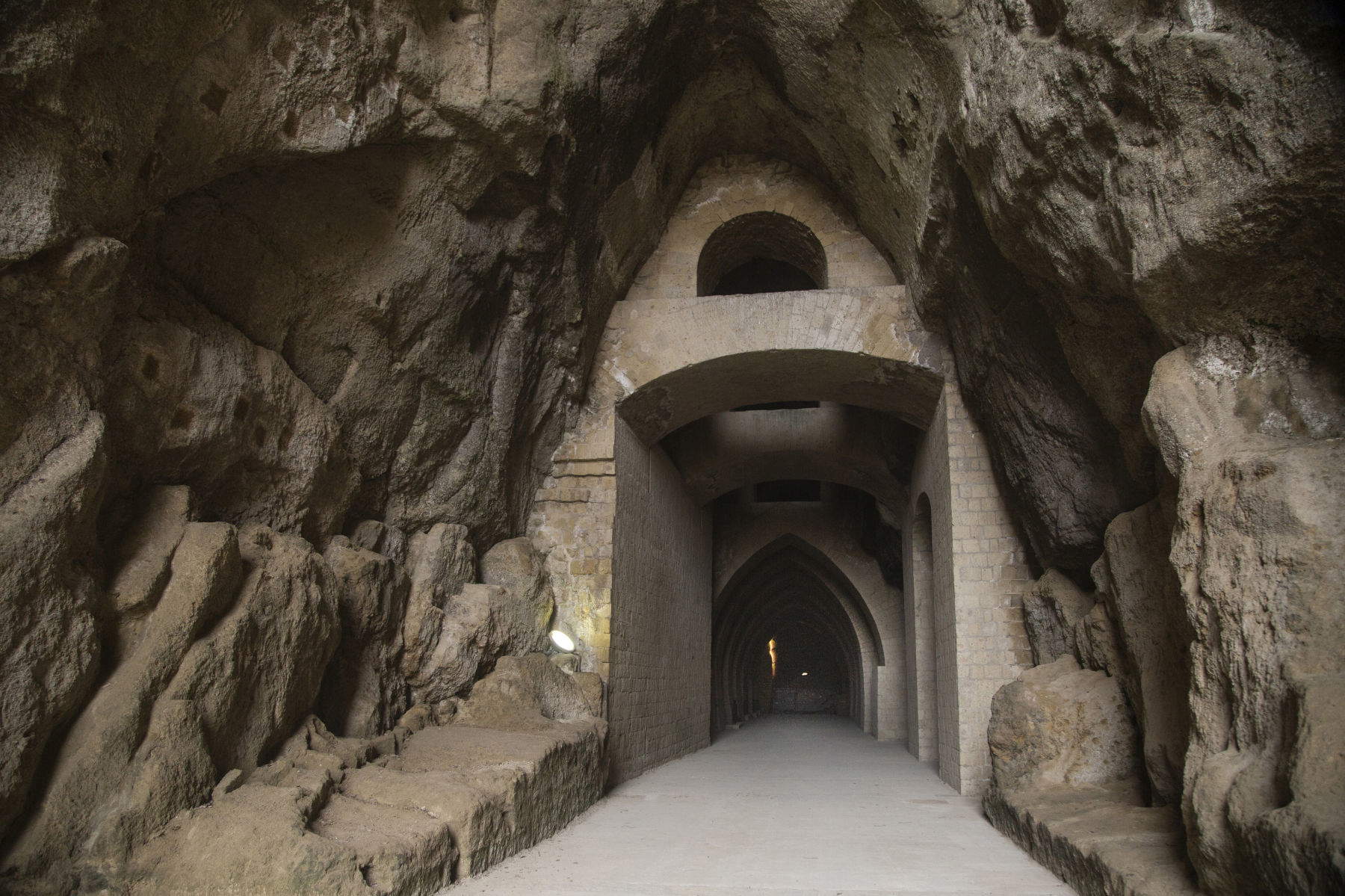
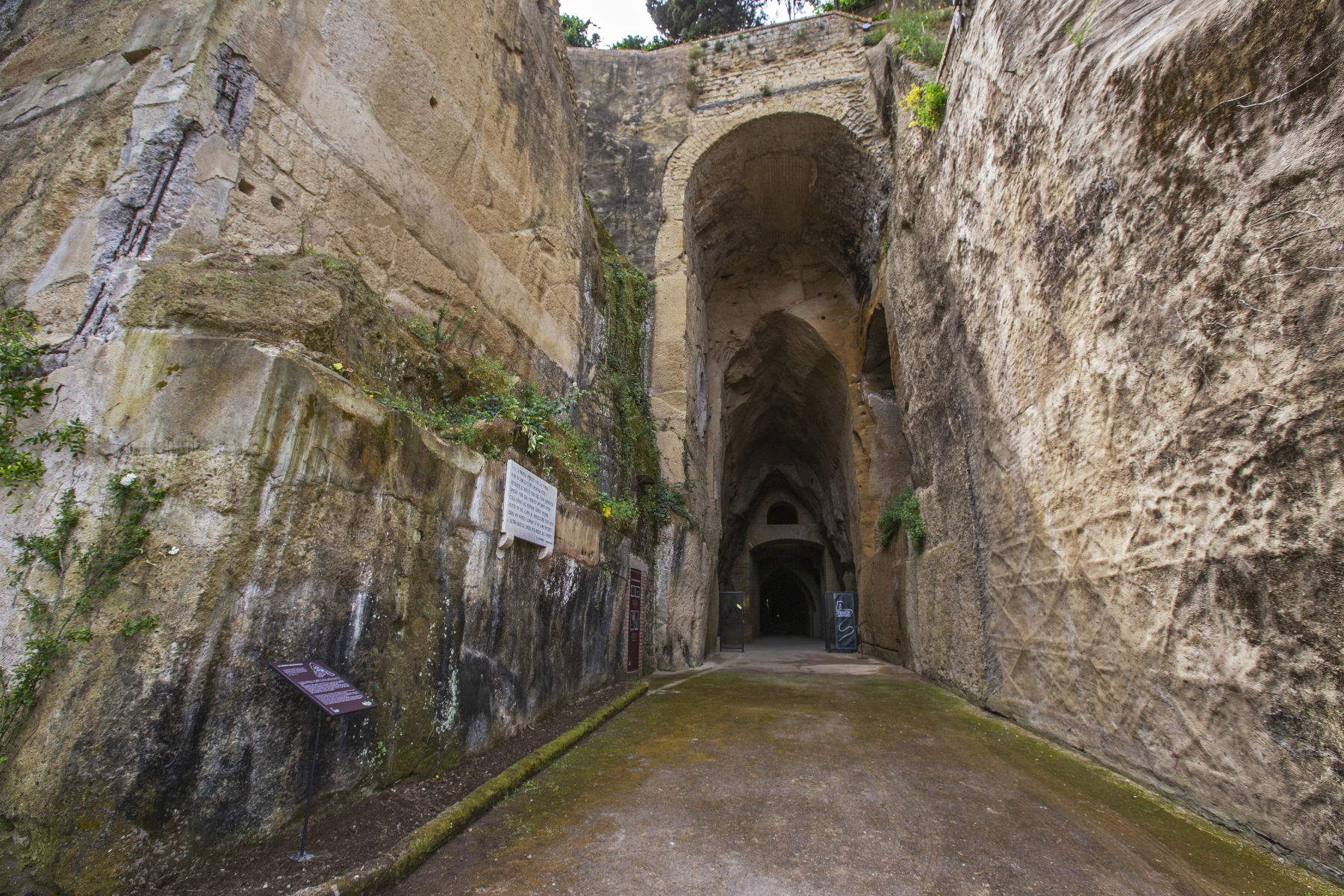
In addition to the funerary monuments, the park houses the eastern entrance to the Crypta Neapolitana, one of the oldest tunnels in the world, built in the Augustan age. Its construction is attributed to the Roman architect and engineer Lucius Cocceius Aucto, the same man who also worked for Emperor Augustus in the Cave of Sejanus and the Cave of Cocceius. The Directorate has programmed the securing of the Crypta through FSC funds in the amount of three million euros, having already begun geognostic investigations and studies on the mechanical component of the massing.
The main goal of recent interventions has been to make the site fully accessible in cultural, cognitive, and sensory terms. Work began on February 4, 2025 and was completed on schedule for the April opening.
The implementation of these interventions was made possible by funds from the NRP Accessibility. The sums available for these renovation and restoration works on the historic greenery amounted to 200 thousand euros. An additional PNRR project, called “Genius Loci. Naples - Tomb of Virgil. Museums with everyone,” contributed 30 thousand euros for the improvement of cultural and sensory accessibility.
The overall project is based on the principles of Design for All and is consistent with the 2006 UN Convention on the Rights of Persons with Disabilities. In this perspective, the intervention is geared toward ensuring universal access to cultural heritage, through diversified and integrated conditions of cultural, cognitive and sensory enjoyment, in accordance with Article 27 of the Universal Declaration of Human Rights.
The working group operated under the scientific coordination of Professor Massimo Osanna, Director General of Museums of the Ministry of Culture, and Dr. Luana Toniolo, former Acting Director of the Campania National Museums Regional Directorate, together with Carla Bagnulo, Park Manager and archaeological officer of the same Regional Directorate, currently headed by Dr. Luigina Tomay.
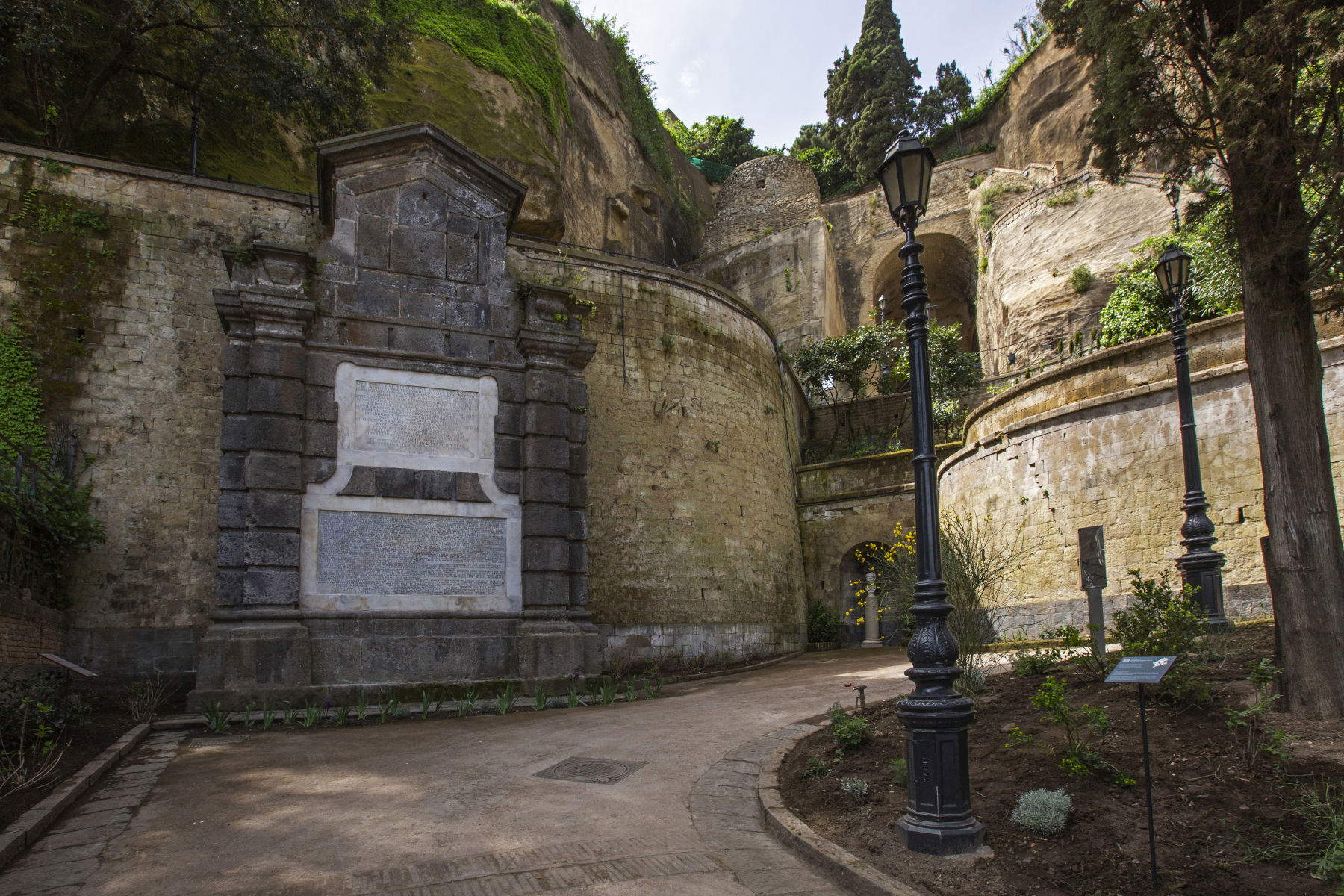
One of the cornerstones of the intervention was the restoration of the historic greenery, conducted as part of a rigorous historical-philological reconstruction of the green space. The project, supervised by historian and garden restoration expert Silvia Lacatena and Maurizio Bartolini, refers to the 19th-century Romantic garden style, characterized by a non-rigidly geometric layout and a freer composition of plant elements.
The formal setting creates a seemingly spontaneous, highly suggestive scenario. The design was based on a careful documentary analysis of photographs, floor plans, writings and botanical diaries, with the aim of reconstructing the historical layout.
To ensure future sustainability and the integrity of the environment, low-impact gardening practices were adopted. The reference shrub module is that of Mediterranean scrub, which is distinguished by its high capacity for self-management and exclusive use of native species. This choice allowed the planting of seemingly randomly arranged essences, consistent with the picturesque design of the garden, creating a harmonious alternation between species such as myrtle, lavender, thyme, laurel, dog rose and, of course, broom.
The restoration also wanted to enhance the deep connection between the landscape and the works of poets: that is why the plant essences mentioned in their immortal verses were included and enhanced. The laurel, a symbol of glory, is evoked in the lines of the song Ad Angelo Mai, while the cypress resonates in Le ricordanze. The broom, celebrated by Leopardi in verses composed in 1836, blooms all around his mausoleum, recalling reflection on the transience and cruel power of nature. Finally, roses, a symbol of ephemeral beauty and hope, recall Il sabato del villaggio.
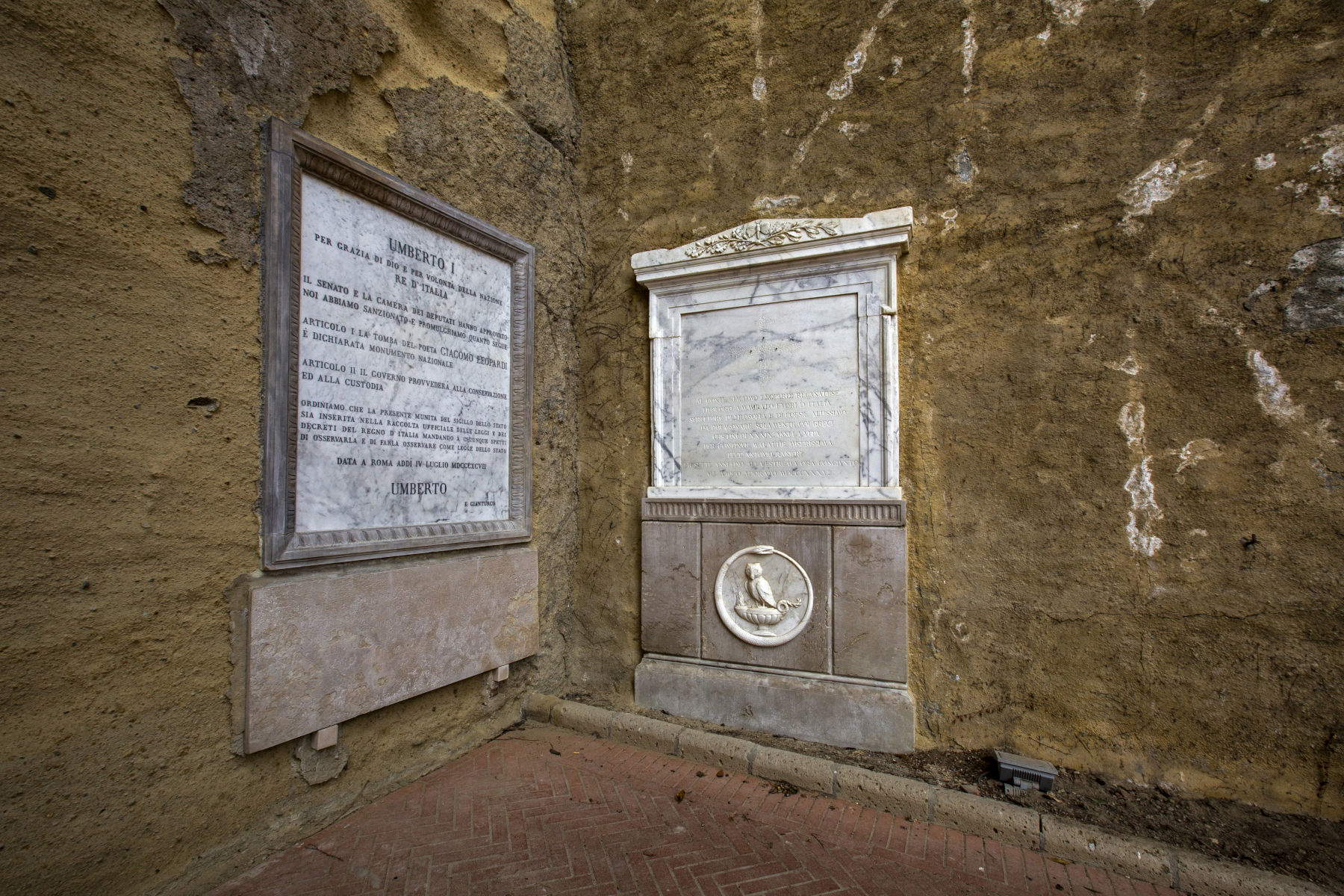
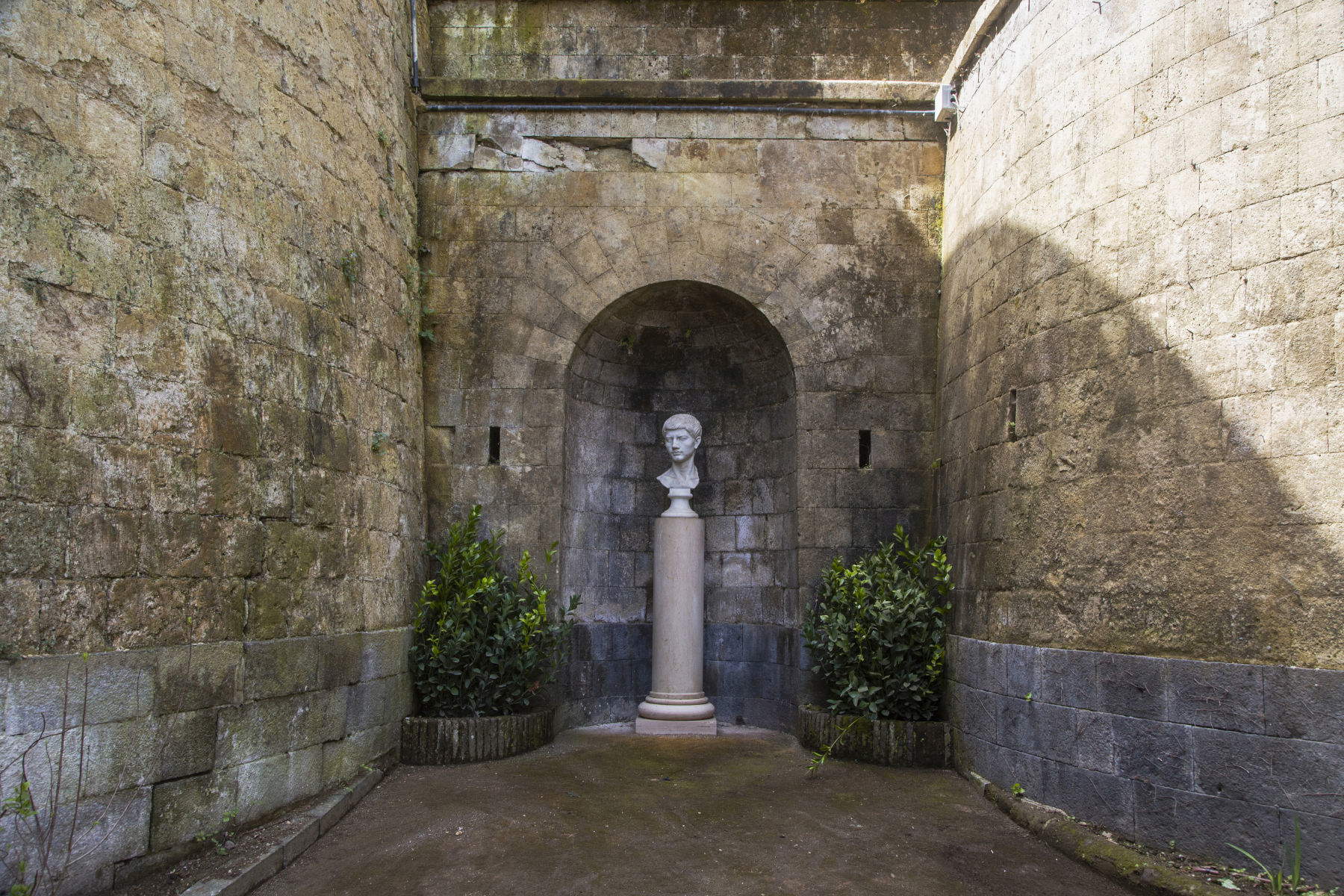
In addition to the landscaping, the restoration of all the stone elements on the site was carried out. The intervention, carried out by the Restoration Office of the Campania National Museums Regional Directorate, involved the bust of Virgil, the aedicule erected by Don Pedro of Aragon in 1668 and, specifically, the mausoleum dedicated to Leopardi, including the epigraphs from the Church of San Vitale. The state of preservation of these elements varied according to exposure and showed consistent and inconsistent deposits, as well as traces of biological colonization.
On the Leopardi monument, the restoration confirmed archival research and analysis of photographic documentation. Through georadar surveys, conducted in collaboration with the University of Naples “L’Orientale,” the space of the burial chamber located below the monument, which was intended to house Leopardi’s coffin after its translation in 1939, was identified.
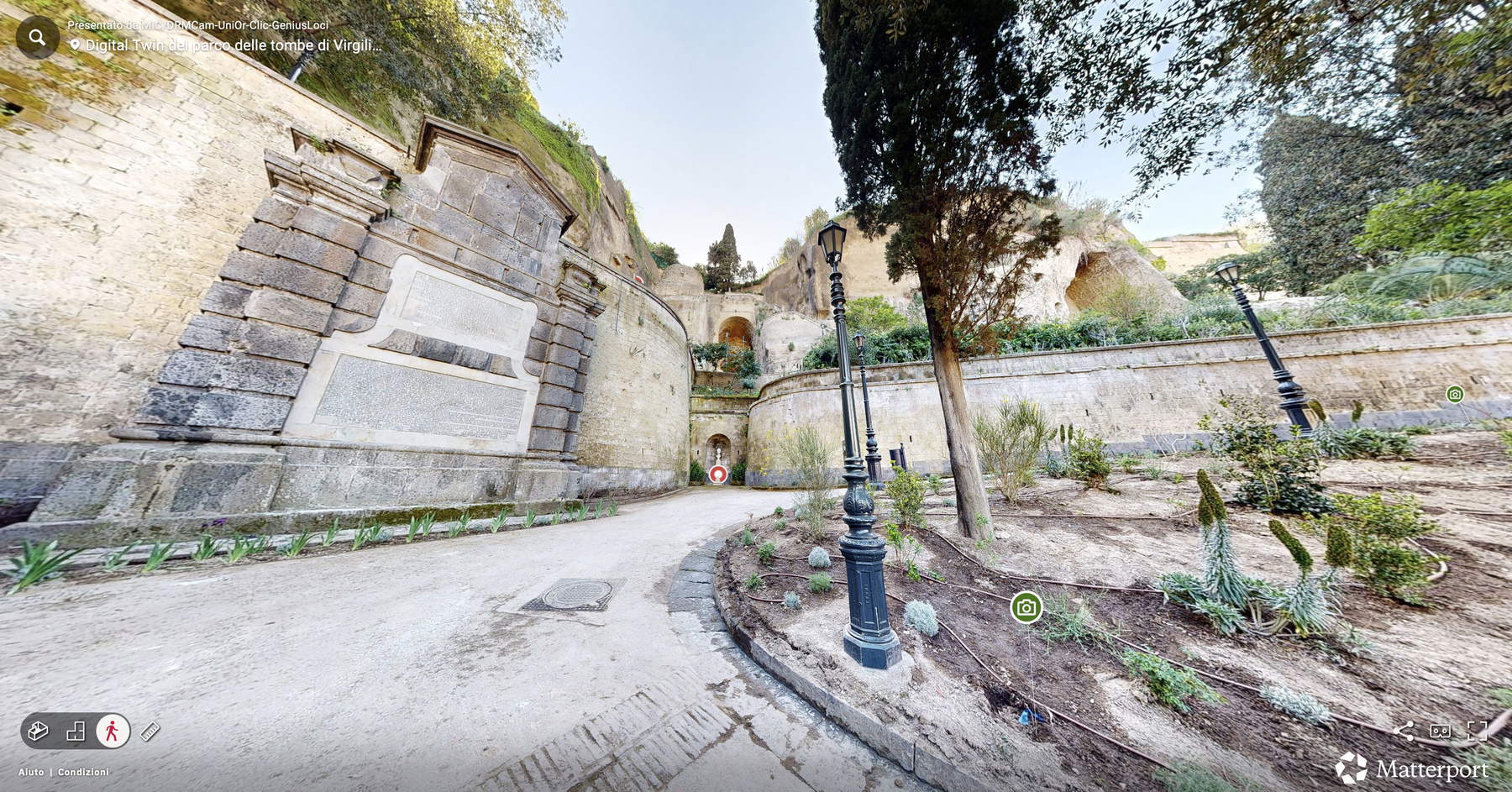
The new tour route is divided into two main tracks, one historical-archaeological and one botanical, both redesigned in an inclusive and accessible way. Visitors are accompanied by multilingual panels that, together with an array of digital tools, enrich the experience. Thanks to the PNRR project, a QR Code system offers the possibility of downloading multilingual textual content (Spanish, French and German, and soon Chinese) and audio description of all educational content in Italian and English. An additional tool for digital enjoyment is the link to the immersive tour obtained thanks to a Matterport platform, with the valuable contribution of the University of Naples “L’Orientale” that made the three-dimensional survey.
The botanical tour, in particular, makes use of a tactile component for visually impaired visitors, who will be able to recognize the different plant species in the Park. The Park’s commitment to inclusivity was then also realized through the renewal of the agreement signed in 2022 between the Campania National Museums Regional Directorate and the Social Cooperative Il Tulipano, a third-sector organization specializing in activities for and with adults with autism or nearing the age of majority. This successful collaboration gave full implementation to the Tulipano Art Friendly program, a cultural welfare model that promotes autism-friendly services and supports in museums and schools, with the aim of making culture an agent of change for individual and social well-being.
The Tulip Cooperative contributes to making the Park a place of well-being and inclusion, where beauty is an opportunity for growth for people with cognitive disabilities as well as normotypical ones. The model is inspired by the principles of the 2005 Faro Convention, which recognizes the social value of cultural heritage as a fundamental right, and the definition of a museum approved by ICOM in 2022, which identifies it as an institution that is accessible, inclusive, and at the service of society.
The program of activities in the Park is full of concrete initiatives. On the occasion of the 227th anniversary of Giacomo Leopardi’s birth, June 29, 2025, the site’s management, in collaboration with Il Tulipano, has planned themed guided tours featuring the recitation of famous poems by the poet from Recanati, interpreted by young high-functioning children with autism. During July and August 2025, the Summer Campus “Un’Estate al Parco” offered recreational moments for people with autism or cognitive disabilities, supported by the Cooperative’s operators. On this occasion, creative and thematic workshops, nature trails, accompanied tours and a special outdoor chess workshop were organized.
Particularly significant is the focus on training and self-employment. A gardening workshop saw two young people from the cooperative, already trained as “art gardeners,” working in a real context, putting the skills they had acquired into practice. The Park thus becomes an educational and naturalistic context that raises awareness of respect for the environment, fostering inclusiveness and active participation.
 |
| Park of the Tombs of Virgil and Leopardi in Naples reopens after PNRR restoration |

Warning: the translation into English of the original Italian article was created using automatic tools. We undertake to review all articles, but we do not guarantee the total absence of inaccuracies in the translation due to the program. You can find the original by clicking on the ITA button. If you find any mistake,please contact us.























 IT
IT FR
FR DE
DE ES
ES CN
CN


