





It sparkles with harmless composure the ceremonial of exhausted furniture that Benni Bosetto has conveyed in the three large rooms of his exhibition Rebecca, destined to occupy the Shed of the Pirelli HangarBicocca until midsummer and applauded unconditionally, as is the custom, by the rivernature of notes and press releases that invade the newspapers and cultural inserts. To all those who, before proceeding along the architectures of Rirkrit Tiravanija exhibited at the next exhibition, manifest some interest in stopping by Rebecca ’s rooms trying to get at least a story out of it, a booklet is provided free of charge, which, as usual, besides being the basic unit of measure of the difference between intention and result, offers diligent explanations ready to use: we inform the kind passengers that the artist “transforms the Shed of Pirelli HangarBicocca into an environment that evokes domestic space, where rooms, walls and surfaces seem to come alive.” The title, we continue reading, “recalls the Gothic novel of the same name by Daphne du Maurier in which the young protagonist, having moved to a new dwelling, experiences the cumbersome presence of the previous inhabitant, Rebecca.” Inhabitant who, according to the artist, “is found in everything and in every gesture.” With his exhibition, therefore, Bosetto wanted to recreate a kind of animated house, a house that becomes flesh, a female body, a living organism (the three environments correspond to “cheek,” “belly,” and “heart”) with the declared invitation, an explicit invitation to the point that it almost seems to be shouted, to “regain possession of one’s own subjective time where one can dream, rest, regain imagination.” Not without the twenty-three-page explanations first, of course, complete with a work-by-work interpretation guide. Gimmick to activate the exhibition, or crutch without which the exhibition is impossible to open?
Crossing the large hall of the Shed plagued by this didactic, repetitive home decor project, one spontaneously wonders for what reasons the public, the Italian and even more so the international public, should bother to give a modicum of credit (or even just some distracted indulgence) to certain Italian contemporary art. Rebecca is a tame, respectable exercise in cemetery respectability, as mild as a nursery rhyme, endowed with the rare merit of avoiding pretense of happening. Rebecca arrives, escapes and returns: if thought to twist, no lurching, no bumping will be found here. If thought to protect, hard to find the shadow of shelter. It cannot even be said to be a packed nothingness, for if it were so Rebecca would inhabit an aesthetic domain that does not belong to her. Everything is quiet, everything precise and correct, each work gracefully in its place to politely decline any invitation to existence.
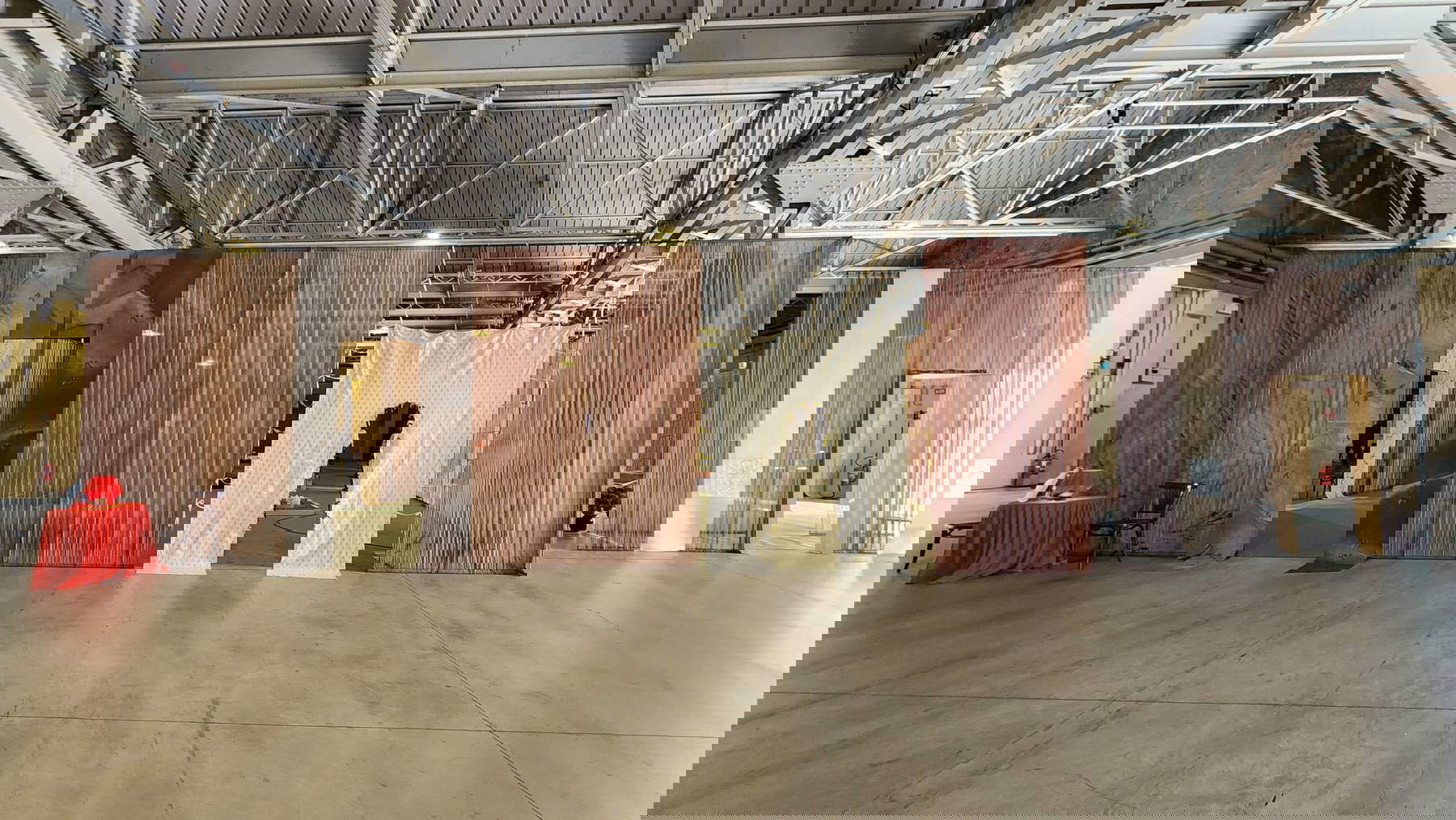
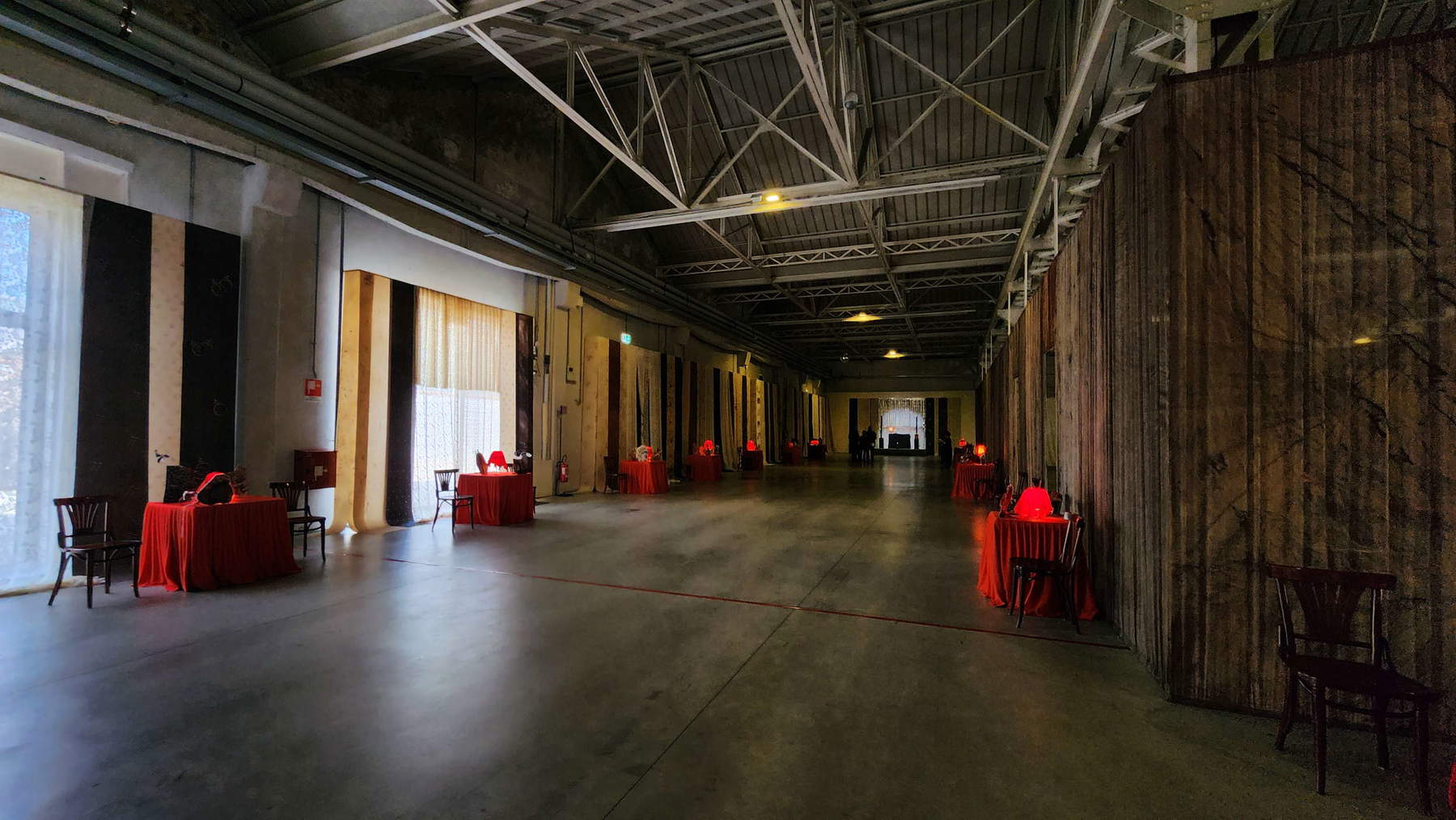
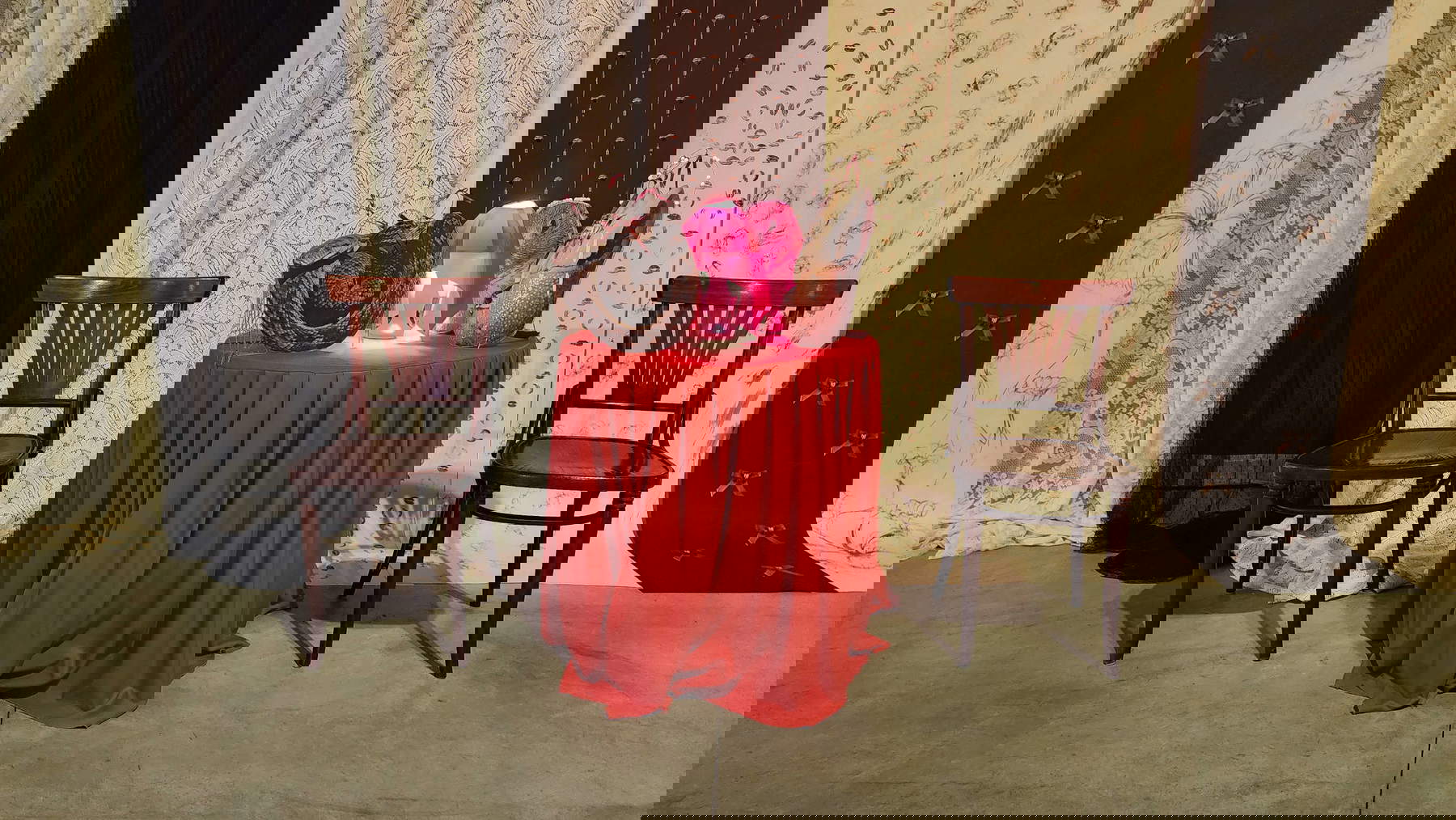
It begins with “Cheek,” which is intended to measure itself against the somewhat ambitious (indeed, perhaps completely out of reach) goal of summoning the public to daydreaming, the artist tells us, that is, daydreaming (read the user manual before starting the product): the environment lies somewhere between the archaeological excavation of a bric-à-brac and the furniture curtain department of department stores, and it is difficult to understand how it is that in here, in this shed where locomotives were once built, where one can still taste iron, and where a dwelling larva is now welcomed, on these flea market dormeuse second-hand, proof themselves that the human body is perhaps an unwelcome guest (and therefore probably designed in secret agreement with the Italian consortium of lumbago specialists), it is possible to even think of “reclaiming fiction and fantasy and training the mind to dream,” as the artist suggests in a burst of candid optimism and contemptuous self-esteem. To train the mind to dream, however, will it be permissible to ask for a minimum of comfort? Provided, of course, that one is willing to raise discomfort to an aesthetic value, a waking tool (dreaming yes, but not falling asleep) capable of triggering a deliberate tension between theinvitation and the impossibility of serious abandonment (there is, however, the serious fear that the conscious will of the artist may be overridden). It will therefore be worth reconsidering the sofas at the entrance of HangarBicocca, softer, wider, more comfortable and even less prescriptive, and since they are located at the beginning of the path the visitor will not run the risk that someone will feel like dreaming next to him and thus end up disturbing him at the most beautiful of his own sacrosanct dream activity stimulated by the wallpapers designed by Benni Bosetto.
Having finished dreaming, one exits the “cheek” passing between the two curtains under which two pairs of ceramic pumps painted in black paint peep out (remember, in case it had escaped one’s notice, that there is still a house that becomes a body) and enters the “belly,” a title that is perfectly consistent with its content, since the audience will find itself in the presence of an obstinate exhibition of umbilical art that takes the form of a series of doors arranged horizontally on the floor, like tomb slabs. There is the door that evokes the moments when Bosetto as a child peeled legumes with family members to make soup. There is the door that houses the works Bosetto had executed for an exhibition in Rome a decade ago. There is the door sprinkled with little bread flowers to remember when Bosetto with his mother modeled little myosotis made of breadcrumbs. Scattered here and there are micro-references to the books and films that have foraged Bosetto’s imagination. With what self-confidence this very correct academy exercise, this crumbling sequence of ornaments torn from their function claims its supposed consistency as a threshold that opens to other dimensions, as a gateway to parallel worlds, as an instrument for metamorphosis. The impression is that of being plunged into the detritus of the school of set design, into the remnants of an interrupted staging, in a space that is too real, in a dimension that is too self-referential to escape the ballast of withdrawal into itself, where it almost seems as if the precision of the artifact precludes any kind of listening and stifles any idea of everydayness, of fragility, of subtraction. Is flipping through the family album still a political gesture or is it in danger of becoming indistinguishable, irrelevant background noise?
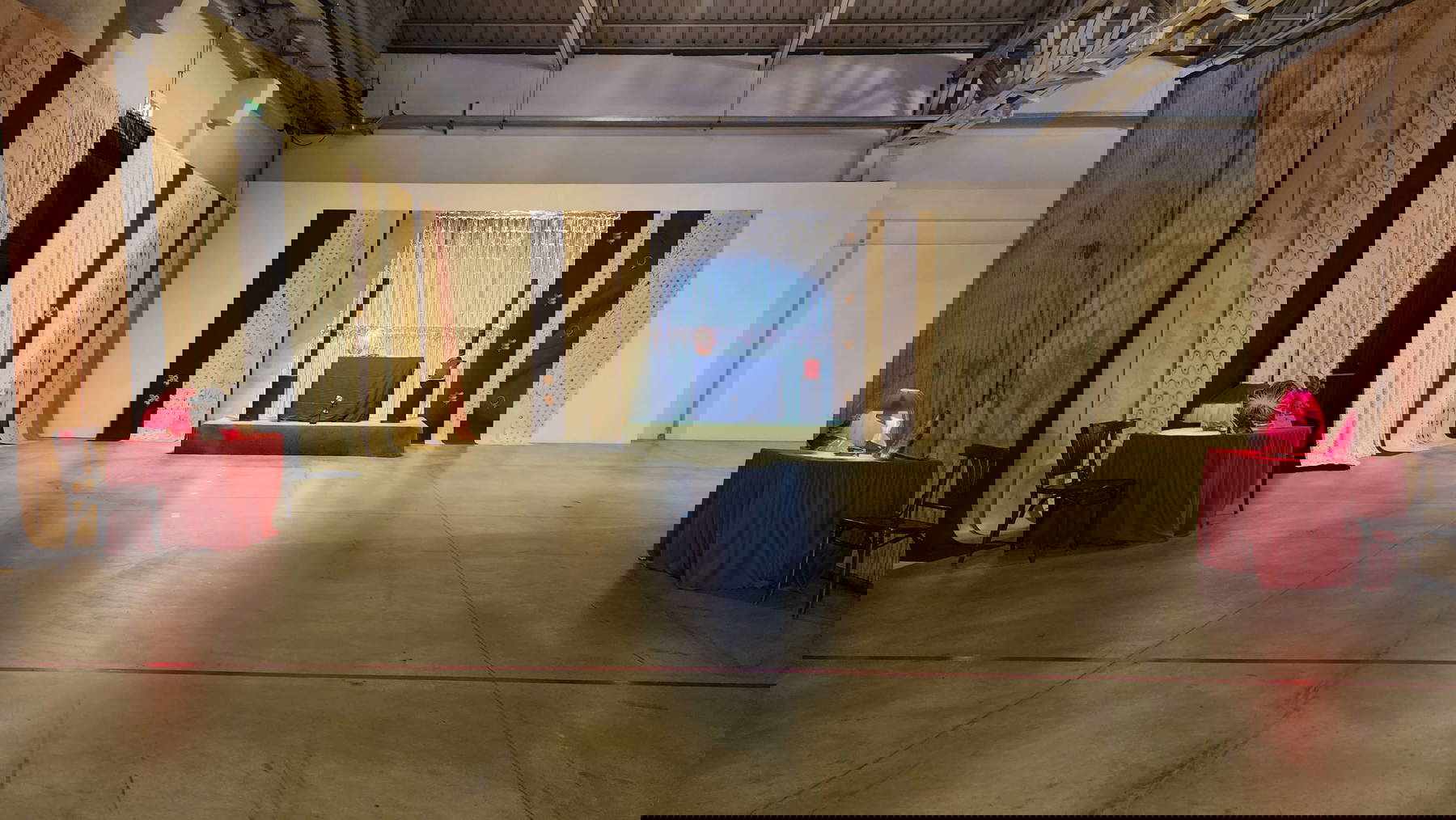
From the sepulchres of the “belly” an effort still in the ballroom set up in the next room, the “heart,” a “space,” set up as a milonga, “where emotions surface as collective pulsations”, provided, however, that you are there during the performance’s scheduled times, once a week with a duration of about two hours according to the calendar that can be consulted on the website or available at Pirelli HangarBicocca’s InfoPoint. The performance is nothing more than a tango session where the defendants dance wearing animal masks (the suspicion evidently does not occur to Benni Bosetto that to discover that the rituality of love extends to all living species one only has to turn on the Discovery Channel and watch a documentary on the great crested grebe): the idea is to transform “the place into a relationship context in which dance is understood as a practice of mutual listening and presence.” Those who should unluckily happen to be at HangarBicocca on the other six days of the week and miss the opportunity to witness this practice of mutual listening can remedy this by going to the Faitango association’s website, search for their province under the “events agenda” section and see which disco, dance club, piazza, bar, cultural club, social center, a.s.d., the nearest gym in which a milonga night is organized (there is a choice in almost all of Italy) in order to find that context of relationship at a stone’s throw from home. At the Liberty Café in Viareggio, the milongueros will not have hermit crab or otter masks but can be observed in their natural habitat, will not follow any script, will seem less forced and, therefore, will appear more genuine.
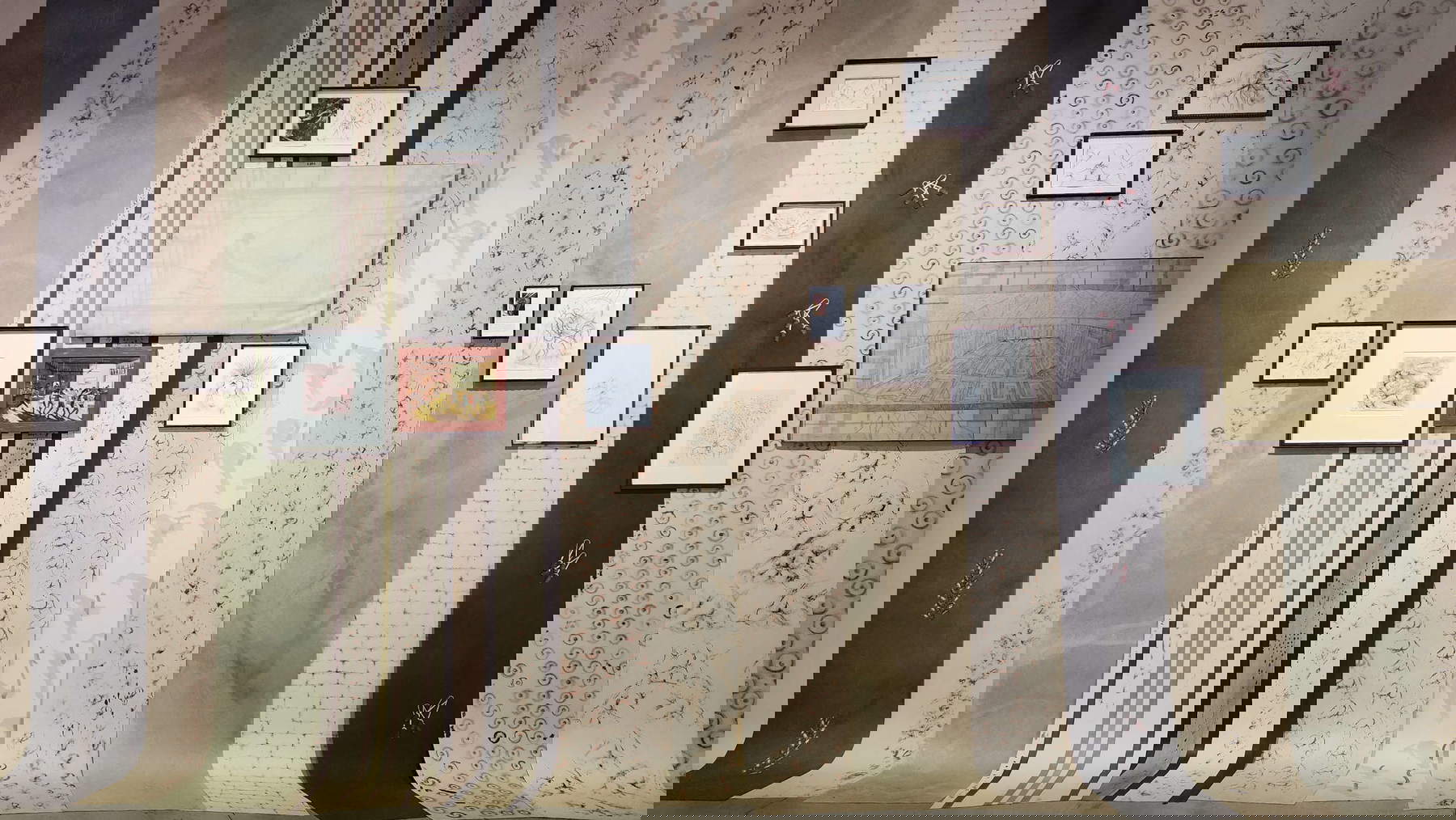
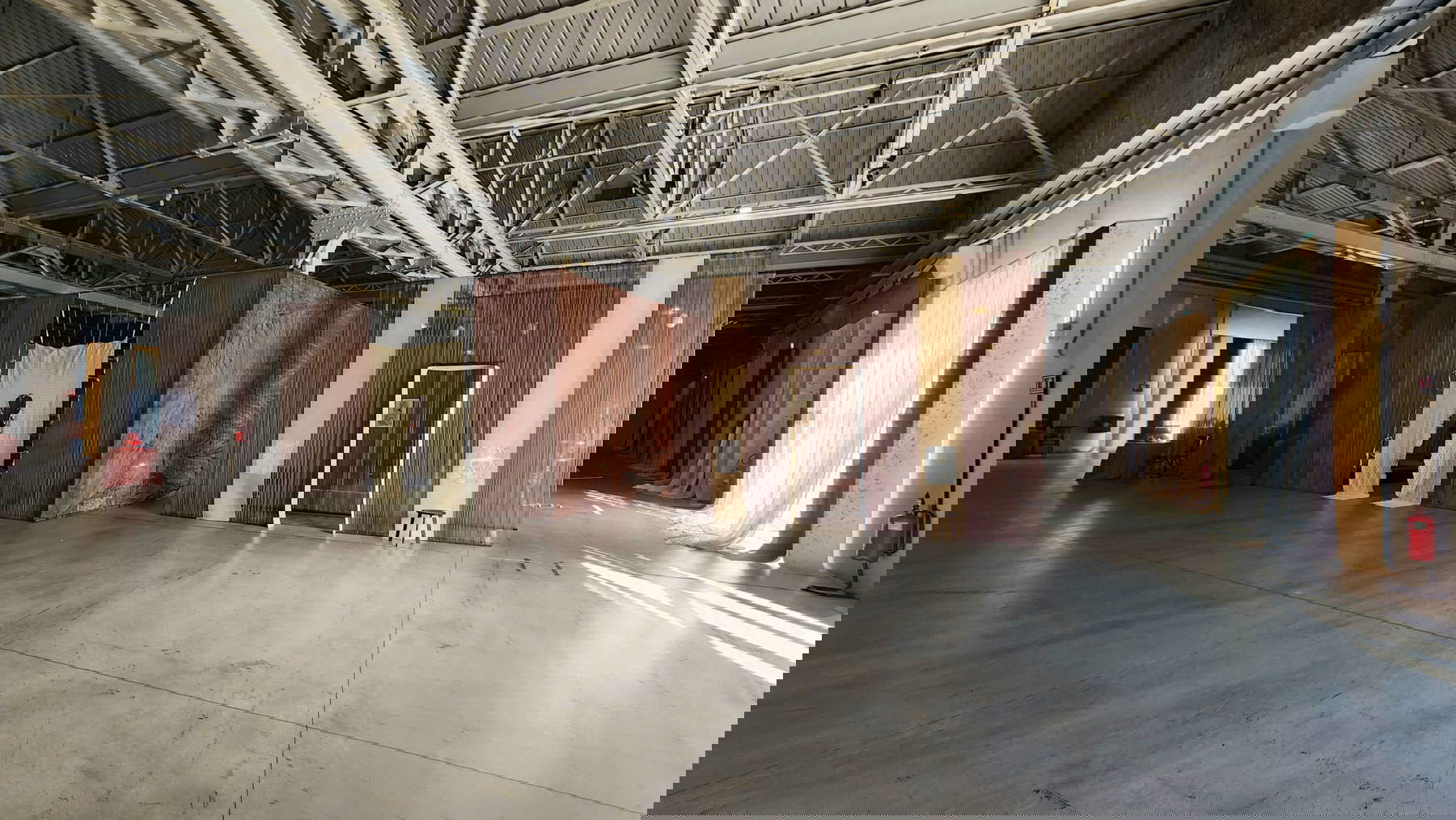
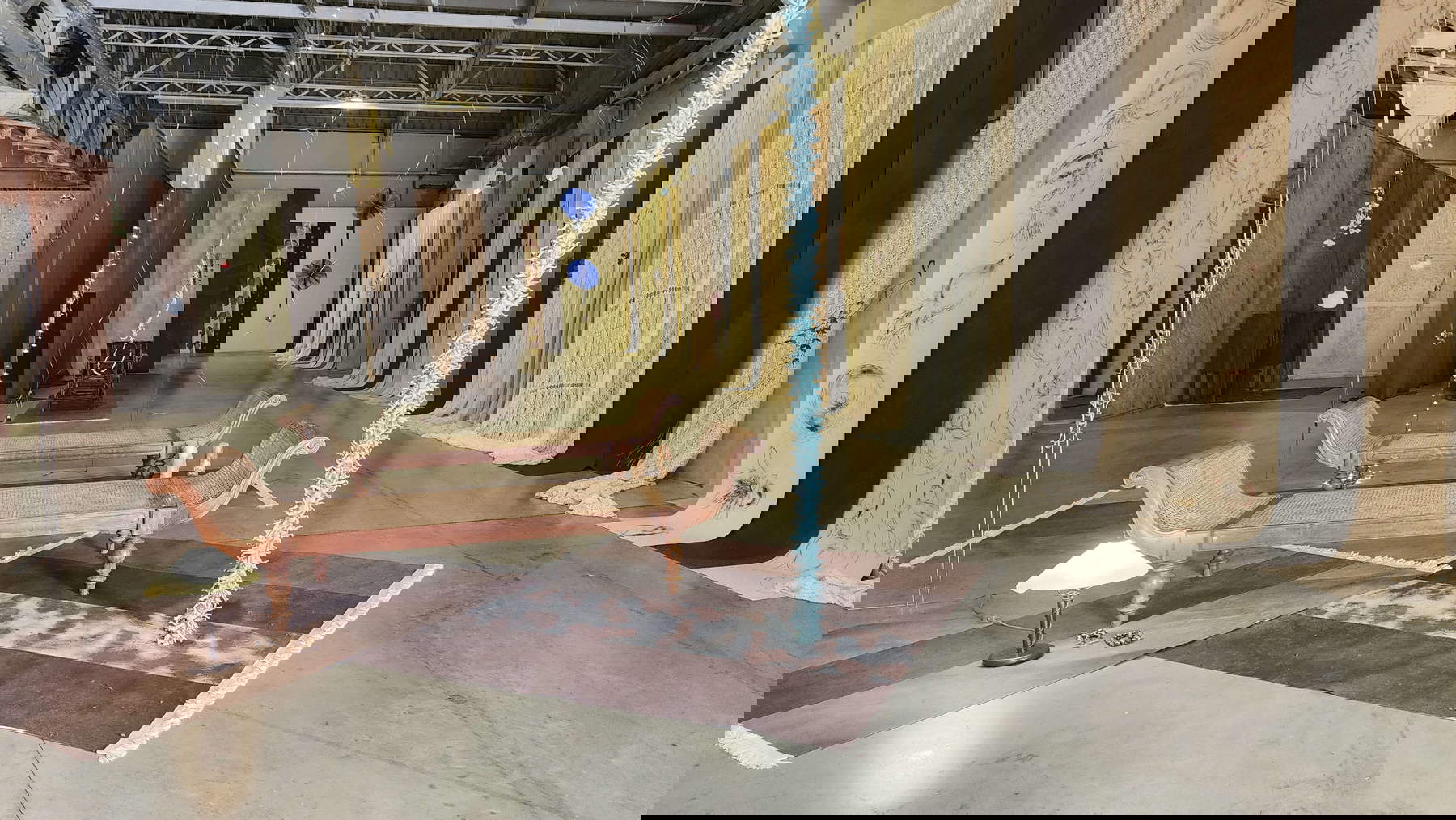
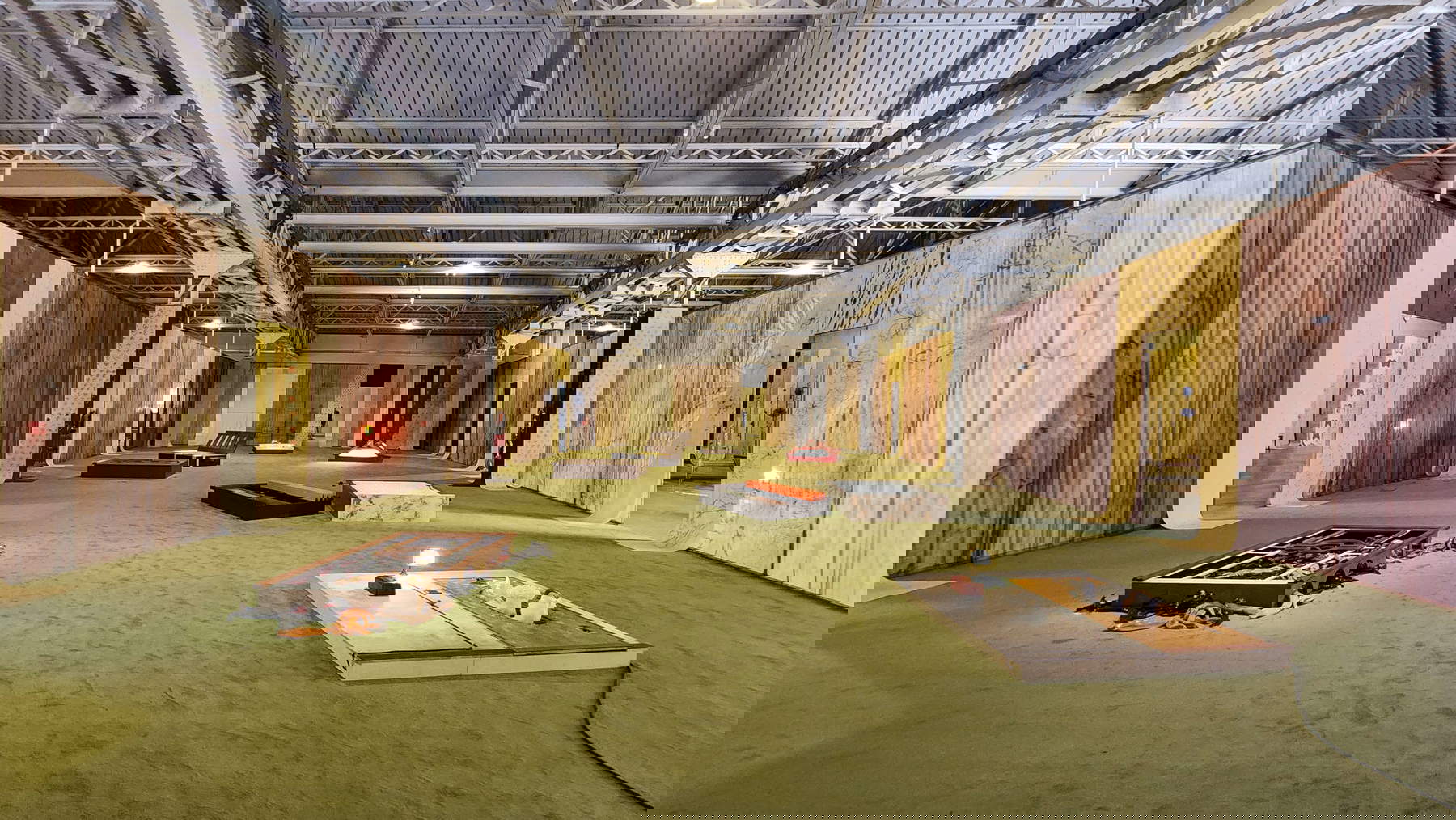
Curiously, it is at the moment when Rebecca ’s milonga is empty that the exhibition, albeit unintentionally (or so it seems, judging again from the instruction booklet), seems to have something to say. It happens when the red silks covering the tables are untouched, when there is no one at the musicalizador’s table, when the chairs serve only to give refreshment to the exhausted visitors after the journey inside the epidermal tapestry of the cheek and amidst the mnemonic borings of the belly. Let them, the passengers, abandon their moralising wanderings in the physical space of the house, loculus where today everyone is holed up exhausted by their own and other people’s lives, a place where the greatest possible seduction is for most majority of people recoiling in front of the telescreen, fixed or portable makes no difference, and contemplating the cage, the ruin, the empty and decaying simulacrum of an era that no longer exists, no matter how hard the performances strive to reactivate it, whether consciously or not does not matter. This is the moment when Benni Bosetto laps up something authentic. Of course: we always move to the parts of stage design, theater, fiction, moreover, with the aggravation of epigonism, and the faint specter of impotence and the unspeakable that lurks in the midst of these empty tables seems to have been evoked by mistake, an unintended consequence to be chased away with invitations to consult the performance calendar.
Natural, then, that to find some more ambitious, more disturbing, and more uncomfortable consideration one needs to turn one’s gaze outside the domestic perimeters. Without having to bother with, say, Rachel Whiteread’s ghostly concrete castings or Doris Salcedo’s junk-furniture assemblages that conceal shreds of dramatic universal history, one can also search among the maps of’a more humble geography, rummaging among those artists who, while not marking prodigies of innovation, and even employing the same tools as Bosetto, nevertheless accept a more significant share of risk, a compromise with the inappropriate. More disturbing, for example, is the American Fiona Connor, who four years ago in Los Angeles filled a gallery with faithful reproductions of closed, no longer existing doors of stores, clubs and discos, some of which have even become contemporary ruins. Of course, even then there was the risk, always lurking, of the fixture resale effect, but the signs of wear and tear, the seals of the authorities, the cease-and-desist signs ended up converting the window and door frames showroom into an ephemeral cenotaph, a monument to commercial desertification transformed into a kind of Frankenstein’s monster of memory, somber yes but of a self-sufficient gloom, with no particular need for pre-heated exegesis.
A dogged exercise in creative writing applied to objects, a scattered scrambling in the vintage store, a quiet mannerism: Rebecca might aspire to the status of a curious, frayed attempt at reconnection, were it not that it is hard to imagine it without the need for paper to fulfill the prayer raised by the works, there begging for an exegesis that frees them from the burden of being seen, without the need for a sheet of paper to act as her defibrillator.


The author of this article: Federico Giannini
Nato a Massa nel 1986, si è laureato nel 2010 in Informatica Umanistica all’Università di Pisa. Nel 2009 ha iniziato a lavorare nel settore della comunicazione su web, con particolare riferimento alla comunicazione per i beni culturali. Nel 2017 ha fondato con Ilaria Baratta la rivista Finestre sull’Arte. Dalla fondazione è direttore responsabile della rivista. Ha scritto i libri Vero, Falso, Fake. Credenze, errori e falsità nel mondo dell'arte (Giunti editore, 2025) e Immagini del potere. Arte e propaganda da Augusto a Trump (Giunti editore, 2026). Collabora e ha collaborato con diverse riviste, tra cui Art e Dossier e Left, e per la televisione è stato autore del documentario Le mani dell’arte (Rai 5) ed è stato tra i presentatori del programma Dorian – L’arte non invecchia (Rai 5). Al suo attivo anche docenze in materia di giornalismo culturale all'Università di Genova e all'Ordine dei Giornalisti, inoltre partecipa regolarmente come relatore e moderatore su temi di arte e cultura a numerosi convegni (tra gli altri: Lu.Bec. Lucca Beni Culturali, Ro.Me Exhibition, Con-Vivere Festival, TTG Travel Experience).
Warning: the translation into English of the original Italian article was created using automatic tools. We undertake to review all articles, but we do not guarantee the total absence of inaccuracies in the translation due to the program. You can find the original by clicking on the ITA button. If you find any mistake,please contact us.
























 IT
IT FR
FR DE
DE ES
ES CN
CN


