








A red bench in the shape of a camellia as a symbol of countering gender-based violence. The installation Camellia japonica Rubra simplex, a project promoted by the Museum of the Ministry of Culture in collaboration with the social cooperative EVA and the Fondazione Una Nessuna Centomila, was presented this morning at the Royal Palace of Caserta. The initiative was held around the principle “Freedom flourishes where there is no violence,” which was chosen as the main theme of the meeting dedicated to a topic of social and cultural relevance.
The event was attended by Lucia Volpe, prefect of Caserta; Tiziana Maffei, director of the Royal Palace of Caserta; Lella Palladino, sociologist and founder of the social cooperative EVA and vice-president of the One Hundred Thousand Foundation; and Alfonsina Russo, head of the Department for the Enhancement of Cultural Heritage of the Ministry of Culture. Also present were actresses Cristina Donadio and Giovanna Sannino, who have long been engaged in activities to raise awareness on the issue of gender-based violence.
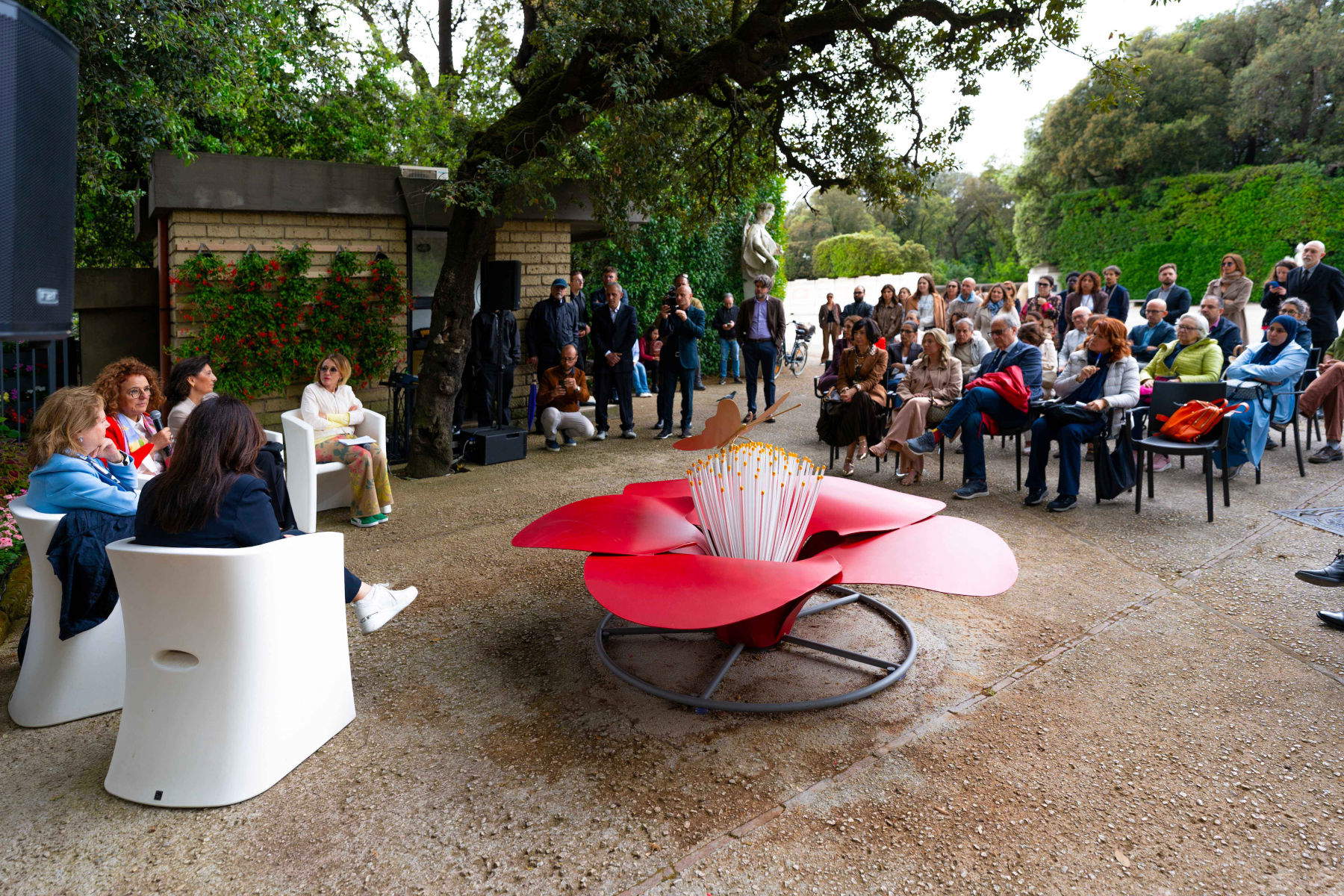
The date chosen for the presentation of the work takes on a special significance for the history of the Royal Palace of Caserta. In fact, May 13 recalls the arrival, in 1768, of Maria Carolina of Habsburg-Lorraine and the subsequent gift, in 1784, of the first camellia Rubra simplex, the strain of which is still preserved in the English Garden of the complex. That flower, which over time became a symbol of the Green Museum of the Royal Palace of Caserta, gradually spread to Italian gardens, taking on the value of a shared element of memory and cultural identity. The UNESCO site thus links its history to a project that aims to create a dialogue between institutions and territory through a recognizable symbol rooted in tradition.
From that historical emblem comes the installation Camellia japonica Rubra simplex, created in line with the #panchinerosse campaign of the Department for the Enhancement of the Ministry of Culture. The structure reproduces a large red camellia with a diameter of more than two meters. Made of steel with galvanizing and fire-painting, the seat is composed of large petals shaped and worked by hand to achieve a realistic rendering, while the flower’s pistils emerge in the center. The work was conceived, designed and engineered by the Royal Palace of Caserta and made by blacksmith Giuseppe Mallardo.
The bench was placed along the Waterway, outside the store of Le Serre di Graefer and Il Giardino della Camelia. The latter space, soon to be opened, will host a bistro, a herbal tea shop and edutainment activities, with the aim of fostering job placement paths aimed at women coming out of situations of violence. With this installation, the camellia flower is taken as a permanent symbol of attention to the issue of gender-based violence. The reference to the historical spread of the camellia throughout Europe and the world is thus associated with the idea of a message capable of extending beyond the local context.
“The red bench inspired by the camellia,” said Prefect Lucia Volpe, “is, first and foremost, an invitation to enjoy the beauty that surrounds us, moreover in a place, such as the Royal Palace of Caserta, which in itself evokes ’beauty’ in all its meanings. But it also represents a warning to care as the ’counterbalance of neglect,’ to quote the words spoken by Pope Leo on his recent visit to Pompeii, as attention to urban spaces, to the suburbs, to the environment, to which all of us citizens must strive. I thank, therefore, Director Tiziana Maffei for inviting us to this initiative, which reminds us that it is our duty to preserve the contexts in which we live through small daily gestures and to guard both the places of extraordinary beauty of which we have and any other public space in which social life takes place in order to build a society that is more attentive, aware and respectful of others, especially the new generations.”
“The Camellia Bench was born as a place of pause and awareness,” said director Tiziana Maffei, “In the Royal Park, sitting means slowing down, training the gaze and finding a deeper relationship with the landscape, with nature and with others. The pause thus becomes a cultural and civil gesture, a space for listening and reflection. This bench aims to be not only a symbol of nonviolence and freedom, but also an invitation to experience public space as a place of care, attention and encounter. The ambition is that it can spread to gardens and parks in Italy and Europe, generating a network of places dedicated to peace, sensitivity and shared beauty.”
“The prevention of male violence against women,” said sociologist Lella Palladino, “passes through a collective awareness, in which each and every one of us feels involved: this is the message conveyed by this special red bench. Getting out of violence then requires systemic interventions, from shelter to support for economic autonomy. The bistro Il Giardino della Camelia testifies, with the job placement of women who have left violence behind, that violence can be exited thanks also to original synergies between institutions and third sector organizations.”
“This red bench,” said Alfonsina Russo, Head of DiVa, “is inspired by and recalls the values and objectives of the broader project called ’#benchesinosse in museums,’ already launched by the Department for the Enhancement of Cultural Heritage to promote, even in cultural places, rights, awareness and respect. In this perspective, the red benches are not mere elements of furniture, but real works of art, tangible signs and permanent awareness-raising tools, capable of activating reflections and paths of active citizenship.”
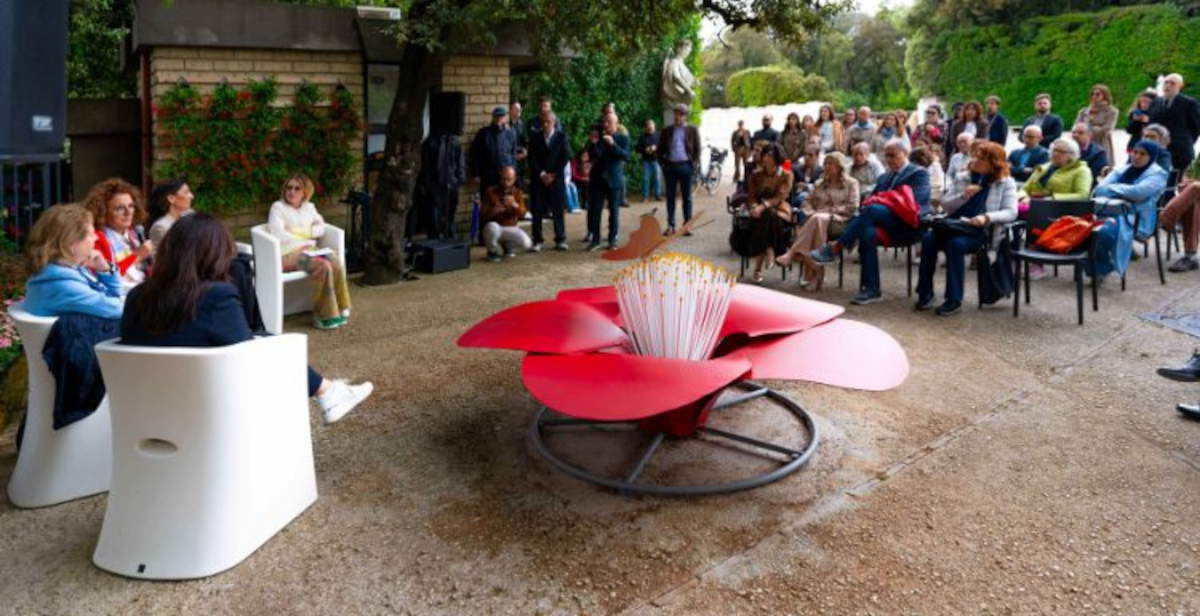 |
| At the Palace of Caserta, a bench-camel against gender violence |

Warning: the translation into English of the original Italian article was created using automatic tools. We undertake to review all articles, but we do not guarantee the total absence of inaccuracies in the translation due to the program. You can find the original by clicking on the ITA button. If you find any mistake,please contact us.






















 IT
IT FR
FR DE
DE ES
ES CN
CN