





A new front of tension is opening around the 61st edition of the Venice Biennale. A group made up of dozens of artists participating in the international exhibition (63 in all) and the National Pavilions (as many as 39 pavilions, including Italy) decided to make public this morning a letter sent last May 20 to the Venice Biennale Foundation and its president, Pietrangelo Buttafuoco, denouncing the absence of any response to requests made in previous weeks regarding the Visitors’ Lions.
According to the petitioners, the decision to make the correspondence public accrued after the Venetian institution failed to respond. The artists claim to have received neither a formal response nor a simple acknowledgement of receipt of the communication sent to the Biennale. A situation that, in their opinion, would represent a lack of respect not only towards the participants involved, but also towards the public called to take part in a voting process that, according to their reconstruction, would lack the necessary transparency.
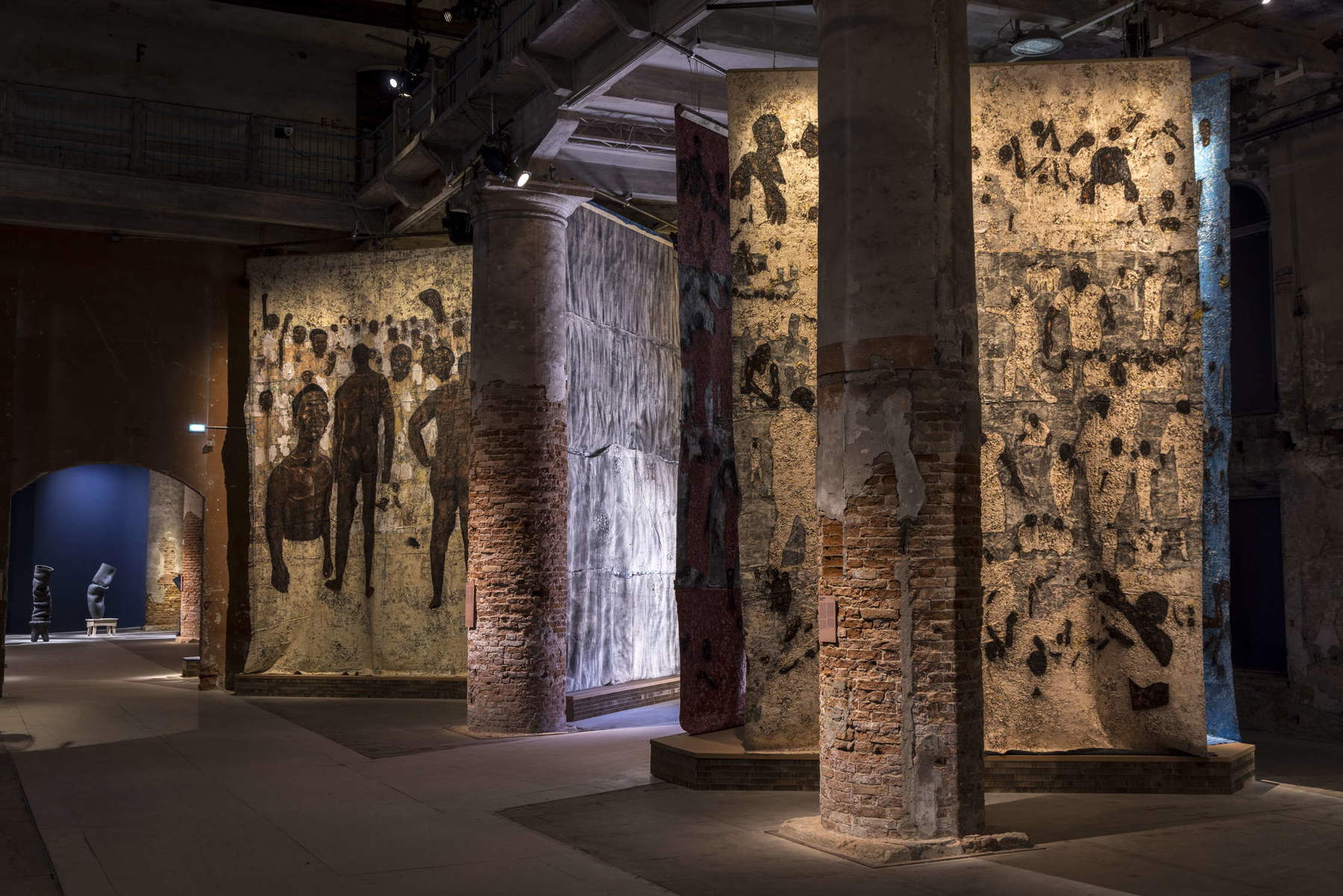
At the heart of the dispute is the Visitors’ Lions system, introduced after the resignation of the official jury appointed by the late Koyo Kouoh. The petitioners say they are not opposed in principle to the idea of an award given by the visitors. Rather, their opposition concerns the manner in which the initiative was allegedly introduced and the context in which it accrued, interpreted as an attempt to circumvent the consequences of the crisis that opened with the resignation of the official jury.
The affair began on April 22, when the Biennale announced the members of the international jury chosen by Kouoh. The next day, the jury had unilaterally decided to exclude from the evaluations some national Pavilions under investigation by the International Criminal Court (i.e., basically, Russia and Israel). The next step marks the breaking point. Indeed, on April 30, the jury reportedly decided to withdraw, claiming that it was exposed to significant personal legal risks: in fact, the Israel Pavilion had raised the possibility of an appeal, since the decision to exclude it from the competition would be contrary to the Biennale’s rules. In the version provided by the signatories of the letter, the Biennale would merely acknowledge the resignation without providing any public or private support to the commission members. On the same day, the Venetian institution announced the introduction of the Visitors’ Lions, intended to replace the traditional awards process.
The choice immediately generated reactions within the artistic community involved in the event. On May 9, the first day the Biennale opened to the public, fifty-two artists, collectives and heirs participating in the international exhibition In Minor Keys, along with sixteen artists in the National Pavilions, sent an initial official communication requesting the withdrawal of their names from the Visitors’ Lions competition. Over the course of the following weeks, the number of signatories grew to more than sixty participants from the international exhibition and more than thirty artists from the National Pavilions.
In their statement, the artists explain that they decided to withdraw in solidarity with the jury originally appointed by Koyo Kouoh. The request stems, according to the signatories, from a desire to defend the commission’s right to deliberate freely and justify its decisions without being pressured or fearing personal consequences. The artists also argue that the responsibility for ensuring the independence and integrity of the jury’s work rests with the Biennale itself. This is the text of the letter sent by the artists:
Dear Fondazione della Biennale di Venezia,
On May 9, 2026, fifty-two artists, collectives, and heirs (now sixty-seven in total) exhibiting in In Minor Keys, along with sixteen artists from the National Pavilions (now thirty-nine in total), submitted a formal request that our names be withdrawn from nomination for the Visitors’ Lions awards. We did so in solidarity with the jury, appointed by Koyo Kouoh in accordance with Biennale protocol, and in defense of its right to deliberate and articulate freely, in good conscience and without fear of retaliation the reasons for its decisions. Our withdrawal represents a refusal to participate in a trial in which the jury was exposed to significant personal legal liability, when it was the Biennale’s responsibility to ensure the independence and integrity of the jury’s deliberations. Let’s be clear: We have nothing against the concept of allowing visitors to vote for the awards. But creating the Visitors’ Lions at this stage represents an attempt to circumvent the jury’s resignation and stands in direct contradiction to the procedure we all accepted when we accepted the invitation to exhibit our works. It is something we do not want to be a part of.
We were shocked to find that despite our explicit request to withdraw our candidacy, an e-mail was sent on May 14, 2026 to visitors with tickets to both the Gardens and the Arsenal, inviting them to vote for the Visitors’ Lions. The list of nominees included the names of artists from In Minor Keys and also artists exhibiting in the national pavilions who had explicitly withdrawn their candidacy. This is not only confusing to visitors, but is also blatantly disrespectful to the artists who have asked to withdraw their candidacy.
Our request is therefore as follows: any name appearing as a signatory to this letter must be removed from any context related to the Visitors’ Lions, including but not limited to the voting interface and any associated promotional or communication materials. If votes have already been cast for a signer of this letter, those votes must be invalidated.
We request written confirmation, as we have done in previous communications, that this letter has been received and that you will immediately implement this change on your website and in all future communications related to the Visitor Lions.
In your judgment, therefore, the introduction of the Visitors’ Lions would represent a deviation from the procedures agreed upon when you accepted the invitation to participate in the event. Tensions escalated further after May 14, when visitors ticketed for access to both the Giardini and the Arsenale began receiving ballots for the Visitors’ Lions. According to the artists, the proposed options still included names of participants who had already publicly announced their willingness to withdraw from the competition. It is precisely this episode that constitutes one of the central elements of the protest.
The decision to go public marks a further hardening of relations between a significant part of the participants and the organization of the event. The artists also announced the launch of further initiatives and the consideration of possible legal action. At the time of the letter’s release, no official response from the Venice Biennale Foundation has been made public regarding the allegations made.
|
| Biennial, artists are against the Visiting Lions. And they are contemplating legal action |

Warning: the translation into English of the original Italian article was created using automatic tools. We undertake to review all articles, but we do not guarantee the total absence of inaccuracies in the translation due to the program. You can find the original by clicking on the ITA button. If you find any mistake,please contact us.



















 IT
IT FR
FR DE
DE ES
ES CN
CN


