




by Redazione 25/05/2026



Categories: News / Disclaimer
The Appia Antica Regional Park and Alto Adige-based startup Plantvoice have launched a scientific monitoring project dedicated to the historic trees of the Sacred Wood.


On the occasion of the European Day of Parks, the Appia Antica Regional Park and Alto Adige-based startup Plantvoice launched a scientific monitoring project dedicated to the historic trees of the Sacred Wood, one of the most evocative places of the Regina Viarum, recognized as a UNESCO World Heritage Site from 2024. On May 24, 2026, special sensors capable of real-time analysis of plant sap, a patented technology developed by Plantvoice, were installed. The initiative is part of the official program of cultural and environmental events promoted by the Park and includes continuous monitoring for the duration of twelve months. Already a few hours after installation, the devices began transmitting the first physiological signals from the trees, while the first processed data will be available within a month through the startup’s digital platform.


The Sacred Wood is located in the Caffarella Valley, within the Appia Antica Regional Park, a protected area of more than 4500 hectares where nature, archaeology and history have coexisted for more than two thousand years along the ancient Roman road. Here are preserved monumental trees of extraordinary value, including ancient poplars, downy oaks, ancient olive trees, elms, hackberry trees and above all a nucleus of about 120 holm oaks, some over 250 years old. Right in the Sacred Wood, Plantvoice sensors have been installed. The intervention is part of the Park’s broader cultural program unveiled in early 2026 by Regional Councillor Giancarlo Righini, who called it the first major structured calendar of widespread events since the Park’s inception. The choice of date is not accidental. European Parks Day, promoted by the EUROPARC Federation, celebrates the value of natural areas and tree heritage every year, emphasizing their essential role in the quality of urban life and the environmental balance of cities.


At a time when many Italian green areas are at the center of controversy and contested urban interventions, the Appia Antica Park represents a virtuous example of land protection. In this context, the Plantvoice project takes on a significance that goes beyond the technological aspect: it becomes a model of collaboration between scientific innovation and environmental protection. “When a tree is defined as ’sick’ or ’dangerous’ without verifiable objective data, it opens the way for arbitrary choices,” explains Matteo Beccatelli, CEO and co-founder of Plantvoice. “Instead, our sensors provide an accurate physiological snapshot: we can tell if a plant is really suffering or if it is viable and productive. This transforms public debate from emotional to rational, giving citizens and governments concrete tools to make informed decisions.”


“We have always envisioned technology as a bridge between humans and the plant world,” Beccatelli stresses. “In Rome, along the Appian Way that has connected cultures and civilizations for two thousand years, our sensors will help connect present and future, data and beauty, science and environmental care. Listening to the plants of the Sacred Wood is not only a scientific gesture, but an act of responsibility to future generations and a levee against the short-sightedness of those who would like to sacrifice public green to short-term interests.”
“We chose to invest in this project because we believe that environmental protection should be based on knowledge, responsibility and the ability to listen. The sensors installed on the trees will allow us to monitor their health in a continuous and scientifically rigorous manner, turning prevention into a concrete tool for protection. Plantvoice’s involvement stems precisely from this vision: giving trees a ”voice“ means making them active participants in the conservation process. Through their technology, we can interpret signals that would otherwise remain invisible, intervening promptly and in a targeted manner,” says Fabrizio Molina, Extraordinary Commissioner Appia Antica Regional Park.
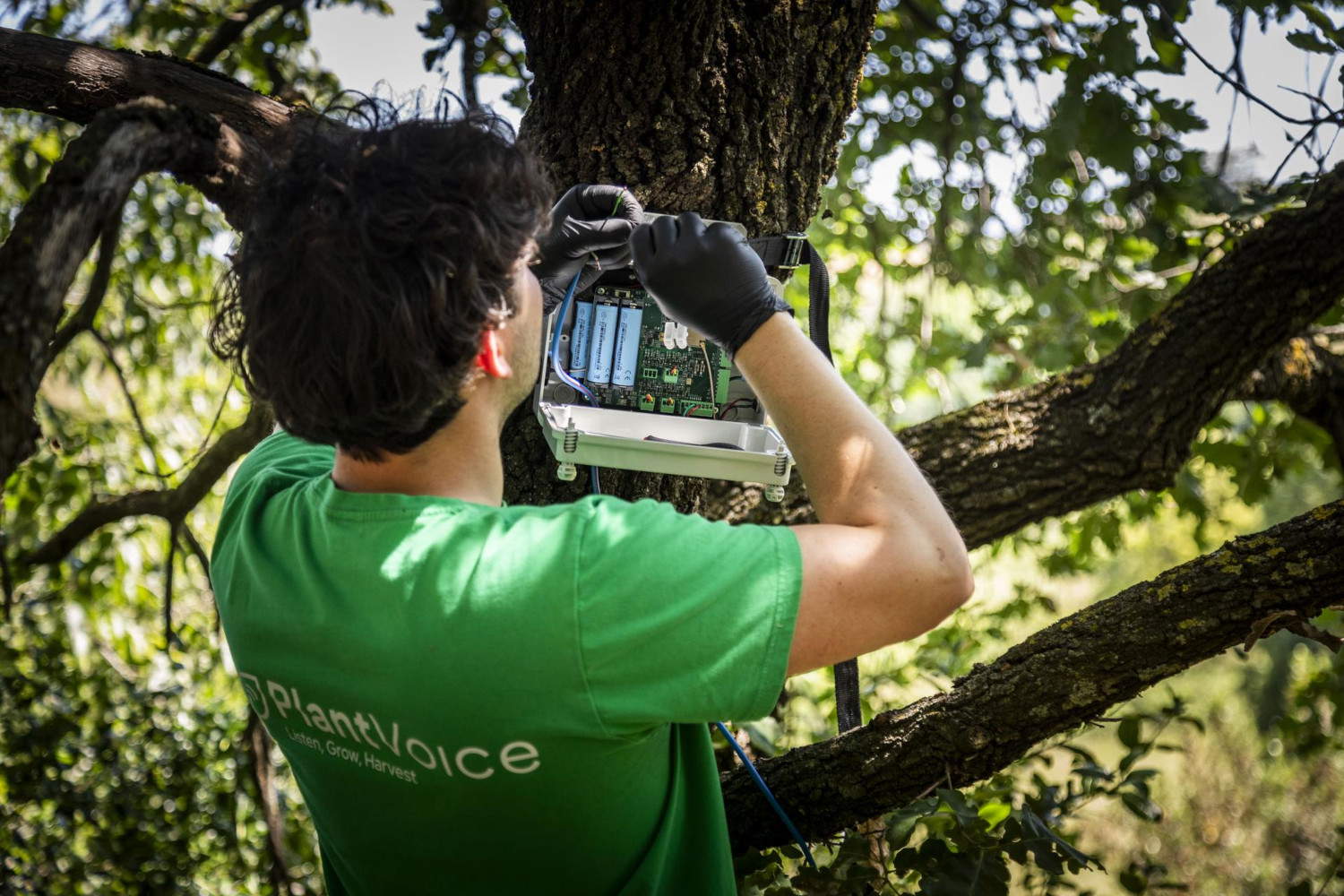
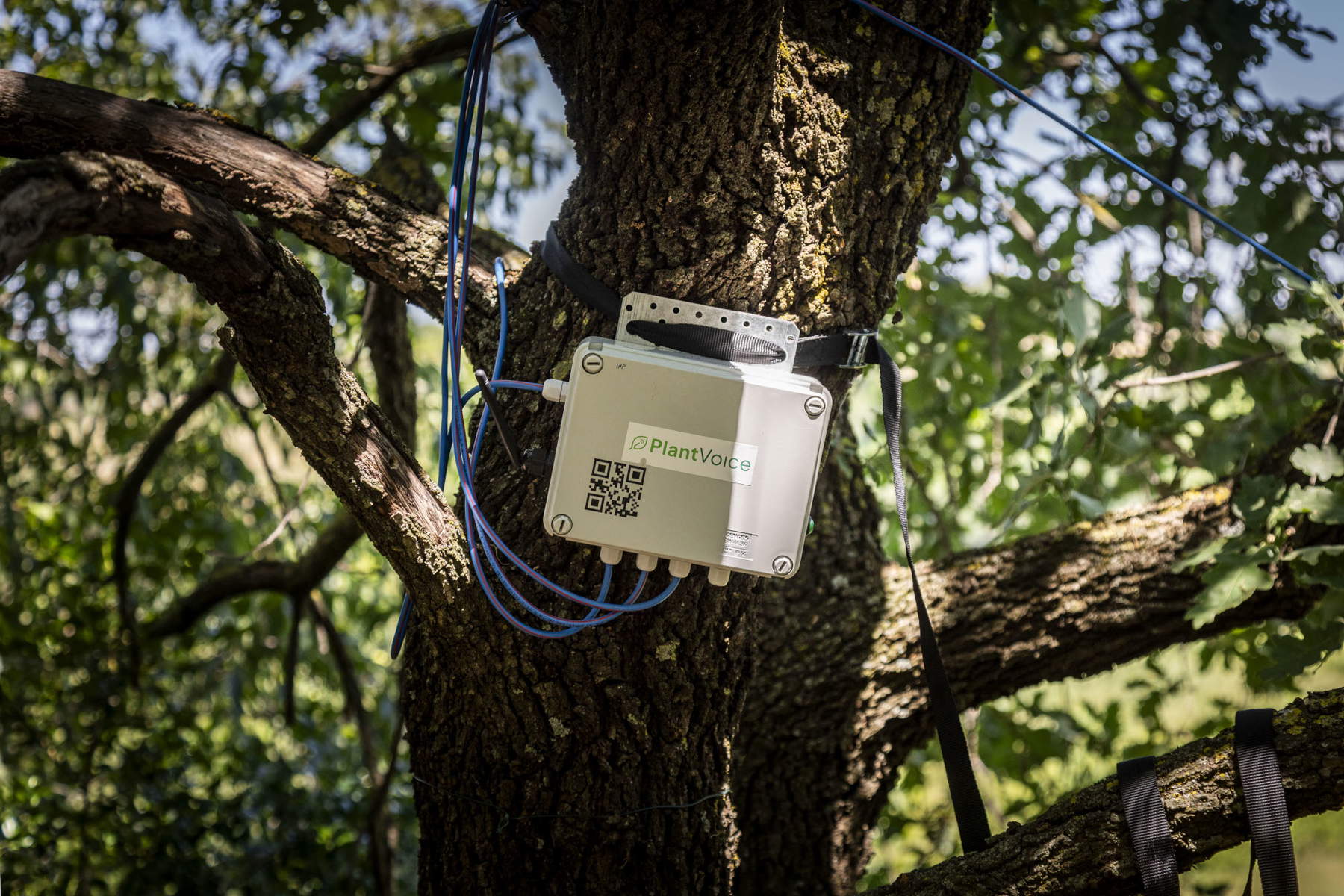
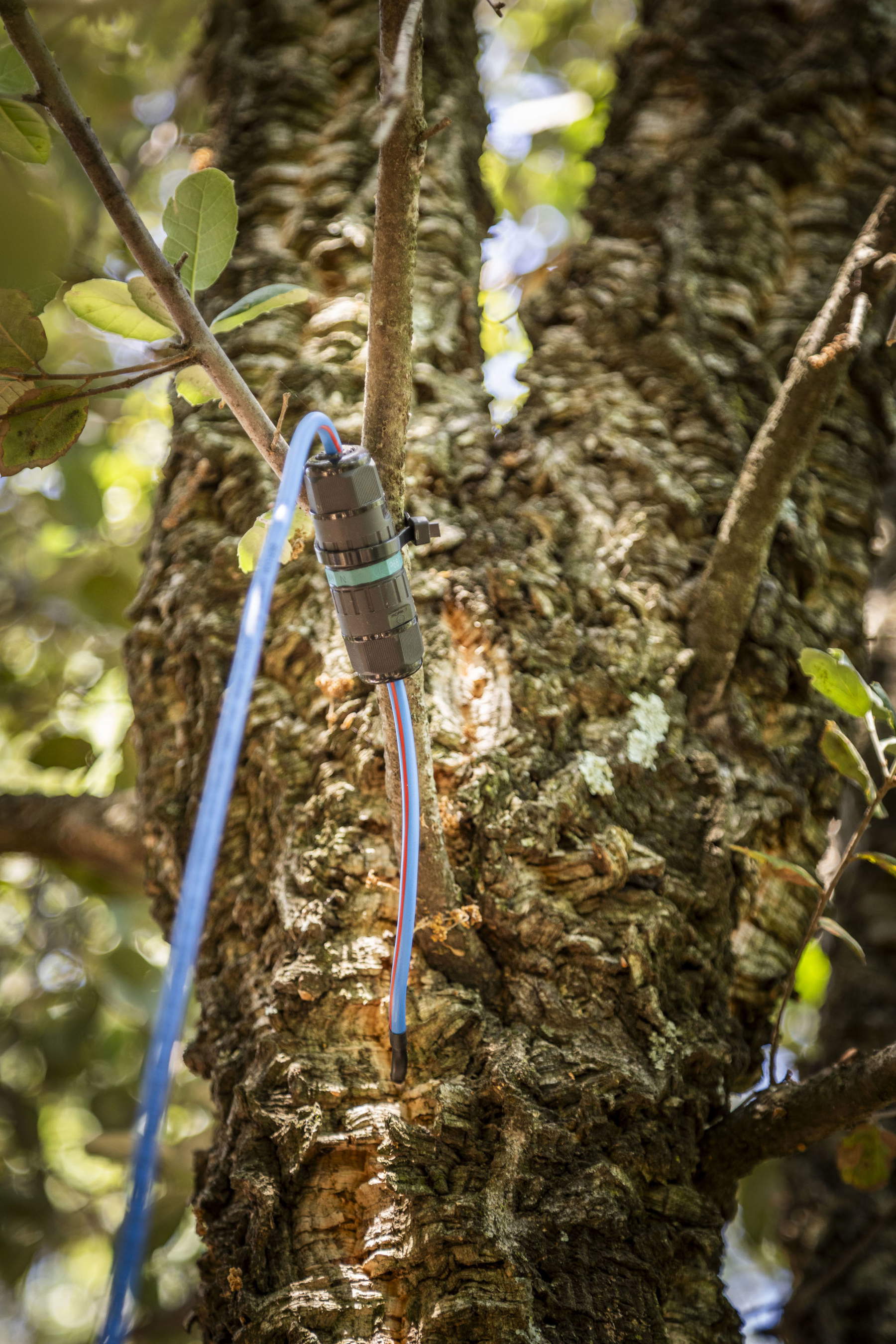
The sensors developed by the startup function as small, intelligent grafts that analyze sap without damaging the plant. The collected data are sent in real time to a cloud platform equipped with artificial intelligence algorithms, enabling it to monitor the health of trees, detect water or pathological stress situations early, measure carbon dioxide uptake, and assess the carbon footprint of the green area. The technology also makes it possible to optimize the resources used in the management and maintenance of public green space.
The 12-month continuous monitoring will allow the collection of comprehensive data on seasonal variations in the trees of the Sacred Wood, providing a useful scientific basis for the long-term protection and sustainable management of the area. The Appia Antica experience also represents an important step for Plantvoice, after previous experiments in the public green and landscape sector, paving the way for future collaborations with other protected areas and administrations interested in combining technology, environmental sustainability and natural heritage protection.
|
| In the Sacred Wood of the Appia Antica, smart sensors monitor the health of historic trees |
Warning: the translation into English of the original Italian article was created using automatic tools. We undertake to review all articles, but we do not guarantee the total absence of inaccuracies in the translation due to the program. You can find the original by clicking on the ITA button. If you find any mistake,please contact us.