





The Ministry of Culture has ordered inspectors to be sent to the headquarters of the Venice Biennale at Ca’ Giustinian as part of a series of checks related to the staging of the Russian pavilion planned for the 2026 Art Biennale. As reported by the La Stampa news outlet, the international exhibition, whose pre-opening is set for May 5-8, is the focus of intensified administrative and documentary checks by the department, with particular attention to the authorizations granted to the Russian Federation for the use of the pavilion at the Giardini.
Ministry officials are reportedly in charge of acquiring additional documentation related to the reopening of the Russian exhibition space, an issue that has been fueling discussions on the national and international levels for weeks.
The Biennale, as the newspaper further reports, had already forwarded to the Ministry of Culture the correspondence it had exchanged with the Russian authorities, with no formal irregularities with respect to sanctions noted. The organizing body has always maintained that the interlocutions that took place were part of ordinary procedures for the management of national pavilions. The new inspection activities also come amid a climate of tension fueled by recent decisions by the Biennale Arte’s international jury that excluded countries led by leaders accused by the International Criminal Court of crimes against humanity, including Russia and Israel, from the main awards race. The awards are scheduled to be presented on May 9.
At the same time, in recent days Culture Minister Alessandro Giuli announced his absence from the opening ceremony of the Art Biennale, justifying it as a form of protest over the Russian presence within the event. The choice contributed to heightening the level of political attention around the Venetian event.
Already in March, the Ministry had requested that the Biennale send the full documentation regarding the Russian participation, including correspondence with those involved, with the aim of verifying the compatibility of the procedures with the current sanctions framework. From these acts, a series of operational contacts related to the reopening of the Russian pavilion was reconstructed, which the Foundation later described as normal institutional interlocutions.
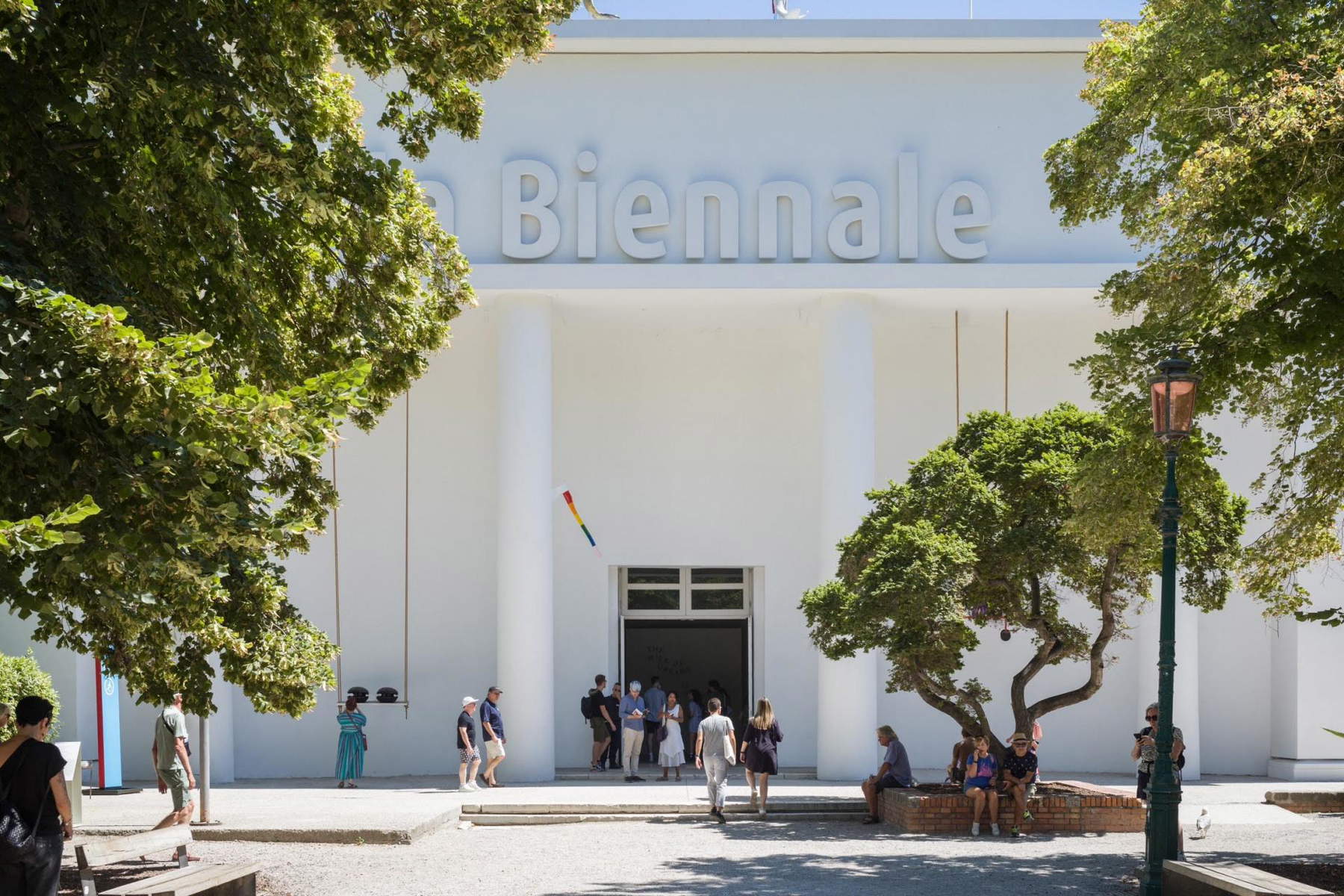
The documents already acquired by the Ministry also include internal communications between Biennale President Pietrangelo Buttafuoco, Director General Andrea Del Mercato, and Russian Pavilion Commissioner Anastasia Karneeva. These exchanges would indicate that the Russian Federation’s return to the event was planned from the summer of 2025. In an email dating back to November, Karneeva also reported difficulties in issuing visas for curator Petr Musoev, requesting support in issuing an official invitation letter.
Russian participation would be confirmed earlier this year with the presentation of the exhibition project entitled The tree is rooted in the sky. Production of materials for the catalog is reportedly completed by February.
According to La Stampa reports, a particularly sensitive issue concerns the management of the Russian presence within the framework of European sanctions. The communications reviewed refer to a shared strategy to allow participation in the pavilion without formally violating the existing regulatory framework. According to reports, the Russian pavilion will only be accessible during the pre-opening days of the Art Biennale, May 6-8, while it will be closed to the public from the following day. However, planned performance activities will be documented and made available through video projections placed outside the building, configuring a compromise organizational solution that has not, however, reduced controversy.
On the European level, a possible financial impact on the Venice Biennale has also been discussed in recent weeks. Indeed, the European Union has reportedly been considering the withdrawal of some 2 million euros intended for film projects related to the Venetian institution, in connection with disputes over Russian participation. The debate was further intensified after the international jury’s decision to exclude countries whose leaders are indicted by the International Criminal Court from competing for major awards, a measure that affected Russia and Israel in particular.
The Biennale, for its part and as the newspaper continues to report, has reiterated on several occasions the correctness of its actions. The institution has stated that it has acted in compliance with current regulations, stressing that every decision regarding the national pavilions was made following legal and institutional evaluations, with no intention of circumventing the current international sanctions regime.
 |
| Ministry of Culture sends inspectors to Biennale over Russian pavilion case |

Warning: the translation into English of the original Italian article was created using automatic tools. We undertake to review all articles, but we do not guarantee the total absence of inaccuracies in the translation due to the program. You can find the original by clicking on the ITA button. If you find any mistake,please contact us.

























 IT
IT FR
FR DE
DE ES
ES CN
CN


