





Padua has officially submitted its application to the Ministry of Culture to become the 2028 Italian Capital of Contemporary Art. The designation, established by Ministerial Decree No. 117 of March 2024, is one of the initiatives promoted by the Ministry of Culture to promote regional development through contemporary culture. The first city to have been awarded the title is Gibellina, which currently holds the title, while Alba has been designated for 2027. Padua’s candidacy was formalized by the municipal administration in accordance with the procedures set forth in the ministerial call for applications and is part of a participatory process that has involved public institutions, cultural organizations, local communities, citizens, professionals, and numerous local entities. The project is the result of a collaborative process that views contemporary art as a tool for interpreting the present and shaping future perspectives.
Led by the City of Padua, with the support of the Veneto Region, the project is carried out in collaborationwith the University of Padua and the Diocese of Padua, along with three private foundations active in the city: the Alberto Peruzzo Foundation, the Chiara and Francesco Carraro Foundation, and the Bano Foundation. The project also involves a broad network of third-sector organizations, associations, and cooperatives, as well as entities from the local economic, manufacturing, and tourism sectors. The title chosen for the bid is *Ancora imparo. Esercizi di dissidenza*(I Am Still Learning: Exercises in Dissent). The dossier’s framework is based on the premise that Padua has a historical tradition of freedom of thought and cultural experimentation. The city is described as a setting in which scientific research and artistic production have developed as tools for innovation and social transformation.
According to the project, Padua is envisioned as a European interdisciplinary laboratory where contemporary art, research, education, and public space can interact on an ongoing basis. The stated goal is to build a platform for cultural development capable of generating new forms of knowledge and participation. Among the strategic objectives outlined in the proposal are the revitalization of spaces dedicated to contemporary art, the expansion of access to culture, engaging younger generations through educational and research programs, strengthening networks between public and private institutions, fostering international cooperation, and building a cultural legacy that is stable and measurable over time.
From this perspective, contemporary art is defined as a tool capable of fostering connections between knowledge, communities, and territories, thereby influencing processes of urban and social transformation. The project is based on an analysis of the contemporary city that takes into account ongoing changes, developing cultural infrastructure, existing creative energies, and the demographic and social dynamics of neighborhoods.
The year 2028 is interpreted as a phase of synthesis for processes already underway. The bid is, in fact, taking place at a time of transformation for the city, characterized by the activation of new cultural spaces, the growth of widespread initiatives, and the redefinition of the relationship between the historic center and the suburbs. Particular attention is given to a polycentric perspective that identifies new urban hubs, with a focus on neighborhoods with high social and cultural density—such as Arcella—and other areas destined to play an increasingly important role in cultural production and civic engagement.
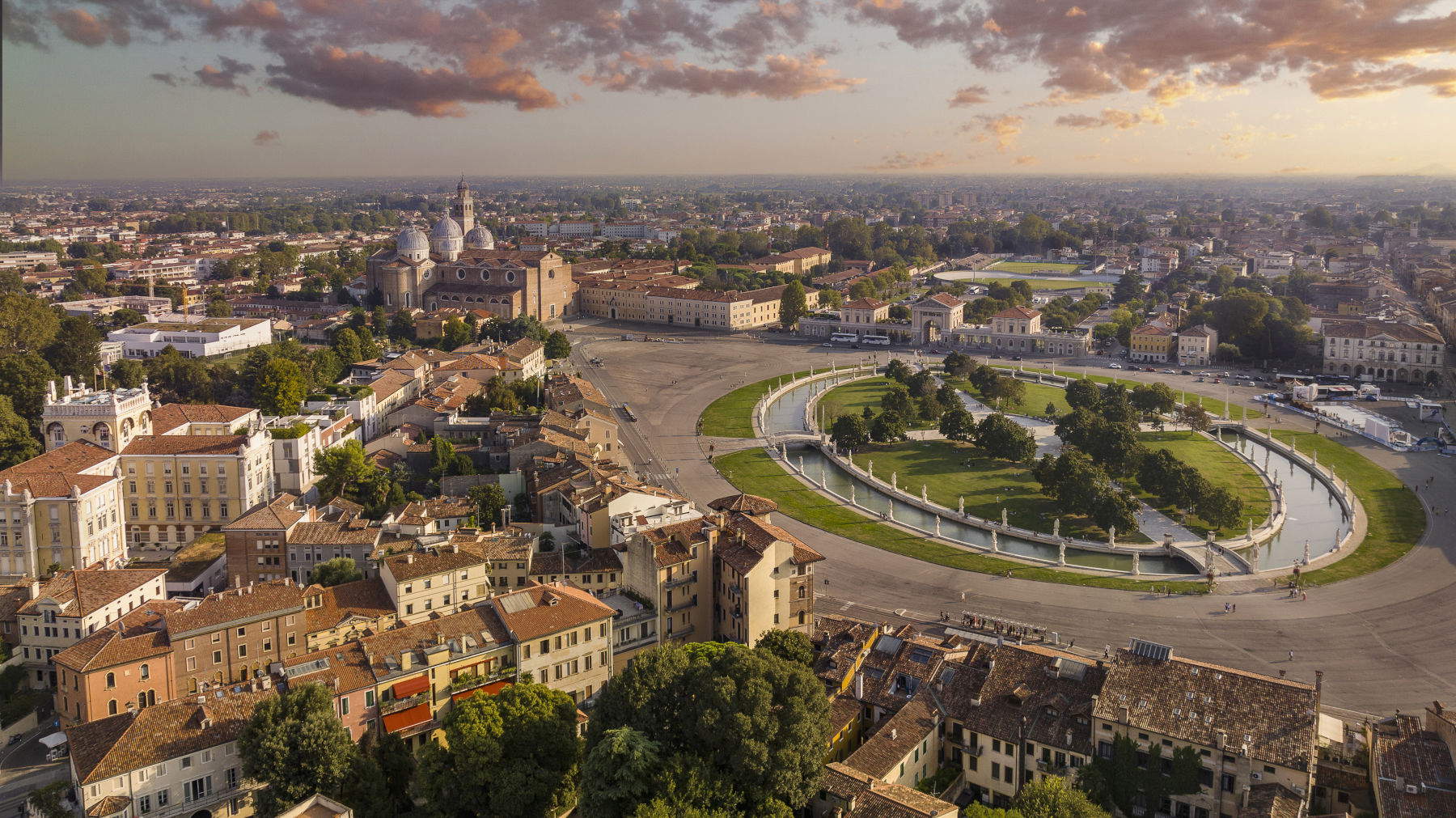
The project also draws on the city’s historical tradition of freedom of thought. In 1222, a group of professors and students founded the University of Padua precisely because of the conditions of autonomy in study and research. Over the centuries, the University and the city have been home to figures such as Pietro d’Abano, Galileo Galilei, Andrea Vesalio, Elena Cornaro Piscopia, Giotto, Mantegna, and the Gruppo N, right up to Maurizio Cattelan, who is now part of the artistic direction of the bid. Building on this historical and cultural legacy, Padua is presented as a city of creative dissent—a place where innovative forms of expression are developed and established models of knowledge are challenged.
The title of the bid also references the phrase “Anchora imparo,” attributed to Michelangelo and later taken up by Goya and Gio Ponti in the Scala del Sapere at Palazzo Bo, the historic home of the University of Padua. The expression is interpreted as embodying an attitude of continuous openness to learning and the transformation of knowledge. The project’s artistic direction is led by Maurizio Cattelan, Marta Papini, and Myriam Ben Salah. Cattelan, a Paduan artist active on the international scene, is identified as a central figure for his work critiquing established codes and narratives. Papini brings experience in public art and participatory processes within local communities. Ben Salah, a Franco-Tunisian curator and director of the Renaissance Society in Chicago, is currently the curator of the French Pavilion at the 2026 Venice Art Biennale.
The project is supported by a Scientific Committee composed of Cecilia Alemani, former director of the 2022 Venice Art Biennale; Cardinal José Tolentino de Mendonça, prefect of the Holy See’s Dicastery for Culture and Education, Daniela Mapelli, rector of the University of Padua, and architect Renzo Piano. The committee has defined an interdisciplinary framework that brings together contemporary art, scientific research, architecture, urban planning, education, and public space.
The bid takes the form of an urban platform rather than a program of events. It will feature exhibitions, public commissions, artist residencies, educational programs, conferences, publishing initiatives, and research projects. The goal is to consolidate the city’s role as a center of cultural production, with effects set to continue beyond 2028 through new works and infrastructure. The project involves the entire urban fabric, with coordination among institutions, foundations, universities, associations, and cultural operators. The bid aims to forge new connections between existing entities and international networks, strengthening Padua’s position within the European and global cultural landscape.
A key element concerns the availability of new spaces for contemporary culture. By 2028, plans call for the restoration and repurposing of over 20,000 square meters of cultural infrastructure distributed throughout the historic center and various neighborhoods. Among the sites identified are the Palazzo della Ragione, the Botanical Garden, the Castello Carrarese, the Museo degli Eremitani, Palazzo Lanza, Palazzo Zabarella, and the former Cinema Altino, along with spaces in neighborhoods such as the San Carlo Center DU30, Palazzo Configliachi, and the Laboratorio di Quartiere all’Arcella, as well as Villa Breda in Ponte di Brenta. The network of sites aims to create a widespread geography of the contemporary, in which historical heritage and new cultural functions intertwine with processes of urban and social regeneration.
The application was submitted to the Ministry of Culture on June 15, 2026. The dossier will now be reviewed by the ministerial committee responsible for the selection process, which will identify the finalists and subsequently the city awarded the title for 2028. The process will continue according to the stages outlined in the call for applications, leading up to the final designation of the Italian Capital of Contemporary Art.
“I am very pleased that Padua has submitted its bid to become the 2028 Italian Capital of Contemporary Art, and I hope the Ministry will recognize the quality of the project we have developed,” said Sergio Giordani, Mayor of Padua. “This quality lies not only in our city’s extraordinary history, but above all in the solidity and practicality of the proposal we have submitted. I would like to emphasize that this bid is the result of a major collaborative effort, developed together with the city’s institutions, the University, and the cultural, social, and economic organizations of the region. Special thanks go to the foundations that have supported Padua’s cultural growth for years—the Alberto Peruzzo Foundation, the Bano Foundation, and now also the Chiara and Francesco Carraro Foundation—which have chosen to stand by the city on this journey as well. If Padua is selected, the project could serve as a major driver of cultural, artistic, and social development, with significant economic and tourism benefits as well. 2028 is just around the corner: that is why we must continue to work together, with enthusiasm and a sense of responsibility, so that we are ready to meet this important challenge.”
“Padua’s candidacy represents an important step, one that unites history and vision, deep roots and the ability to look ahead,” emphasizes Daniela Mapelli, Rector of the University of Padua. “Joining the Scientific Committee means contributing to a journey that is not only about planning but also about culture—one that calls into question the very role of knowledge in shaping the future. Padua is a city that has made the relationship between knowledge, institutions, and the community its defining characteristic. A city where the university, from its very beginnings, has been a place of openness, dialogue, and freedom. It is within this tradition that today’s candidacy is rooted, looking toward Europe and the world, and placing the ability to interpret change at its core. “I am still learning” was also one of the key messages for the celebrations marking our University’s 800th anniversary: namely, the awareness that knowledge is never acquired once and for all, but is continually renewed through discussion, research, and the encounter between different forms of knowledge. This is the spirit with which we embark on this journey.”
“Padua’s bid to become the Italian Capital of Contemporary Art 2028 represents a great opportunity for our city, as it expands the artistic horizons that define its national and international identity,” says Andrea Colasio, Councilor for Culture. “Alongside Urbs Picta, the Padova Contemporanea 2028 project expands the overall cultural offering. This journey is the natural outcome of a strategy that, in recent years, has seen a multitude of public and private stakeholders invest decisively in the languages and spaces of contemporary art. This process has involved the redevelopment and regeneration of often-abandoned buildings and sites, restoring them to a new identity and public function: the Altino Cinema, the Church of Sant’Agnese and Palazzo Lanza, Palazzo Configliachi, the DU30, and the Carrarese Castle, but also encompasses the numerous University campuses and even the hangars at Allegri Airport. This strategy has begun to redefine the center-periphery axis of cultural policies, identifying new spaces dedicated to artistic creativity and contemporary art: this is the case with the DU30, which will host full-fledged artist residencies, and Palazzo Configliachi, dedicated to 20th-century art. The strength of the bid naturally lies in the presence of an internationally renowned artist such as Maurizio Cattelan, a native of Padua who has decided to offer the city his invaluable cultural contribution. Joining him are internationally acclaimed curators such as Marta Papini and Myriam Ben Salah. Another strength is the project’s connection to the city’s cultural history, beginning with the title of the bid: *Ancora imparo. Esercizi di dissidenza*(I Am Still Learning: Exercises in Dissent), which refers to the inscription Gio Ponti—inspired by Michelangelo and Goya—had placed on the Scala del Sapere at the Bo. *Exercises in Dissent* also alludes to the great tradition of freedom and to the way in which, over the long term, our city—through forms of generative dissent—has been able to break away from established patterns and old paradigms: Giotto reinvented the language of art, while Pietro d’Abano, Galileo, and other scholars at the University of Padua followed in this same vein, combining scientific experimentation with innovation. The University of Padua itself was founded in 1222, precisely because a few years earlier the city—with the Torre degli Anziani and the construction of the Palazzo della Ragione—had forcefully expressed the close connection between the free commune and civic liberties. But the project also connects to those artistic and cultural movements that, in more recent times, have been characterized by a strong capacity for innovation, such as Gruppo N, to which a special section within the Castello Carrarese will be dedicated. Finally, the nomination is the result of a collaborative effort involving numerous institutions, businesses, and associations, as well as the Diocese itself and the University of Padua, which is contributing to the project by making the Botanical Garden a shared asset, in addition to the many projects, knowledge, and expertise of its departments.”
“We are interested in art when it sparks questions, when it challenges our habitual ways of seeing, when it creates spaces for dialogue rather than confirming what we already know,” say Maurizio Cattelan, Marta Papini, and Myriam Ben Salah. “This is why we chose to start with the idea of dissent: an exercise in freedom, curiosity, and imagination. Padua has a long tradition of independent thought, research, and experimentation. Our task will not be to bring something from outside, but to work together with the many energies already coursing through the city—often beneath the surface—connecting them with one another and with artists, institutions, communities, and international networks. The bid stems from listening to what Padua is today and from the desire to highlight the transformations already underway. We would like Padua 2028 to be an opportunity to view the city from unexpected perspectives: through the eyes of those encountering it for the first time, of those who live there every day without even noticing some of its treasures, but also of those who return after many years and discover it different from how they remembered it. A city capable of surprising us with the vitality of its cultural, scientific, and social energies—energies that are often less visible than they deserve to be. We are interested in what happens when different worlds come into contact: when art meets scientific research, when heritage engages with the contemporary, when neighborhoods become hubs of cultural production, when a community confronts ideas that come from elsewhere. It is in these tensions—between reality and imagination, between what exists and what could exist—that something new often emerges. This is why an important part of the project focuses on young people and the more than 76,000 students who live in, pass through, and transform Padua every year. They are the natural community at the heart of a bid titled “I’m Still Learning.” We would like to offer opportunities for encounter, research, creation, and experimentation capable of sparking curiosity, creating opportunities, and building lasting relationships between those studying in Padua today and the city’s future—which will inevitably be theirs as well. We are not interested in merely putting together a program of events. Exhibitions are the most visible part of a much deeper process. We are interested in working on cultural infrastructure, relationships, skills, spaces, and opportunities that can continue to generate value even after 2028. If dissent is the ability to imagine what does not yet exist, then the most important legacy of Padova 2028 will be to help make the city even more aware of its own potential. To help it continue to transform itself, to never settle for less, and to keep alive that drive toward the new that has run through its history for over eight hundred years. Because a vibrant city is not one that stops asking questions, but one that continues to imagine, experiment, and reinvent its own future.”
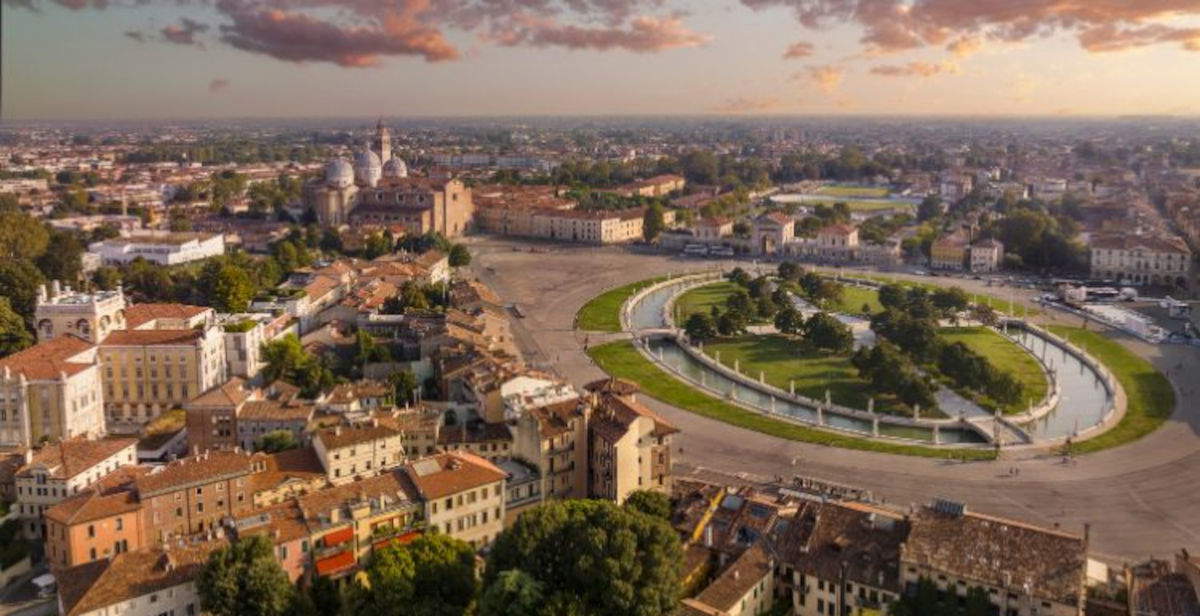 |
| Padua is a candidate for the 2028 Capital of Contemporary Art, with Cattelan and an international committee |

Warning: the translation into English of the original Italian article was created using automatic tools. We undertake to review all articles, but we do not guarantee the total absence of inaccuracies in the translation due to the program. You can find the original by clicking on the ITA button. If you find any mistake,please contact us.






















 IT
IT FR
FR DE
DE ES
ES CN
CN


