





The Council of the European Union adopted Implementing Regulation (EU) 2026/509 on April 23, 2026, further strengthening the framework of restrictive measures against Russia in connection with the war against Ukraine. The decision is based on the Treaty on the Functioning of the European Union and a proposal by the High Representative of the Union for Foreign Affairs and Security Policy. In the preamble to the regulation, the Council explicitly recalls the conclusions of the European Council of December 19, 2024, in which the Union had reiterated its condemnation of Russia’s war of aggression against Ukraine, which it called a manifest violation of the United Nations Charter. On that occasion, European leaders had reaffirmed support for Ukraine’s independence, sovereignty and territorial integrity within its internationally recognized borders, while also declaring readiness to intensify pressure on Moscow through new sanctions.
The new regulation thus falls in line with this policy orientation, in response to what is described as continued aggression and escalation by the Russian Federation. It highlights in particular the recent military campaign targeting civilian infrastructure, including energy, water and sanitation facilities, causing severe suffering to the population and aimed at weakening the country’s resilience. In light of these developments, Brussels deemed it necessary to adopt additional restrictive measures.
At the heart of the measure is the inclusion of 37 individuals and 80 entities on the sanctions list. These are individuals deemed responsible for actions that undermine or threaten Ukraine’s territorial integrity, sovereignty and independence. Updating the list entails the application of measures such as freezing of assets and a ban on entering or transiting the territory of the European Union.
Among the names included are those of four prominent cultural figures. The most famous is Michail Borisovič Piotrovsky, longtime director of the State Hermitage Museum in St. Petersburg and considered close to Russian President Vladimir Putin. According to the Council, Piotrovsky actively supported and justified the war against Ukraine, going so far as to compare the global spread of Russian culture to the so-called “special military operation,” an expression used by the Kremlin to refer to the invasion. The museum executive also allegedly supported Russian legislation allowing the incorporation of cultural property from Ukrainian museums into the Russian state fund. Under his leadership, the Hermitage museum is accused of conducting unauthorized archaeological excavations in occupied Crimea, causing the destruction of protected Ukrainian heritage sites. Such activities are interpreted by the European Union as serving the Kremlin’s goals of legitimizing its territorial claims through initiatives presented as scientific.
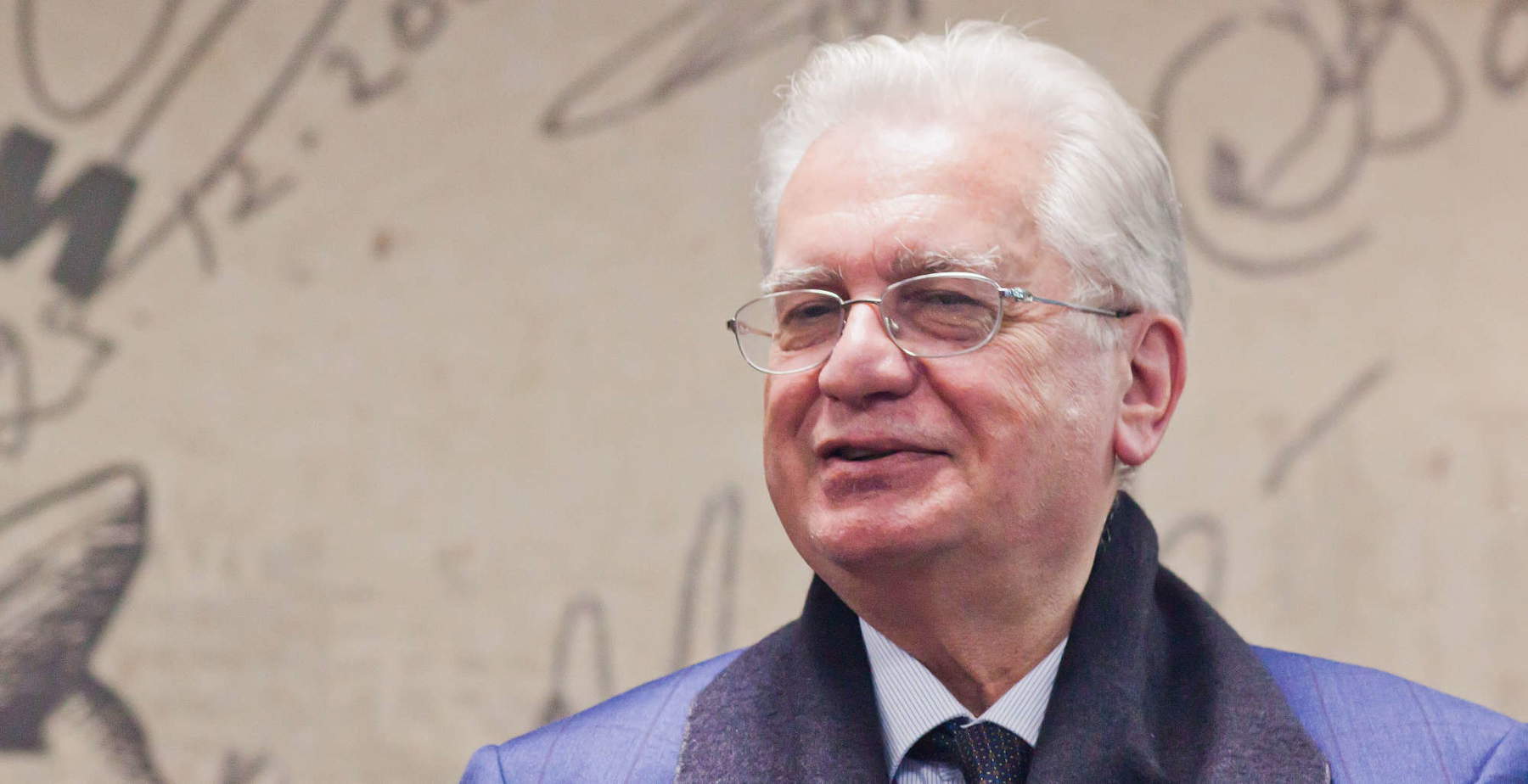
Another name included in the list is that of Sergey Gennadievič Obryvalin, First Deputy Minister of Culture of the Russian Federation. Obryvalin oversees key departments of the ministry, including that of cultural heritage protection, museum management and the Russian Military Historical Society. According to the Council, these structures are directly involved in seizing Ukrainian cultural property and reclassifying it as Russian heritage. The official allegedly signed permits, known as “open letters,” authorizing Russian scientists to conduct archaeological excavations in Crimea. In addition, the Ministry of Culture, in cooperation with authorities deemed illegitimate in the occupied territories, promotes cultural initiatives in those areas, with the active involvement of Obryvalin himself. For the European Union, such activities constitute concrete support for policies that undermine Ukrainian sovereignty.
Among those affected by the sanctions is Andrej Vladimirovič Polyakov, director of the Institute for the History of Material Culture of the Russian Academy of Sciences. Between 2014 and 2023, under his leadership, the institute systematically conducted archaeological excavations in the territories of Russian-occupied Crimea. The institution has obtained over twenty permits from the Russian Ministry of Culture, which coordinates and authorizes such activities along with other state institutions. According to the Council, these excavations were carried out without the consent of Ukraine, which is internationally recognized as sovereign over the peninsula. Polyakov is also reported to have publicly supported the institute’s continued activities in the occupied region, pointing to ongoing work in Chersonesos and other areas as part of a larger program that included more than forty excavations in 2024. His leadership is seen as instrumental not only in the execution of activities deemed illegal, but also in the institutional normalization of the Russian presence in Crimea and the cultural appropriation of the territory.
Nikolai Andreevič Makarov, director of the Institute of Archaeology of the Russian Academy of Sciences and vice-president of the same Academy, also appears on the list. Makarov is responsible for the scientific, technical and economic operations of the institute, including development strategy and policies related to fieldwork. Under his leadership, the institute has become a major player in the archaeological exploitation of occupied Crimea, an activity considered part of a broader state strategy. For the Council of the European Union, Makarov’s role involves supporting and implementing policies and actions that undermine or threaten Ukraine’s territorial integrity, sovereignty and independence. The allegations against the listed individuals reflect a growing focus by the Union on the role of the cultural and scientific sector in the dynamics of the conflict.
The regulation stipulates that the amendments to Annex I take effect from the date of publication in the Official Journal of the European Union. As expected, the text is binding in its entirety and directly applicable in each of the member states, without the need for national transposition.
|
| Sanctions on Russia: Hermitage director also hit. The reasons |

Warning: the translation into English of the original Italian article was created using automatic tools. We undertake to review all articles, but we do not guarantee the total absence of inaccuracies in the translation due to the program. You can find the original by clicking on the ITA button. If you find any mistake,please contact us.














 IT
IT FR
FR DE
DE ES
ES CN
CN


