





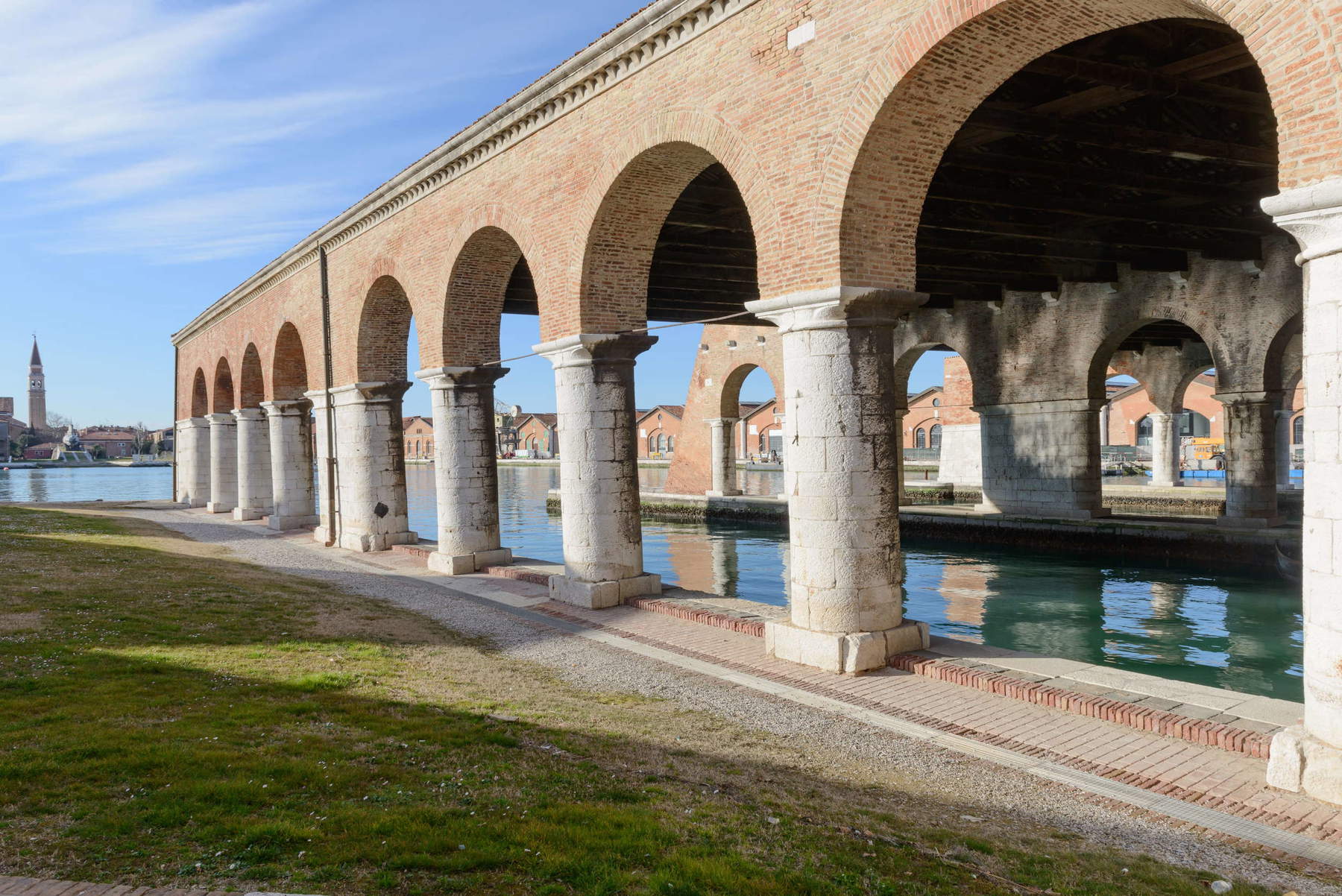
La Biennale di Venezia has announced the unveiling of the new headquarters of theArchivio Storico - International Center for Research on Contemporary Arts - within the Arsenale, at the Magazzino del Ferro, a historic building located near the Corderie and identified with Campo della Tana 2169/F. The initiative is part of a multifaceted program that will run from June 1 to 3, 2026 and will include performances, lectures and a concluding open day dedicated to public access to the restored spaces.
The intervention was funded by the Ministry of Culture through the National Complementary Plan (PNC) to the National Plan for Recovery and Resilience (PNRR), as part of the Great Cultural Heritage Attractions and Great Cultural Heritage Projects programs. The project is also part of the redevelopment of the Arsenal, Lido and other mainland sites initiated by the Biennale since 1999, with the aim of strengthening the institution’s cultural and archival infrastructure and its relationship with the city of Venice. The new headquarters of the Historical Archives occupies a total area of about 8,000 square meters. The work, which began in March 2024, is reported to have been completed on schedule. The facility represents one of the most complex interventions in the Biennale’s space enhancement program and is part of the system of progressive redevelopment of the Arsenal’s environments.
Over the past four years, the Biennale has strengthened the activities of its Archives in preparation for the move to the new venue. In this context, the International Center for Contemporary Arts Research was established, inaugurated in 2021 as a permanent structure dedicated to the promotion of collaborations between scholars, students, cultural institutions and research bodies at the national and international level. The center is conceived as a place for the production and exchange of knowledge related to contemporary languages of the arts.
TheHistorical Archives of the Biennale preserves documentation related to the Foundation’s activities since the first International Art Exhibition in 1895. The holdings include materials related to participating artists, works and disciplines that have spanned the history of the institution. Included are the Library specializing in contemporary arts, located in the Central Pavilion at the Giardini, the Historical Fund with more than 10,000 files, an extensive photo and media library, the Artistic Fund, as well as posters, press reviews and heterogeneous materials that include photographs, correspondence, audiovisuals, scores, artworks and vinyl records.
The archival institution is configured as a gradually expanding system geared toward the enhancement and accessibility of materials through study and research tools. Funds are described as active resources, capable of generating new lines of research and planning. Within this framework, the Artistic Directors of the different sectors of the Biennale are involved in the development of projects based on the archival materials, with aims that include the creation of exhibition routes and special initiatives.
The inaugural program spans three days and offers a reflection on the languages of contemporary arts through interventions and performative actions curated by the Artistic Directors of the Biennale, who are also curators of the Archive. They are Alberto Barbera for cinema, Caterina Barbieri for music, Willem Dafoe for theater, Wayne McGregor for dance, Wang Shu and Lu Wenyu for architecture, as well as Maria Magdalena Campos-Pons and Kamaal Malak for art.
On Monday, June 1, the program includes two afternoon sessions, from 3:30 to 5 p.m. and 6 to 7:30 p.m. Opening is the performance Body as Archive, a Dance Biennale project curated by Wayne McGregor, developed with AISOMA, a machine learning-based choreography system designed in collaboration with Google Arts & Culture. The device analyzes a 30-year archive of the choreographer’s work and proposes new movement sequences as a creative tool. Inside the Archive’s new location, sixteen dancers from the Biennale College Danza are participating in the creation of a work in installation form. The dancers involved are Martina Balzamo, Jacopo Bellani, Ada Campagnolo, Giorgio Adam Forlani, Gerardo Garrido, Yawen Huang, Patricia Insa Ribera, Elaini Lalousis, Siyu Li, Pasquale Mazzella, Pietro Mazzotta, Garris Muñoz, Coralie Murgia, Pam Pam Phusanisa Sapchartanan, Melissa Venturi Degli Esposti, and Pengfan Wu. The project includes light design by Theresa Baumgartner and live music by Yraki.
It is followed by WATERMARKS, a performance by Maria Magdalena Campos-Pons and Kamaal Malak, artists involved in the Biennale Arte 2026. The intervention develops as an interweaving of word, sound and electric bass, with a reflection on the relationship between time, memory and perception. The two artists describe the archive as a threshold of access to the past and a device for opening to the future.
The June 1 program concludes with We Were Together, I Forget the Rest, a Biennale Teatro performance curated by Willem Dafoe, focusing on the theme of memory and built on an improvised choral reading of fragments from the Historical Archives. The introduction is by Willem Dafoe. The readers involved are Cesare Bisantis (Cinema), Michela Campagnolo (Dance), Giacinta Dalla Pietà (Historical Archives), Helga Greggio (Architecture), Davide Ferrante (Music), Luigi Ricciari (Visual Arts) and Marta Zannoner (Theater). Sound design is curated by Soundwalk Collective.
On Tuesday, June 2, the program opens at 11 a.m. with a lecture by Wang Shu and Lu Wenyu, directors of the Architecture Biennale 2027 and founders of the Amateur Architecture Studio. The talk addresses issues related to the relationship between memory, materials, landscape and contemporary design research. In the afternoon, from 3:30 p.m. to 5 p.m., the three performances already presented on the previous day are presented again. At 5:30 p.m., the conversation Orizzonti della Mostra Internazionale d’Arte Cinematografica takes place, with Alberto Barbera in dialogue with five young scholars and film scholars: Sara Coppola, Marta Costagli, Alessandro Del Re, Lorenzo Meloni and Anja Boato.
The day closes at 9:30 p.m. with the concert Yet Darkness Held No Seraphim by Caterina Barbieri, director of the Music Biennale. The project, conceived for the Archives’ new spaces, focuses on generative techniques and electroacoustic forms, with an original repertoire performed together with guest musicians. The concert includes a site-specific light design by Marcel Weber (MFO) and visuals by Ruben Spini. Musicians involved include FontanaMIXensemble, Clara La Licata (soprano), Matilde Lazzaroni (mezzo-soprano), Rocco D’Aurelio (tenor), Paolo Leonardi (baritone), Enrico Castagnetti (horn), István Baráth (trumpet), Gabriele Bastrentaz (trombone), and Niccolò Baldisserri (bass tuba), with sound engineer Carlos Boix. On Wednesday, June 3, the spaces of the new Historical Archives building will be open to the public for an open day from 11 a.m. to 7 p.m., with last admission at 6:30 p.m.
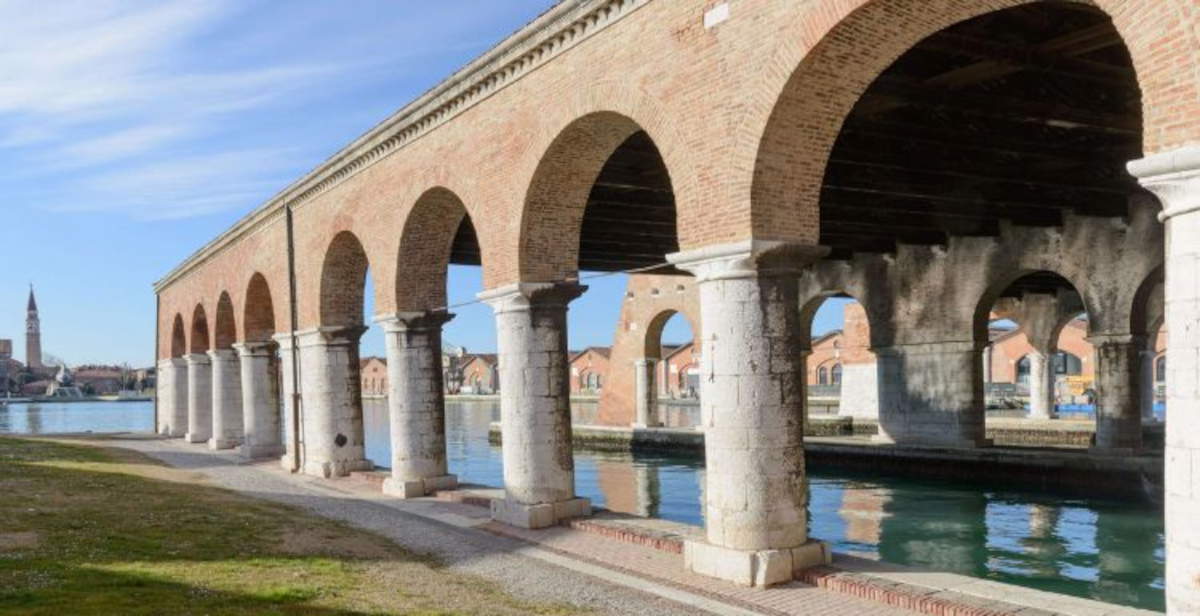 |
| Venice Biennale, new headquarters of the Historical Archives and Research Center at the Arsenale |

Warning: the translation into English of the original Italian article was created using automatic tools. We undertake to review all articles, but we do not guarantee the total absence of inaccuracies in the translation due to the program. You can find the original by clicking on the ITA button. If you find any mistake,please contact us.
























 IT
IT FR
FR DE
DE ES
ES CN
CN


