





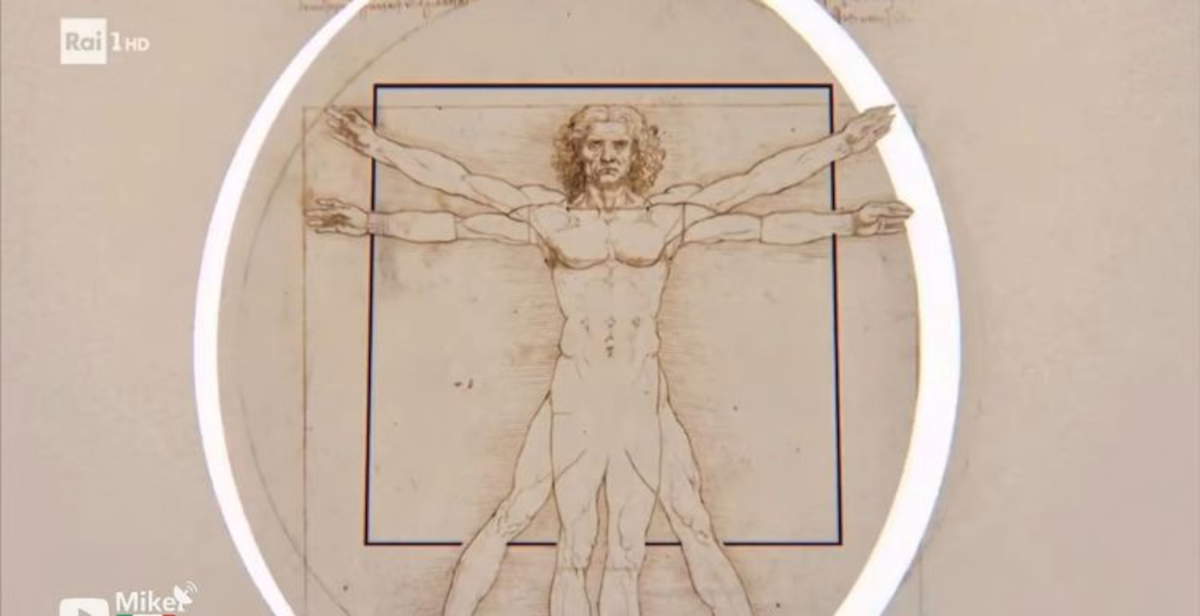
The television theme song that accompanies daily live broadcasts of the Milan Cortina 2026 Winter Olympic Games has ended up at the center of a controversy involving the relationship between philological fidelity of the artwork and the need for global distribution. At the center of the debate is Leonardo da Vinci’sVitruvian Man, a Renaissance masterpiece and universal symbol of human proportions, which appears visibly altered in the opening graphic clip. Although the structure of the original drawing has been retained to represent the excellence of the Italianate and the harmony of the athletic body, the male genitals have been removed from the digital animation. The change, which initially went almost unnoticed due to the speed of the sequences, was brought to the public’s attention by an analysis by Elisa Messina of Corriere della Sera, who pointed out the discrepancy between Leonardo’s canon and the television version. The news quickly turned into a political and cultural case that crossed national borders and attracted the attention of international newspapers such as The Guardian.
Leonardo’s work, which in the original intent of the Vincian genius was intended to represent the symbolic union between the human microcosm and the universal macrocosm through the geometric figures of the circle and the square, is used in the theme song as the basis for a fluid transformation. In the video, the lines of the drawing evolve to shape the silhouettes of skaters, skiers and other protagonists of winter disciplines. However, although the animation very accurately traces the musculature and somatic features defined by Leonardo, the pelvic area is bleached out, as Corriere delle Sera reports, making the Renaissance man an asexual figure similar to a contemporary mannequin. The graphic choice has raised questions about the nature of the decision, oscillating between being overly cautious with respect to international regulations and fear of offending the sensibilities of more conservative television markets. From the standpoint of editorial and production responsibility, it has emerged that the clip was not made directly by Rai. The authorship of the content, the paper reported, belongs to Olympic Broadcasting Services, the body in charge of producing television signals and providing official materials to all rights-holding broadcasters worldwide. Rai, as the national broadcaster, received and used the official graphic package as prepared by the Olympic production headquarters. The fact remains, however, that the clip was viewed and accepted by the technical offices and top management of state television, who raised no objections to the integrity of Leonardo’s masterpiece prior to airing.
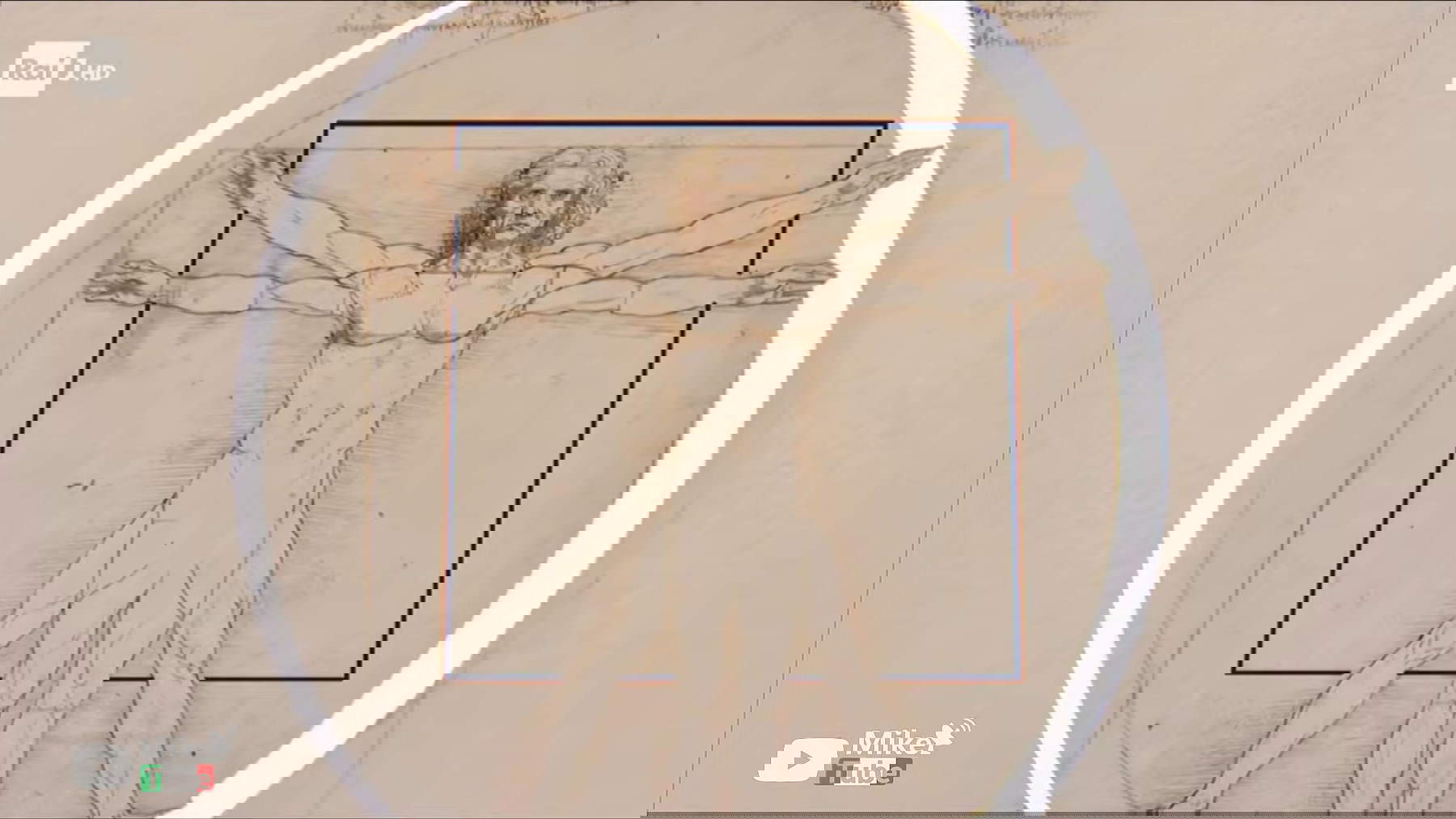
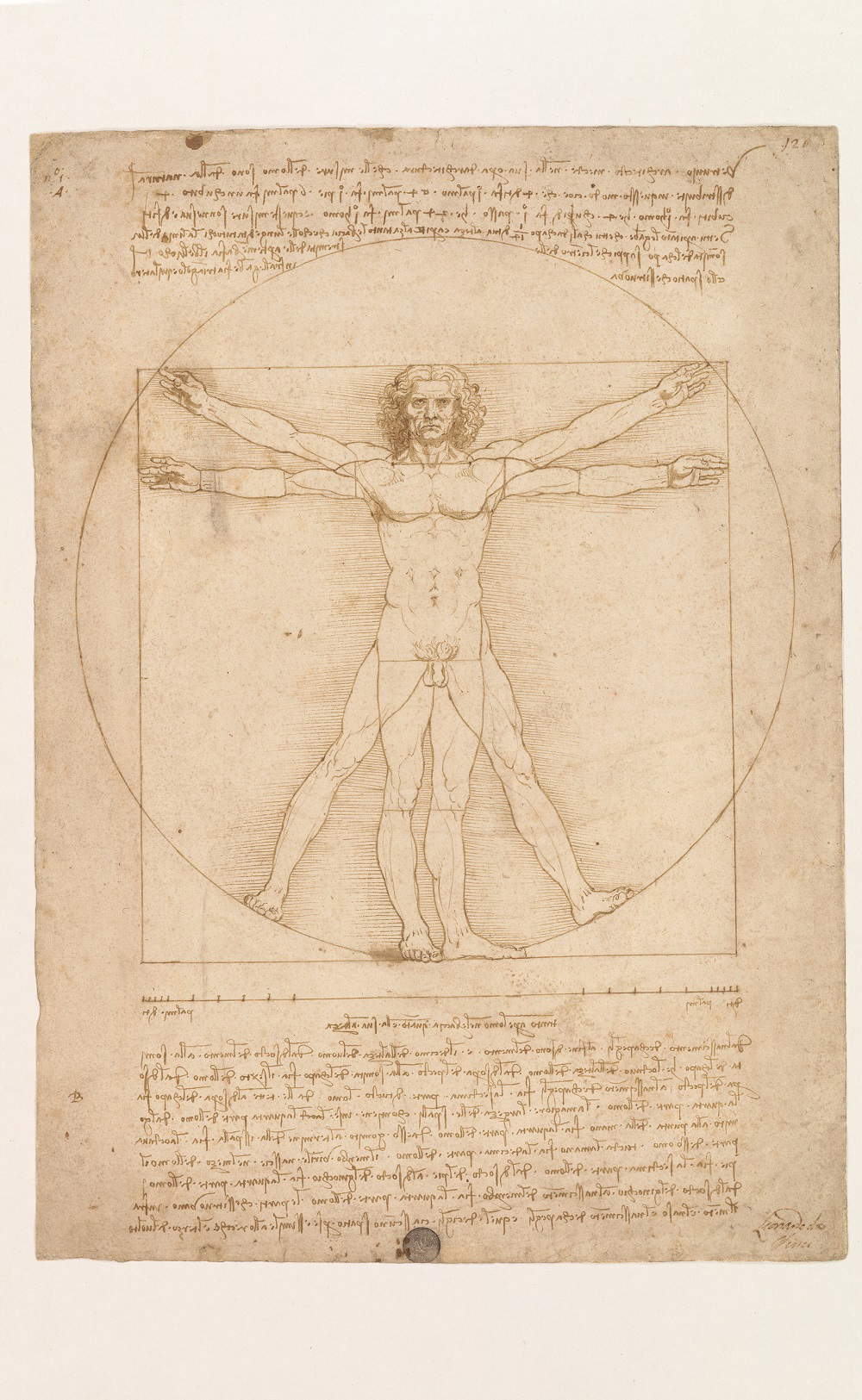
International Olympic Committee (IOC) regulations impose very strict standards on the dissemination of content, strictly forbidding images that could be interpreted as explicitly sexual. The rule, designed for universal enjoyment that includes extremely diverse cultures and legislation, seems to have been applied extensively even to a five-hundred-year-old work of art, universally recognized for its scientific and anatomical rather than erotic value. The debate quickly moved to the institutional level, with parliamentary questions even calling the Ministry of Culture into question. Opposition figures have in fact asked for clarification on the legitimacy of such an alteration, questioning whether the legal custodians of the original work granted permission for such a radical manipulation of Leonardo’s graphic form.
"The Corriere della Sera website denounces a very serious fact: in the RAI theme song of the Milan Cortina Olympic Games, Leonardo da Vinci’sVitruvian Man has been tampered with and censored, with the elimination of the genitals present in the original work," says Irene Manzi, Democratic Party group leader in the Culture Commission at the Chamber through a press release. “We are faced with an incomprehensible and unacceptable choice: does Rai really get to edit Leonardo? Is it possible that Rai sports director Petrecca authorizes the airing of an altered version of one of the universal symbols of Renaissance art every day? Rai, which was once considered the most important cultural company in the country, cannot be reduced to intervening in a masterpiece that belongs to the world’s heritage. Altering art means humiliating it, impoverishing it, certainly not protecting it. The public service has a duty to enhance our history and identity, not to rewrite them through excessive prudence or bureaucratic interpretations of regulations. We ask Rai to immediately clarify the reasons for this decision. And we ask the government, starting with President Meloni, to put an end to these continuous gaffes that damage Italy’s cultural credibility. Does Minister Giuli really have nothing to say in the face of this disfigurement to cultural heritage? We cannot present ourselves to the world by censoring Leonardo right during the Olympics.”
The case of the emasculated Vitruvian Man brings to mind previous episodes of aesthetic revisionism applied to Italy’s artistic heritage for promotional or television purposes. One recalls, for example, the use of Botticelli ’s Venus in advertising contexts where the original nudity was concealed by contemporary clothing. In the Olympic context, the choice to remove male anatomical features appears as an attempt to neutralize the image in order to make it conform to an overall aesthetic free of disturbing elements, even at the cost of sacrificing the historical truth of the artwork. The issue raises a profound question about protecting the integrity of artworks when they are turned into mass communication tools, where the line between technical adaptation and distortion of original meaning becomes extremely thin and problematic for art critics.
 |
| Vitruvian Man censored in theme song for Milan Cortina Olympics becomes international case |


The author of this article: Noemi Capoccia
Originaria di Lecce, classe 1995, ha conseguito la laurea presso l'Accademia di Belle Arti di Carrara nel 2021. Le sue passioni sono l'arte antica e l'archeologia. Dal 2024 lavora in Finestre sull'Arte.Warning: the translation into English of the original Italian article was created using automatic tools. We undertake to review all articles, but we do not guarantee the total absence of inaccuracies in the translation due to the program. You can find the original by clicking on the ITA button. If you find any mistake,please contact us.






















 IT
IT FR
FR DE
DE ES
ES CN
CN


