








I scroll through contrarian and self-defensive comments. Too much. I would like to disassociate myself a bit from the general mobilization. Undoubtedly, there has been a lack, on the curatorial side, of any cultural-diplomatic sensitivity or tact, and of this lack, if we wish, we can be critical. I would wait, however, to know, if any, the reasons for it. Already Okwui Enwezor, on the occasion of the 2015 Venetian Biennale, which he curated, reproached “Italian artists”-a very dubious category in itself-as being “not very brave”: it is possible that this prejudice or cliché has been confirmed today. I am anxious, however, to broaden the horizon beyond the mere fact of the news, which is in itself little more than an anecdote; and to consider the long-term reasons for an irrelevance (not only international, but also domestic) that seems to be overt today.
I then challenge the summarization imposed by the brief editorial space and state: contemporary Italian art pours into irrelevance/impotence today because it lacks an adequate critical literature. This is the thesis. That is, it does not have a critical literature (or art criticism) that is:
(a) accountable to images, not ideologies or commerce;
(b) perceptive on specifically visual planes, because it is provided with art-historical training;
(c) finally sovereign in its domain, which is writing, i.e. not hamstrung (or worse) by considerations of immediate utility, resonance and/or consensus.
Such a literature, which is a breeding ground, is not there today: the result is that, on the Italian side (whatever sense we attribute to the adjective), there is a failure to “remember” and regenerate a cultural heritage that is unique, and assigns to the peninsula, precisely in terms of geopolitical “minor keys” etc., roles of great relevance, I would say almost uniqueness.
This is not being brought to bear because we ignore it first: art, history, anthropology. Too many caesuras that have eroded, in the twentieth century and beyond, any intimate, native memory (in the Warburghian sense of Mnemosyne; or in the Julian-Pauline sense of “etymologies”). Too many impasses the socio-educational and publishing failures.
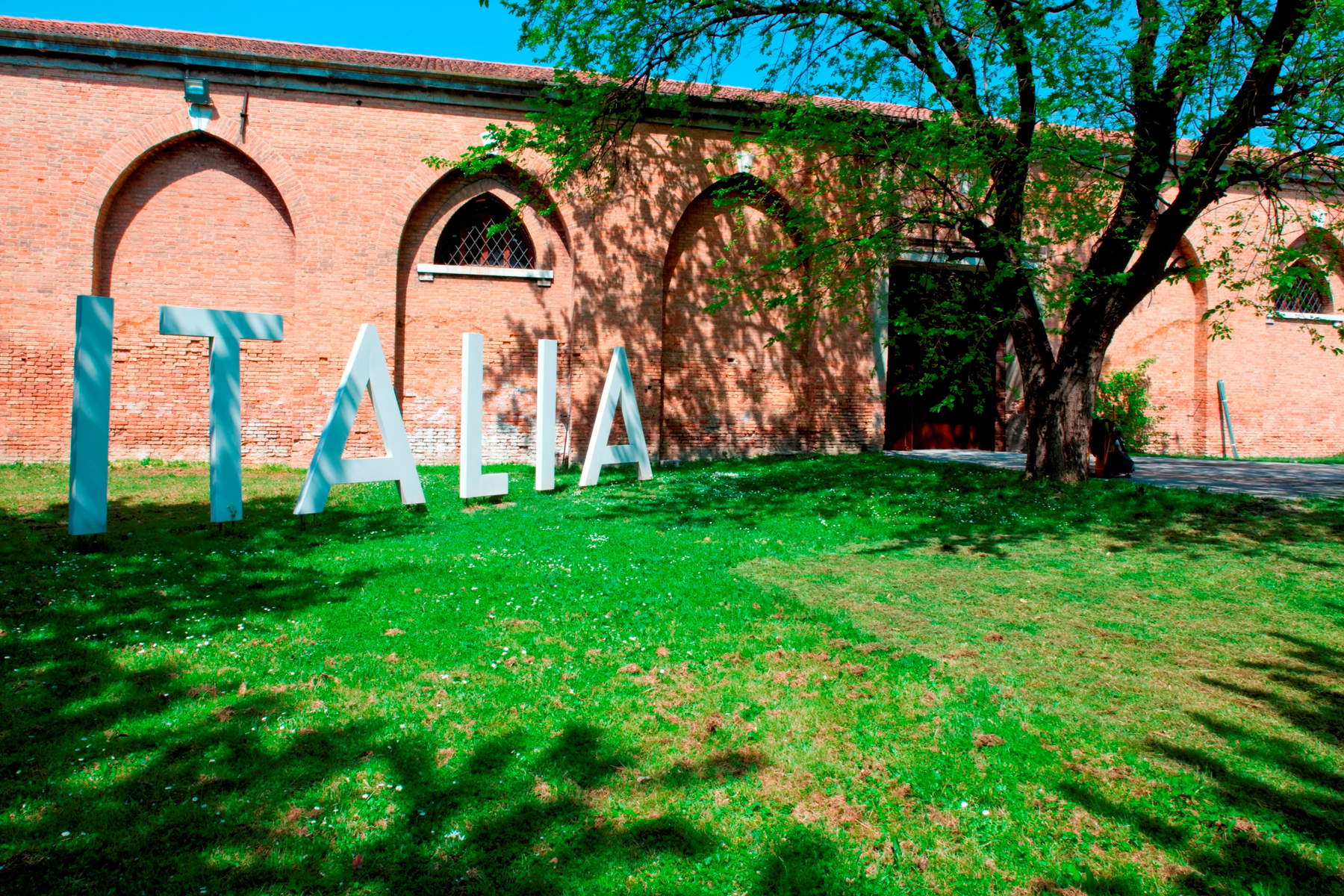
A young artist, in Italy, is mostly trained today on a not infrequently mediocre sociological literature and mainly through trade magazines: all this is little, imposes unproductive jargon and distances him from the “powers” that lie dormant in a figurative mother tongue.
We imitate others, the Anglo-Americans for example, because we feel they possess a more “aggressive” cultural theory. But no one has time, in this world, for those who imitate; for those in the Periphery who are unable to process their experience to the point of making it a requirement for a new Center.
On the other hand, since the instrumental launching of Arte povera in a New Left key in 1967, three or four generations of Italian artists have been educated to a prescriptive Americanism devoid of any complexity, uncritical, euphoric, servile; and to the sociological reduction of the creative process, whereby art, it is argued, is “an expression of its own time.” Today we grasp the fruit of all this. Even a few years ago, in the introduction to a major exhibition held at the Palazzo Reale, Milan, the curator, a successful Italian-American, called on Italian artists “to become more international.” How to accommodate such conformist, neo-colonial boutades? Do we know any German curator who disputes that Richter or Kiefer, I don’t know, are either of them great connoisseurs of the German-Dutch tradition, from whose repertoire one and the other draw with full force, giving it new life? Or are we to impute to Marlene Dumas that she moves at ease in the expressionist tradition, to Tracey Emin that she cultivates the art of drawing in the light of early twentieth-century Central European models, learned through the mediation of Lucien Freud, who was in more ways the heir of those models in Britain?
With such vapid and sterile mentors -- I return now to the brilliant curator mentioned above -- we will not get far, it is clear: without serious image education, ancient or contemporary it does not matter, nor any protection against the danger of geopolitical and cultural irrelevance.

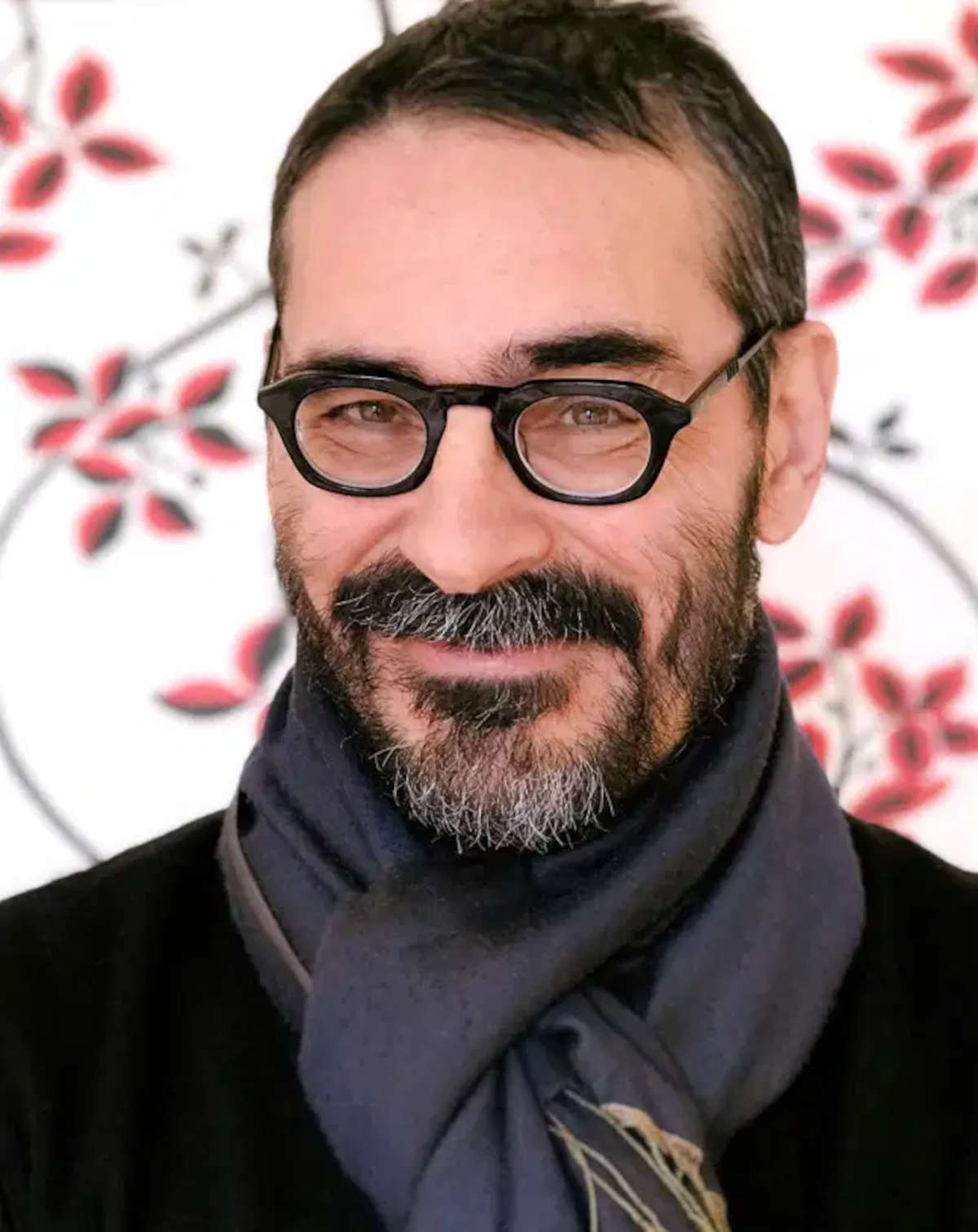
The author of this article: Michele Dantini
Michele Dantini (Firenze, 1966) è ordinario di Storia dell’arte contemporanea all’Università per Stranieri di Perugia, dove insegna dal 2016, ed è visiting professor alla Scuola Alti Studi di Lucca. Si è laureato e ha ottenuto un dottorato in storia dell'arte e della filosofia alla Scuola Normale Superiore di Pisa con Remo Bodei e Paola Barocchi. Ha insegnato dal 2006 al 2016 all'Università del Piemonte Orientale, dal 2011 al 2013 ha diretto il master MAED (Educational Management for Contemporary Art) all'Università del Piemonte Orientale - Castello di Rivoli Museo d'Arte Contemporanea. Dal 2018 al 2021 ha fatto parte del comitato scientifico delle OGR di Torino. È ed è stato inoltre responsabile di progetti di ricerca nazionali e internazionali dedicati ai temi dell’arte italiana postbellica. Tra i suoi libri più recenti: Geopolitiche dell’arte. Arte e critica d’arte italiana nel contesto internazionale (Christian Marinotti, 2012); Macchina e stella. Tre studi su arte, storia dell’arte e clandestinità: Duchamp, Johns, Boetti (Johan & Levi, 2014); Arte italiana postbellica (con Lara Conte, Ets, 2016); Arte e sfera pubblica. Il ruolo critico delle discipline umanistiche (Donzelli, 2016), Arte e politica in Italia. Tra fascismo e Repubblica (Donzelli, 2018). Sulla delicatezza (Il Mulino, 2021). I suoi libri sono tradotti negli Stati Uniti, in Francia, Spagna, Polonia e altri paesi.
Foto: Livia Cavallari
Warning: the translation into English of the original Italian article was created using automatic tools. We undertake to review all articles, but we do not guarantee the total absence of inaccuracies in the translation due to the program. You can find the original by clicking on the ITA button. If you find any mistake,please contact us.













 IT
IT FR
FR DE
DE ES
ES CN
CN