




by Sandro Debono 18/05/2026



Categories: Opinions / Disclaimer
From Bari to Malta, a reflection by Sandro Debono on Mediterranean museology as a space of relationships, stratifications and living memories that traverse communities, rituals and everyday places.
This text is a popular reworking of the keynote presented at the ICOM Italy national assembly and annual conference with the theme - Mediterranean Heritage: communities, alliances and horizons (Bari, April 17-19, 2026), an expanded version of which will be published soon.
I have been to Bari, more than once. Walking through the streets of the historic center one encounters buildings with walls smoothed by centuries of human contact, stone worn not by erosion but by presence. The elderly ladies sitting on the doorstep with their hands busy in the auricles embody a gesture unchanged through generations, performed without self-awareness, for no audience. Cloths stretched out among the alleys almost seem to want to muffle the conversations in narrow Bari dialect, exchanges that to an outsider’s ear sound like quarrels, and are instead nothing but everyday, intense, lived words. Here and there a votive shrine recesses into the wall like a sacred parenthesis while a moped creeps between all this as if it belongs to us, because it belongs to us, really. Nothing here is staged. Nothing is curated. Yet everything is layered.
These alleys of Bari’s historic center are the alleys of the Mediterranean that this time led to the ICOM annual conference entrusted to the wise hands of ICOM Puglia - Mediterranean Heritage, Communities, Alliances,Shared Inheritances , in which I had the honor of recounting the Mediterranean museum as a cultural and narrative space by bringing to theattention of the assembly a more than ten-year research path with the first reflections around the idea of a Mediterranean museology presented at Cartastorie - Museum of the Historical Archives of the Bank of Naples - in 2022 and subsequently published.


The Mediterranean resists definitions and has always done so. More than a unitary geographical space, the Mediterranean could also be told as a complex condition, marked by stratification, proximity and difference. It is a region that rejects simplification with an identity that is not based on uniformity, but on coexisting and overlapping histories and narratives. A Mediterranean also shaped from within by the three great monotheistic religions, each universal in its aspirations and yet irreducibly particular in its material and spatial expressions. It is not a sequence. It is not a progression. It is, more like, a continuous, unresolved, living accumulation. A sedimentation. And this is the Mediterranean that our museums are called upon to interpret, to guard and, in a sense, to represent.
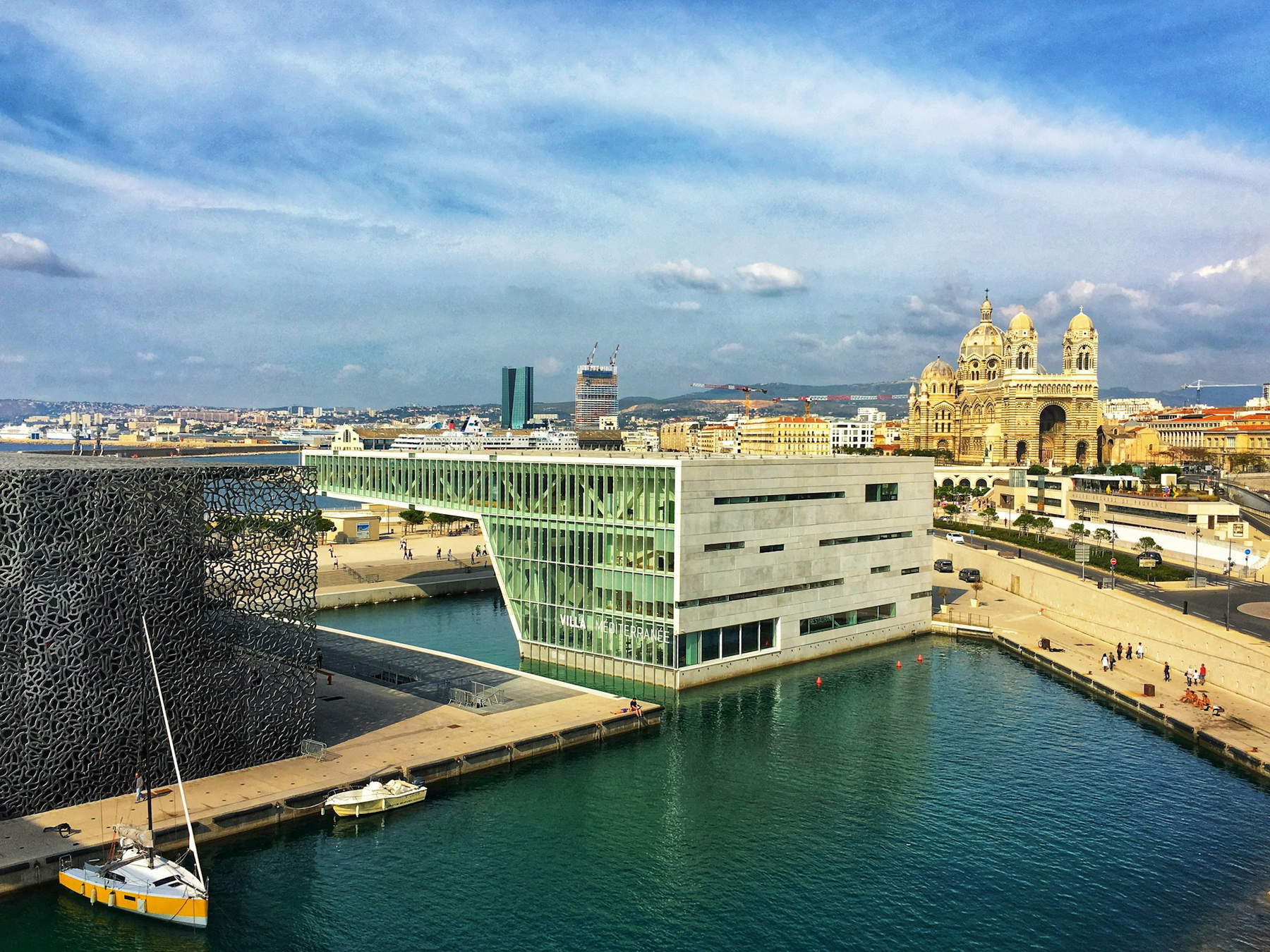
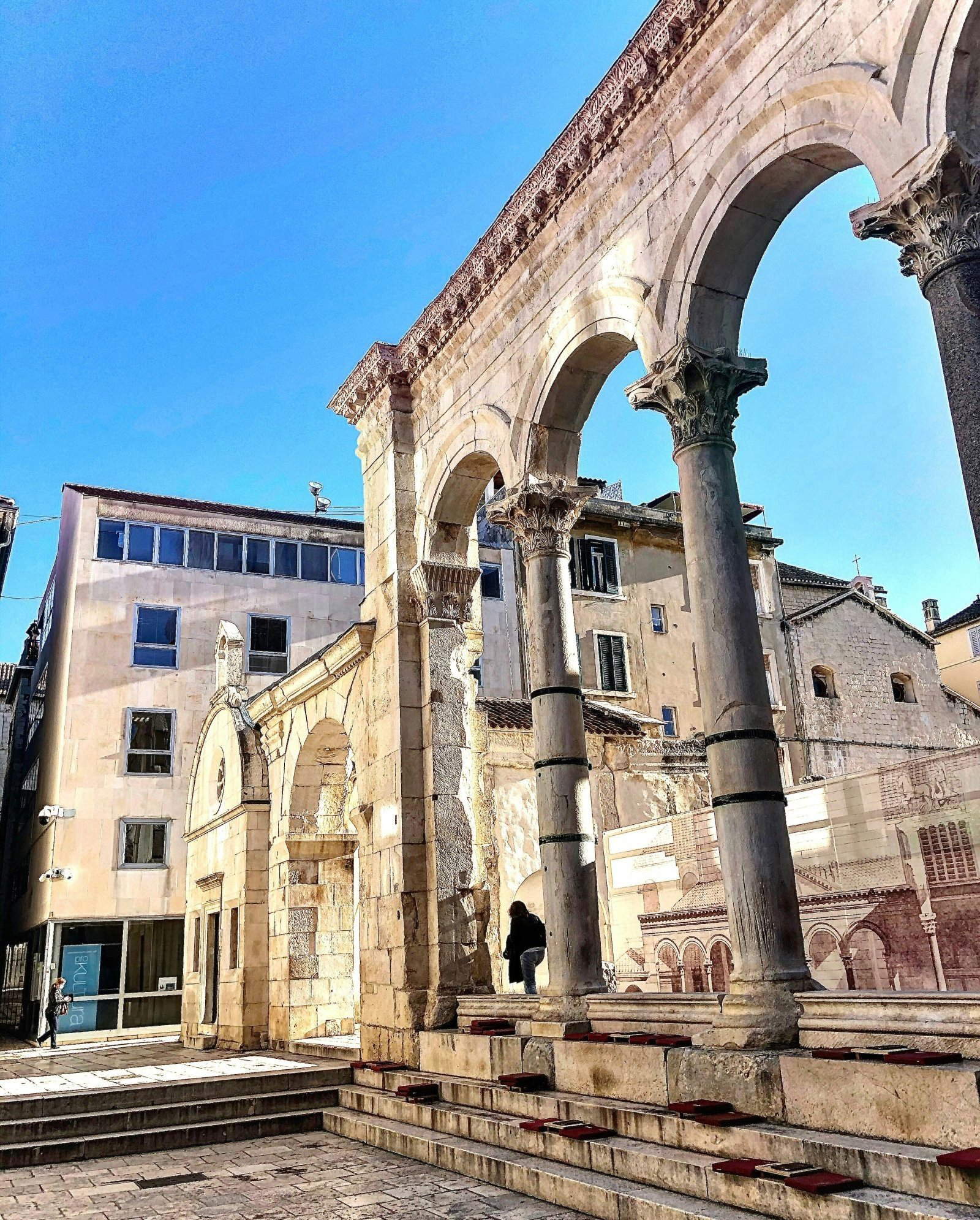
Sedimentation is inscribed in the reuse and reconversion of architectural spaces. Historic buildings that become museums, archaeological sites frequented in everyday life, also because they are an integral part of the living urban fabric. A sedimentation that lives in the persistence of ritual practices whose origins no longer belong to any single tradition.
One need only think of the Easter processions that still traverse the streets and alleys of dozens of Mediterranean cities, in the presence of the same people from generation to generation. No one organizes this the way an exhibition is organized. No interpretive panels explain it. No ticket is paid. Yet it is, unequivocally, an act of museality where a community meets. The object at the center of that procession is not a symbol of the past. It is a living part of the present. It does not represent memory. The door. That same statue inside a museum is in danger of becoming something else, different. This is, perhaps, the central question of a Mediterranean museology. In the Mediterranean, the past is never completely distant. It is present, visible, often tangible. The layers of history do not follow one another in a linear fashion, but coexist in space and everyday experience. The museum, in this sense, does not merely represent the past but continuously reactivates it in the present.
Hence a new reading of the museum space takes shape through the metaphor, or rather, the model of the Mediterranean square that originates from the Greek agora and the Roman forum, present as a public space in the Arab suk and the Greek plateia, or in the inner courtyard of the Islamic mosque. The Mediterranean square, understood as a public meeting space, is not just an urban space; it is a form of public life, a place of encounter, proximity and negotiation, where different voices coexist, often in tension, without necessarily reaching a synthesis. To think of the museum as a square is to conceive of it as a relational, open space, where meaning emerges from interaction and is not imposed from above. When a museum bases its practice on the mode of thinking that the square frames, then it becomes a space for confrontation, exchange, and the production of meaning. It remains not a space that presents what things mean, but a space that creates the conditions in which meaning becomes accessible and is revealed through a triangulation between the object itself, the visitor, and the community from which both come.
In this reinterpretation, collections are not simply bearers of meaning, but activators of relationships. They become connectors of people, memories and contexts, functioning as meeting points. Their value is not intrinsic, but is built through the relationships they make possible. In practice, an object in a Mediterranean museum may carry devotional, historical, and aesthetic significance simultaneously. To reduce it to only one of these registers is not clarification: it is amputation. It is the denial of a richness that is constitutively Mediterranean. An object that was a devotional image, then a political symbol, then a cultural trophy, then a museum artifact loses meaning when presented as only one of these things. Polyphonic interpretation is neither a curatorial preference nor a fashion. It is a condition of truth and authenticity.
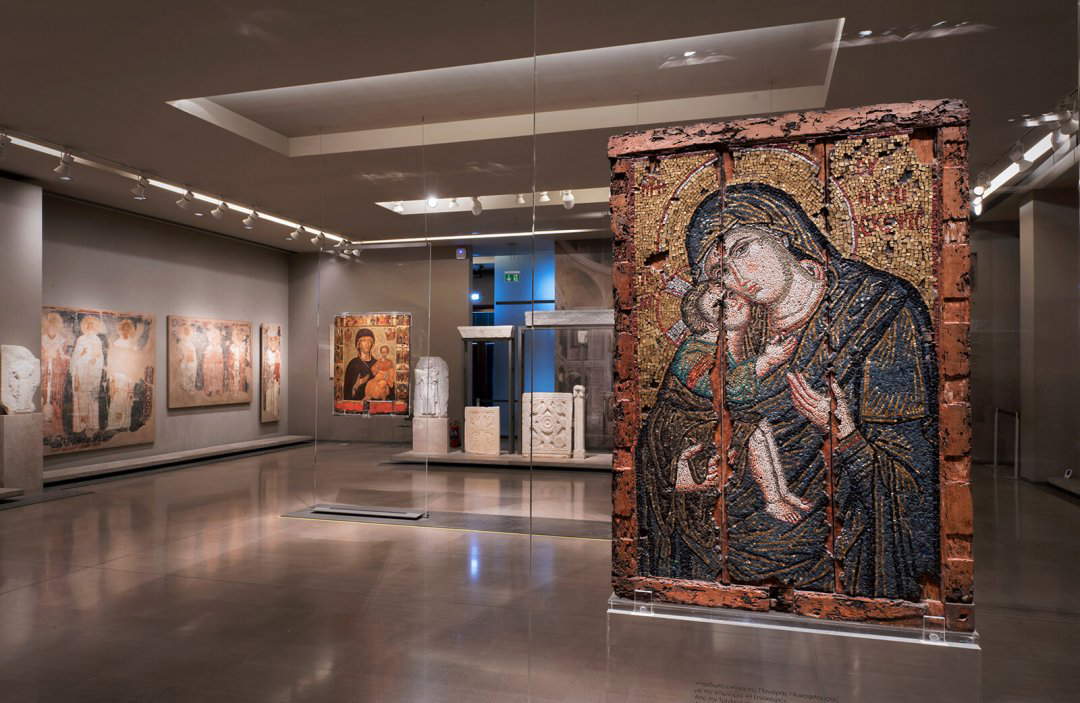
The Mediterranean museum is thus not a container, but a condition. A condition that stands on three planes that intertwine without ever fully resolving. Time does not flow there sequentially but is layered, making cultural heritage something alive in the everyday and not just kept in display cases. Space there is not neutral but relational, shaped by the logic of the square. A space that is open, accessible and capable of transforming the encounter into the production of meaning. And the object there is not mute but active, a connector of people and memories, whose value does not precede the relationship but emerges from it. Together, these three planes create the conditions for meaning to be neither transmitted nor imposed, but constructed in the encounter and recognized even before it is defined.
Hence the proposal of a Mediterranean museology understood not as an autonomous discipline but as a perspective: a shift in focus from what the museum does to how the museum exists and operates within stratified cultural contexts. Mediterranean museology does not propose a rigid model or a new orthodoxy. Rather, it suggests an arrangement, a way of looking at the museum that takes into account the complexity, plurality and historical depth that characterize the Mediterranean. Perhaps rather than asking what the museum should do, it is time to ask where the museum is placed and how this placement radically transforms its meaning. In a world increasingly impatient with complexity, which seeks resolutions before it has tolerated difficulty, a museum that keeps the space of exchange and confrontation open is performing a political act, in the deepest sense of that word. The Mediterranean has never resolved its tensions but has always lived them from within, productively, for millennia. Our museums can do the same.
It is perhaps Malta, with its square miles of honey-colored globiger stone under a clear blue sky, that represents in the most concentrated and unequivocal way the condition that this museology seeks to name as a reality experienced every day by those who inhabit those layers without knowing it, without needing to know it.
In the Mediterranean, meaning does not wait to be explained. It waits to be recognized. And we who guard these objects, these spaces and these memories are the first to have to recognize it and to do so together, wherever Mediterranean conditions exist and persist.
Warning: the translation into English of the original Italian article was created using automatic tools. We undertake to review all articles, but we do not guarantee the total absence of inaccuracies in the translation due to the program. You can find the original by clicking on the ITA button. If you find any mistake,please contact us.