




by Andrea Laratta 19/07/2026



Categories: Tourism / Disclaimer
Airbnb responds to the restrictions imposed by the City of Florence on short-term rentals: according to the platform, the examples of New York, Barcelona, and Lisbon show that such bans have not improved the rental market. Palazzo Vecchio, on the other hand, reiterates the need to protect the right to housing.


“To date, there is no data showing that the blanket restrictions in Manhattan and Barcelona have had any positive effect on long-term rents. Overtourism is certainly an issue, but we need to understand where this tourism is coming from, because if the city continues to welcome millions of tourists, they have to stay somewhere”: In Florence, Airbnb is fighting back against Palazzo Vecchio, and with these words—spoken by Airbnb’s Country Manager for Italy and Southeast Europe, Matteo Sarzana, at a press conference in the Tuscan capital, the non-hotel tourism platform is attempting to debunk the narrative underlying the policy restricting this activity, which is in effect in Florence under a municipal ordinance dated May 2025.


In fact, the City of Florence—acting under the Regional Tourism Law—imposed a moratorium on the issuance of short-term rental licenses through 2028 following the introduction of the licensing system, and will introduce a five-year license with non-automatic renewal after that date. The City reserves the right to determine every five years whether the number of B&Bs should be reduced based on their impact on the city. And this focus extends not only to the historic center—which is designated as a UNESCO World Heritage Site—but also to the rest of the city’s neighborhoods, given that a regulation was approved in June that blocks the establishment of B&Bs even in many areas urbanized in the 19th and early 20th centuries (and beyond).


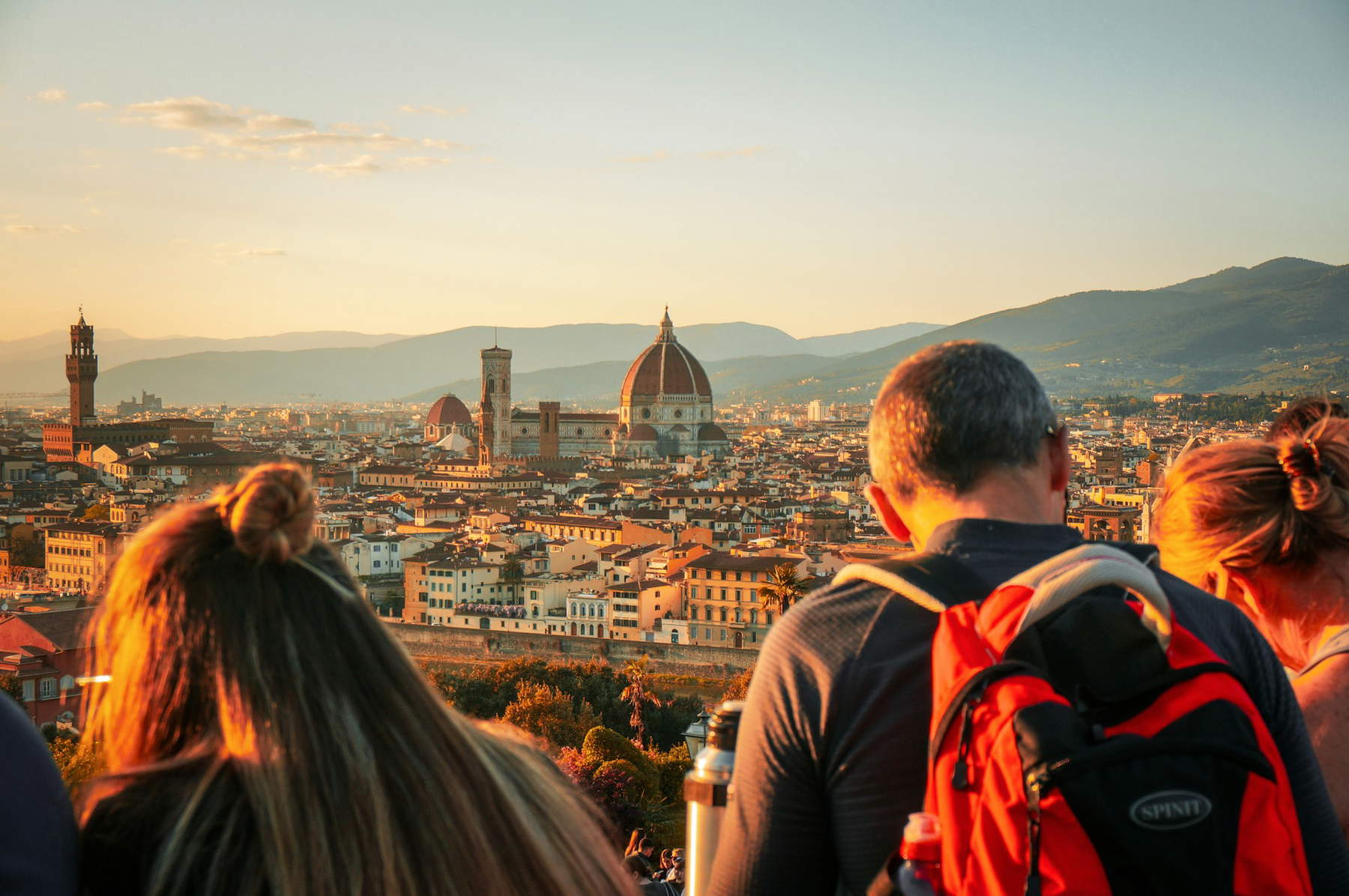
The reasons, similar to those in other cities of art in Italy and around the world facing the same situation, stem from the displacement of Florentine families from the city center due to the ongoing transformation of residential apartments into tourist rentals, with the resulting rise in housing costs for local residents. Because the real issue isn’t Airbnb itself. It’s the conflict between two urban functions: the city as an international cultural destination versus the city as a place inhabited by residents. On one hand, there’s the tourism economy, which has become a structural component of Florence’s identity. On the other hand, there is the risk that the historic center and growing parts of the city will lose their resident population and the local shops that serve them. Who has a right to the historic city? Residents, visitors, or the market? In other words, the fear is that the city’s success as a tourist destination will end up profoundly altering its social fabric.


But Airbnb refuses to be singled out as the cause of the housing crisis; it counters the city’s data with a report prepared in collaboration with Nomisma and argues that cities such as New York and Barcelona, which preceded Florence in implementing restrictive policies, did not achieve the desired results. On the contrary: Speaking in Florence, Sarzana stated that the crackdown on short-term rentals contributes to “fuel hit-and-run tourism, which is the opposite of what tourists do on Airbnb, where we see that the average length of stay is longer than in hotels, and these are people who also enjoy exploring what lies outside the historic center.”
“We reject the accusation that we are the cause of Florence’s housing crisis based on the data in our possession, which shows that, to date, the real housing issue in Florence is that only 12.9% of homes in the City of Florence are completely vacant and unused,” said the Airbnb representative, defending the company’s model: “What we see is that short-term rentals are, in the vast majority of cases, a source of income. We see that three-quarters of the people who rent out a home on Airbnb rent out only one home.” And here are some figures. First, those related to the tourist tax, collected as a withholding tax from vacationers under a 2018 agreement with the City and remitted to the City: the more than 6,200 active hosts in Florence (average age 49) have contributed 76 million euros to the city’s coffers, of which 17 million were collected in 2025 alone. And the typical annual income for hosts, according to Airbnb’s country manager for Italy and Southeast Europe, is around 14,000 euros. Nomisma also calculates the economic impact of the revenue generated, estimated at 524 million euros, based on an average of 80 nights rented per year, and on the fact that Airbnb bookings account for 30% of all nights booked in Florence. There are 10,645 entire apartments listed for rent on Airbnb—that is, 5% of Florence’s residential properties—and for 64% of the “hosts,” this activity on the platform is not their primary source of income.
Sarzana, however, extends an olive branch: “We continue to collaborate and engage in dialogue with the City of Florence, and we are open to a meeting. Our position is that these measures must be clear. To date, there is no clarity regarding the criteria used to issue new licenses. Furthermore, the measures must protect hosts and be based on certified data that is reviewed at least once a year in light of changes in the city.”
He also reflected on the tourism boom Florence has been experiencing in recent years, as the city’s artworks have become an ever-greater draw for visitors from around the world: “Overtourism is definitely an issue, but we need to understand where this tourism is coming from because if the city continues to welcome millions of tourists who rightly want to see the beauties of Florence, these people have to stay somewhere,” and he does not believe that the policy of limiting tourism is effective. He adds: “Today, three-quarters of those who rent out a home through Airbnb rent out just one home or a single room. For them, it represents an opportunity to supplement their income and, at times, to keep a home that they would otherwise have been forced to sell.”
The visit to the banks of the Arno by the platform’s Italian leadership aims to refute the data underlying the rationale that led to curbing the proliferation of short-term rentals in Florence, dispelling the notion of real estate speculation associated with Airbnb, and offering a critique of those who had already done so: “To date,” Sarzana states, “there is no data showing that the total restrictions in Manhattan and Barcelona have had any positive effect on long-term rentals; in fact, we’re even beginning to see cities, such as Lisbon, that have reversed course precisely because they haven’t seen any benefits.”
From Palazzo Vecchio, Tourism Councilor Jacopo Vicini noted that the City has never “identified short-term rentals as the sole cause of the housing crisis, but rather as one of the phenomena that have a significant impact on the urban fabric.” The administration emphasizes that the regulation “is not based on a single study but on the synthesis of various analyses and monitoring data.” “Our goal is not to pit institutions against operators, but to build an increasingly sustainable model of tourism that protects the right to housing without compromising the quality of hospitality in the tourism sector.”
The position taken by Palazzo Vecchio also fits into a broader framework established by the Region of Tuscany. The Consolidated Law on Tourism, approved at the end of 2024, allows municipalities facing high tourist pressure—and in particular provincial capitals—to identify areas where specific criteria and limits for short-term rentals can be introduced, with the aim of managing the effects of tourism on the urban fabric. Councilor Leonardo Marras, as reported in *La Nazione*, dismissed Airbnb’s criticisms as “misplaced and poorly substantiated. We have enacted a law that is becoming the national benchmark for the sector.”
|
| Airbnb Challenges Florence: “Bans on Short-Term Rentals Don’t Solve the Housing Crisis” |
Warning: the translation into English of the original Italian article was created using automatic tools. We undertake to review all articles, but we do not guarantee the total absence of inaccuracies in the translation due to the program. You can find the original by clicking on the ITA button. If you find any mistake,please contact us.