





The outcomes of the restoration and enhancement intervention involving six figurative stucco sculptures, originally part of the decorative apparatus of the Teatro Farnese, considered one of the masterpieces of the European Baroque, were presented today Wednesday at the Complesso monumentale della Pilotta in Parma. The initiative, which began in spring 2025 inside the Hall of Triumph, allowed the conservative recovery of the works and their renewed availability in the museum itinerary of the theater, now enriched by multimedia tools and an articulated digital reconstruction project. The intervention was fully supported by the Isabel and Balz Baechi Foundation, a Swiss nonprofit organization committed to the protection and promotion of European and international cultural heritage. A support that the director of the Monumental Complex of the Pilotta, Stefano L’Occaso, described as decisive for the realization of a project of profound impact for the museum.
According to L’Occaso, “the restoration of the sculptures of the Teatro Farnese, in addition to the important material recovery, takes the form of an act of responsibility toward our history: the works, which survived the wounds of 1944, now return to dialogue with the space for which they were conceived, returning to the public a fundamental piece of the seventeenth-century decorative apparatus. We are particularly pleased with the scientific quality of the operation and the integrated approach that combined conservation, research and digital innovation, allowing us to fully enhance works of extraordinary cultural and artistic relevance. Luca Retti’s masterpieces, the statues that once adorned the Theater, return to be an integral part of it and breathe new life into this immense place.”
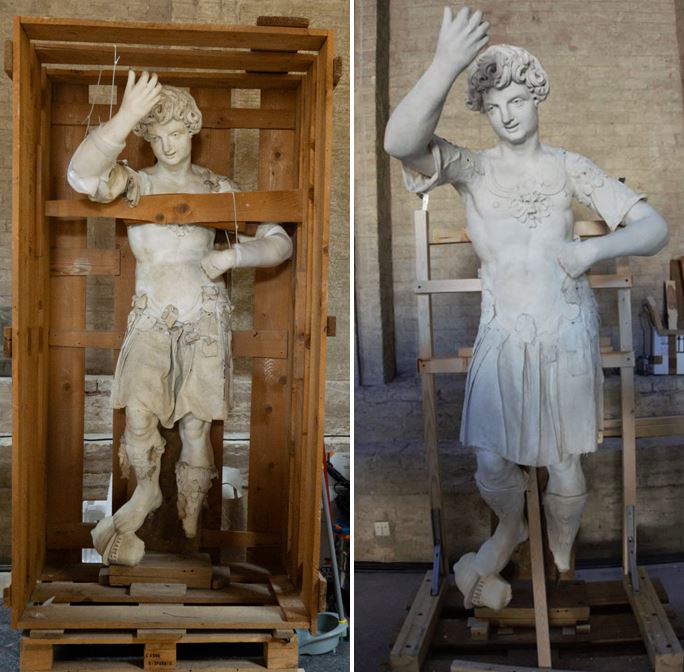
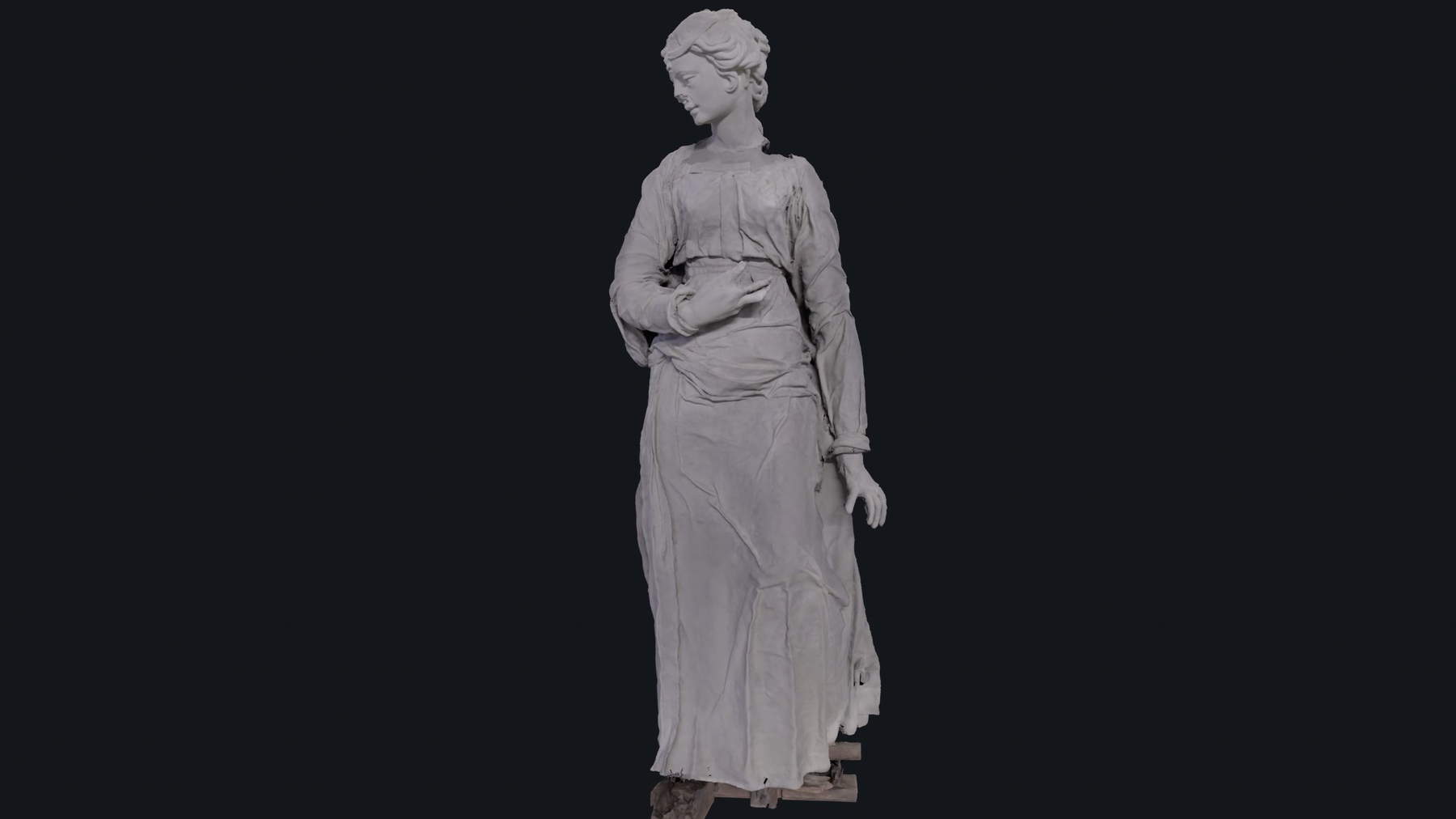
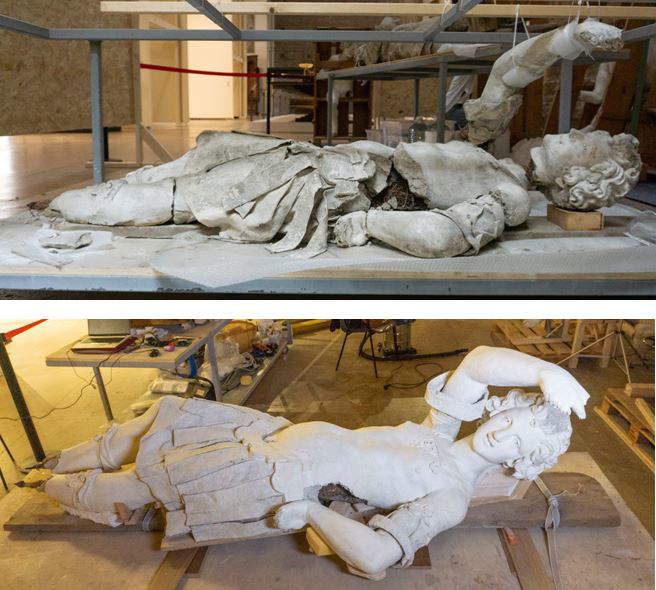
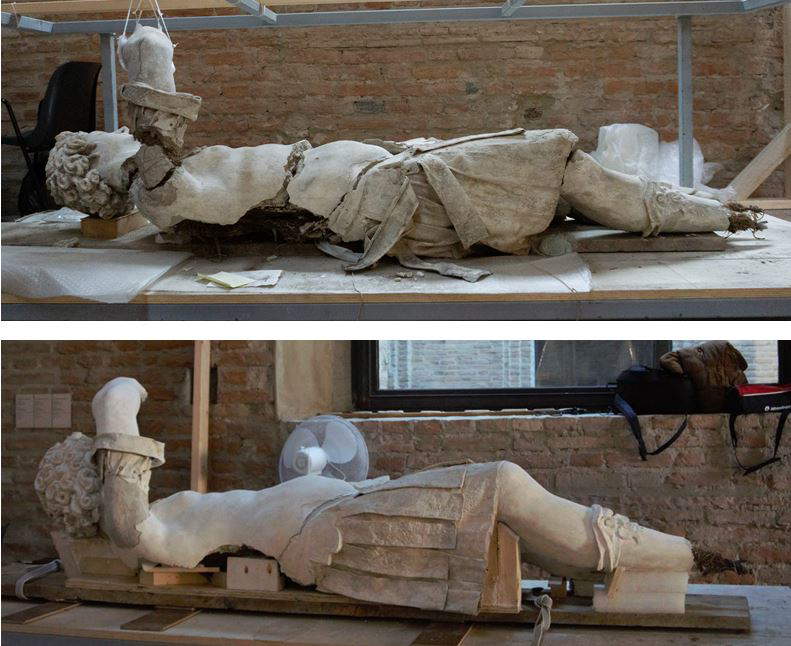
Paola Potenza, head of restoration projects at the Isabel and Balz Baechi Foundation, also highlighted the multidisciplinary nature of the intervention. “This intervention,” she commented, “is the result of a virtuous collaboration between different skills, which have worked together integrating conservation, historical study, scientific investigations and advanced digital tools, says Paola Potenza, head of restoration projects at the Isabel and Balz Baechi Foundation. The dialogue between different professionalities demonstrates how multidisciplinarity is fundamental in heritage protection today. Restoration is thus configured not only as an act of conservation, but as a path of knowledge that deepens its meaning and reinforces its value.”
The six sculptures covered by the intervention depict three bishops, two angels, identified as a Puttino and a Genietto, and a female figure with an allegorical subject. They were made in 1617 by Ticino-based sculptor Luca Retti together with his workshop in an extremely short time span, just five months, and were part of a larger sculptural group intended to allegorically contrast War and Peace. Their function was thus closely connected to the symbolic program of the Theater, helping to define the ideological and representative identity of the space.
Severely damaged during the 1944 bombing, the sculptures had come down to the present day in fragmentary condition. The gaps, fractures and structural compromises made it necessary to carry out a thorough intervention from both a static and formal point of view. The restoration, conducted by Elena Zichichi and Elena Russo under the work direction of Gisella Pollastro, included securing the works, cleaning the surfaces, structural consolidation and selective reintegration of the gaps, in full respect of the complex polymateric nature of the stucco sculptures.
A decisive role was played by diagnostic investigations. X-ray radiographs, carried out in collaboration with the University of Parma, made it possible to analyze the internal structure of the works, identifying criticalities not visible to the naked eye and precisely directing conservation choices. These analyses were complemented by archival study and examination of the material and technical data observed on the figures, making it possible to restore balance and coherence to the compositions. For the vertical sculptures, already the subject of a previous restoration in 1978, dedicated supports were also designed and created, conceived with respect for the original material and functional to guarantee stability and correct placement in the new setting.
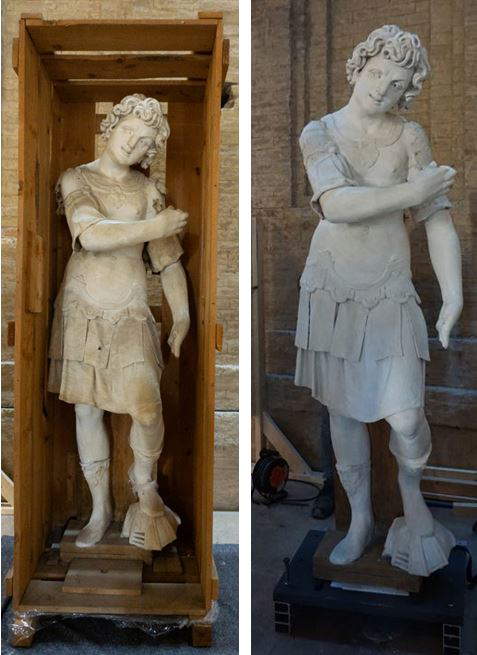
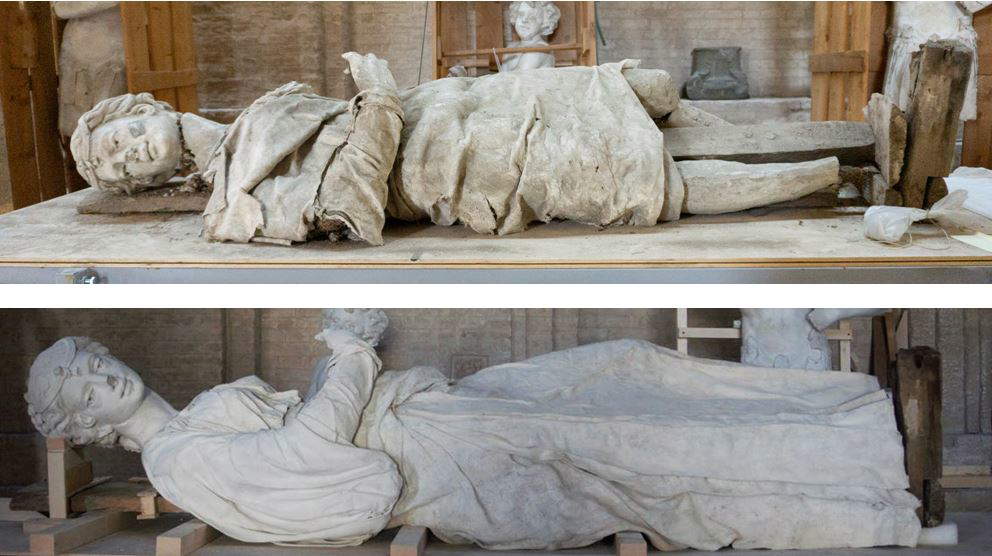
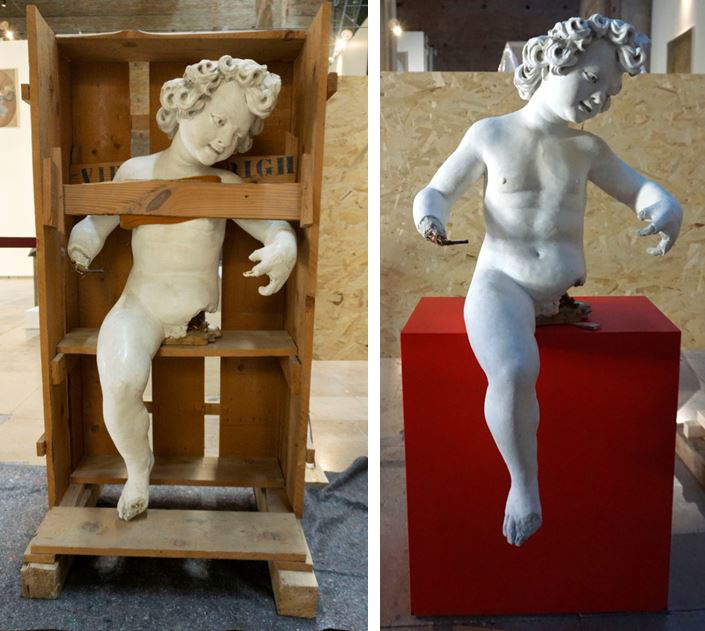
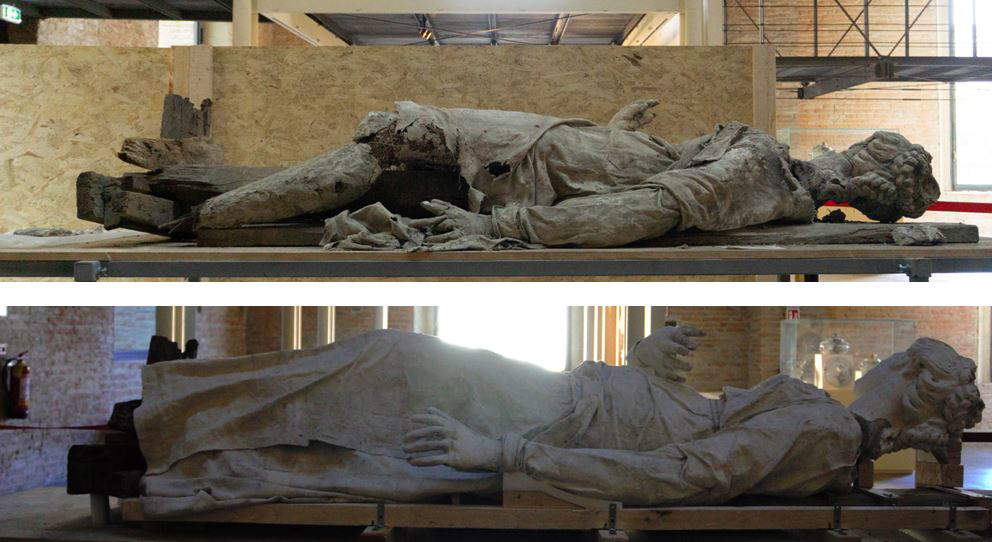
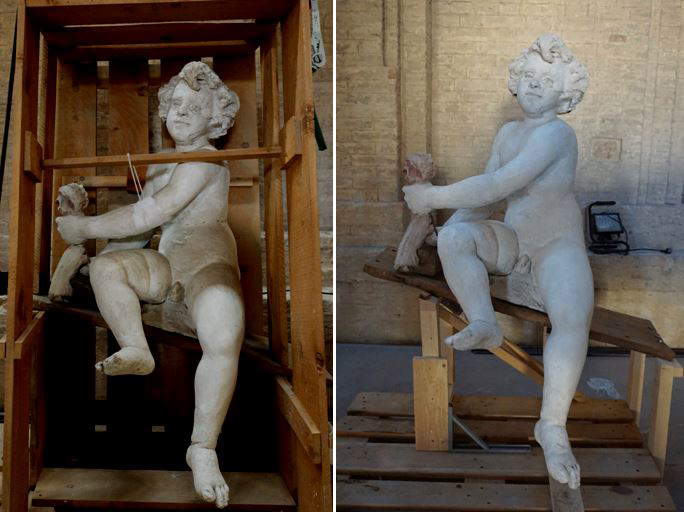
The reintegration of the works into the museum itinerary of the Teatro Farnese took place through a renewed arrangement that enhances their overall reading and relationship with the architectural space. The two vertical bishops have been placed in the proscenium, re-establishing the dialogue with the architecture for which they were conceived and recovering the original scenographic dimension. The putti, on the other hand, are presented in the understage, in an exhibition context accompanied by a video documenting the phases of the intervention, offering the public an in-depth look at the restoration work and the methodological choices adopted.
Alongside the material dimension of the recovery, the project has also developed an important digital component. Thanks to the collaboration with the Department of Engineering and Architecture of the University of Parma, represented by associate professor Andrea Zerbi and researcher Sandra Mikolajewska, a three-dimensional survey of the Teatro Farnese was carried out. This work allowed the virtual relocation of the sculptures in their original context, offering a more complete and philologically accurate view of the lost decorative apparatus. Digital reconstruction now allows a clearer understanding of the role that the six sculptures played in the overall economy of the theater, restoring to the public and scholars a perception closer to that of the seventeenth century. The integration of physical conservation and technological innovation represents one of the most qualifying aspects of the intervention, in line with the most advanced museum enhancement practices.
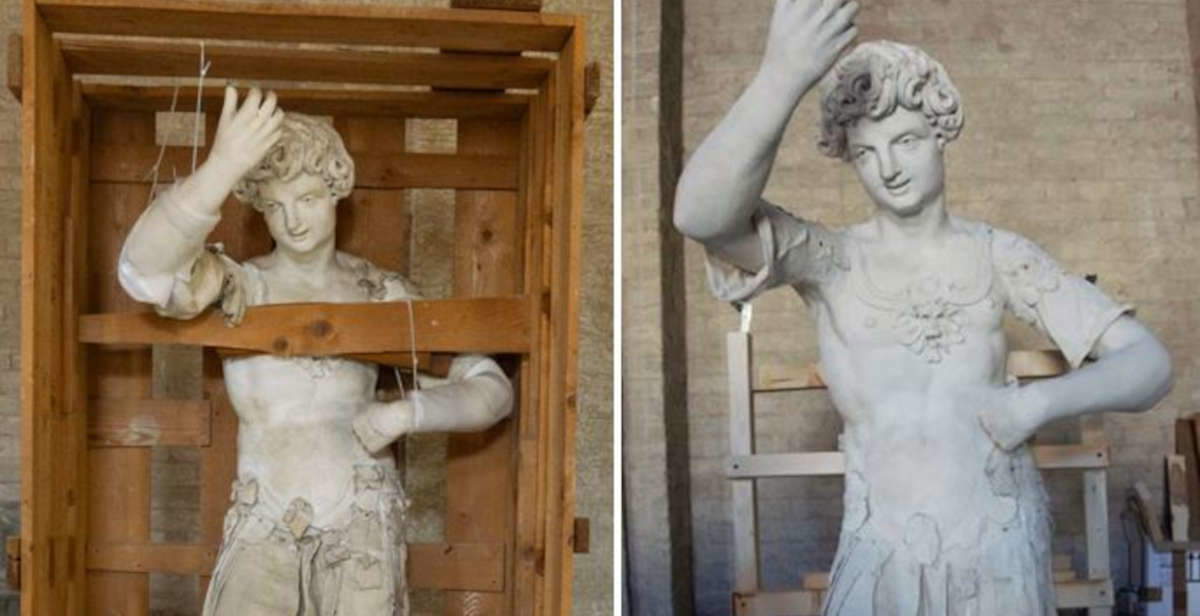 |
| Parma, six sculptures from the Farnese Theater at the Pilotta restored. |

Warning: the translation into English of the original Italian article was created using automatic tools. We undertake to review all articles, but we do not guarantee the total absence of inaccuracies in the translation due to the program. You can find the original by clicking on the ITA button. If you find any mistake,please contact us.

























 IT
IT FR
FR DE
DE ES
ES CN
CN


