




by Redazione 12/03/2026



Categories: Ancient art / Disclaimer
A painting by Francesco Albani (a masterpiece that went missing and was fortunately found) and a sculpture attributed to Alfonso Lombardi are entering the collections of the National Picture Gallery of Bologna thanks to funds from the Ministry of Culture. The works enrich the museum's holdings and will be presented to the public from March 17.

More important blows from the state for Italian museums. Two new works join the collections of the Pinacoteca Nazionale di Bologna, thus further enriching the holdings of Bologna’s National Museums. They are a painting by Francesco Albani (Bologna, 1578 - 1660) depicting the Madonna in Glory with cherubs and a sculpture attributed to Alfonso Lombardi (Ferrara, c. 1497 - Bologna, 1537) depicting a Face of Christ. Both acquisitions were made possible thanks to funds allocated by the Ministry of Culture and represent a significant step in the process of enhancing the museum’s collections.
Albani’s painting will be presented to the public from March 17 until mid-June in Room 30 of the Pinacoteca, as part of a display designed to put it in dialogue with two other fragments of the same altarpiece already in the museum’s collections and with a graphic representation of the entire work. The sculpture attributed to Alfonso Lombardi, on the other hand, will be on view on March 17 at 5 p.m. in Aula Gnudi, on the occasion of a conference dedicated to the sculptor, before finding a definitive location in the Pinacoteca’s exhibition itinerary.
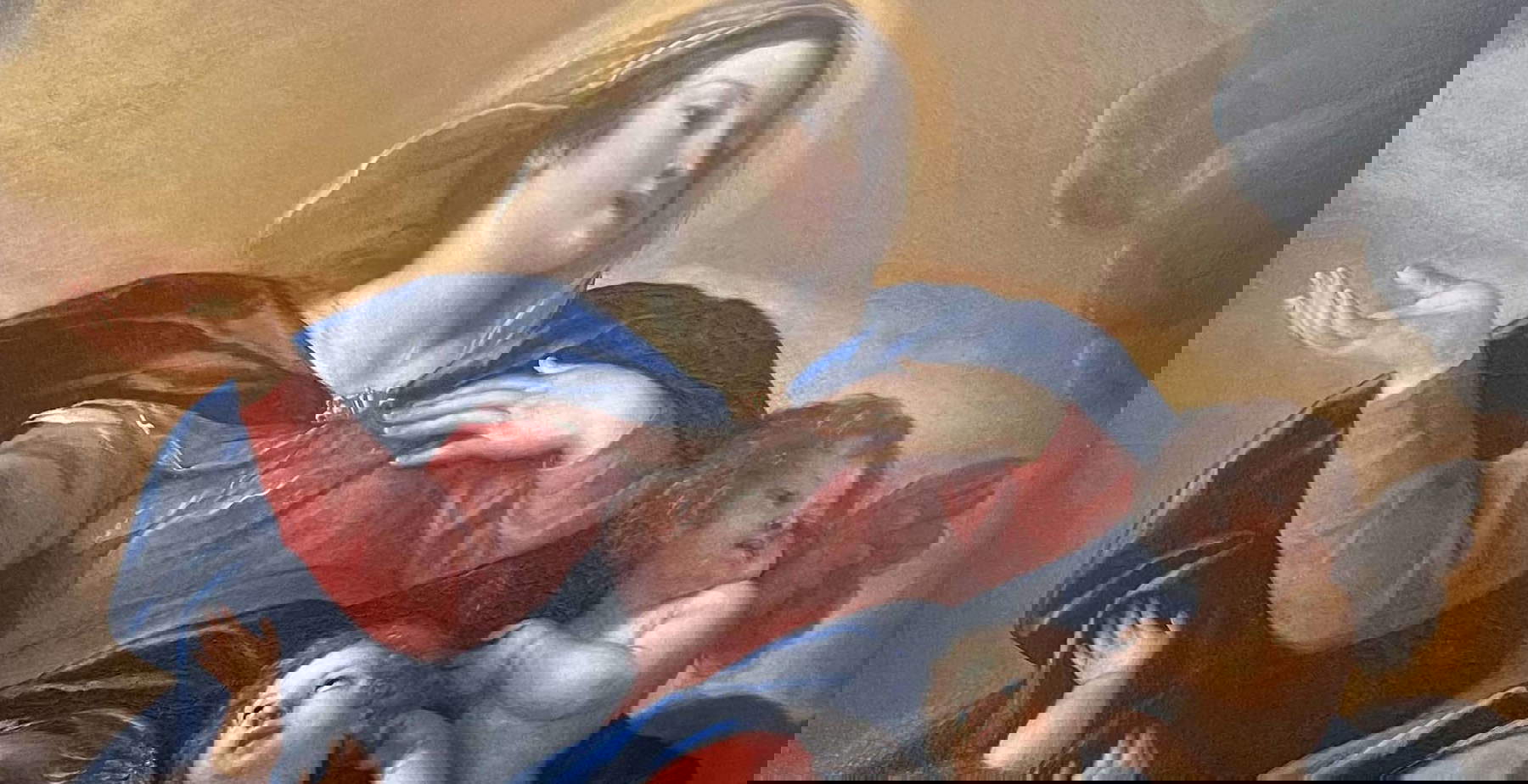
Francesco Albani’s painting represents a particularly relevant discovery for studies on the artist and seventeenth-century Bolognese painting. The work, as we have recounted in detail on these pages, was identified by Tiziana Sassoli, owner of the Galleria d’Arte Fondantico in Bologna, and identified as a fragment of the altarpiece depicting St. William praying comforted by the Virgin, painted by the artist around 1645 for the Bolognese church of Jesus and Mary of the Augustinian nuns, located in Porta Galliera.


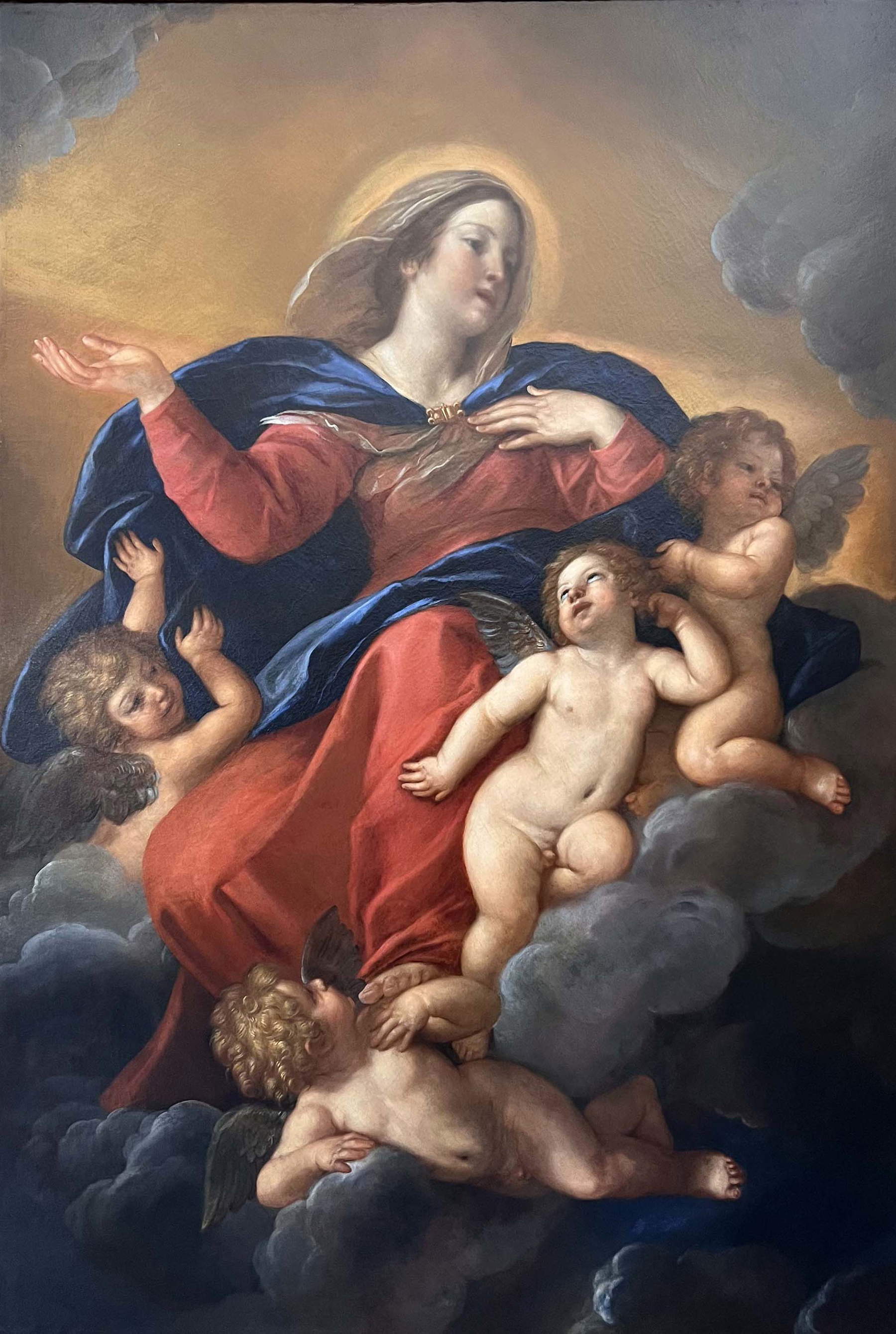
The work’s history is marked by the events that affected many works of art during the 19th century. As a result of Napoleonic requisitions, the Church of Jesus and Mary was destroyed and the altarpiece was dismembered. The various fragments were later dispersed and sold separately on the antiques market. Over time, parts of the work entered the collections of the Pinacoteca Nazionale di Bologna. In fact, the museum already holds two fragments of the altarpiece: the detail with Saint William, which came into the collection thanks to the Zambeccari bequest in 1883, and a Skull, an attribute of the now lost Saint Mary Magdalene, which entered the collection through a donation in 2006.
The purchase of the new fragment through private negotiation made it possible to bring back to the museum the most relevant portion of the dismembered painting. The entry of the work into the Pinacoteca’s collections thus represents a result long awaited by scholars of the Bolognese master and makes it possible to recompose, at least partially, the original arrangement of the altarpiece. The new arrangement planned in Room 30 of the Pinacoteca will offer visitors the chance to view the three fragments currently preserved by the museum together. A graphic representation of the entire altarpiece will also be on display alongside the works, which will be useful for visually reconstructing the original composition of the painting and understanding the relationship between the different parts that made it up.
Alongside Albani’s painting, a sculpture attributed to Alfonso Lombardi, an artist born in Ferrara in 1497 and active in Bologna until his death in 1537, also enters the Pinacoteca’s collections. The work depicts a Face of Christ and was acquired by pre-emption at the proposal of the Milan Export Office for the Pinacoteca Nazionale di Bologna.
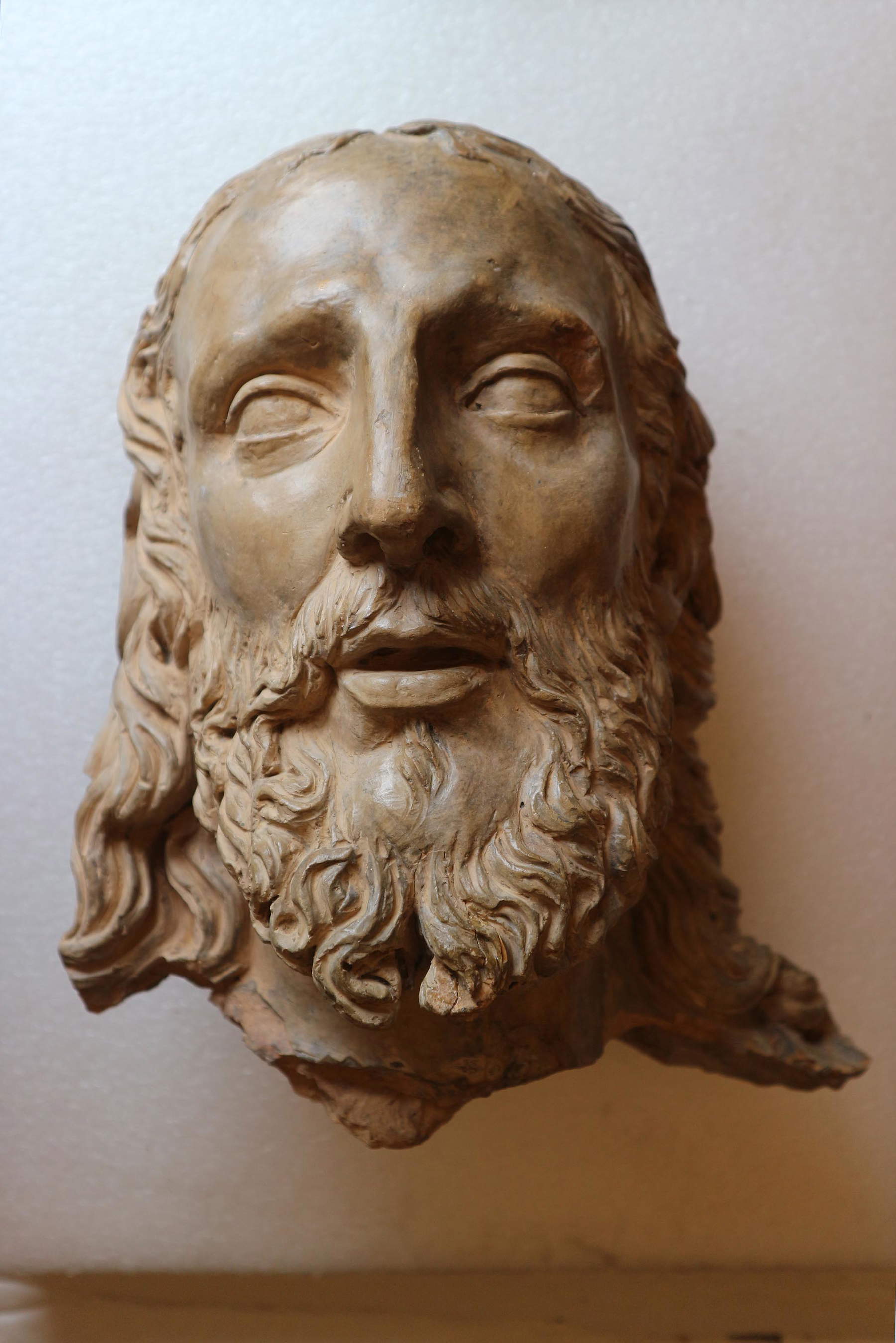
The operation thus represents an example of collaboration between the offices of the Ministry of Culture and has made it possible to secure to the public patrimony a work that the most recent critics on the sculptor do not hesitate to define as autograph. The Face of Christ appears as a fragment of a larger sculpture or sculptural complex whose origin and original location are currently unknown.
However, the quality of the modeling and the expressive force of the features make it possible to relate the work to some of Alfonso Lombardi’s most important achievements. The most obvious comparison concerns the famous sculptural complex of the Transit of the Virgin, preserved in the Oratory of Santa Maria della Vita in Bologna and made by the artist between 1519 and 1522.
Indeed, both the Transito group and the newly acquired Face of Christ testify to the influence exerted by Raphael Sanzio’s inventions on Alfonso Lombardi’s work. The ability to translate into plastic forms the emotional intensity of the figures and the refined attention to the expression of the faces represent elements that unite the two works and help define the sculptor’s artistic language.
Waiting to be permanently included in the exhibition itinerary of the Pinacoteca Nazionale di Bologna, the sculpture will be presented to the public on March 17 in Aula Gnudi during a conference dedicated to the author. The meeting will provide an opportunity to delve into the artistic and historical context of the work and to illustrate its value within Lombardi’s production and the sculptural tradition of the Emilian Renaissance.
 |
| The state buys a masterpiece by Francesco Albani for the Pinacoteca Nazionale in Bologna |
Warning: the translation into English of the original Italian article was created using automatic tools. We undertake to review all articles, but we do not guarantee the total absence of inaccuracies in the translation due to the program. You can find the original by clicking on the ITA button. If you find any mistake,please contact us.