





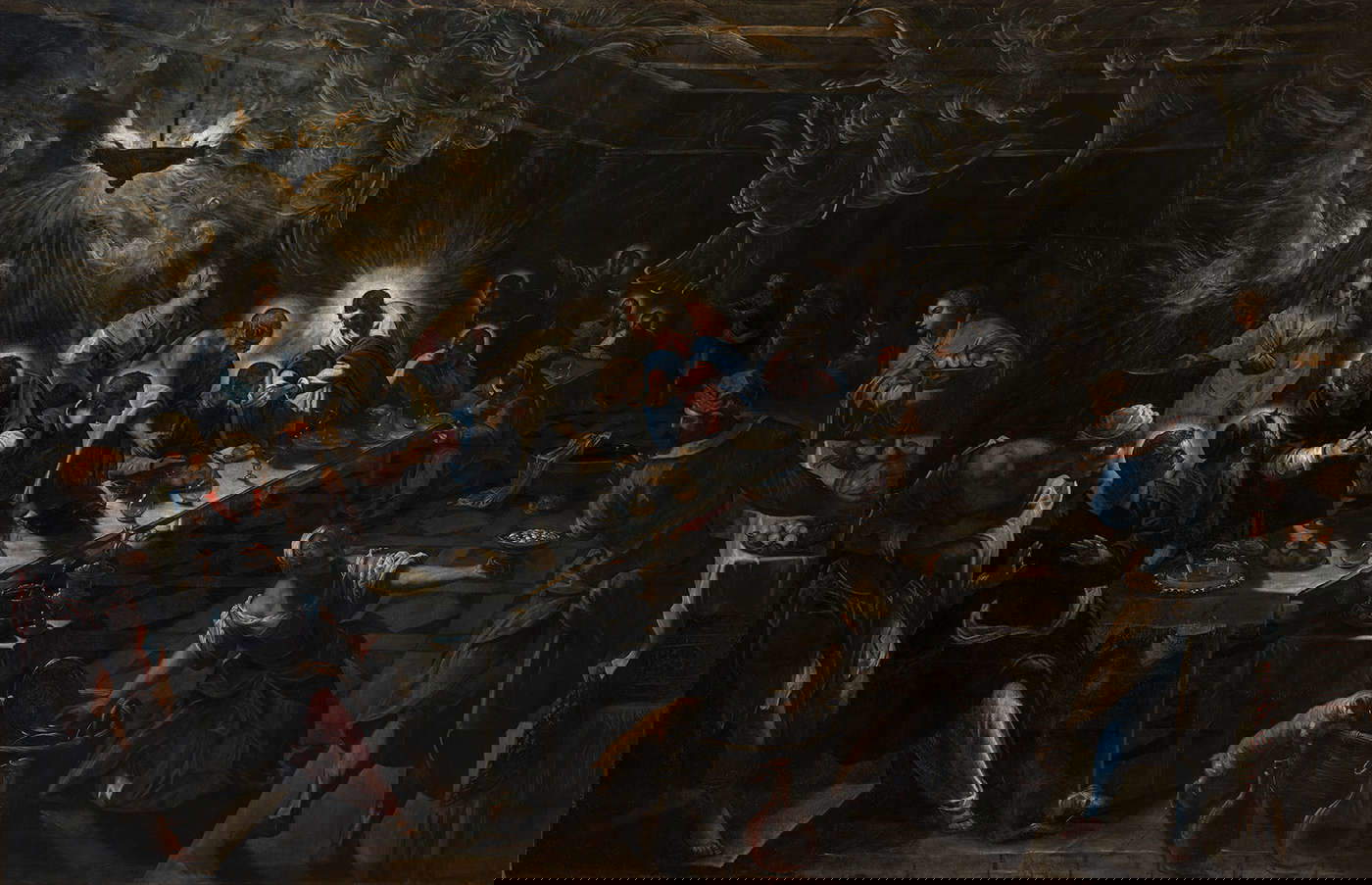
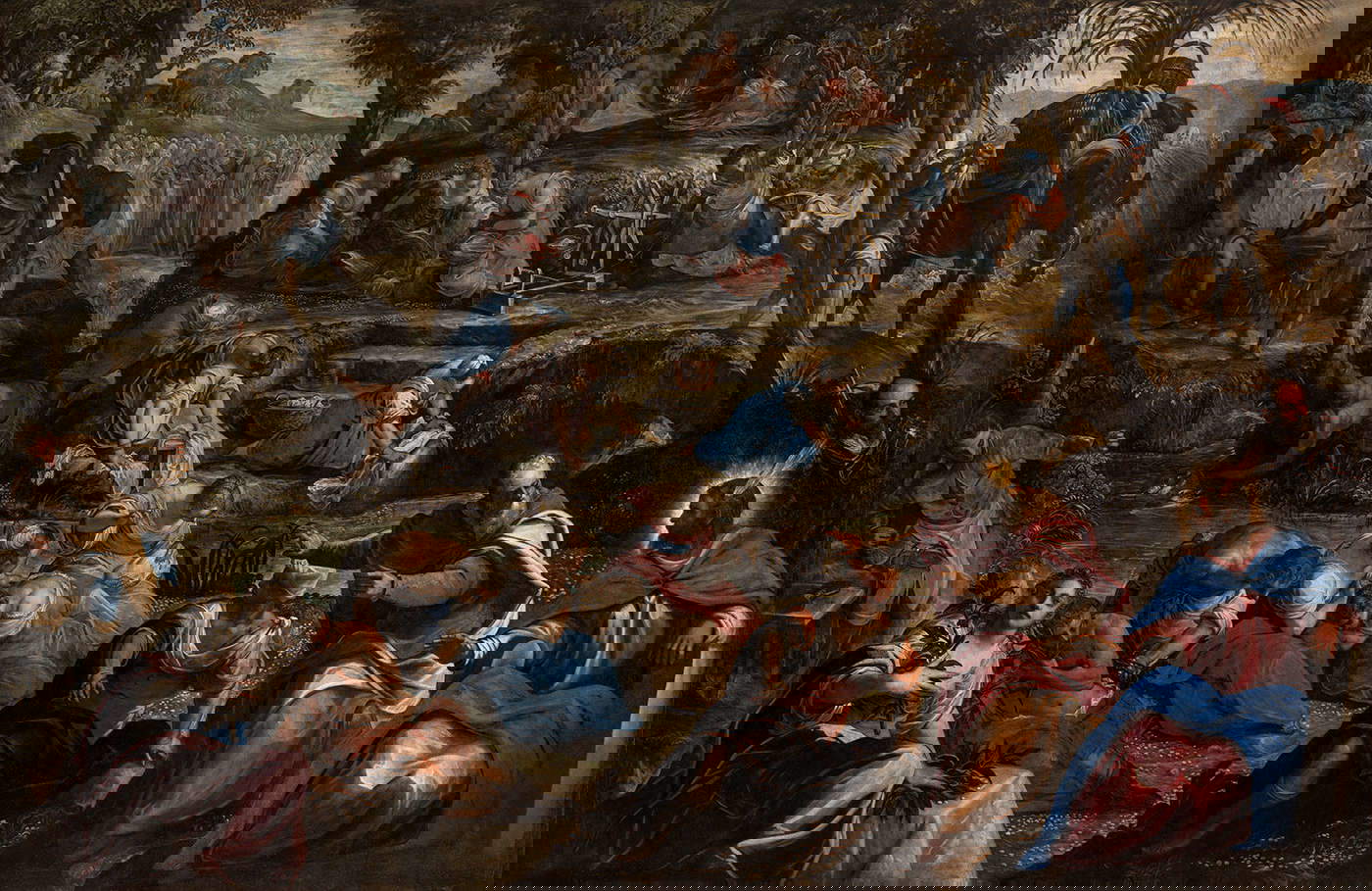
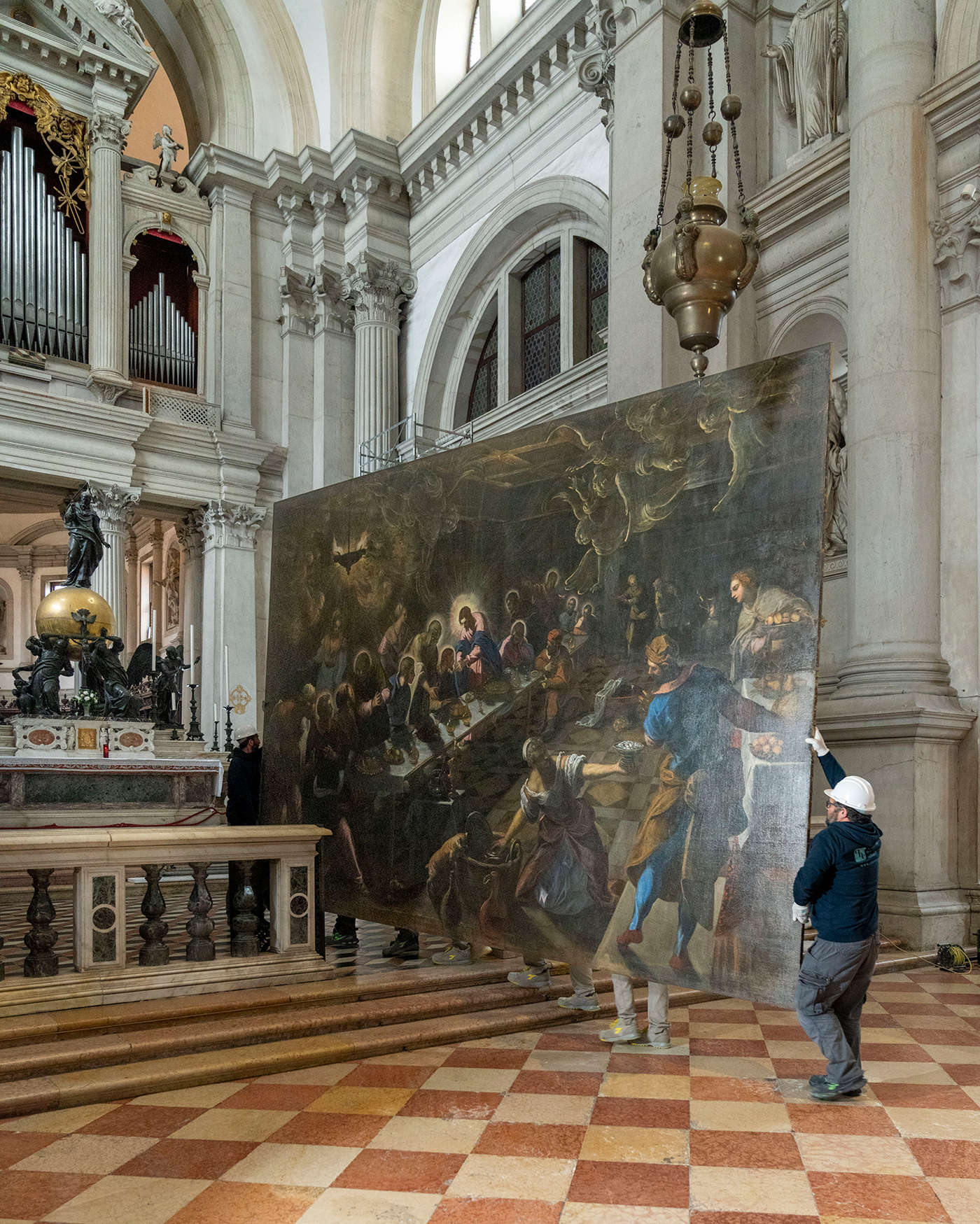
The restoration of two monumental works by Tintoretto (Jacopo Robusti; Venice, 1518 - 1594), The Last Supper and The Jews in the Desert, two masterpieces from the late phase of the Venetian painter’s career, now once again on view in the basilica of theAbbey of San Giorgio Maggiore in Venice, has been completed. The two canvases, each measuring 370 by 570 centimeters, have been relocated to the presbytery after a complex conservation work that lasted more than a year, began in February 2025 and was completed in the spring of 2026. The work was sponsored by the Save Venice organization together with the abbey’s ETS section, and was made possible thanks to the support of the Stracke family. The completion of the work was presented at a press conference held yesterday inside the basilica, and will be followed by a public opening set for May 8, when the restored works will be officially returned to the community and visitors.
The project represented a significant milestone in the conservation of the two masterpieces, whose last documented restoration dates back to 1937. Almost ninety years later, the intervention has substantially recovered the legibility of the compositions, restoring depth, balance and visual coherence to the scenes painted by Tintoretto. The work once again highlighted the complexity of the artist’s tonal range and his characteristic dynamic brushwork, elements that had been compromised over time by the alteration of surface materials.
The restoration operations were entrusted to the company CBC Conservazione Beni Culturali, under the direction of Caterina Barnaba, and were carried out under the supervision of the Soprintendenza Archeologia, Belle Arti e Paesaggio for the Metropolitan City of Venice. The construction site involved several specialized professionals: the photographic documentation was taken care of by Matteo De Fina, while Maco Film produced the video footage of the intervention. The non-invasive diagnostic investigations were conducted by S.T.Art-Test di S. Schiavone & C. sas., while the handling and logistics of the works were managed by UniSVe, whose technicians also provided for the relocation of the canvases in the presbytery in April 2026.
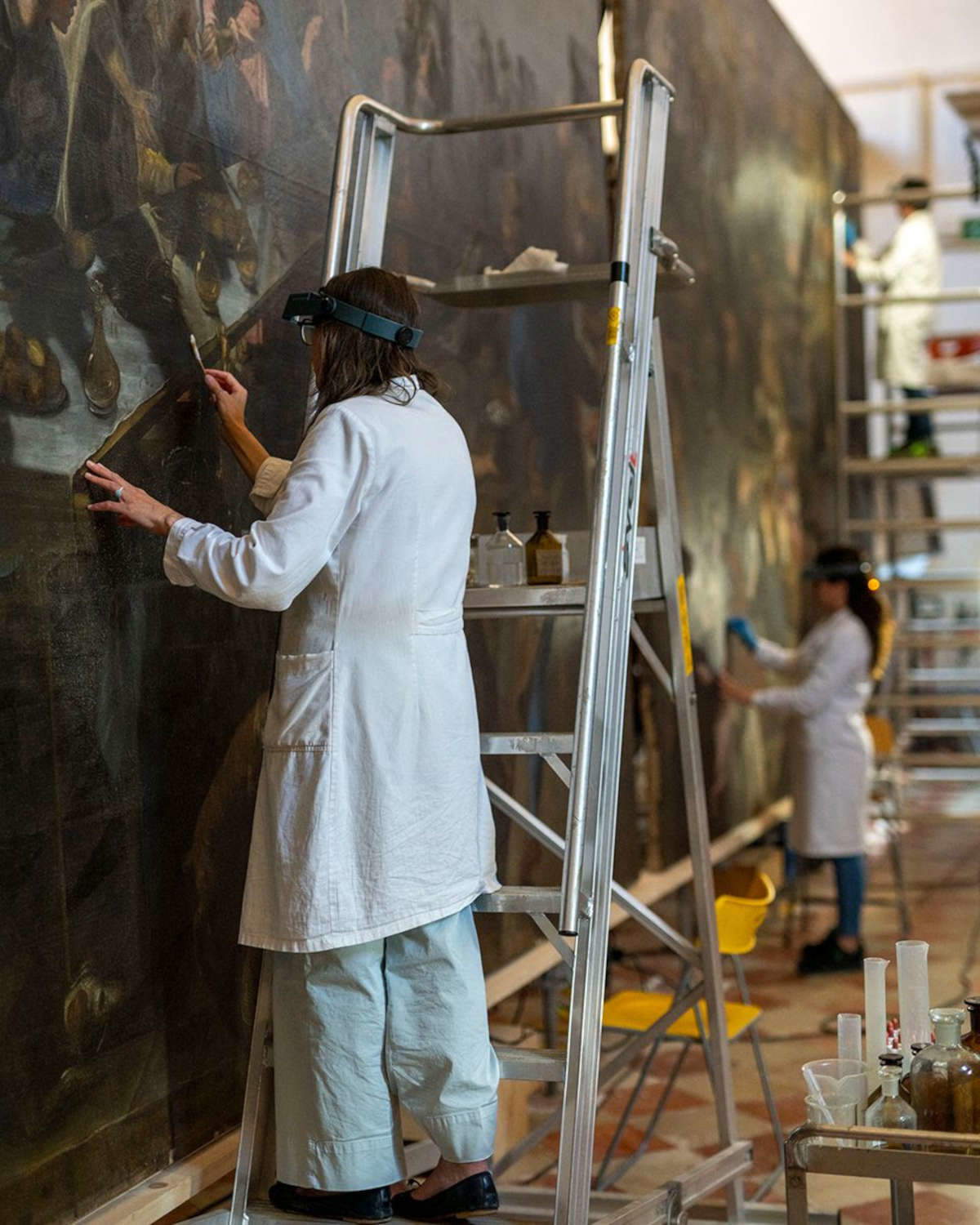
A distinctive element of the project was the direct involvement of the public during the processing stages. In fact, the Benedictine community made the sacristy of the basilica available as a temporary space for the restoration, transforming the construction site into an environment accessible to visitors. This “open construction site” thus had an educational function, allowing visitors to observe the different phases of the intervention up close and to understand the techniques used in the conservation of works of art.
From a technical point of view, the restoration involved the careful removal of yellowed paints and repainting that had altered the canvases’ original appearance over time. This process brought to light details that had remained hidden for decades, allowing the chromatic vibrancy and definition of tonal transitions to be recovered. As the work progressed, the scenes regained a new clarity, restoring a more faithful perception of the artist’s compositional intent.
The recovery of the brilliance of the colors and spatial depth allowed to appreciate again the narrative complexity of the works, which represent fundamental episodes of the biblical tradition. In theLast Supper the scene develops with a strong dynamic charge and an articulated perspective construction, while in the Jews in the Desert a broad and structured composition emerges, capable of guiding the gaze through multiple levels of reading.
The relocation of the canvases to their original context marks the completion of a journey that has combined scientific research, technical expertise and cultural heritage enhancement. The intervention is part of a wider activity of protection and conservation of the works present in the basilica of San Giorgio Maggiore, one of the symbolic places of the Venetian artistic heritage.
With the conclusion of the restoration, the two works by Tintoretto thus return to be an integral part of the visual and spiritual experience of the basilica, and the public is offered a renewed opportunity to engage with one of the protagonists of 16th-century Venetian painting.
|
| Venice, Tintoretto masterpieces restored and relocated to San Giorgio Maggiore |

Warning: the translation into English of the original Italian article was created using automatic tools. We undertake to review all articles, but we do not guarantee the total absence of inaccuracies in the translation due to the program. You can find the original by clicking on the ITA button. If you find any mistake,please contact us.

























 IT
IT FR
FR DE
DE ES
ES CN
CN


