



by Redazione 14/12/2025



Categories: Archaeology / Disclaimer
The Florentine Civic Museums, in collaboration with Fondazione MUS.E, are reopening the archaeological excavations of Palazzo Vecchio to the public after five years. Thus, the remains of the monumental Roman theater, which could seat thousands of spectators in the age of Hadrian, become visible again.


The Florentine Civic Museums, in collaboration with Fondazione MUS.E, are reopening to the public, after five years, the archaeological excavations of Palazzo Vecchio, spaces that preserve important evidence of Florentine urban history from Roman times to modern times. The area is accessible with guided tours every Saturday and Sunday at 12 p.m. and 12:45 p.m., for groups of up to 15 people, with a ticket costing 4 euros.

The reopening follows a long suspension due initially to the Covid-19 health emergency and later to work to comply with fire regulations. Thus, the remains of the monumental Roman theater, which could seat thousands of spectators in the Hadrianic age, return to view. The rooms present a complex stratification that allows us to trace the architectural and urban evolution of this city area from the first centuries A.D. to the height of the 16th century, offering evidence of the continuous reuse and adaptation of structures according to historical needs.
“The archaeological excavations of Palazzo Vecchio, an extraordinary testimony to the history of our city that traces its origins back to Roman times,” said Culture Councillor Giovanni Bettarini. “Now, after five years of interruption due first to the pandemic and then to adaptation work, thanks to the work of the Florentine Civic Museums and the MUS.E Foundation, we are returning a priceless heritage to the city to visit and learn about.”


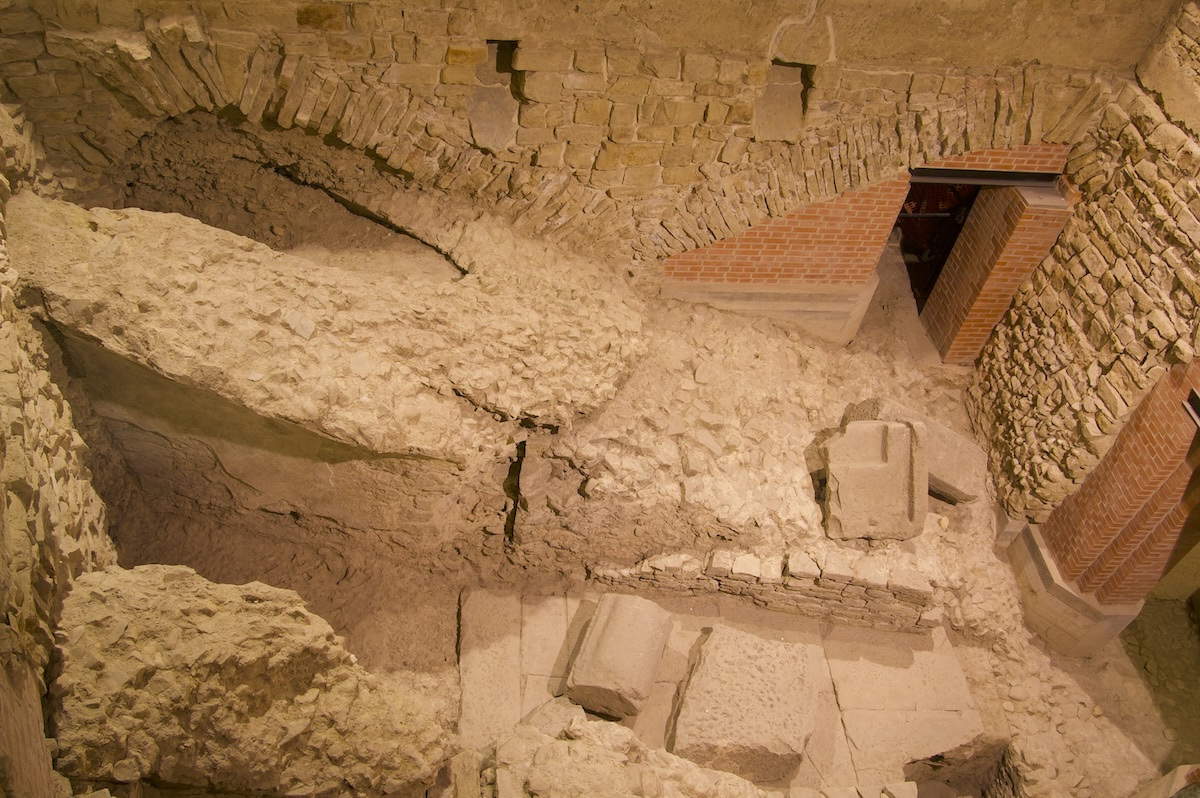
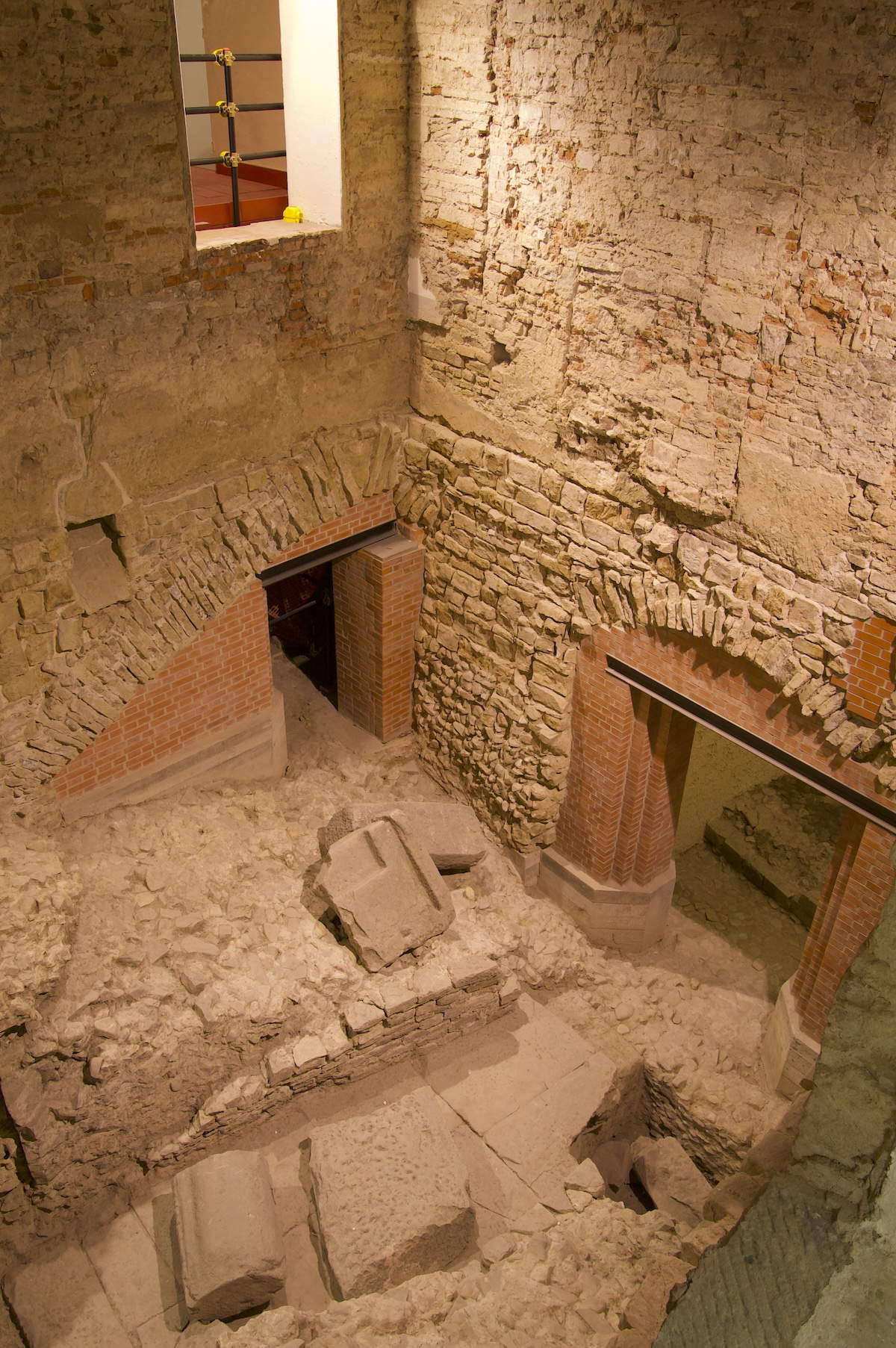
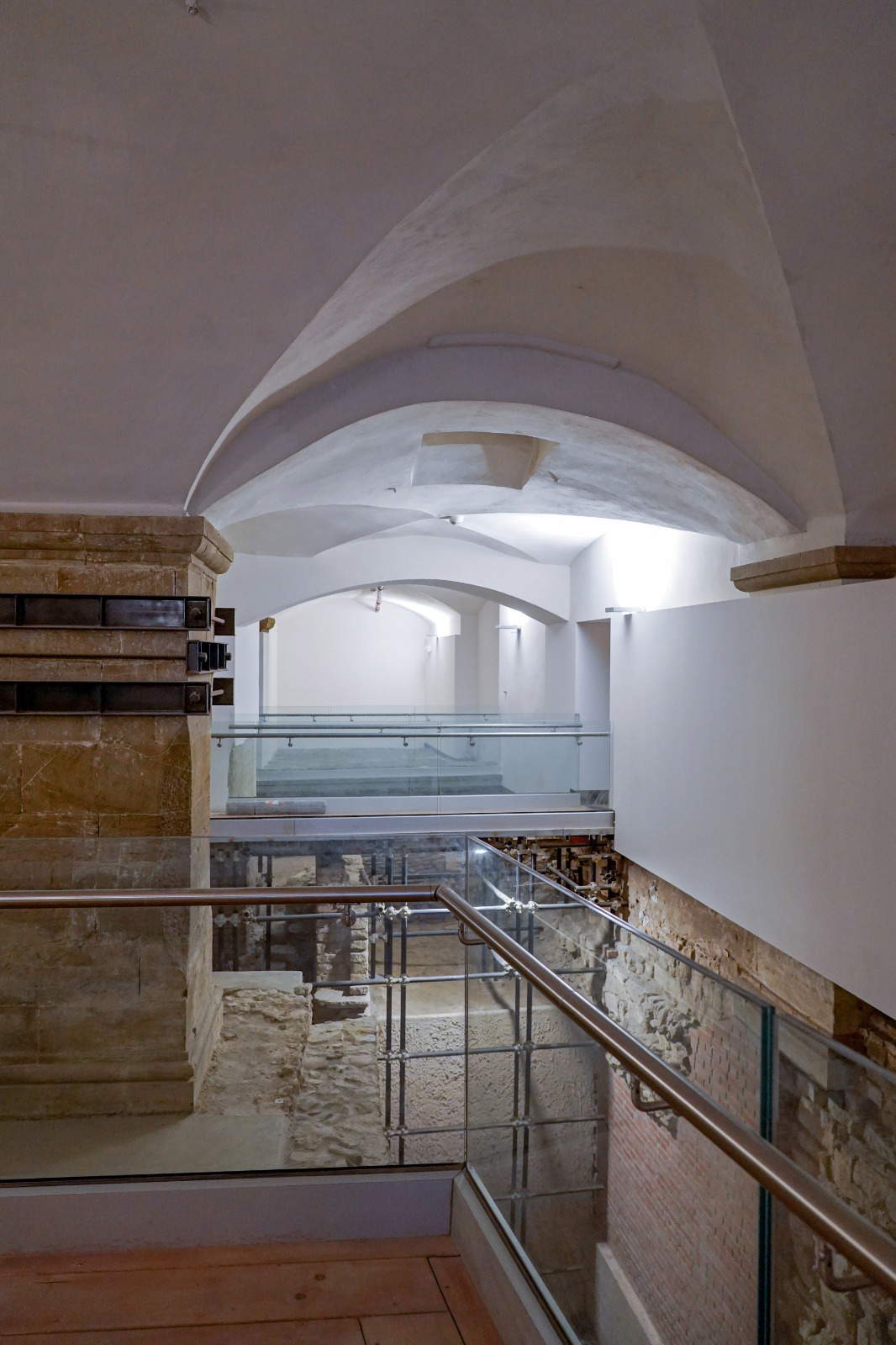
The conclusion of the archaeological excavations in the basement of Palazzo Vecchio dates back to 2010 and has brought to light the structures of the Roman theater of Florentia and the subsequent stratifications, configuring itself as a significant case of reuse and building transformation, both public and private, from ancient to modern times. The original layout of the theater may date back to the colonial phase of the city, while the expansion can probably be traced back to the great urban restructuring of the imperial age, between the late 1st and early 2nd centuries CE. At its peak, Florentia’s theater must have had a considerable capacity, estimated at between 8,000 and 10,000 spectators.
The archaeological remains extend under a large portion of land between Palazzo Vecchio and Palazzo Gondi, with the cavea oriented toward Piazza della Signoria and the stage along today’s Via dei Leoni. The size and capacity of the theater testify to the significant population increase and urban development known to the city in the imperial age. The building remained in use until the fifth century CE; later, with the crisis of the Roman Empire and the Greco-Gothic wars, it went into gradual abandonment and degradation, suffering looting and spoliation of its building materials.
Beginning in the Lombard age, the burellas, or radial masonry corridors that supported the semicircular cavea, were reused with different functions: some rooms were used as landfills, limestone pits, burial grounds or stables. The upper part of the cavea was fortified and turned into a watchtower, known as the Guardingo. Between the 12th and 13th centuries, some burettes were also converted into prisons. From the 11th century, medieval buildings were set above the Roman structures, and in the following centuries, the area was affected by further building interventions, becoming an integral part of a dense urban fabric. In addition to the layout of Via di Bellanda, there arose the tower-houses of the Foraboschi and Manieri families and the Bellialberti palace, later the seat of the Executor of Justice. These buildings were gradually incorporated into the civic palace, today’s Palazzo Vecchio, built beginning in the late 13th century and gradually expanded eastward. Particularly significant in this process was the construction of the Sala del Maggior Consiglio, today the Salone dei Cinquecento, whose foundations exploited the ancient radial chambers of the Roman theater as structural plinths.
Reservations at info@musefirenze.it or at 055-0541450
|
| Florence, Palazzo Vecchio excavations with remains of Roman theater return open to visitors after five years |
Warning: the translation into English of the original Italian article was created using automatic tools. We undertake to review all articles, but we do not guarantee the total absence of inaccuracies in the translation due to the program. You can find the original by clicking on the ITA button. If you find any mistake,please contact us.