





The action is quick and painless, the result immediate and comforting under the magnificent vault of the Sistine Chapel. That veil of white that has thickened exclusively over Michelangelo’s Last Judgment, dulling the 391 figures painted by the master between 1536 and 1541, is removed with the proverbial stroke of a sponge. Or rather, simply by brushing deionized water over the double layer of Japanese paper that is applied to the surface of the fresco by restorers and restorers at the Vatican Museums. Two minutes of waiting and, voilà, the game is done: angels and demons, damned and blessed, holy apparitions and divine figures rediscover as if by magic the hue of the paint laid by Buonarroti to give body and life to the project desired by Pope Clement VII and carried out by Paul III.
In fact, the figures of the Last Judgment, made “in buon fresco” with essential “dry” additions by Michelangelo himself, are regaining the color that reappeared thirty-one years ago after the 181 square meters of wall surface were healed by the Vatican team of restorers led by Gianluigi Colalucci. That team, which included Maurizio Rossi, Piergiorgio Bonetti and Bruno Baratti, managed in four years to remove the layers of black smoke produced by the ritual candles and those of the animal glues spread over centuries to revive the dull colors on the altar wall. And he did so after having already put his hand (from 1981-89) to the blackened Michelangelo frescoes on the vault. The final intervention silenced, on the strength of incontrovertible scientific evidence, the heated controversy raised by American art historian James Beck (1930-2007) who, supported by artists’overseas such as Andy Warhol and Robert Rauschenberg, who came to call for a halt to the restorations, was convinced that, with the removal of the dirt and posthumous repainting, the smoky-black shading executed by Michelangelo himself and, more generally, the more plastic than coloristic sense of his Sistine cycles would be lost.
That 1980-1994 worksite was truly the restoration of the century and earned Colalucci two honorary degrees, from New York University in 1991 and from the Polytechnic University of Valencia in 1995. The intervention that now concerns only the Judgment (and which, funded by the Florida Chapter of the Patrons of the Arts in the Vatican Museum, began in February and will be completed by Easter) is much more simply a case of “extraordinary maintenance.” So says the Holy See’s communiqué. And so the director of the Vatican Museums, Barbara Jatta, never stops emphasizing, well content to achieve maximum results with minimum effort and safe from legitimate doubts or specious criticism. "The white patina that obscured the Judgment, even though it could be seen well only by approaching the wall, while from a distance the view of the work was acceptable overall, alerted us,“ explains the Roman scholar who has been at the head of the Oltretevere collections since 2017. ”We introduced a probe into the gap that divides the wall of the fresco from the wall behind so we could rule out the presence of infiltration. And we could see that it was calcium lactate, which is the product from the perspiration of visitors to the Sistine Chapel. The remedy was very simple and the result is there for all to see.“ Meanwhile, next to Barbara Jatta, restorer Angela Cerreta performs the cleaning operation on one of the ”giornate" (there are 456 layers of plaster used by Michelangelo) of the Last Judgment: the removal of the sheet is done slowly, easily, and all the lime lactate remains imprisoned in the wet paper.
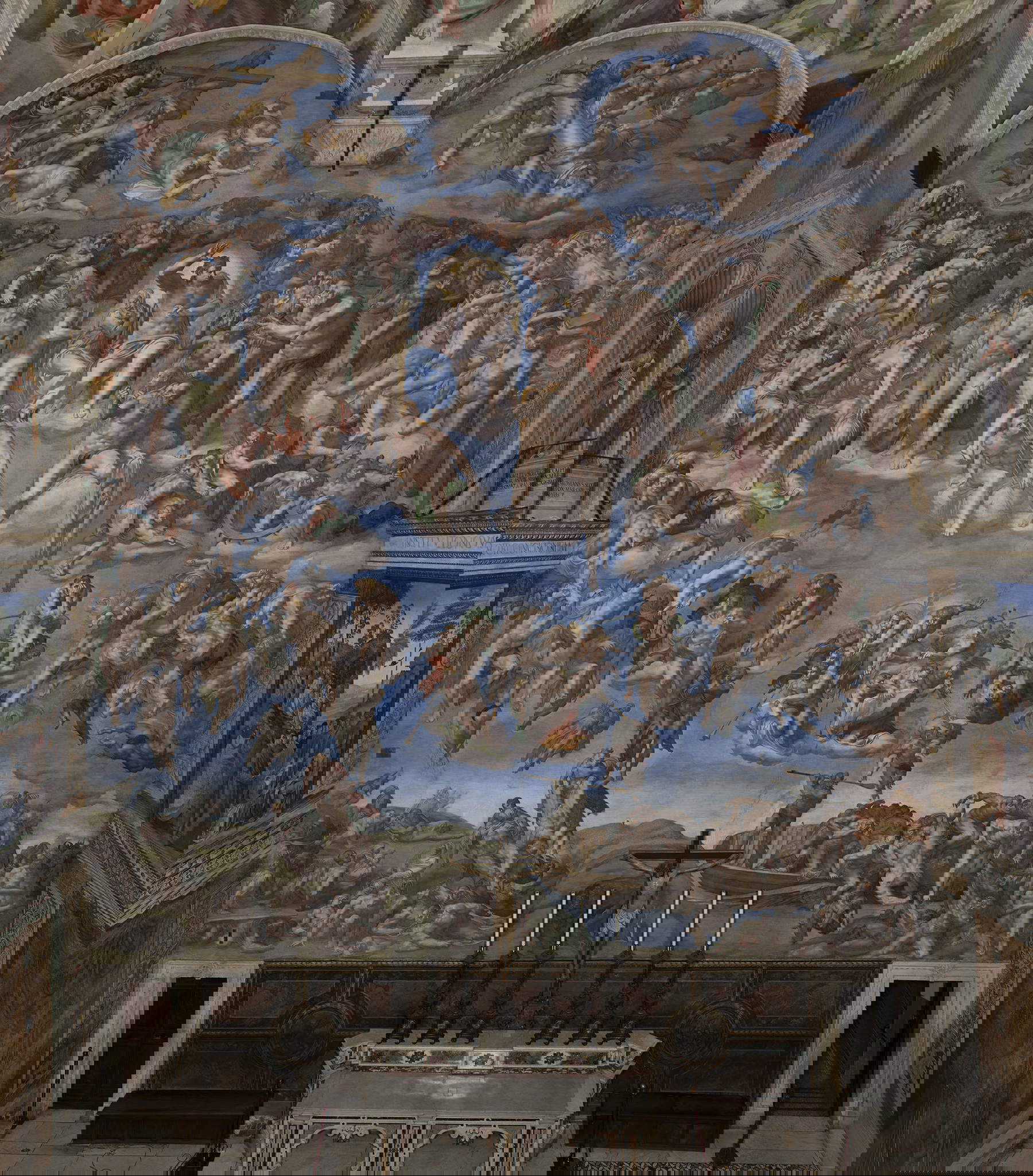
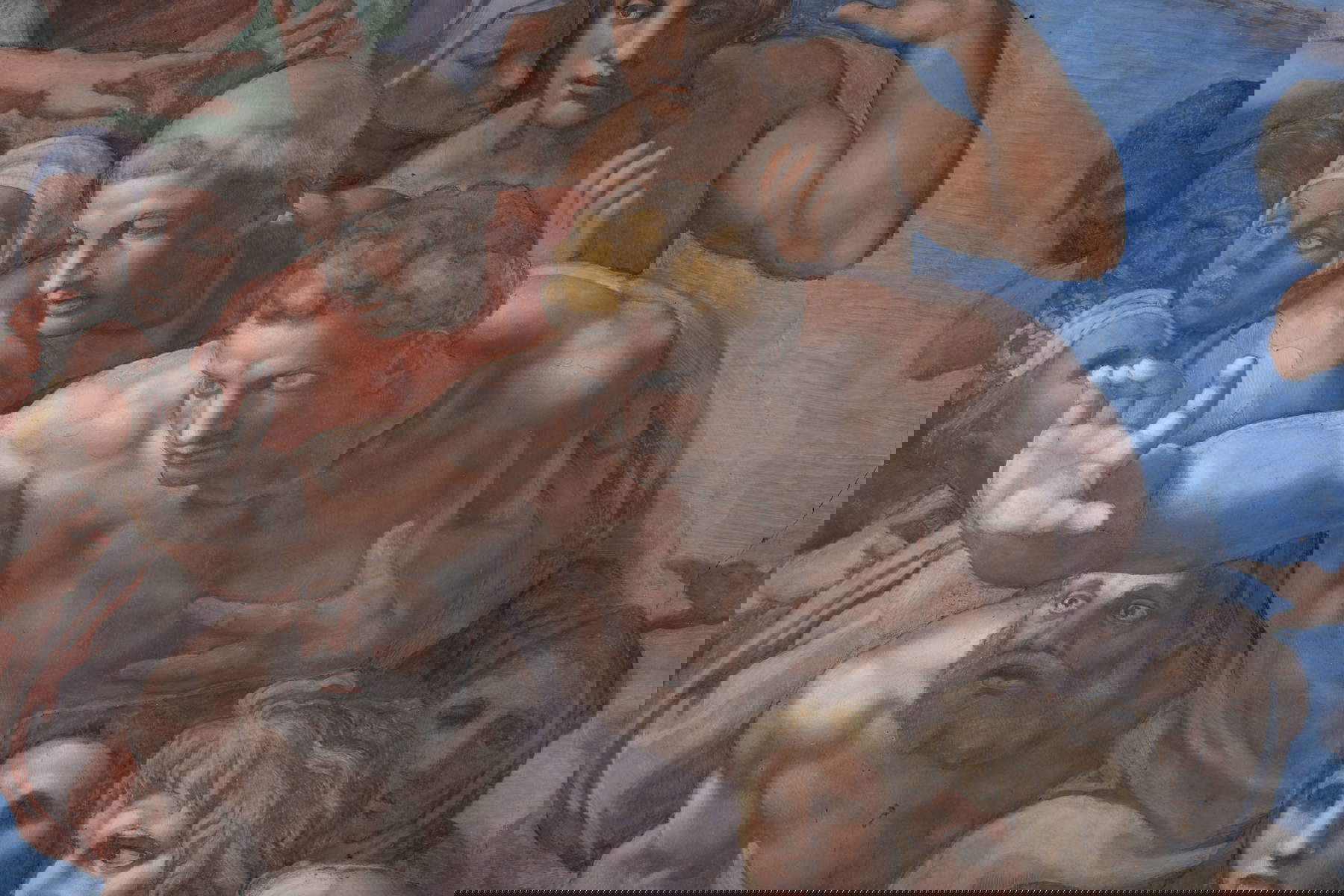
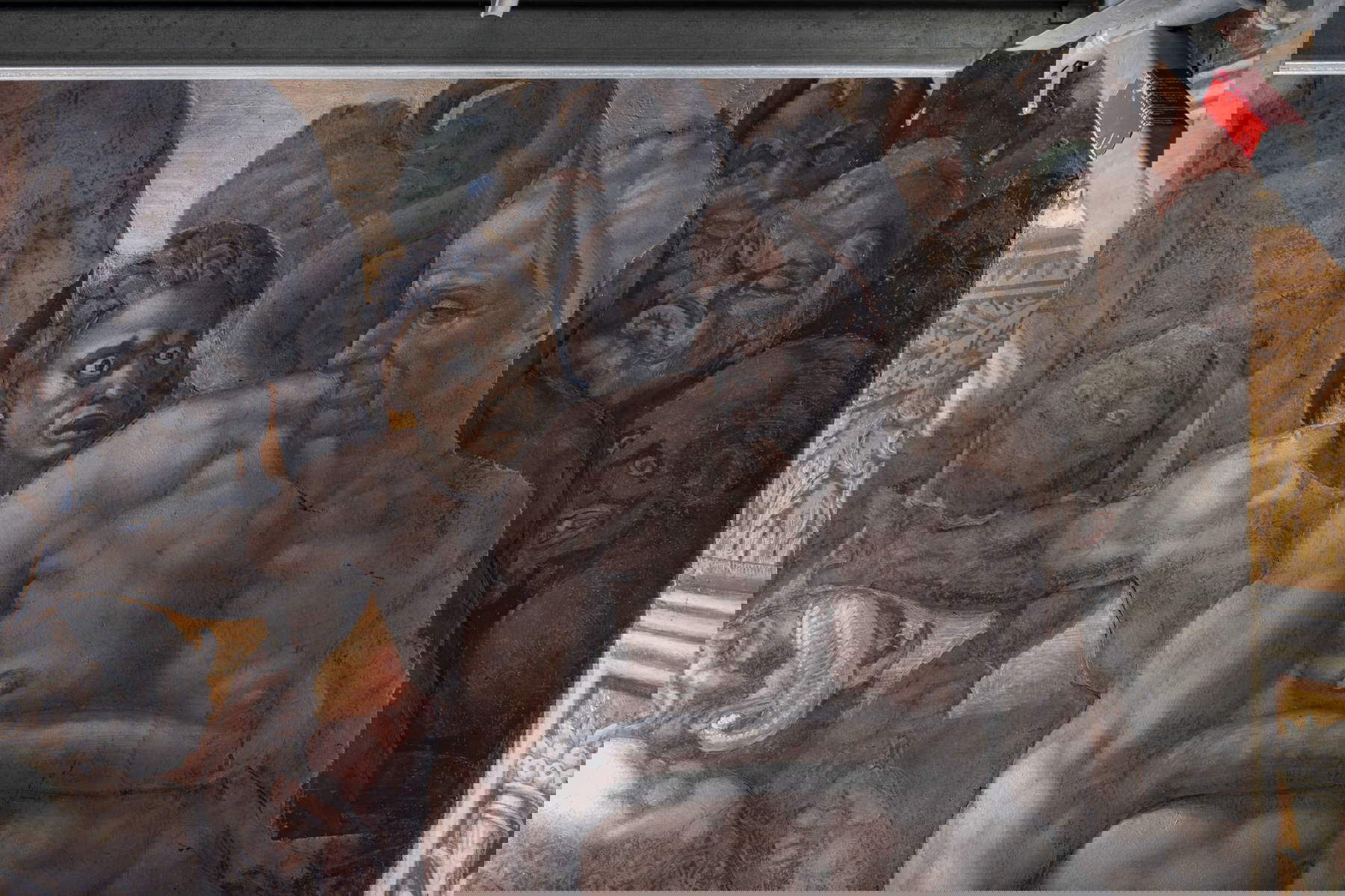
Fabio Morresi, head of the Vatican’s Scientific Research Cabinet, then specifies about the reversible bleaching that has led to fears of similar phenomena brought about by the far more dangerous saltpeter: “Calcium lactate is a salt that has stratified only on the outermost surface of the painting and is very soluble in water: this chemical-physical characteristic makes its removal easy, ensuring minimal interaction with the underlying pigments.” And water does not even scratch the few parts painted “dry” by Michelangelo, for example the figure of the crown of thorns superimposed on the various “days” of the fresco, since these are colors “now cured and originally mixed with lime mixed with pigment to make the mixture more resistant,” Cerreta explains.
The “extraordinary maintenance” coined by the Vatican is an effective oxymoron. Exceptionality lies precisely in the ordinariness of the operation, letting the sense of awe and wonder exclusively define the work of art being treated, "the Dies Irae of the Dying Rebirth,“ according to the felicitous definition of Deoclecio Redig de Campos who, in the wake of the imperious gesture of the Christ-Judge, in 1959 remarked: ”The new fresco marks, beyond it, the limit of the expressive power of the ’classical’ form, reached by Michelangelo himself in the Genesis cycle, twenty-five years earlier [...]. The ancient balance is no longer possible."
Those currently in charge of the cleaning operation found their way paved and facilitated by the restoration, that yes in many respects extraordinary, carried out by their predecessors more than thirty years ago: the director general of the Pontifical Monuments, Museums and Galleries, Professor Carlo Pientrangeli (1912-1995); the art historian who headed the Vatican’s Department of Byzantine, Medieval and Modern Art, Fabrizio Mancinelli (1940-1994); and the chief restorer of paintings in the Vatican Museums, Gianluigi Colalucci (1929-2021). “I was then the last intern at the museum,” Barbara Jatta recounts recalling the origins of the staff, “while Fabio Morresi was already working in the Cabinet of Scientific Research that he now directs [ed: in the role held then by Nazzareno Gabrielli] and Paolo Violini was a mere ’store boy’ in the great Sistine site, while now he is the chief restorer of the Laboratory for the Restoration of Paintings and Wooden Materials of the Vatican Museums.” The reference to the terminology of a Renaissance endeavor is not out of place, for it is peculiar to the Vatican team to combine ancient knowledge, the secret remedies of workshop tradition and the scientific contributions of modern technology.
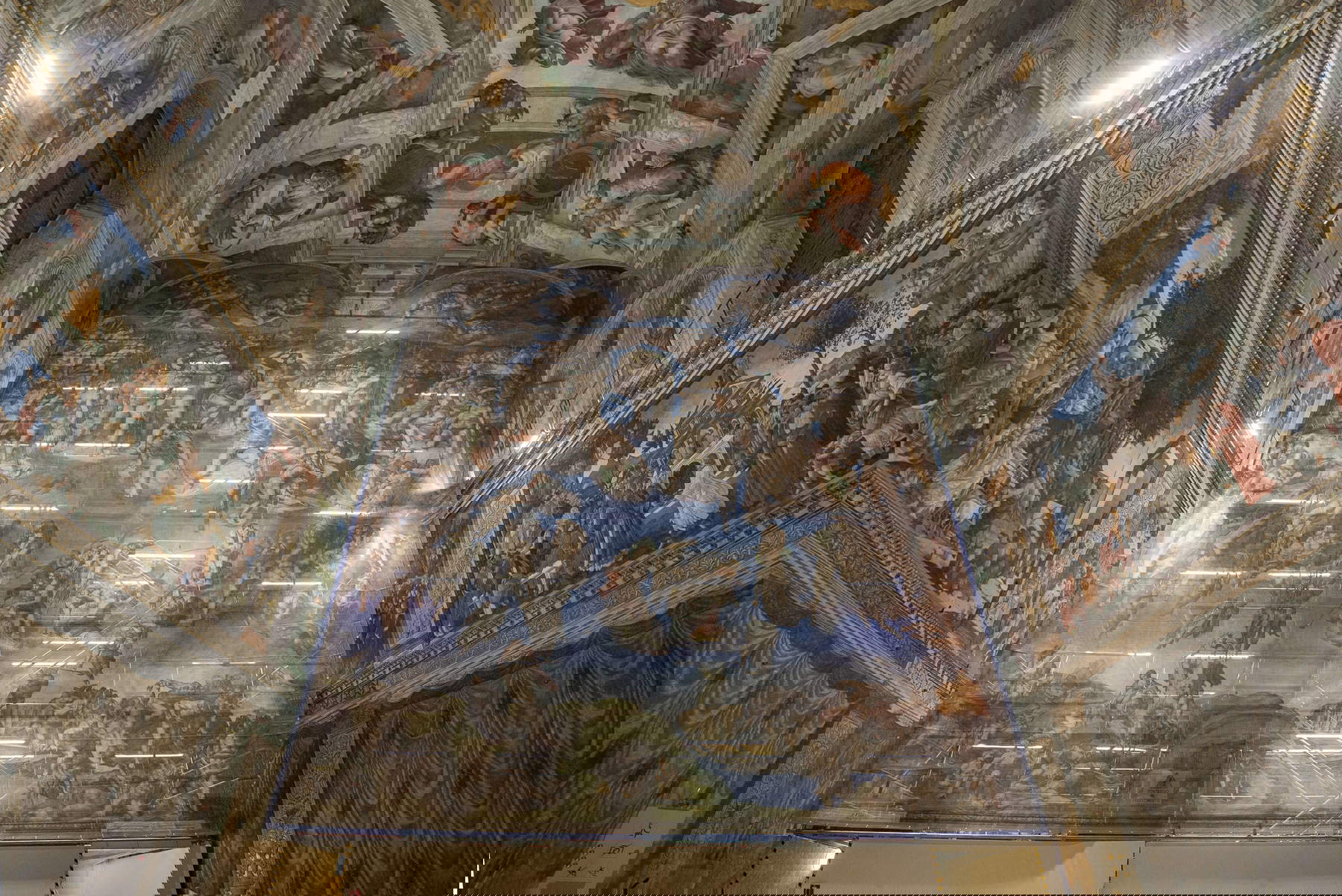
As the droves of visitors continue to swarm and clamor, gazing upward to admire the Genesis narrative on the vault, the scaffolding that completely covers the altar wall is itself covered by a tarpaulin that reproduces, for the use of the public, the entire Last Judgment. Behind this giant transparent photographic screen the twelve restorers of the Vatican team move swiftly and silently. And it is the same number (only coincidentally the same as the apostles) of colleagues who at the end of the last century restored to this masterpiece the original color relationships of the Mannerist tradition, freeing it from the obscurity of which Goethe spoke in his Italian Journey: “On February two,” the great German writer noted on February 16, 1786, “we went to the Sistine Chapel to attend the ceremony of the blessing of the candles ... the candles, which for three centuries have blackened these stupendous frescoes, and here is theincense, which with holy effrontery, not only shrouds the unique sun of art with vapors, but from year to year clouds it more and more and will eventually plunge it into darkness.”
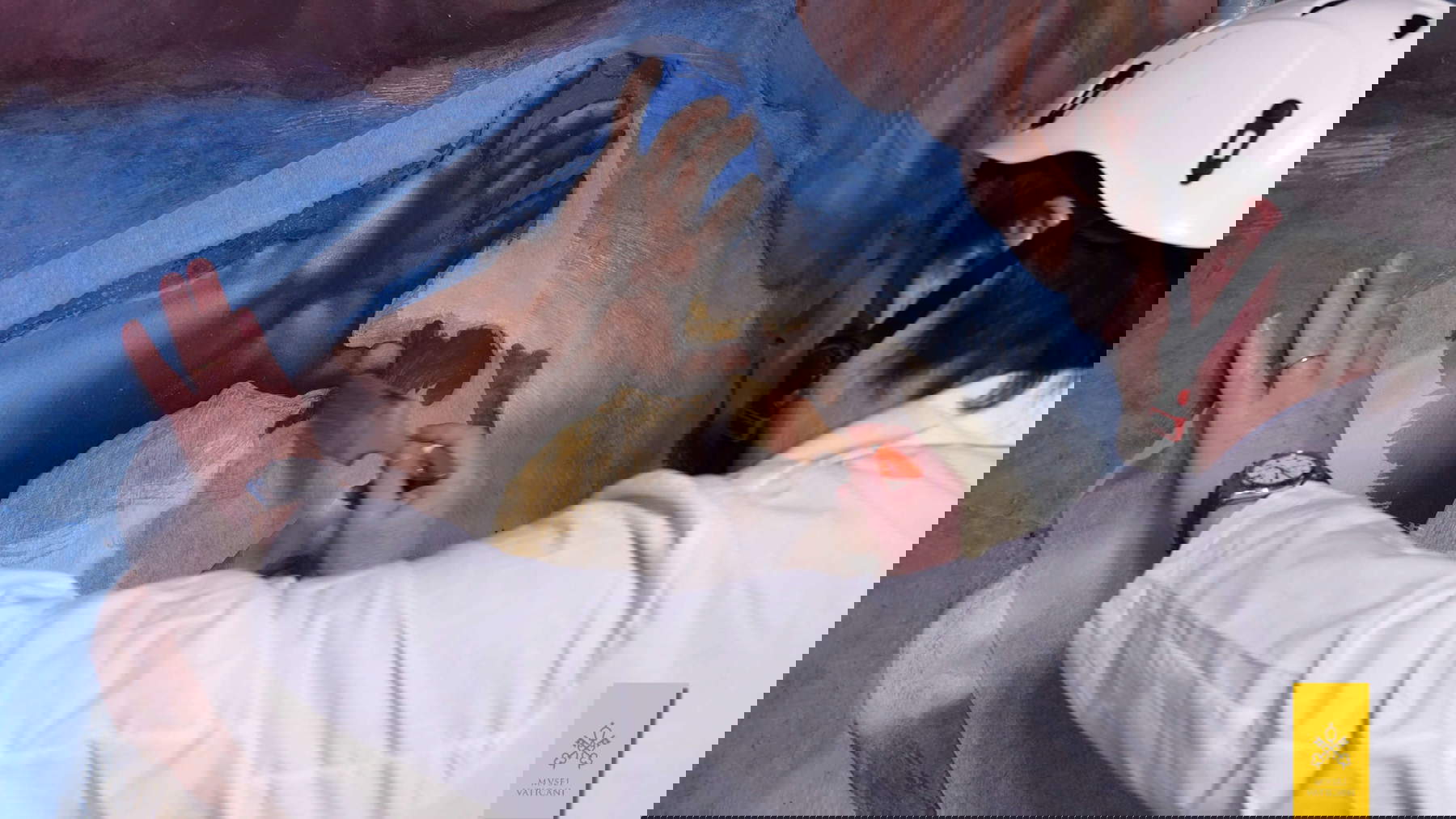
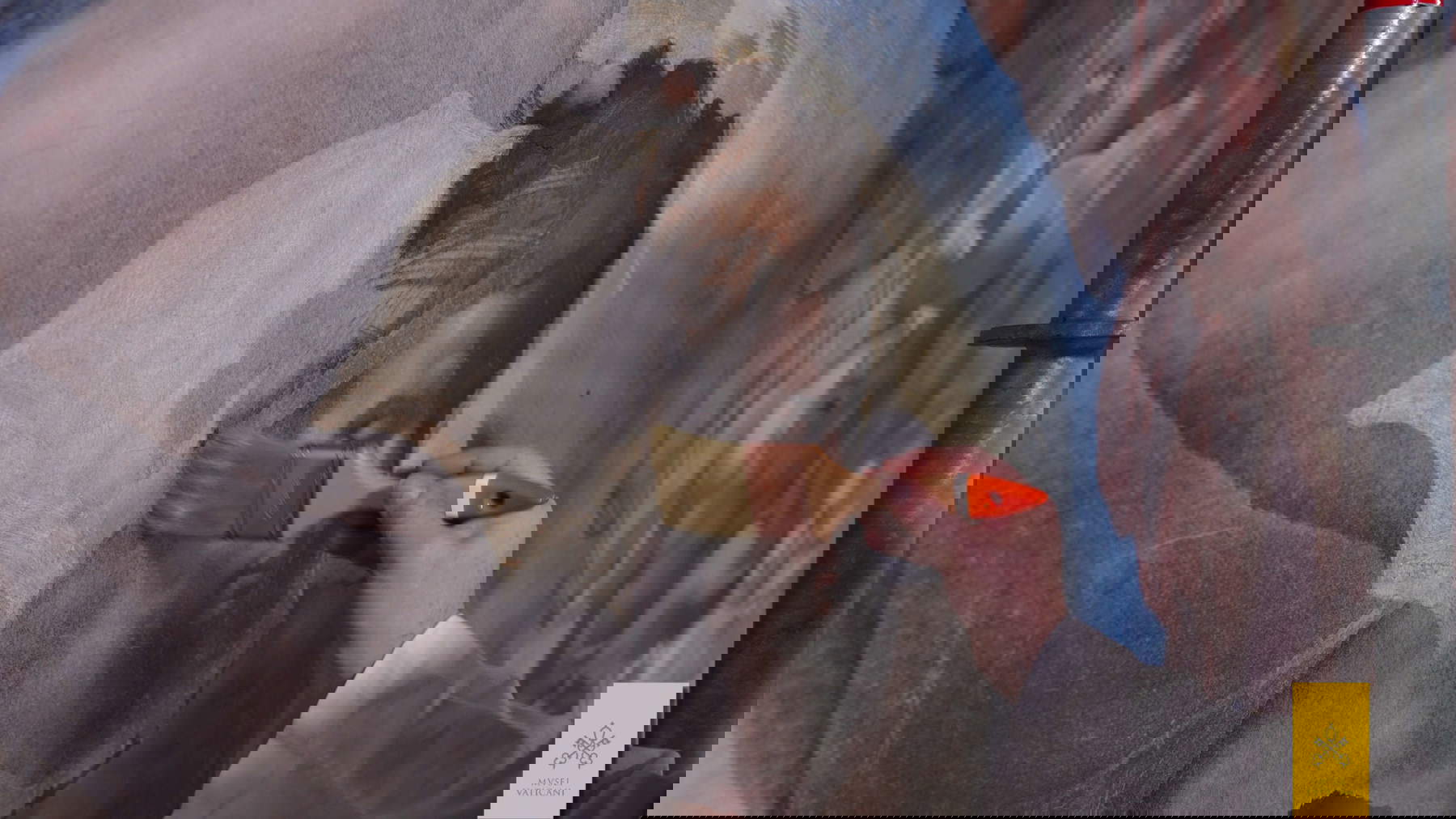
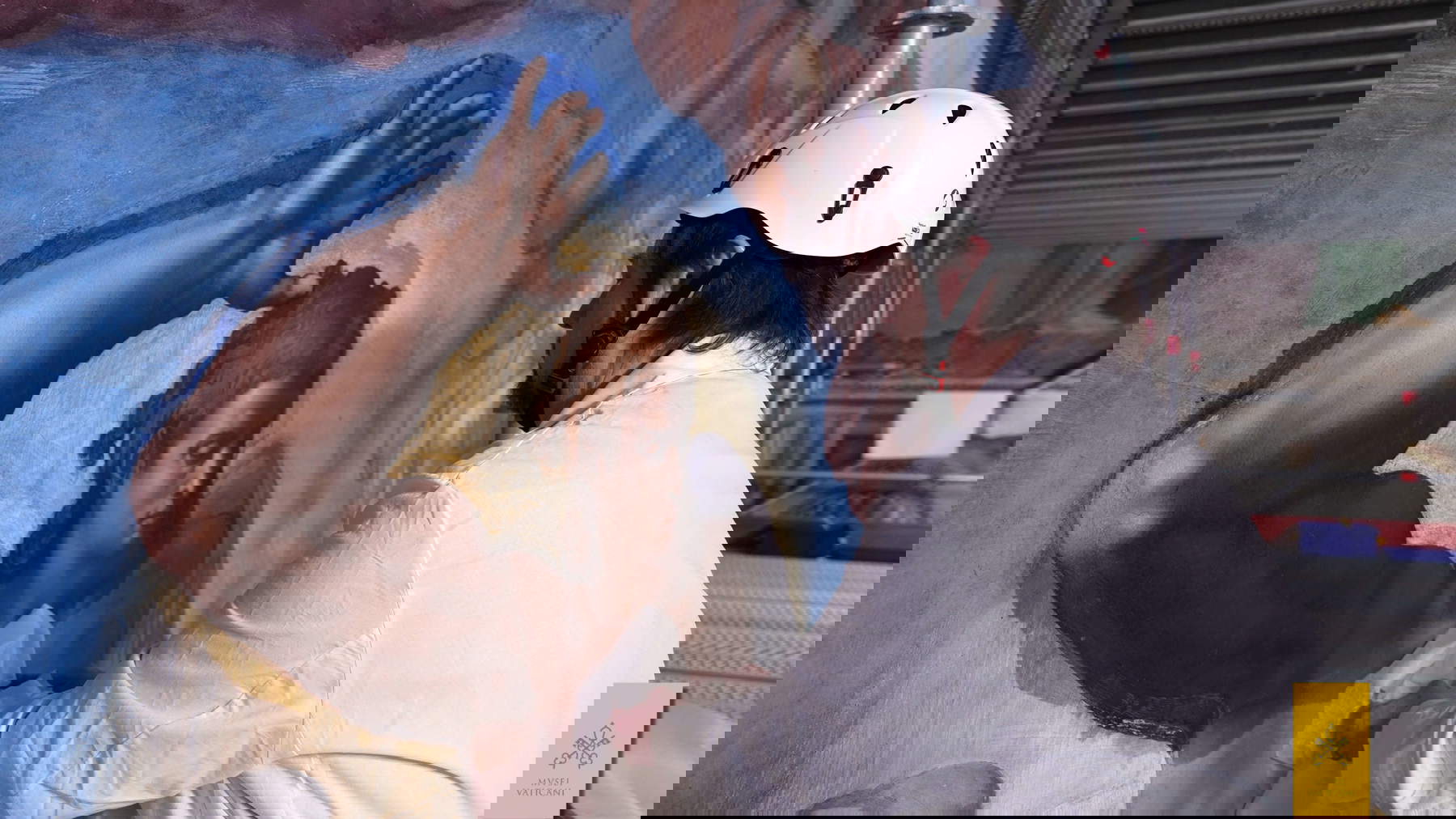
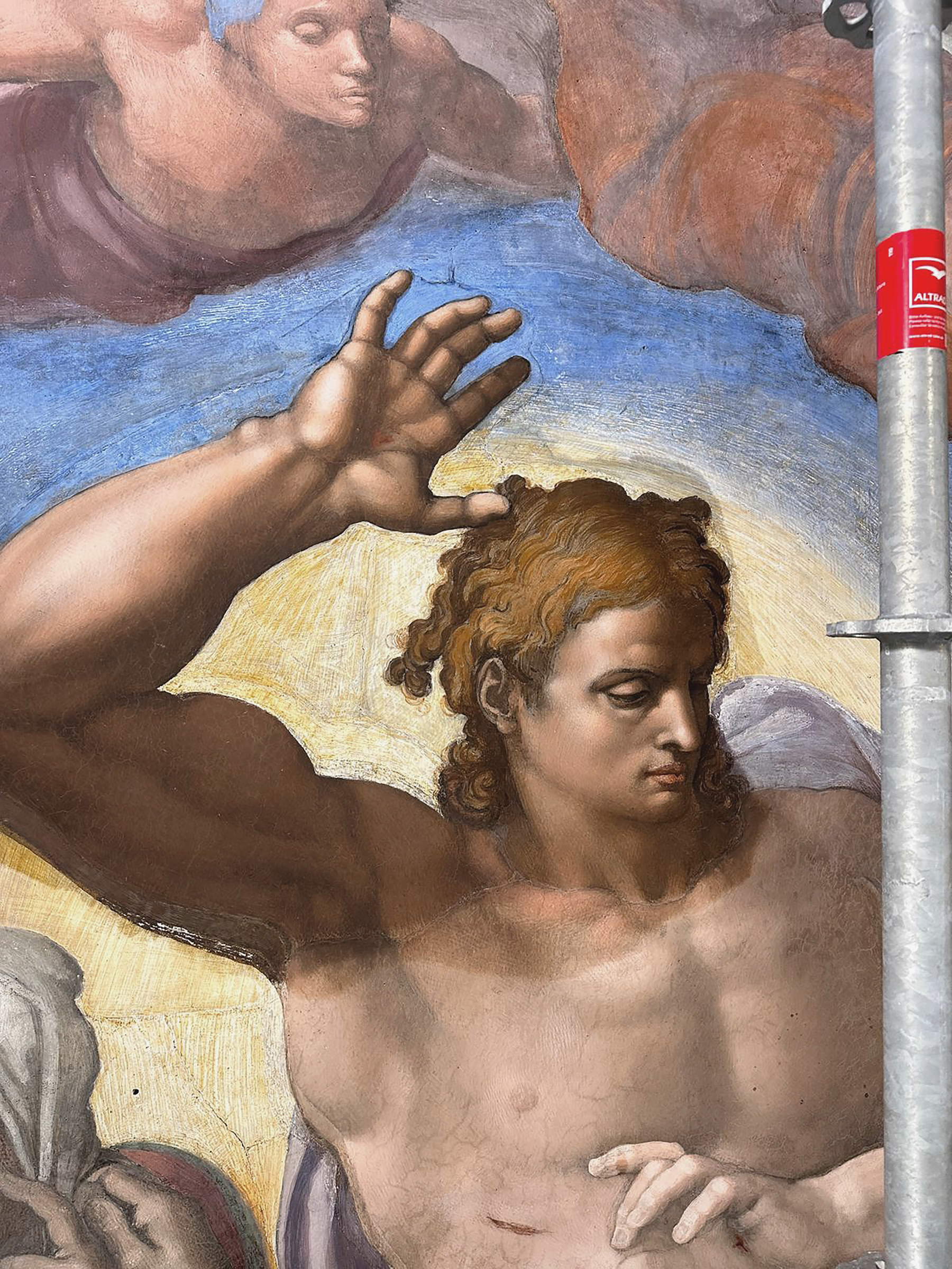
Instead of twilight, it is now the foggy dawn due to the lactic acid of the thousands of visitors to the Sistine Chapel (in 2025 there were seven million) that has obscured the sacred Judgment, resulting, Paolo Violini points out, in “an attenuation of the chiaroscuro values and the consequent alteration of the chromatic legibility of the fresco.” As in the construction site completed in 1994, to assist in the work of cleaning and analysis of the fresco’s state of preservation there are occasional art historians, museum directors, and master restorers to share the excitement of the close-up view of the masterpiece executed for Pope Farnese, who salaried Michelangelo with 1,200 ducats a year. Fabrizio Mancinelli, for that matter, wrote proudly in 1990, “The Chapel has been constantly open to visitors and the bridge [ed. note: that of the vault] studied so as to cover only a small portion of the frescoed surface so as to allow one to follow the progress of the cleaning. And the public has always been allowed on the bridge, necessarily restricted to specialists from whom valuable guidance has always come.”
Along the stairs and on the metal deck of the nimble structure assembled in a single week by a Vicenza firm, the exchange between academy and art of restoration, connoisseurs and masters, theory and practice, is staged. Thus the occasion of extraordinary maintenance offers a chance to better study technique and meanings of Buonarroti’s painting. Fabrizio Biferali, curator of the Department for the Art of the 15th-16th Centuries, emphasizes: "The close view of the fresco of the Last Judgment confirms the change of technique by the Florentine master who, twenty-five years after the end of the Sistine cycle on the vault, adopted a faster brushstroke, with many parts executed by brush directly on thefresh plaster and accelerating the speed of execution as, from the top of the lunettes with the angels carrying the instruments of the Passion, he descended in the direction of the infernal scene behind the altar, moreover shrinking the figures downward so as to achieve a perspective balance."
Some parts will be spared by the cleaning of Violini’s team, as did Colalucci last century by preserving minimal portions of blackened pictorial film but also, in the head of the Ignudo next to the Sibilla Persica, that fragment of plaster that fell off and was reinserted by Carnevali in 1570 as a filler in a crack: the original and intact fragment, hidden for centuries in the mortar, proved beyond reasonable doubt that Michelangelo’s fresco had the brilliance of colors freed from glues and black smoke. Similarly now the leg and foot of a character standing next to the figure of Saint Sebastian positioned above the front door will retain as testimony and memento what restorers have smilingly dubbed “the white sock.”
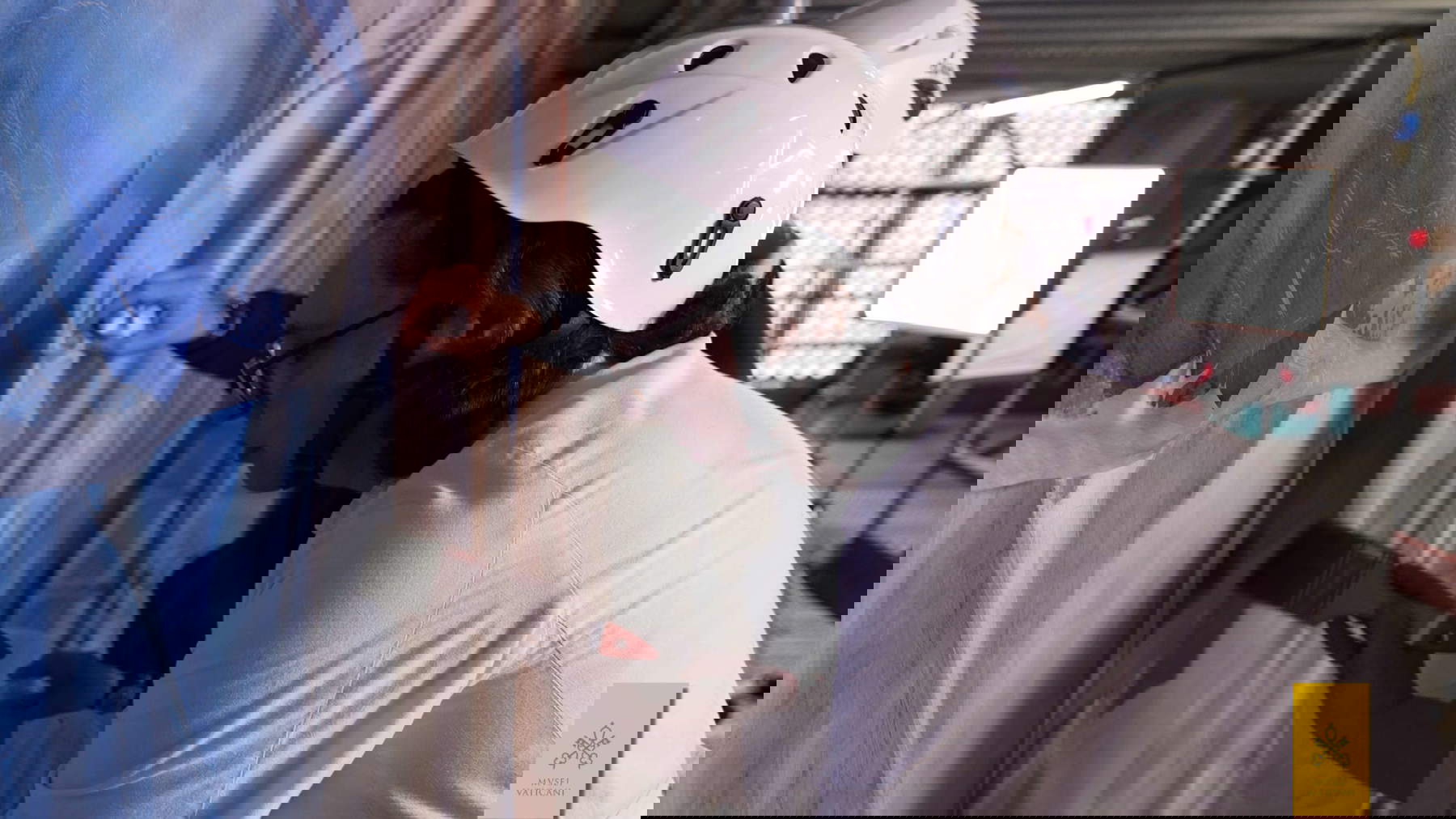
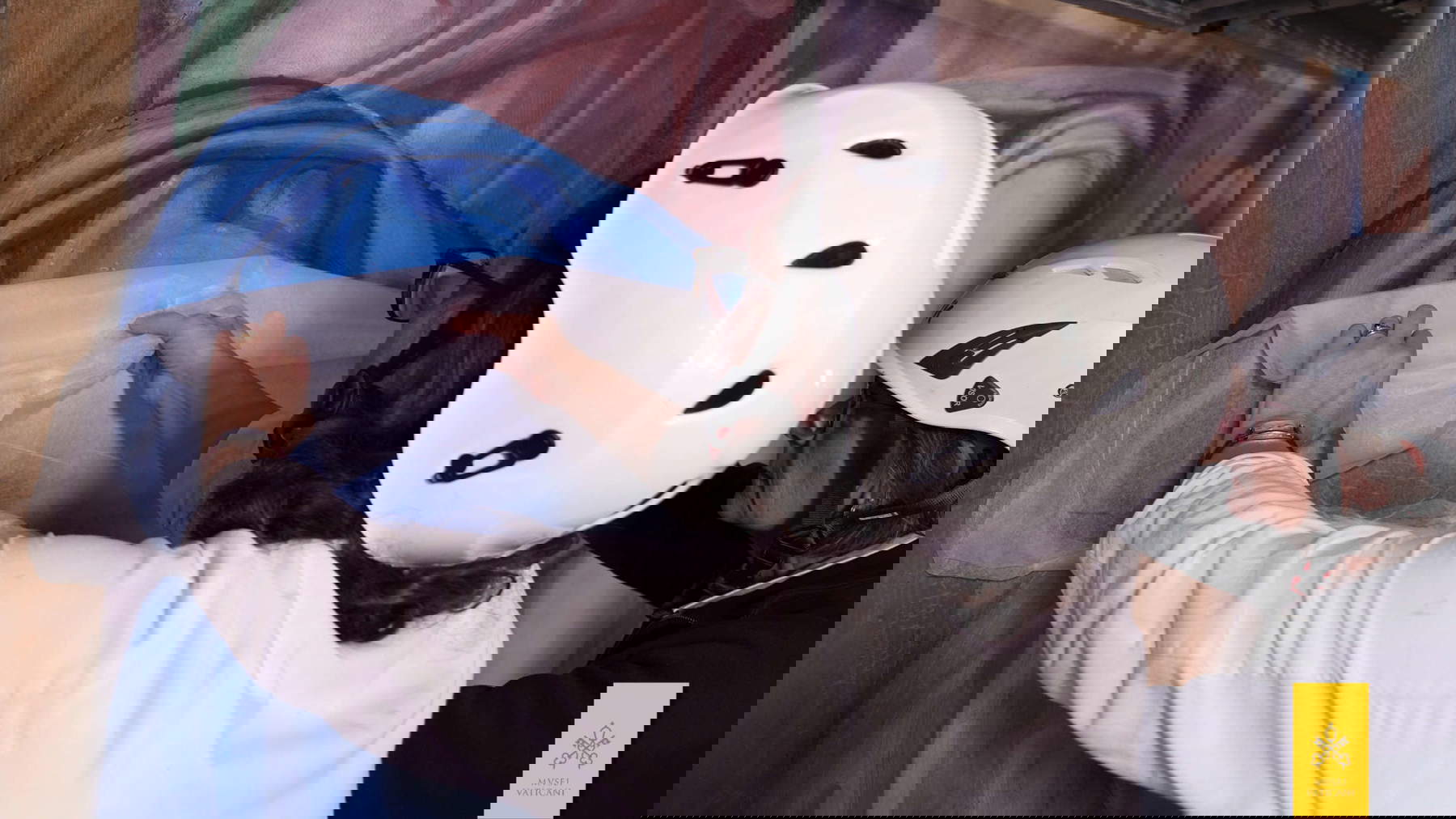
Where the snow-white veil of calcium lactate has been removed instead, one can better see both the pointillism of the cardboard with the spolvero technique and the rethinking and adjustments made by Buonarroti when dry, e.g., the line of the left side of the Christ-Judge. Or, the invention of figures painted in detail alternating with others barely sketched so as to accentuate depth of field. Finally, among the many novelties and confirmations, the use of gray plaster as a background for different complexions, in the same way as Michelangelo did, in the wake of Beato Angelico, with Adam’s eye in the Creation of the progenitor on the vault of the Sistine itself. But also the use of a multi-pronged brush to make that crisscrossing pattern of pictorial marks of pure colors reminiscent of the stroke of the step in sculpture.
On the level of the palette (“with the adoption this time of lapis lazuli, lacquer, orpimentum and giallorino, richer and more expensive colors, good for imitating gold and brilliance”, Biferali points out), the Last Judgment registers an enrichment over the youthful palette employed for the 1508-1512 Sistine cycle, whose exhilarating final part, enclosed in the figure of the prophet Jonah and the characters close to him, as well as in the faux architecture on that side of the vault, did not register the drawback of calcium lactate that clouded the underlying color score. Nor did that white veil appear on the walls frescoed in the 1580s by Botticelli, Signorelli, Ghirlandaio and co. along the sides of the Sistine Chapel (the scenes on the altar wall, painted by Perugino, were instead famously destroyed by Michelangelo, along with two of his lunettes from 1508-12, to pave the way for the Judgment); also because these are surfaces that are more easily reached and dusted by the staff of the Conservator’s Office, led by Marco Maggi, who is in charge of the routine maintenance plan for the Cappella magna.
Better protected (perhaps because of the slight forward inclination) from the sedimentation of dust that enters the Sistine despite the technological apparatus that has been filtering the air since 2014, the wall of the Judgment , once the cleaning is finished, will undergo further technical and scientific analyses that follow the preventive ones that lasted eighteen months. The solution for the future could be as simple as water and Japanese paper: better air circulation. Reduced visitor flow does not, in fact, provide for further contingency. The Sistine is admired last on the tour to the Vatican, but it remains the main focus of the thousands of tourists visiting the museum built in the rooms of the popes every day.

The author of this article: Carlo Alberto Bucci
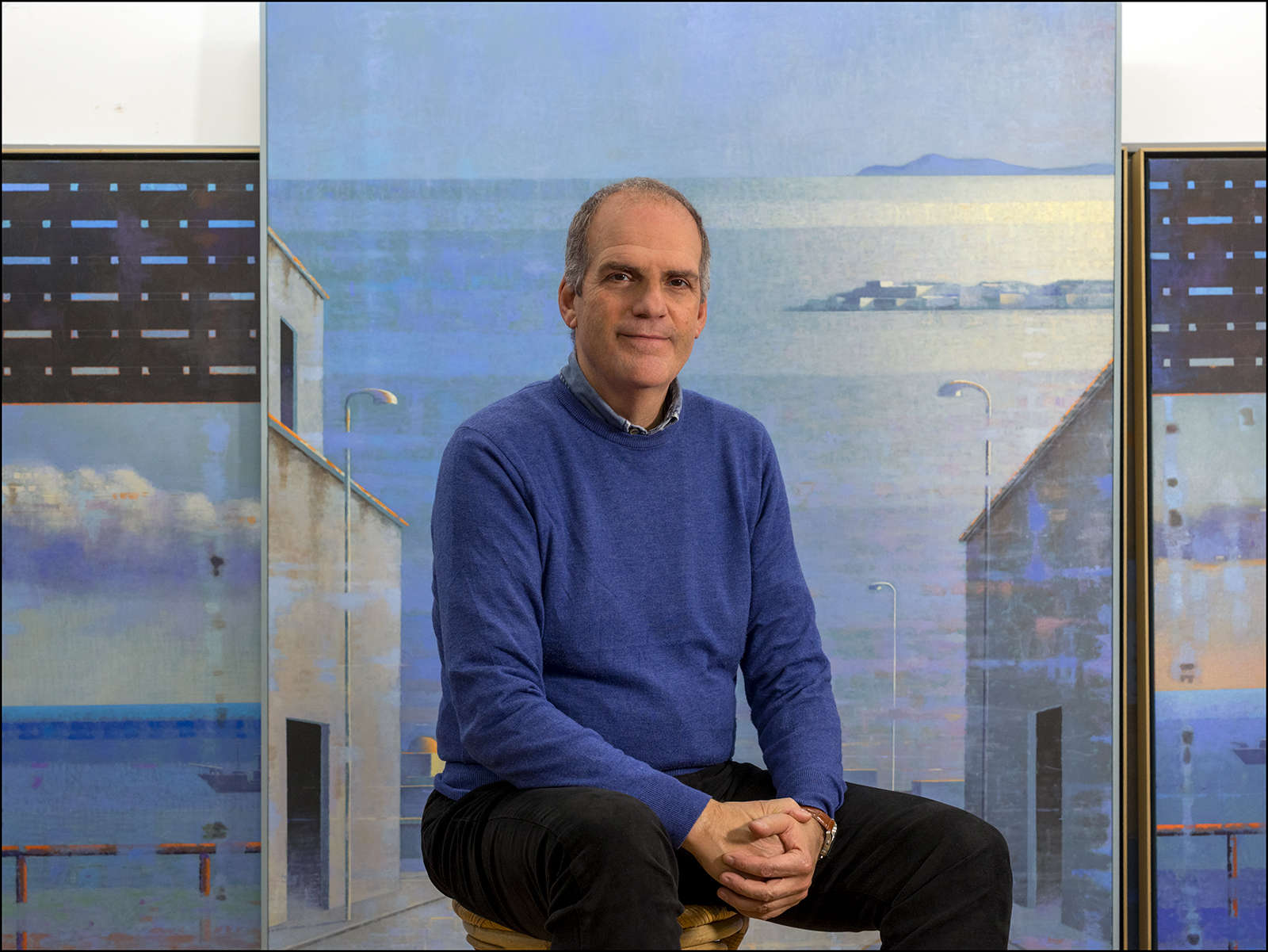
Nato a Roma nel 1962, Carlo Alberto Bucci si è laureato nel 1989 alla Sapienza con Augusto Gentili. Dalla tesi, dedicata all’opera di “Bartolomeo Montagna per la chiesa di San Bartolomeo a Vicenza”, sono stati estratti i saggi sulla “Pala Porto” e sulla “Presentazione al Tempio”, pubblicati da “Venezia ‘500”, rispettivamente, nel 1991 e nel 1993. È stato redattore a contratto del Dizionario biografico degli italiani dell’Istituto dell’Enciclopedia italiana, per il quale ha redatto alcune voci occupandosi dell’assegnazione e della revisione di quelle degli artisti. Ha lavorato alla schedatura dell’opera di Francesco Di Cocco con Enrico Crispolti, accanto al quale ha lavorato, tra l’altro, alla grande antologica romana del 1992 su Enrico Prampolini. Nel 2000 è stato assunto come redattore del sito Kataweb Arte, diretto da Paolo Vagheggi, quindi nel 2002 è passato al quotidiano La Repubblica dove è rimasto fino al 2024 lavorando per l’Ufficio centrale, per la Cronaca di Roma e per quella nazionale con la qualifica di capo servizio. Ha scritto numerosi articoli e recensioni per gli inserti “Robinson” e “il Venerdì” del quotidiano fondato da Eugenio Scalfari. Si occupa di critica e di divulgazione dell’arte, in particolare moderna e contemporanea (nella foto del 2024 di Dino Ignani è stato ritratto davanti a un dipinto di Giuseppe Modica).Warning: the translation into English of the original Italian article was created using automatic tools. We undertake to review all articles, but we do not guarantee the total absence of inaccuracies in the translation due to the program. You can find the original by clicking on the ITA button. If you find any mistake,please contact us.





















 IT
IT FR
FR DE
DE ES
ES CN
CN


