




by
Federico Giannini  @federicogiannini1
25/02/2026
@federicogiannini1
25/02/2026



Categories: Exhibition reviews / Disclaimer
The exhibition that CONI organized at the Milan Triennale for the Milan-Cortina 2026 Olympics? A disappointing mishmash of things imagined to "enhance the Italian cultural heritage" (even though the artists were overwhelmingly foreign), shaky juxtapositions, absence of curatorship. Muse, that was the title, was a wasted opportunity. Federico Giannini's review.
A few days ago, we were roughly at the beginning of the second week of the Olympics, Aldo Cazzullo wrote in the Corriere that “Milan is not at all pervaded by Olympic fever,” and that after the inauguration the Milan-Cortina 2026 Games were “flowing away, confined inside the arenas, in general indifference.” I spare the reader the continuation of the piece, which continues along the same lines, with barroom arguments: interesting, rather, is to wonder in which Milan Cazzullo has been in recent days. Milano Marittima, perhaps, because in the Milan commonly understood as the capital of Lombardy for days there was a totally different air than the one that penetrated Cazzullo’s nostrils. There were, meanwhile, fans everywhere. Dutch, above all: it may be that they are the most recognizable, but either in the past two weeks orange windbreakers were particularly in fashion (it may be), or from Amsterdam and its environs they were organized for an invasion not seen since the days when the West India Company colonized Surinam. In front of the big screen at the Fan Village in Cannone Square was a crowd cheering Lollobrigida that I wouldn’t believe when the national soccer team is playing (I give the Lollobrigida example because I was there at the time, for other competitions I can’t say, but I suppose we weren’t that far away). They may have moved away from the center the bourgeois bohemians like in Paris two years ago, but I think everyone else got over it. Lines everywhere, even to get into the merchandise stores, starting with the one in front of the Duomo. On the Saturday before closing, in the late afternoon, when the brazier show began, in Parco Sempione it was like being at Woodstock, with the lawn in front of the Arch of Peace packed with people as far as the eye could see (in the non-rhetorical but literal sense of the word, because you couldn’t see where the spectators ended up). Clearly then if one wandered around Milan at one or two in the morning then one could see the brazier up close and could register business as usual (in countries where it snows they have the custom of going to bed early), but wandering around the city a bit on Olympic days one could feel an unusual, vivid, festive warmth.
There were also queues to go and visit the Triennale, where several exhibitions were scheduled, including that of Casa Italia, which we can consider as a kind of artistic business card with which Italy presented itself to the public at the Olympics (because if you decide to present yourself to those arriving in Milan with a contemporary art exhibition in the place chosen as the hosting space for the Olympic committee organizing the Games, then that exhibition, like it or not, becomes your cultural calling card). There you have it: all the premise to say that this enormous popular enthusiasm would have deserved something much better than Musa, the exhibition organized by CONI to tell, quote passages from the press release, “the Italian identity” through “sport, culture, art, architecture and design.” And again, “an immersive journey” (whatever that means: everything is “immersive” now) to “accompany the public into the heart of the Games” and to “enhance, on the international stage, the cultural, artistic and human heritage of the country through art, architecture, design, food.” Now, when the most disparate topics are thrown into the cauldron, and especially if a narrative of an unspecified “Italian identity” has to come out of the hodgepodge, the result is usually pitiful: first, because it is difficult to derive a meaningful discourse when you start from deeply inhomogeneous material. Second, because I cannot think of a more elusive and elusive expression than “Italian identity,” especially when it is used as a vague rhetorical formula, like a rug under which to hide the emptiness of content. Given the premises, therefore, one could not expect much of interest from Musa, an exhibition based even on the most generic of themes: the “inspirational role that Italy has exercised for centuries on the world’s imagination and culture.”


Let us go ahead and pretend that these fourteen words make sense, and that we can really think that the “inspiring role of Italy through the centuries” could be a valid theme for an exhibition made up of a hundred pieces by contemporary artists. We can certainly make this exercise in imagination, but even with the principle of suspension of disbelief, one cannot help but think that nowadays any artist in any corner of the world who has received a formal education has devoted at least a modicum of study to Italian art. So, unless one wants to inconvenience the Yanomami artists of the Amazon as someone did at the recent Venice Biennials and other exhibitions, any artist who has studied has come into contact at some point with Italy. Consequently, the audience from which to fish for possible artists to include in an exhibition on the “inspirational role of Italy” was so vast that no discourse with logic could come of it.
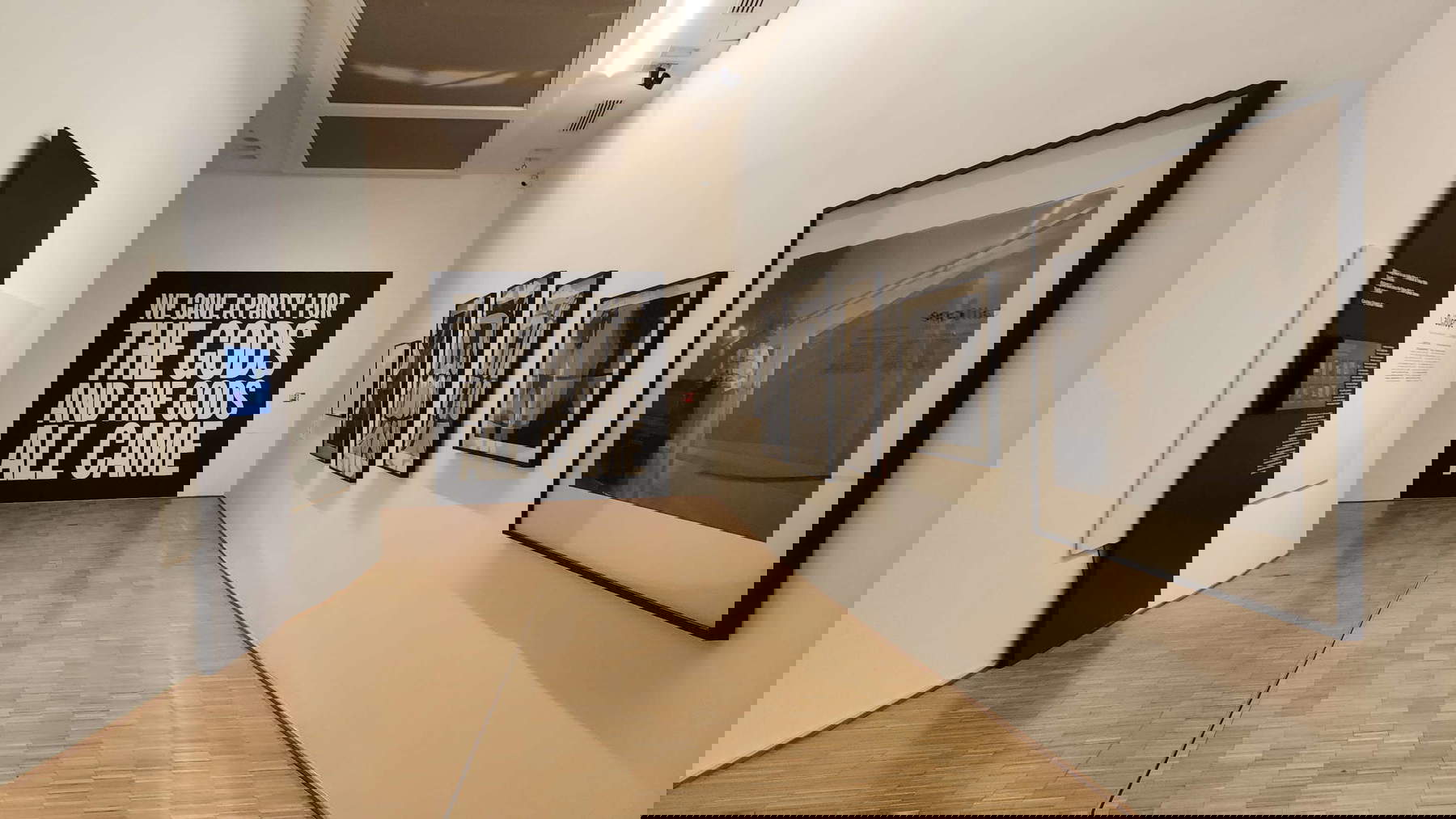
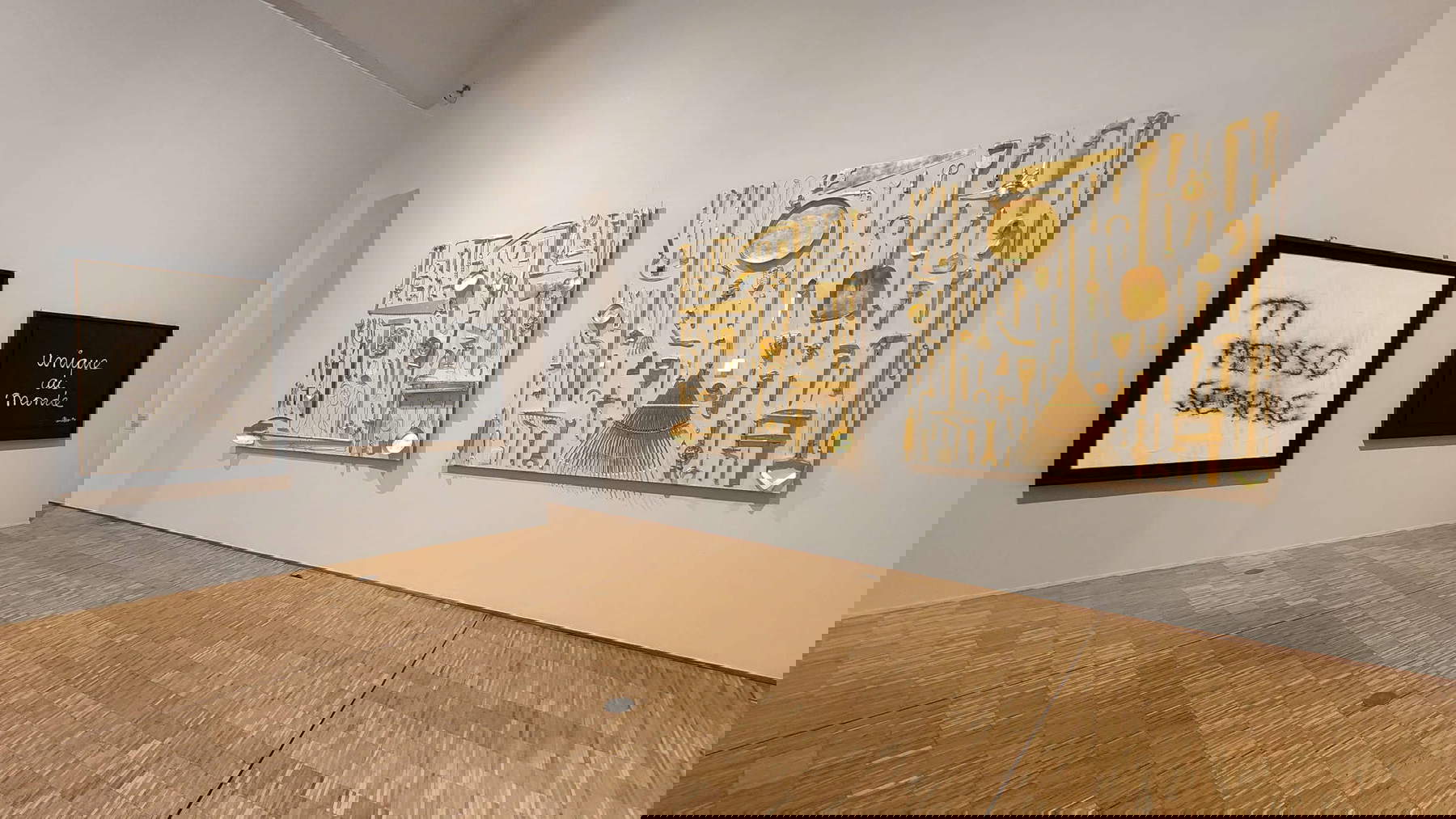
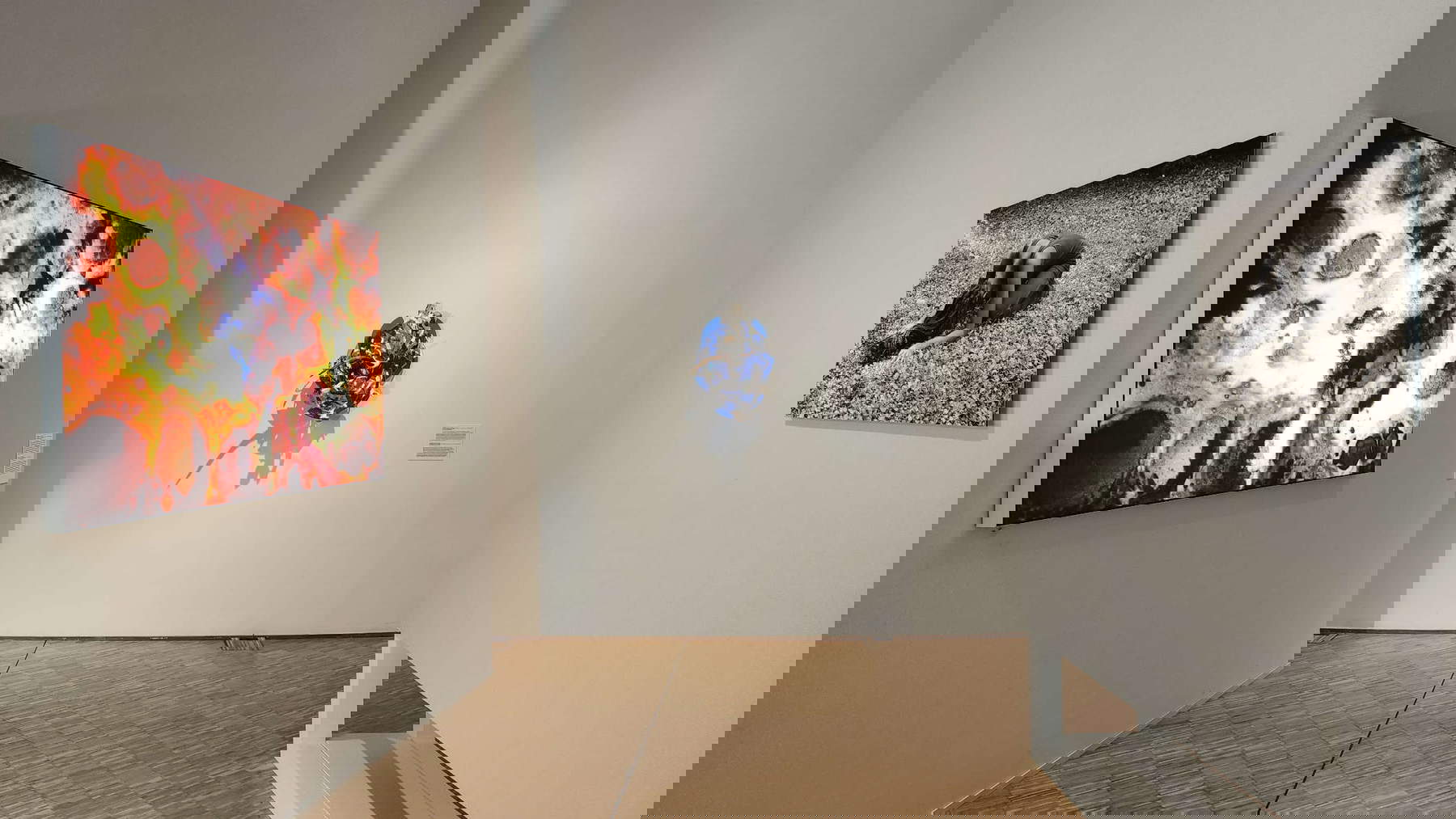
And the exhibition was indeed a cheerful jumble of mostly foreign artists, apparently selected on the basis of the criteria “has been to Italy,” “lives in Italy,” and “has studied Italian art.” As to why certain artists were chosen instead of others, since the three categories just described belong to thousands of creative people all over the world, is of course not known: at the exhibition, however, it was easy to see that the bulk of the loans came from a very small swarm of Italian gallery owners and big collectors. Everyone is capable of organizing exhibitions like this, however: all one has to do is have the correct cell phone numbers and get the artists in the stable who meet the criteria. It is as if the coach of the national soccer team only watched the matches of Milan, Atalanta, Fiorentina, Bologna and Genoa and selected the players accordingly, either by his own choice or by having them suggested by the teams’ coaches. So much so that, at least officially, Musa appears to be without a curator: no professional, I imagine, would have been willing to sign such a shoddy product. In any case, I have not researched how this exhibition came about, because I think it matters up to a point: the result, not exactly the most exciting, is more important.
The tour itinerary was divided into nine chapters, each dedicated to a muse (interestingly enough, the first sections were quite substantial, and then one arrived at the end with three muses sharing two small rooms, among the smallest of the itinerary: one almost had the impression that in the end the organizers no longer wanted to commit themselves, or that they had not properly reckoned with the available space). The hooks, however, were so tenuous that the sections could be filled with anything. And to think that at first the exhibition even had a semblance of logicality: the path opened with Calliope, the muse of epic poetry. The artists chosen for the section: those who “use the medium of visual poetry and language.” So here are John Giorno, Ben Vautier, Cy Twombly and, more generally, artists who blend text and images. In there were also artists who have dealt with verbovisual research in their production, but who were represented in the exhibition by works distant from visual poetry (Ugo Rondinone, for example) and artists who instead have little or nothing to do with those experiments (Tristano di Robilant, present in the section for the simple fact that he uses verses of famous poems as titles for his glass works), but at least they started with a minimum of coherence. Reviewable as much as we want is the idea of associating epic poetry with visual poetry (the bulk of visual poets are anything but epic), but it can be considered an understandable choice. Already by the second chapter it became much more foggy: Clio, muse of history, was represented by “architectural and archaeological works of which Italy is the custodian.” On paper, the idea might even make sense, but there was everything inside: from Yan Pei-Ming painting Milan’s Duomo at night to Vik Muniz taking up Piranesi’s prisons, from Christo packing Leonardo’s monument in Piazza della Scala to a resin Splotch by Sol Lewitt.
From here on, an end to any attempt at coherence: it was as if, after the second section, someone had blown up the exhibition, taken the works and had fun mixing them up, messed up the order of a hypothetical curator or had fun changing the names of the artist’s works: so if up to this point the exhibition also had its own tightness (debatable, but still readable), from the third section onward it became a jumble of random things. Here, then, is Polyhymnia, the muse of sacred song, chosen to narrate nature “understood as a sacred element for all the peoples of the earth” and raised to protect “territory” and “Italian biodiversity” (!), with the works summoned on the basis of the flimsiest of footholds: Keith Haring because he wanted people to live “more naturally” (yes, I repeat: it sounds like a joke, but in Muse you could have found the words “biodiversity” and “Keith Haring” in the same room), Elger Esser because he photographed an island in the Venetian lagoon, Camilla Alberti (among the very rare Italians in the exhibition: not bad, for an exhibition also imagined to “enhance, on the international stage, the cultural, artistic and human heritage of the country”) because she creates works with discarded materials, Botero because he once happened to paint an Adam and Eve, Sislej Xhafa probably for the conceptual slippage of his Paradise made with a parasol and plastic chairs. There was even Jessie Boswell in the section, totally decontextualized, since we are talking about an artist who lived between 1881 and 1956, when the exhibition was overwhelmingly made up of works by living artists, with at most a few Nouveau Réaliste here and there (and already even they appeared out of focus compared to the rest), and some presence of artists who had recently passed away: it is unclear why throw into the fray even a contemporary of Carlo Carrà, an artist who was almost 30 when Marinetti published the Manifesto of Futurism.
Moving on, the audience found Talia, muse of Comedy, represented by works quoting famous Italian works because comedy, for some reason, was associated by the organizers “with the Italian character and the vivacity and variety of our heritage.” Erato, muse of love poetry, paired with works evoking sensuality and food (!). Urania, muse of astronomy, revisited into muse of innovation (with three artists in all: Arman because he spoke of memory and time by welding motorcycles, César because he used disused bodies and sheet metal, Miltos Manetas because he paints people looking at tablets). Of course, the display of memorabilia could not be missed: grand finale, then, with Deborah Compagnoni’s tracksuit, Arianna Fontana’s helmet, Michela Moioli’s snowboard, Stefania Bemondo’s gloves, Nicola Rodegari’s skates, and the flashlight and medals to represent Terpsichore, muse of dance, for an alleged similarity between the movement of athletes and that of dancers.
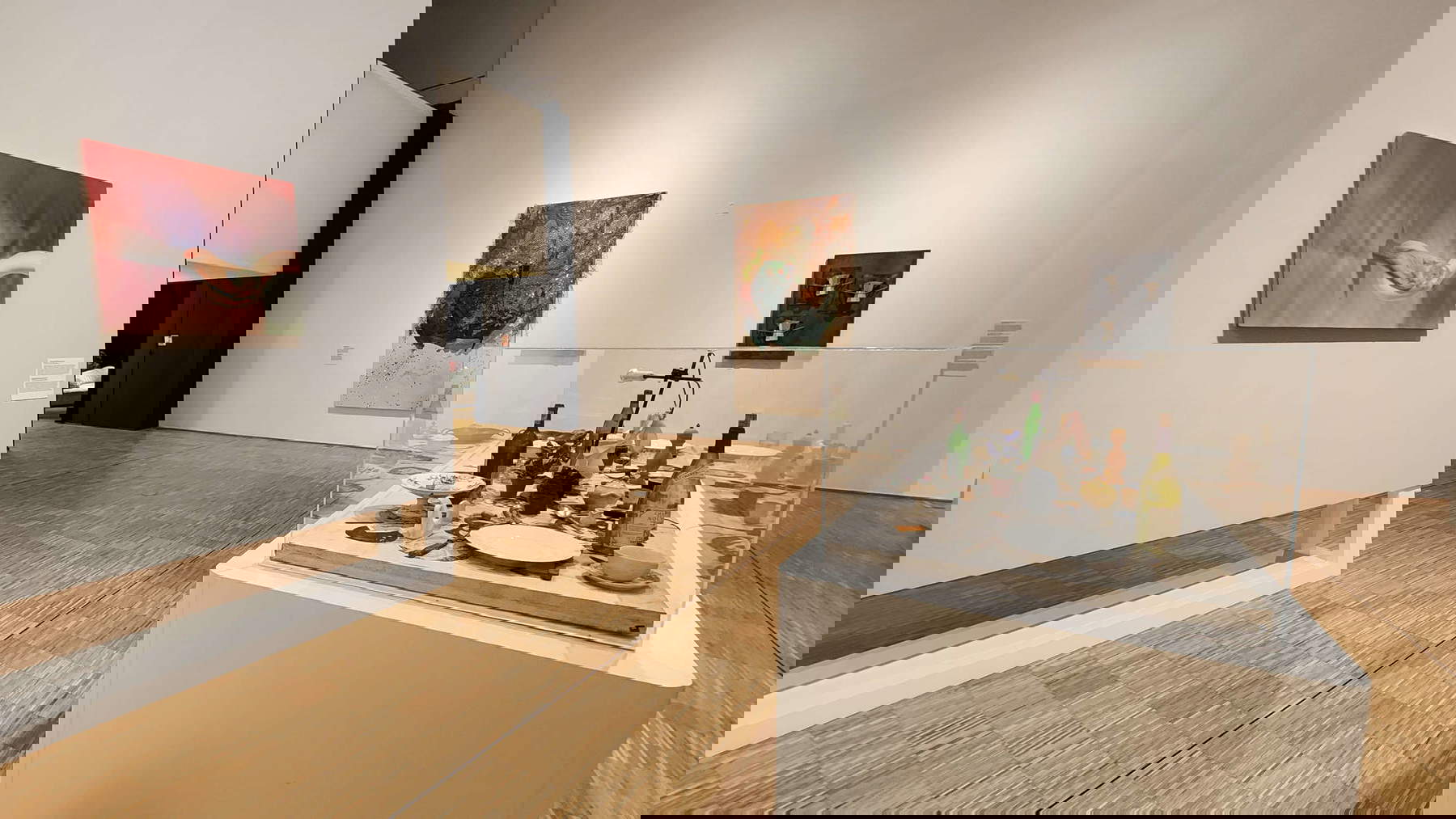
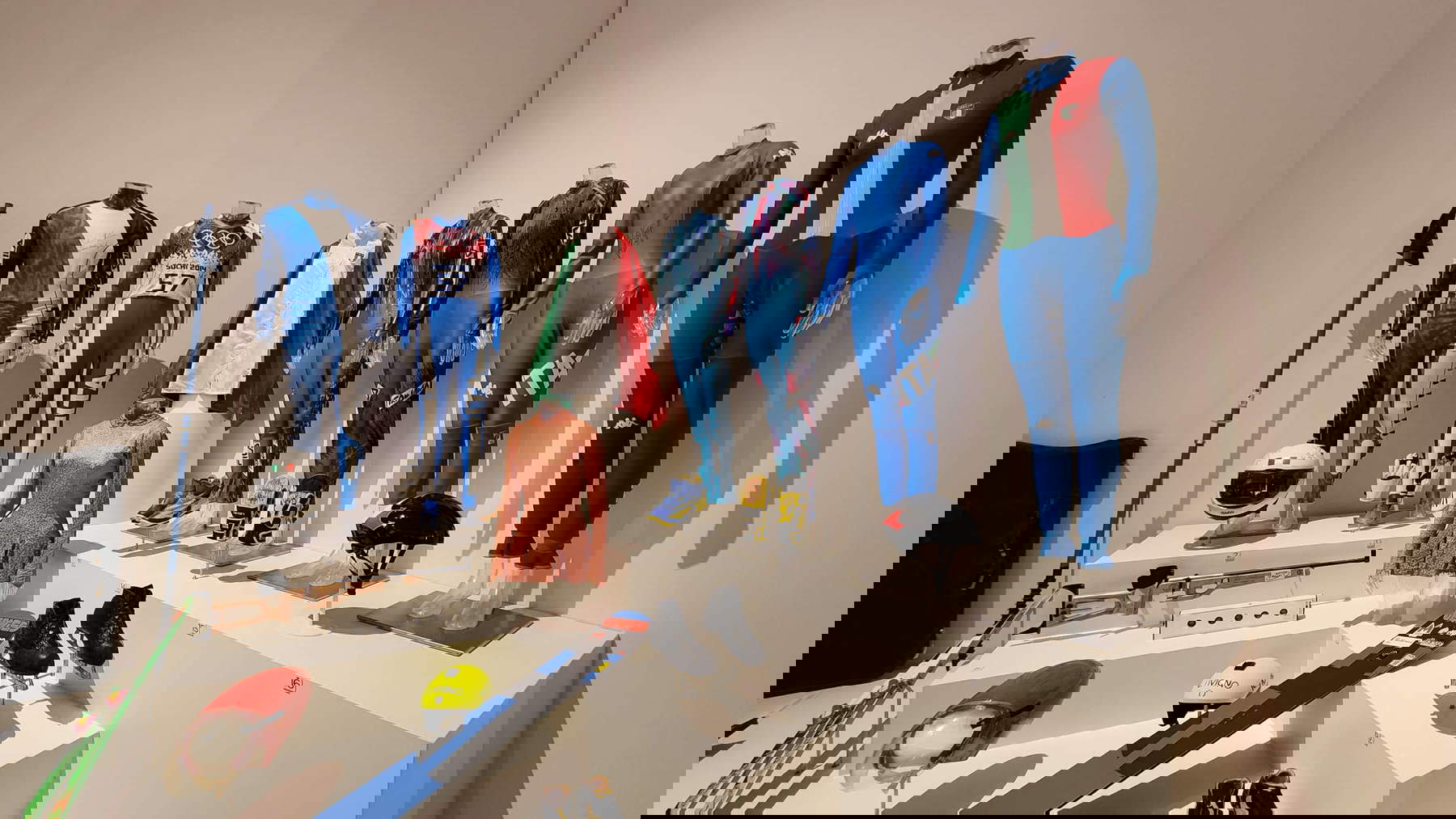
In the misfortune of having to see that contemporary art Italy was presenting itself to the international audience of the Olympics with such an exhibition, we had two strokes of luck. First, a ticket was needed to enter the halls of Musa : 14 euros to admire such an exhibition, an outlay certainly not comparable to what one used to pay to see the competitions (for certain finals one had to pay even hundreds of euros), but still enough to act as a deterrent even during the most crowded times at the Triennale (the public used to quietly queue for half an hour to go to see White Out, the ground-floor exhibition on the fate of winter sports in the age of climate change, free of charge, and instead kept away from Musa, where one could get in without waiting a second). Second, the exhibition lasted only two weeks, the period of the Olympics. Thank goodness, then, that such an embarrassing exhibition had only a fortnight to be visited.
As mentioned above, we do not know whether an organization of art professionals (who, if so, we imagine were careful not to claim the outcomes of their work) was behind Muse , or whether it was an exhibition set up by hobbyists or by staff who lent themselves to art for the occasion, but it does not matter: what is important is that an embarrassing spectacle was offered to the public, one that gave an image of improvisation, tinkering, amateurism. With the aggravating factor that an Olympics in Italy is something that happens, if it goes well, once every twenty years. Why didn’t CONI entrust the task to a professional (a curator, a critic, a historian) who interpreted the theme with a somewhat more serious exhibition, who proposed a sensible and reasoned selection, who took enough time to put together an exhibition worthy of being considered such, and not a sequence of works? Was it too complicated to organize an itinerary that had meaning, instead of putting together a mishmash to jibe about “Italian identity” and “biodiversity,” and what’s more, with almost no Italian artists? It’s a shame: we had the most victorious Winter Olympics edition, by number of medals, in Italian history. And what’s more, at home. We had a Milan that, despite being told otherwise, expressed a commendable and enviable enthusiasm. Everyone would have (would have) deserved more: the art that was supposed to represent our country was not gold-medal worthy.
Warning: the translation into English of the original Italian article was created using automatic tools. We undertake to review all articles, but we do not guarantee the total absence of inaccuracies in the translation due to the program. You can find the original by clicking on the ITA button. If you find any mistake,please contact us.