





I reached out via Instagram to Rory Tsapayi, a member of the Venice Biennale curatorial team who, since May 2025, has been overseeing the implementation of this year’s international exhibition . After the death on May 10, 2025, of artistic director Koyo Kouoh, a curator of Cameroonian descent but who resided in Switzerland, her curatorial team took over the project management with the goal of realizing the late curator’s design wishes. The project In Minors Keys, the title of the international exhibition that will open in early May 2026, would like to suggest a slowing of the pace and the need to return to the earth and look to the sky. In order to have a term of discussion other than simply the choice of 111 international artists among whom no Italian artists appear, I wanted to submit to Rory Tsapayi a video of one of my performances inside the MAMbo Museum in Bologna where a white man, mostly Italian, gives a press conference completely alone(ALONE, Luca Rossi, 2024).
An image that says a lot about Italy’s situation of marginality but also about an international political dimension characterized by self-referential actions where any confrontation and any dialogue seem impossible, despite the fact that we live a continuous and exasperated communication. The curator immediately replied to me that it is not possible for the curatorial team to add new works, because they in May 2025 merely inherited the list of 111 artists that Koyo Kouoh herself had compiled between December 3, 2024, the day of her official appointment, and May 10, 2025, the day of her passing. Most likely, as Ilaria Bonacossa also stated, the curator, despite having five months at her disposal, did not make it in time to settle in Italy and delve into our country’s art scene. Usually, as was the case with the artistic directors of previous editions, the international curator turns to some Italian individuals he knows and trusts for suggestions on Italian artists to include in the international exhibition. In this way in previous editions of the Venice Biennale there has always been a “blue quota,” a fixed presence of Italian artists that the curator decided on as an unspoken practice in favor of the host country. The objectionable aspect of this practice has always been that the curator, always turning to the usual known subjects, always ended up including the same artists from a few powerful galleries, without having the time and curiosity to delve independently into the Italian art scene. Indeed, this practice seems inevitable, since the artistic director of the Biennale has to organize an international exhibition and it would be unthinkable for him to really delve into the art scenes of all the countries of the world.
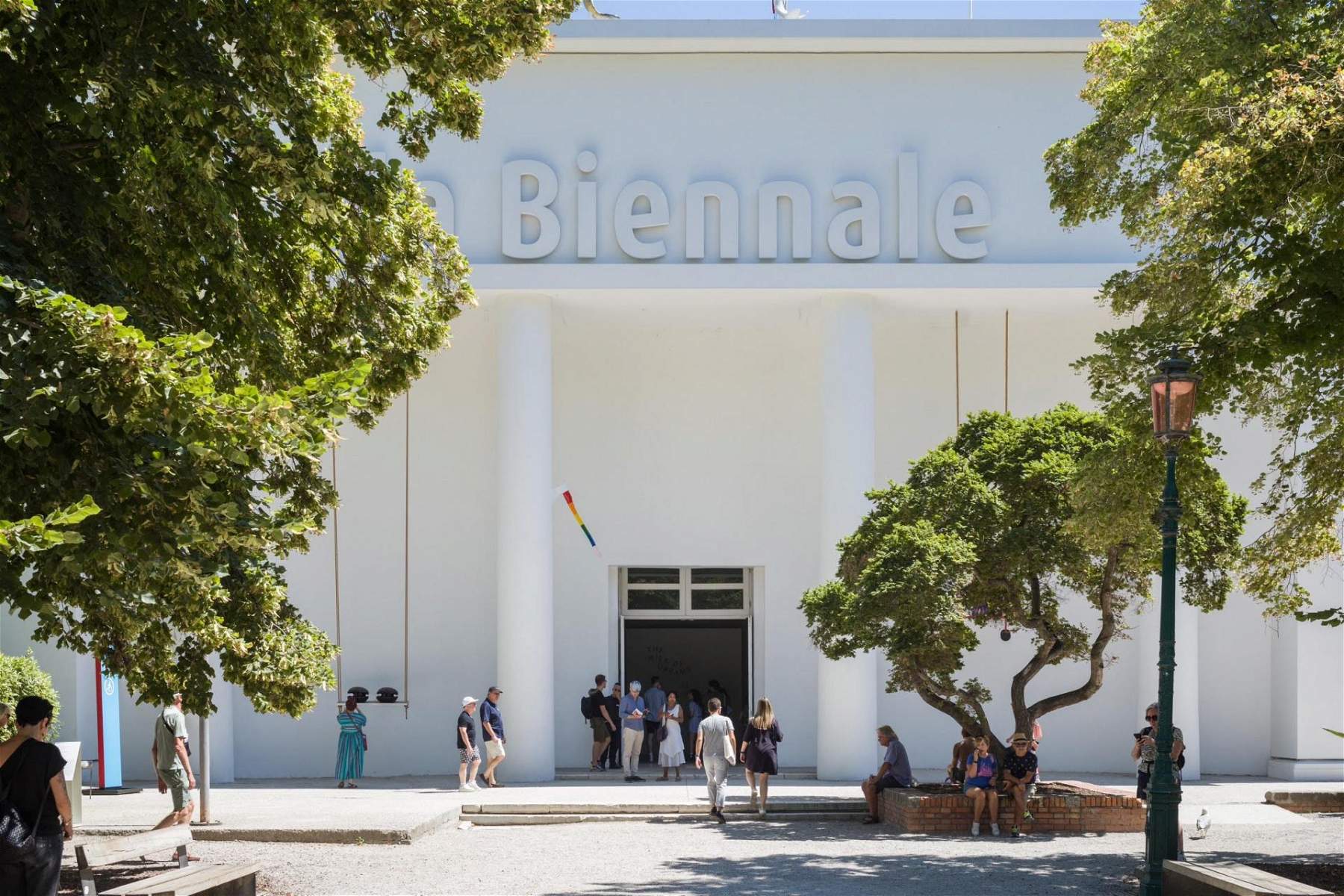
However, this dynamic has created, over the past 30 years, a strong standardization and homogenization in the selection of artists so much so that it has exposed the Biennale itself to the criticism of being a kind of showroom for the most powerful international galleries with artists conveyed by equally powerful and world-renowned curators and collectors. In the last editions of the Venice Biennale we see, for example, a strong involvement of artists who are part of the stables of Galleria Zero and Galleria Massimo De Carlo in Milan, with a large number of artists involved: Massimo Bartolini, Giorgio Andreotta Calò, Chiara Enzo, Yuri Ancarani, Maurizio Cattelan, but the list could go on. Let’s take an example: in the 2019 edition of the Venice Biennale, curated by Ralph Rugoff, Italian artist Ludovica Carbotta (1982) appeared on the list, who, in April of that very year, had opened a solo exhibition at the Fondazione Sandretto Re Rebaudengo. Upon inspection, Carbotta had never worked before 2019 with the curator who selected her and never worked there again after 2019. And that year Ludovica Carlotta’s project was supported financially by the very Fondazione Sandretto Re Rebaudengo, and in October 2019 Patrizia Sandretto Re Rebaudengo received an award at ICI London institution headed by Rugoff himself.
Be careful, however: we are not trying to go on a witch hunt, much less pretend that public relations is not crucial, especially in a field like contemporary art. We are just saying that, beyond the absence of Italian artists at the next Biennale, the selections in the last 30 years have not followed meritocratic criteria, also disincentivizing the search for quality. Why should I engage in my artistic work by trying to really address the present, if I know that then the results come only through public relations and the possibility of being protected by galleries and influential individuals? Most likely, as far as the 2026 edition of the Venice Biennale is concerned, the curator, who passed away prematurely, did not make time to connect with leading figures in the Italian contemporary art world and thus failed to make her own selection of Italian artists. I believe that for the good of all this absence of Italian artists is much more important and significant to confront these issues and rethink some of the dynamics of the contemporary art world as a fundamental matter to see and resist our time.

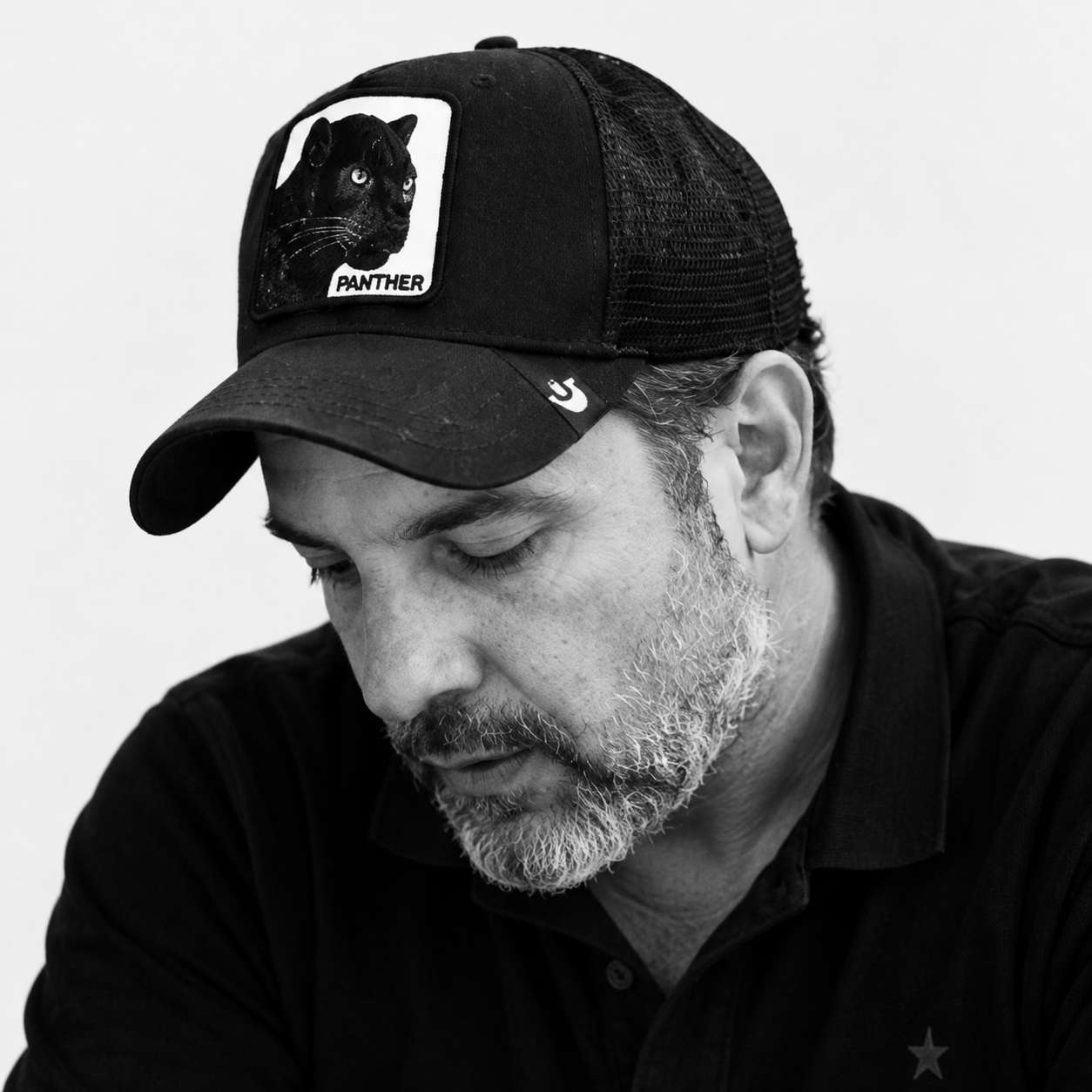
The author of this article: Luca Rossi
“Luca Rossi" è un nome di fantasia in cui idealmente convergono tutti i ruoli del sistema dell'arte: artista, critico, curatore, blogger e osservatore indipendente. È stato definito da Fabio Cavallucci “la personalità artistica più interessante d'Italia”. Dal 2009, “Luca Rossi”, collettivo aperto e figura controversa nel sistema artistico, cerca di stimolare quotidianamente un dibattito più critico nell'ambito dell'arte contemporanea, intesa come materia capace di rivestire un ruolo fondamentale nel nostro presente. Dalle sue riflessioni critiche, ampiamente diffuse, sue le definizioni di “Ikea evoluta”, “Sindrome del Giovane Indiana Jones” e “Nonni Genitori Foundation”, è nato un progetto artistico non convenzionale, che comprende anche attività di divulgazione e formazione, culminate nel 2016 con la creazione della Luca Rossi Art Academy & Coaching (documenta.live). Nel febbraio 2026, un Hidden Work di Luca Rossi è entrato nel nuovo percorso espositivo di Osteria Francescana di Massimo Bottura, segnando un ulteriore sviluppo del progetto e della ricerca intorno agli Hidden Works. Nel 2014 Giacinto Di Pietrantonio, in un’intervista, definì Luca Rossi la promessa futura dell'arte contemporanea, paragonandolo a ciò che Vanessa Beecroft avrebbe potuto essere negli anni Novanta. Alcuni “nodi critici” sviluppati nel corso degli anni da Luca Rossi sono entrati a far parte del linguaggio dell'arte italiana e hanno contribuito a cambiare la prospettiva e la visione di molte persone, dentro e fuori il settore. Nel 2014, la celebre critica d'arte Angela Vettese dichiarò che, dopo aver letto i testi di Luca Rossi, aveva deciso di non dedicarsi più alla pratica artistica, ma esclusivamente alla teoria.Warning: the translation into English of the original Italian article was created using automatic tools. We undertake to review all articles, but we do not guarantee the total absence of inaccuracies in the translation due to the program. You can find the original by clicking on the ITA button. If you find any mistake,please contact us.



























 IT
IT FR
FR DE
DE ES
ES CN
CN


