




by Noemi Capoccia 09/03/2026



Categories: Interviews / Disclaimer
From her beginnings in 1967 to her television success with “La Mercante di Brera”, Roberta Tagliavini has turned her passion for Art Nouveau and design into a successful career. In this interview with Noemi Capoccia, she guides us through the aesthetics, history and market of modern collecting. And she gives us her tips on how to choose the piece that will give soul to our home.


Robertaebasta, one of the most relevant realities in the Italian and international art and antiques scene, with special reference to Italian art nouveau, was founded in 1967 thanks to Roberta Tagliavini. The Milan gallery, located in the heart of Brera, stands out for its selection of art nouveau furniture, interior design and 20th-century decorative arts. The project reflects Tagliavini’s sensibility, who chooses pieces in which shapes, colors and emotions are linked, resulting in proposals that do not follow commercial patterns but respond to an intimate passion for beauty and history. The gallery has received numerous awards, including the gold medal at the Milano Produttiva award and the Milan antiquarian union award, and regularly participates in international events such as BIAF in Florence, BRAFA in Brussels, Modenantiquaria, Masterpiece in London, the International Fine Art and Antique Fair in Monte Carlo, and La Biennale Paris. Roberta Tagliavini is also the star of the docureality La Mercante di Brera and the game show Cash or trash, both aired on Channel Nine, which recounts the gallerist’s daily life among tight auctions, iconic pieces and singular objects. We interviewed Tagliavini to find out her views on the art world, the evolution of the gallery, and the role of vintage and modern antiques in the current period. The interview is by Noemi Capoccia.



NC. What is the philosophy behind Robertaebasta’s project and how has it evolved from its beginnings to the present?


RT. The philosophy behind the project is to create environments of great aesthetic quality through the choice of distinctive elements. A house can be fascinating in any location. The difference lies in the objects that inhabit it and, of course, in the solidity and harmony of the architectural layout. For this reason, it becomes essential not to make mistakes when choosing a lamp or piece of furniture. These are details that determine the overall character of the space; the rest can also remain essential. The same happens in clothing. A black dress, simple in itself, gains elegance through a carefully chosen necklace. If the accessory is inadequate, or missing altogether, the whole loses expressive force and appears more ordinary, less incisive.


Since the 1960s, the world of antiques has changed dramatically. In your experience, how has the perception of the beautiful and the collectible evolved in today’s market compared to the beginnings of your gallery?
In the beginning you were coming out of a war. The priority was about possession, not quality. It didn’t matter what one had, it mattered what one had. A living room was already an achievement even if it was essential; a kitchen was enough if it had a stove. The very idea of furnishing coincided with the achievement of previously unattainable possessions, but over time, needs became more ambitious. A simple print hanging on the wall was no longer enough: people began to desire an authentic painting, a designer lamp instead of a standard light purchased out of necessity. Economic prosperity, supported by the postwar boom, transformed the way people lived and conceived of domestic space. This was a clear generational shift. Before the conflict, society had a strong rural feel. The home simply constituted functional space. A fireplace with a pot for cooking was enough; the essentials coincided with survival. With economic growth, the common imagination also changed. Kitchens became rooms designed, equipped, thought to last and to represent status. Furniture ceased to be merely a necessity and became an expression of taste.
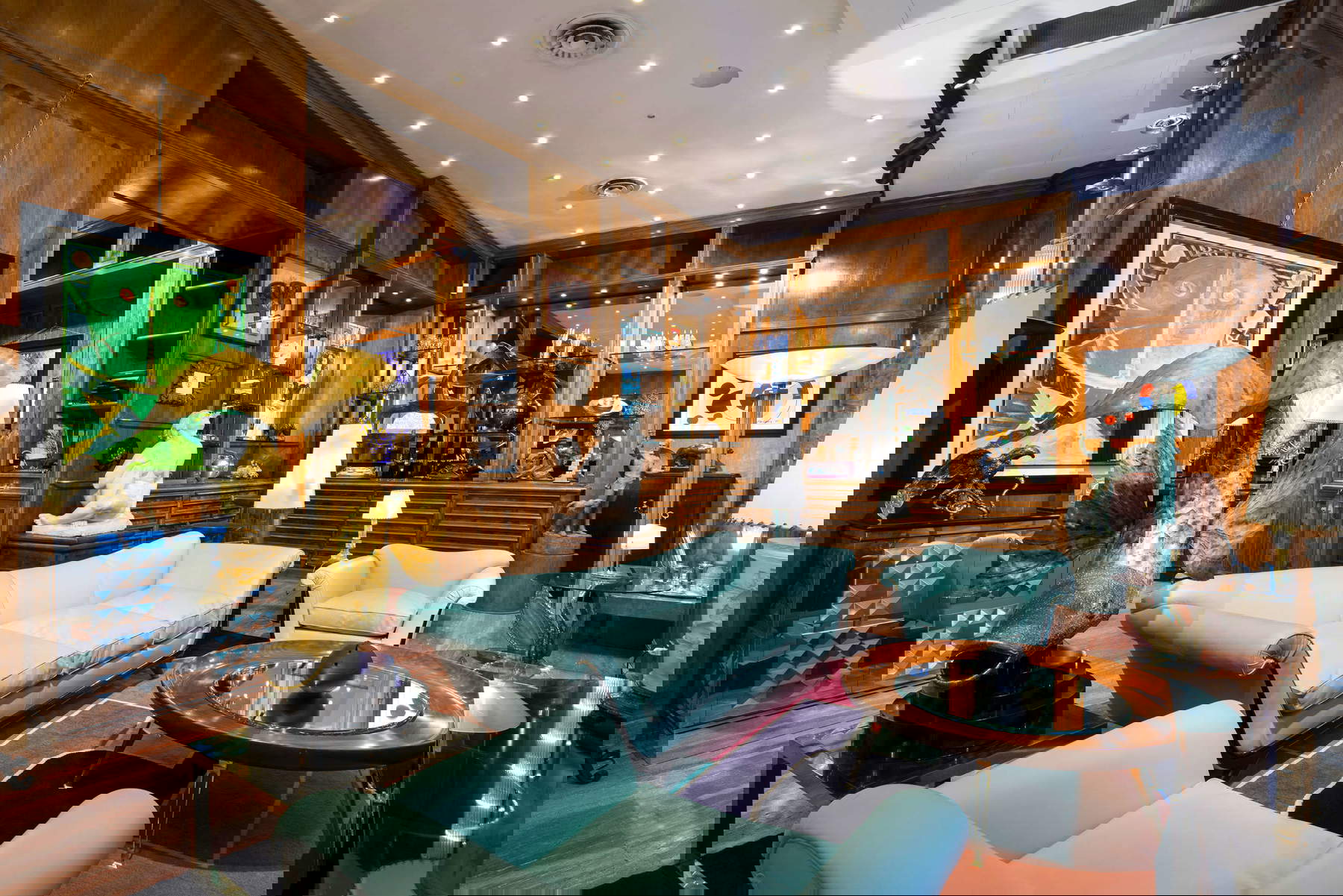
For a gallery of Robertaebasta’s caliber, where does the allure of the vintage object end and the art-historical value of signature design begin? What turns a 20th-century piece of furniture into an investment piece?
Real training of the eye is needed in this area. One has to travel, observe, study in books, attend museums, get informed consistently. The 20th century presents an incredible amount of experiences and languages, but not everything possesses the same value. There are works born from the invention of artists and designers, and mass-produced objects that imitate their forms. They resemble each other, sometimes strikingly, but do not coincide in quality and intention. A unique piece, on the other hand, carries with it a thought and a story. A serial object may be pleasing, but it remains devoid of that cultural density. Thus, personal research allows one to understand these distinctions and to make informed choices. In the beginning, the market did not make such rigorous selections: everything belonging to the twentieth century found buyers easily. Today the demand is more targeted. Recognized designers and works attributed with certainty are sought. Objects without a clear provenance are no longer accepted. Even in the field of painting, the authentic signature, sometimes accompanied by the reference archive or foundation, has become decisive. Taste has become more refined and collecting has become more demanding. The same logic applies to home furnishings. A house can look elegant even with affordable items, just as one can dress with inexpensive garments while achieving a good aesthetic result. In any case, there is a clear distance between an anonymous product and one signed by a recognized designer. The line may look identical, but the design, materials, quality control, and value over time change. The choice depends on the desire to own unique objects with identity and history, or simply pleasing decorative elements. In the former case, one invests in culture and authenticity; in the latter, one favors immediate effect, while being aware that the intrinsic value remains different.
Names such as Gio Ponti, Carlo Bugatti, Richard Ginori and Renato Guttuso appear in your gallery...
Yes. The artists and designers of the 20th century are numerous and very diverse. It is precisely this variety that allows for harmonious juxtapositions, as long as one has the sensitivity to create coherent links between works, furnishings and spaces. There is no need to accumulate objects: a house can be beautiful even almost bare, provided it houses a few important pieces. The idea of decoration associated with Art Deco does not coincide with the ornamental excess of eighteenth- or nineteenth-century houses: twentieth-century interiors tend toward synthesis. An essential bookcase or a table with studied proportions can define the entire room. In comparing deco and design, a clear distinction emerges: deco expresses luxury; modern design favors functionality. The furniture becomes more linear, sometimes even more rigorous. Different is the case for vintage and modern. Often these two terms are used loosely to refer to objects that seem to belong to a specific era or design language. Here, however, similarity does not mean authenticity. A signed design piece comes from a recognized maker, from controlled production. Modernism, in many cases, indicates vintage objects without relevant attribution or replicas inspired by the great masters.
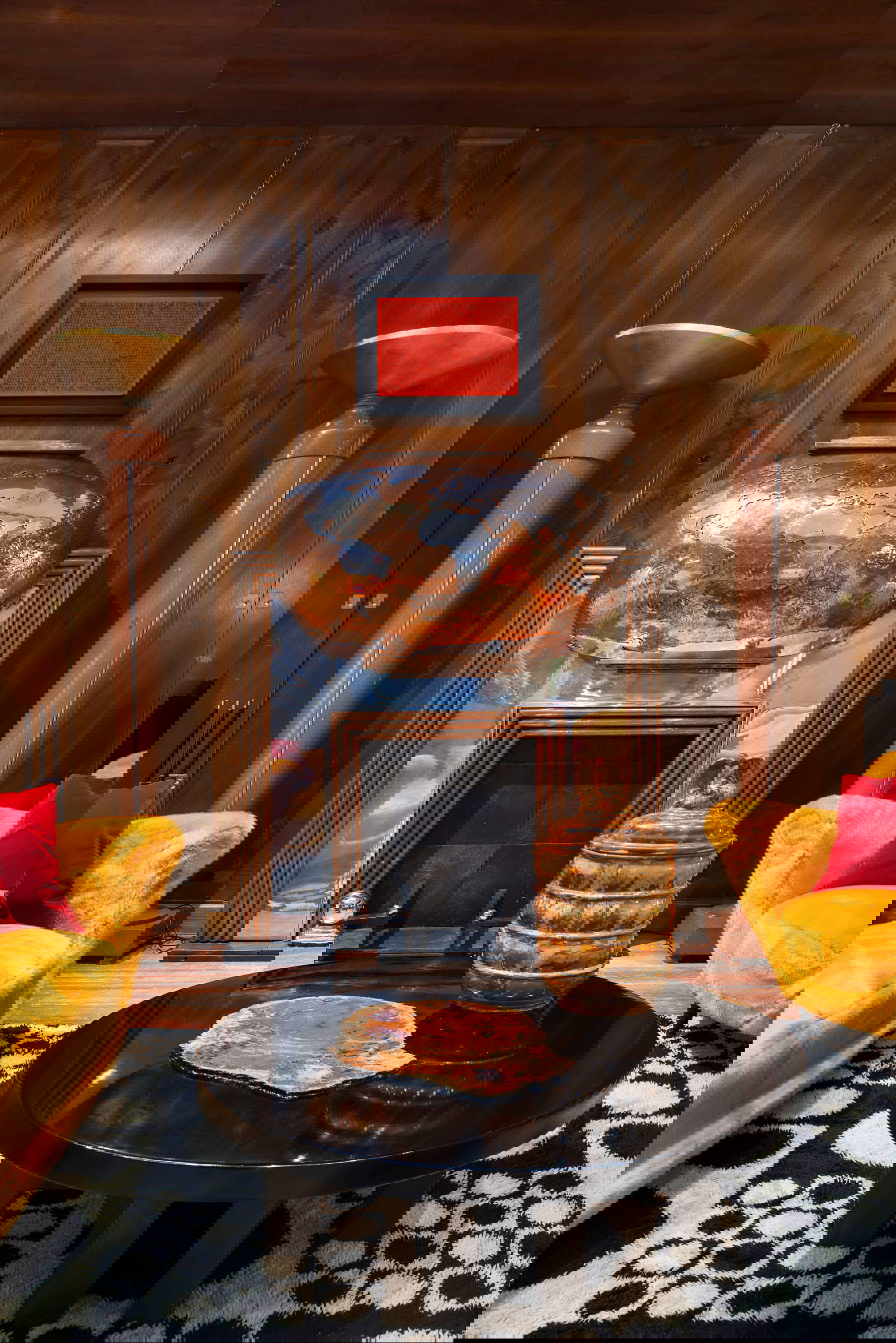
Vintage and modern antiques are often repurposed by big brands and global platforms. In your opinion, could this phenomenon have changed the way collectors and customers perceive the value of vintage design?
Collectors are fully aware of the value of design, often even more deeply than those who operate more across the board. The true collector focuses on a specific object or a signature. Those who are more generalists, on the other hand, tend to have many interests and numerous reference signatures. A broad but less focused expertise is developed. The collector, on the other hand, builds knowledge that allows him or her to immediately recognize authenticity and quality.
Who are Robertaebasta’s customers today? Are there generational differences between historical collectors and new buyers who are approaching Deco or modern antiques for the first time?
Today, many young people are not oriented toward art-house design or selected modern antiques. They often choose objects that recall the forms of the past, but without possessing its historical identity or signature. They cost less, are readily available, and meet a need for practicality. Furniture, for a portion of the new generation, is no longer a top priority. They invest more heavily in travel, experiences, cars or other forms of contemporary well-being. The home becomes a functional space, pleasant, but not necessarily built through research. In recent years, especially in cities such as Milan, the number of stores offering furniture inspired by the 1970s, 1980s, and 1990s has clearly grown. These are new productions that reinterpret languages of the past. The customer enters, chooses in a few hours and defines the whole apartment without facing the more complex work of philological selection. A difference between Italian and foreign audiences is also noticeable. Many young foreigners show an interest in research and authenticity; a portion of Italian peers, on the other hand, appear more attracted to the immediacy of commercial offerings, including department stores that offer low-cost furnishings with contemporary taste. Over time, tastes can evolve. Often interest in the signature piece, design history and lasting value emerges at a more mature stage of life. In youth, speed of choice prevails; only later may the desire for quality and uniqueness arise.
What is the average price for those who want to start investing with your gallery? Is there an entry point designed for young collectors?
There are also objects that are not prohibitively expensive and that, while not belonging to very high market ranges, possess authenticity and character. A well-chosen, perhaps unique piece can change the perception of an environment. Sometimes one element is enough to give soul to a home. At that point an emotional dimension comes into play. When a real interest in design or art arises, the choice is no longer just aesthetic or functional: it becomes a form of affection. One falls in love with an object and no longer considers it interchangeable. Without that sensibility, every solution can appear equivalent.
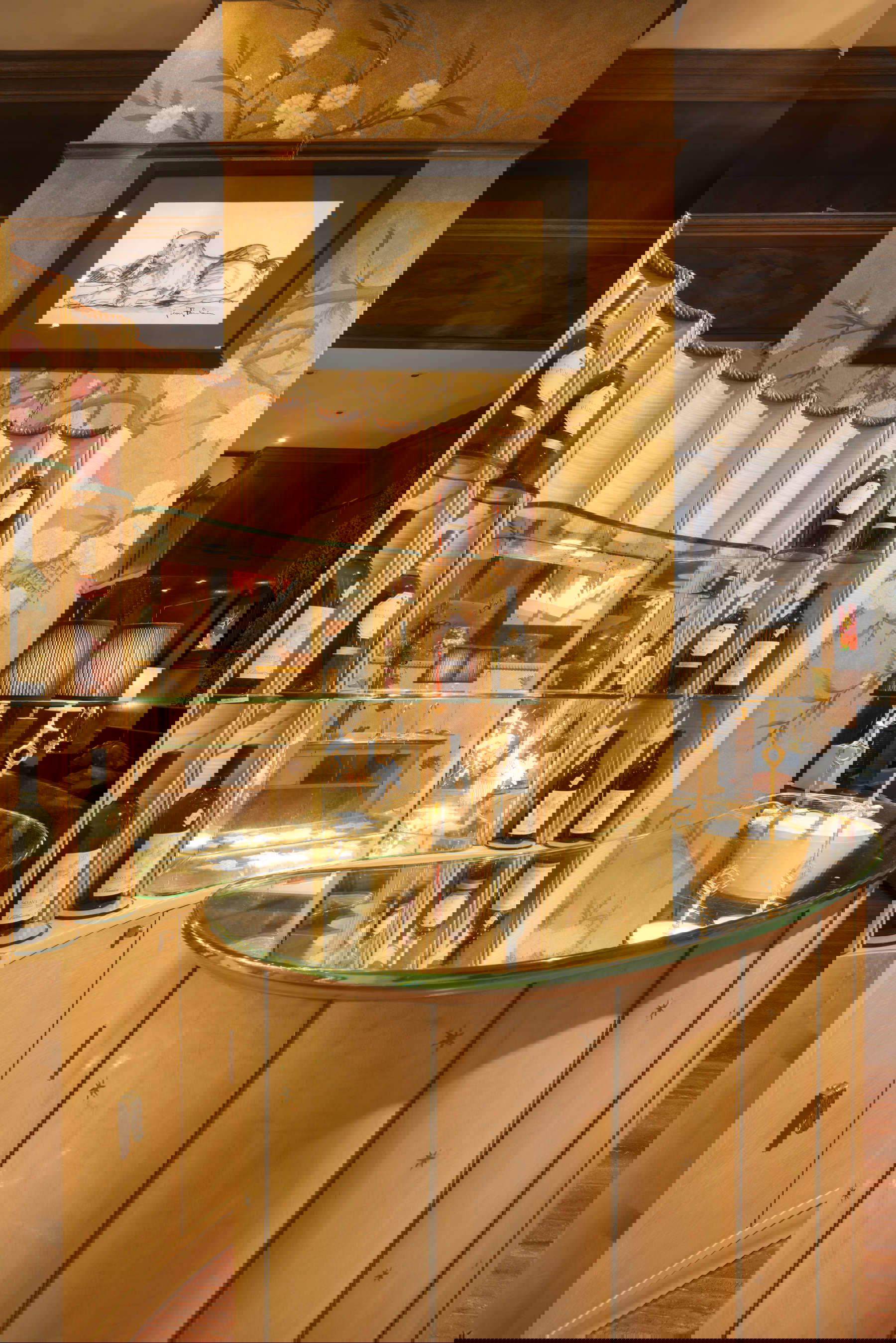
How does the process of finding pieces happen? Is it more a matter of historical relationships or intuition at international fairs?
International fairs now present very high quotations. For those who do careful and independent research, those contexts are often inaccessible economically. They are markets aimed primarily at large collectors and individuals with strong spending power. For operators and scholars, it therefore becomes necessary to look elsewhere, through direct work on the ground. This is a complex activity, destined to become even more difficult. A decisive role is played by auction houses. They operate with a model that minimizes risk: they do not incur storage costs comparable to those of a traditional gallery and charge commissions to both seller and buyer. Thus they can afford a widespread presence in the hunt for the best pieces, often intercepting them before other operators. The auction system also influences the perception of values, and those who are not familiar with the dynamics risk being guided by distorted parameters. The web also contributes to the complex picture. Some online platforms publish very high prices to guide the market, while others offer similar objects at lower figures, and this generates confusion.
You are based in Milan and London, two key but different marketplaces. What are the main differences in demands between Italian and Anglo-Saxon audiences? What do the British look for in 20th-century Italian design that they don’t find elsewhere?
At one time, France was the absolute reference point for Art Deco: the finest examples were born there and all the researchers went to France to observe them. For design, on the other hand, Italy was the center. Our country was and remains a reference point for all of Europe, attracting the interest of Spaniards, Englishmen and collectors from other countries. Twentieth-century Italian furniture and objects are highly sought after today precisely because of all their characteristics. This international demand contributes to higher prices and makes many pieces hard to find: they are often appreciated and treasured more carefully abroad than they are here. Many works have escaped the Italian market, purchased by foreign collectors who understand their value and uniqueness.
How would you describe the market for quality modern antiques today?
Today it is increasingly rare to find interest in authentic design or 20th-century pieces, because many focus on what is called modern or vintage. In most cases it is a fashion phenomenon: young people follow it because it is trendy, they use the objects and accessories as aesthetic accessories, without considering their cultural value. When they then enter the reality of the home, they often find that charm is not enough. This is where those who present a comprehensive service such as ours, which includes restorations, verifications, but also quality control, come in.
Warning: the translation into English of the original Italian article was created using automatic tools. We undertake to review all articles, but we do not guarantee the total absence of inaccuracies in the translation due to the program. You can find the original by clicking on the ITA button. If you find any mistake,please contact us.