





Extraordinary openings of archaeological and monumental sites restored thanks to funding from the PNRR Caput Mundi program continue in Rome. After the success of the first day of visits that brought more than 500 people to discover the mausoleum of Monte del Grano and the tomb of Largo Talamo, the Capitoline Superintendence returns to offer a new weekend dedicated to the enhancement of the capital’s historical and archaeological heritage. On Saturday, June 13 and Sunday, June 14, citizens and visitors will have the opportunity to have free access to some places of special interest, returned to the city through interventions of recovery, consolidation and expansion of the visiting routes carried out as part of the Caput Mundi program. Among the protagonists of the new cycle of openings are the Church of Sant’Urbano alla Caffarella, the Roman villa of Tor de’ Cenci and, for the first time, a new sector of the archaeological area of the Circus Maximus.
The initiative is part of the broader program of interventions funded by the National Recovery and Resilience Plan, which in the Capital has enabled the launch of a vast process of recovery and enhancement of historical, archaeological and monumental sites that are often little known or not accessible to the public. The aim is to return places of extraordinary cultural value to the citizenry, while expanding the possibilities of enjoyment and knowledge of urban heritage.
The first event is scheduled for Saturday, June 13, from 10 a.m. to 1 p.m., with the extraordinary opening of the Church of Sant’Urbano alla Caffarella. Located within the Appia Antica Park, the church represents one of the most fascinating examples of the transformation of a Roman building into a place of Christian worship. The ancient structure preserves artistic testimonies of exceptional value that tell of centuries of history and cultural stratifications.
Particularly significant are the frescoes that decorate the building and date from different periods, from the 11th to the 17th century. Among the oldest works is the fresco preserved in the crypt, depicting the Madonna and Child between St. Urban and St. John the Evangelist. The work is dated between the 9th and 10th centuries and is one of the most valuable pictorial testimonies in the monumental complex. The interventions carried out thanks to PNRR funds involved not only the conservation of the monument, but also the improvement of its accessibility. In particular, the connecting staircase to the so-called Nymphaeum of Egeria, one of the most striking places in the Caffarella Valley, has been restored. The nymphaeum was built in the first half of the second century AD by excavating the rock on the left bank of the Almone River and reproducing the appearance of a natural cave. The possibility of recovering the connection between the two sites now allows a more complete reading of the historical and archaeological context of the area.
The following day, Sunday, June 14, will instead see a double event, both scheduled between 10 a.m. and 1 p.m. In fact, visitors will be able to choose between a visit to the Roman villa of Tor de’ Cenci and a visit to the new sector of the Circus Maximus archaeological area, open to the public for the first time. The Roman villa of Tor de’ Cenci constitutes one of the most important testimonies of the presence of suburban residences in the territory of ancient Rome. The complex has a long history of use stretching from the first century B.C. to the fifth century A.D., documenting different phases of the economic and social life of the Roman territory. The preserved structures make it possible to reconstruct the evolution of the settlement and to understand the transformations that affected the suburban landscape over the centuries.
Even more archaeologically relevant is the opening of the new sector of the Circus Maximus, the largest spectacle building in ancient Rome. Thanks to recent excavation and enhancement works, the tour route is expanded with a portion of the hemicycle located on the southeastern side of the monument, an area that until now has been little explored and substantially inaccessible to the public.
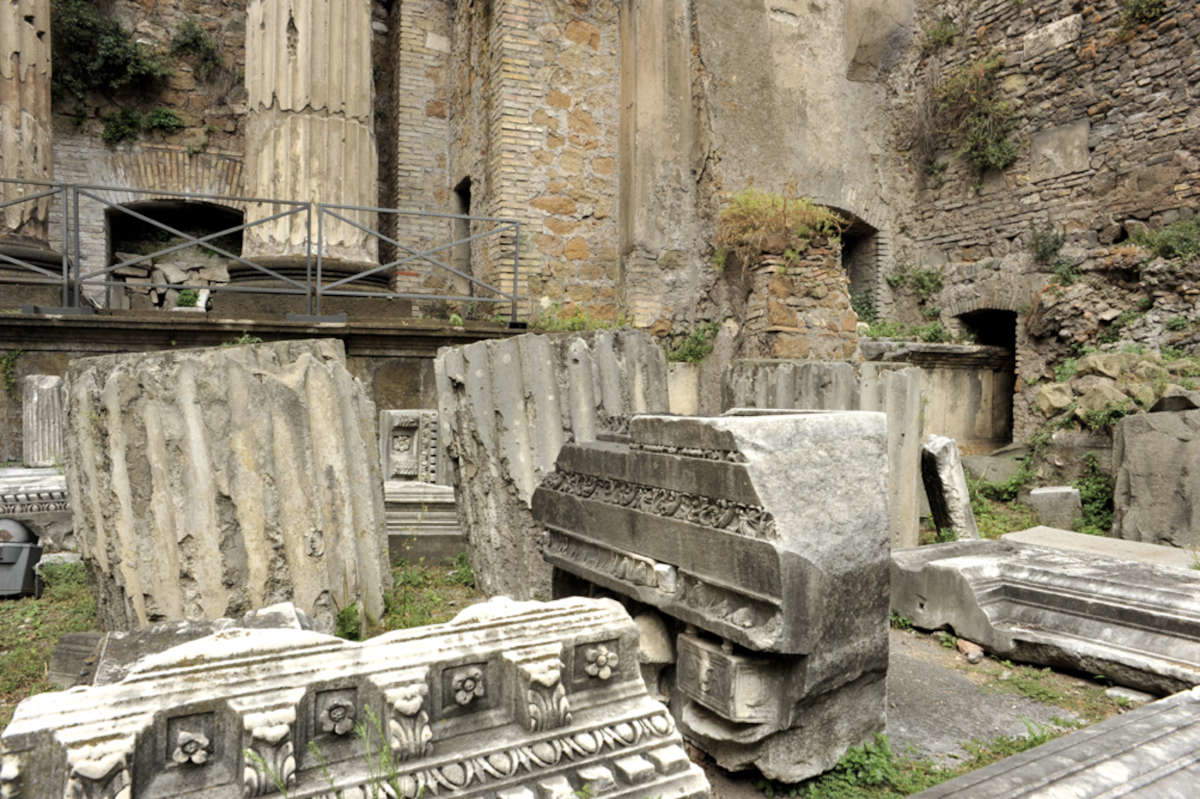
Archaeological investigations have allowed for a deeper understanding of the structures dating back to the Trajan era and the subsequent phases of reuse of the complex. In fact, the excavations have returned new elements useful for understanding the long continuity of life of the site, which maintained a constant function and frequentation well beyond the imperial period. Among the most significant discoveries are ancient pavements and structures hitherto unknown or inaccessible, evidence of rooms datable to the Late Antique period. These spaces turn out to be related to living functions and craft activities that developed within the area after the original function of the circus gradually ceased.
Research has also uncovered traces of the buildings that, beginning in the 18th century, settled on top of the Roman structures. Over the centuries, in fact, ancient architecture was adapted to new uses. A particularly interesting example is a modern staircase that connected the buildings above to the Roman gallery, which was transformed into a cellar at the time. These are evidences that document the continuous reuse of the archaeological heritage and the constant dialogue between different periods of Rome’s urban history.
In parallel with the excavation activities, major consolidation and restoration works were carried out on the walls and galleries. The works have made it possible to secure the structures and make them accessible to visitors through new specially created paths. The area has also been equipped with a new connecting staircase and multimedia tools that allow a deeper understanding of the archaeological evidence and historical transformations of the site.
Visits will be free of charge and curated by archaeologists from the Capitoline Superintendency, who will accompany the public to discover the restored monuments by illustrating their history, architectural features and the results of the restoration work. Access will be allowed until all available seats are filled and in compliance with the maximum capacity provided for each site.
The program of special openings will continue in the following weeks. On Sunday, June 21, from 10 a.m. to 1 p.m., the Torrione Prenestino will be open, while in the afternoon, from 3 to 6 p.m., the archaeological area of Via delle Botteghe Oscure will open. On Sunday, June 28, it will be the turn of the Rupe di San Paolo, which can be visited from 10 a.m. to 1 p.m., and the Cristoforo Colombo Cistern, open from 3 to 6 p.m.
|
| Rome, special openings at archaeological sites restored with NRP funds |

Warning: the translation into English of the original Italian article was created using automatic tools. We undertake to review all articles, but we do not guarantee the total absence of inaccuracies in the translation due to the program. You can find the original by clicking on the ITA button. If you find any mistake,please contact us.


























 IT
IT FR
FR DE
DE ES
ES CN
CN


