



by Redazione 24/01/2026


Categories: Archaeology / Disclaimer
With the aim of making the Veio Archaeological Park more accessible, a new path has been created at the Portonaccio sanctuary, funded by the PNRR as part of the interventions for the elimination of physical and cognitive barriers.
With the aim of making thearchaeological area of the Veio Park more accessible, a new route was created at the Portonaccio sanctuary, funded by the PNRR as part of the interventions for theelimination of physical and cognitive barriers.
The project has solved the main critical issues related to the lack of adequate routes for people with disabilities and the lack of rest areas, with the creation of a single route that overcomes the previous fragmentation and allows even those with mobility difficulties to visit the area easily. Starting from today, on the opening Sundays realized in collaboration with the Veio Park Authority, visitors to the Veio Archaeological Park will thus be able to appreciate the sacred area in its monumentality, thanks to a free path, free of parapets, that favors a direct visual relationship with the ancient structures and the surrounding natural landscape.
The Veio Archaeological Park, located north of Rome in the XV Municipality, is managed by the National Etruscan Museum of Villa Giulia, which takes care of its protection and enhancement activities. Within the park, the sanctuary area of Portonaccio, located south of the ancient Etruscan city of Veio, represents one of the oldest and most important Etruscan sacred complexes. Its importance is also attested by the rich terracotta decorative apparatus preserved and exhibited at the National Etruscan Museum of Villa Giulia, including the famous statues of Apollo, Hermes and Heracles that decorated the roof of the archaic temple, which can be dated to the end of the 6th century BCE.


A renewed focus, not only thanks to the interventions that allowed the removal of physical and cognitive barriers, but also by virtue of the scientific advances that emerged from the recent excavation campaign conducted in collaboration with La Sapienza University of Rome. This was accompanied by the launch of a program of routine maintenance of the site, aimed at ensuring the preservation of the archaeological evidence over time.
The intervention also addressed the issue ofcognitive accessibility through the introduction of new information panels, designed to tell the complex story of the site with particular attention to the needs of deaf and visually impaired people, thanks to the inclusion of content in LIS, Braille texts and tactile maps.
The project falls under Mission 1 - Digitization, Innovation, Competitiveness and Culture, Component 3 - Culture 4.0 of the NRP under MIC’s responsibility - Investment 1.2 Removal of Physical and Cognitive Barriers in Museums, Libraries and Archives).
“Since the discovery of the Portonaccio sculpture group, with its exceptional monumental statues of Apollo, Heracles and Latona, scientific interest in this site has never waned. After the passage of the Veio Archaeological Park to the management of the National Etruscan Museum of Villa Giulia, several interventions have been completed that aim to enhance the importance of this site for the history of the Etruscans and relations with Rome,” said the museum’s director, Luana Toniolo. “This project, therefore, combined with the excavation campaign that has just been completed,” she continued, “has taken into account the peculiarities of the site and aimed to stitch together the fragmentary nature of the various structures of the sacred area in a coherent way that respects the fragility of the site and the surrounding landscape.”
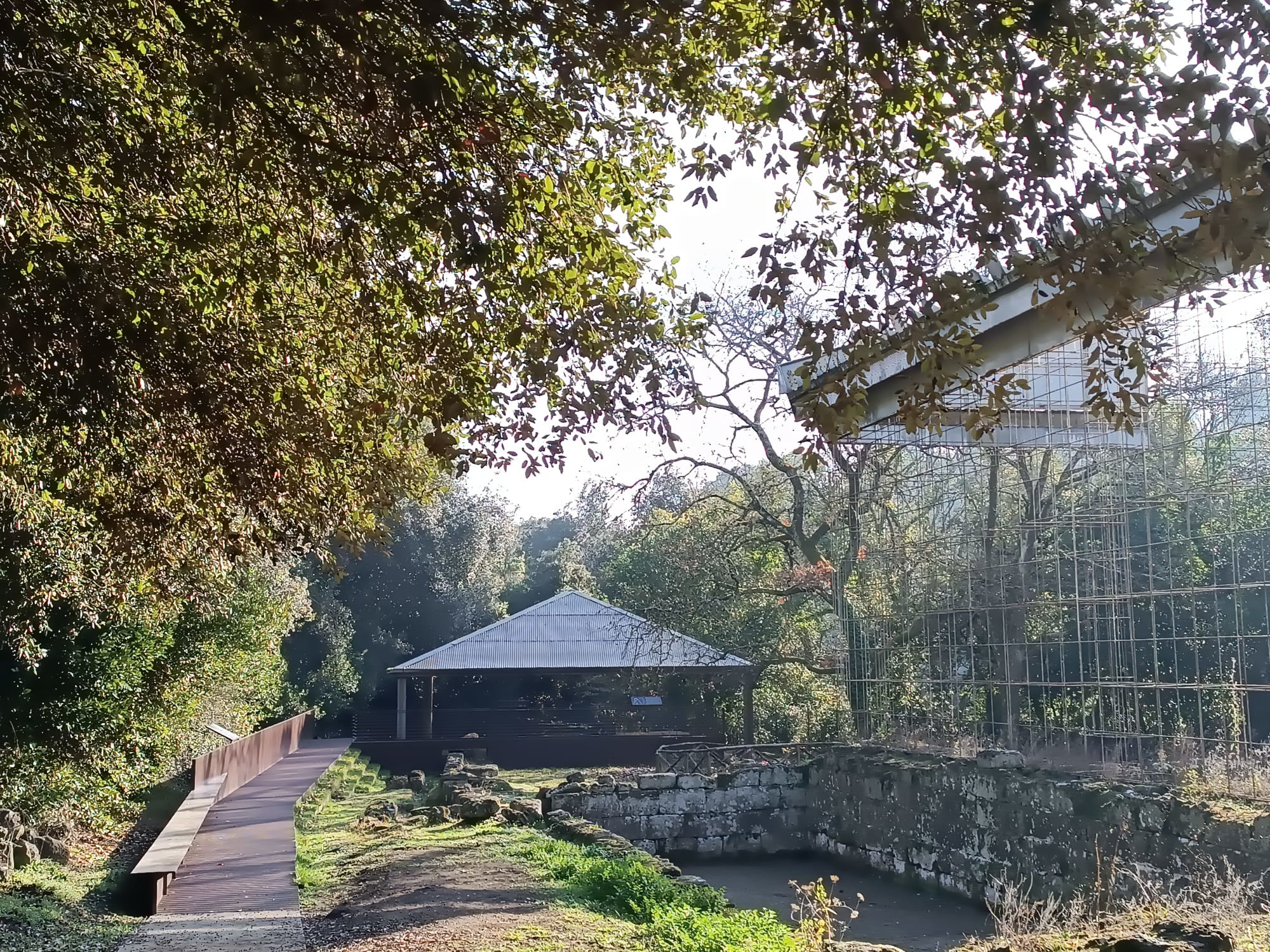 |
| Veio Archaeological Park opens a new accessible trail in the Portonaccio sanctuary area |
Warning: the translation into English of the original Italian article was created using automatic tools. We undertake to review all articles, but we do not guarantee the total absence of inaccuracies in the translation due to the program. You can find the original by clicking on the ITA button. If you find any mistake,please contact us.