



by
Federico Giannini  @federicogiannini1
11/02/2026
@federicogiannini1
11/02/2026



Categories: Opinions / Disclaimer
The state is investing 12.5 million euros for Antonello da Messina's Ecce Homo. A deal that marks the return of large allocations for individual works of art, but one that raises crucial questions: scientific opportunity or bombastic purchase? Federico Giannini's editorial, which also takes a position on the destination: Capodimonte.

There is some lateral significance to be found in the fact that the Italian state has decided to invest nearly $15 million, or 12.5 million euros at today’s exchange rate, to purchase Antonello da Messina’sEcce Homo that everyone, even those who have not set foot in a museum since their eighth-grade field trip, is talking about. The Ministry seems to have realized, as Fabrizio Moretti has suggested on these pages, that in order to purchase major works, adequate resources must be allocated. It is not that the state does not invest in art, and there are many recent purchases that could be talked about. Beginning with the latest in chronological order, Guido Reni’sLucrezia bought for Palazzo Spinola, at an amount that is a fraction of that spent onEcce Homo: a less noisy and less bombastic purchase, but certainly no less significant (on the contrary). And going back in time, one could mention the Cronaca Crespi (€1 million in 2024, for the Biblioteca Nazionale Braidense), the Concerto a due figure by Antiveduto Gramatica (€350,000 in 2023, for the Musei Reali in Turin), Donatello’s Madonna di via Pietrapiana (€1.2 million in 2021, for the Bargello), the Disputa sull’Immaculate Conception by Juan de Borgoña (400,000 euros in 2021, for Capodimonte), Guido Reni’s Country Dance (800,000 euros in 2020, for the Borghese Gallery), Daniele da Volterra’s Madonna Pannocchieschi d’Elci (2 million euros in 2019, for the Uffizi). To conjure up a purchase comparable to that of theEcce Homo one has to go back, at least in memory, to 1996, when the state spent 16 billion euros to buy two panels of Antonello da Messina’s Polyptych of the Doctors of the Church, now in the Uffizi (the figure, with today’s exchange rate and updated for inflation, would be around 15 million euros).
There is no doubt that the amount spent by the state is entirely congruous for a work by a rare artist (some 40 works attributable to him are known), and more than honest when compared to certain figures that collectors prove willing to pay for much less interesting things: it will then be worth recalling that, in the last two weeks alone, a self-portrait by Artemisia Gentileschi was sold at Christie’s for nearly 5 million euros, a Rembrandt drawing changed hands at Sotheby’s for more than 15 million, and a sketch by Michelangelo was even beaten at 27 million. Going back a couple of months, however, one can find a Rembrandt print sold for 3 million and a Fabergé egg for 26. In the presence of such sums, one can almost say that the state got a bargain. However, it is not the name of the artist and the appropriateness of the invoice that are the only elements that should be considered when evaluating the purchase: next to the goodness of the purchase, there is the appropriateness of it.


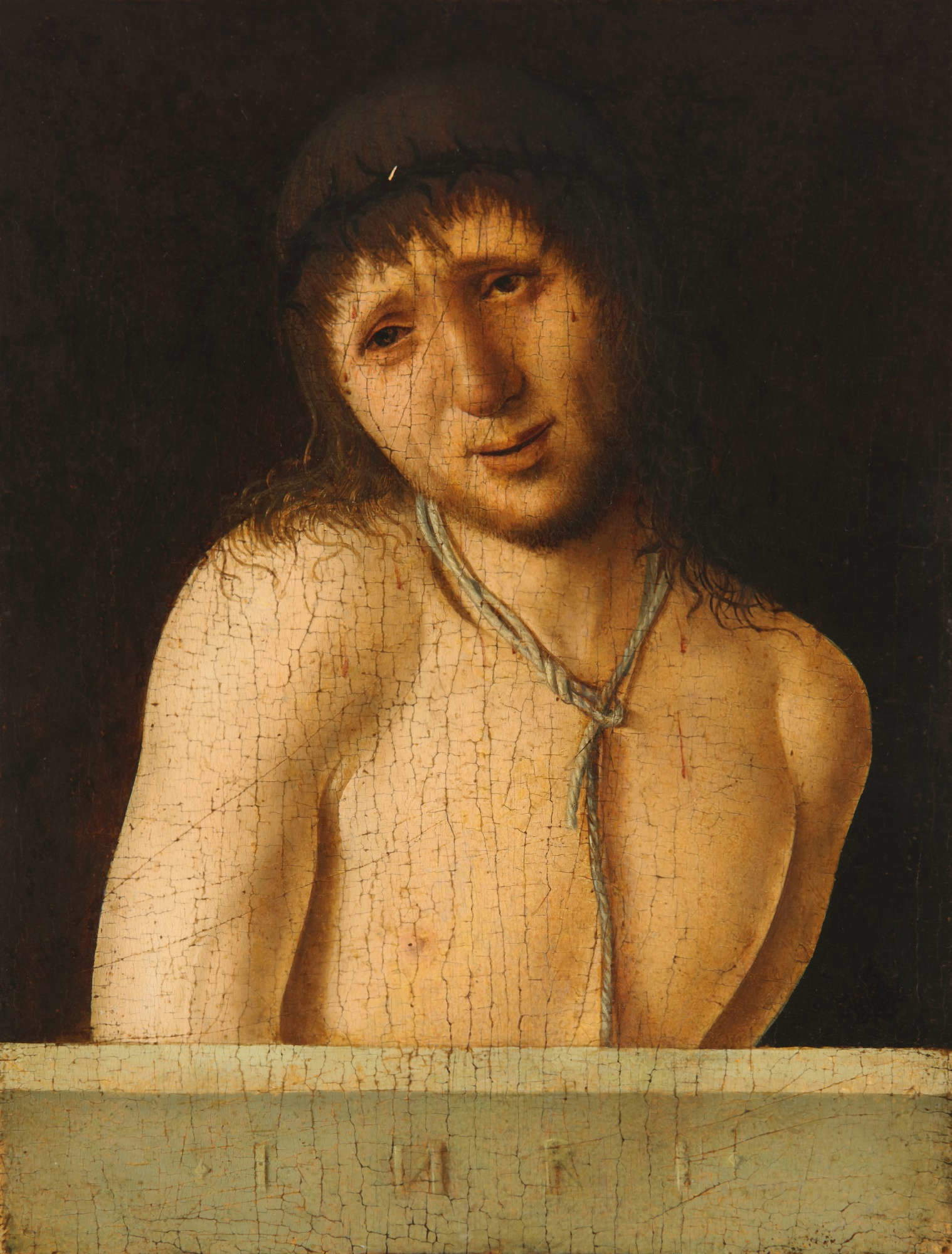
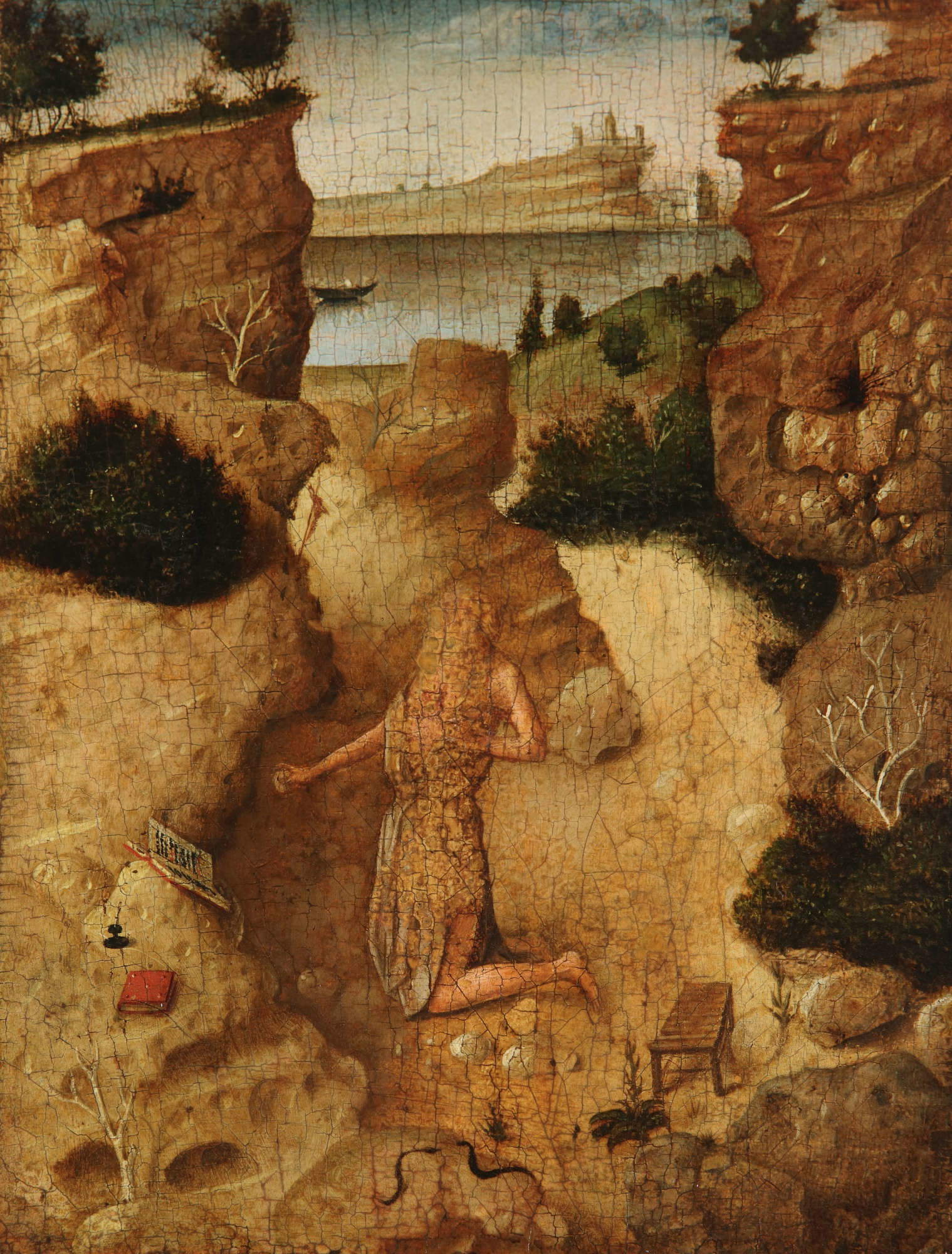
It is true, then, that Antonello is a rare artist. But it is also true that 12.5 million euros is a considerable sum for an artist well documented in Italian museums. Moreover, of the four Ecce Homo known to scholars, two are preserved in our institutions (one in a state museum, the Galleria Nazionale della Liguria, the other at the Collegio Alberoni in Piacenza). Did we then purchase a relic, a cover masterpiece? Was it more of a media purchase than a necessary one? Was it worth spending so much money (assuming, of course, that we are talking about a purchase financed entirely from public resources, without considering the possibility that the state may have resorted to appropriations from private individuals: rumors are circulating, but we do not know how well-founded, about this possibility) to win the last known Ecce Homo available on the market, and which is not even the best (although it is almost certainly the first in the series, so it also has unquestionable document value), to get three out of four? More generally, is it worth spending significant sums of money to acquire works that are essentially isolated and about which we know little, and to let important works slip through the cracks, for sale at much lower figures, but which are from the pinnacles of those artists, or which serve to stitch together contexts? With the same amount of money, how many important works could we have saved from dispersion? I am thinking, for example, of two masterpieces that were in Italy and came out, and which have been at the center of debated cases: the Miracle of the Quails by Jacopo Bassano and the Portrait of Camillo Borghese by François Gérard. But even without talking about works that came out amidst controversy, recently works of great interest have passed on the market at lower prices: only at the last BIAF one could find, for example, one of the canvases of the Padernello cycle by Giacomo Ceruti (as well as one of the best quality ones) at a million euros.
In any case, one cannot help but raise one’s glasses in celebration of the purchase, and we can also top them up in learning that the Ministry of Culture when needed has the resources to allocate to the purchase of works of art that are far greater than those to which we have been accustomed in recent years. The hope now is twofold: first, that the Ministry proves that the Antonello was not an isolated case and that in the future we can spend on perhaps less muscular but more millimeter purchases. Second, that theEcce Homo now reaches an appropriate destination: leaving aside the folkloric hypotheses that are circulating in these hours, the most suitable museum, at least in the eyes of this writer, can only be (however much I may regret the Uffizi, which would also be a more than reasonable venue) the National Museum of Capodimonte, where a context would be reconstructed and where Antonello’sEcce Homo would find again the culture of which it is the son and the works of Colantonio, who was Antonello’s master.
Warning: the translation into English of the original Italian article was created using automatic tools. We undertake to review all articles, but we do not guarantee the total absence of inaccuracies in the translation due to the program. You can find the original by clicking on the ITA button. If you find any mistake,please contact us.