





More than a hundred artists, from 30 different countries, but no Italians: Manifesta 16 Ruhr, the next edition of the traveling European biennial that, for this occasion, takes place in the heart of the Ruhr region, announced today the artists who will take part in the event. The numbers immediately render the scope of the project: 106 participants from 30 countries, 64 new commissions and a constellation of interventions spread across 12 venues within four cities. And yet, after the Venice Biennale 2026 exhibition, once again a major international contemporary art event that will do without Italian artists.
More than just an exhibition show, Manifesta 16 is set to be a platform for work that focuses on process, relationship and exchange. The artistic program, which has just been released, reflects the curatorial team ’s vision of an avowedly dialogic approach, in which the work is not an isolated point of arrival but the result of an ongoing confrontation between subjects, contexts and practices.
Guiding the selection of artists were “Creative Mediators,” figures called upon to work both individually and in intergenerational tandems. They had the task of identifying the participants and building of an active dialogue with each of them, shaping contributions that aim to directly confront the social, cultural and spatial realities of the Ruhr.
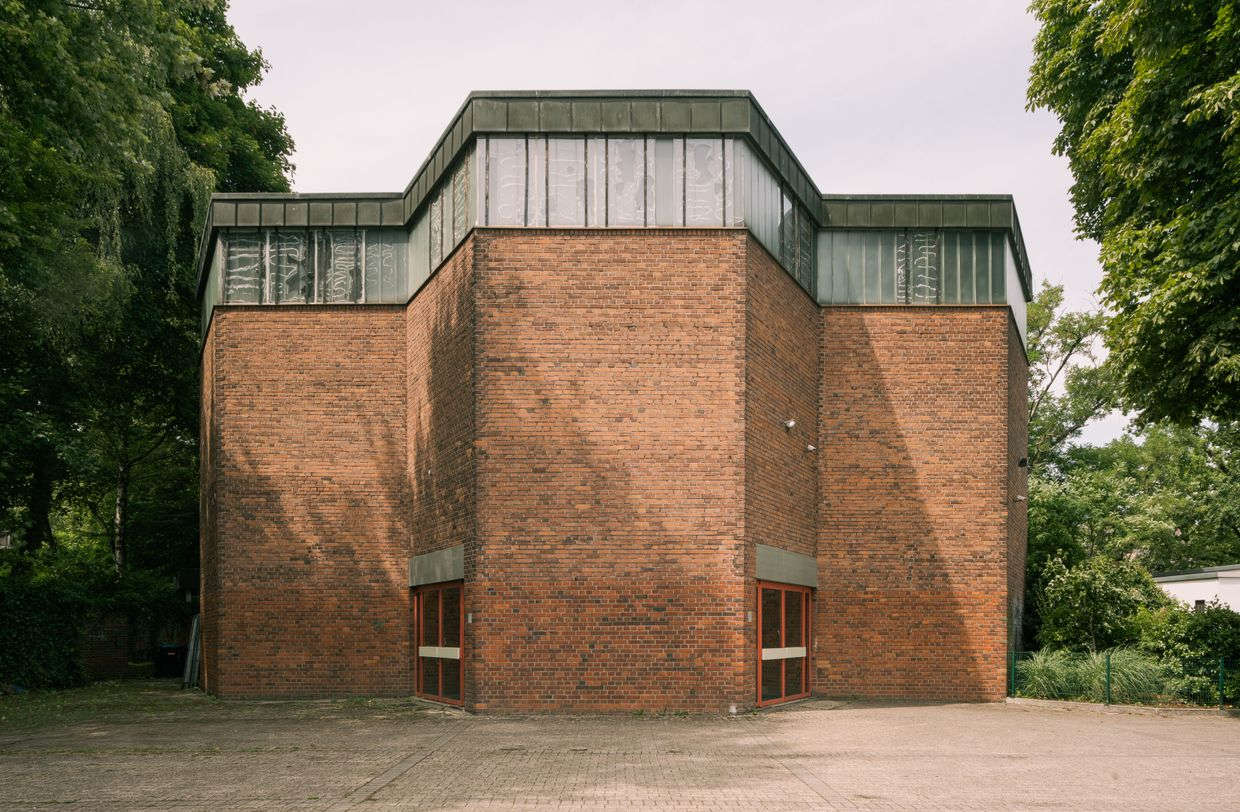
The program aims to bring together a plurality of languages and methodologies. Installations, performances, research practices and collaborative projects coexist within a framework that rejects any uniformity. The variety of proposals reflects the diversity of backgrounds: in fact, the 106 participants come from thirty countries, including Austria, Belgium, Brazil, France, Germany, Greece, Iraq, Iran, Lebanon, the Netherlands, Poland, Portugal, Spain, Turkey, Ukraine, the United Kingdom, and the United States, to name a few.
The 64 new commissions represent one of the most significant elements of the edition. Designed specifically for Manifesta 16 Ruhr, these works arise from a research process involving artists, facilitators and local communities. Thus, they are not pre-existing works adapted to the context, but projects developed in direct relationship with the places and the people who inhabit them.
Geographical distribution also helps define the identity of the biennial. The 12 venues, located in four Ruhr cities, form a diffuse network that invites the public to move through the territory. In this way, the visit aspires to become a dynamic experience, combining the enjoyment of the works with the exploration of the places.
Below is the full list of artists convened.
Emre Abut (Germany, 1985)
Mehmet Aksoy (Germany, 1939)
Havîn Al-Sîndy (Iraq)
Begzada Alatovic (Bosnia and Herzegovina)
Bettina Allamoda (United States, 1964)
Özlem Altın (Turkey, 1977)
Halil Altındere (Turkey, 1971)
Atiye Altül (Turkey, 1947)
Llorenç Barber & Montserrat Palacios (Spain, 1948 and 1973)
Mirosław Batka (Poland, 1958)
Mehtap Baydu (Turkey, 1972)
Akbar Behkalam (Iran, 1944)
Mabe Bethônico (Brazil, 1966)
Sara Bichão (Portugal, 1986)
Cana Bilir-Meier (Germany, 1986)
Ayzit Bostan (Turkey, 1968)
Aline Bouvy (Luxembourg, 1974)
Cudelice Brazelton IV (United States, 1991)
Bureau Baubotanik (Germany, 2010)
Cabosanroque (Spain, 2001)
Pedro Cabrita Reis (Portugal, 1956)
Vlassis Caniaris (Greece, 1928-2011)
Fatma Ceylan (Turkey, 1967)
Curro Claret (Spain, 1968)
İsmail Çoban (Turkey, 1945-2024)
Constructlab (Germany)
Yıldırım Denizli (Turkey, 1946)
Jason Dodge (United States, 1969)
İhsan Ece (Turkey, 1949)
William Engelen (Netherlands, 1964)
Ayşe Erkmen (Turkey, 1949)
Robert Fleck (Austria, 1957)
Katharina Fritsch (Germany, 1956)
Füruzan (Turkey, 1932-2024)
Bérénice Gaça Courtin (France, 1994)
Niklas Goldbach (Germany, 1973)
Zuza Golińska (Poland, 1990)
Nicolas Grospierre (Poland, 1975)
Philipp Gutler (Germany, 1989)
Hava Güleç (Turkey)
Abuzer Güler (Turkey, 1959)
Mehmet Güler (Turkey, 1944)
Cihangir Gümüştürkmen (Turkey, 1964)
Nejla Gür (Turkey, 1952)
Albe Hamiti (Kosovo, 1988)
Mona Hatoum (Lebanon, 1952)
Judith Hopf (Germany, 1969)
Julian Irlinger (Germany, 1986)
Pravdoliub Ivanov (Bulgaria, 1964)
Annika Kahrs (Germany, 1984)
Sejla Kamerić (Bosnia and Herzegovina, 1976)
Merve Kaplan (Germany, 1997)
Muhlis Kenter (Turkey, 1952)
Azade Köker (Turkey, 1949)
Eva Kotátková (Czech Republic, 1982)
Athina Koumparouli (Greece, 1983)
Jarosław Kozłowski (Poland, 1945)
Katarzyna Kozyra (Poland, 1963)
Gašper Kunsic (Slovenia, 1992)
Alicja Kwade (Poland, 1979)
Lilli Lake (Germany, 1995)
Justin Lieberman (United States, 1977)
Julia Logothetis (Austria, 1945)
Kateryna Lysovenko (Ukraine, 1989)
Miedya Mahmod (Germany, 1996)
Olaf Metzel (Germany, 1952)
Małgorzata Mirga-Tas (Poland, 1978)
Mihály Moldvay (Serbia, 1938-2024)
Marina Naprushkina (Belarus, 1981)
Donja Nasseri (Germany, 1990)
Julia Nitschke (Germany, 1988)
Navid Nuur (Iran, 1976)
Pınar Öğrenci (Turkey, 1973)
Asimina Paradissa (Greece, 1945)
Pele Collective (Portugal, 2007)
Penique Productions (Spain, 2007)
Elizabeth Price (United Kingdom, 1966)
Jannis Psychopedis (Greece, 1945)
Judith Raum (Germany, 1977)
Mykola Ridnyi (Ukraine, 1985)
Mesut-Sabuha Salaam (Turkey, 1966)
Coumba Samba (United States, 2000)
Wilhelm Sasnal (Poland, 1972)
Anka Sasnal (Poland, 1973)
Augustas Serapinas (Lithuania, 1990)
Dennis Siering (Germany, 1983)
Mikołaj Sobczak (Poland, 1989)
SUPERFLEX (Denmark, 1993)
Metin Talayman (Turkey, 1939-1999)
Nesrin Tanç (Germany, 1977)
Cassidy Toner (United States, 1992)
Rıza Topal (Turkey, 1934-2025)
Nasan Tur (Germany, 1974)
Luc Tuymans (Belgium, 1958)
Yıldız Tüzün (Turkey, 1932-2021)
Gülbin Ünlü (Turkey)
Evita Vasiljeva (Latvia, 1985)
Emil Walde (Germany, 1991)
Weberei Kai (Germany, 2018)
Ming Wong (Germany, 1971)
Nil Yalter (Egypt, 1938)
Mira M. Yang (Germany, 1993)
Hanefi Yeter (Turkey, 1947)
Serpil Yeter (Turkey, 1956)
Abbas Zahedi (United Kingdom/India, 1984)
Amanda Ziemele (Latvia, 1990)
|
| Manifesta 16, 106 participating artists announced: again, no Italians |

Warning: the translation into English of the original Italian article was created using automatic tools. We undertake to review all articles, but we do not guarantee the total absence of inaccuracies in the translation due to the program. You can find the original by clicking on the ITA button. If you find any mistake,please contact us.




















 IT
IT FR
FR DE
DE ES
ES CN
CN


