





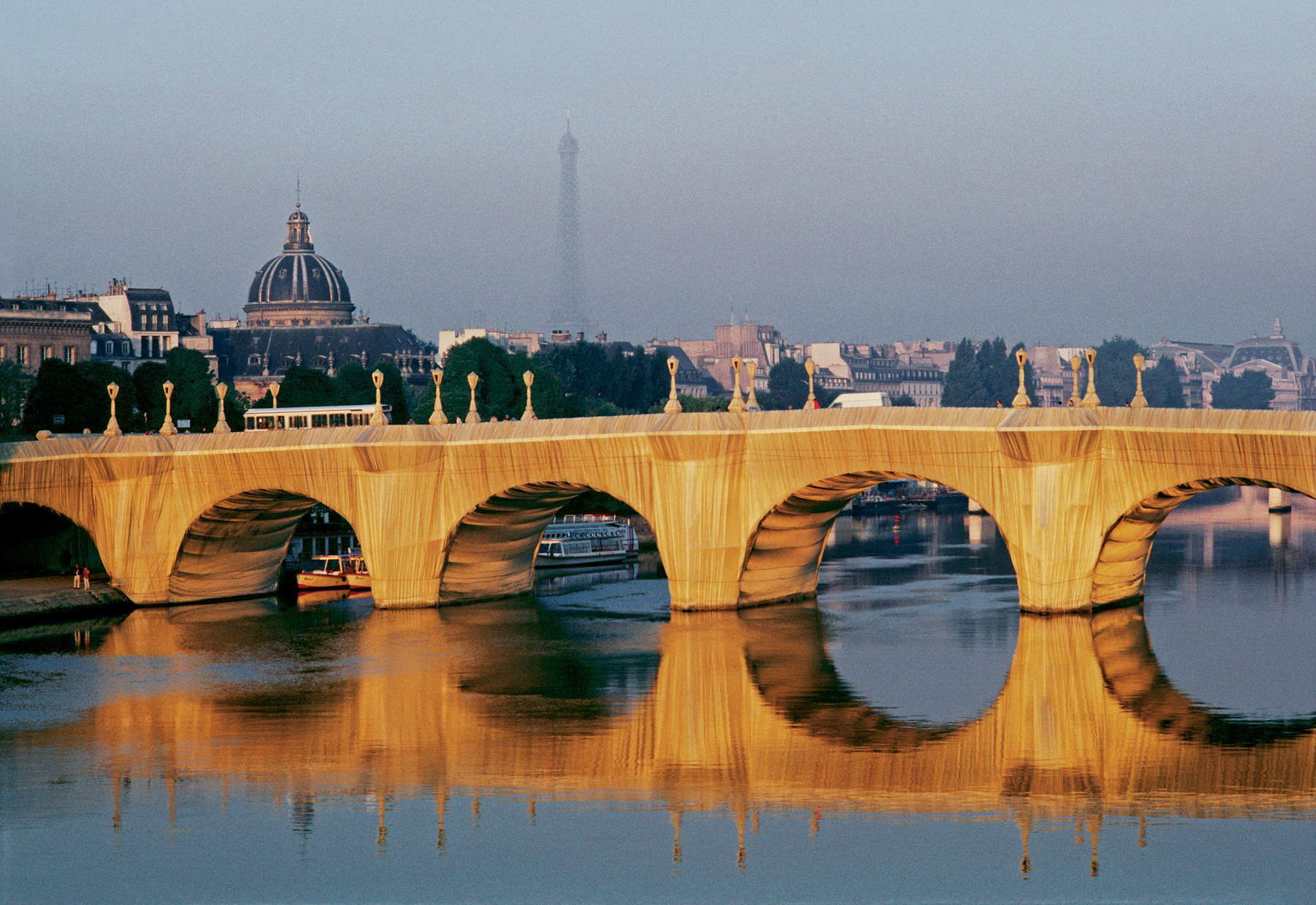
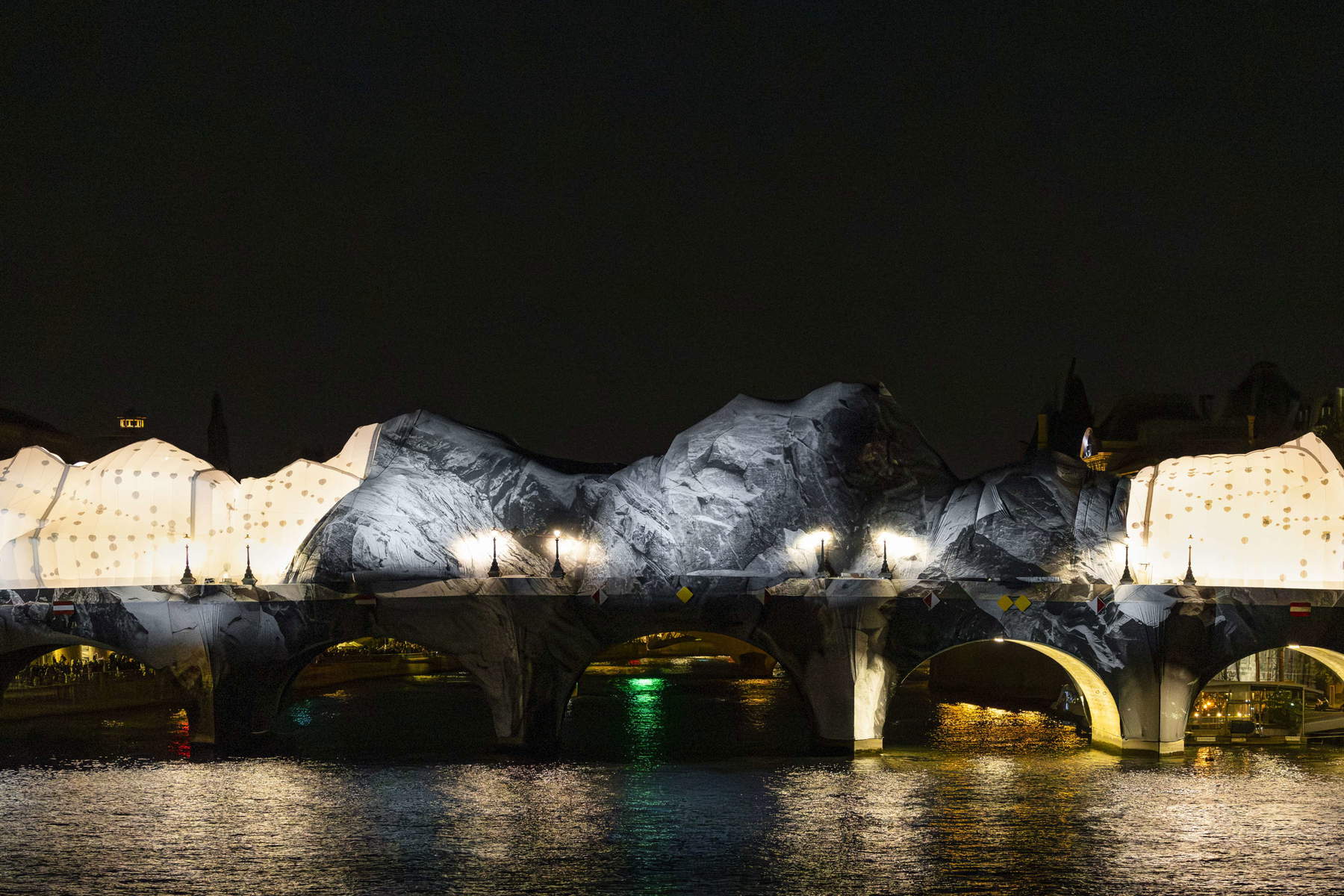
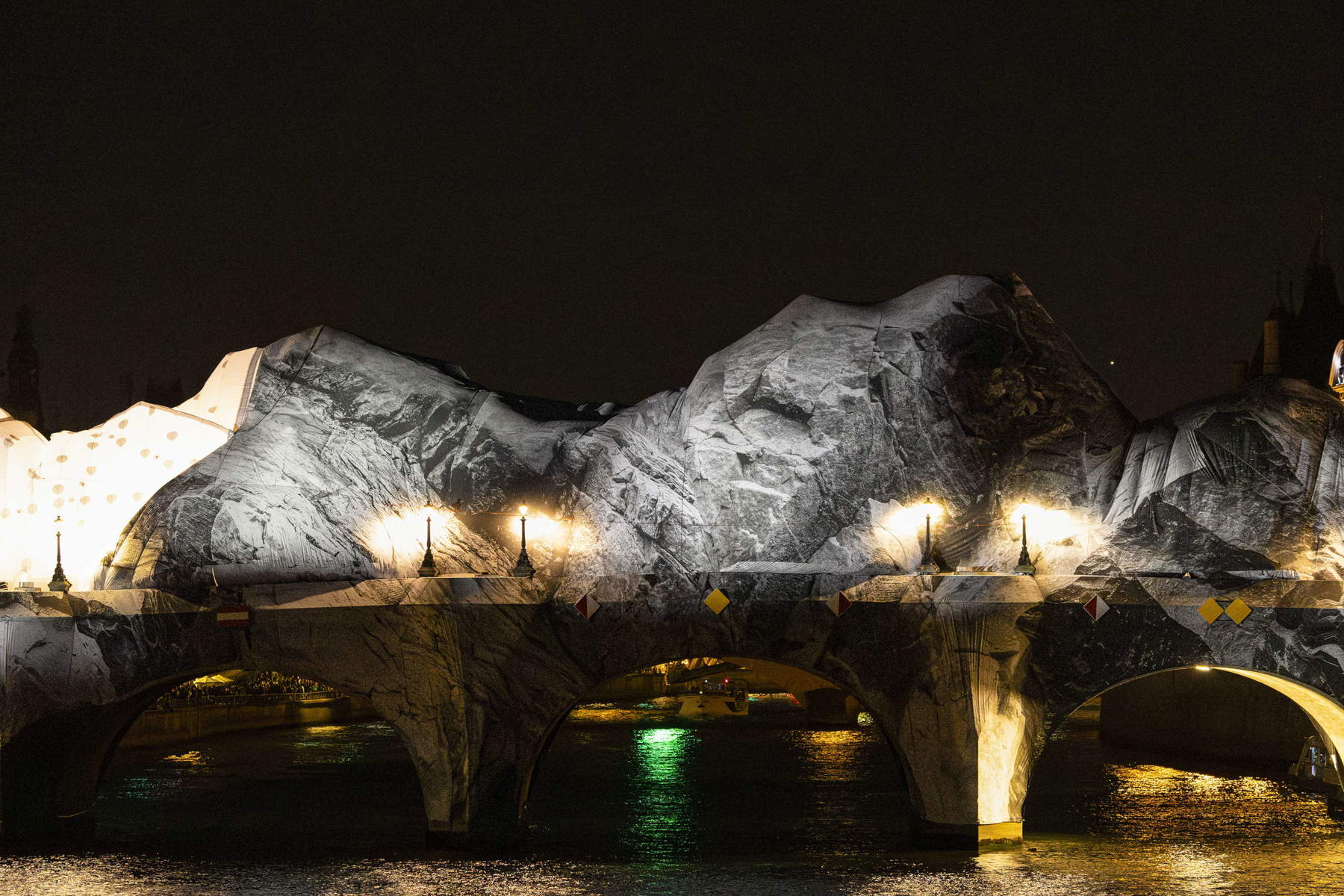
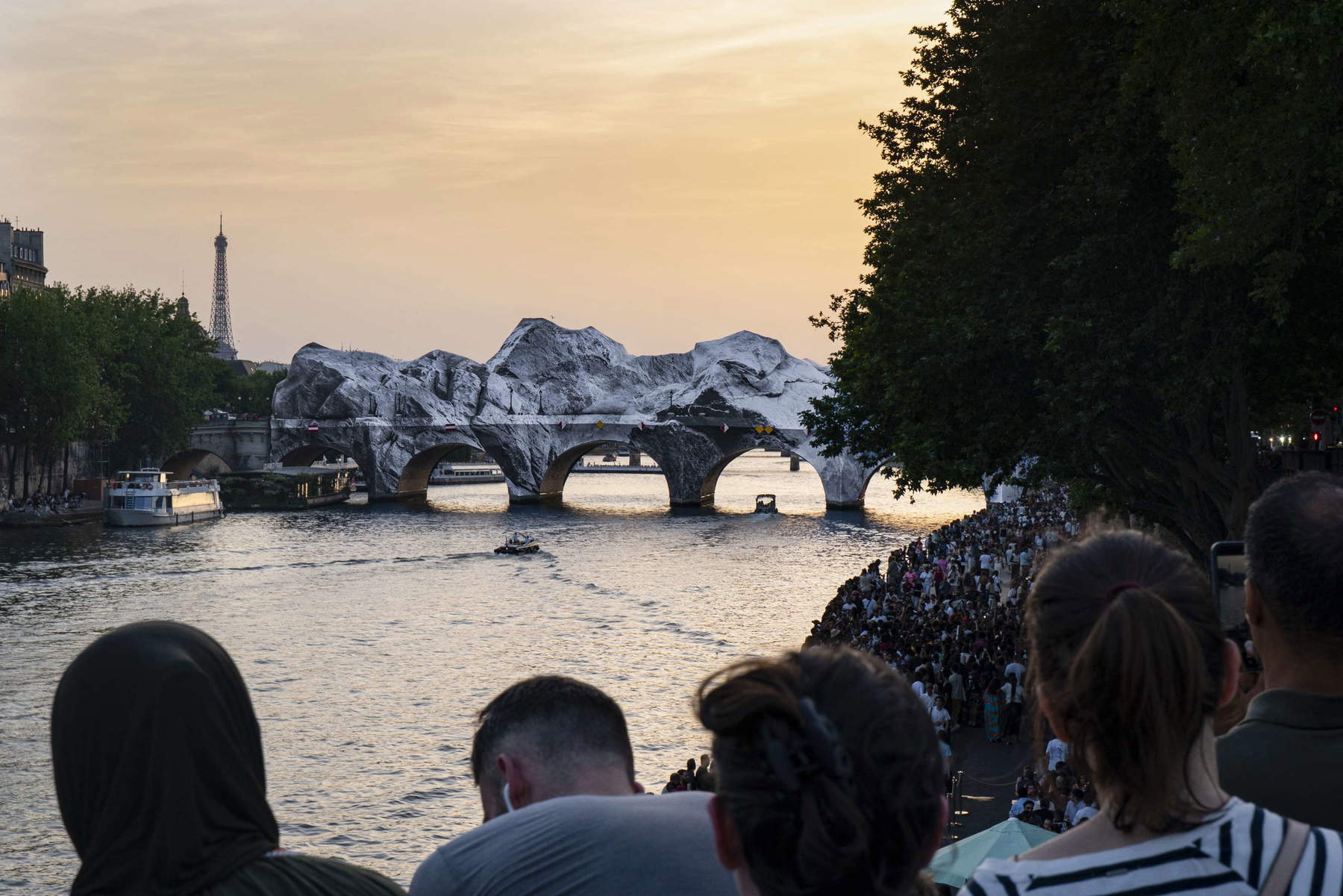
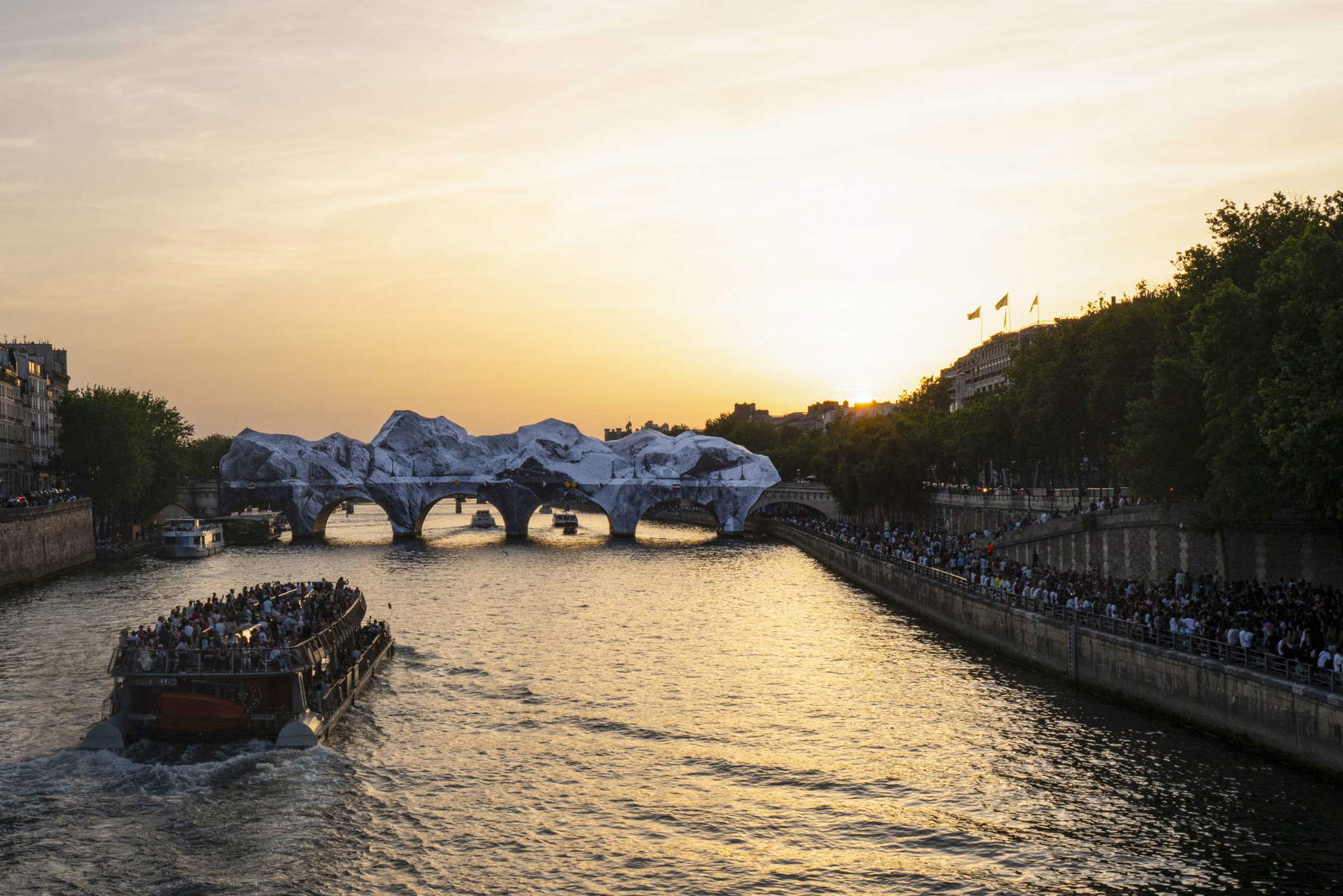
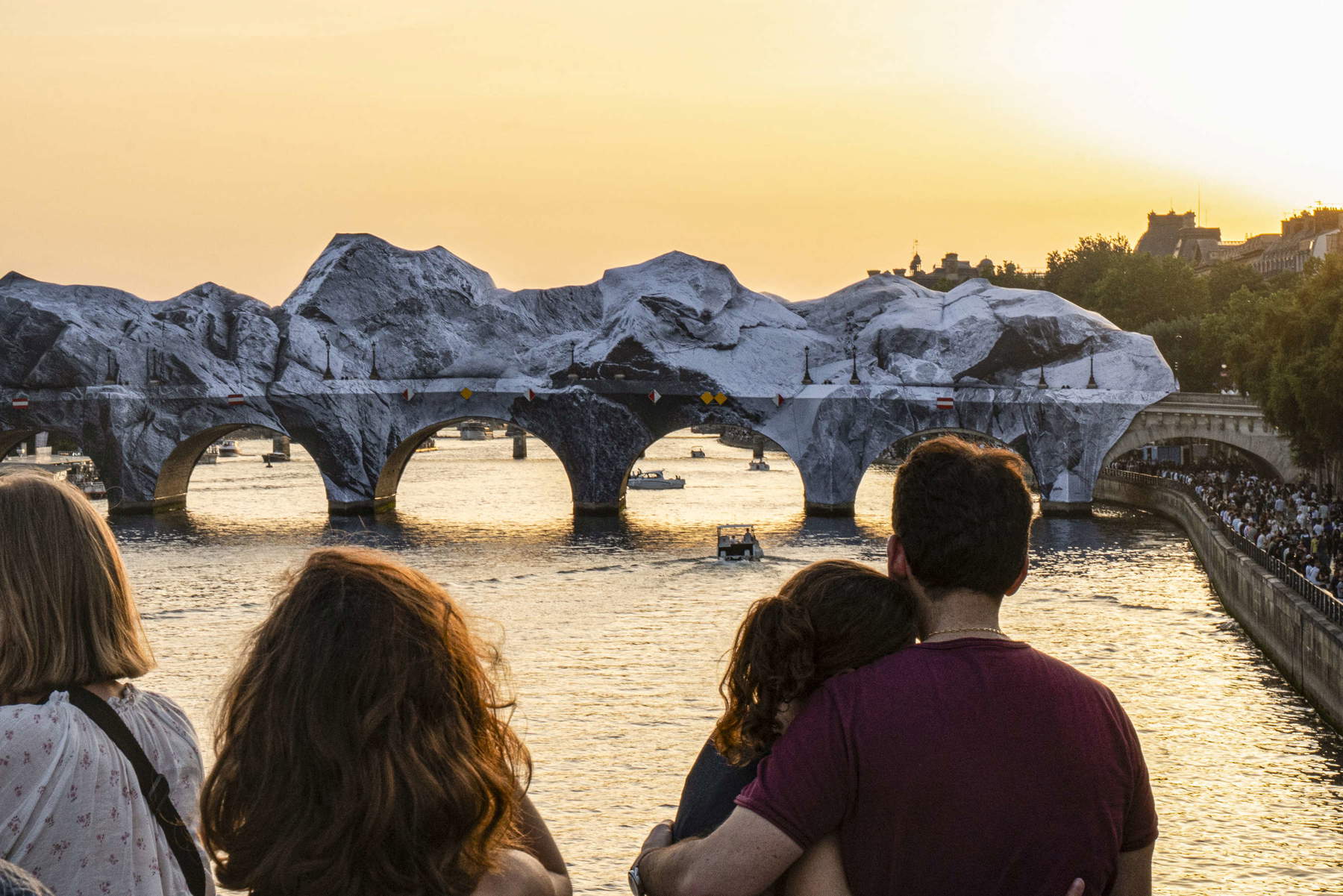
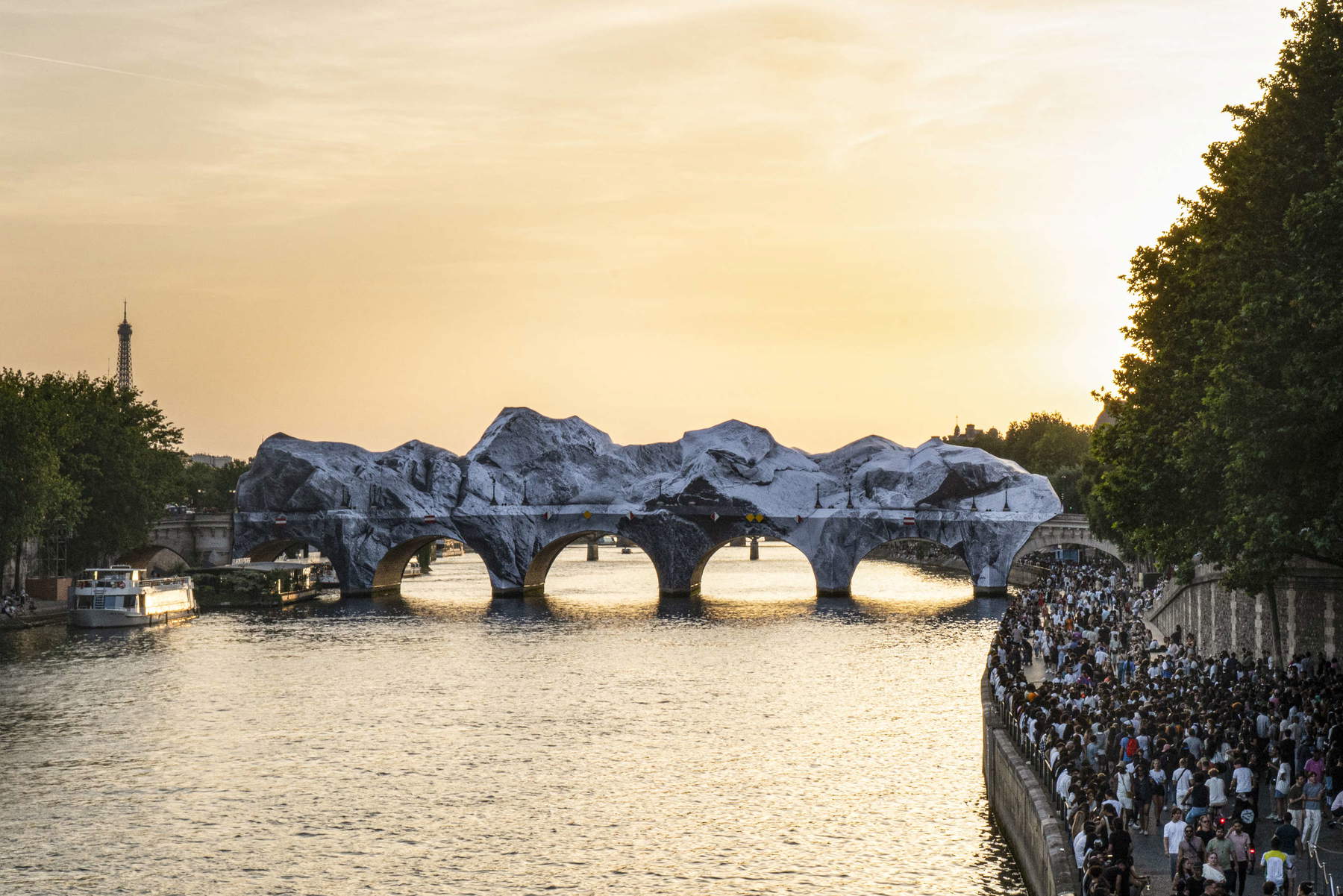
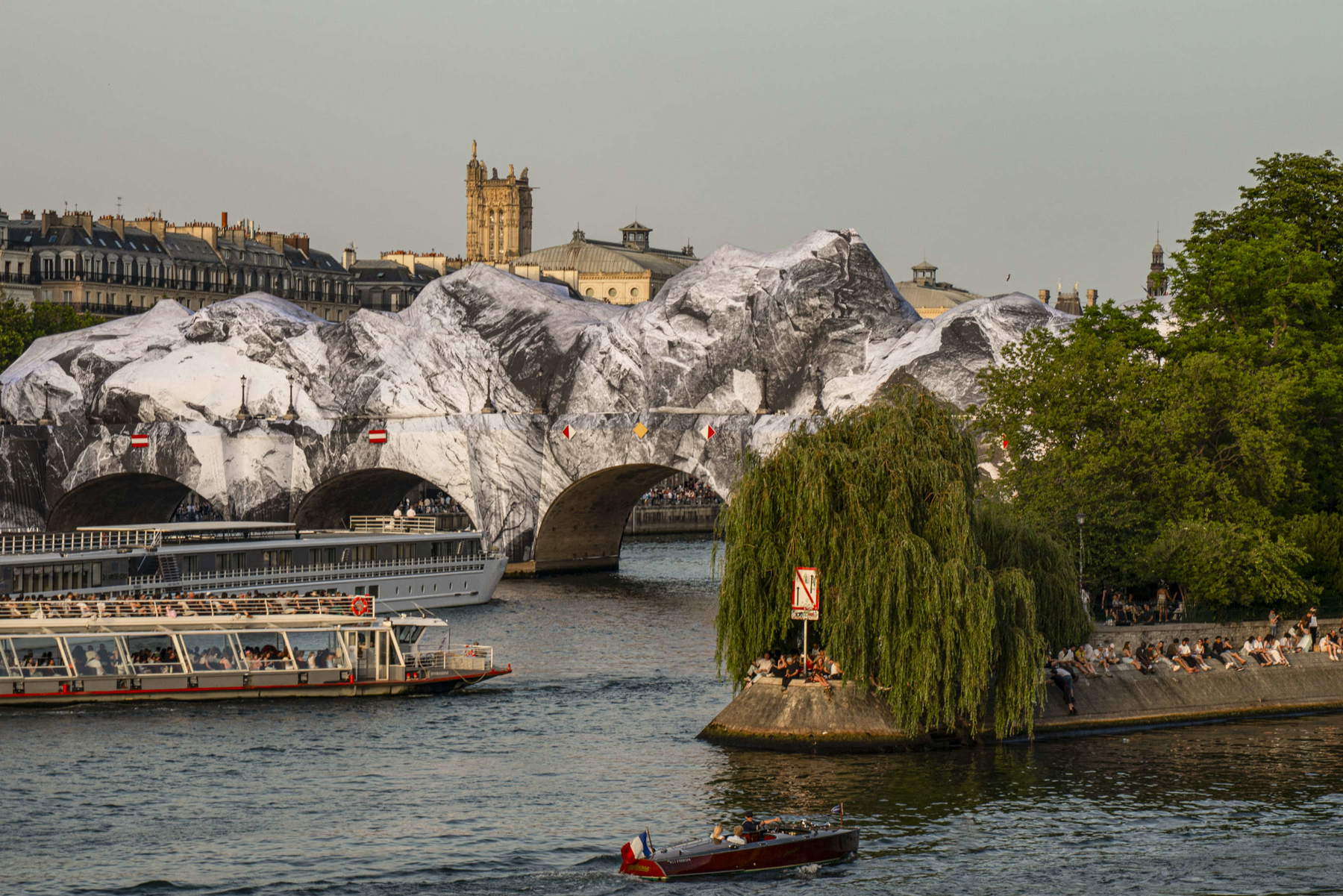
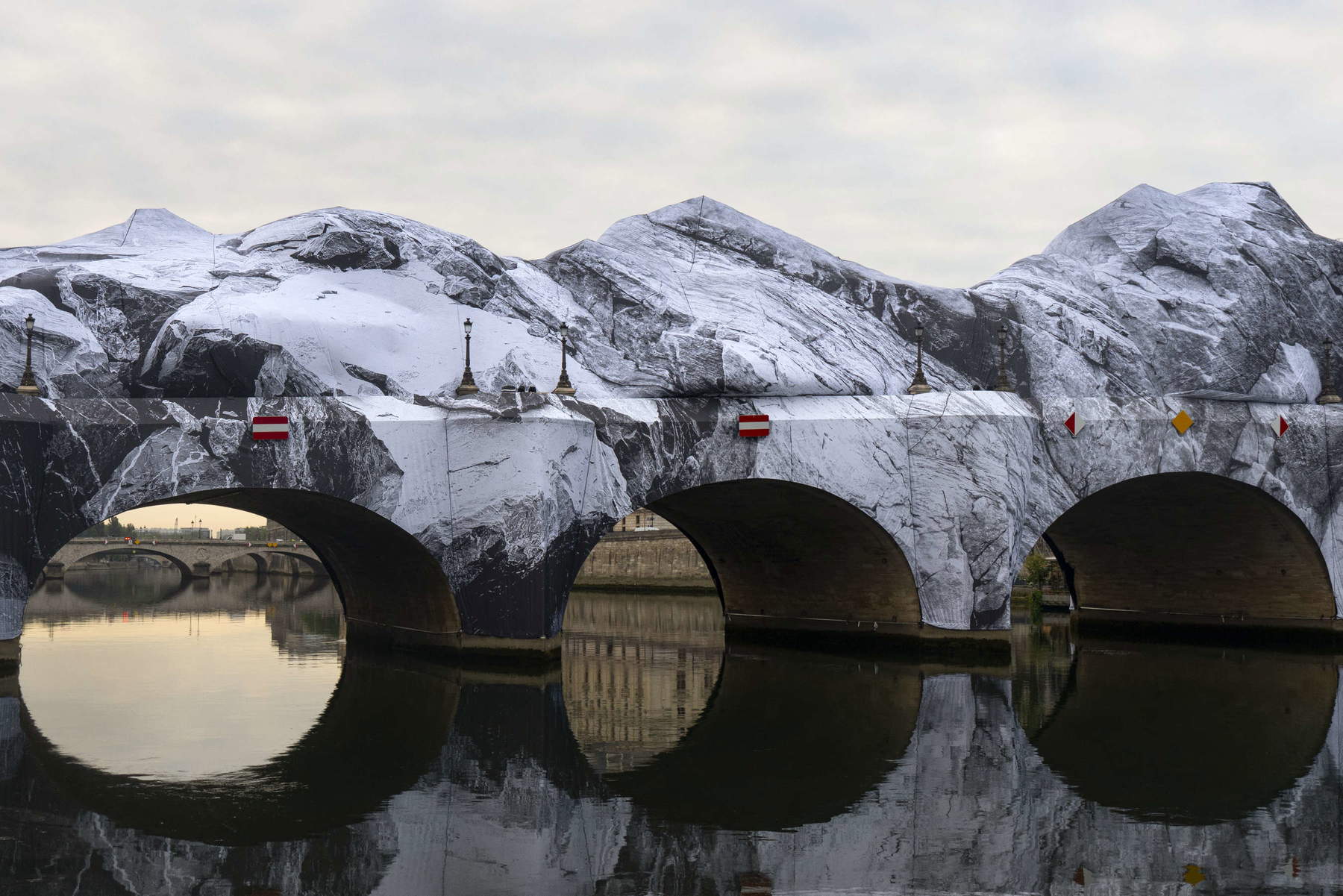
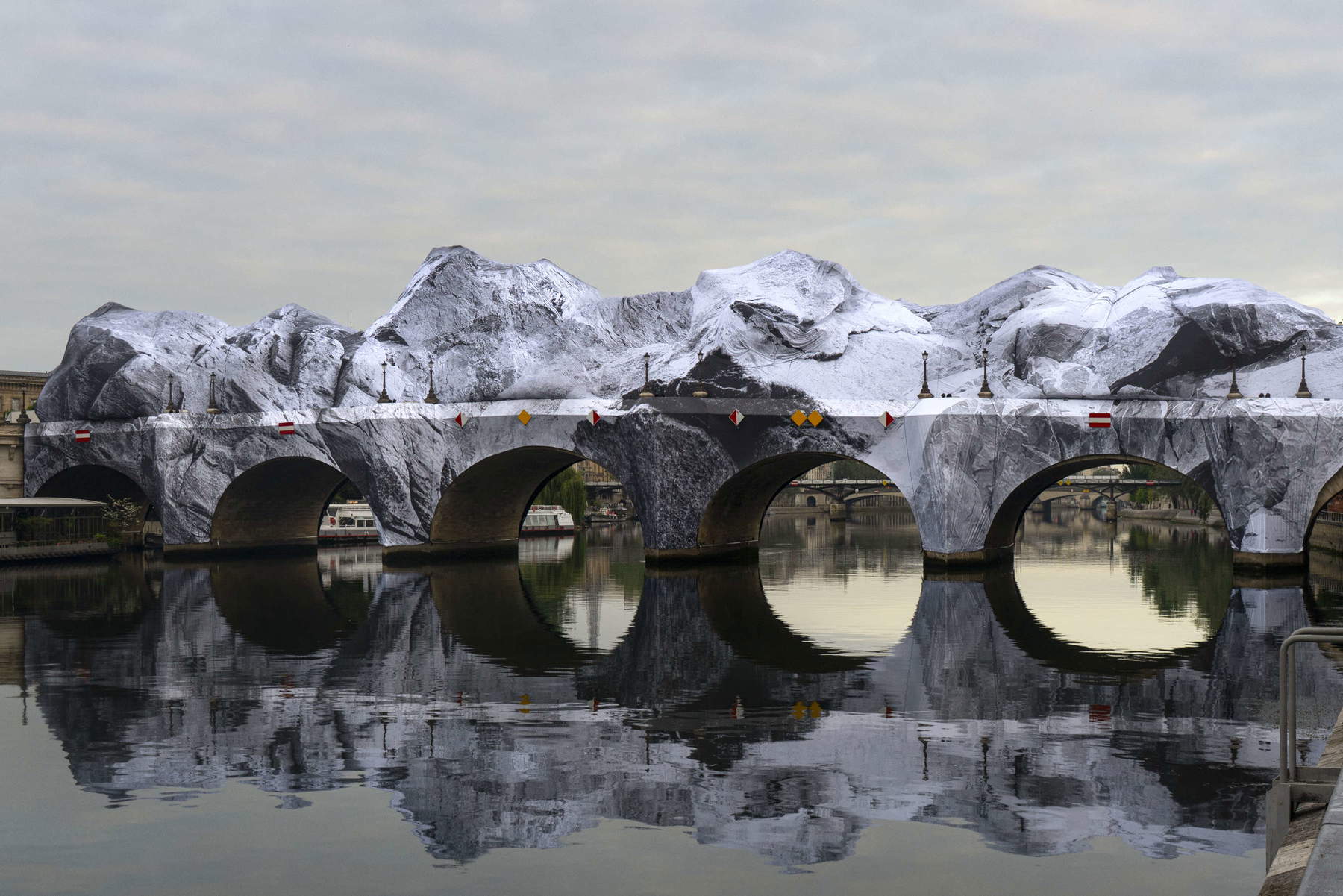
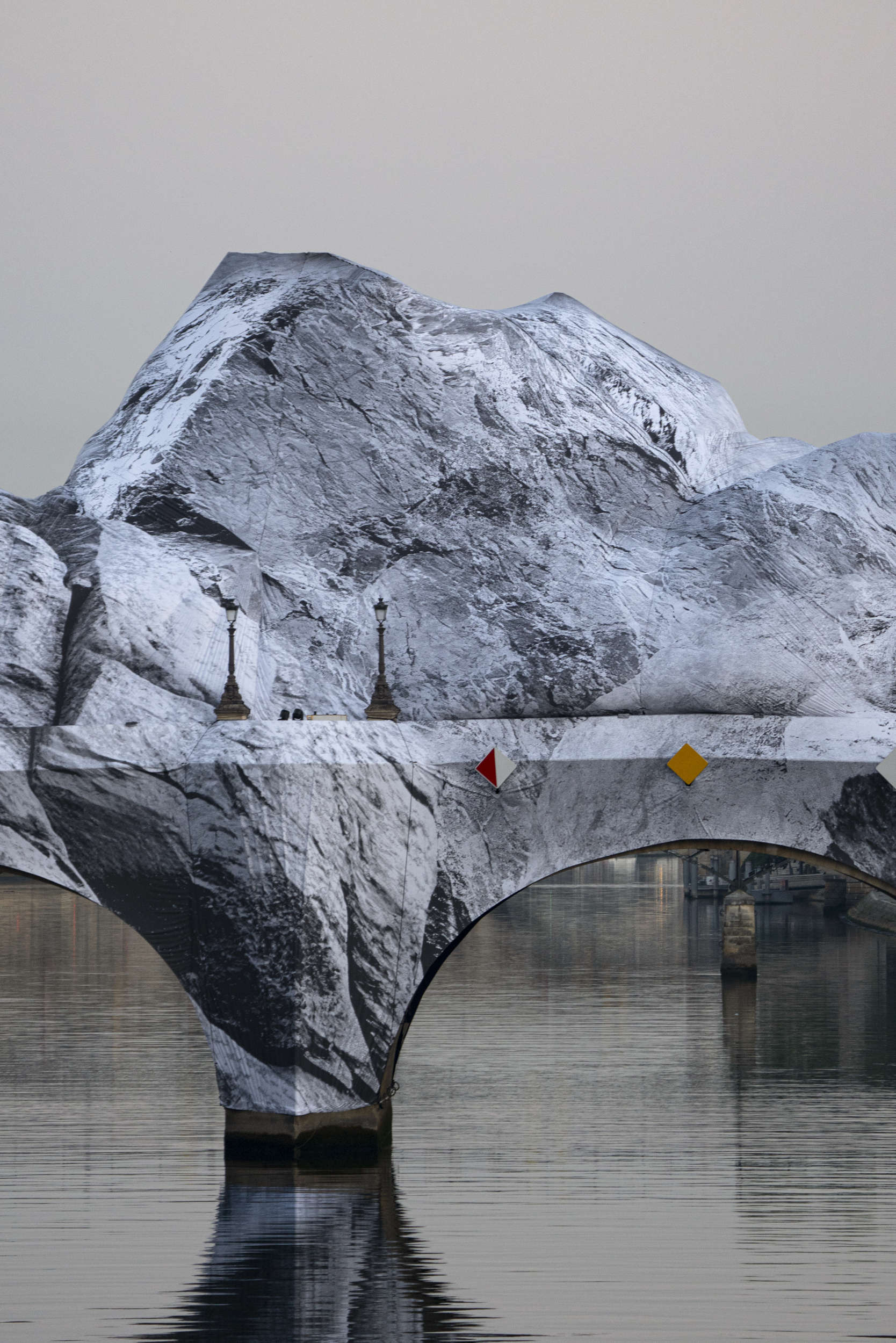
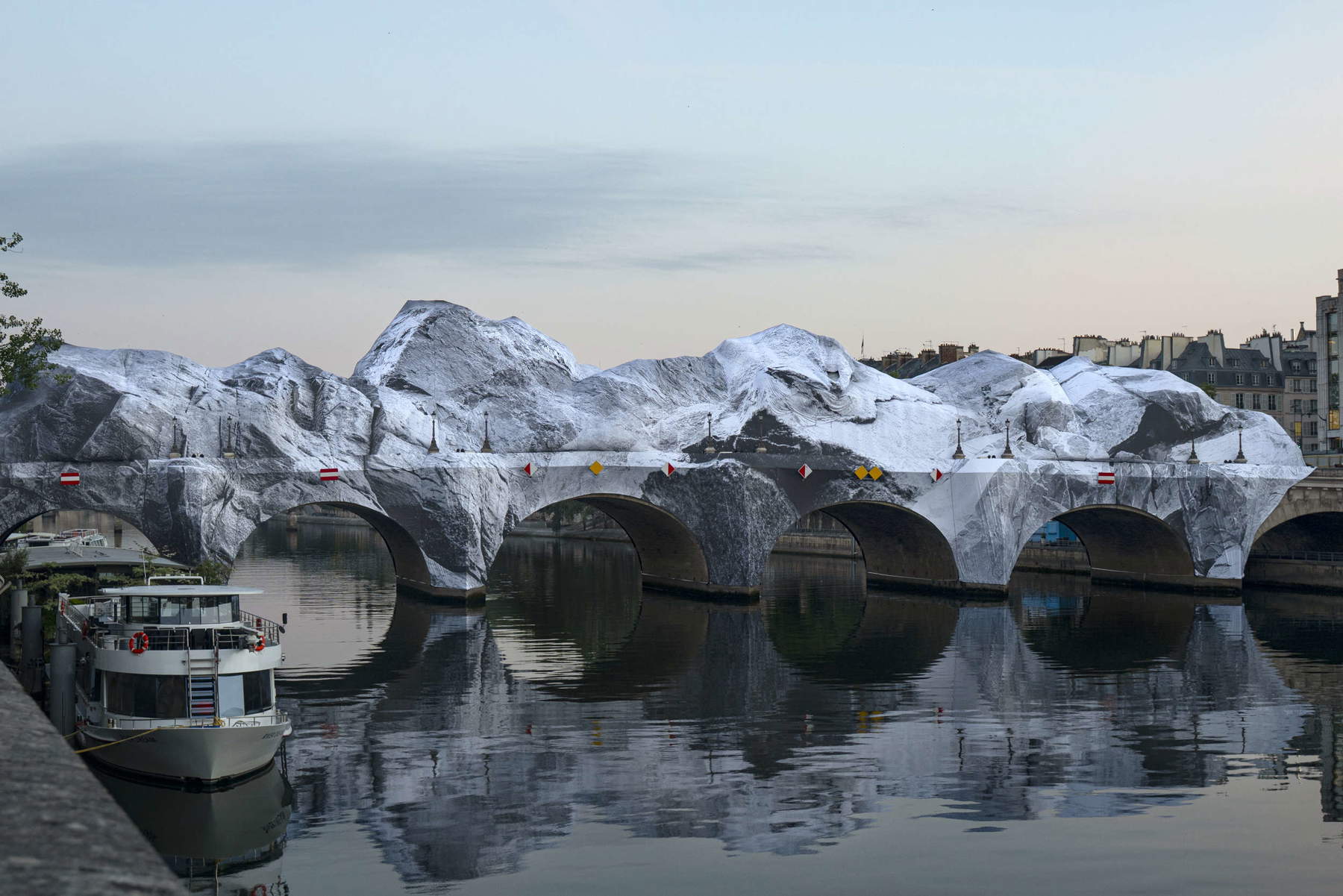
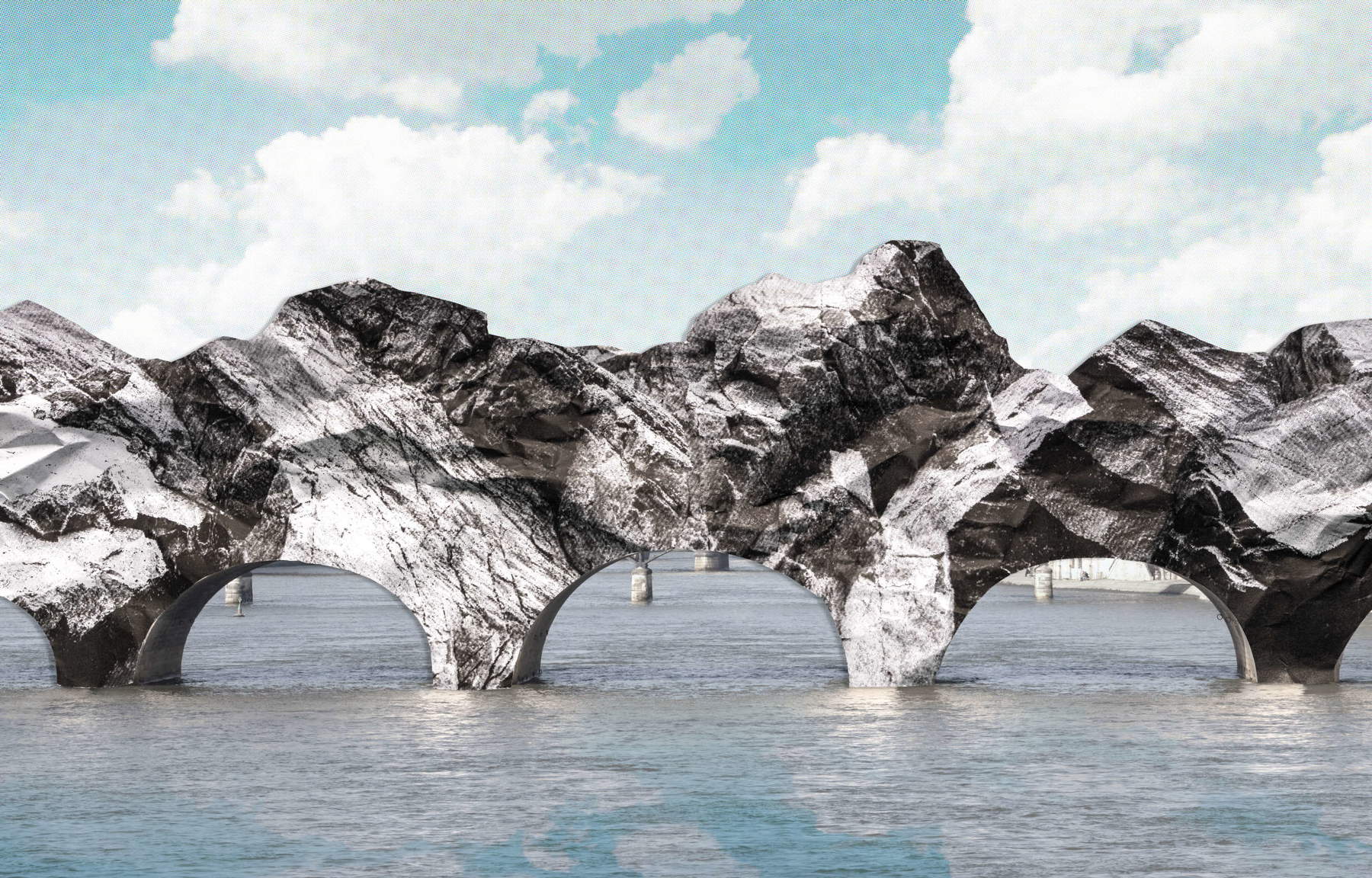
At 6 p.m. today in Paris , *La Caverne du Pont Neuf* officially opened to the public. This new art project, conceived by JR, pays homage to *The Pont Neuf Wrapped*, the famous work created in 1985 by Christo and Jeanne-Claude. Through June 28, Parisians and visitors from around the world will be able to enjoy an experience that will last only a few weeks: walking across a temporary reinterpretation of the French capital’s oldest bridge, the Pont Neuf. The initiative is made possible by the L’Amicale des Ponts de Paris endowment fund and has received no public funding. The project was supported through the sale of JR’s works and thanks to contributions from private partners including Snap Inc., Bloomberg Philanthropies, Paris Aéroport, and Salesforce. Access is completely free, 24 hours a day, seven days a week, starting from Place du Pont Neuf - Christo et Jeanne-Claude.
The opening comes after a particularly challenging few weeks. Although an exceptional weather event on June 2 forced organizers to postpone the inauguration, the public had already been able to view the artwork since its installation on the evening of May 20. For thirteen days, La Caverne remained visible from numerous points throughout the city: from the banks of the Seine to the upper riverbanks, from various nearby bridges to tourist boats, riverboats, and cruise ships traveling along the river. Thanks to its monumental dimensions, the installation is visible far beyond the immediate surroundings of the Pont Neuf, offering perspectives reminiscent of the sweeping urban vistas visible from the top of the Eiffel Tower. From the very start of its temporary presence in the Parisian landscape, the work has invited residents and tourists alike to create their own personal journey through the city, discovering it from ever-changing angles.
The creation of the work, however, turned into what JR describes as a “climatic odyssey.” Installation work began on May 11 and was accompanied by extreme weather conditions that constantly put the project to the test. The first week, dedicated to covering the arches of the Pont Neuf, took place with wind chill temperatures as low as just three degrees Celsius. Subsequently, the bad weather progressively worsened, with strong winds and persistent rain forcing the team to reschedule the timeline multiple times. The operation to inflate the structure was postponed three times. When the artwork was finally hoisted into place, new extreme conditions continued to affect its installation. Between May 22 and 30, while work continued inside the structure, Paris was hit by a prolonged nine-day heat wave.
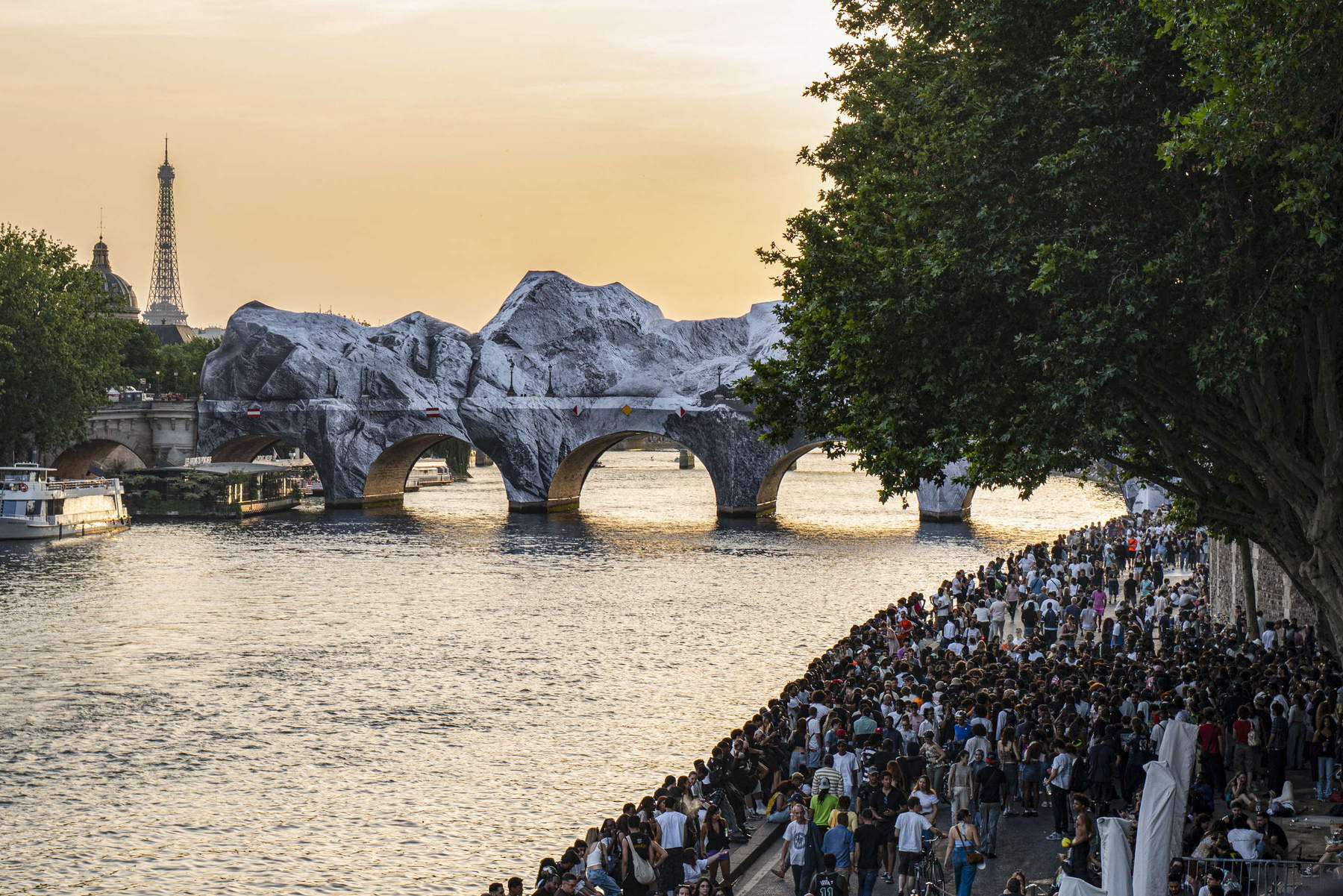
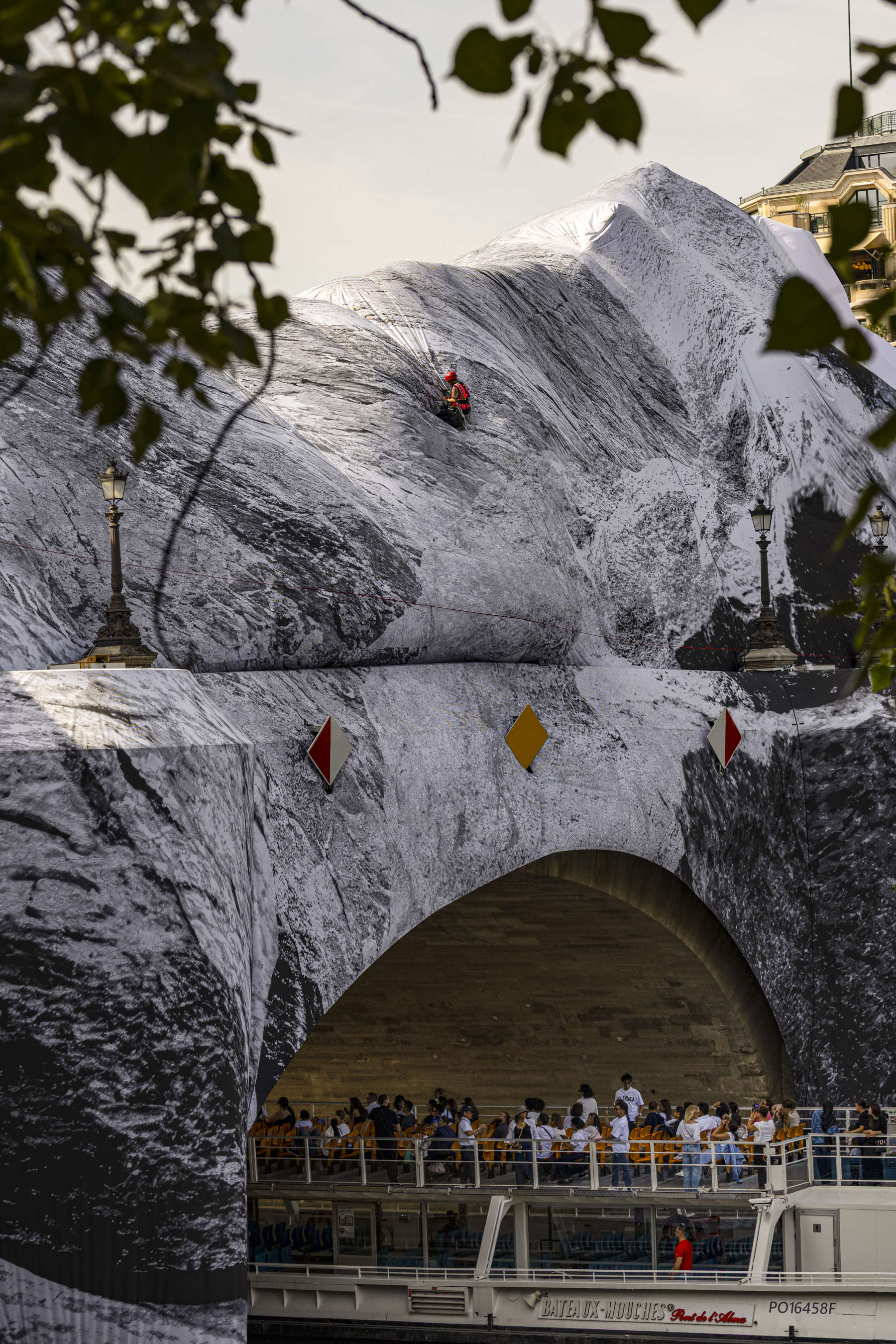
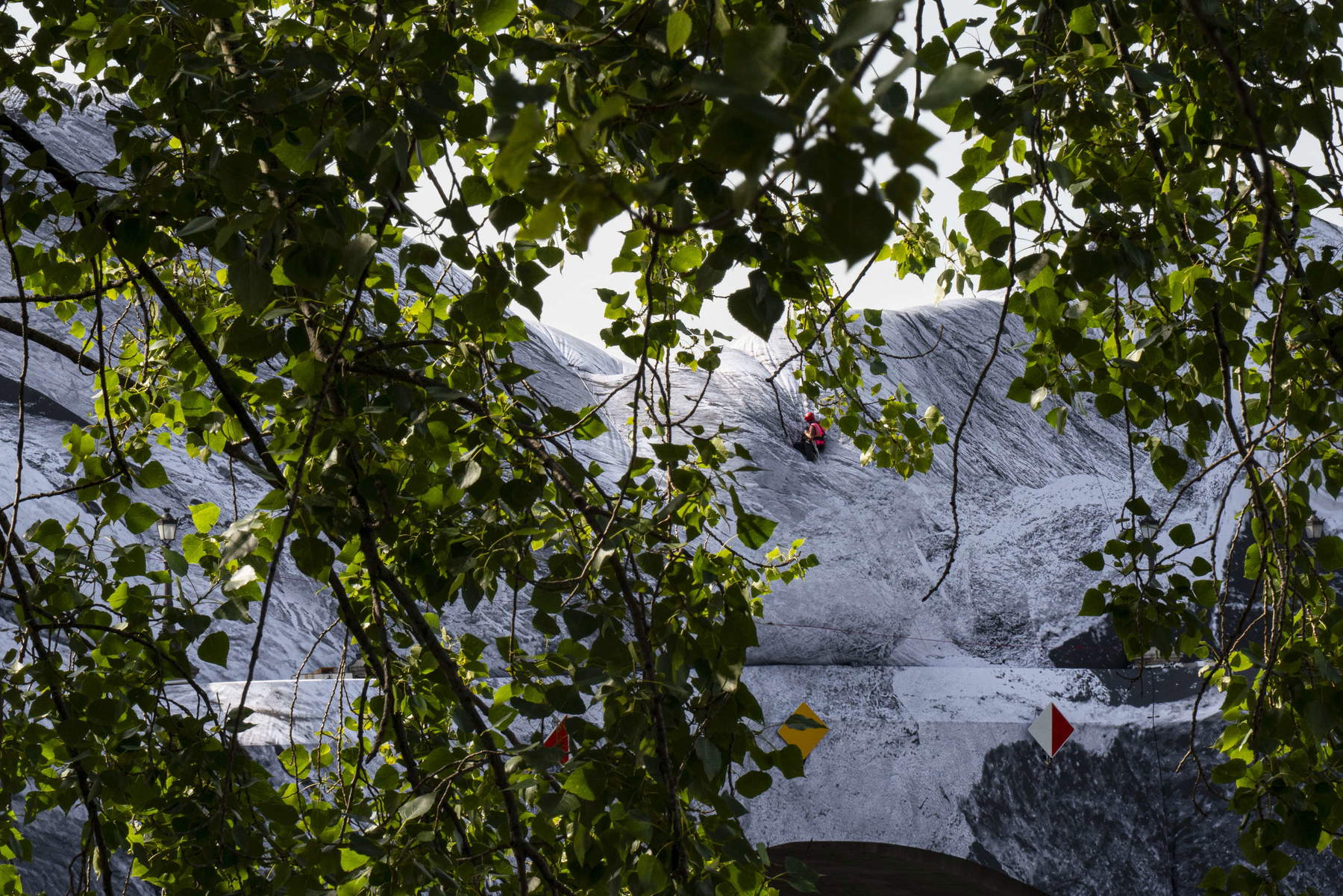
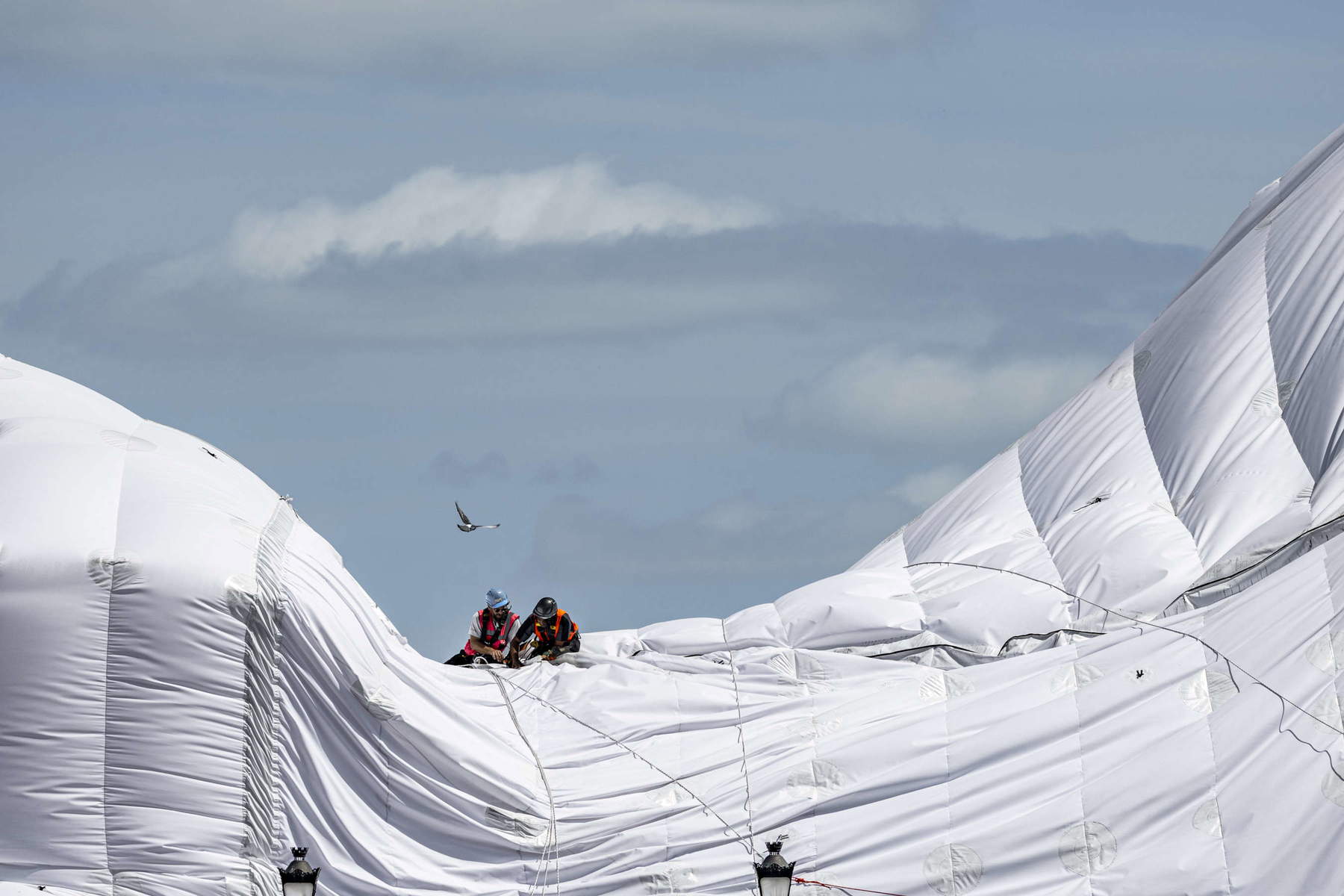
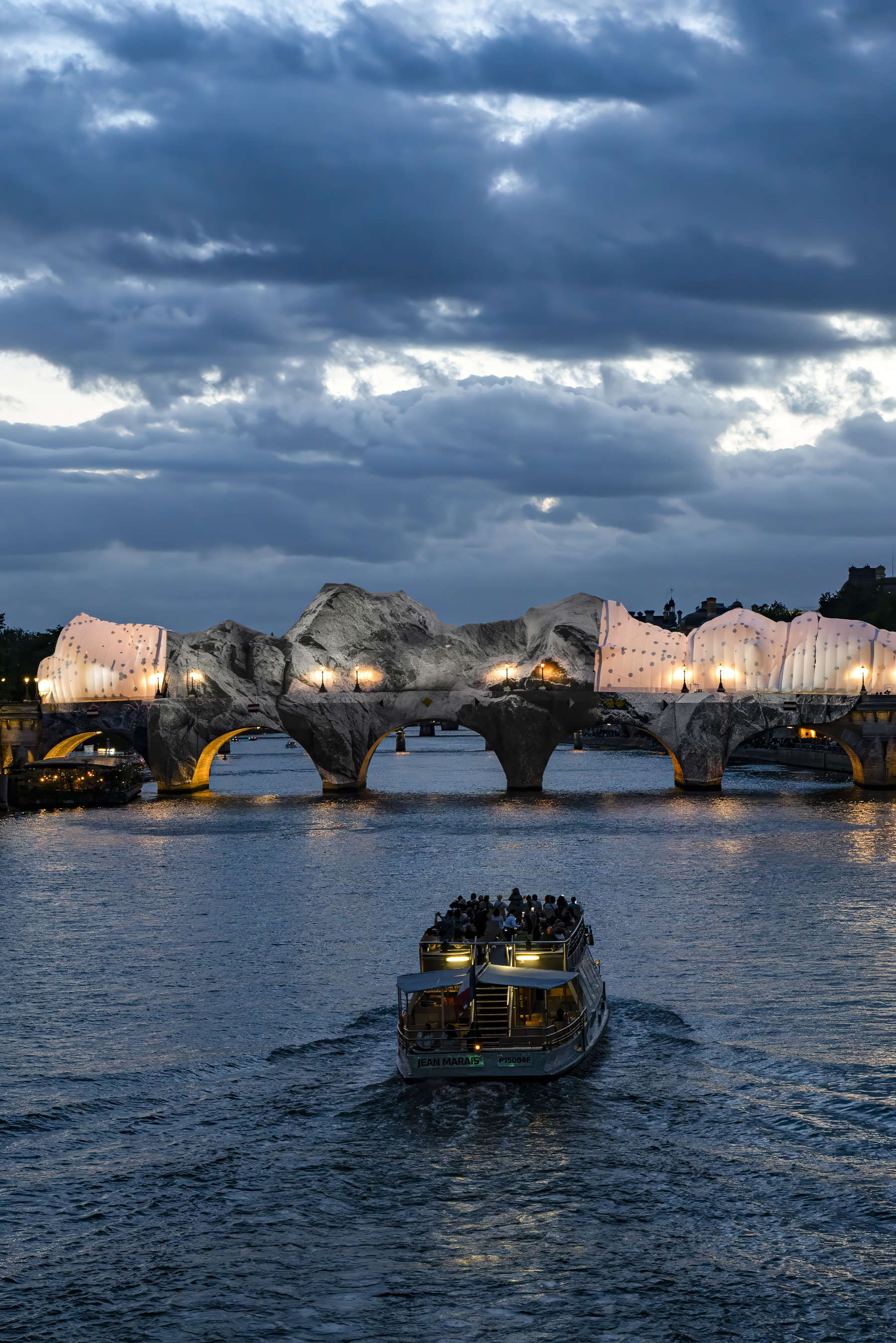
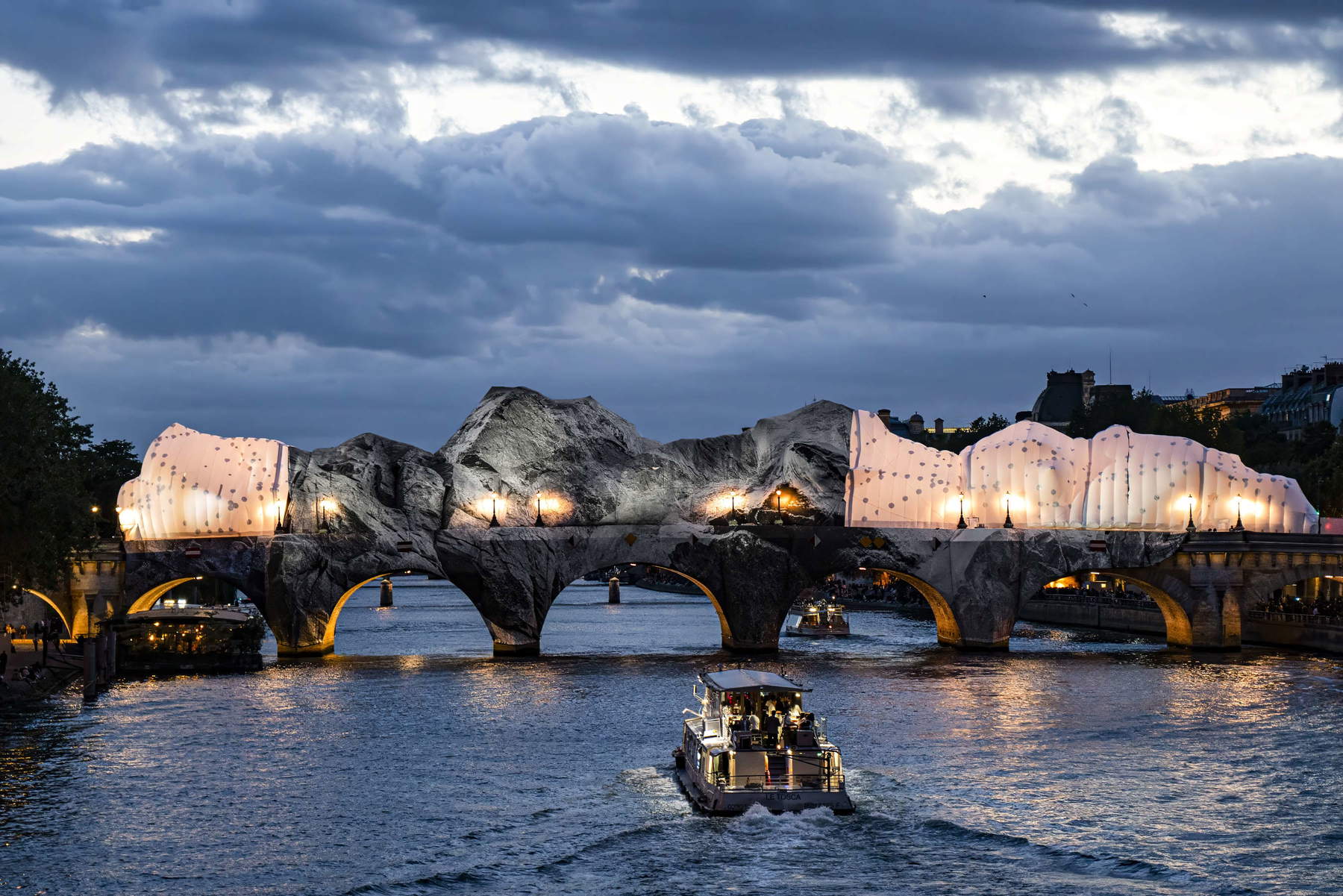
The situation took a turn for the worse on June 2. While work was being carried out on the exterior cladding, strong gusts of wind and a violent hailstorm struck the installation simultaneously, causing tears at the edges of the work and localized damage in three different sections of the inflatable envelope. JR and his team immediately began repair work, operating outdoors and in full view of the public. After ten days of work, La Caverne du Pont Neuf was finally able to open, albeit later than originally planned.
Precisely to preserve the memory of this journey marked by weather events, the organizers chose not to completely conceal the marks left by the damage. The seams created during the repairs were deliberately highlighted in black, transforming the structure’s wounds into a visible testament to the impact of extreme weather conditions. In light of these events, safety and visitor protocols have also been strengthened, and temporary closures cannot be ruled out in the event of particularly severe weather.
At the heart of the project lies a reflection on the relationship between the contemporary city and its origins. JR conceived La Caverne du Pont Neuf, drawing inspiration from the quarries where the stones used to build the bridge and much of Paris’s historic architecture were extracted. The work thus creates a dialogue between the raw, primordial aspect of the material and the urban elegance of the City of Light, establishing a contrast between past and present.
Completed in 1607, the Pont Neuf was the first bridge in Paris built entirely of limestone, the famous “Paris stone,” sourced from quarries in the region. It was also the first bridge to feature paved sidewalks, contributing decisively to the development of urban life and civic social interaction. “My project is rooted in both the past and the present of this iconic bridge,” explains JR. “I admire the legacy of Christo and Jeanne-Claude and share their belief that the mission of art is to make us reflect and question what seems familiar to us. The debate that a public work can generate is just as valuable as its creation. Art is transformation and represents a way to renew our view of the world.” The experience proposed by JR is not intended to be limited to visual impact. “It is a passage into the unknown, a journey within oneself,” says the artist. “I envisioned La Caverne as a place where fullness and emptiness coexist in balance.”
To develop the sound dimension of the work, JR enlisted Thomas Bangalter, a former member of Daft Punk. The collaboration represents a natural continuation of previous joint projects, including Retour à la Caverne - Act II, Chiroptera at the Opéra Garnier, and the exhibition Dans la lumière. Bangalter vividly recalls Christo and Jeanne-Claude’s wrapping of the Pont Neuf, which took place when he was just ten years old. He still considers it one of the most influential artistic experiences of his life. For La Caverne du Pont Neuf, he chose to create a soundscape that was not strictly music but an acoustic texture capable of accompanying and amplifying the perception of space. Through an electroacoustic composition, the artist sought to give the structure a monolithic and almost mystical dimension.
The project is further enhanced by augmented reality technology developed in collaboration with Snap Inc.’s AR Studio Paris. This collaboration gave rise to Echoes, an experience that combines monumental art and digital tools. Through visual effects inspired by Étienne-Jules Marey’s chronophotographic studies, visitors can view the work from alternative perspectives and participate in a personalized experience. Echoes is the result of months of research and experimentation. Bodies, animals, light, and sound become elements that manifest in space as persistent traces and presences suspended in time. The goal is to make aspects of reality normally invisible to the human eye perceptible. The experience can be enjoyed for free either via mobile devices or through Spectacles, the augmented reality glasses developed by Snap. Users can book a session for free or, depending on availability, join the daily sessions organized on-site.
For the first time in his career, JR has also introduced an olfactory component into one of his artistic projects. The sensory dimension was curated by Sarah Bouasse, a journalist and author dedicated to promotingthe sense of smell as a tool for understanding the world. In collaboration with the house of Odore Scola, Bouasse developed two olfactory compositions diffused in different areas of the installation. The fragrances are based on molecules naturally present in the environment and linked to the earliest forms of life on Earth. The intention was not to create pleasant scents in the traditional sense, but rather to accompany the immersive experience by evoking doubts and perceptions. Visitors might even wonder whether the work is actually scented or if what they perceive is a natural part of the surrounding environment.
Special attention was given to the visitor experience. Visitors enter via Place du Pont Neuf - Christo et Jeanne-Claude and exit onto Quai du Louvre. Bloomberg Connects, the digital platform developed by Bloomberg Philanthropies, provides mobile guides and multilingual ambassadors available 24 hours a day. Through the digital guide, visitors can access exclusive content, archival materials, interviews with JR and his collaborators, and in-depth features dedicated to The Pont Neuf Wrapped by Christo and Jeanne-Claude.
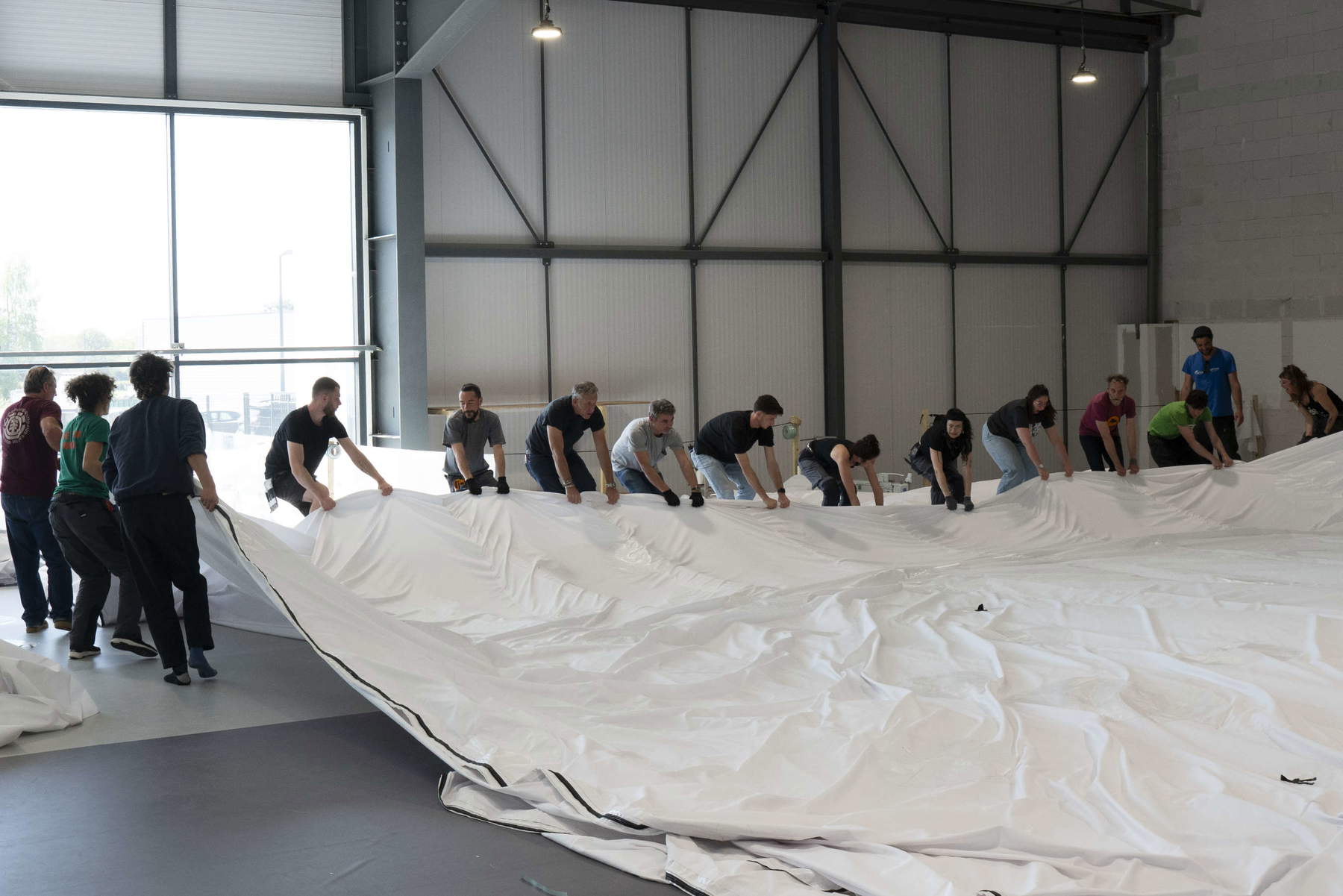
Behind the creation of the artwork lies an enormous collective effort. A total of 850 people were involved, including suppliers, technicians, workers, engineers, and production managers. Specialized French companies contributed to various aspects of the project, from structural design to safety, lighting, and sound installation. The company Air Toiles Concept played a central role in the conception and construction of the work. The firm, which has been in business for thirty years and is based in Brittany, designed the architectural system that made it possible to transform the bridge into a gigantic artificial cave.
From a technical standpoint, La Caverne du Pont Neuf covers an area of 2,400 square meters. The structure is 120 meters long and 20 meters wide, with heights ranging from 12 to 18 meters. The main element of the structure is air, which fills eighty structural fabric arches and shapes the entire outer shell. A total of 18,900 square meters of fabric and 20,000 cubic meters of air were used. The system comprises a double inflatable wall, a printed inner tunnel, and an outer envelope that fully covers the structure. The technique used allows for a reduction in overall weight and a decrease in the amount of materials required compared to a traditional construction.
This choice also aligns with a specific environmental strategy. From the outset, JR and his team sought to minimize the project’s ecological impact. The materials were sourced almost entirely in Europe, while the printing and production of the fabrics were carried out in France using water-based inks free of solvents and volatile organic compounds.
The lighting and sound systems were selected for their energy efficiency, and the installation uses only electricity from the city grid, without generators powered by fossil fuels. Even the ballast used to ensure the structure’s stability is made of recycled decarbonized steel and, at the end of the project, will be remelted and reintroduced into the production cycle.
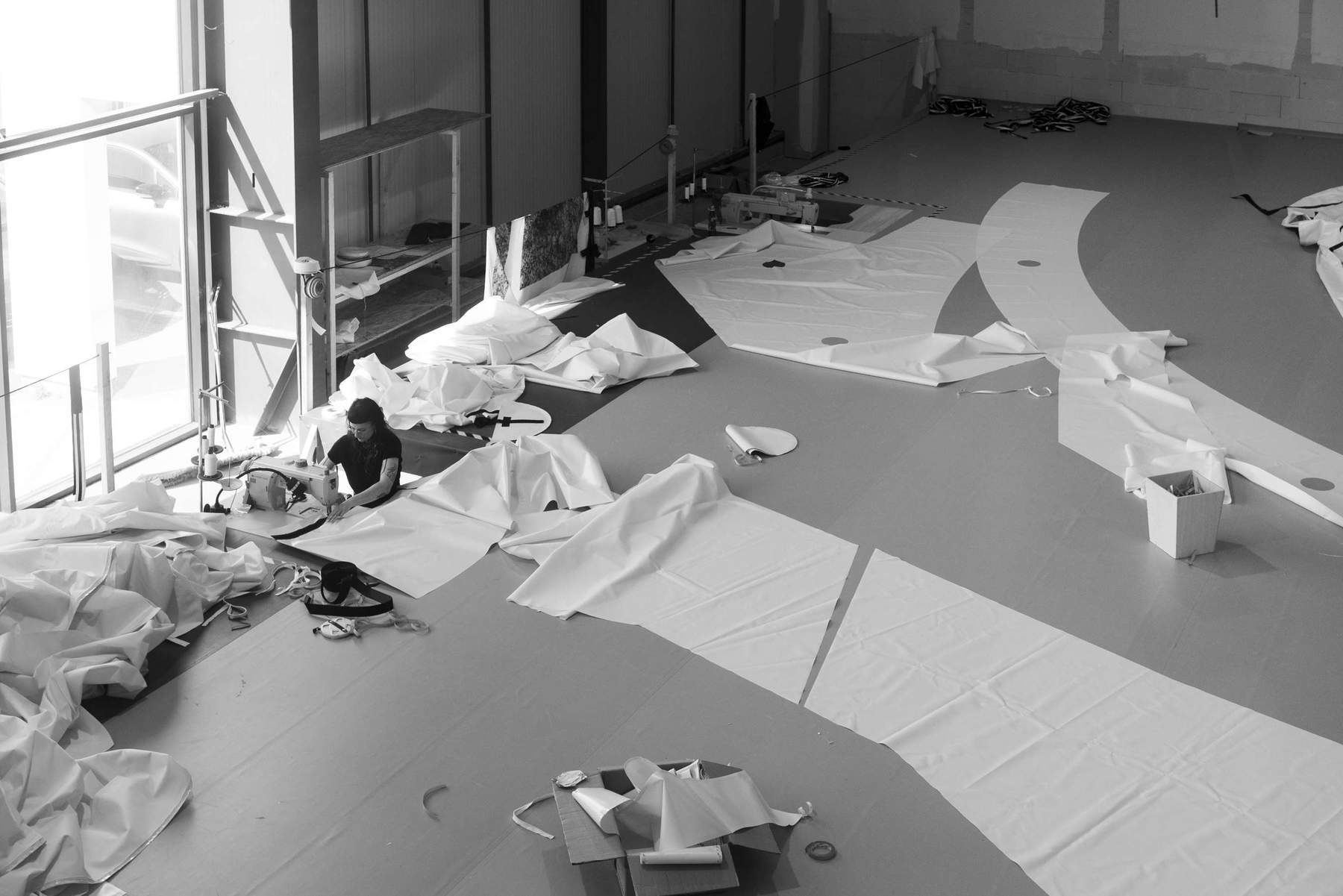
After closing on June 28, La Caverne du Pont Neuf will be completely dismantled. JR has announced that the fabrics used will be repurposed through social projects developed in collaboration with French nonprofit organizations, with the aim of ensuring a positive impact that extends beyond the artistic realm.
For the artist, the work also represents the culmination of a creative journey that began in 2020 and focused on the theme of social isolation exacerbated by the pandemic. Installations such as La Ferita in Florence, Punto di Fuga in Rome, La Nascita in Milan, and Retour à la Caverne at the Opéra Garnier have progressively built a reflection on the relationship between community, perception, and urban space.
In parallel with the installation, Galerie Perrotin is hosting the exhibition Les esquisses de la Caverne through July 25. The exhibition presents works documenting the project’s genesis through photographs, drawings, collages, and zinc panels salvaged from Parisian rooftops, following a methodology that echoes the famous preparatory drawings created by Christo and Jeanne-Claude for their monumental installations.
Finally, on June 19, France 5 and France.tv will broadcast the documentary *La Caverne du Pont-Neuf*, directed by Vincent Lorca and produced by Together Media in co-production with Social Animals. The film will follow all stages of the project’s creation, from the quarries of Saint-Maximin to the hangars at Orly used for preliminary tests, all the way to the banks of the Seine. The documentary will chronicle the daily work of the artists, technicians, engineers, administrators, law enforcement officers, residents, and students involved in the project, offering a unique behind-the-scenes look at the work.
|
| Paris: "La Caverne de Pont Neuf," JR’s monumental tribute to Christo, opens |

Warning: the translation into English of the original Italian article was created using automatic tools. We undertake to review all articles, but we do not guarantee the total absence of inaccuracies in the translation due to the program. You can find the original by clicking on the ITA button. If you find any mistake,please contact us.





















 IT
IT FR
FR DE
DE ES
ES CN
CN


