





From April 18 to September 6, 2026, the Milan Triennale presents the exhibition Edward Barber | Jay Osgerby. Alphabet, a monographic exhibition dedicated to the two London designers Edward Barber and Jay Osgerby. The project, curated by Marco Sammicheli and with installation designed by studio studiomille, is located within the Design Platform, the ground-floor space overlooking the garden of the Palazzo dell’Arte, which has recently undergone an architectural and functional redevelopment that has changed its intended use from its previous function as a cafeteria.
The exhibition takes the form of an extended reconnaissance of about thirty years of activity of the Barber & Osgerby studio, active from the mid-1990s until 2022. The exhibition traverses the evolution of their work in industrial and furniture design, including product projects, large public commissions, and collaborations with Italian and international brands. The stated goal is to return a comprehensive reading of the two designers’ design method and their incidence in the contemporary design scene, both in the European and global arena.
The title Alphabet refers to the idea of a formal alphabet constructed over time by the studio through recurring and recognizable elements that have defined a coherent design grammar. Prominent among these are the systematic use of color, the use of technical curvatures, and the management of angular variations, elements that over time have accompanied a progressive technological sophistication of the projects and greater executive complexity.
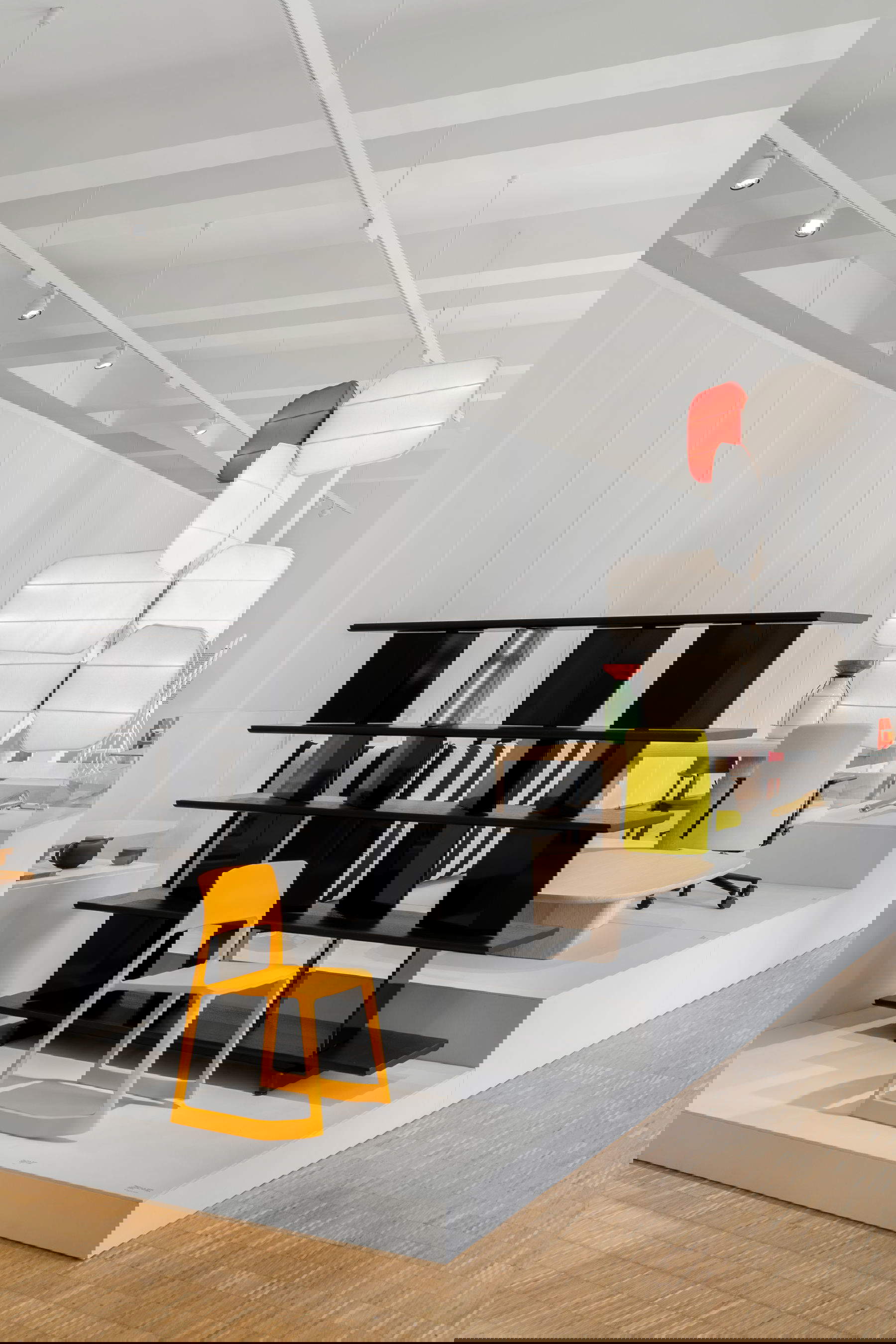
The exhibition itinerary is structured according to a chronological layout divided by decades and organized into four thematic nuclei, conceived as different epochs of the firm’s production. This articulation makes it possible to follow the development of Barber and Osgerby’s work in relation to changes in the production context and transformations in international design, keeping the tension between experimentation and craftsmanship at the center.
The layout designed by studiomille introduces a scenographic dimension that transforms the exhibition space into a kind of theatrical environment. The central element are the tiers, inspired by structures historically used for the anatomical investigation of bodies, here reinterpreted as devices for observation and design study. The path is also articulated through a system of curtains that punctuates the space and helps define the narrative sequence of the exhibition.
Within this system is a sequence of podiums on which objects from the London studio’s production are displayed, selected to represent structural passages of their design language. A preliminary, continuous-shelf section, on the other hand, collects prototypes, models and mock-ups, offering direct access to the process dimension of the work, with a focus on the development and experimentation phase. Further insight is devoted to drawing and design sketches, which document the creative dialogue between Barber and Osgerby and partner companies spread across three continents. This part of the itinerary allows reconstructing the dynamics of project development, highlighting the role of industrial collaboration in defining the final outcomes.
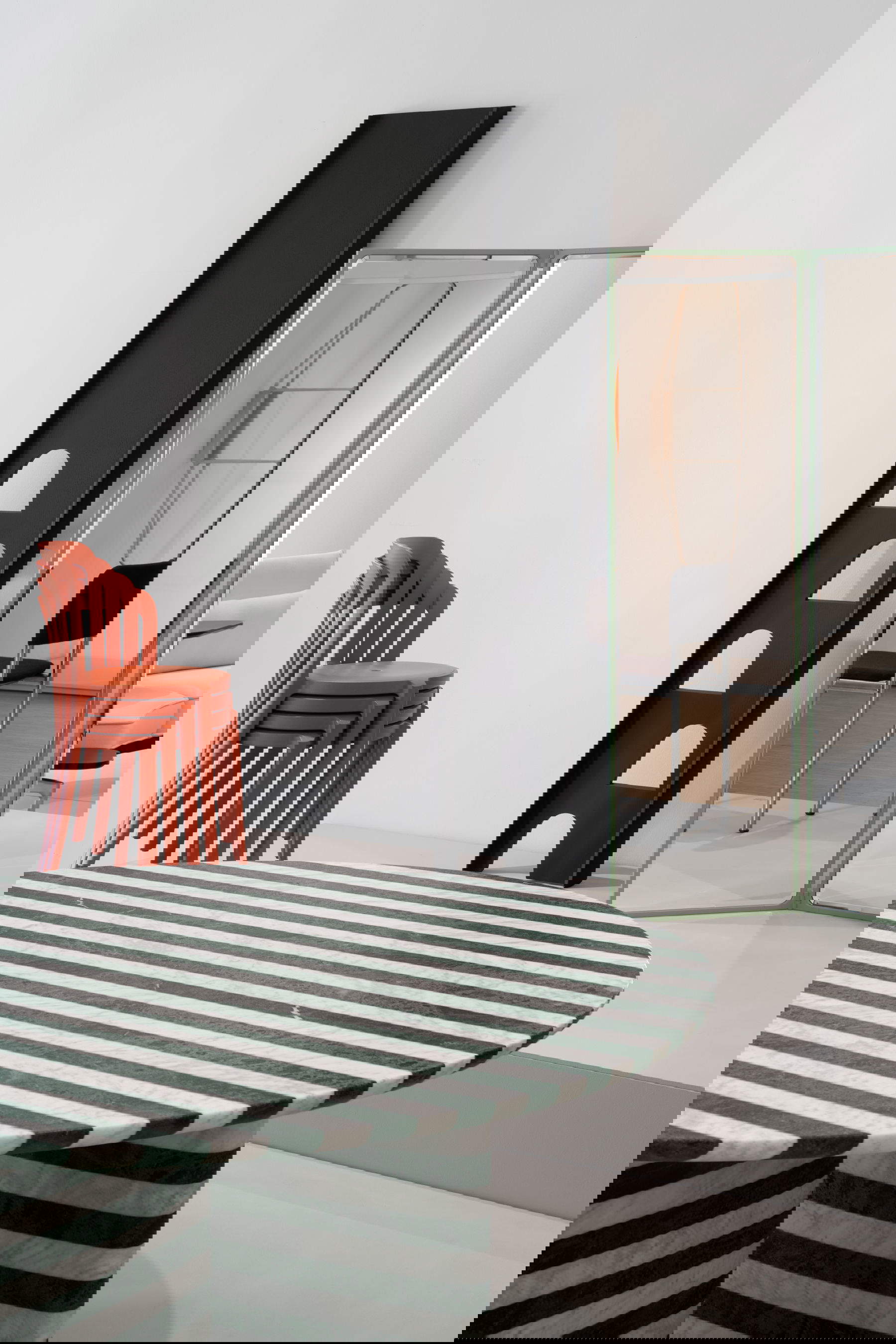
Among the works on display are some projects that have become iconic in the contemporary design scene, such as the Olympic flashlight made for the London 2012 Olympic Games on commission from the London Organising Committee of the Olympic and Paralympic Games, the Iris tables for Established & Sons and the Tab lamp for Flos, along with other objects made on commission and special projects that testify to the variety of the studio’s production. The exhibition tour closes with a reconstruction of three previous exhibition episodes: Ascent, presented in 2011 at Gallery Haunch of Venison in Salisbury; Signals, realized in 2022 at the Kreo Gallery in Paris; and the exhibition dedicated to the Rivington collection for Mutina in 2023.
To complete the project, a catalog published by Electa has been published, collecting essays and interviews dedicated to the studio’s 30 years of activity, along with extensive documentation consisting of drawings, sketches, photographs, models and prototypes. The volume aims to return the progressive construction of a recognizable and coherent design language. The exhibition project is supported by several institutional and private partners, including Gruppo Consorcio as opening partner, Deloitte and Fondazione Deloitte, Lavazza Group and Salone del Mobile.Milano.
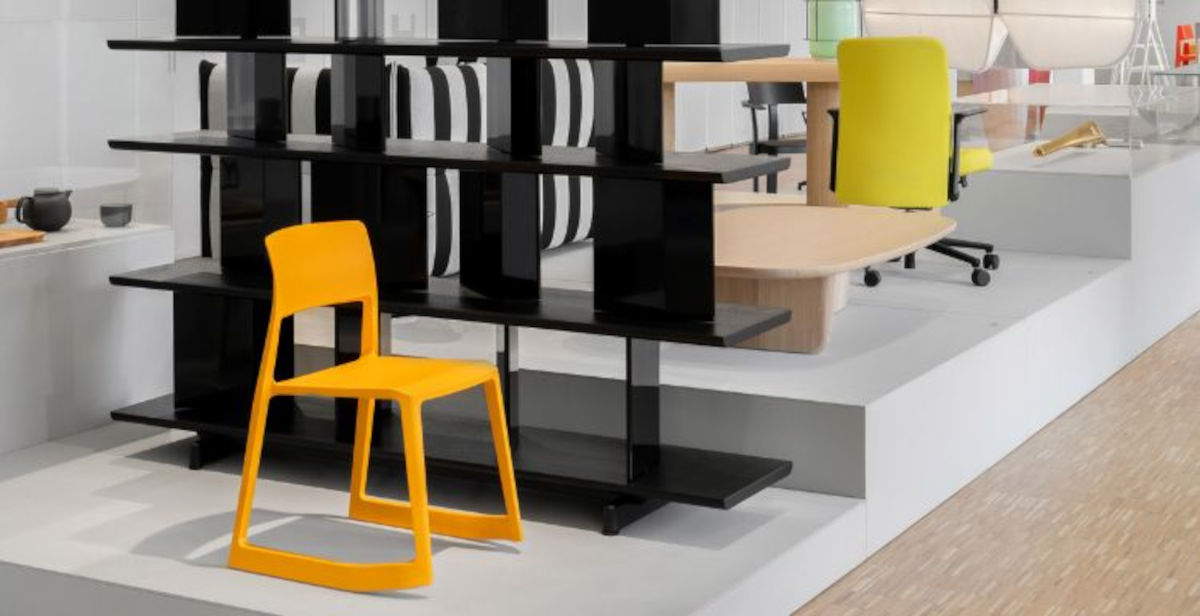 |
| At the Milan Triennale, Barber and Osgerby's "Alphabet" chronicles 30 years of design |

Warning: the translation into English of the original Italian article was created using automatic tools. We undertake to review all articles, but we do not guarantee the total absence of inaccuracies in the translation due to the program. You can find the original by clicking on the ITA button. If you find any mistake,please contact us.
















 IT
IT FR
FR DE
DE ES
ES CN
CN


