





The upside-down man: Baselitz’s icon that the German artist turned into a kind of brand. So too in this latest exhibition Heroes of Gold that opened at the Island of San Giorgio curated by Luca Massimo Barbero, the new president of the Cini Foundation. Opening with the stone guest: Georg Baselitz has delegated to the works every duty of presence, he in fact since April 30 has been sailing to the islands where mythology has given home to heroes and the righteous. As had been happening for at least a decade, the format of the canvases also grew from time to time and on this occasion reached four meters in height. The gold seems to unite space and the human body, the one embedded in the other: the mark that delineates the figure over which swirls of colors swirl is similar to a rock carving. Although they represent a mystical space, as in Byzantine or Medieval painting, these gigantic canvases look like Alice’s mirrors traversing worlds. Here again, for the last time, figures turned upside down. A principle of authentication of the painting produced by the German artist over the decades.
Baselitz emerged on the international scene with a handful of German artists later called neo-expressionists, who were reacting to the international crisis of abstract-conceptual art in the late 1960s by announcing an imminent return to painting. It was a Teutonic language, which became the Sturm und Drang verb of the so-called Neue Wilde or New Savages, and it united artists such as Gerhard Richter and Kiefer, Immendorff and Middendorf, Hödicke and some of their disciples (Lüpertz, Fetting, Zimmer) and others from the Swiss and Austrian area, such as Disler and Anzinger. In Italy Transavanguardia responded, which Bonito Oliva would later attempt to transfer to the international side by co-opting precisely also German neo-expressionism and American painters such as Schnabel and David Salle (also with an exhibition in Venice these weeks hosted in the other Cini venue, not far from the Gallerie dell’Accademia).
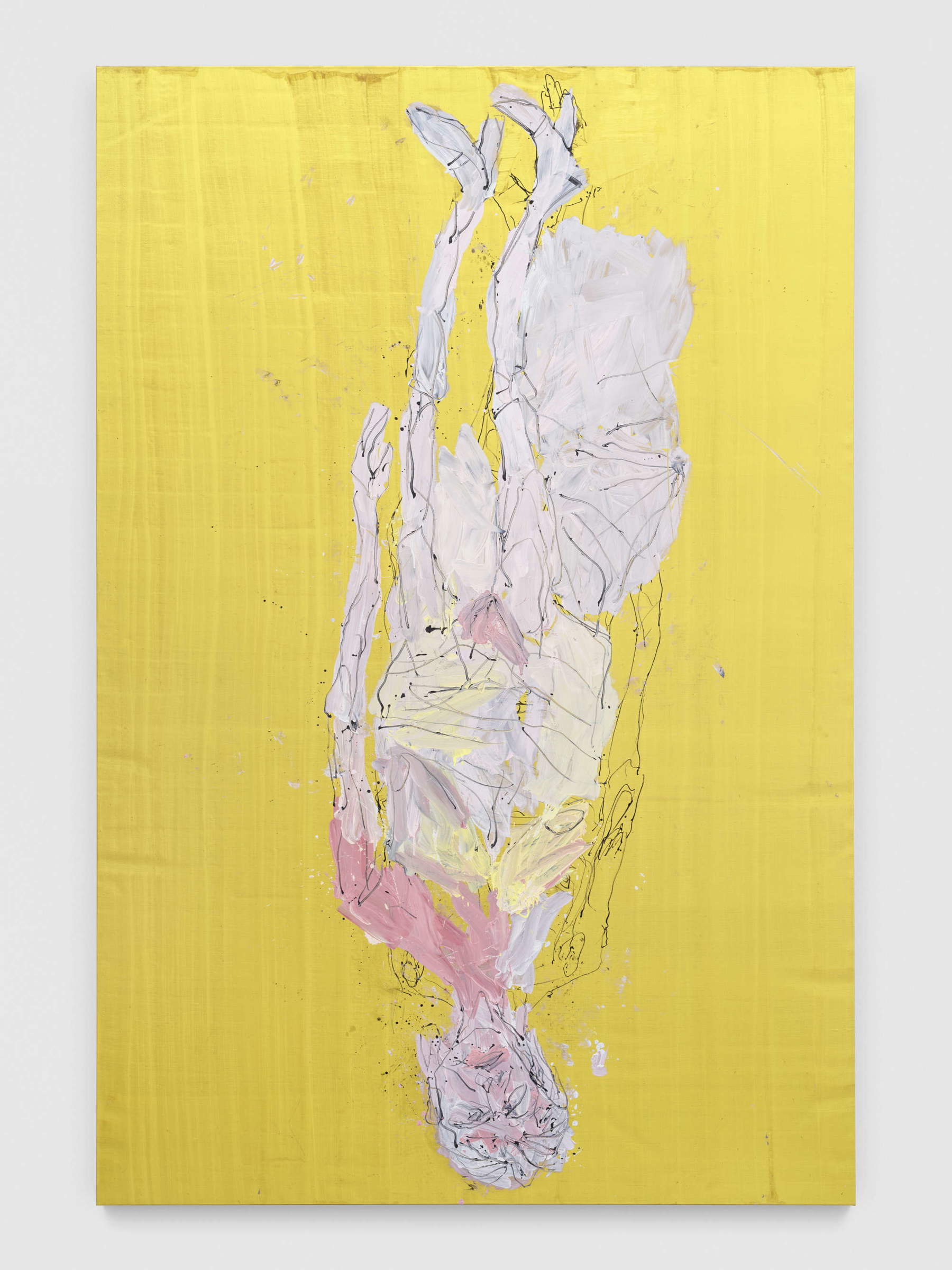
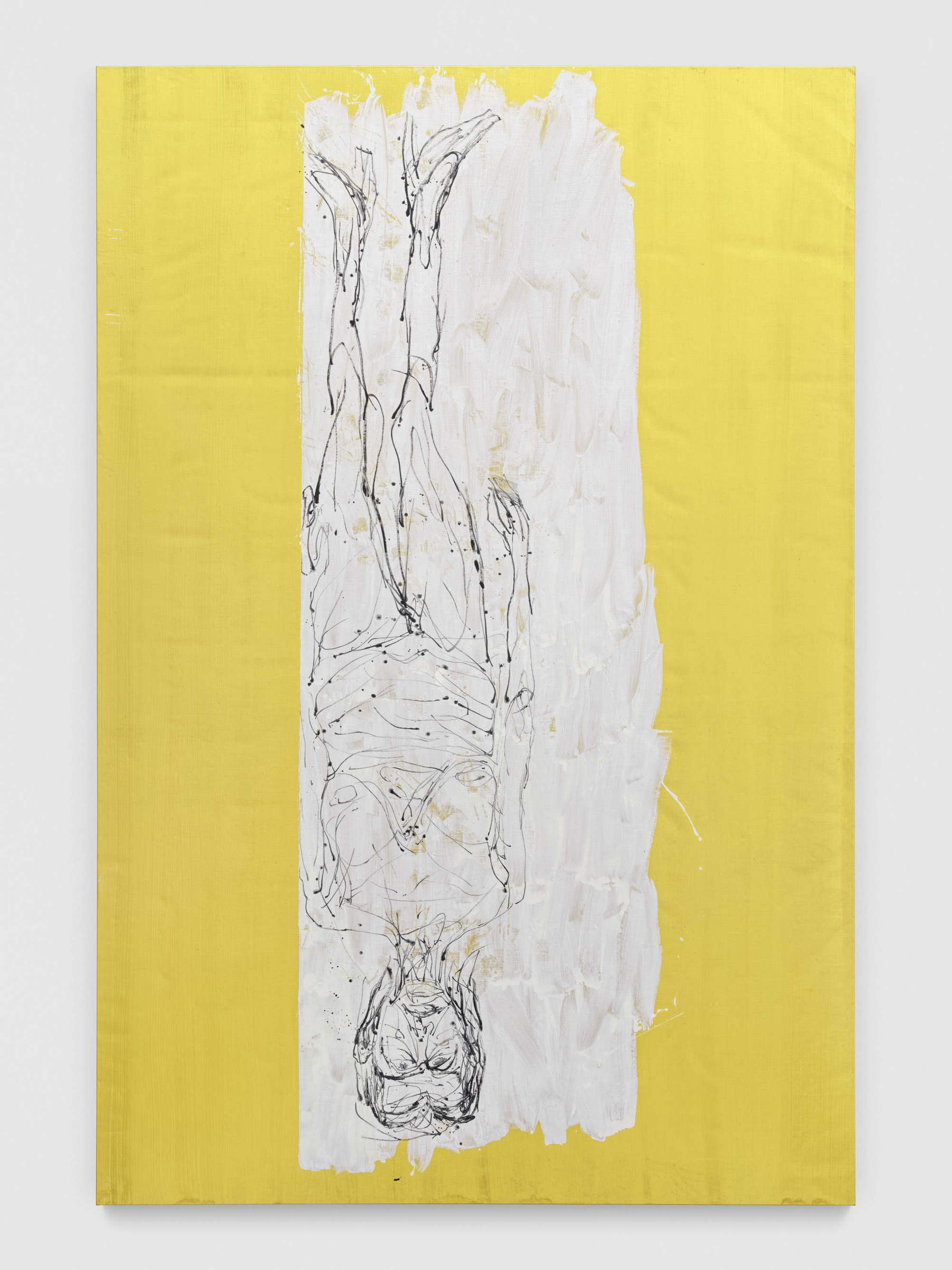
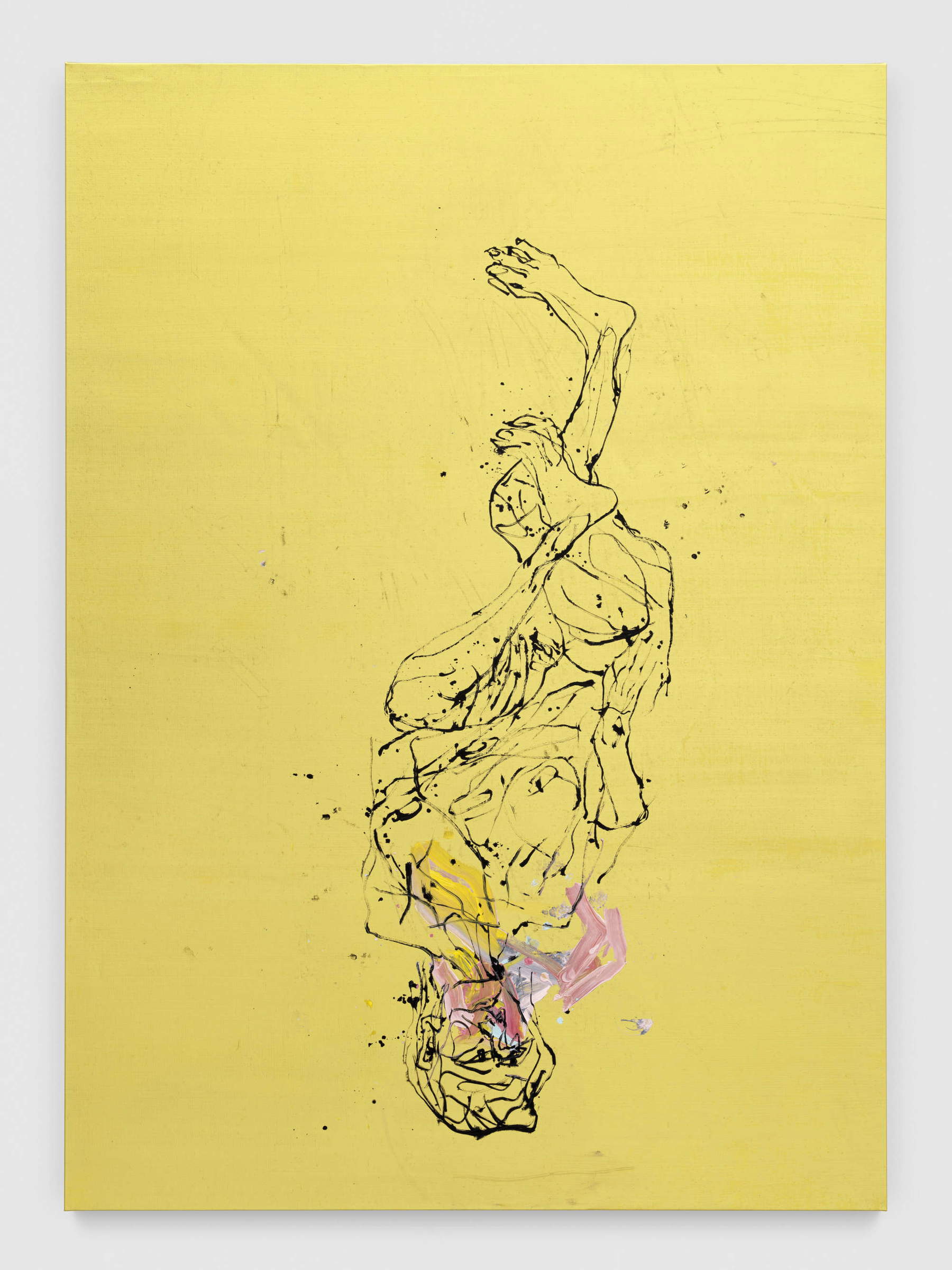
Few artists have had the privilege of “drawing conclusions” about their work. Indeed, some artists dread the very thought that their journey has an end. If Baselitz worked on these ten canvases with that in mind, the viewer cannot help but wonder what was to be accomplished. An apocalyptic expression, uttered by Christ on the cross shortly before he expired, “All is accomplished,” for all one can induce was referring to what the sacred scriptures had prophesied about the Savior. But if we see it as the moment where the world opens up over the abyss that brings the Hero who died on the cross into Hades, into the Sheol, as Hebrews says, the realm of death, again it applies more than before All is accomplished. There is no going back from there, because hell is probably this consciousness of “being dead” and not being able to fix it.
I have always wondered if painting figures upside down had any ethical value for Baselitz, but the artist repeatedly stated that that “form” (this is what we are talking about, not the illustration of a pose) was a chosen way to attract attention, to get noticed. Too banal, almost American in the utilitarian purpose to which something that is not entirely new to painting was bent. For example, St. Peter follows his Lord down the same path as the cross, but is crucified upside down. It was not, as one might think, a humiliation inflicted by Roman law, but a choice: St. Peter wanted, yes, to follow his master, but humbly did not feel worthy to die in the same way. For the Romans, crucifying a man upside down was a more painful punishment that was meant to be a warning to those who fomented riots. St. Peter therefore discounted the price tag because his Lord by some was considered the one who would overthrow Roman power.
But is this price-increase also present in Baselitz’s painting? An overlay of tragicness? Hard to accept the idea that Baselitz had such a trivial choice in mind, to be noticed by critics, when the upside-down figure has undoubted “critical” values since antiquity. Seven years ago, new canvases by Baselitz were exhibited at the Galleria dell’Accademia; the German painter, unlike Kiefer’s last period, has never succumbed, albeit repeating himself, to the mannerism of those who, having achieved fame, repeat themselves. In that exhibition still upside-down figures, either nude or portraits, marked by a much cooler palette, ranging from gray to light blue, from which emerged figures of a pale pink, crossed by tracings that became the constructive lines of stairs that the nudes descended, but in fact, being upside down, was an upward motion in all respects. An idea that remotely reminds me of the way Duchamp wanted to disavow the retinal vision of realist painting, proposing a nude descending the stairs fragmenting into many splinters like a broken mirror (and it was already an accomplished overcoming of cubism).
Do upside-down figures stand out more this way or if they appear as they are in a relationship to the real? This should not be judged merely as cleverness (although perhaps it was partly so). But that would almost be a boutade. Nannimoretian dilemma of do I come and stand aside or do I not come at all? Other dough, other era. Baselitz, in the mid-1960s, had painted a cycle of heroes, titanic figures who emerged exuberantly like a tuber catapulted out of the earth, a kind of pictorial truffle heralding the birthing of a new human type, whose scents did not yet need to empower themselves by turning their bodies upside down and returning inside the womb that had given birth to them. He was still, Baselitz, an artist mindful of the German mythology found by Beuys until the famous planting of seven thousand oaks whose work was finished by his son after the artist’s death. Although Georg later rejected its lesson. Baselitz’s figures were actually man-arboreans, dendrites who lived in trees and took on their appearance, dwellers, or rather, children of a humanity that had not yet married Western civilization, and exhibited mythical bodies strewn with knots and twisted muscle fibers. It was a great anticipation that painting gave us of an artistic talent capable of transfiguring the world, while it seemed that everything had been said and nothing could be invented. That is why there is little justification for the artist’s claim that one fine day he tried to turn a painting upside down and everyone noticed that oddity, began to take notice of him and convinced him to persevere until it became his trademark.
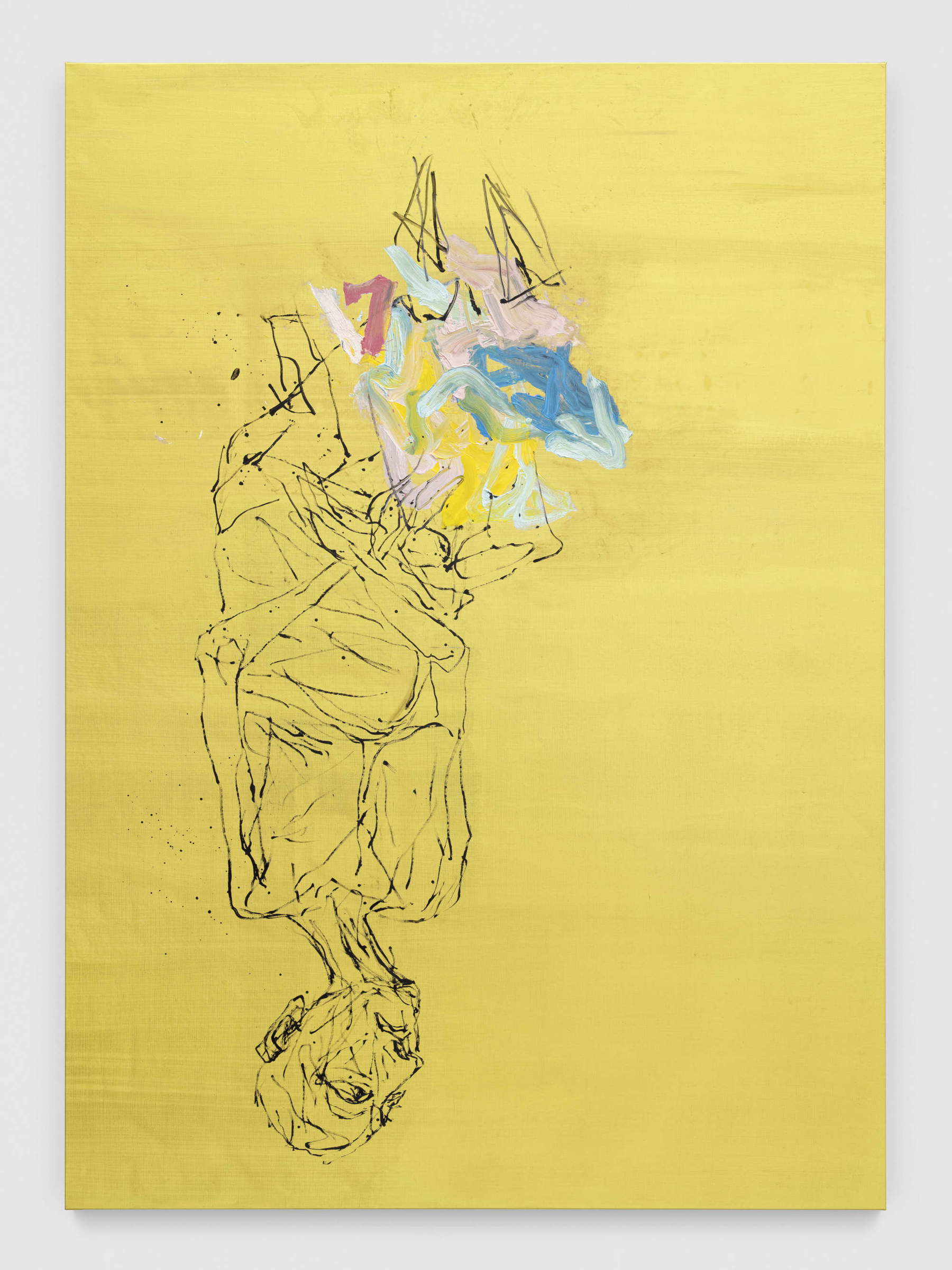
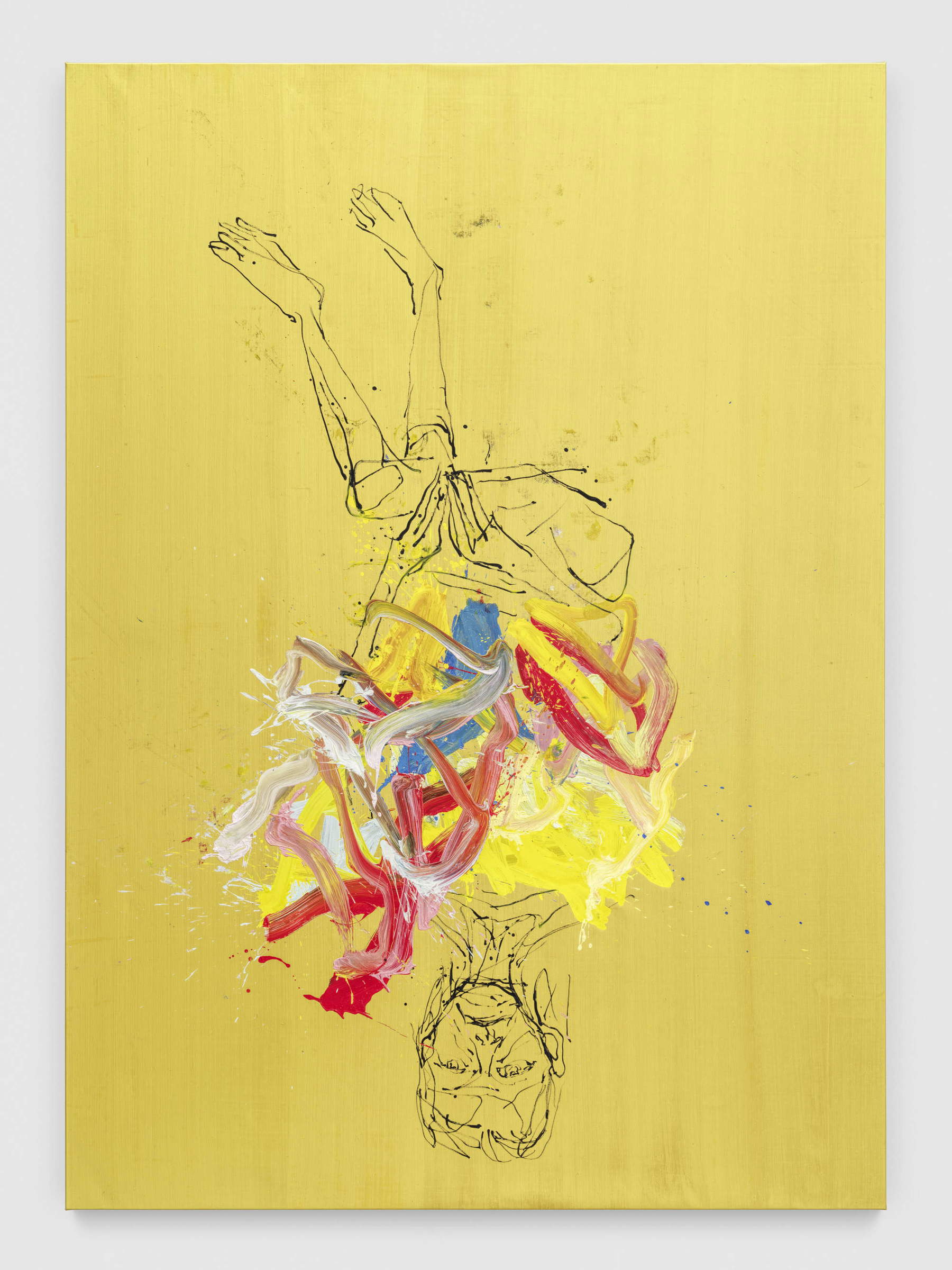
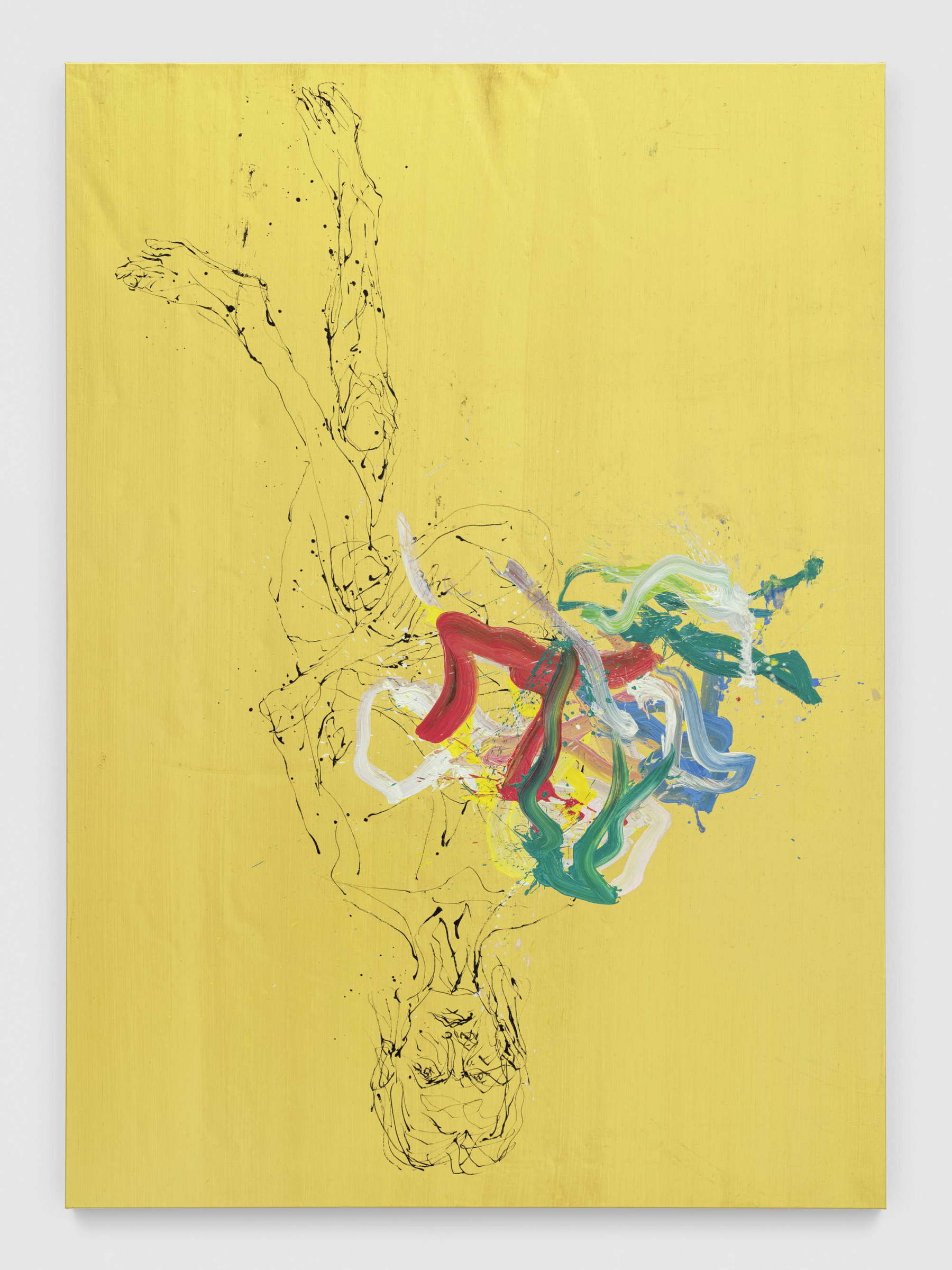
Baselitz is a highly educated painter, which can be seen in the drawings of the 1960s. He does not paint instinctively; his painting is head and guts, like most of the neo-expressionist painters between the 1970s and 1980s. And it is because of this meditation on form and sign springing from within like a life impulse that German painting of the period embodies a fundamental moment in the history of art of the second half of the twentieth century. It can be placed in relation to the corrosive anti-totalitarian work played by Western culture toward the Iron Curtain established by Soviet communism and visually embodied by the Berlin Wall. Walls, bricks, stones, and curtains also appeared in the painting of Baselitz and his fellow Germans of the 1960s, who were still paying as an inhibition of the mind for having stained the German people under Nazism with the worst moral guilt that man could imagine. Kiefer, too, had sought a liberating way out of this burden by depicting figures intent on the Nazi salute.
Baselitz repeatedly confessed his astonishment that the “reversal” of the figure had not become a “school” form, that is, that it was not imitated by others. Why could he not understand that an evolution had been missed, which, in truth, outside his individual horizon would be scarcely credible? Baselitz is unique; he will never be the creator of a school. Baselitz has found himself in recent decades repeating himself: the 2018 cycle, precisely because of the reduction of the rich and overflowing palette of the golden years and the second decade of this century, albeit with a greater artificiality and coldness of mind (from the black-and-white Negatives Pictures of 2004-2007 to other “negatives” where color returns in 2012), recalls a kind of spatial nebula, like the coming to light from the cosmic night of real “upside-down” apparitions (the tones, though different, evoke the almost monochromes of some woodcuts of the mid-1960s, which testify to a relationship with the Old Masters).
Angelic, mysterious figures seem to hover above us, mirroring our gravitational condition. Since he is a cultured painter (in the late 1950s drawings we can see the relationship with the Renaissance painting of Giovanni di Paolo, the Madonnas of Rosso Fiorentino and Pontormo, Beccafumi, but before that Leonardo and Raphael: as we have said, by other routes the gold takes us back to the Byzantines and the medievals, but Baselitz is a devourer of painting, and among his favorite modern dishes are of course the German expressionist painters, but also the unsuspected Bonnard). Perhaps one can see, especially in the increased size of the formats on which he paints, in the gigantism that unites another big German name in recent years, Anselm Kiefer, a tendency toward academicism as the language of grandeur. But the bigger the Icarus sky, the greater the crash when the sun rises above him. Baselitz and Kiefer, two heroes of German art, awaiting the judgment of history.


The author of this article: Maurizio Cecchetti
Maurizio Cecchetti è nato a Cesena il 13 ottobre 1960. Critico d'arte, scrittore ed editore. Per molti anni è stato critico d'arte del quotidiano "Avvenire". Ora collabora con "Tuttolibri" della "Stampa". Tra i suoi libri si ricordano: Edgar Degas. La vita e l'opera (1998), Le valigie di Ingres (2003), I cerchi delle betulle (2007). Tra i suoi libri recenti: Pedinamenti. Esercizi di critica d'arte (2018), Fuori servizio. Note per la manutenzione di Marcel Duchamp (2019) e Gli anni di Fancello. Una meteora nell'arte italiana tra le due guerre (2023).
Warning: the translation into English of the original Italian article was created using automatic tools. We undertake to review all articles, but we do not guarantee the total absence of inaccuracies in the translation due to the program. You can find the original by clicking on the ITA button. If you find any mistake,please contact us.





















 IT
IT FR
FR DE
DE ES
ES CN
CN


