





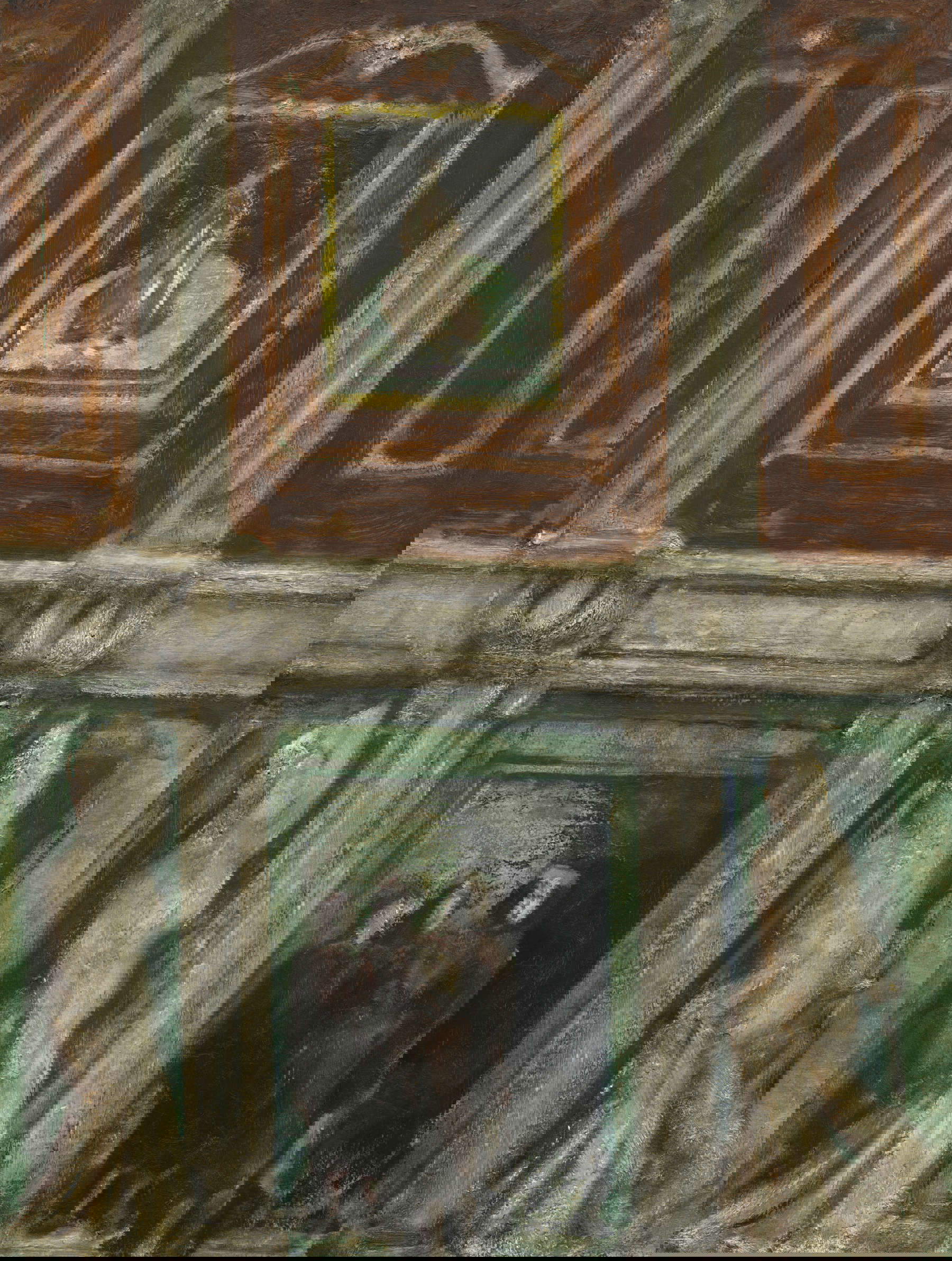
“Oh no, I’ve got the wrong exhibition!”: let us be allowed a joking incipit before delving into the rooms of the Mark Rothko exhibition currently underway in Florence. The joke, admittedly a bit exaggerated, springs from the feeling one gets from casting a first glance at the works gathered in the first room of Palazzo Strozzi and which seem to have nothing in common with the well-known “color field paintings” of the abstract expressionist painter. In fact, the substantially chronological itinerary kicks off with Rothko’sSelf-Portrait and some works dated between 1936 and 1946. These are all works that wink at Surrealism, grafting it with suggestions from Antiquity-from Babylon to Rome-and even from De Chirico’s Metaphysics, as rightly mentioned by one of the curators, Elena Genua, who explains how Rothko had perceived in the paintings of the Italian Pictor Optimus an urban landscape capable of concealing rather than revealing. Christopher, the artist’s son and co-curator, in his catalog contribution also traces in these early paintings the “archaeological stratifications applied to color” and references to the moldings of buildings, all factors from which Rothko derives a conception of composition closely linked to architecture, a sense of space and volumes (see Interior or Untitled [Cityscape], both from 1936); an idea that would remain firmly in place even in his abstract works. On the canvases of the mid-1940s, however, the still realistic figures begin to dissolve into organic forms, then disperse into patches of color silhouetted against horizontally banded backgrounds, a prelude to something new.
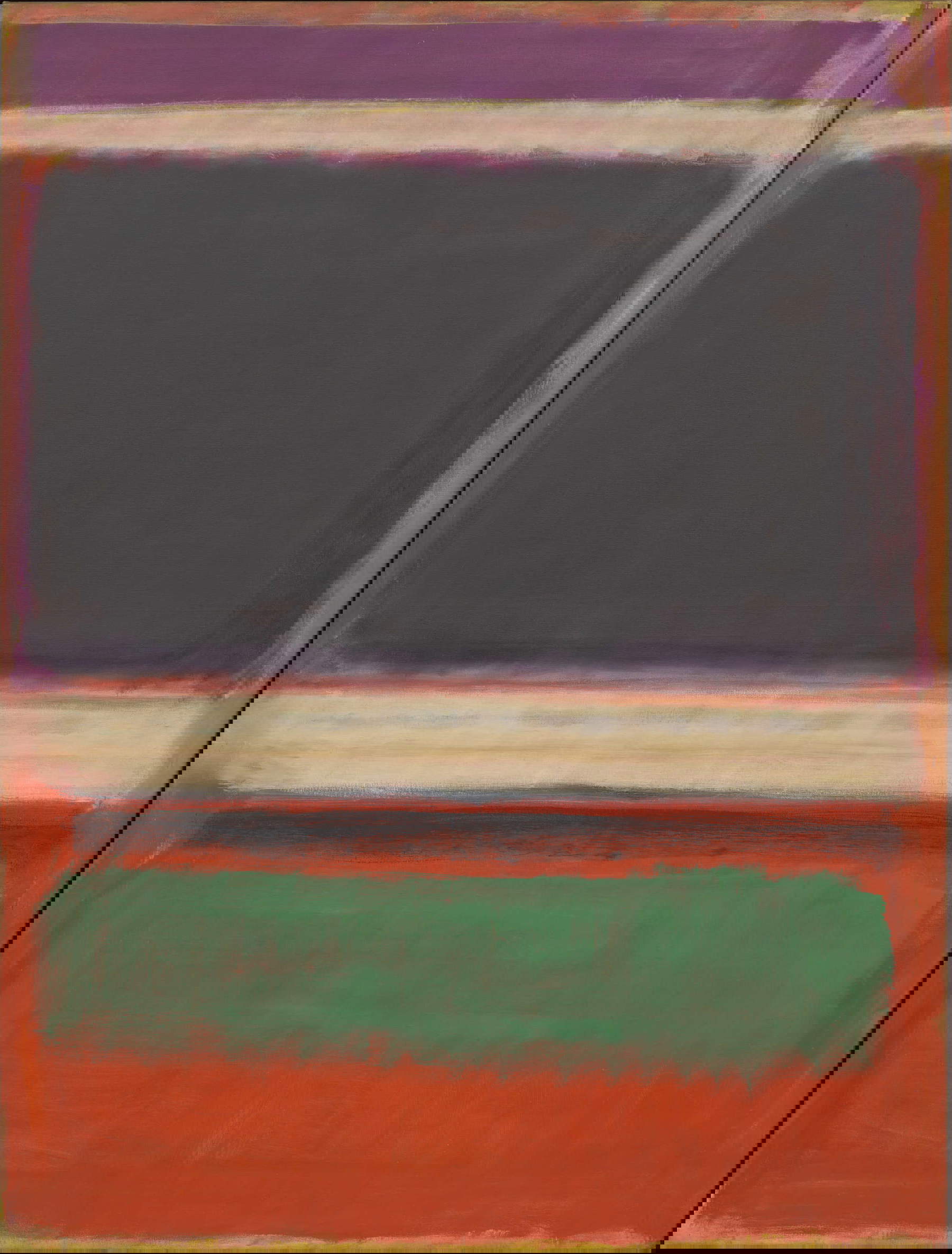
From the threshold between the first and second rooms, the style for which Rothko is known begins to peep out: we then leave behind the sequence of experimental works, from which a certain restlessness typical of someone who is searching for his own way leaks out. The painter then took the avant-garde path, walking it alongside the other exponents of the New York School - Jackson Pollock, Willem de Kooning, Barnett Newman -, the so-called “irascibles,” so called because they were angry at the lack of interest shown to them by MoMa and other official institutions. Rothko’s Multiforms series turns out to be fully abstract, and in these works the irregular color backgrounds already present those undefined edges and overlapping glazes characteristic of the mature style; it is between 1948 and 1949, however, that the previously haphazard color layering begins to widen and take on rectangular shapes, until it defines a geometric order. In the work No. 3/No. 13 of 1949 the invention of the color field paintings, lyrical and spiritual works, with their enveloping, opaque surfaces and their invitation to silence and introspection, can be called accomplished.
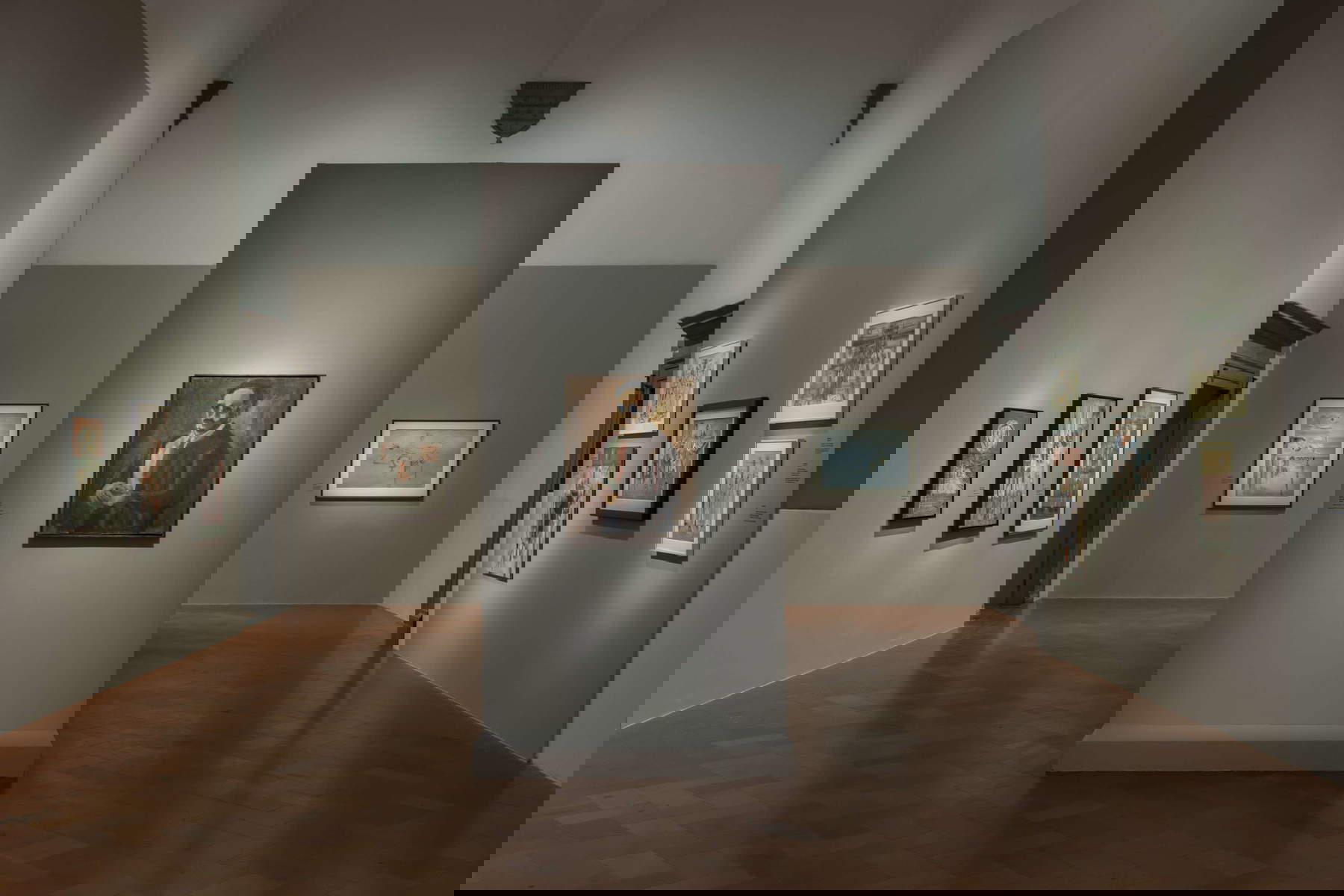
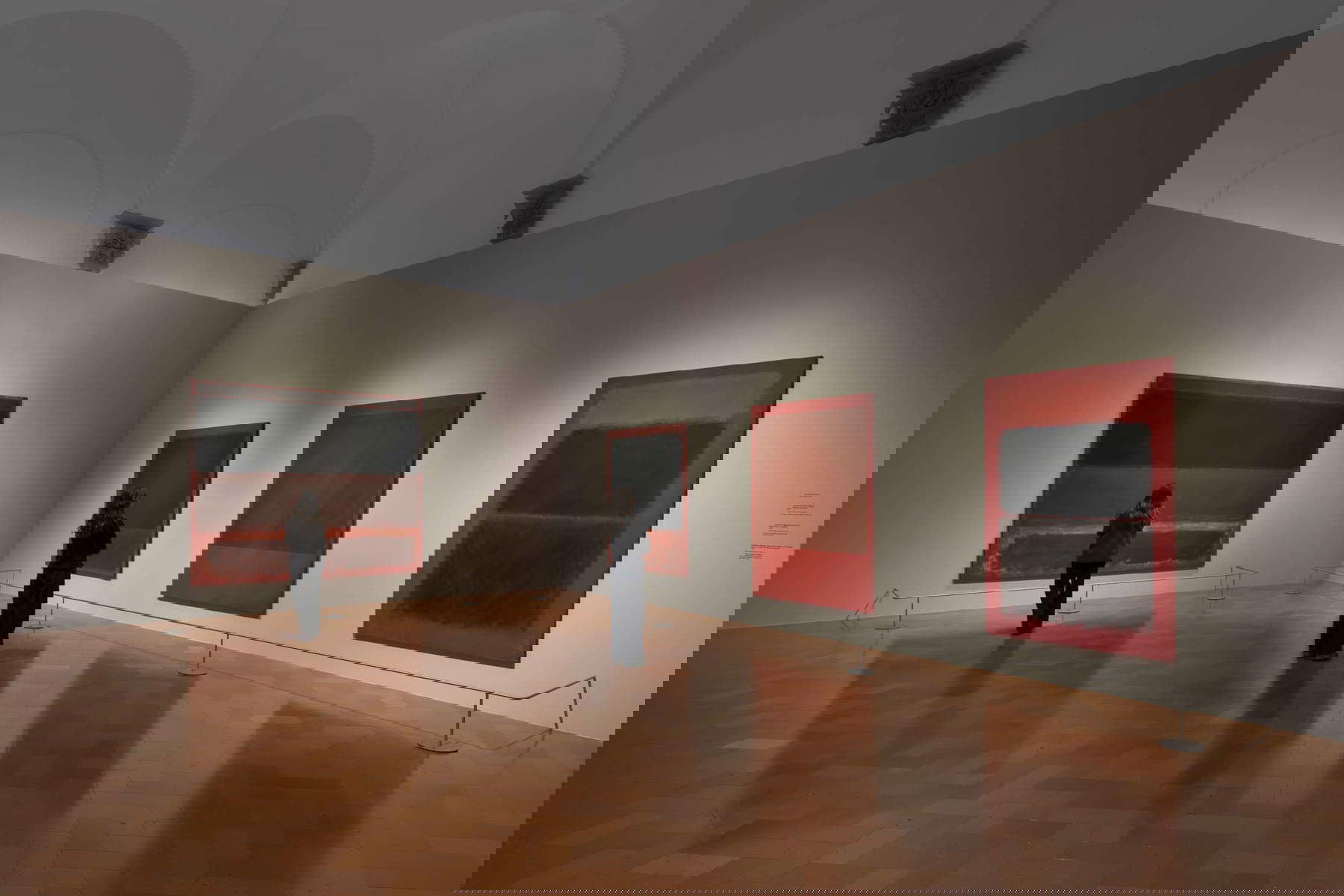
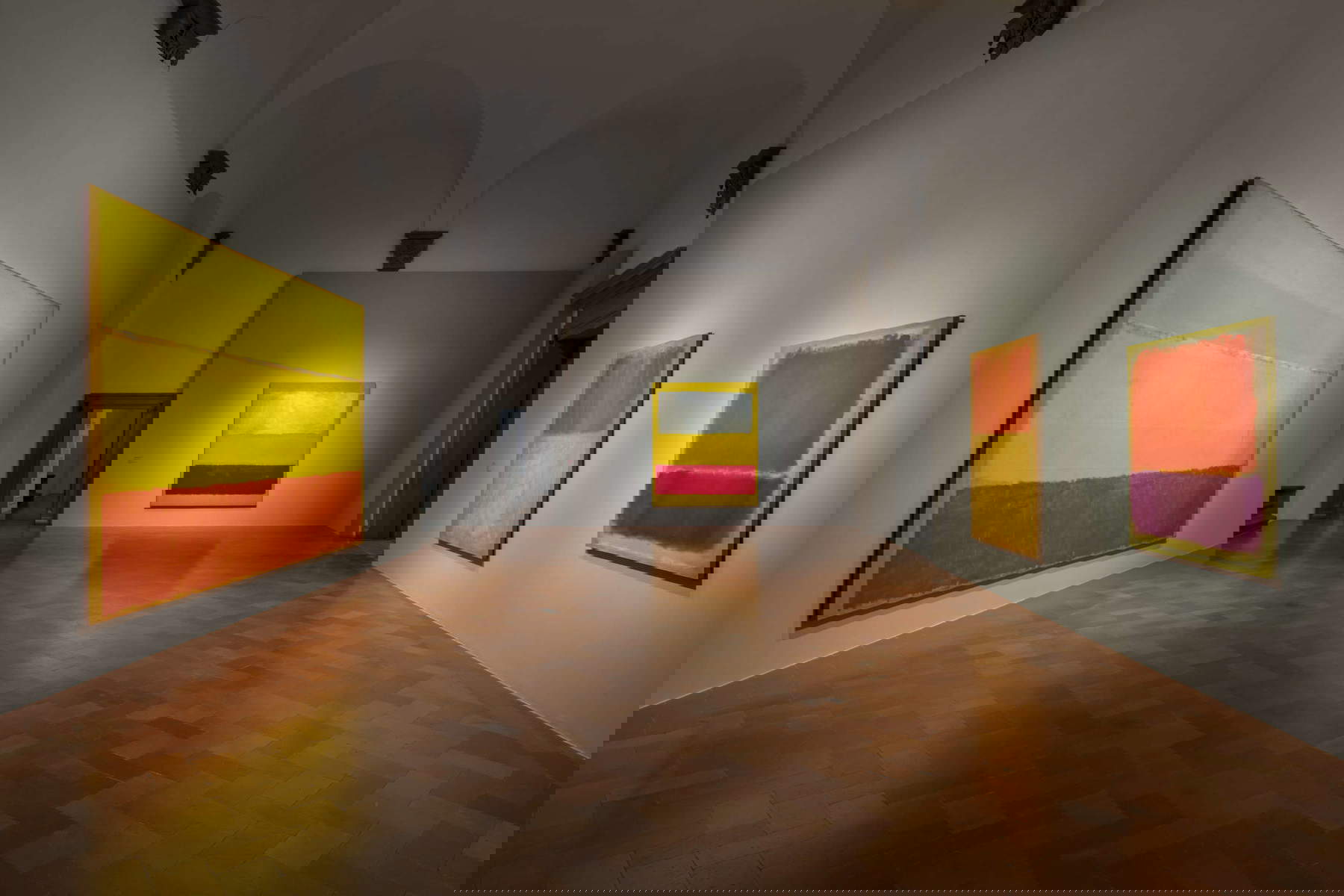
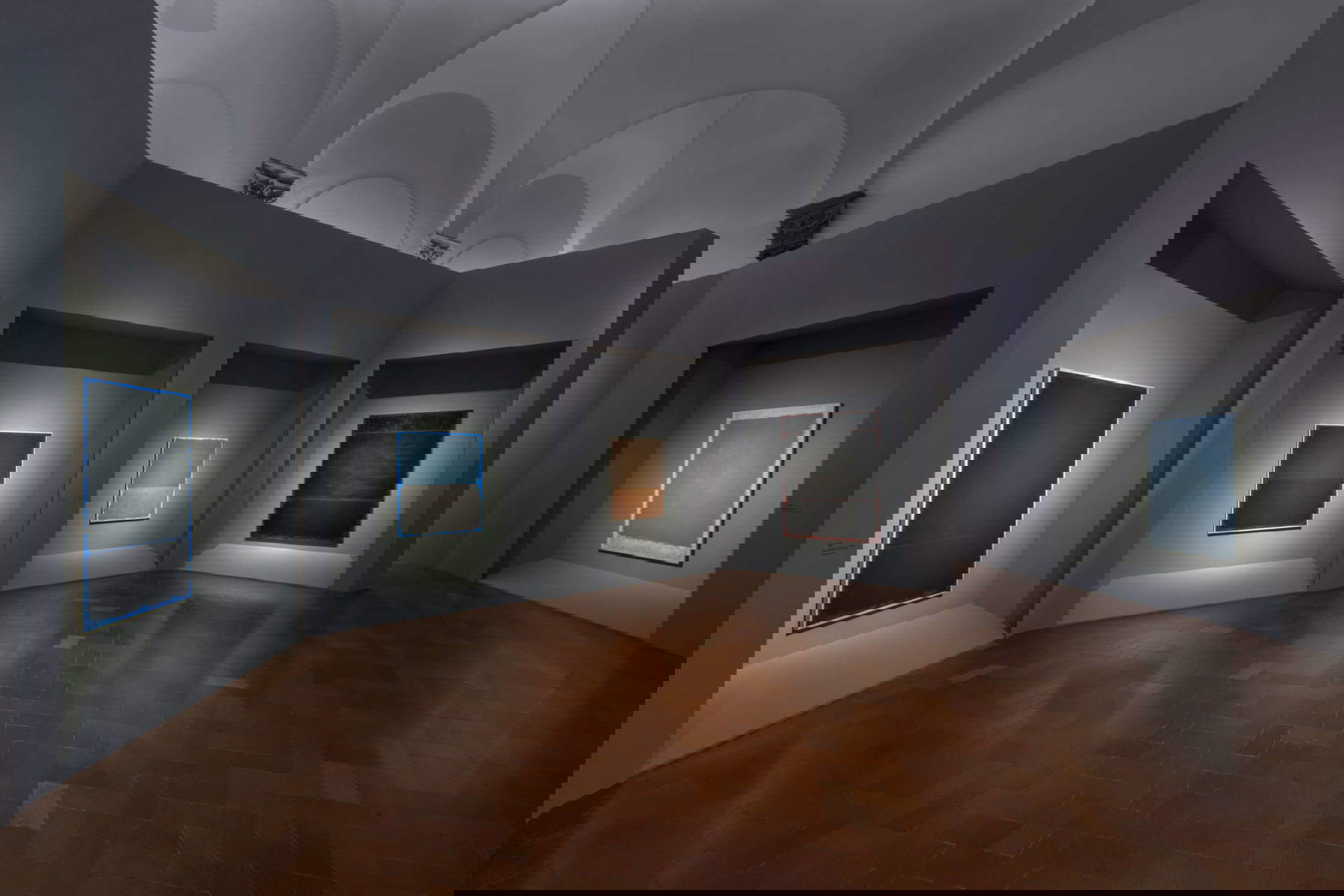
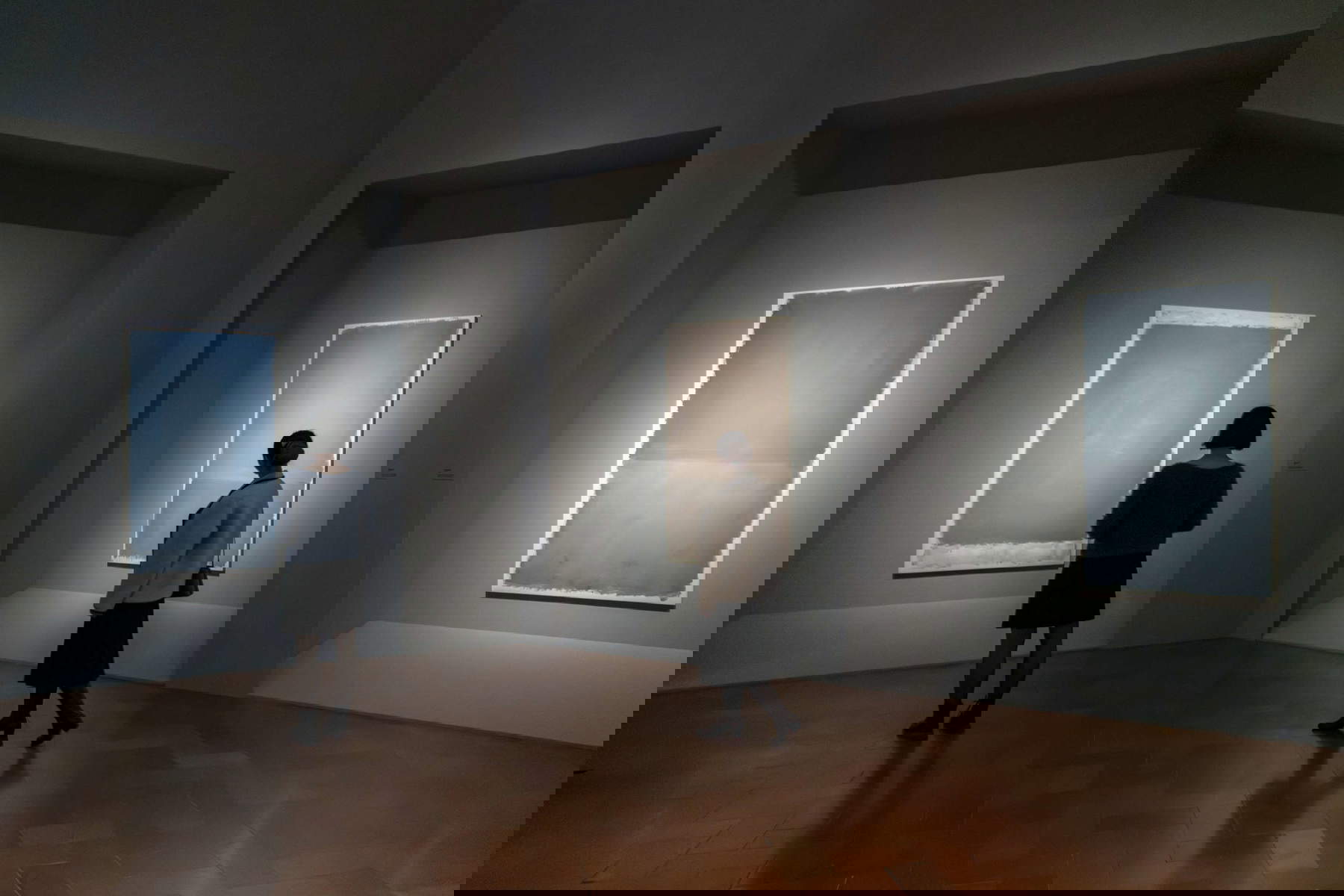
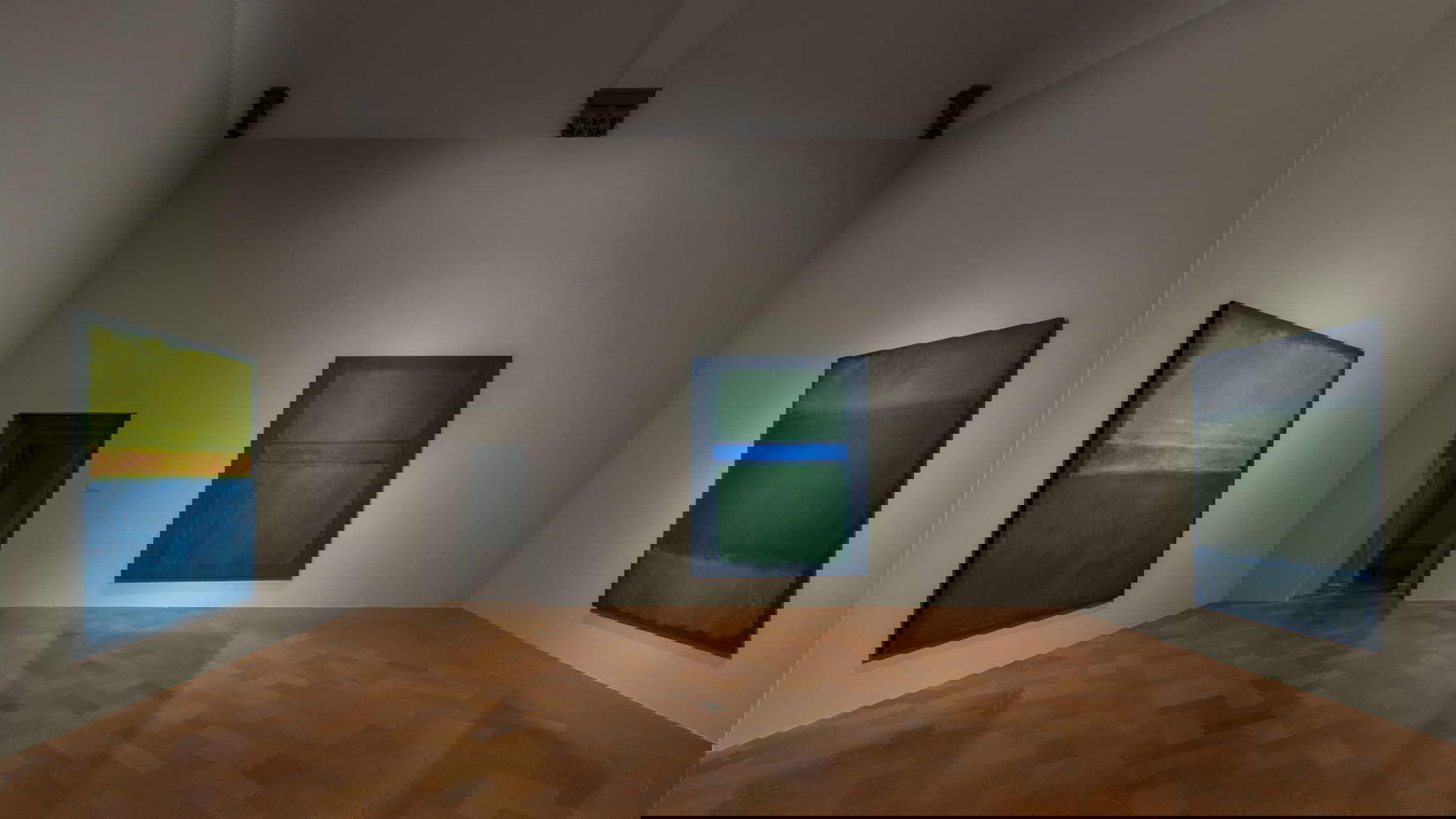
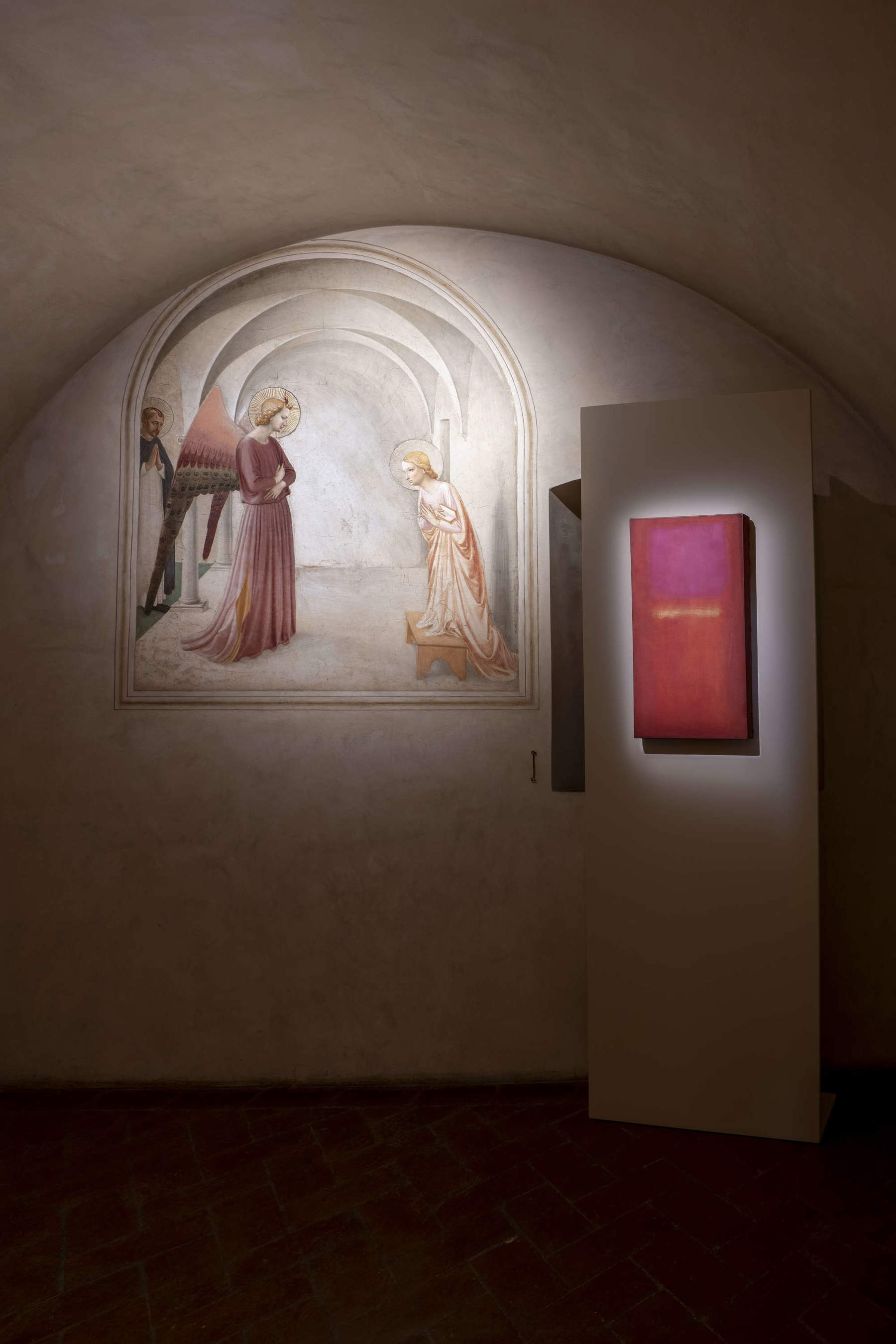
The layout of the exhibition, which features about seventy of Rothko’s works and is enjoying resounding success in the city of the Medici, seeks to respect as much as possible the wishes of theartist who, for example, demanded that his works be hung so as to skim the floor, giving viewers the chance to get closer, to exclude any other element from the field of vision and to accustom their gaze to a new dimension, ideally “entering” the paintings. Such proximity exposes viewers to the materials and traces of the painterly gesture, thus to the inimitable and vibrant surfaces that change depending on the angle and temperature of the lights, the “dustiness” of the pigments, the emergence of the unpainted canvas in some places, and the masterful handling of the margins, which is perhaps the component that really makes the difference between a Rothko masterpiece and so many other examples of abstract art.
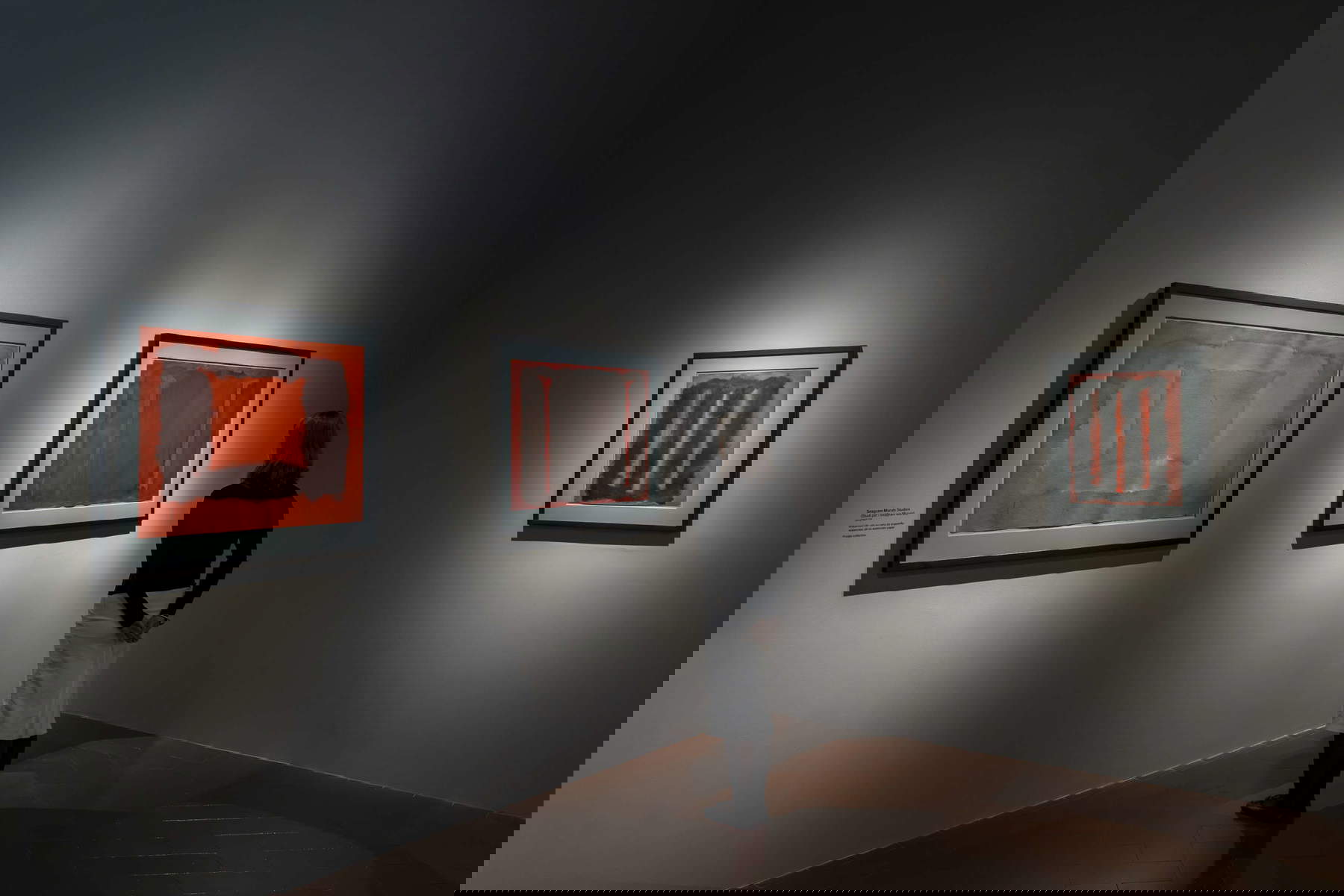
At Palazzo Strozzi, contemplation of the paintings is especially favored in the sections set up in the smaller rooms-those devoted to the drawings and sketches for the Seagram Murals and the Harvard Murals-and in the final room, which seemed truly moving to the writer. In the larger and more characterful rooms (the polished terracotta floor, the off-white walls, the architectural decorations in pietra serena) it might be a bit more complex to enter the meditative state that Rothko’s research would demand, also having to contend with the audience of selfies, reels, and vowels. A comparison would come to be made-obviously impossible-with the radical choice made on the occasion of Yayoi Kusama’s Infinity Mirror Room entitled Fireflies on the Water in Brescia, where only one person at a time was allowed access, so as to give the possibility of totally immersing oneself in the work without distraction. A mode of fruition, we repeat, utopian and impractical in the case of the project we are talking about.
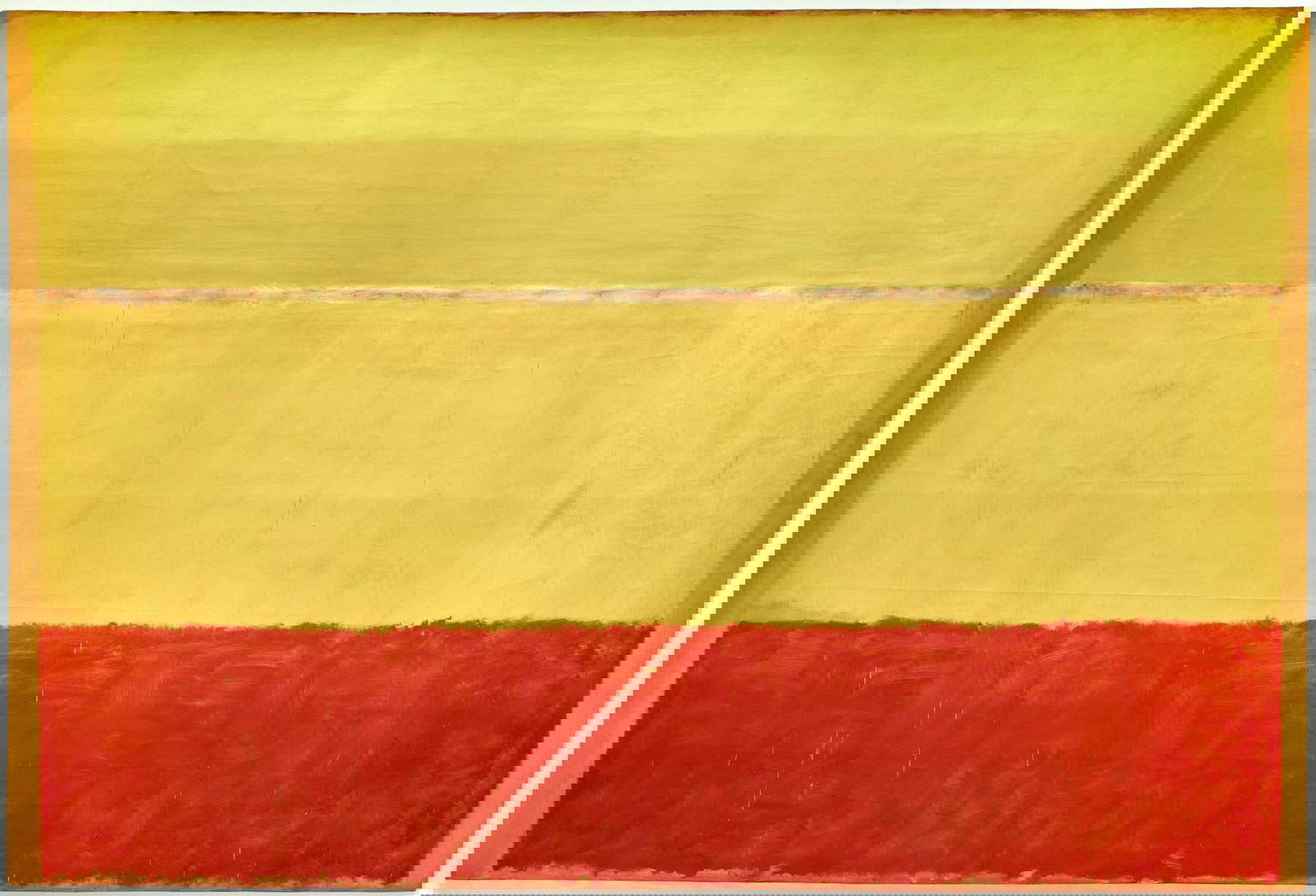
The exhibition then proceeds by nuclei that trace Rothko’s creative-or rather chromatic-periods: in the early 1950s the palette is lit up with warm tones, from yellow to red, passing through the various shades of orange; one encounters, for example, a large canvas from Bilbao, painted between 1952 and 1953 and set on a horizontal format-a rarity for Rothko, who preferred vertical supports. In the second half of the decade, however, the artist began to tone down the tones, choosing greens and deep blues more often, with an even more contemplative and introspective effect (Kandinsky, coincidentally also of Russian origin, in The Spiritual in Art completed in 1910 associated blue with concepts of infinity, spirituality, stillness and introspection). To 1958 and 1962 date the commissions for the large cycles we have already mentioned: in that order, the Seagram Murals-which, moreover, are not “murals” but canvases-were commissioned from him for the Four Seasons restaurant inside the Seagram Building in New York, designed by Philip Johnson and Mies van der Rohe; Johnson’s vision, however, contrasted sharply with the spiritual intent of Rothko’s work, and the artist refused to hand over the work he had already completed, withdrawing from the commission (nine canvases are now on display at the Tate Modern in London). However, for the artist, this opportunity gave him the chance to confront an architectural project directly and to be guided, as a result, by the inspiration he had while visiting the vestibule of the Laurentian Library designed by Michelangelo, with its volumes, its grandeur, its blind windows. If the sketches have an intrinsic painterly force, comparable to that of large paintings, what is surprising in this section and in the section devoted to the Harvard Murals are the black ink and graphite drawings: indeed, it would seem impossible to translate the idea of a Rothko painting into a few linear marks, and instead Rothko’s research into volumes and proportions clearly emerges from the papers, while the few watercolor brushstrokes suggest the sense of depth of the forms.
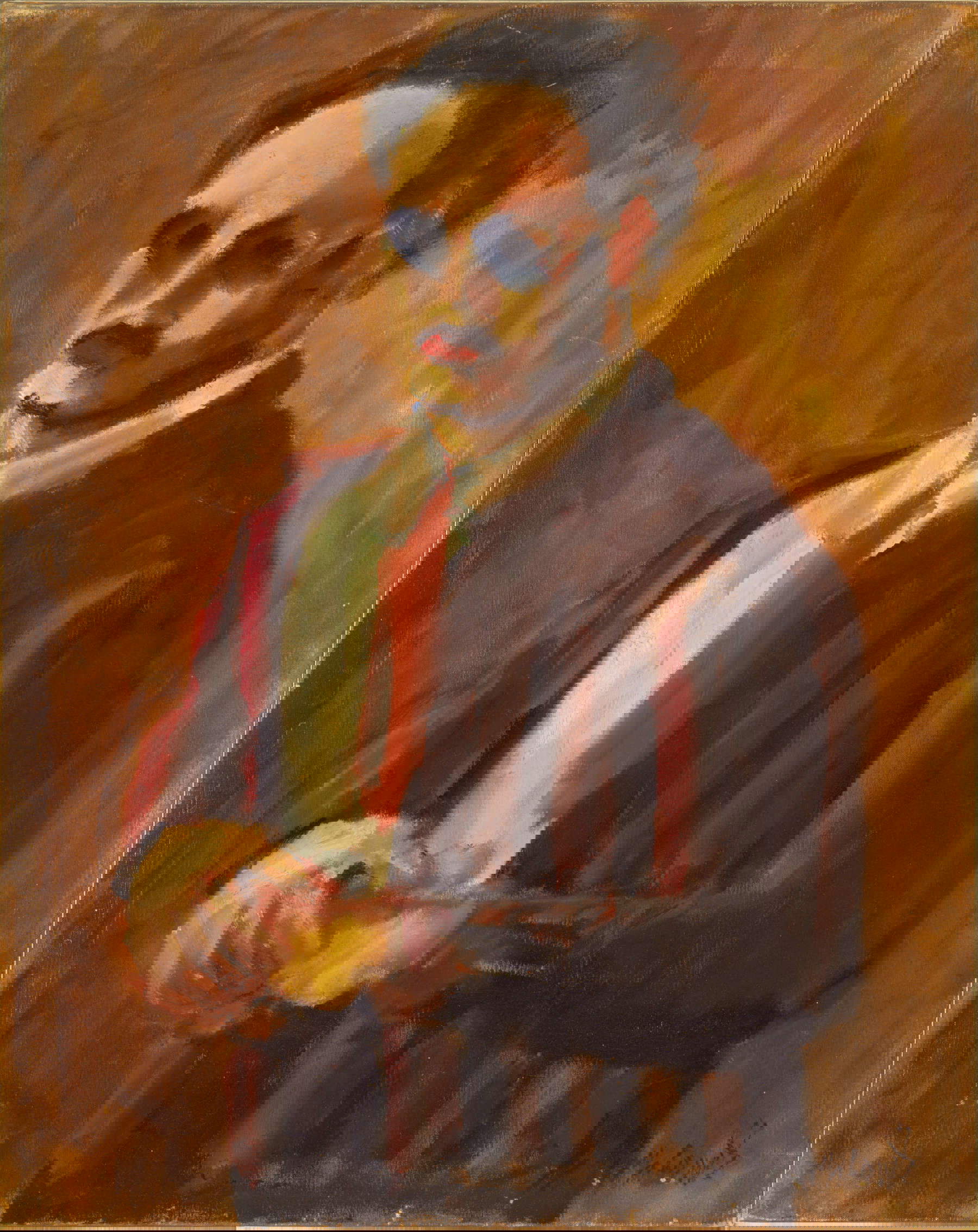
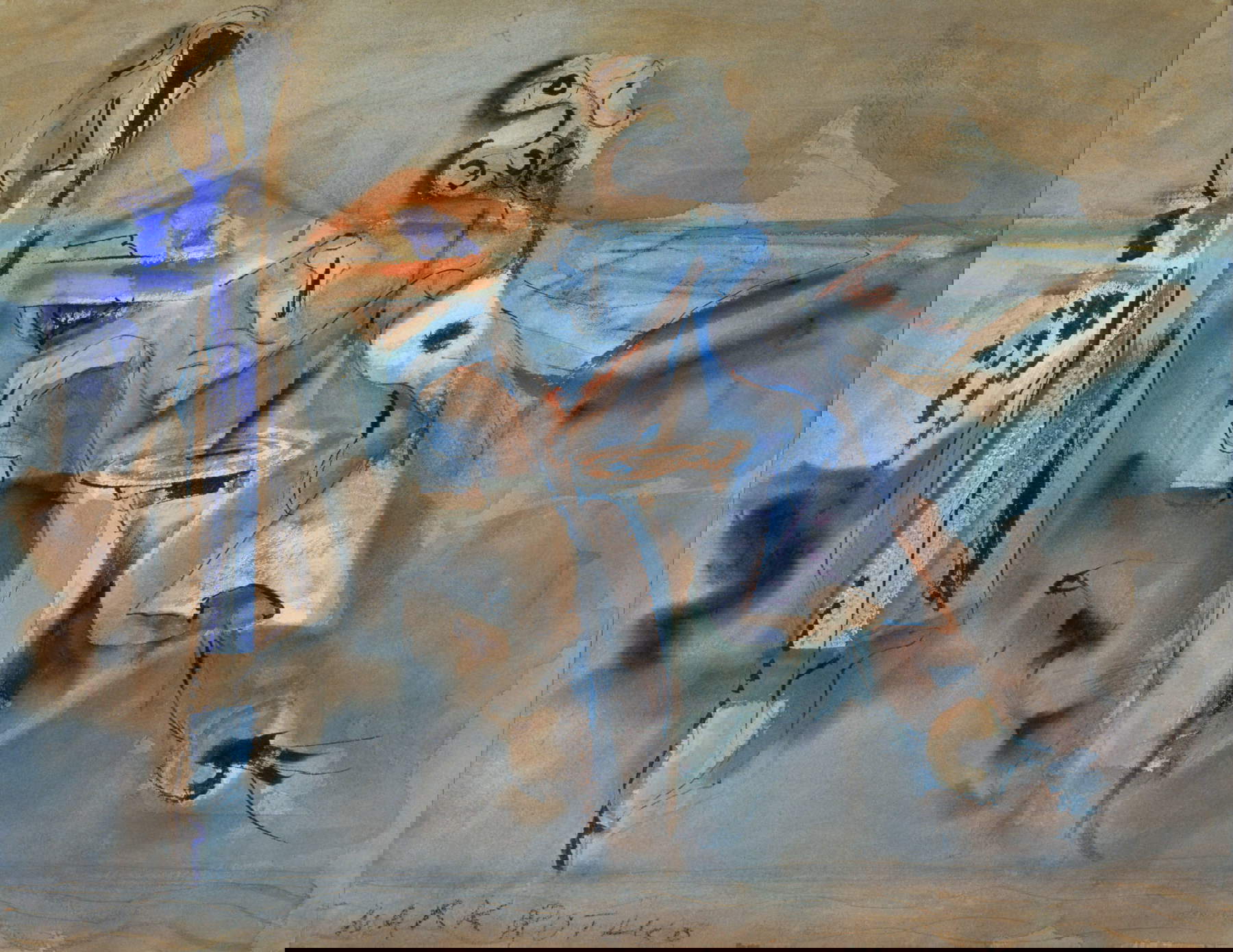
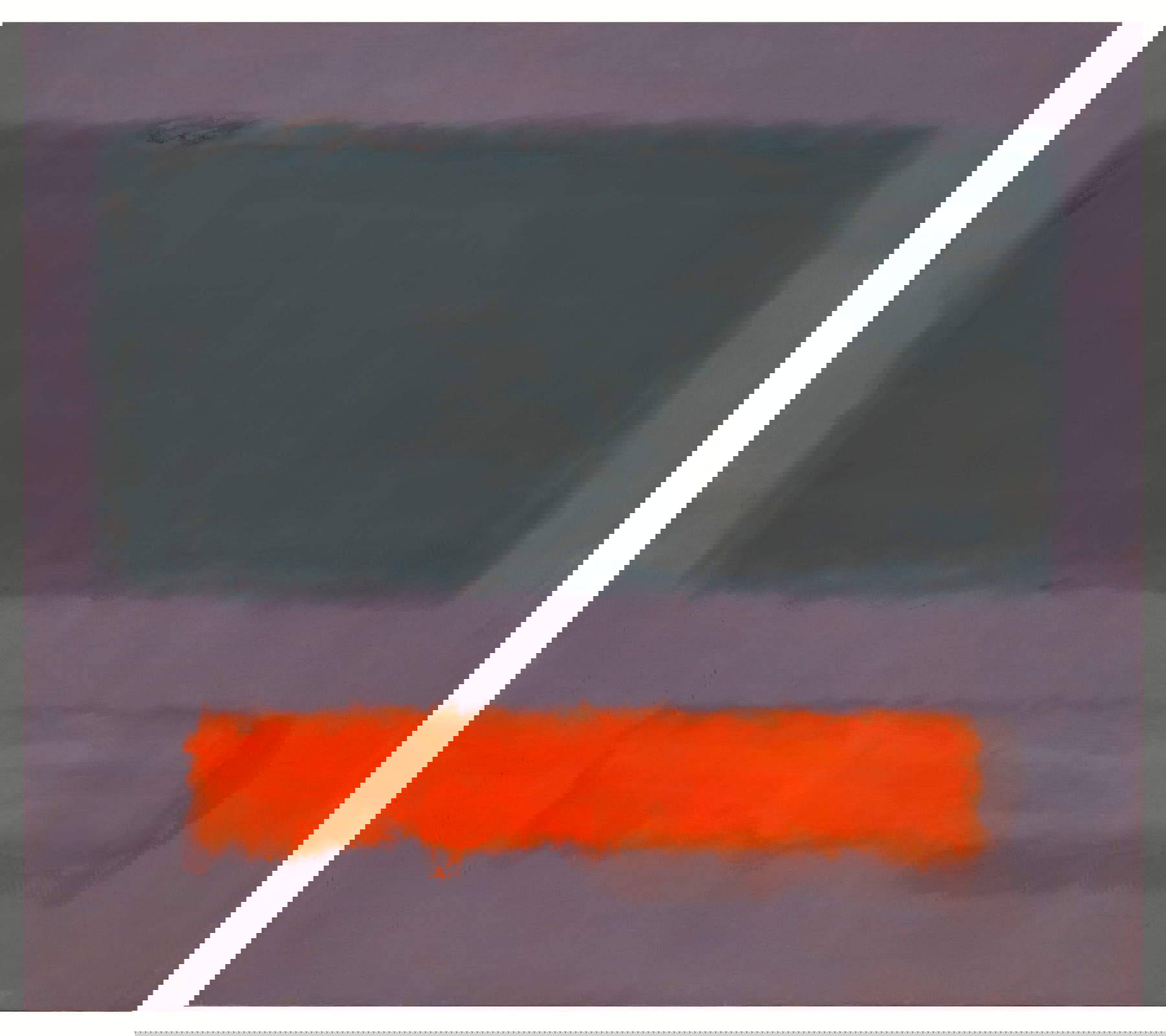
Between the late 1950s and the late 1960s, the color intensity of the paintings darkens with blacks, dark blues, and garnet reds that are also reminiscent of the Pompeian frescoes seen by the painter in 1958. It is also the period in which Rothko engaged in the realization of his most challenging and most meaningful undertaking, the famous Houston Chapel. In the same decade the artist also began to work on paper, with a final predilection for canvas on the occasion of the project intended for the room dedicated to Alberto Giacometti for the Unesco headquarters in Paris: on display are three large canvases from 1969 set in a double register, the lower gray and the upper black. Regardless of the somber tones of these works, one cannot help but mention Rothko’s state of health: tormented by deep depression, he discovered in 1968 that he was also suffering from an aortic aneurysm, which was shortly thereafter joined by a diagnosis of bilateral emphysema. Fatigued and debilitated, according to doctors the artist should have stopped painting, however, the order was disregarded, and Rothko limited himself to making works on paper and of medium size. Eight of these works-painted shortly before the suicide enacted on February 25, 1970-appear like an epiphany in the final room of the exhibition itinerary, with their pastel colors punctually echoing the hues of Beato Angelico, whose panels were housed in the same spaces of Palazzo Strozzi until a few months ago. In short, the finale of the itinerary is tinged with lavender, powder pink, light earth, and silvery gray brushstrokes, and the series on display seems to represent a spiritual testament of the great artist.
In the last paragraphs we have referred to Michelangelo and Beato Angelico: these are almost two co-protagonists in the concept of the exhibition, which, not coincidentally, is entitled Rothko in Florence and which intended to bring Rothko’s works to the city that had so impressed him. There were in fact three trips to Italy by the painter, who already the first time he set foot in Florence, in 1950, was deeply impressed both by the frescoes of Beato Angelico and his collaborators in the cells of the convent of San Marco and by the vestibule of the Laurentian Library, about which he wrote: “he has succeeded in obtaining just that particular sensation I was looking for: he has made visitors have the impression of being imprisoned inside a room in which the doors and windows are walled up so that all that is left for them is to bang their heads against the wall for eternity.” The relationship is particularly stringent in the paintings for the Seagram Murals. The catalog essays extensively explore the relationship between the American and the two Italian masters, even adding references to Giotto, whose “tactile plastic” art, as Bernard Berenson called it, Rothko particularly appreciated. This is evident from the manuscript The Artist and His Reality, written by the painter between the mid-1930s and early 1940s and which still guides art historians in understanding his poetics.
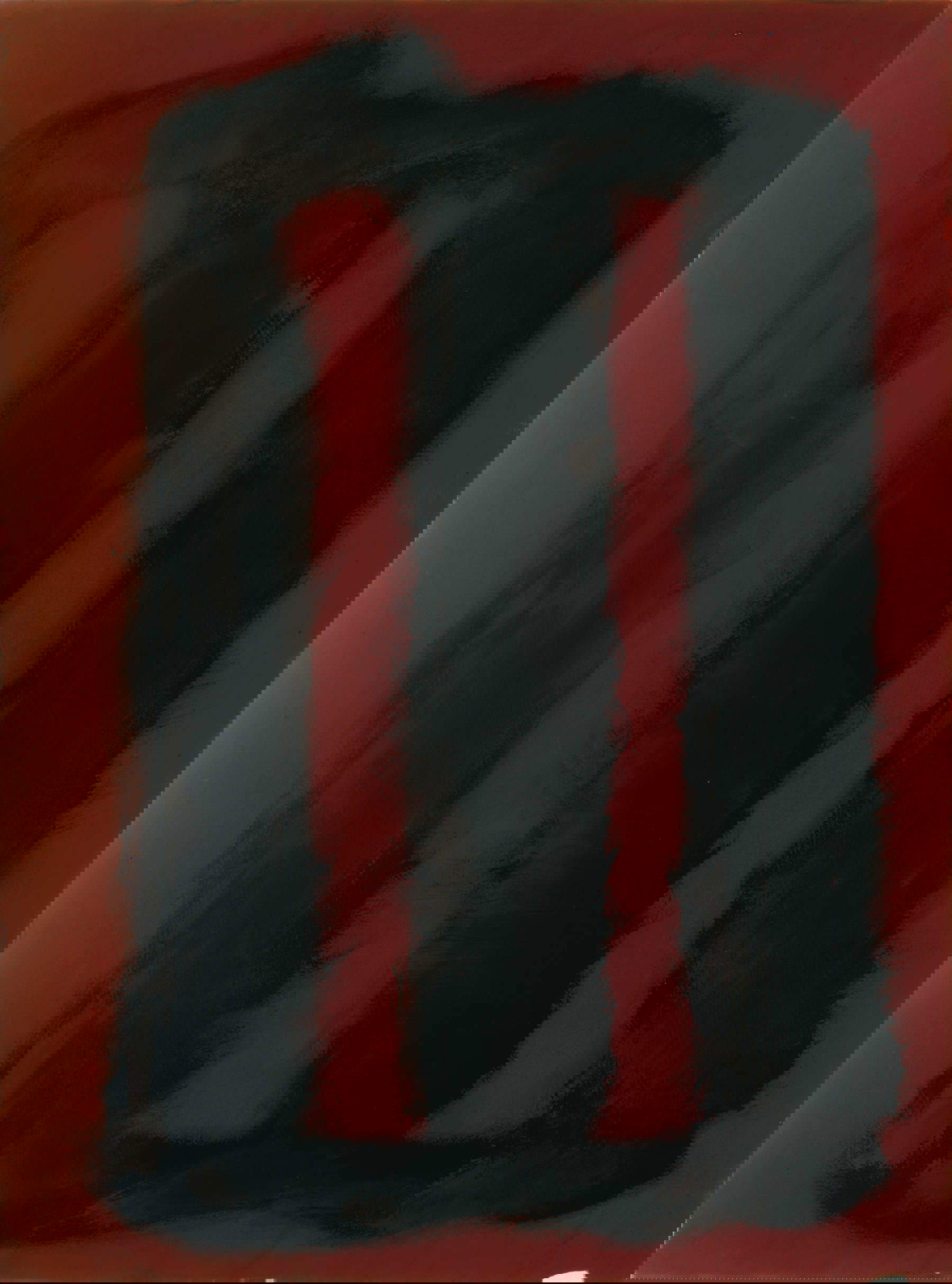
![Mark Rothko, Untitled [Harvard Murals Sketch] (Sketch for the Harvard Murals) (1962; oil on canvas, 236.9 × 144.1 cm; Private collection Cat. Rais. no. 731 - Summer inv. 5116.60)](https://cdn.finestresullarte.info/rivista/immagini/2026/fn/mark-rothko-harvard-murals-sketch.jpg "Mark Rothko, Untitled [Harvard Murals Sketch] (Sketch for the Harvard Murals) (1962; oil on canvas, 236.9 × 144.1 cm; Private collection Cat. Rais. no. 731 - Summer inv. 5116.60)")
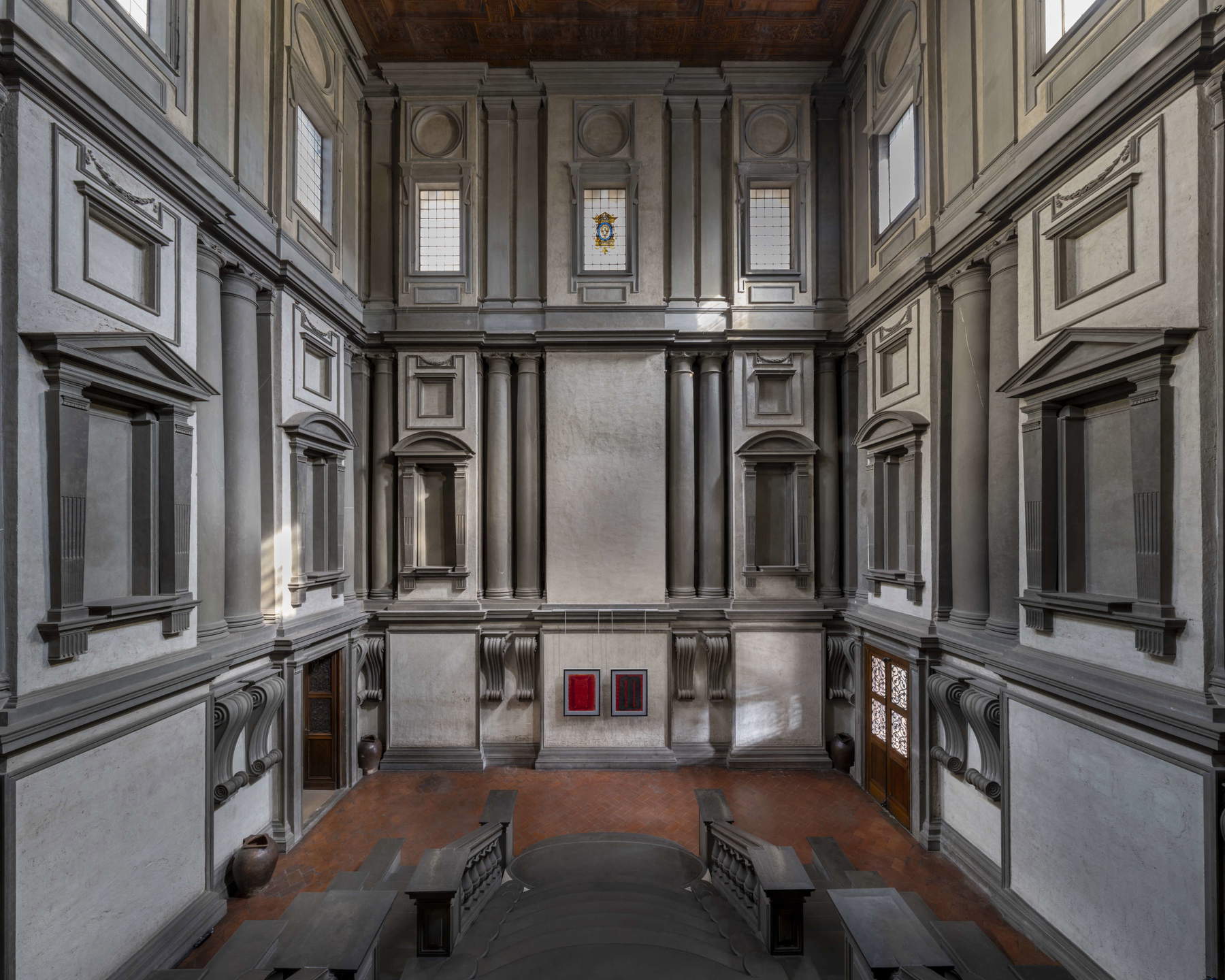
The exhibition project is thus enriched with two more stages, precisely in the crucial places of the master’s experience of the twentieth century: in five cells of the convent of San Marco, Beato Angelico’s frescoes have been juxtaposed with as many small to medium-sized paintings by Rothko. There are those who criticize the widespread tendency to “dialogue between the ancient and the contemporary,” but the writer thinks instead that the operation was opportune and convincing: the selected canvases do not bear explicit references to the creations of Fra’ Giovanni da Fiesole, yet between the ancient frescoes and the twentieth-century paintings resonate the same palettes, the same weights of the portions of color and above all the tension toward a heartfelt spirituality. On the other hand, I refrain from giving an opinion on the display of two sketches of the Seagram Murals in front of Michelangelo’s monumental staircase at the Laurentian Library: I visited the venue on a rainy day and before the official opening: the two works hanging on one wall could practically not be seen, they were shrouded in darkness. We trust that, since then, the lights have been calibrated so that we can admire the two Rothkos even when the sun is not shining on Florence.
Finally, a note on the catalog: among the various essays we come across, quite unexpectedly, a love letter. In fact, David Breslin interweaves a message to his daughter who was born just over a year ago with a “very sensitive” interpretation of Mark Rothko’s poetics and an analysis of what is involved in encountering his works. The reflection-which is also an explicit political stance against the dark times in which we live, marked, as the 1940s were, by tragic conflicts, mass slaughters and frightening authoritarianism-begins with a photo of the painter sitting on a deck chair looking at two of his paintings: “I doubt that [Rothko] sat there for hours with the sole purpose of showing us what to do. I doubt that for him our world should become as myopic as the one he needed to inhabit in order to create his paintings. My guess is that he would stare at them for a long time and invest so much time in creating them that their presence would be felt and have a pervasive effect on us. She once said something to that effect, namely that she wanted us to feel them even by having our backs to them, like the sun on our backs. Perhaps he wanted you, Emily Grace, and all of us to live in the grace of infinite and boundless presence, of shining, heterogeneous and unlimited attention, of sensations felt with every cell deputed to learning and caring.” Perhaps the most timely interpretation of the profound purpose of Rothko’s art.

The author of this article: Marta Santacatterina
Marta Santacatterina (Schio, 1974, vive e lavora a Parma) ha conseguito nel 2007 il Dottorato di ricerca in Storia dell’Arte, con indirizzo medievale, all’Università di Parma. È iscritta all’Ordine dei giornalisti dal 2016 e attualmente collabora con diverse riviste specializzate in arte e cultura, privilegiando le epoche antica e moderna. Ha svolto e svolge ancora incarichi di coordinamento per diversi magazine e si occupa inoltre di approfondimenti e inchieste relativi alle tematiche del food e della sostenibilità.Warning: the translation into English of the original Italian article was created using automatic tools. We undertake to review all articles, but we do not guarantee the total absence of inaccuracies in the translation due to the program. You can find the original by clicking on the ITA button. If you find any mistake,please contact us.
























 IT
IT FR
FR DE
DE ES
ES CN
CN


