





The Pavilion of the Republic of Cuba at the 61st. International Art Exhibition - La Biennale di Venezia presents the project Hombres Libres / Free Man by artist Roberto Diago. The national participation is curated by Nelson Ramirez de Arellano Conde and has Daneisy García Roque as commissioner. The exhibition is located in Il Giardino Bianco - Art Space, at 1814 Giuseppe Garibaldi Street, between the Giardini area and the Arsenal, and will be open to the public from May 9 to Nov. 22, 2026.
The project focuses on a reflection on the concept of freedom and its historical and cultural construction. In the artist’s perspective, freedom is configured as a process that requires awareness, memory and constant tension. The work insists on the idea that freedom can be understood as an ongoing practice involving the maintenance of dignity and the preservation of memory.
The installation that makes up the project, titled Hombres Libres / Free Man, consists of a group of sculptures depicting heads of different sizes. The figures are placed so as to advance toward the viewer, establishing a direct confrontation with those who enter the exhibition space. The surfaces display raised scars made on heterogeneous materials, including oxidized metals, wood, plastic and other salvaged elements. The presence of such marks becomes a tangible reference to memory and endurance, with the intention of preventing such traces from being absorbed into oblivion.
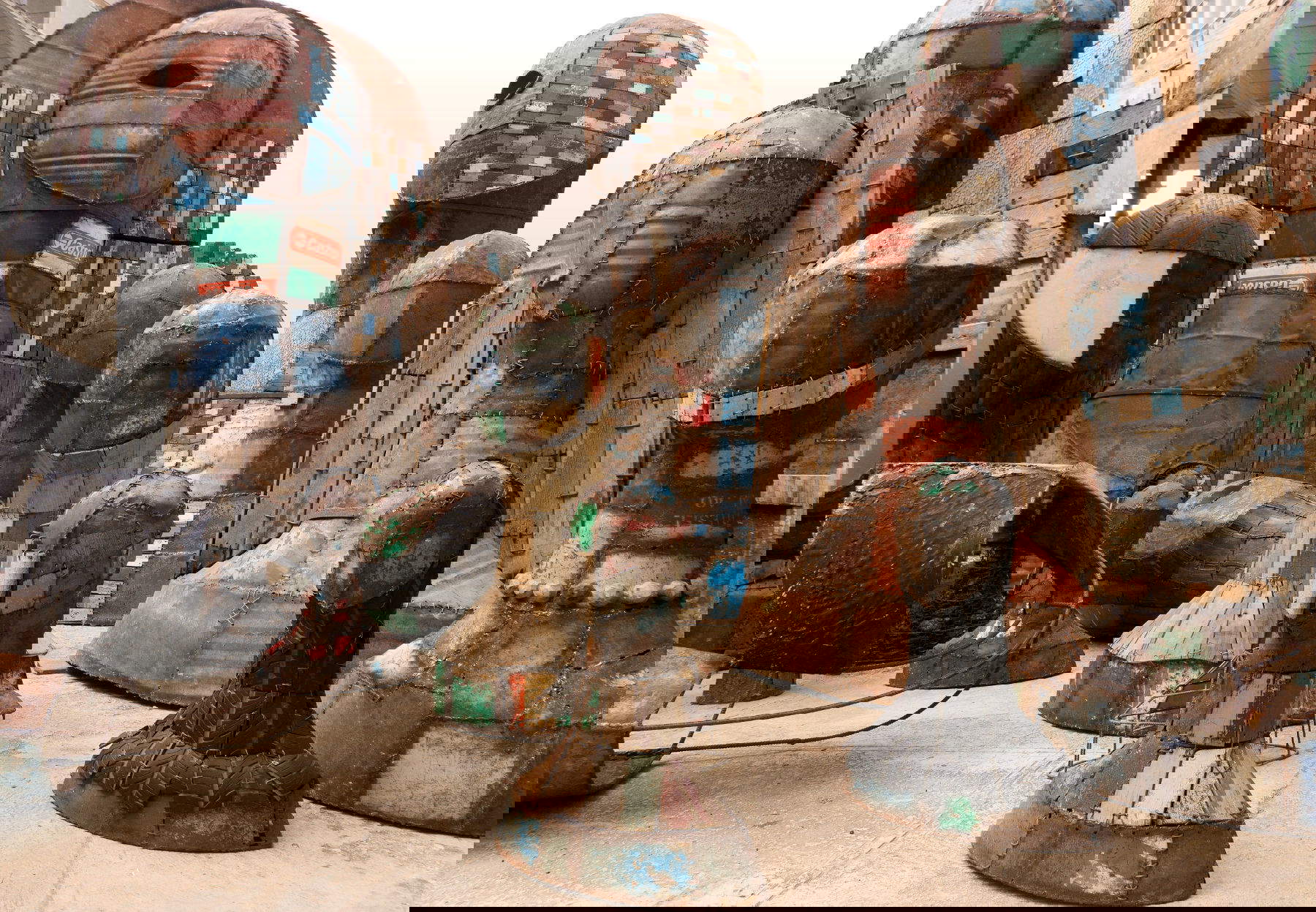
Within this poetics, freedom does not coincide with the erasure of suffering or the removal of traumatic experiences. On the contrary, the artist proposes to expose such marks as evidence of a lived history. Scars thus become visible and declared elements, assimilated as symbols of resistance and survival. In this perspective, the surface of the works, which recalls the epidermis of the human body, suggests an interpretation of black skin as a space in which memory, violence and resilience are deposited.
The concept of the scar takes a central role in the construction of the identity represented in the installation. The mark engraved on the material is not interpreted as a mere trace of pain, but as a testimony of the experience gone through. The body, although marked, maintains a condition of autonomy and sovereignty. From this perspective derives a redefinition of the idea of “free man,” which goes beyond the traditional legal dimension of an individual without constraints. In Diago’s project, freedom is identified with the ability to recognize one’s historical traces and to preserve memory in the face of narratives that have attempted its erasure or distortion.
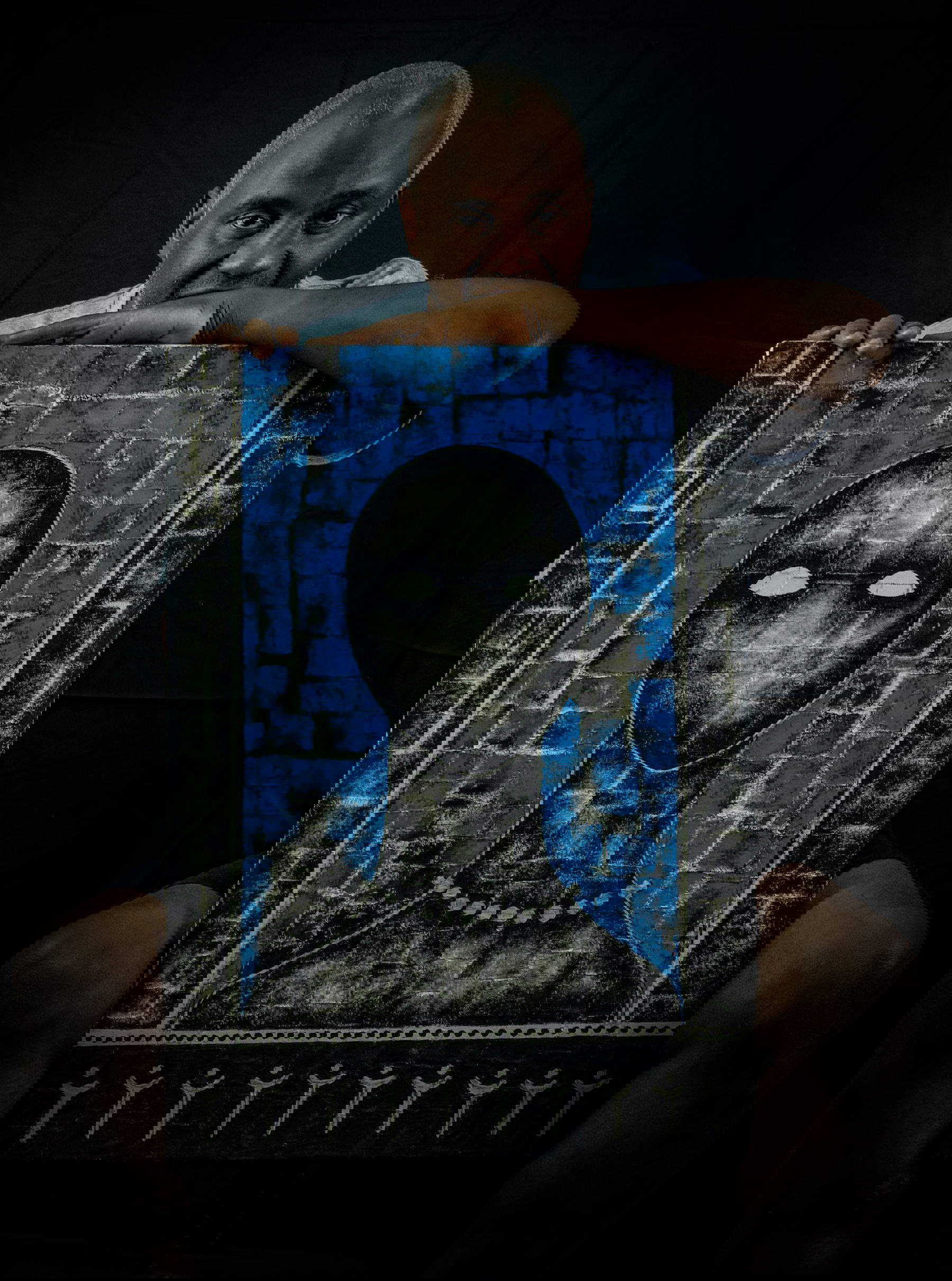
Roberto Diago, born in Havana in 1971 as Juan Roberto Diago Durruthy, lives and works in the Cuban capital. A painter, sculptor and installation artist, he trained at the San Alejandro National Academy of Fine Arts. He currently serves as a consulting professor at the University of the Arts (ISA) and is a member of the National Union of Writers and Artists of Cuba (UNEAC).
The artist frequently uses salvaged materials, which become an integral part of the visual language of his works. Within his production, the theme of the condition of the black man in contemporary times emerges continuously. Diago’s work addresses the historical conflict related to the African diaspora and the legacies of slavery, returning an image of resistance and struggle for survival. Through assembling disparate elements, the artist constructs works that evoke historical wounds and layered memories.
Over the course of more than three decades, Diago has developed an international career with appearances in numerous exhibition contexts in Europe, Africa, the United States and the Caribbean. His works are part of some twenty major public and private collections nationally and internationally. Notable exhibitions include shows at Harvard University’s Ethelbert Cooper Gallery, the National Museum of Fine Arts in Havana, and the Casa de América in Madrid.
The artist has also participated in numerous biennials, including the 47th and 57th International Art Exhibition of the Venice Biennale, the Havana Biennale, and the 2022 Dakar Biennale. His work has also been included in large-scale exhibition projects such as Artes de Cubaat the John F. Kennedy Center in Washington, D.C.
Roberto Diago’s works are now held in several public and private collections around the world, including the Museum of Fine Arts in Boston, the CIFO and Pizzuti collections in the United States, the Museum of Black Civilizations in Dakar, Senegal, the National Museum of Fine Arts in Cuba, and the Reina Sofía Museum in Madrid. Throughout his career, the artist has participated in hundreds of solo and group exhibitions in some twenty-five countries.
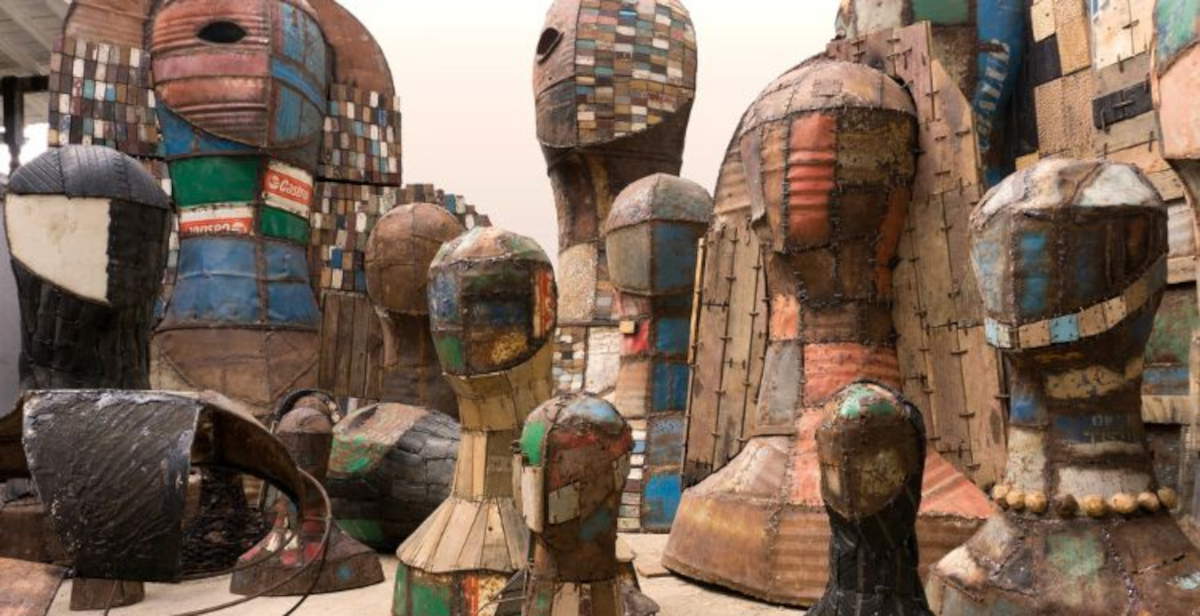 |
| At the Venice Biennale, the Cuba Pavilion presents "Hombres Libres" by Roberto Diago |

Warning: the translation into English of the original Italian article was created using automatic tools. We undertake to review all articles, but we do not guarantee the total absence of inaccuracies in the translation due to the program. You can find the original by clicking on the ITA button. If you find any mistake,please contact us.





















 IT
IT FR
FR DE
DE ES
ES CN
CN


