





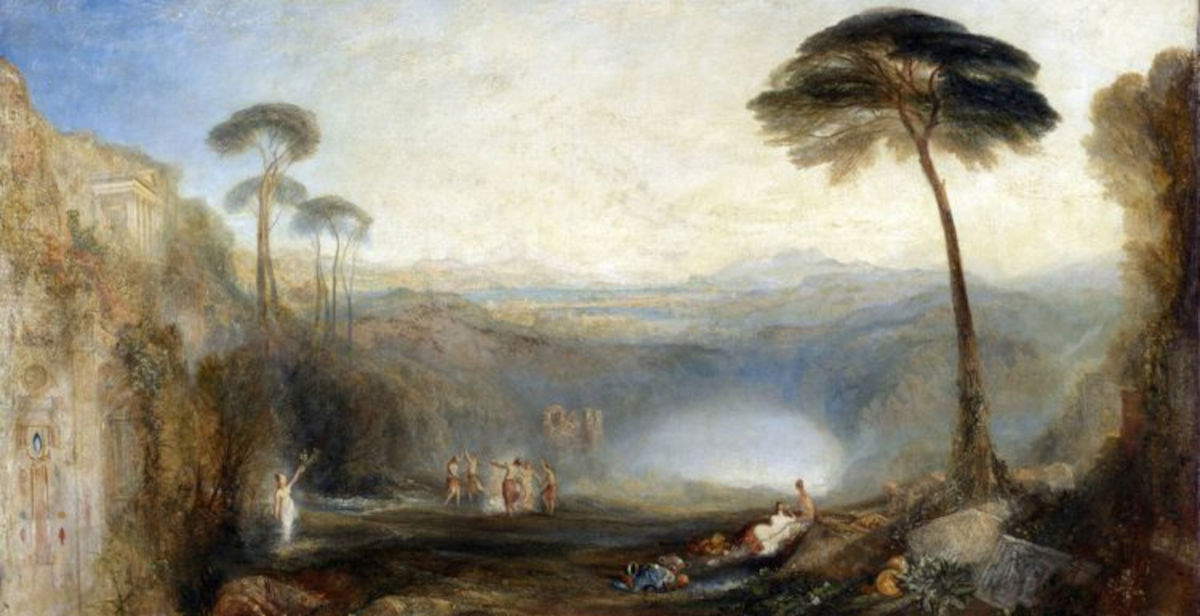
From May 29 to Sept. 27, 2026, the city of Como will host an exhibition project dedicated to William Turner (1775-1851), a central figure of English Romanticism, with a path spread between Palazzo del Broletto and the Pinacoteca civica. The initiative, entitled Turner: the Enchantment of Lake Como and the Italian Landscape, is conceived and organized by the Municipality of Como and the Tate in London, the institution from which all the works on display come.
The exhibition project, curated by Elizabeth Brooke, is developed as an investigation into the role of travel in Turner’s artistic practice and the relationship between his pictorial research and the Italian landscape, with particular attention to the Lake Como area. The exhibition is part of a dialogue between Italian and British cultural institutions and benefits from the partnership of the Como-Lecco Chamber of Commerce, the support of Villa Erba and technical sponsor ASF.
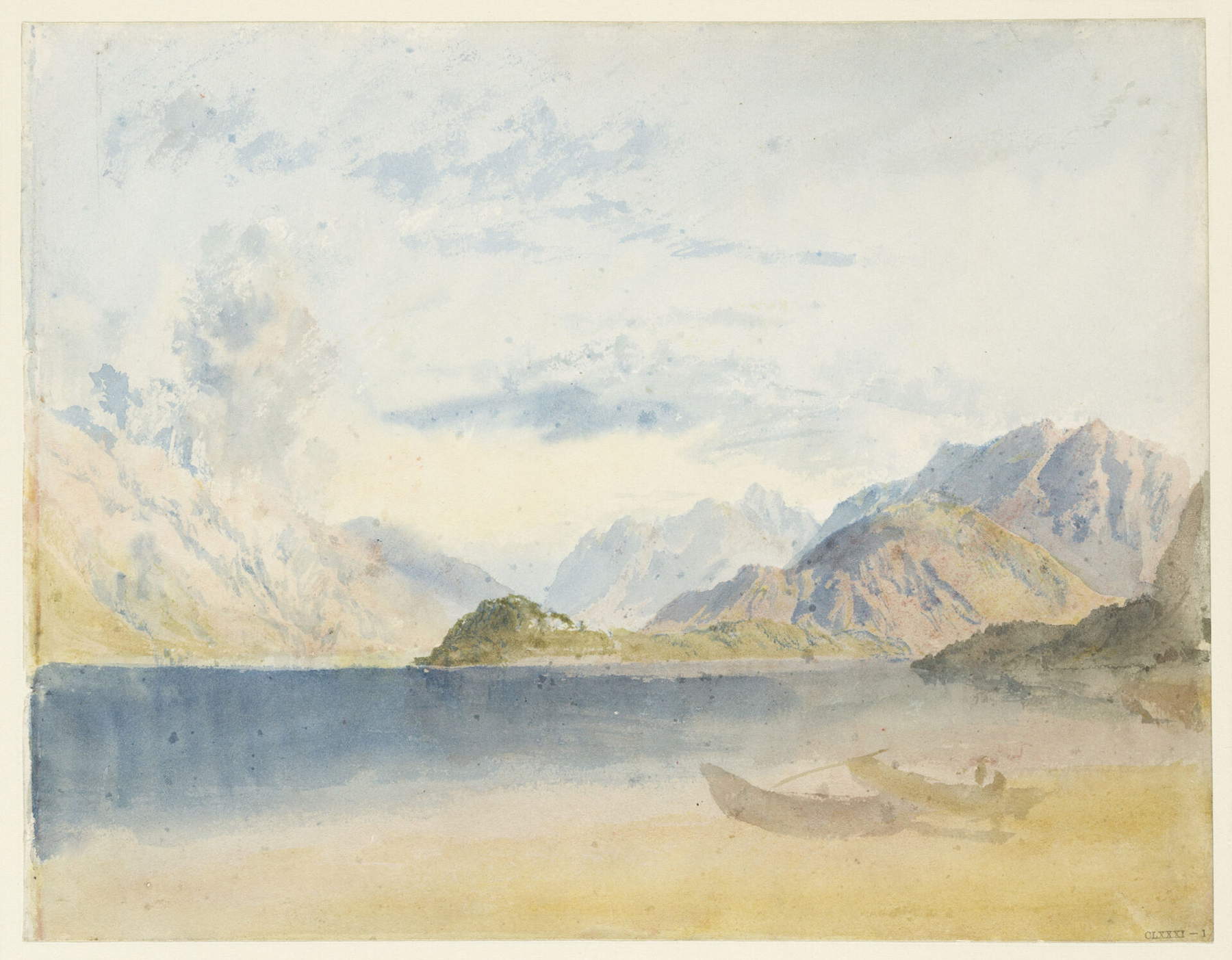
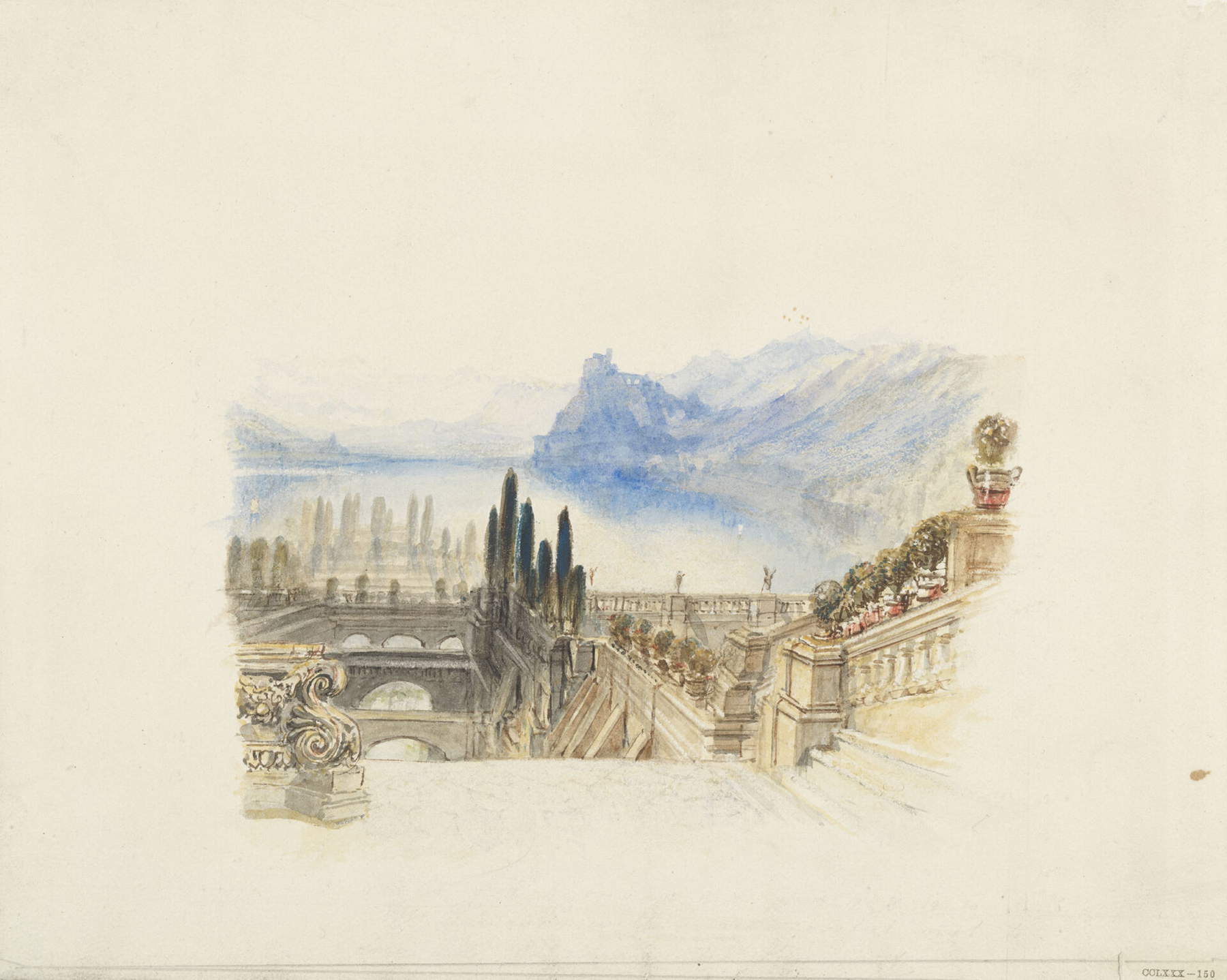
The exhibition begins at the Palazzo del Broletto, a medieval building that once housed the Como city government, where seven watercolors from the Tate’s collections are presented. The works have Lake Como and its geographical context as their subject. The nucleus testifies to Turner’s interest in a landscape characterized by strong contrasts between mountainous reliefs, water surfaces and rapid atmospheric variations, elements that become an integral part of his pictorial research.
The works also allow us to observe a chronological and stylistic progression of the artist’s language. The earliest evidence refers back to sketches made during his 1819 trip to Italy, in which particular attention to topographical structure and vantage points along the lake shores emerges. These are flanked by compositions made for the 1830 illustrated edition of Samuel Rogers’ Italy poem, to the color studies executed between 1842 and 1843, in which light and color assume a predominant role. Overall, the landscape appears as a system in transformation, in which natural and architectural elements tend gradually to dissolve into an atmospheric dimension.
The installation project also includes a screening of the film JMW Turner On the Wing, produced by Tate Digital with support from Tate International Partnership. The film traces the artist’s career through the theme of travel, with interviews with curators, conservators, writers, and historians, and examines works created in different geographical contexts, from Wales to the Swiss Alps to the Italian countryside and the English coast of Margate.
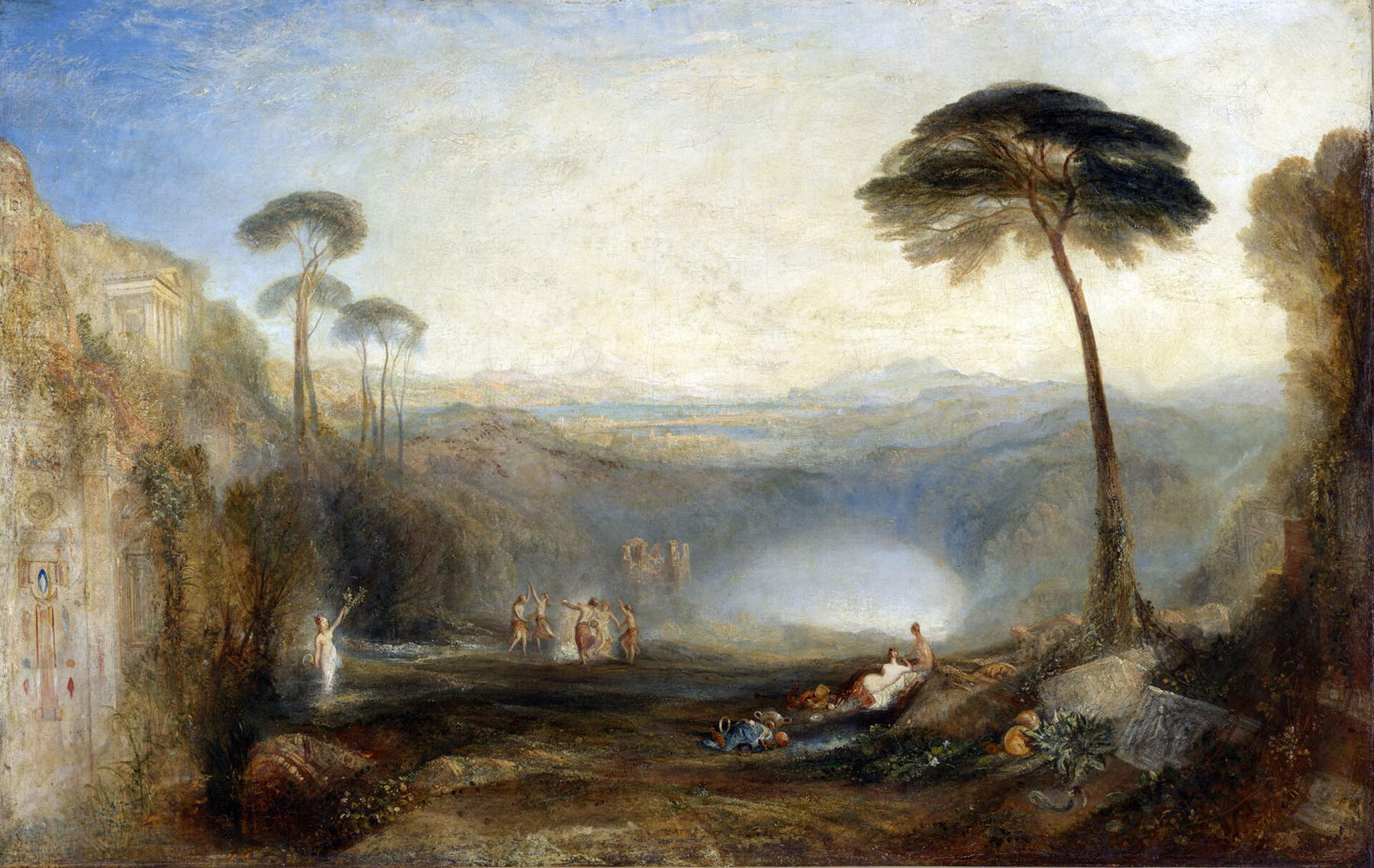
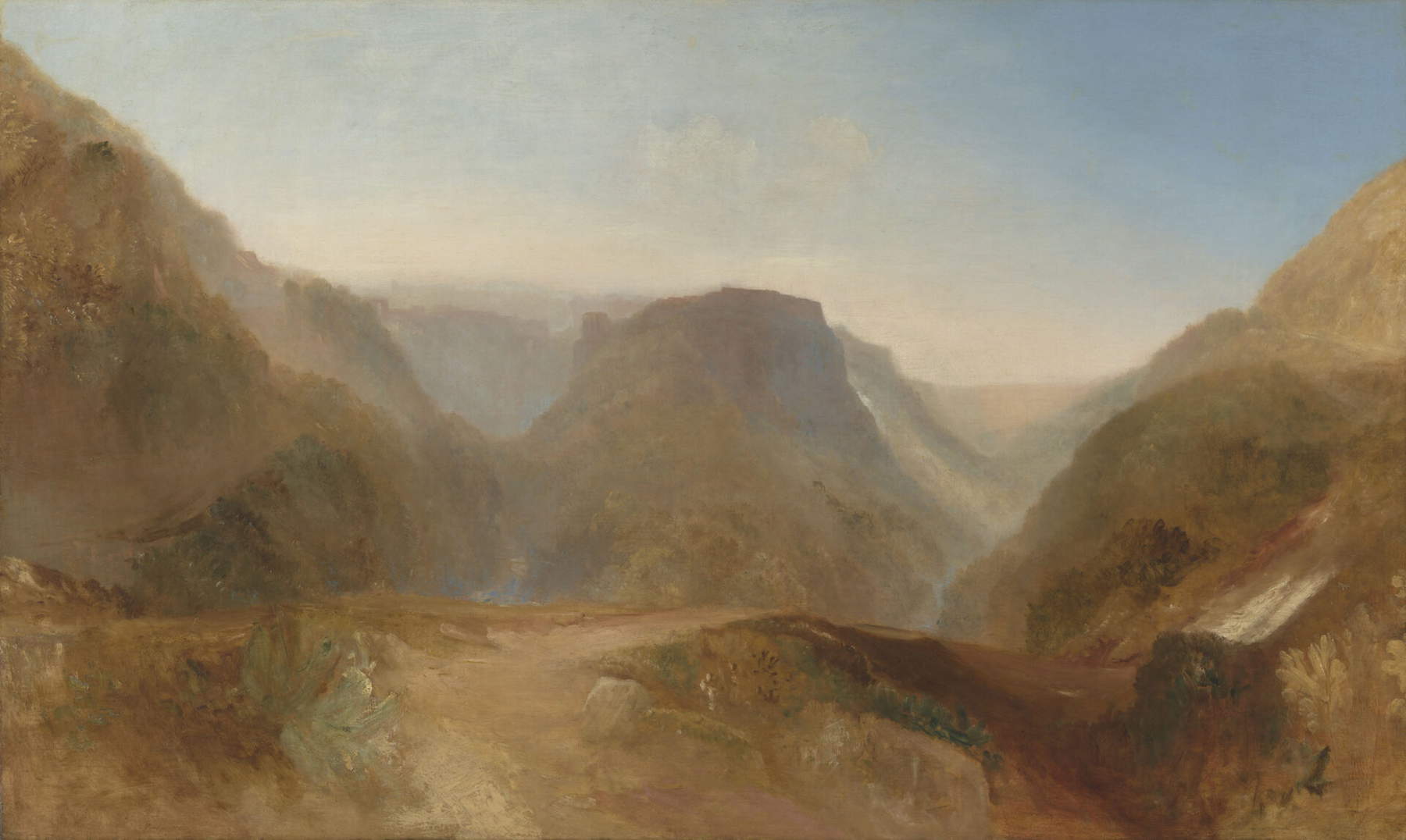
The Civic Art Gallery hosts a selection of four oil paintings that explore Turner’s relationship with Italian themes and the gradual evolution of landscape toward a symbolic and poetic dimension. The itinerary highlights the reference to classical and literary sources, the use of light as a structural and metaphysical element, and the tendency in the artist’s mature phase toward forms of abstraction and dissolution of the image.
Inside the Pinacoteca, the Campo quadro space also presents a selection of 19th-century works, prints and maps from the collection of the Civic Museums of Como. Among the materials on display is the 1871 Pianta guida della città e dei borghi, in which the hotel “Volta (formerly Dell’Angelo),” a structure that had hosted Turner during his stay in Como, is mentioned. From the windows of the hotel, the artist had observed and depicted the present Piazza Cavour, then the site of the old city port. The project is accompanied by a bilingual catalog, published by Moebius, with contributions by Pietro Berra, Federico Crimi, Elizabeth Brooke and Andrew Loukes. The volume includes critical essays and in-depth materials useful for contextualizing the works and the exhibition itinerary.
The collaboration between the City of Como and the Tate of London also extends to an additional exhibition intervention hosted at San Pietro in Atrio, from May 29 to September 27, 2026. The initiative, entitled Jim Lambie and David Batchelor. Feeling Colour. Contemporary Works from the Tate’s Collection, is curated by Elizabeth Brooke and offers a discussion of the role of color in contemporary art through two separate interventions.
Jim Lambie, an artist born in Glasgow in 1964, presents Zobop, a project begun in 1999 and still ongoing. The work consists of a site-specific installation created through the manual application of colored vinyl tape, arranged from the perimeter toward the center of the room in overlapping sequences. The intervention combines precise formal rules with a component of chromatic randomness, fitting into the tradition of process art and post-minimalist research.
In contrast,David Batchelor, born in Dundee in 1955, proposes the work I Love King’s Cross and King’s Cross Loves Me, 8, part of the Monochromobiles series. The artist uses salvaged materials from the urban context, including industrial elements, metal structures, colored acrylics and visual components related to signage and advertising lighting. The ensemble is reworked into sculptural form within the museum space, with direct reference to the London neighborhood of King’s Cross and the dynamics of the relationship between the individual and the urban environment.
“The exhibition program,” says curator Elizabeth Brooke, “underscores the artists’ abiding interest in light, color, and the experience of place. Combining historical and contemporary perspectives, the exhibitions illustrate how these themes are interpreted in different eras, finding ever new resonances in the luminous landscape of Lake Como.”
“In 2022, at the beginning of our administrative journey,” says Alessandro Rapinese, Mayor of Como, “we realized that we had inherited a fragmented museum reality that needed a unified vision and structural revitalization: the Tempio Voltiano was operating at a reduced capacity and the Pinacoteca Civica was struggling to integrate into the city’s social fabric, not to mention the critical issues related to the Piazza Medaglie d’Oro complex and the other places symbolic of our identity. Our efforts have resulted not only in the structural recovery of these spaces, but above all in the activation of a network of international relations of excellence. Thanks to synergies with prestigious institutions such as the Uffizi Galleries, the Brera Academy, the Museum of Science and Technology in Milan, the National Gallery of Canada and the Art Institute of Chicago, Como has become a protagonist in the cultural sphere. In this groove is the prestigious collaboration with the Tate in London: a project that projects our city and the entire territory into a dimension of absolute prominence in the global scenario.”
“Often museums are perceived as static places, devoted exclusively to the preservation of their identity heritage, neglecting their natural vocation to enhancement,” says Enrico Colombo, Councillor for Culture of the Municipality of Como. "With the exhibition Turner. The Enchantment of Lake Como and the Italian Landscape, this tendency is reversed: the synergy between the Civic Museums of Como and the Tate of London gives birth to an international project capable of transforming our heritage into a dynamic narrative deeply rooted in the territory. This synergy, open to collaborations with local realities, acts as a driving force for the development of Como and its territory, consolidating them as a cultural as well as tourist destination. It is a project in which art, architecture and the international vocation of the city find their ideal synthesis."
Hours: Tuesday through Sunday, 10 a.m. to 6 p.m. (last admission 5:30 p.m.)
Closed every Monday and Saturday, Aug. 15
Tickets:
Tate pass full: €12.00
Tate pass reduced: €8.00
 |
| Como dedicates exhibition to Turner: Lake and Italian landscape in Tate's works |

Warning: the translation into English of the original Italian article was created using automatic tools. We undertake to review all articles, but we do not guarantee the total absence of inaccuracies in the translation due to the program. You can find the original by clicking on the ITA button. If you find any mistake,please contact us.
























 IT
IT FR
FR DE
DE ES
ES CN
CN


