



by Redazione 03/05/2026



Categories: Exhibitions / Disclaimer
Equatorial Guinea makes its debut at the Venice Biennale, at Palazzo Donà dalle Rose, with Paraguayan artist Ingrid Seall. An immersive journey takes the visitor into a fairy-tale undergrowth.

From May 9 to Nov. 22, 2026, Palazzo Donà dalle Rose in Venice will host, within the Pavilion of the Republic of Equatorial Guinea, present for the first time in history in the official programming of the Venice Biennale, Paraguayan artist Ingrid Seall with Manar. A work that stems from a generative process that transforms residues, waste and errors into new vital matter capable of producing meaning. Made with paper, cellulose, iron and cassava paste, the work gives life to a continuous movement that develops vertically, rather than horizontally, reestablishing a link between human beings and their deepest and most ancestral dimension.
Inserted in the exhibition path The Forest: The Undergrowth, the title and theme of the pavilion, Manar is configured as an organism in tension within a symbolic and multiform forest. Here she dialogues with the imagery of the undergrowth, a space of the unconscious and a meeting point between what is visible and what is not, offering a topical reading. The work does not merely represent nature, but reactivates its presence, restoring its spiritual and regenerative value. In this context, all the works in the pavilion are transformed into living presences, elements of an artistic ecosystem that reflects on the relationship between man and the environment, culture and nature, memory and change.


The Forest: The Undergrowth, created under the patronage of the Embassy of Paraguay in Italy, offers an immersive journey that takes the visitor into a fairy-tale undergrowth, inspired by the forest of Equatorial Guinea. The pavilion is curated by Catalan Joan Abelló, under the direction of Brazilian commissioner Paulo Speller, joined by a committee composed of Anna Balzani, Vito Corte, Chiara Modìca Donà dalle Rose, Andrea Guastalla, Massimo Scaringella, Anna Solano Lopez and Carlota Muiños. For this first participation of Equatorial Guinea in the Biennale, the title chosen explicitly recalls the forest and its undergrowth, in dialogue with the theme of the 61st edition, In Minor Keys. The undergrowth, a mysterious and unexplored archetype, becomes a symbol of the unconscious: a space of relationship between the visible and invisible. The forest fascinates artists such as Modest Gené, Fernando Nguema and Giuseppe Saporito, who interpret it as a sacred place for spiritual growth. The exhibition thus pays homage to the subtle link between man and nature, between body and cosmos, conceiving the forest as a space for self-knowledge and rediscovery.
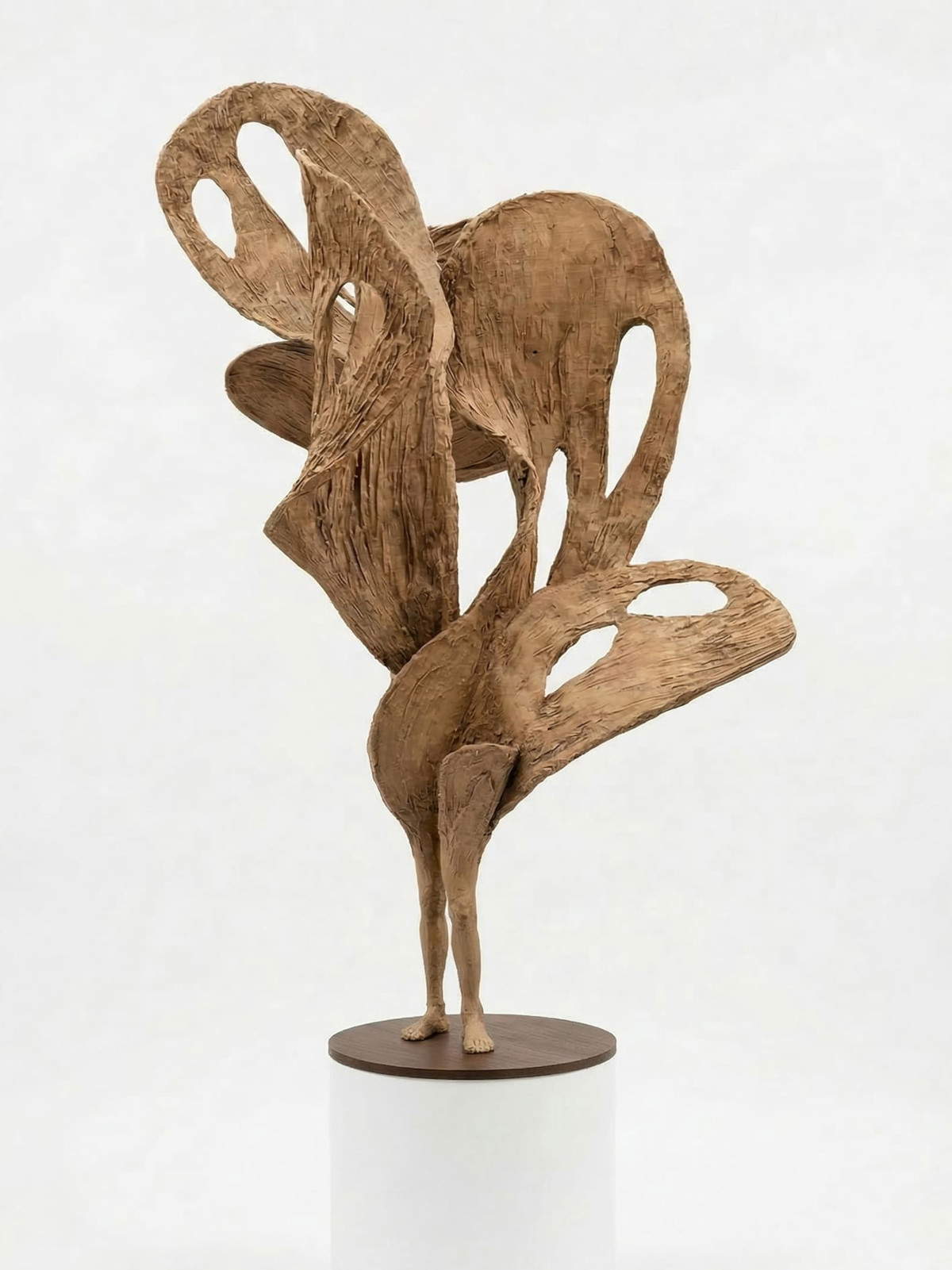
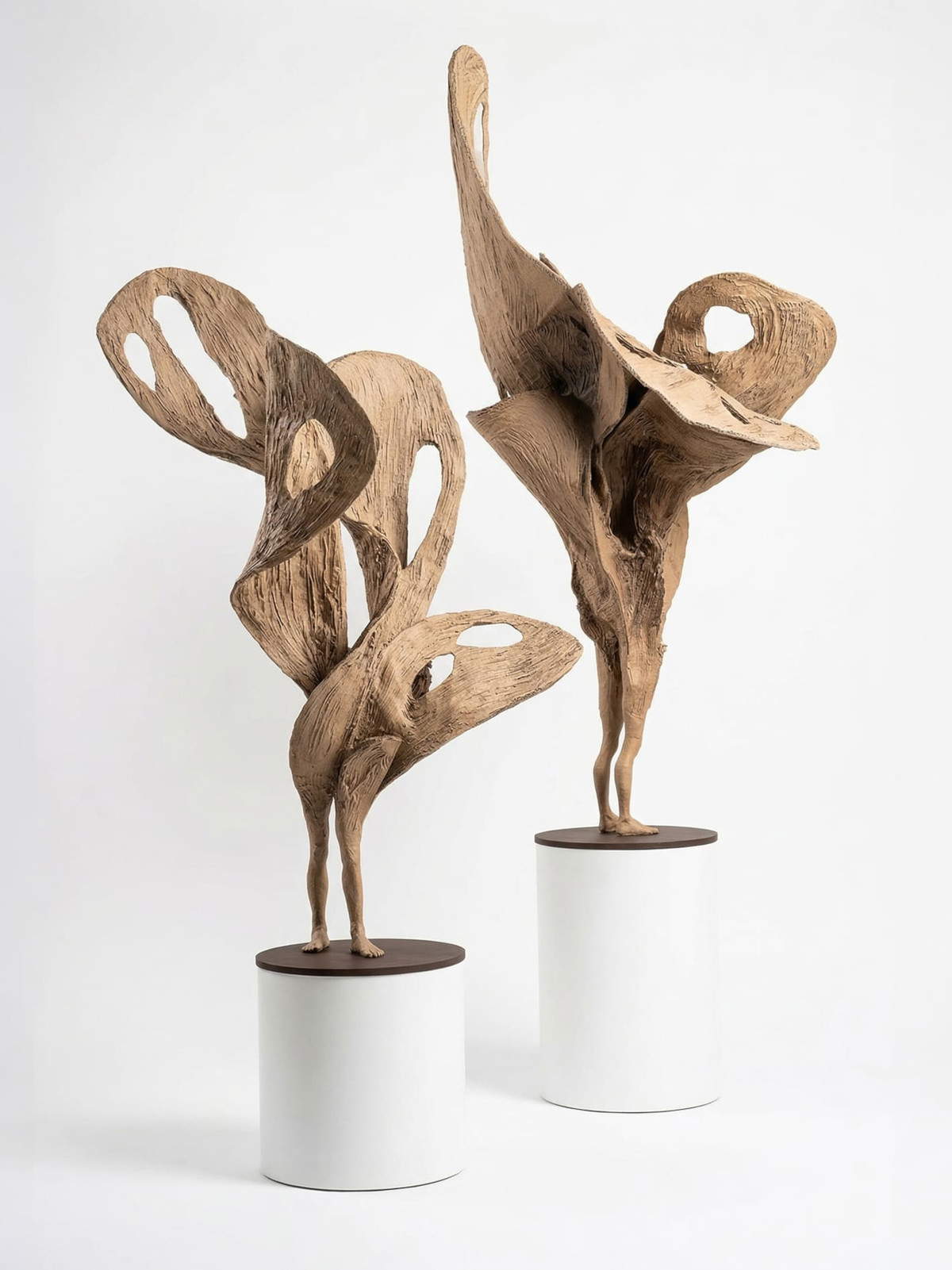
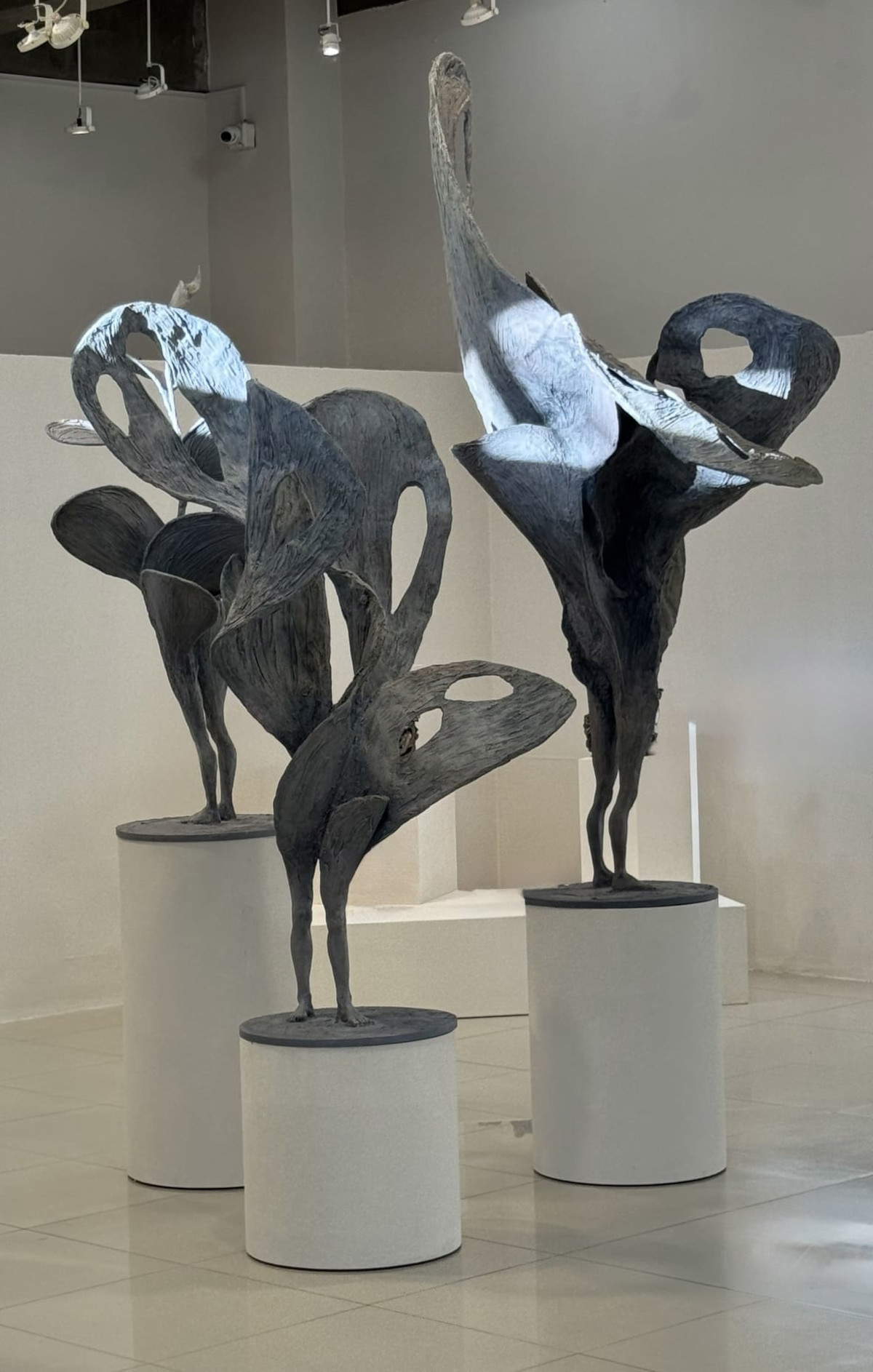
The pavilion is presented as a true “artistic forest,” composed of heterogeneous works: from the wooden sculptures of Gené and Nguema to the terracotta figures of Martin Escherman, from the trees of Mfochive Oumarou to the marble forms of Florin Codre, to the creations of Alessia Forconi, Ingrid Seall, Andrea Raggi, Alfred Mirashi Milot and many other international artists. Each work contributes to building an immersive environment, rich in visual and symbolic suggestions.
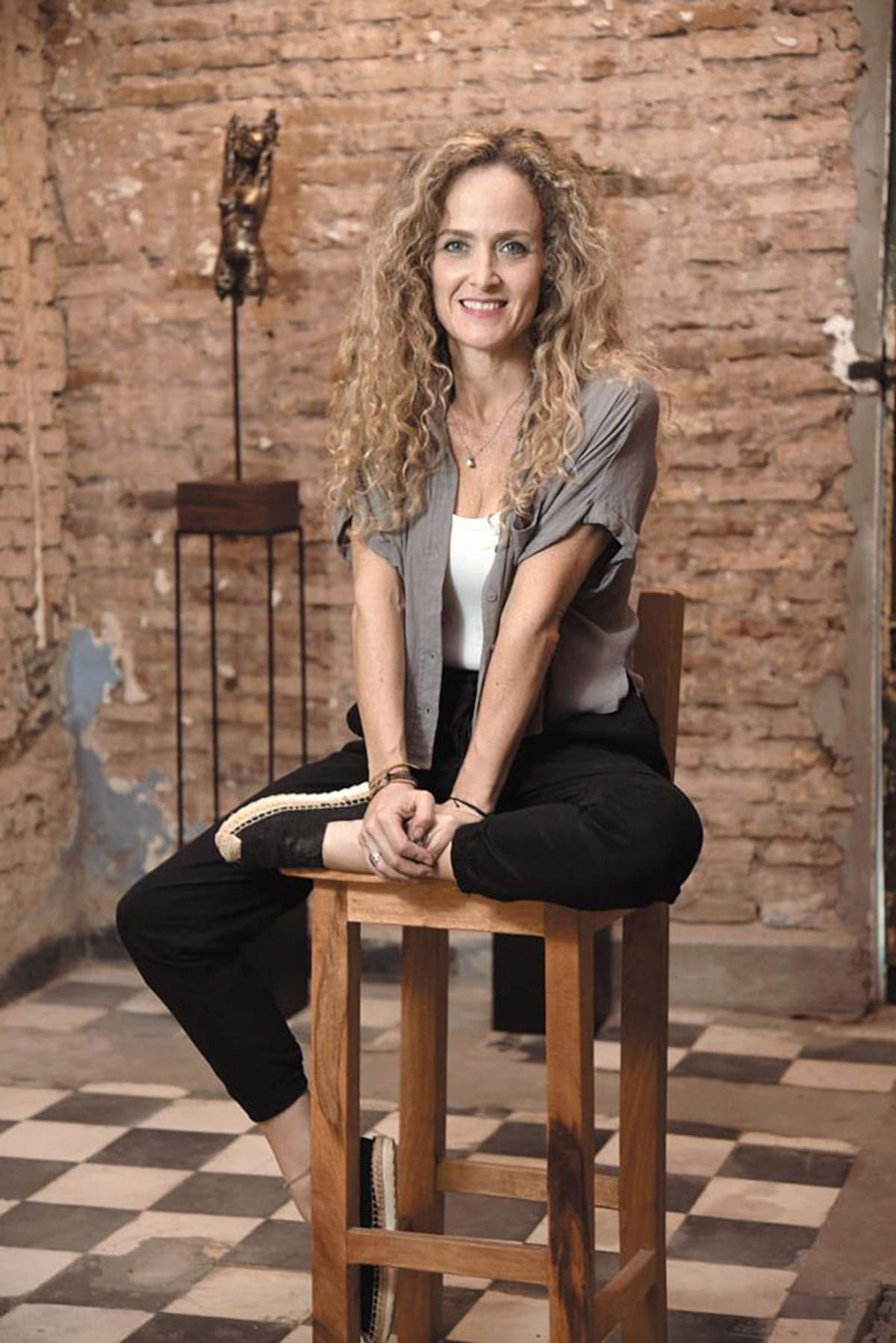
In her artistic research, Ingrid Seall uses the human figure as a starting point for questioning the meaning of existence, placing it side by side with organic and abstract forms in constant transformation. Born in Asunción in 1975 to a family of German and Spanish origin, she grew up in a multicultural context that profoundly influences her poetics. She works with different materials, such as bronze, ceramics, iron, papier-mâché, clay, beeswax and fiberglass, constantly experimenting with new expressive possibilities. Trained with masters such as Patricia Ayala, Hermann Guggiari and Gustavo Beckelmann, she combines sculpture and dance in her early works, exploring the lines of the human body and its potential for transformation. He graduated from the Higher Institute of Arts of the National University of Asunción and, alongside his exhibition activity, he creates works on public and private commissions, as well as sets for theater and dance. He currently teaches Visual Arts at the Goethe Schule in Asunción, Paraguay.
 |
| Equatorial Guinea debuts at the Venice Biennale with Paraguayan artist Ingrid Seall and the theme of undergrowth |
Warning: the translation into English of the original Italian article was created using automatic tools. We undertake to review all articles, but we do not guarantee the total absence of inaccuracies in the translation due to the program. You can find the original by clicking on the ITA button. If you find any mistake,please contact us.