





The Villa dei Cedri Museum in Bellinzona (Canton Ticino, Switzerland) opens its spring-summer 2026 exhibition season with two exhibitions devoted to figures from the contemporary Swiss art scene. From March 14 to August 2, the institution presents the exhibition projects Zilla Leutenegger. My Home and Alex Hanimann. Human Nature, two parallel paths that address the relationship between the individual and the environment, focusing on the human experience and the way spaces inhabited or observed contribute to the construction of memory, identity and the imaginary.
The two exhibitions develop a reflection on areas that belong to the Bellinzona museum’s research tradition: domestic space and the natural landscape. In the rooms of the villa, these dimensions become places of projection and transformation, contexts in which visitors are invited to confront their own experience and reconsider the relationship between private memory and collective experience.
The projectCasa mia by Zilla Leutenegger (Zurich, 1968) fits directly into the environments of the historic mansion that now houses the museum. Over time, Villa dei Cedri has undergone several transformations related to the housing needs of successive owners. Each intervention has reflected the representative needs of its era, recording social and cultural changes. The artist builds his site-specific intervention precisely from this stratification, reconnecting with the villa’s original function as a domestic space.
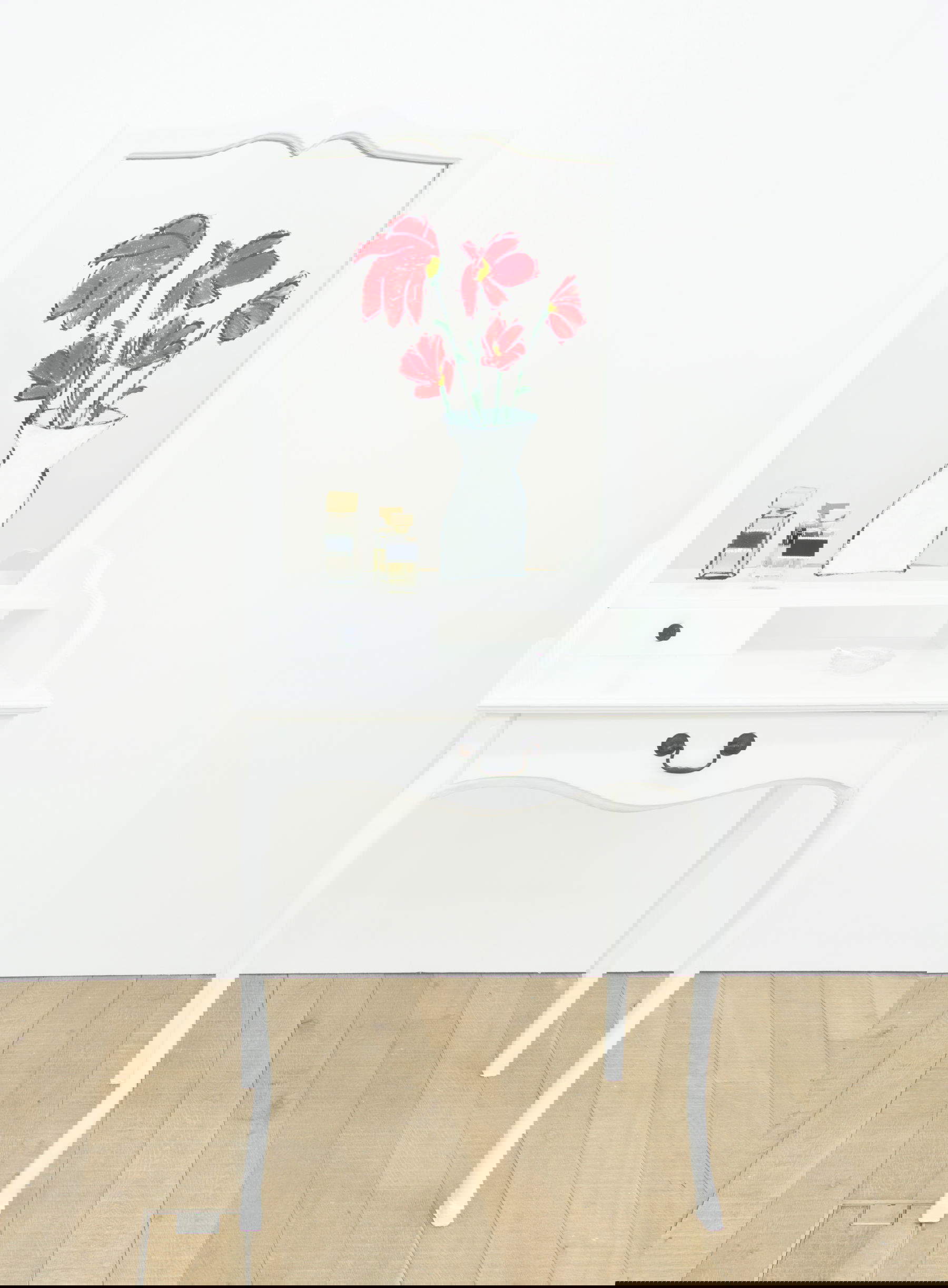
Through a combination of wall drawings, video projections and modernist furnishings, Leutenegger redefines the rooms of the museum as if they were still environments of everyday life. The exhibition route restores the structure of a home, with spaces that refer to precise functions: bathroom, bedroom, study, living room and kitchen. The intervention recalls the imagery and social models of the post-World War II period, a period that constitutes one of the central references of the installation.
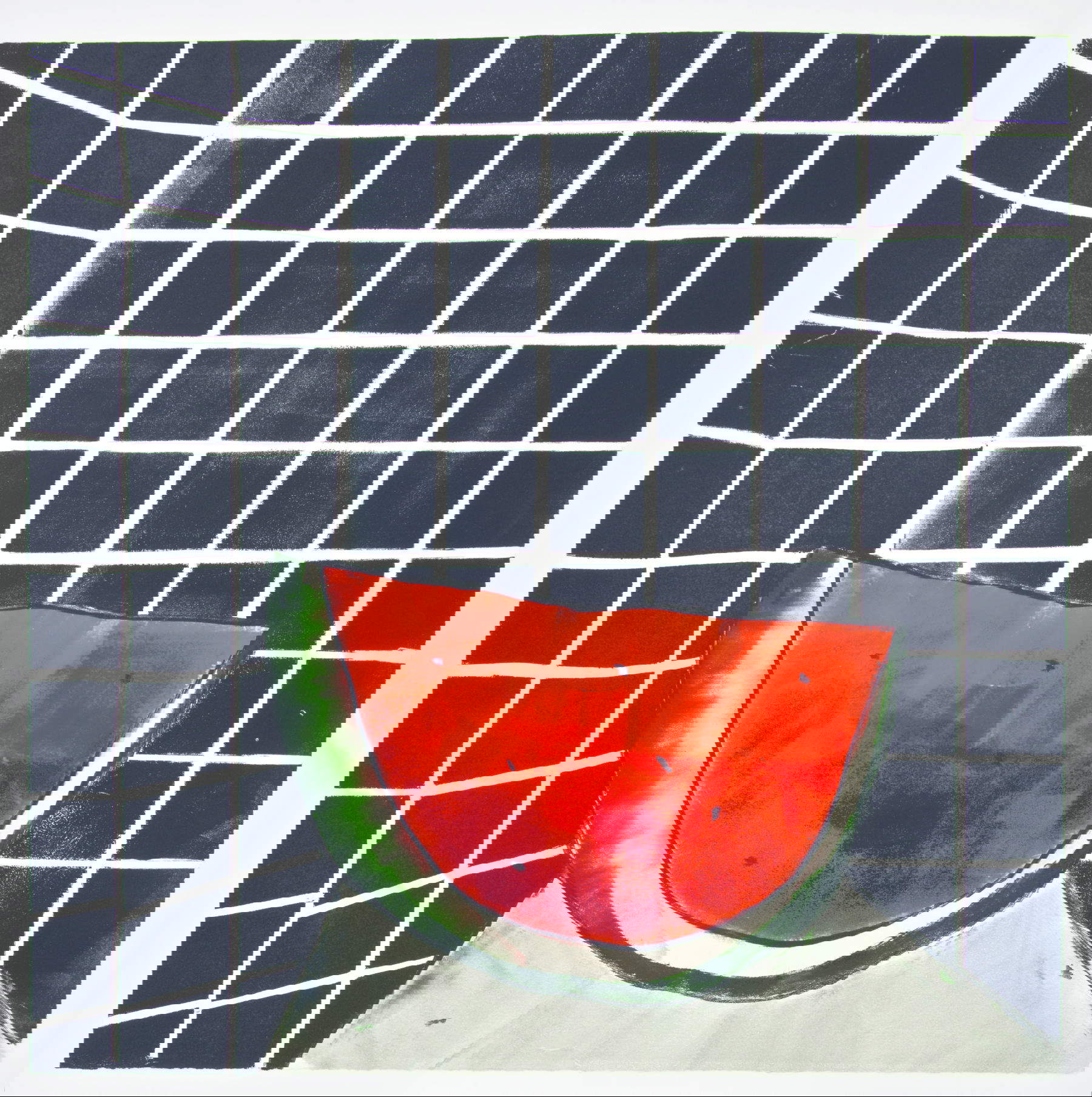
Entering the rooms leads the audience into a predominantly female universe that spans a time frame from the 1950s to contemporary times. Within this context, the figure of the landlady emerges, a presence that contrasts with that of Arrigo Stoffel, the head of the household tied to social values and norms of the late 19th century. The dialogue between these two symbolic figures helps to delineate a comparison between different eras and cultural models. From the dwelling of the head of the Stoffel family to the reinterpretation proposed by Leutenegger, the museum building thus becomes a mirror of the social transformations, changes in family relationships and new aspirations that have swept through society over time.
The project also invites the viewer to observe the many possibilities of drawing, a technique that forms the common thread of the entire exhibition. The graphic sign appears in the works in different forms: traced directly on the walls, animated through projections or transformed into a three-dimensional object. The choice to use drawing as a central element does not only respond to a formal preference. In fact, drawing allows the outlining of essential contours and leaves spaces of interpretation open to the visitor’s gaze, who is thus involved in the construction of the meaning of the images.
The site-specific approach represents one of the characterizing elements of Leutenegger’s practice. His installations construct suspended environments, almost silent settings in which the works appear as images crystallized in time. In these contexts each visitor is invited to elaborate his or her own reading and imagine a possible narrative. Over the years, the artist’s work has also found several moments of confrontation with the Italian public. Among the most relevant experiences are the participation in the 2006 exhibition Visions of Paradise at theSwiss Institute in Rome, the solo exhibition Ariel and His Cats presented in 2021 at the Monica De Cardenas Gallery in Milan, and the participation in the sixth edition of the 1+1+1 exhibition project in 2022 in the spaces of Assab One, where he presented the installation The Dncr.
![Alex Hanimann, Untitled [Residential Building 1, China] from the series](https://cdn.finestresullarte.info/rivista/immagini/2026/fn/alex-hanimann-senza-titolo-residential-building-1-china.jpg)
Alongside this project, the exhibition Human Nature by Alex Hanimann (Mörschwil, 1955) offers a reflection on the representation of landscape and the relationship between nature, memory and image. The artist belongs to a generation that has gone through a phase of profound transformations, in a social context marked by increasing change and complexity. In this scenario, artistic languages and visual technologies have gradually become intertwined, giving rise to expressive forms that combine different media and question the traditional boundaries between technique and meaning.
The exhibition project focuses on black-and-white photography and begins with images of often marginal or inhospitable natural environments. Tangled branches, brushwood, trees and wild vegetation constitute the main subjects of the works. From these elements, Hanimann constructs landscapes that evoke the idea of an unspoiled, almost mythical nature. Within the images, however, traces of human intervention remain visible, signs that suggest the presence of man even in the seemingly wildest contexts.
The arrangement and structure of the photographed natural spaces take on a symbolic function that stimulates the visitor to make personal connections with the images. The path invites visitors to relate the photographs to their own store of memories and experiences, opening up the possibility of different interpretations. In this way, Hanimann’s work takes the form of a reflection on the functioning of memory and the mechanisms through which experience is recorded and reprocessed. Images observed over the course of a lifetime are selected, organized and recomposed through processes of interpretation and reworking that continually alter the personal visual heritage. The photographs presented in the exhibition reflect precisely this process of transformation.
![Alex Hanimann, Untitled [Building with Landscape] from the series](https://cdn.finestresullarte.info/rivista/immagini/2026/fn/alex-hanimann-senza-titolo-building-with-landscape.jpg)
Many images originate during the artist’s travels and are made on the move, from different means of transportation such as car, train, bus or bicycle. This condition introduces an element of randomness into the photographs that complements the compositional intention. Subsequently, the images are subjected to a process of reworking that involves cut-outs, subtractions and recompositions. Through these operations the artist builds landscapes characterized by a strong ambivalence, an element that constitutes one of the interpretative keys of the entire project.
The works exhibited are made with different tools. Some photographs arise from the use of the smartphone, a device through which the photographer’s gaze enters into relationship with the operational choices of the algorithms. This dynamic is particularly evident in the series Driving as far as I can see. Alongside these images appear shots taken with a high-precision professional camera, used for the diptych belonging to the Wilderness series, a work that concludes the exhibition.
 |
| Two exhibitions at Villa dei Cedri in Bellinzona: home and nature take center stage in exhibition season |

Warning: the translation into English of the original Italian article was created using automatic tools. We undertake to review all articles, but we do not guarantee the total absence of inaccuracies in the translation due to the program. You can find the original by clicking on the ITA button. If you find any mistake,please contact us.




















 IT
IT FR
FR DE
DE ES
ES CN
CN


