





At the Museo Correr in Venice the exhibition Dialoghi Canoviani continues, a project that relates contemporary artistic research to the legacy of Antonio Canova. The second edition offers a confrontation between the Franco-Swiss artist Julian Charrière (born in Morges in 1987, lives and works in Berlin) and the great protagonist of Neoclassicism, through the path Spiral Economy: Charrière and Canova, hosted in the Sale Canoviane.
Curated by Chiara Squarcina and Pier Paolo Pancotto, with the collaboration of Claudia Cargnel and the support of Kulturstiftung Basel H. Geiger, Pro Helvetia, Schmidt Ocean Institute and The Shifting Foundation, the exhibition, which can be visited from April 30 to Nov. 22, 2026, unfolds as a dialogue between different eras, highlighting the poetic dimension of matter. Charrière’s works confront Canova’s idealized forms, placing marble at the center of the reflection: a living material, suspended between physical presence and symbolic dimension, a guardian of beauty and memory.
At the heart of the project is a creative tension between opposites: on the one hand the neoclassical aspiration to the eternity of form, on the other the fragility and processual character typical of contemporary sensibility. The exhibition thus builds a dialogue between permanence and erosion, between ideal and transformation, between stability and change.
Charrière’s intervention takes the form of a large multi-sensory installation, conceived in close relationship with the museum’s Canova collection, which is involved in a contemporary art project for the first time. The exhibition itinerary alternates works by Canova and works by the contemporary artist, many of them specially made, creating significant juxtapositions such as Venus Italica (1804-1812) and Albedo (2025), Icarus (1777-1779) and Controlled Burn (2022), Orpheus and Eurydice (1773-1776) and Stone Speakers (2024), to Spiral Economy (2025), Self-Portrait (1812) and Imperfect Lovers (2025).
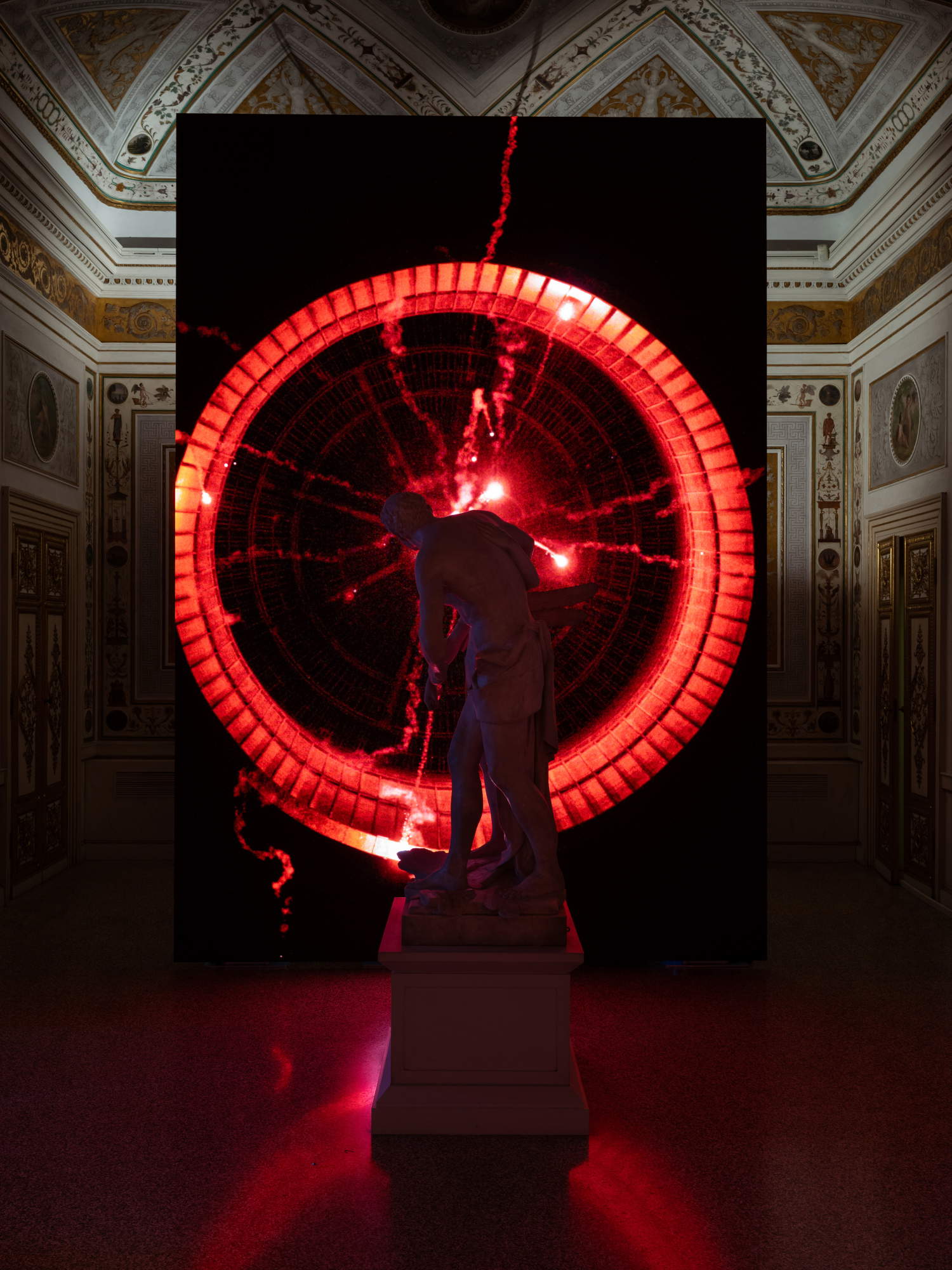
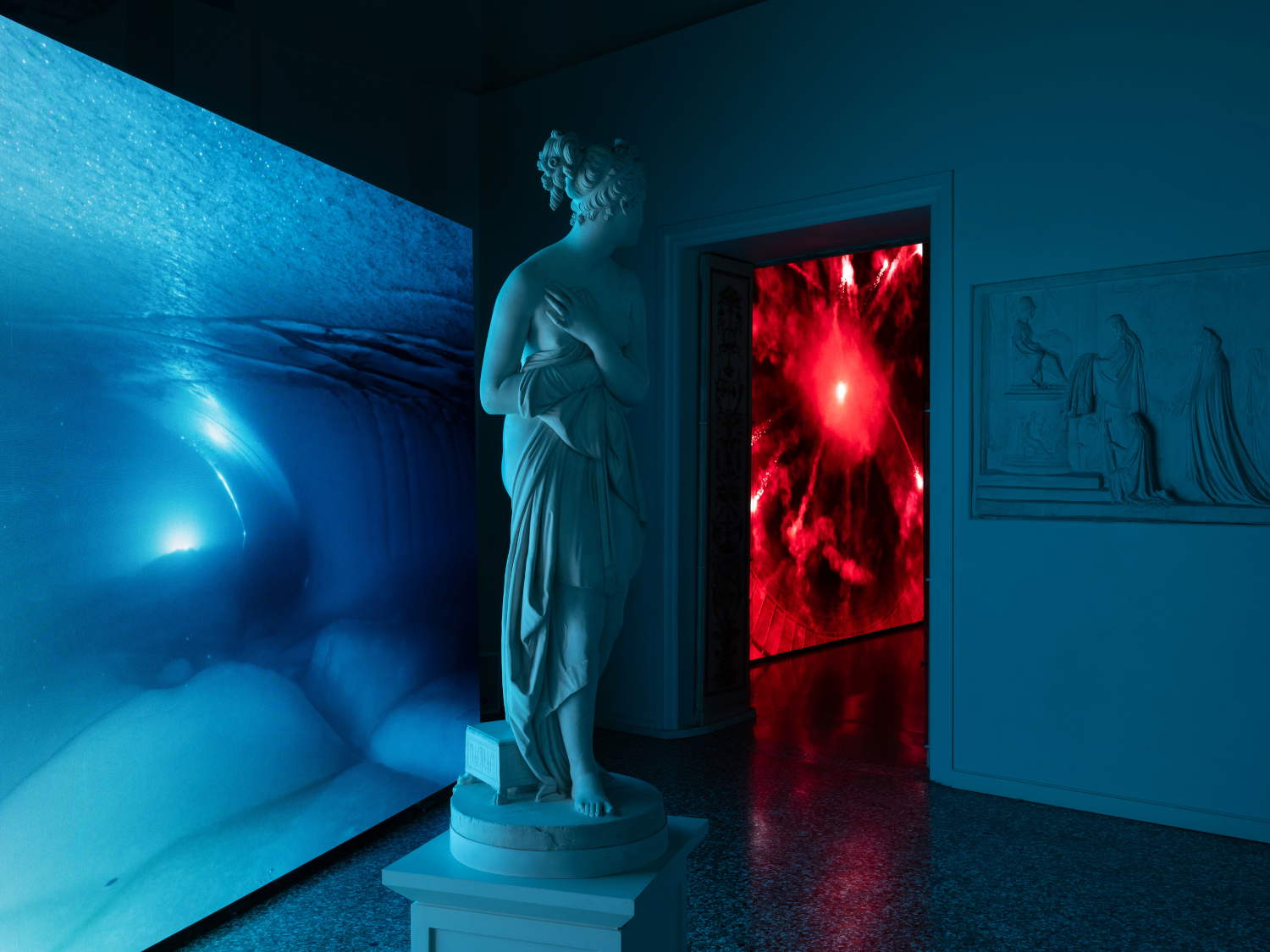
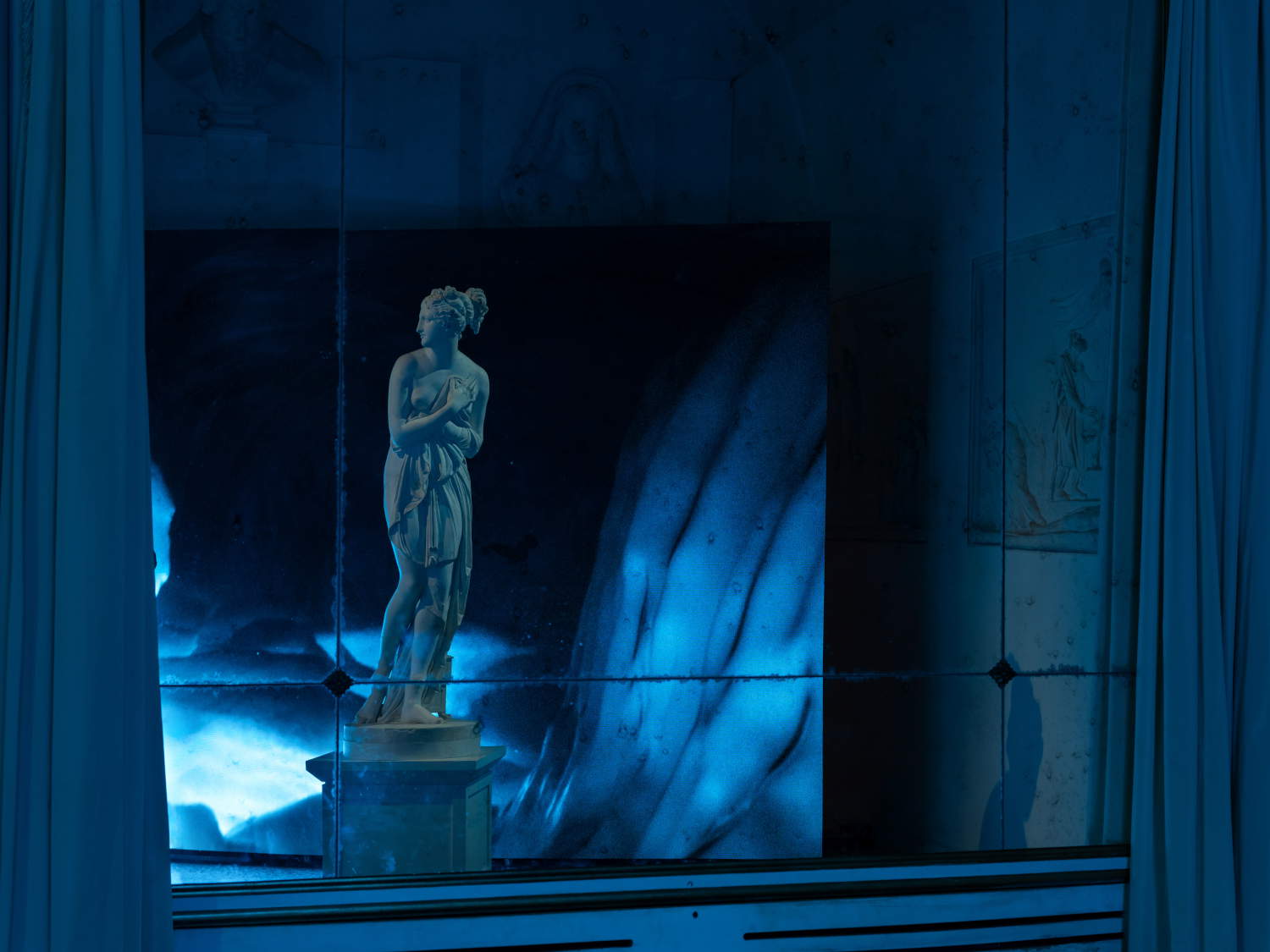
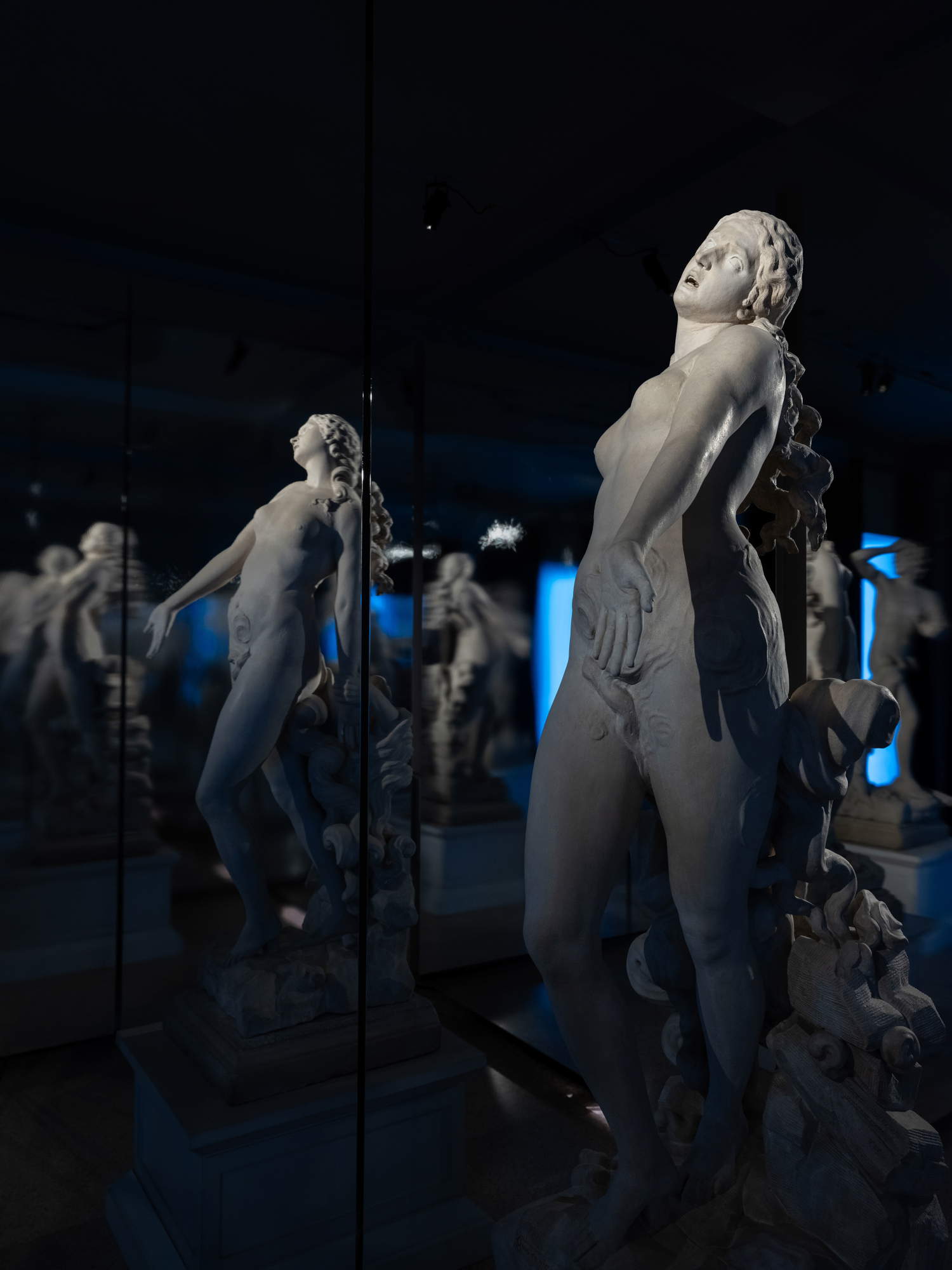
Through different languages, from sculpture to video, from photography to performance, Charrière investigates the complex relationship between human beings and the environment, between technology and ecology, between industry and science. His work is nourished by direct experiences in the field: the artist often works in remote contexts and under extreme conditions, not to celebrate nature, but to highlight its fragility and criticality.
The project stems from a dialogue built over time between Charrière and Canova, based on their ability to confront universal dimensions such as myth and utopia. If Canova translates these themes into a plastic language suspended in time, Charrière rereads them through a contemporary sensibility, keeping their relevance intact. Already a protagonist of the Venice Biennale (visual arts 2017 and architecture 2012 and 2021), Charrière offers here a reinterpretation of the Canovian Rooms that is incisive. The dialogue between neoclassical marble and contemporary multimedia languages, such as light, sound, and image, gives rise to an unprecedented confrontation between Canova’s classical idealism and Charrière’s reflections on entropy and biological mutation.
|
| Venice, in the Sale Canoviane of the Museo Correr, Julian Charrière in dialogue with Canova |

Warning: the translation into English of the original Italian article was created using automatic tools. We undertake to review all articles, but we do not guarantee the total absence of inaccuracies in the translation due to the program. You can find the original by clicking on the ITA button. If you find any mistake,please contact us.






















 IT
IT FR
FR DE
DE ES
ES CN
CN


