





A vast collection of orders of knighthood and decorations that belonged to Umberto II of Savoy, the last king of Italy, is being presented to the public for the first time and auctioned in Geneva by the auction house Piguet in March 2026. The set includes forty-four major lots and brings together some of the most important honors received by the sovereign during his lifetime, largely while he was still Prince of Piedmont. Hitherto kept within the royal family, the decorations will be on display in the auction house’s salons from March 12 to 15, while the online sale runs from March 5 to 18, with closures between March 16 and 19.
The collection offers a panorama of the diplomatic and dynastic relations that characterized the Italian monarchy during the 20th century. Through the honors bestowed on the crown prince and then the sovereign, the ties that united the House of Savoy with European courts and numerous states around the world, from France to Belgium, Sweden to Russia, the Vatican to Portugal, and countries outside Europe such as Peru, Egypt, Thailand and Japan emerge. Many of the dynasties that bestowed these decorations no longer reign or have disappeared, but the ensemble restores the international dimension of monarchical diplomacy in the interwar period and the years that followed.
“It is extremely rare to offer such an important and prestigious ensemble within a single auction. The most distinguished orders of knighthood are represented there in their highest rank!” emphasizes Bernard Piguet, director and auctioneer of the auction house. “Receiving the trust of Europe’s greatest aristocratic families is an immense privilege, which also comes with the responsibility of seeing to it that these prestigious objects continue their history with a new owner worthy of their legacy.”
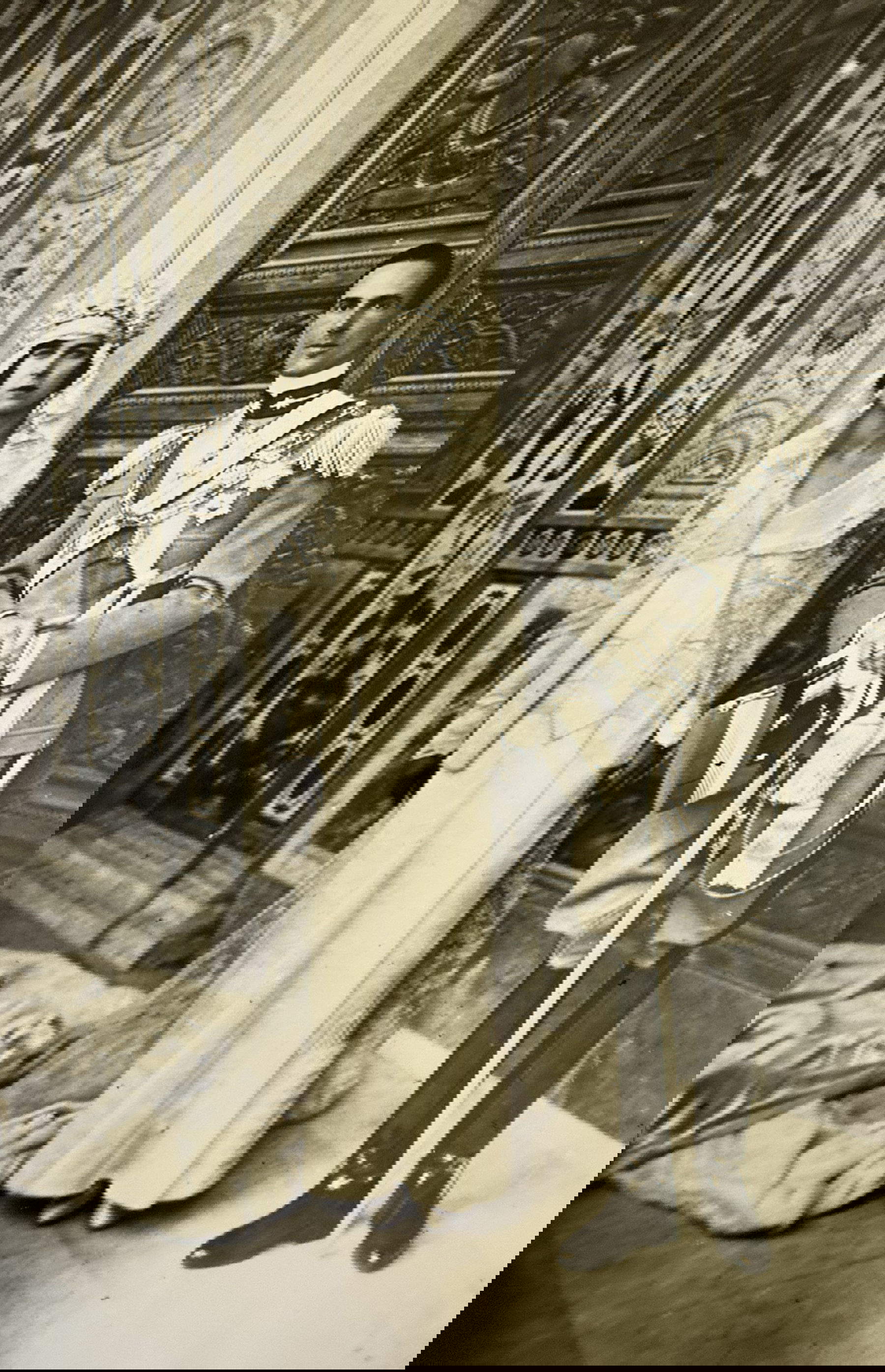
Umberto II was born in 1904 at the Royal Castle in Racconigi, Piedmont. The only son of King Victor Emmanuel III and Queen Elena of Montenegro, he was designated from birth to represent the Italian monarchy in relations with other states. In 1930 he married Princess Maria Jose of Belgium, daughter of King Albert I and sister of Leopold III. His figure coincides with the last chapter of the Italian monarchy born of the Risorgimento. In May 1946 she ascended the throne for a brief period before the institutional referendum that led to the exile of the royal family. After that date, the decorations he received during his lifetime remained as material evidence of a concluded political and diplomatic season. Piguet’s proposed collection reflects the role played by the crown prince in the network of international relations among the monarchies of the early twentieth century. The exchange of orders of knighthood then represented a true diplomatic language. The awarding of a decoration sanctioned relationships between sovereigns, consolidated alliances and marked official occasions such as state visits, dynastic marriages or important moments in political life.
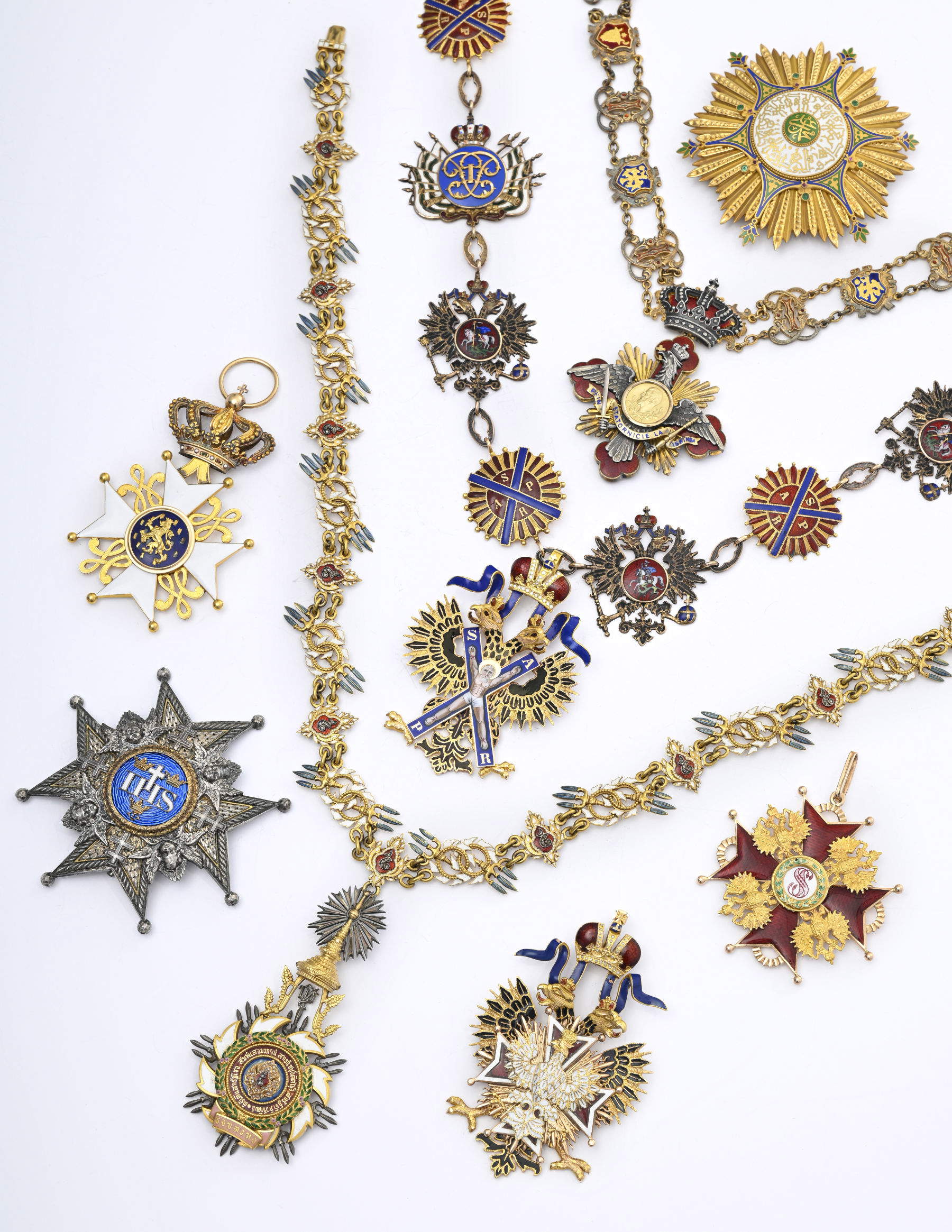
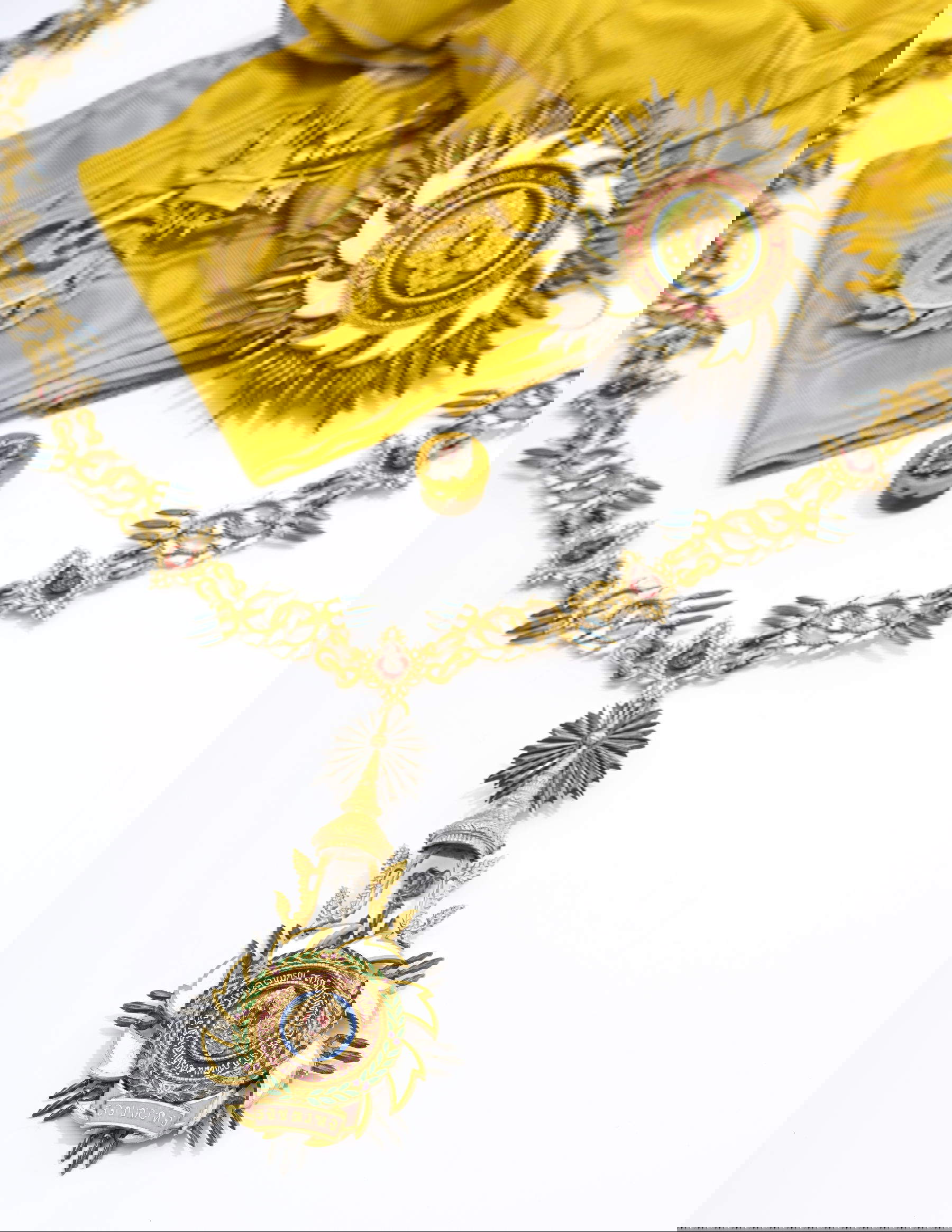
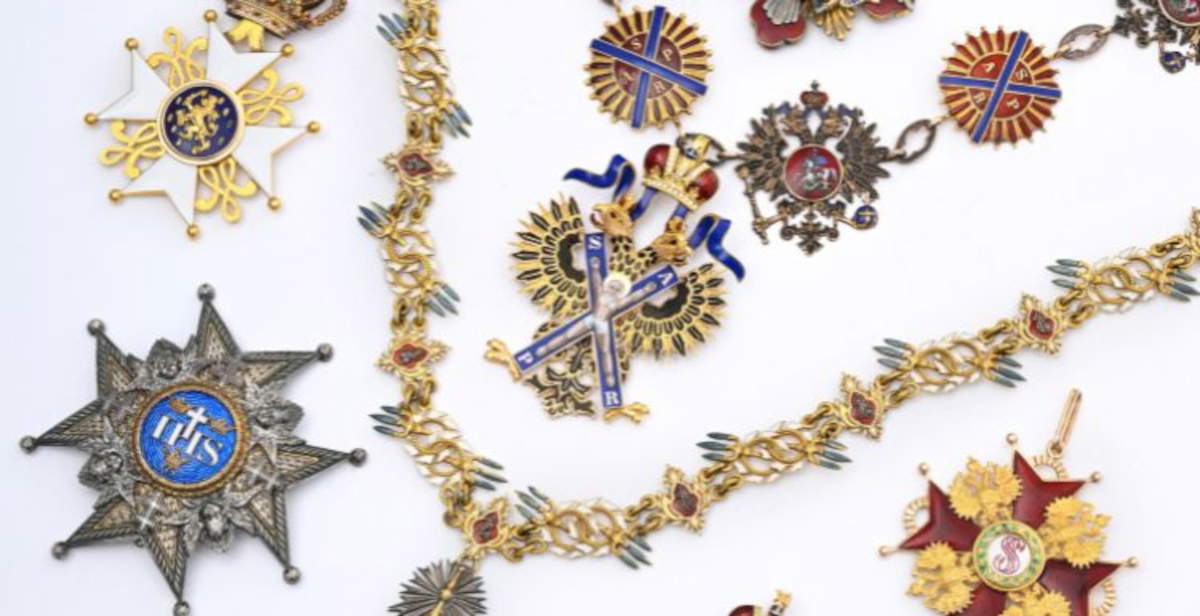
Among the most notable pieces in the sale are a number of honors from the Russian Empire. In particular, theImperial Order of St. Andrew the Apostle First Called, the highest civil and military decoration of the tsarist state, awarded in 1910 to the young Prince of Piedmont when he was six years old. The order was established in 1698 by Peter I the Great, and in the lot for sale it appears in a set consisting of the main insignia, a necklace richly decorated in solid gold and enamel, and the plaque with the original casket. The elements were made by goldsmith Johann Lindstedt for the Edouard house. The set is estimated at between 100,000 and 150,000 Swiss francs, or about 110,800 to 166,200 euros.
Presented alongside this piece is a casket containing four other Russian imperial orderstraditionally conferred together with the Order of St. Andrew: the Order of St. Anne, the Order of St. Alexander Nevsky, the Order of the White Eagle, and the Order of St. Stanislaus. The lot, preserved in its original red leather case, is estimated at between 40,000 and 60,000 Swiss francs, equivalent to about 44,300 to 66,500 euros.
Among the highest honors is theSupreme Order of Christ, the highest papal decoration, awarded to Umberto in 1929 on the occasion of the signing of the Lateran Pacts between Italy and the Holy See. The order, no longer awarded, was reserved for Catholic heads of state and is a testament to the role played by the crown prince at a crucial moment in European political and religious history. The lot has an estimate of between 15,000 and 20,000 Swiss francs, or about 16,600 to 22,200 euros. Numerous other orders testify to the Italian monarchy’s relations with major European ruling houses. These include theOrder of Seraphim of the Kingdom of Sweden, theOrder of Leopold of Belgium (lots 1828 and 1804), the Grand Cross of the French Legion of Honor, and theOrder of St. Charles of the Principality of Monaco (lots 1815 and 1816). There are also decorations from Romania, Bulgaria, Serbia, the Netherlands and Greece, bestowed on Humbert II at various times in his public life.
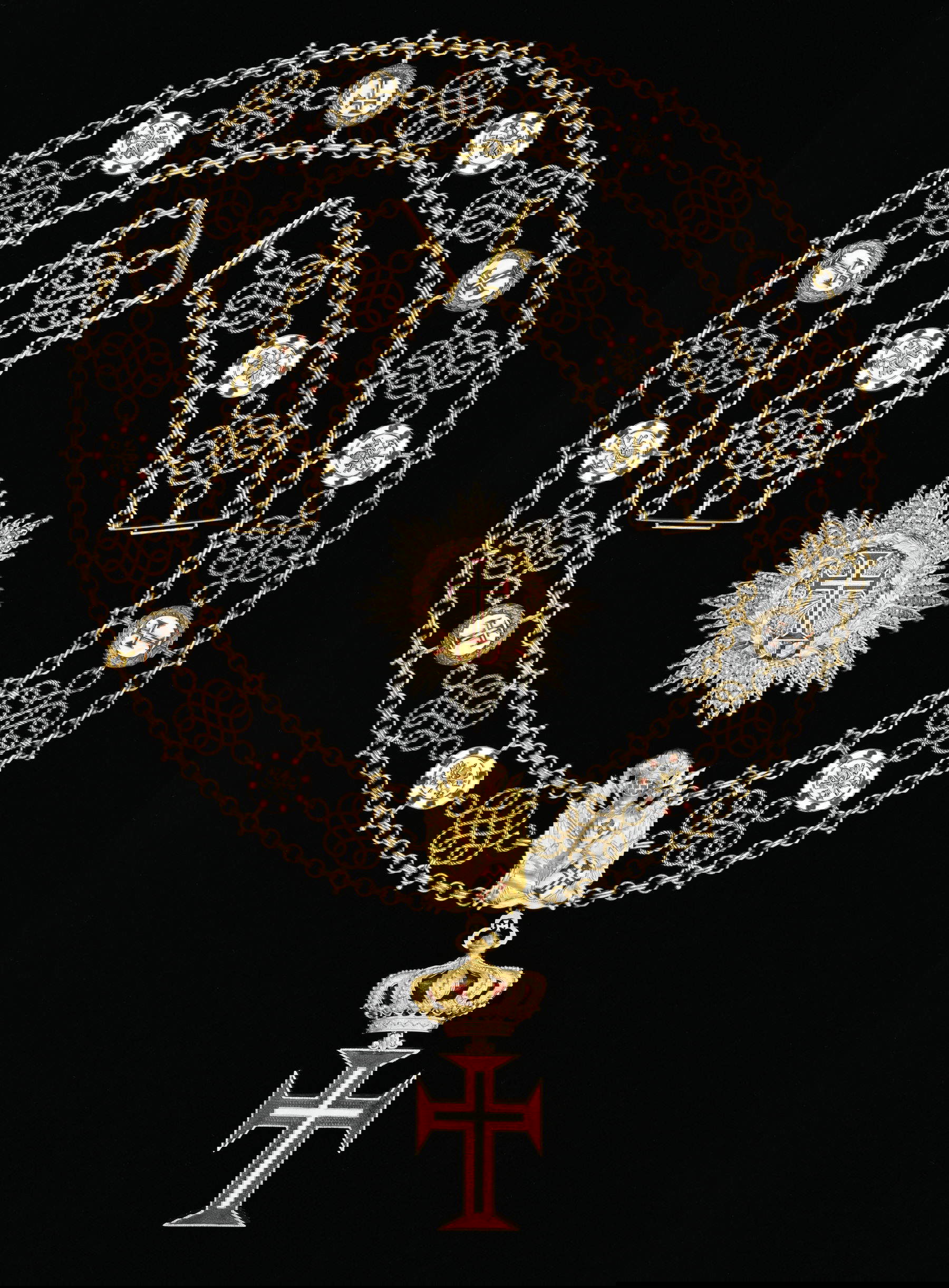
An important chapter of the collection concerns Spanish orders. Prominent among them is the collar of the Order of Charles III, bestowed by King Alfonso XIII of Spain in 1924 and estimated at between 20,000 and 30,000 Swiss francs, about 22,200 to 33,300 euros. TheOrder of the Golden Fleece, one of Europe’s oldest and most prestigious orders of chivalry, founded in 1430 by Philip the Good, also belongs to the same range. The gold and enamel collar, consisting of 56 links and with a total weight of about 590 grams, is estimated at between 60,000 and 80,000 Swiss francs, equivalent to about 66,500 to 88,700 euros.
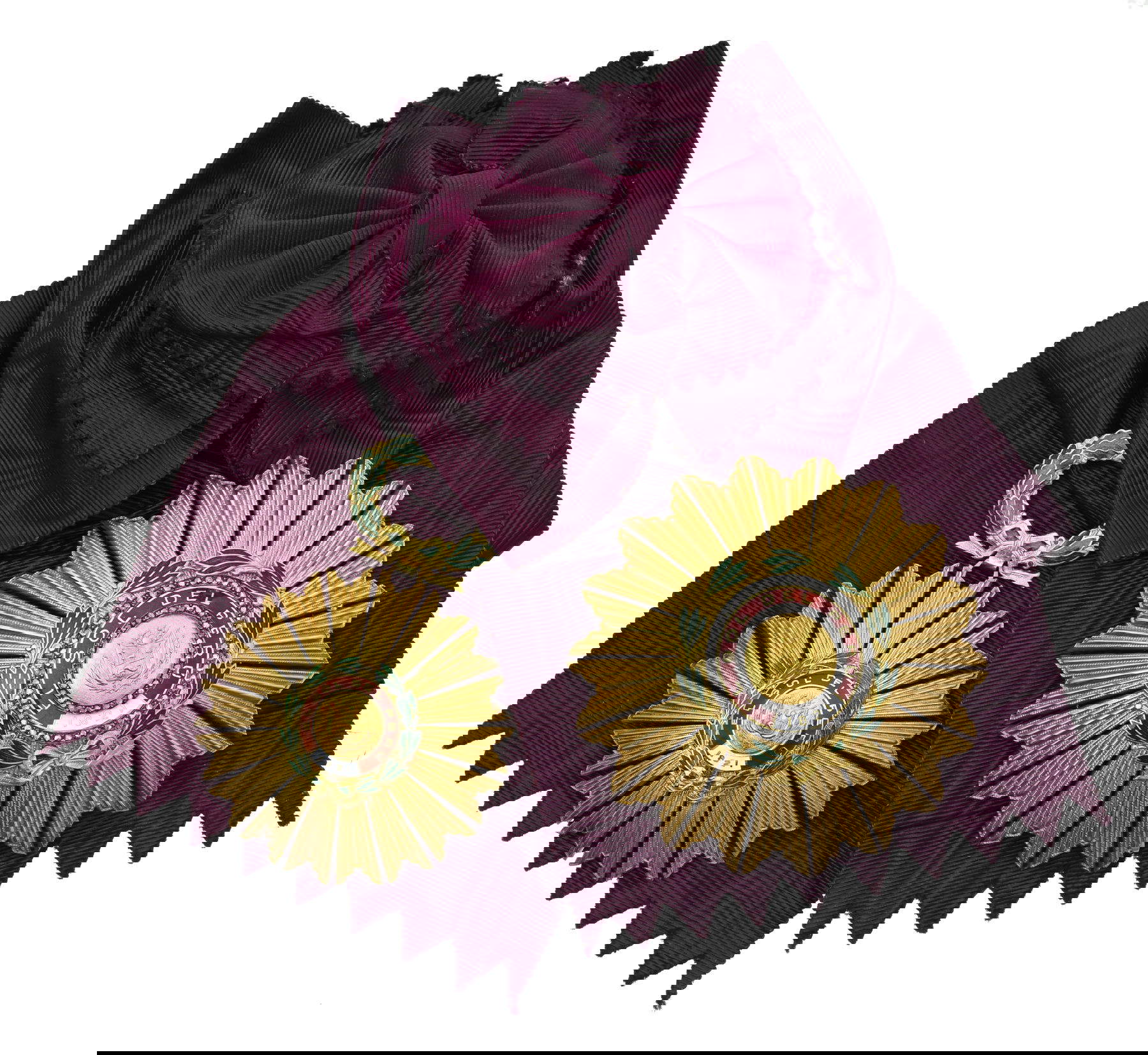
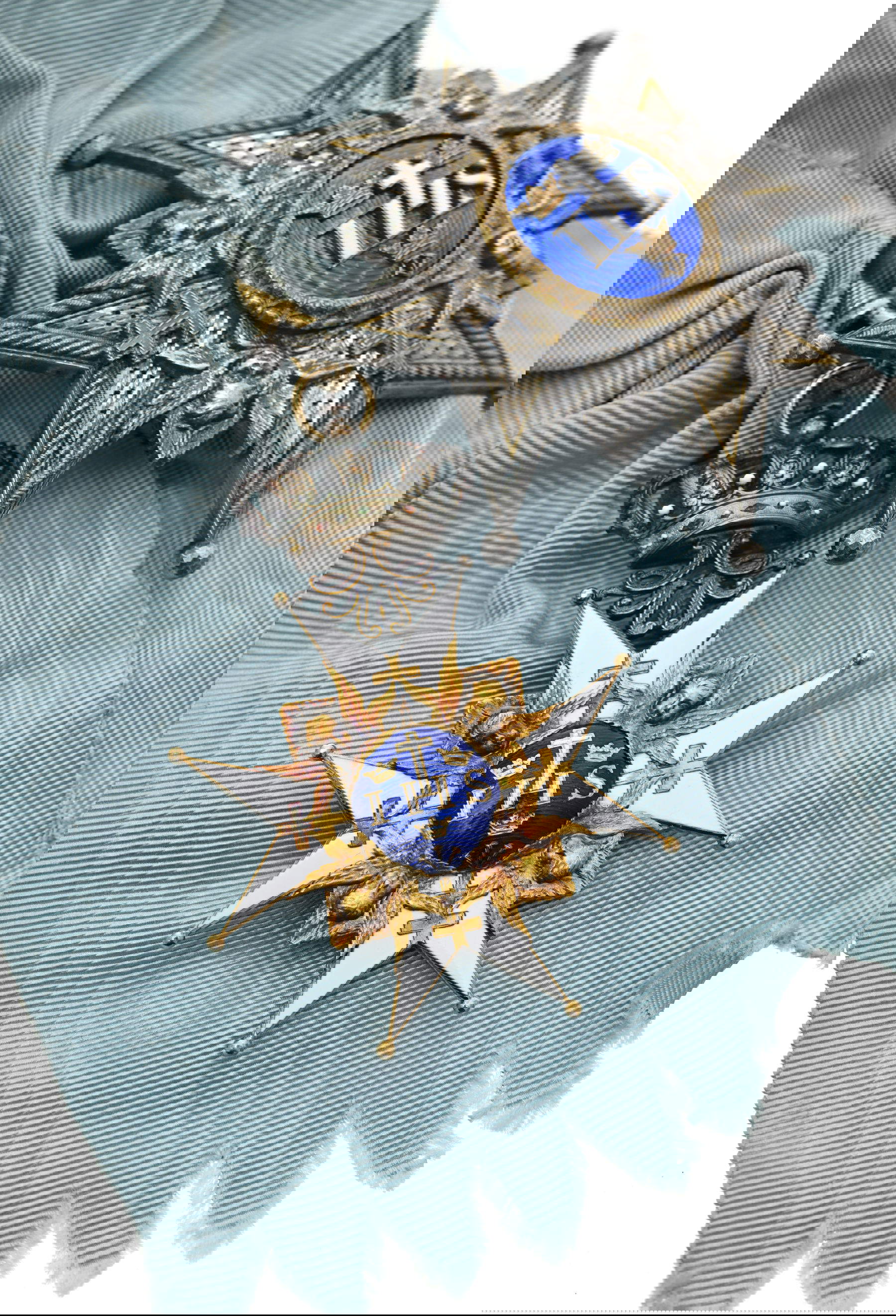
The collection also includes numerous decorations from countries outside Europe, which testify to the global dimension of the Italian monarchy’s diplomatic relations. These include theSupreme Order of the Chrysanthemum of Japan (1831 lot), one of the highest honors of the Japanese Empire, awarded to Umberto in 1923 shortly after he came of age. According to the diplomatic tradition of the time, the coming of age of a crown prince was in fact the occasion for receiving the highest distinctions from foreign rulers.
In contrast, from Thailand comes theOrder of the Chakri Dynasty (1794 lot), established in 1882 and reserved for members of royal families and foreign heads of state. Conferred on Humbert II in 1933, when he was still Prince of Piedmont, the lot is estimated at between 30,000 and 50,000 Swiss francs, about 33,300 55,400 euros. Decorations of non-European origin also include theNishan al-Muhammad ’Ali Order of the Kingdom of Egypt (lot 1832), established in 1915. The ensemble includes the collar, insignia, and plaque decorated with emeralds, rubies, and diamonds. The lot is estimated at between 40,000 and 60,000 Swiss francs, or about 44,300 to 66,500 euros. The order was awarded to Umberto II in 1933 by King Fuad I of Egypt on the occasion of Italian ruler Victor Emmanuel III’s state visit to Egypt. Although the prince did not personally participate in the trip, the exchange of decorations between sovereigns was part of the diplomatic practice of such official meetings.
The collection also includes orders from Latin America, such as theOrder of the Sun of Peru (lot 1796), created in 1821 and presented here in a Grand Cross version estimated at between 6,000 and 8,000 Swiss francs, or about 6,650 to 8,870 euros. This is flanked by other decorations from Brazil, Chile and Ecuador, testifying to diplomatic relations between Italy and several countries on the American continent.
The set of decorations was stored for decades in a family safe and now resurfaces more than 40 years after Umberto II’s death in 1983. Their auction represents therefore the first occasion on which these objects are presented to the public and the market. After the institutional referendum of 1946, which sanctioned the exile of the royal family, these decorations became material evidence of a sovereignty that had come to an end. Over the decades they have continued to represent a tangible reminder of the role the Italian monarchy played in international relations in the twentieth century. According to Emanuele Filiberto di Savoia, head of the House of Savoy and grandson of Umberto II, the decorations assembled in the collection testify to the path of the sovereign and the position he occupied from his youth within the monarchies and states of the world.
See the complete catalog at Piguet.com to discover all the lots.
 |
| At auction in Geneva at Piguet's the decorations of Umberto II: 44 lots from the archives of the House of Savoy |

Warning: the translation into English of the original Italian article was created using automatic tools. We undertake to review all articles, but we do not guarantee the total absence of inaccuracies in the translation due to the program. You can find the original by clicking on the ITA button. If you find any mistake,please contact us.
























 IT
IT FR
FR DE
DE ES
ES CN
CN