





What makes the Venice Biennale model unique in the world? As the world’s first biennial international art exhibition format, founded in 1893 and inaugurated in 1895 (in a recently unified Italy, still ruled by the House of Savoy), between the 1920s and 1930s, it was steered by figures such as Vittorio Pica and Antonio Maraini (Dacia’s grandfather) toward a modernity definitively established by Rodolfo Pallucchini’s first exhibition in 1948—featuring retrospectives on Cubism and Futurism—and by subsequent efforts at cultural revival. That same year, the Greek Pavilion hosted Peggy Guggenheim’s art collection, featuring works ranging from Abstract Art, Informal Art, and Action Painting, with Jackson Pollock as the leading figure of American art—a prelude that would lead the United States to win the 1964 edition with Robert Rauschenberg, marking a definitive international turning point for the Venice Biennale. But it wasn’t until 1995, on the occasion of its centennial, that the Biennale finally appointed its first foreign curator, Jean Clair.
Before the Venice Biennale, the distinction of the first universal exhibition format belonged to London, with the Great Exhibition of 1851 commissioned by Queen Victoria and Prince Albert, though focused on scientific, technological, and industrial innovation, followed by Paris under Napoleon III, who introducedthe Exposition a section dedicated to the Fine Arts in the Palais de l’Industrie, which rivaled London’s Crystal Palace; both structures have since been destroyed, but they revolutionized the concept of the art exhibition and paved the way for the monumental art for which the Grand Palais in Paris is now renowned. The Venice Biennale, on the other hand, is the first world’s fair dedicated exclusively to art. To conclude this introduction to Venice’s primacy, the multidisciplinary nature of the Biennale—which unites the major sectors of art into a single creative industry —grants Italy centralized control over the arts and transforms it into a “super-Academy,” akin to the Oscars but multisectoral (and not limited to cinema), governed by a single board of directors. Italy inherited this fusion of sectors from the state and propaganda policies implemented during the twenty years of Fascist rule.
Speaking informally with Lia Durante, an art historian at the ASAC Art Fund (the Venice Biennale Archive, which will relocate from the VEGA department store in the Port of Marghera to its new headquarters at the Arsenale, at the conclusion of the 2026 Art Biennale), and a leading scholar with many years of experience working alongside the Biennale’s artistic directors, one realizes the gap between the misunderstandings that arise from political or media controversies and the legal functioning of the Biennale. Taking a brief look back at the history of the Biennale, one might question the actual power and limitations of this institution.
Following the 1973 reform—which temporarily included a Television section—the Venice Biennale changed its legal status under the Prodi government through the Legislative Decree of January 29, 1998, known as the the “Veltroni Reform,” named after the then-Minister of Culture: from a public entity, the Biennale became a cultural corporation, opened itself up to private funding and partnerships, and established its current six artistic sections (Art, Architecture, Film, Theater, Music, and Dance). Another reform was enacted shortly thereafter by the Berlusconi government through the Legislative Decree of January 8, 2004, which completed the privatization of the Biennale and transformed it into a foundation, giving it a more corporate and commercial structure.
Since its inception, the Venice Biennale has rarely amended its Statute—on average, once every 32–33 years. In the Biennale’s 131-year history, there have been only four major reforms: the first, in 1938, during the Fascist regime. To date, nearly thirty years have passed since the Biennale’s last two reforms, which, from a legal and economic standpoint, have achieved an optimal balance that has so far been accepted by all successive governments since then. Statistically, but also historically, it is therefore fair to say that the time is ripe to rethink the Biennale. Furthermore, the critical issues that have emerged this year—with the resignation of the jury and the ongoing protest by half of the participating artists against the popular vote (which was urgently instituted by the Biennale last month)—bring the need for a change in the Statute back to the table. Whether or not the “Visitors’ Lions” have the same institutional legitimacy as the Golden and Silver Lions—and assuming that an awards ceremony will still be held after the exhibition closes on November 22, 2026—the Board of Directors should in any case resolve the regulatory vacuum that has emerged from this edition.
In its now century-long history, the Venice Art Biennale has been canceled only in truly exceptional cases—three times so far: between the two world wars; following the protests of 1968 and the subsequent government takeover of the Biennale to democratize it (in 1974, Carlo Ripa di Meana transformed the event into a major political demonstration outside the Giardini in support of Chile against Pinochet’s coup); and most recently in 2020 due to the COVID-19 pandemic. Without getting bogged down in statistics and simply to better contextualize the current situation, the death of an artistic director in the history of the Venice Biennale had already occurred once, as Lia Durante pointed out to me (between 1980 and 1982, between the 39th and 40th editions), and the director at the time was Luigi Carluccio. A young Harald Szeemann, along with Achille Bonito Oliva, curated an experimental section that put them in the spotlight, much like what is happening today to the curators on Koyo Kouoh’s team in this collaborative edition following her sudden death.
Among the most enlightening pieces of information I received from the Fund’s expert is the connection between Venice and São Paulo, Brazil. The only Biennial in the world that—not coincidentally—has the same Statute as the Venice Biennale is the São Paulo Biennial in Brazil, founded in 1951 thanks to the close relationship between the president of the Venice Biennale at the time, Rodolfo Pallucchini, and the first president of the São Paulo Biennial, Francisco Matarazzo, who was of Italian origin. ASAC preserves the correspondence explaining how the founding of the São Paulo Biennial is also linked to the Brazilian Pavilion and why this country was granted a privileged position in the Giardini. This partnership between the Venice and São Paulo Biennales (and the friendship between these two presidents) clearly benefited Italy—bordering, one might say, industrial espionage—since Pallucchini and Matarazzo exchanged valuable advance information on the artistic and exhibition projects of other nations, such as France, thereby ensuring that Italy could compete on equal footing.
If Italy is out of the running this year due to the absence of Italian artists in the international exhibition, one wonders if the cause might not lie in the long process of transforming the legal structure of the Venice Biennale, which has yet to be completed. Among the official missions of the Venice Biennale from 1929 to 1973—the year a new Statute (the second) was adopted— was the promotion of Italian art abroad—a fundamental function that, with the changing times, became a source of embarrassment due to a policy that was perhaps more democratic but also more self-conscious, one that sought to avoid accusations of favoritism amid the extremely tense geopolitical context of the “Years of Lead” and the Cold War. This generally led to a concealment of the political dynamics that always underlie—and must underlie—art and culture, but in a transparent and public manner, rather than unofficially through diplomatic channels as in subsequent years.
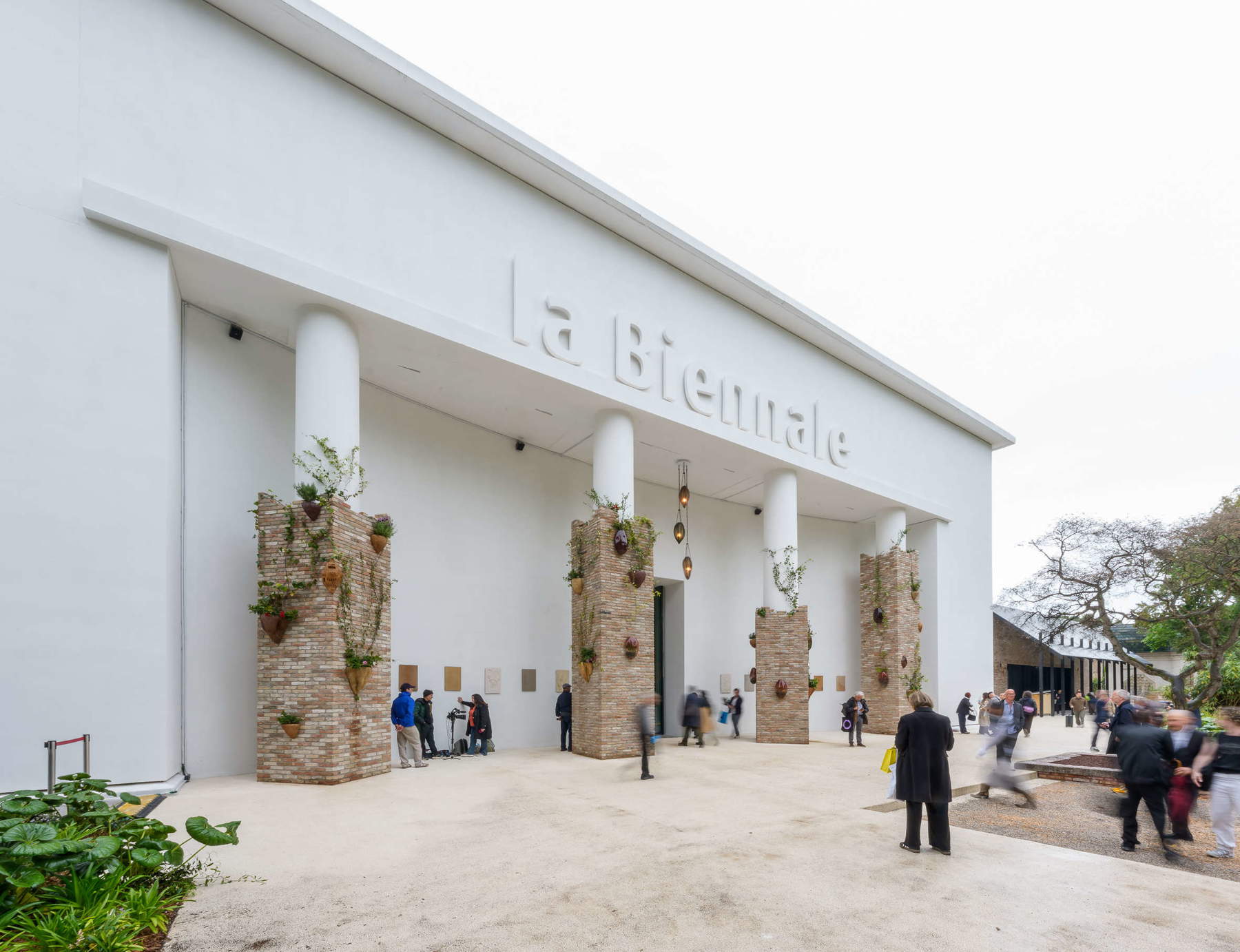
Until Paolo Baratta’s presidency—the longest-running in the history of the Venice Biennale, albeit temporarily interrupted by the appointments of Franco Bernabè and David Croff between 2002 and 2007—and with the establishment in 2006 of an Italian pavilion at theArsenale—separated from the Central Pavilion for the first time—a Biennale without Italian artists, as is the case this year, would not have been technically possible. Whether curator Koyo Kouoh simply ran out of time or did not actually consider Italian artists among her priorities, this is in fact the result of a presidency like that of Pietrangelo Buttafuoco, which no longer interferes—nor has any reason to interfere—with the work and exhibition choices of the Central Pavilion.
Another critical issue in this edition: the Russian Pavilion. In reality, the “case” of the Russian Pavilion does not exist because, having never closed, it cannot technically have been “reopened,” as many have claimed. In the previous edition, the 2024 Art Biennale, the Russian government hosted Bolivia—a provocation only superficially disguised as a step back. Since neither Russia nor the Venice Biennale—which bureaucratically ratifies its participation—violated any regulations, it was up to the Italian government, at most, if it deemed the Russian presence in Venice politically inconceivable, to seize the pavilion—a move that, however, would amount to a declaration of war. Under the current Statute, the national pavilions in the Giardini are de facto foreign embassies on Italian soil and cannot legally be closed without entering a state of war. In short, it would seem that this factor is worth taking into consideration when and if the Statute is reviewed.
Although only remotely connected to the history of the Venice Biennale, it is worth mentioning (due to an important milestone in Venice’s artistic and cultural landscape) the story of the conversion of Punta della Dogana into a museum—an idea conceived and championed by the then-Mayor of Venice, Massimo Cacciari, and strongly advocated by the father of Arte Povera, Germano Celant, curator of the 1997 Art Biennale, through the American Guggenheim Foundation. However, the bid was won by the Frenchman François Pinault, who signed the 30-year concession agreement in 2007, oversaw the renovation with Tadao Ando, and inaugurated the museum in 2009 with Francesco Bonami as co-curator. Technically, the City of Venice will therefore be required to issue a new international call for bids in 2040.
In 2003, the Biennale’s headquarters—originally located at Ca’ Corner della Regina (now the Venice headquarters of the Prada Foundation)—was moved to Ca’ Giustinian in San Marco. Some of the 500 works of art from the ASAC Art Fund—including pieces by Turcato, Severini, Vedova, and Bonalumi—are on display there, for now solely for internal viewing and representational purposes. There are currently no plans for an exhibition space in the new ASAC facilities at the Arsenale, nor is there an ongoing project to transform the Venice Biennale Foundation into a museum, which would allow the Biennale’s Artistic Fund to be legally recognized as an art collection. For now, the works from the Art Collection can be admired every three months in the print-only magazine *La Biennale di Venezia*, commissioned by President Buttafuoco and returned to newsstands in 2024 after a 53-year hiatus. Those who cannot afford a subscription to the magazine can view the works from the Fund online. Edited by Debora Rossi (an administrative pillar of the Venice Biennale with various roles, including that of legal representative) and Luigi Mascheroni (a contributor to *Il Giornale*, among other things), and edited by officials from various sectors of the Biennale, you will find nothing in the magazine that obviously compromises the impartiality of the Venice Biennale Foundation—and nothing about the current edition of the 61st Art Biennale. This institutional caution borders on resignation and, to put it in liberal-competitive terms, perhaps fails to fully capitalize on its own cultural advantage.
To conclude, the issue of Koyo Kouoh’s exhibition remains to be addressed. Postponing the award ceremony until the close of the Venice art exhibition could become the norm and justify its duration. This year, however, and for the first time, the works of the featured artists will have from May through November 2026 to take root, spark discussion, radiate their aesthetic power and cultural significance, and be seen by the widest possible audience. The Golden Lion of each edition should go to the work that, over this entire period (seven months), proves to be the most beloved and memorable—in short, the one that fosters the greatest collective attachment. Awarding the prize at the very start of the exhibition leaves no sufficient time and is scientifically premature. This rapid awarding is more akin to a promotion, as it highlights the winning artists from the very beginning of the exhibition. Live art (performances, happenings, processions) should be moved to the Biennale’s Theater section; otherwise, these art forms will continue to be outpaced in immediacy by unscheduled flash mobs, such as the one staged by Pussy Riot in front of the Russian pavilion during the Biennale’s pre-opening. A slower awards ceremony, held after the fact or at the close of the event, on the other hand, would restore balance to the competitiveness of the visual arts in all their diversity and longevity. After all, the goal is to consign works and artists to history (or at least to try to do so) and to the market. This 61st Biennale forces the art world to slow down, giving us time to think.

Warning: the translation into English of the original Italian article was created using automatic tools. We undertake to review all articles, but we do not guarantee the total absence of inaccuracies in the translation due to the program. You can find the original by clicking on the ITA button. If you find any mistake,please contact us.


























 IT
IT FR
FR DE
DE ES
ES CN
CN


