





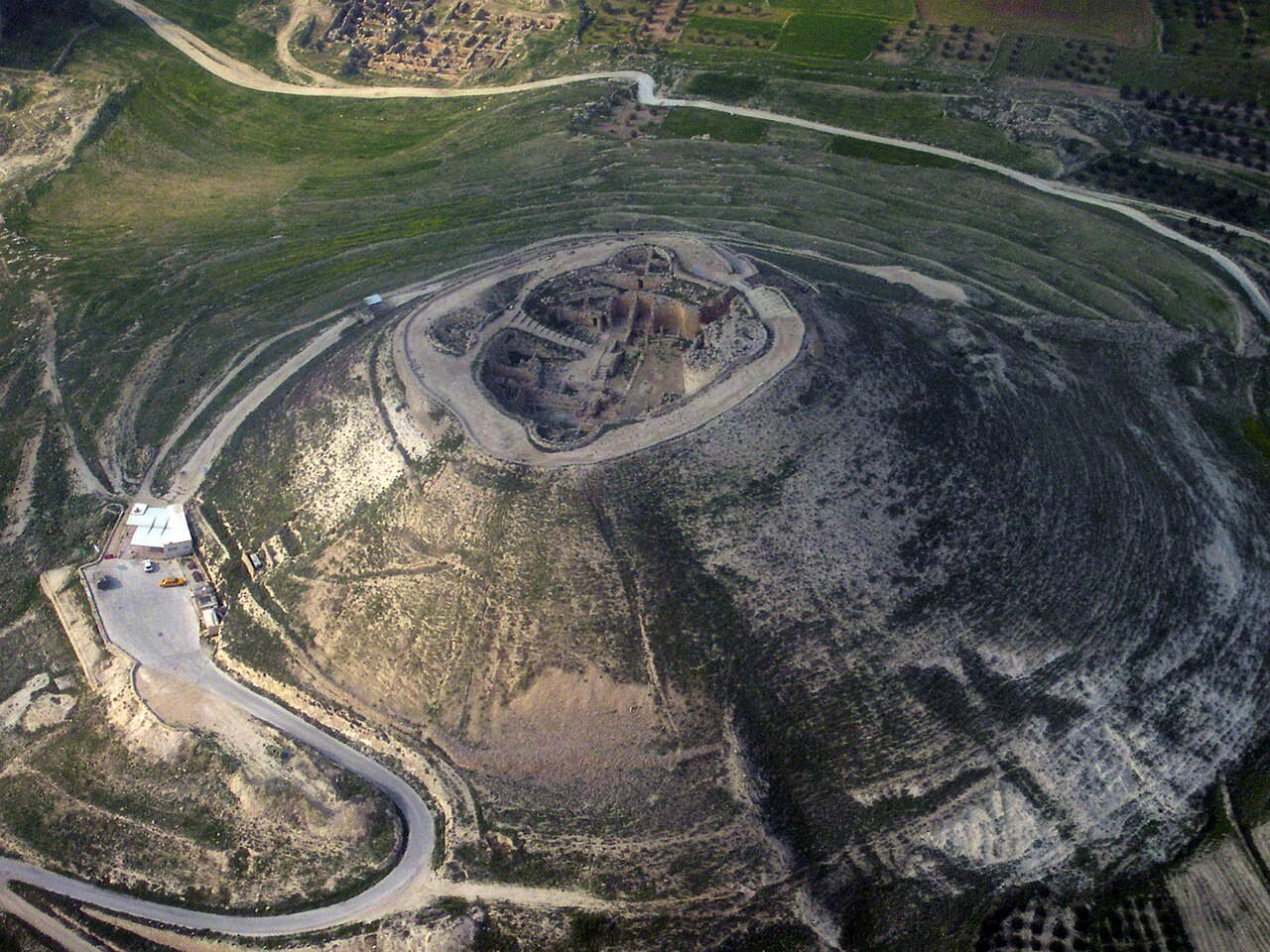
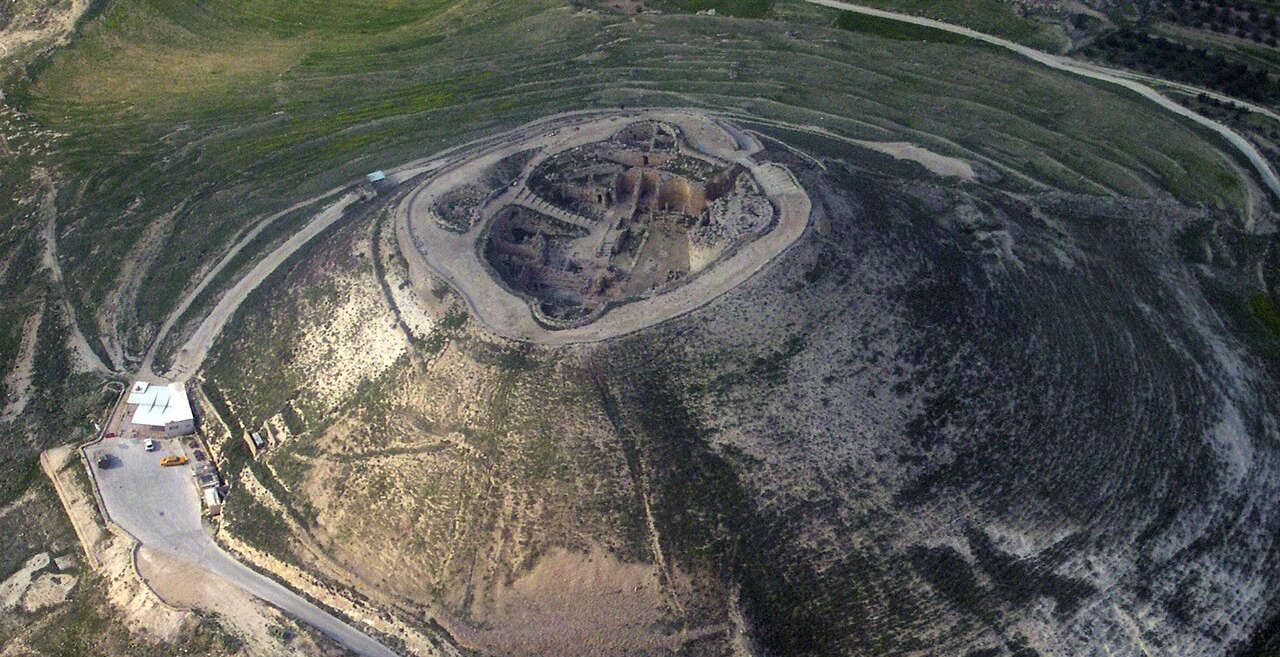
The IsraelCivil Administration, Israel’s government agency operating in the West Bank, has initiated procedures to expropriate 320 dunams of land, or 32 hectares, earmarked for the conservation and development of the Herodium archaeological site, one of the most important monumental complexes in the West Bank itself. The announcement, which was released today, comes in the context of a particularly delicate political and legislative situation, as the future of archaeological heritage management in the occupied Palestinian territories has been debated in Israel for weeks: there is no shortage of accusations, from numerous observers and professional organizations, of a gradual extension of Israeli sovereignty through the instruments of cultural protection.
Herodium, the famous palatial complex built by Herod the Great in the first half of the first century AD, is located southeast of Bethlehem, in Area C of the West Bank, the portion of the territory that, under the 1993 Oslo Accords, is under Israeli control and administration (and corresponds to 59 percent of the West Bank territory). The site, located on the top of an artificial hill and now included within a national park, represents one of the most significant archaeological remains of the Herodian period.
In an official note, the Civil Administration explained that “the expropriation is being carried out in compliance with the law, following thorough professional evaluations conducted by the Civil Administration’s officer in charge of archaeology and the officer in charge of nature reserves. Their conclusions highlighted the urgent need to regulate the area and promote site conservation measures in order to prevent damage to archaeological remains of exceptional historical and cultural importance.” The initiative does not represent an isolated case. As early as last November, the Civil Administration, reports the Israeli newspaper Times of Israel, announced plans to expropriate some 1,800 dunams (180 hectares), in the area surrounding the archaeological site of Sebastia, near Nablus. Sebastia is believed to be the ancient capital of the Kingdom of Israel between the 9th and 8th centuries B.C. and preserves evidence from different eras, including Roman, Crusader and Ottoman.
The decision regarding Herodium comes as the Knesset, Israel’s parliament, is debating a controversial bill that could profoundly change the antiquities management system in the West Bank. The measure, supported by Likud, Prime Minister Benjamin Netanyahu’s party, and presented by MP Amit Halevi, in fact envisions the creation of a new structure called the “Judea and Samaria Heritage Authority,” using the biblical designation by which the West Bank is often referred to in Israel.
As reconstructed by the Haaretz newspaper, according to the promoters, the new authority would assume sole responsibility for all matters related to historical heritage, antiquities and archaeology in the area, with responsibilities that would include excavations, site management, supervision of archaeological research and monitoring and protection activities. The plan would also give the body powers to acquire and expropriate land for the protection and development of archaeological sites. On the night of May 12-13, the bill passed its first reading in the Knesset with 23 votes in favor and 14 against. It will now have to return to the Education, Culture and Sports Committee for further discussion and amendments before facing the subsequent readings necessary for final approval. However, the parliamentary process has encountered some delays. A vote scheduled to advance the text to the final stage was postponed after a meeting devoted to amendments ended early due to the absence of enough MPs from the governing coalition to secure a majority.
One of the most controversial aspects of the proposal, Haaretz explains, concerns the transfer of authority, which is currently exercised by the Civil Administration’s archaeological officer, a body that reports to the Coordinator of Government Activities in the Territories (COGAT) and, therefore, to the Defense Ministry. Instead, the new authority would operate under the supervision of the Ministry of Heritage. Heading that department is Amichai Eliyahu, a member of the far-right Otzma Yehudit party, led by Itamar Ben-Gvir. Eliyahu has repeatedly spoken out in favor of theannexation of the West Bank and, last February, had attracted media attention by hoisting a large Israeli flag over the Sartaba archaeological site, publicly declaring, “We are taking back what is ours.” Under this new law, the new authority will have sole responsibility for all matters related to heritage, antiquities and archaeology in the area. Its powers would include excavation and management of sites, supervision of archaeological excavations, and law enforcement. The bill also provides that the jurisdiction of the new authority could extend to Areas B in the West Bank, which under the Oslo Accords are subject to Israeli control but to the civilian administration of the Palestinian National Authority. Some parliamentary discussions have also considered the possibility of expanding the powers to the Gaza Strip in the future and renaming the body as the “Heritage Authority of Yesha,” a Hebrew acronym that encompasses the West Bank, Gaza and the former Israeli settlements in the Palestinian enclave.
According to data from the Civil Administration’s Archaeological Unit, there are more than 2,600 surveyed archaeological sites in the West Bank alone. These include places of enormous historical and religious significance such as Sebastia, the Tomb of the Patriarchs in Hebron, Tel Shiloh, where according to biblical tradition the Tabernacle was kept, several Hasmonean fortresses, the palace of Herod the Great, and the caves of Qumran, where the Dead Sea Scrolls were found. The area also includes important Christian and Muslim sites, including the Basilica of the Nativity in Bethlehem. Supporters of the law believe that the current system is insufficient to ensure the protection of archaeological heritage and accuse the Palestinian Authority of showing little interest in preserving sites connected to ancient Israel’s history. Cases of damage attributed to development projects carried out under Palestinian administration are often cited.
Amit Halevi presented the measure as a cultural and identity response to the current political and military situation. Speaking in the Knesset, the Likud MP said that “the current war is about our identity, our culture, God and our deep connection to this land,” arguing that the new legislation would represent part of the victory against what he called “barbarism.” Reactions from academia and a number of professional organizations were of the opposite stamp. The Israeli archaeologists’ association Emek Shaveh harshly criticized the draft, arguing that the proposal would not have as its main goal the protection of antiquities, but would turn archaeological heritage into a political tool used against the local population and functional to promote the annexation of the West Bank. According to the organization, a real preservation policy should focus on preventing looting, working with local communities and scientific institutions, and introducing a general ban on the antiquities trade, which is considered one of the main incentives for the destruction of archaeological sites.
In a document sent to the Knesset Culture Committee in February, Emek Shaveh also warned that the measure could undermine scientific research, accentuate Israel’s international isolation in the archaeological field, and have significant consequences for communities living near historic sites. In fact, according to scholars, the extension of control powers could pave the way for discriminatory policies and further tensions in the area.
That’s not all: according to prevailing interpretations of international law, even in Area C Israel would only be allowed to conduct salvage excavations and operations for the preservation of archaeological artifacts and sites, not to initiate excavations for academic purposes or site development. The expropriation of land in Herodium would therefore, according to this interpretation, be a violation of international law.
Parliament’s legal advisers also expressed misgivings. During consideration of the text, the Culture Committee’s legal adviser, Tami Sela, pointed out that the passage of the law would mark the first time that land expropriation and acquisition powers in the West Bank would be transferred directly to the Israeli state, which would also apply to Palestinian residents. And now, in this already complicated scenario, the expropriation of Herodium’s land now also enters the picture, bound to further fuel a discussion that intertwines archaeology, politics, national identity and international law.
 |
| Israel expropriates land in West Bank to develop archaeological site |

Warning: the translation into English of the original Italian article was created using automatic tools. We undertake to review all articles, but we do not guarantee the total absence of inaccuracies in the translation due to the program. You can find the original by clicking on the ITA button. If you find any mistake,please contact us.




























 IT
IT FR
FR DE
DE ES
ES CN
CN


