





The Louvre Museum is embarking onthe most impressive and ambitious restoration project ever undertaken by the Department of Painting: the 24 monumental canvases by Peter Paul Rubens that make up the famous Maria de’ Medici Cycle will be restored. This is a four-year project of exceptional scope in every respect. Indeed, the Medici Gallery represents the largest commission ever given to Rubens, carried out when the artist was at the height of his fame in Europe. The work will affect a total painting surface of about 293 square meters and will be carried out directly in Room 801 of the Richelieu Wing, which will be specially converted into a restoration laboratory. The decision to restore the entire cycle, matured over the past decade, stems from an assessment of the state of conservation conducted in 2016 and subsequently confirmed by two preliminary studies carried out in 2020 and 2023. The latter made it possible to obtain, for the first time, complete documentation through scientific imaging of the works. In addition to the yellowing caused by the oxidation of the varnishes, the structural condition of some paintings is of concern, where there is evidence of detachment of the pictorial layer.
The public tender was published on Feb. 23, 2026 with the support of the French Center for Museum Research and Restoration (C2RMF). The assignment will be awarded in June 2026 to two teams of restorers, and work is scheduled to begin in October of the same year, under the supervision of an international scientific committee. The work is made possible thanks to a significant contribution from the Society of the Friends of the Louvre, which has earmarked four million euros for the project.
The pictorial cycle, consisting of twenty-four canvases, narrates in a heroic key the life of Marie de’ Medici (1573-1642), queen of France and consort of Henry IV. It was made between 1622 and 1625 to decorate one of the two galleries of Marie de’ Medici’s palace in Paris, Palais du Luxembourg, a residence desired by the sovereign beginning in 1615 and now the seat of the Senate. The works, largely executed directly by the hand of Rubens, although removed from their original location, were placed between the windows of the gallery, illuminated by openings on both sides. A second gallery, intended to celebrate the exploits of Henry IV, was only partially started between 1628 and 1631 and then abandoned following the queen’s exile in 1631.
The cycle followed a precise narrative path: upon entering the gallery, the works were arranged along the walls in sequence from left to right, with portraits at the entrance and a large concluding painting on the back wall.
When Rubens received the commission, he already enjoyed extraordinary international fame. For this reason, the queen approached him to carry out what would become the most important commission ever received by Rubens and his workshop. The project immediately stood out for its imposing size. It involved some 293 square meters of painted surface area, executed in Flanders for later transfer to France. The contract was signed in February 1622, after negotiations began the previous year, and the cycle was completed in 1625.
The twenty-four canvases recount the life of the Tuscan princess who ascended to the French throne in 1600, closely intertwined with her political activities. The work, created in Antwerp by Rubens and his workshop, represents one of the most complex artistic endeavors of the time, although its completion is only partially documented. The artist’s letters, while incomplete, provide a valuable source for understanding its genesis. This cycle is considered the masterpiece of Rubens’ career, but it still retains many mysterious aspects. It is anextremely rich and layered work: it is at once a political statement, a celebration of France’s role in Europe, an excellent example of court portraiture and a pinnacle of the allegorical language of the period. It also reflects the political tensions of the court, the rise of Cardinal Richelieu and the fragility of the early Bourbon dynasty. It is therefore not surprising that it is now considered one of the Louvre’s most precious treasures.
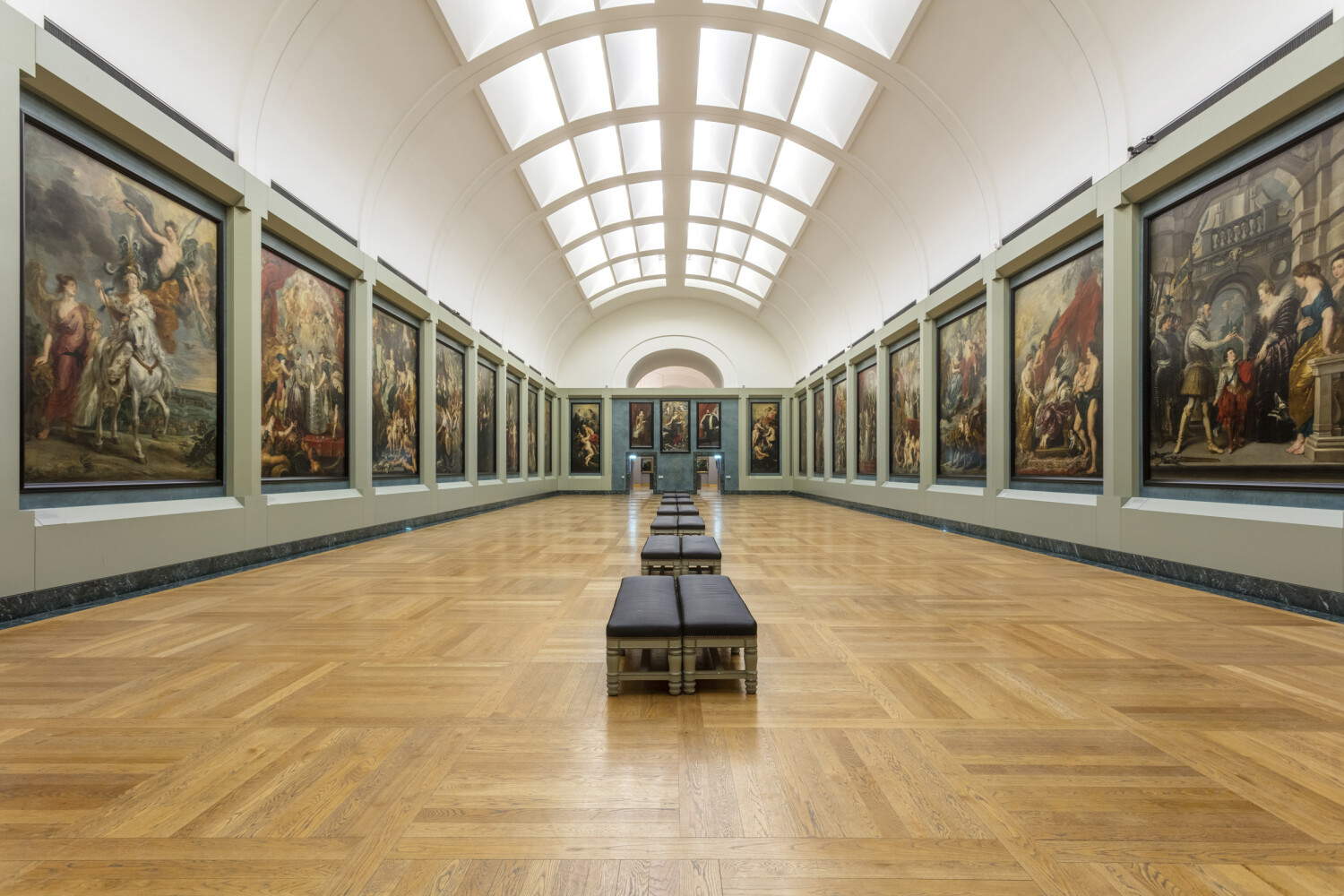
As early as 2016, the Painting Department found unsatisfactory conservation conditions for the entire cycle. A preliminary study was therefore entrusted in 2020 to a team of six specialized restorers, coordinated by Luc Hurter. Their analyses confirmed significant critical issues: detachments of the paint film, deterioration of the supports, and alterations due to previous interventions. In addition, the aesthetic appearance of the works was compromised: oxidized varnishes appeared yellowed and the repainting done in the past was now visible and uneven, hindering the correct reading of the images.
In light of these assessments, it was decided to proceed with a complete restoration, with a twofold objective: conservative and aesthetic. The interventions involve cleaning the surfaces to remove deteriorated restorations and recover the original color balance, as well as structural operations on the supports to ensure the stability of the canvases over time. The final phase will involve reintegration of the gaps to restore visual coherence to the whole.
One of the main challenges will be to maintain uniformity and harmony among the different interventions, considering that the cycle is conceived as a unified whole. At the same time, the restoration will offer the opportunity to deepen the study of the materials and techniques used, thanks also to the support of advanced scientific analysis. Over the centuries, the cycle has enjoyed great fame and has been studied and copied by numerous artists, including Laurent de La Hyre, Jean-Honoré Fragonard, Antoine Watteau, and Eugène Delacroix. Since the 18th century, measures were taken for its conservation, such as light and temperature control in the exhibition rooms.
Numerous restorations have taken place over time, often during relocations or rearrangements. All canvases have now been lined or transferred to new supports. The last major intervention was in the years 1950-1951: the present restoration is thus the first of such magnitude in about 75 years.
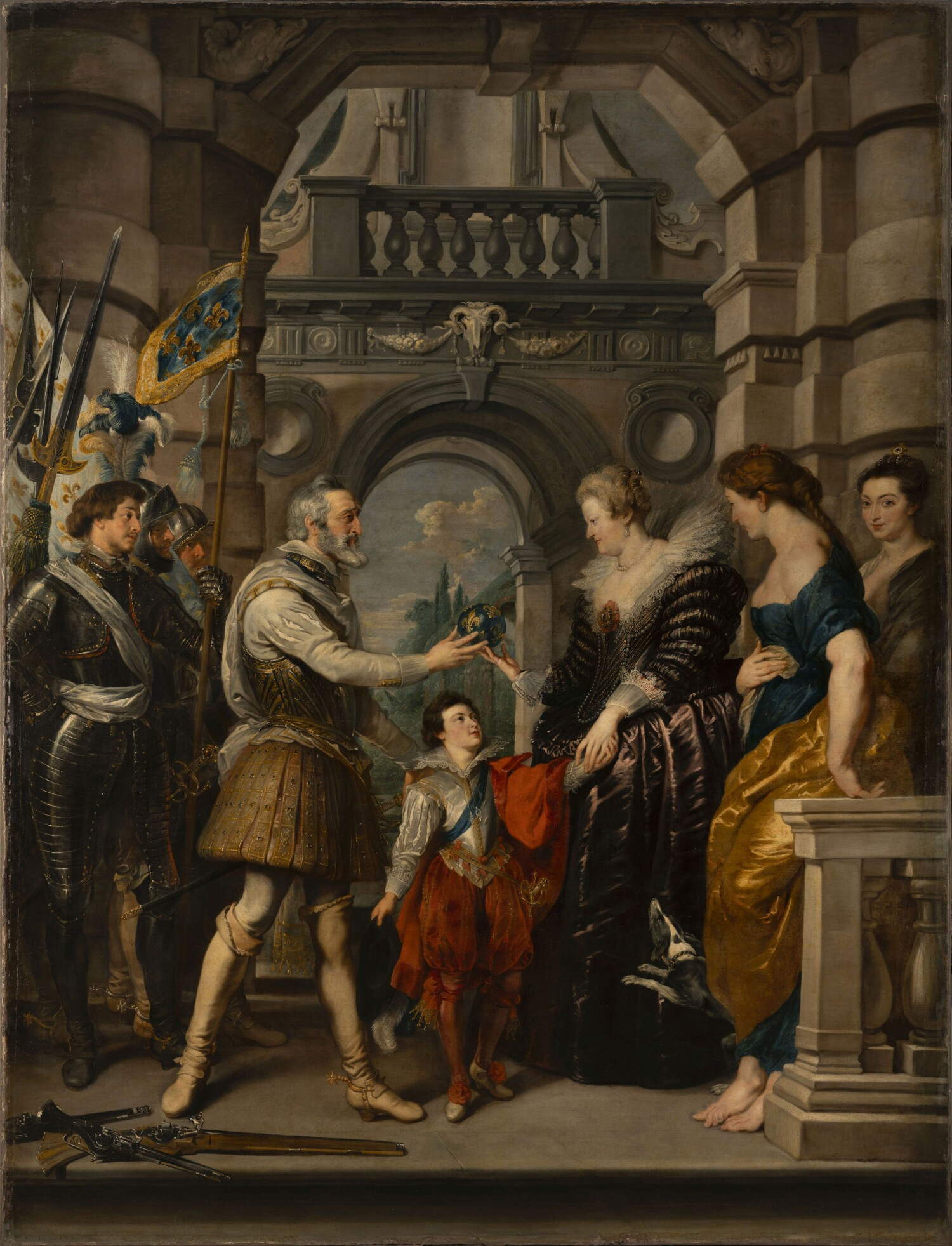
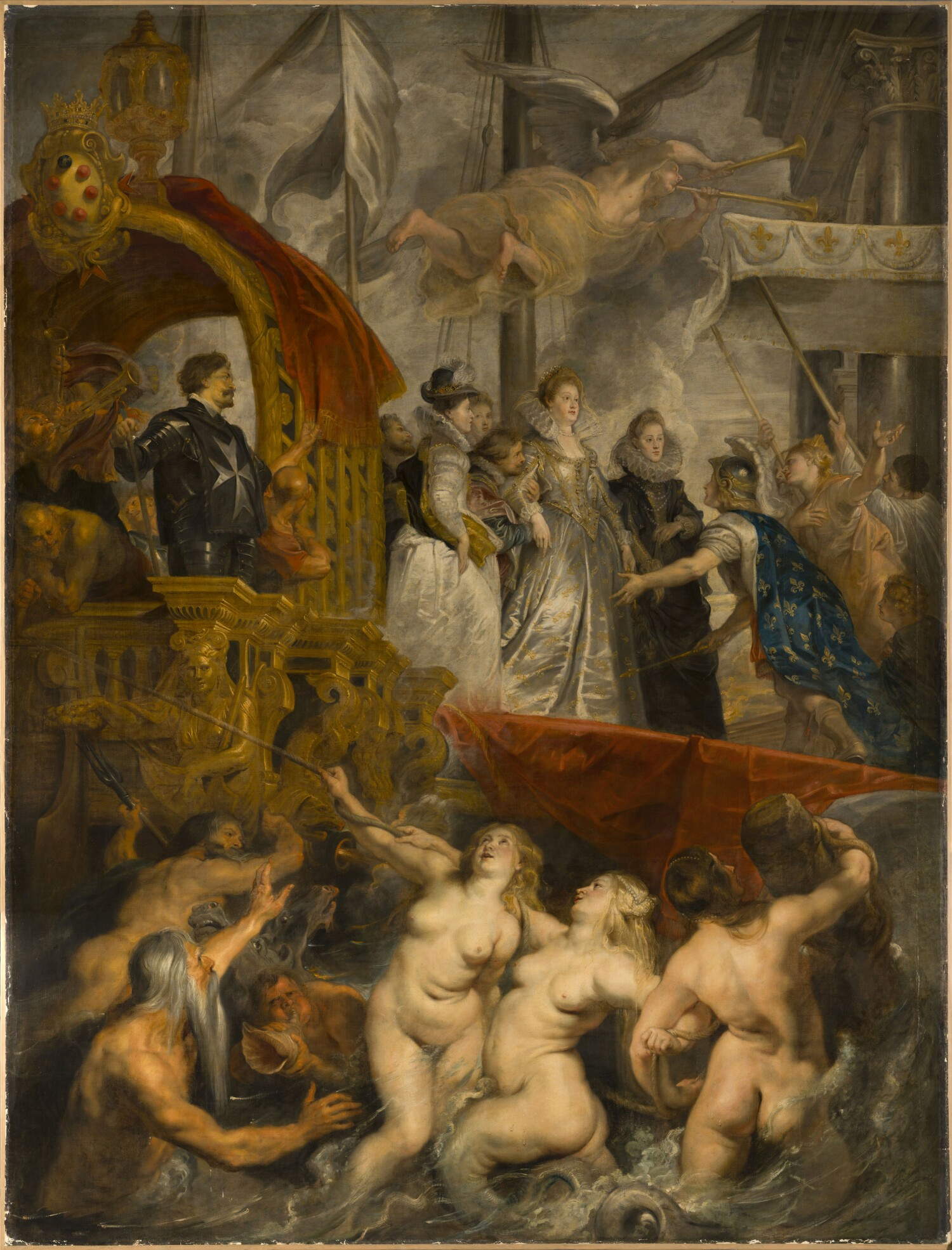
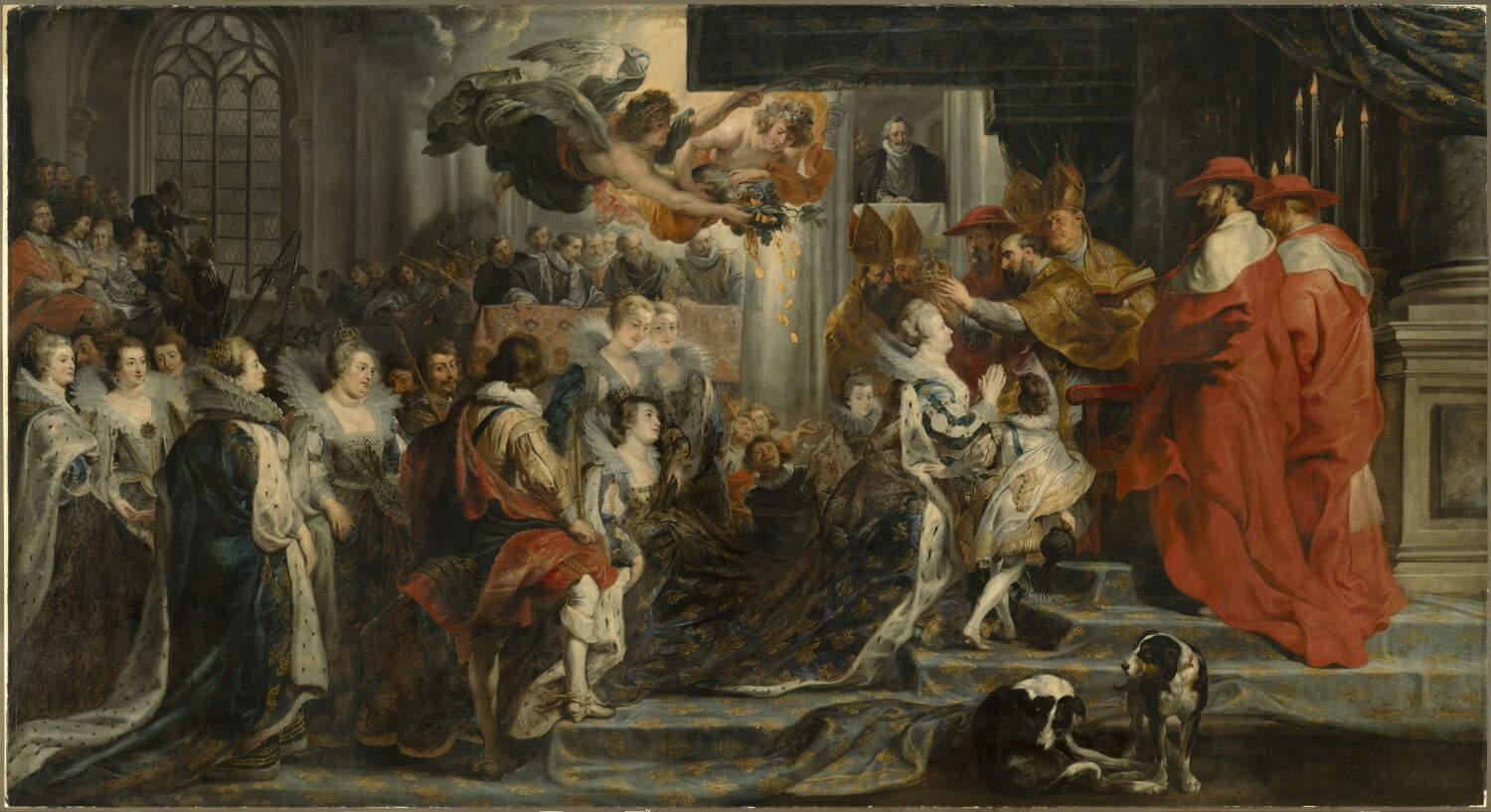
It took ten years of study and preparation to get to the publication of the announcement in 2026. The second study, conducted in 2023 by Thierry Radelet’s team, produced extremely detailed scientific documentation, including images under different light conditions (direct, grazing, ultraviolet, and infrared), as well as radiographs and pigment analysis. These investigations have enabled a better understanding of the execution techniques, compositional changes, and interventions undergone over time.
The restoration will be carried out directly on site, and the Gallery will be closed to the public for the duration of the work. The space will be set up as a highly equipped laboratory, with specific tools and structures custom-designed to work on large works. All phases will be carefully documented.
Sébastien Allard will direct the project, with the supervision of Blaise Ducos and Oriane Lavit, who are responsible for the collections involved.
|
| Louvre's largest pictorial restoration kicks off: 24 monumental Rubens canvases take center stage |

Warning: the translation into English of the original Italian article was created using automatic tools. We undertake to review all articles, but we do not guarantee the total absence of inaccuracies in the translation due to the program. You can find the original by clicking on the ITA button. If you find any mistake,please contact us.
















 IT
IT FR
FR DE
DE ES
ES CN
CN