





Forte Aurelia has been handed back to the city of Rome, at the end of a long recovery and restoration process. The official ceremony of reopening and handover of the Fort to the city by the Guardia di Finanza marked the conclusion of a 10-year project, returning to the capital one of the most significant artifacts of the defense system built in the aftermath of the Unification of Italy. The ribbon-cutting ceremony was held in the presence of leading institutional authorities. The event was attended, in addition to the top officials of the Guardia di Finanza, by Mayor Roberto Gualtieri, Economy Minister Giancarlo Giorgetti and Culture Minister Alessandro Giuli, emphasizing the symbolic and cultural value of the initiative.
Starting today, Fort Aurelia will be used to host cultural events, exhibitions and displays. Opening it to the public is one of the central elements of the project, with the goal of making a place that has long remained closed or inaccessible visitable.
“What the Guardia di Finanza has done,” Gualtieri explained, “is a beautiful gift to the city of Rome and to the Romans. Extraordinary work has been done to restore this beautiful fort, which is the first of the 15 forts in the city that replaced the Aurelian walls after the taking of Rome and were then decommissioned and entered a state of decay. Now this fort will be open to cultural uses, events, exhibitions and can become one of Rome’s lesser-known itineraries along with the others we are working on such as the Bravetta fort, the Trionfale fort and the Boccea fort where a project for the neighborhood involving the market and the square has started.”
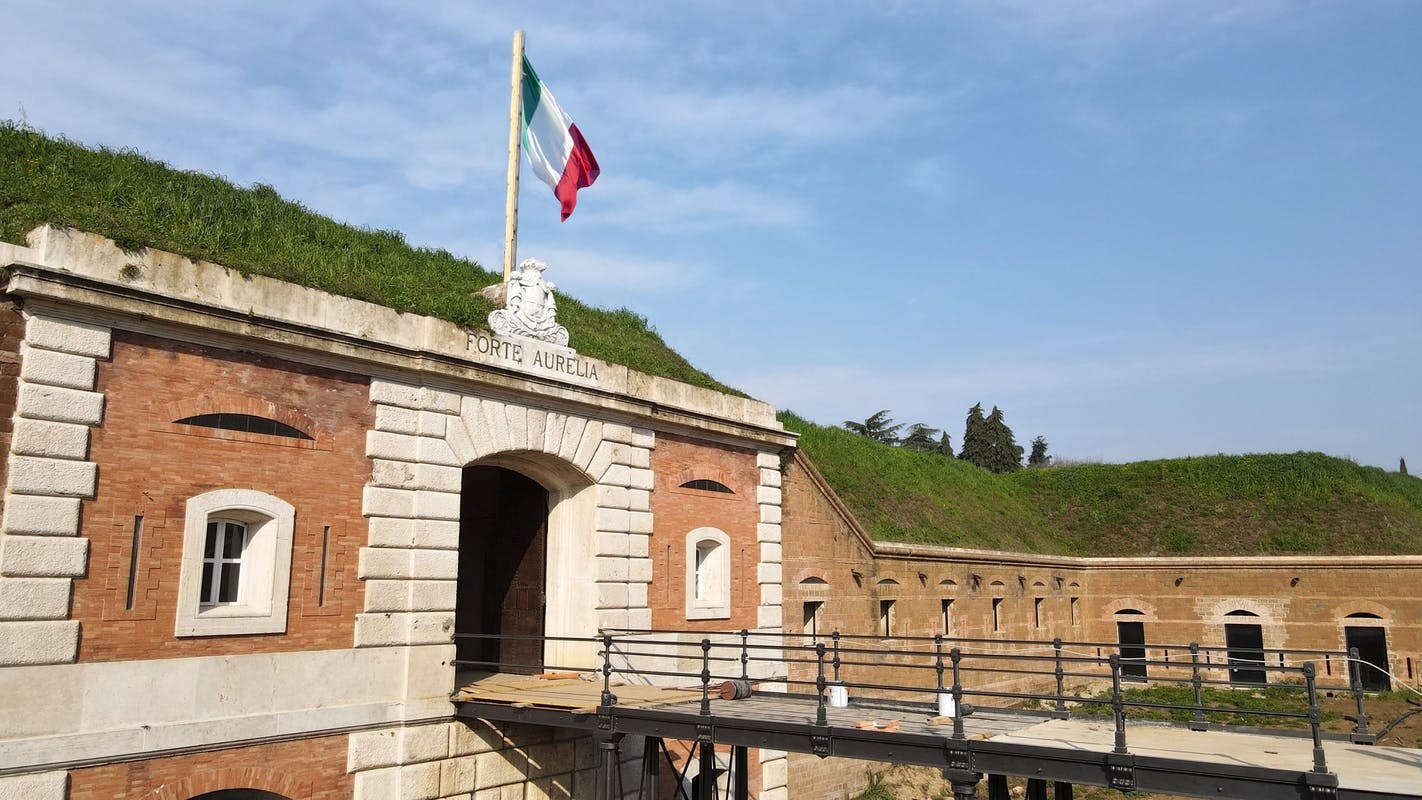
“It is particularly significant,” Culture Minister Alessandro Giuli said instead, “to be in the context of Rome’s 2779th Christmas celebrations to greet the rebirth of Fort Aurelia, finally returned to the community after a restoration that has enhanced its historical value. This is an integrated enhancement strategy designed to strengthen the identity of the ’System of Rome’s Forts’ and consolidate its role in the city’s cultural fabric, thanks to coordinated action between the Ministry of Culture, the Prime Minister’s Office, other ministries and state agencies. A shared commitment that represents a concrete model of institutional cooperation.”
The recovery of the fort is set in a precise historical context, linked to the urban and institutional transformation of Rome after its proclamation as capital of the Kingdom of Italy. On September 20, 1870, with the taking of the city through the Breach of Porta Pia, the temporal power of the Papal State came to an end. A few months later, with the law of February 3, 1871, Rome officially became the capital of the new unified state.
This change brought about a profound reorganization of the city, with urban, architectural and functional interventions aimed at transforming it into a modern European capital. Among the needs that emerged was the need to strengthen the defensive system, to protect the new political center from any attempts at reconquest by foreign powers or restoration of papal power. Thus was born the so-called entrenched camp of Rome, consisting of fifteen forts and four batteries, small fortifications equipped with artillery emplacements.
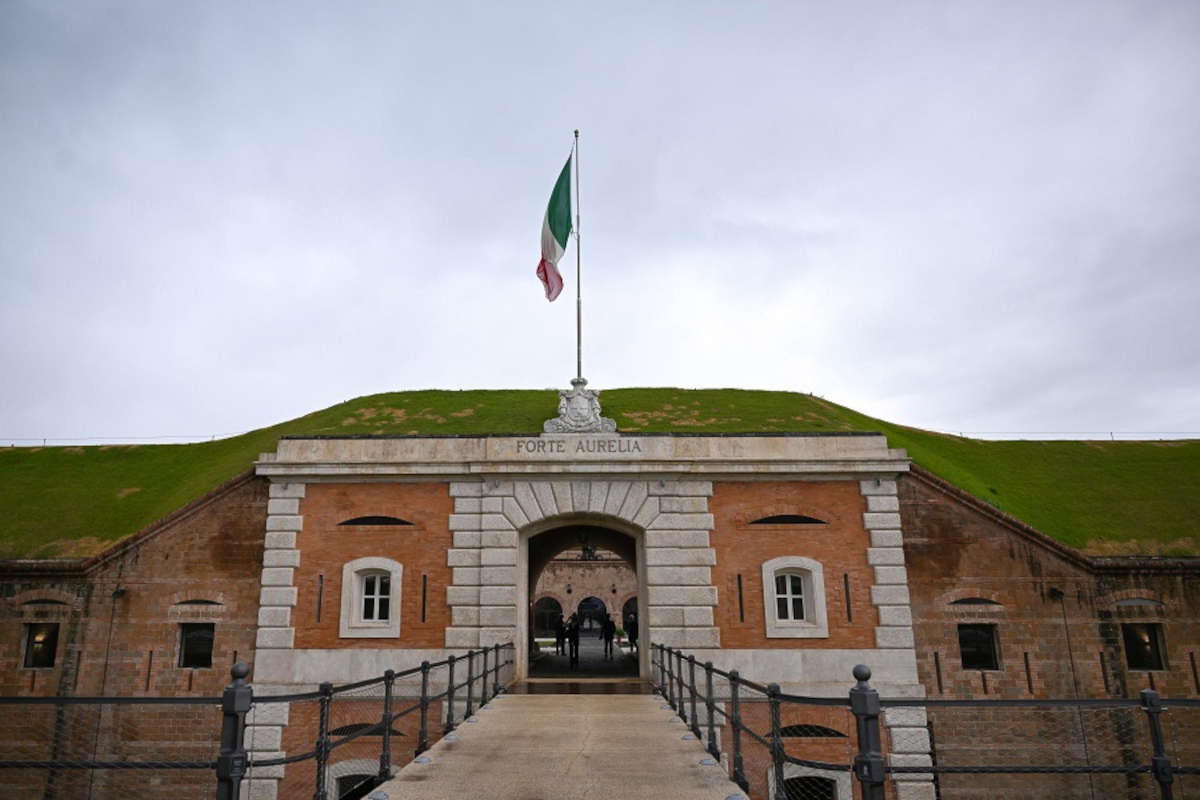
Fort Aurelia was part of this system and is still one of the best preserved and most historically and architecturally significant structures. Originally located in the open countryside, the fort was gradually incorporated into the urban fabric of the city, becoming a concrete testimony to the transformations experienced by Rome over the decades.
The redevelopment intervention has restored the artifact to its original identity, enhancing its architectural features while improving its accessibility. The restored parts are now accessible to the public and allow a clearer reading of the structure and its historical functions. The project has transformed the fort into a cultural and museum center, capable of combining conservation and enhancement.
The initiative is also part of a broader program to restore and network Roman fortifications, which was also launched on the occasion of the 150th anniversary of the proclamation of Rome as capital city. The goal is to create a unified path connecting the different forts of the entrenched field, through the collection and systematization of historical and artistic materials, documents and photographs. This is a widespread heritage, now in use by different entities, which could be made more accessible and understandable through an integrated project.
In this context, Fort Aurelia wants to propose itself as a pilot project, a model of intervention that combines architectural recovery, cultural enhancement and opening to the public. The idea is to build an itinerary, including a virtual one, that allows exploring not only the restored and visitable parts, but also those still inaccessible, thus expanding the possibilities of knowledge and fruition. The reopening of the fort thus represents not only the return of a historical asset to the community, but also a step toward a broader strategy of enhancing the military heritage of the Capital. The recovered spaces will be able to host temporary exhibitions, cultural events and initiatives open to citizens, fostering a new relationship between the historical past of the place and its contemporary use.
|
| Rome, Forte Aurelia reopens, handed over by the Guardia di Finanza to the city: it will be a cultural hub |

Warning: the translation into English of the original Italian article was created using automatic tools. We undertake to review all articles, but we do not guarantee the total absence of inaccuracies in the translation due to the program. You can find the original by clicking on the ITA button. If you find any mistake,please contact us.




















 IT
IT FR
FR DE
DE ES
ES CN
CN


