





The first public Center dedicated to Photography, one of the flagship projects included in the wide-ranging urban recovery and regeneration plan of theformer Slaughterhouse in Testaccio, destined to be transformed into the new “City of the Arts,” has been unveiled on Capitol Hill in Rome. The new cultural space will be inaugurated on January 29, coinciding with the celebrations of the 70th anniversary of the twinning between Rome and Paris, and will open its doors to the public the following day. The presentation was attended by Mayor of Rome Roberto Gualtieri, Slaughterhouse Foundation CEO Umberto Marroni and Capitoline Councillor for Culture Massimiliano Smeriglio.
The Center was created with the aim of becoming a point of reference for the dissemination and enhancement of contemporary photography, both Italian and international. It will be located inside the former slaughterhouse complex, in Pavilion 9D. The contract was managed by Roma Capitale and the Capitoline Superintendency, for an amount of about 5 million euros of municipal funds. The building, which covers an area of about 1,500 square meters spread over two levels, will be able to accommodate several activities simultaneously. On the ground floor, more than 1,000 square meters will house flexible exhibition spaces, offices, a ticket office and a library with about 3,000 volumes. The second floor, which covers a total area of 450 square meters, includes a large multipurpose hall of nearly 200 square meters and a scenic gallery intended for exhibitions.
The project aimed to enhance the building’s original architecture, typical of late 19th-century industry, by integrating historical elements such as cast-iron structures, guidovie and the truss roof with contemporary solutions. New state-of-the-art lighting and air conditioning systems ensure high versatility according to different exhibition needs.
The Center’s logo was also unveiled at the presentation: a monogram symbolizing the union of frame and content, interpreting the concepts of framing, perspective, duality and modularity in a modern way.
The first exhibitions, organized with the contribution of main sponsor Urban Vision and in collaboration with Civita Mostre Spa, will be dedicated to the famous U.S. photographer Irving Penn, who died in 2009, and the Italian photographer and artist Silvia Camporesi.
The exhibition Irving Penn. Photographs 1939-2007 - Masterpieces from the Collection of the Maison Européenne de la Photographie in Paris, curated by Alessandra Mauro, Pascal Höel and Frédérique Dolivet, will be on view from Jan. 30 to June 29, 2026. The exhibition Silvia Camporesi. There is a Time and a Place, curated by Federica Muzzarelli.
In the same period, the “Visual Field” space, dedicated to research, experimentation and contemporary languages, will host the exhibition Real Bodies and Imaginary Bodies, curated by Daria Scolamacchia, with the aim of stimulating a reflection on the themes of the body and gesture, through a dialogue between archival materials, documentary images and projections with a playful character.
The Slaughterhouse complex in Testaccio, covering about 105,000 square meters, was built in 1881 and decommissioned in 1975. Today it is at the center of a major transformation that will lead it to become a major cultural center, managed in an integrated way by the Fondazione Mattatoio di Roma, established last November. Thanks to collaboration with Roma Tre University and the Fondazione Roma, and a total investment of more than 90 million euros from PNRR and municipal funds, redevelopment work will be completed between 2026 and 2027.
Fifteen major construction sites are currently active and several spaces are already operational, including university and exhibition spaces. Work involves the restoration of the facade, including the iconic tauromachy, the redevelopment of the pavilions, and the creation of the first Photography Center of Roma Capitale.
Work is also scheduled to be completed by 2027 in the Former Refrigerators Pavilion, which will house the Central Library of the Faculty of Architecture of Roma Tre and a cafeteria. Construction also began in March 2025 on Palazzina 27, located in the former Livestock Warehouse, which will become a multimedia library with a study center. Interventions also affect the public spaces surrounding the Slaughterhouse, with the construction of a new parking lot, the rehabilitation of the facades and external perimeter, as well as the redevelopment of additional pavilions for cultural and university activities. A large events pavilion is also under construction and will be completed by June 2026. Finally, thanks to a grant from the Fondazione Roma, construction has begun on a 550-meter-long bicycle path that will directly connect the Tiber cycleway to the former Slaughterhouse area.
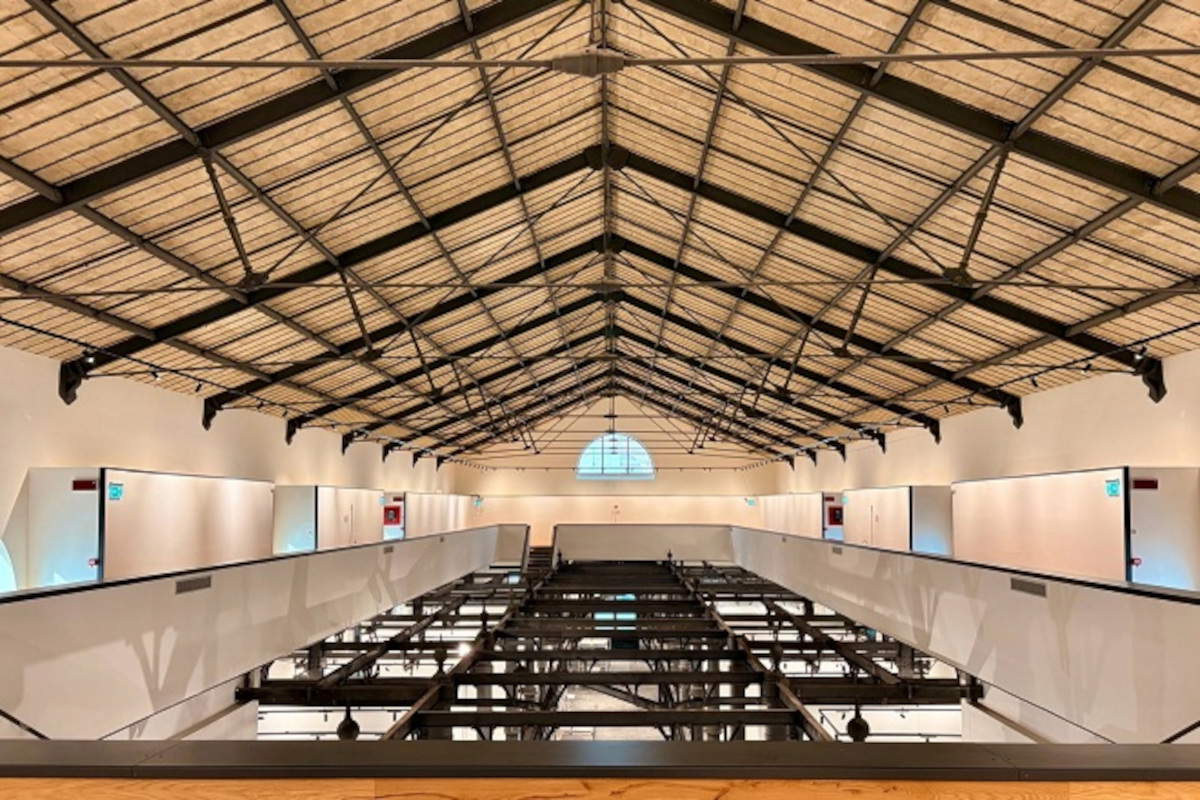 |
| In Rome, a public center dedicated to photography will open in the former Slaughterhouse of Testaccio. |

Warning: the translation into English of the original Italian article was created using automatic tools. We undertake to review all articles, but we do not guarantee the total absence of inaccuracies in the translation due to the program. You can find the original by clicking on the ITA button. If you find any mistake,please contact us.




























 IT
IT FR
FR DE
DE ES
ES CN
CN


