




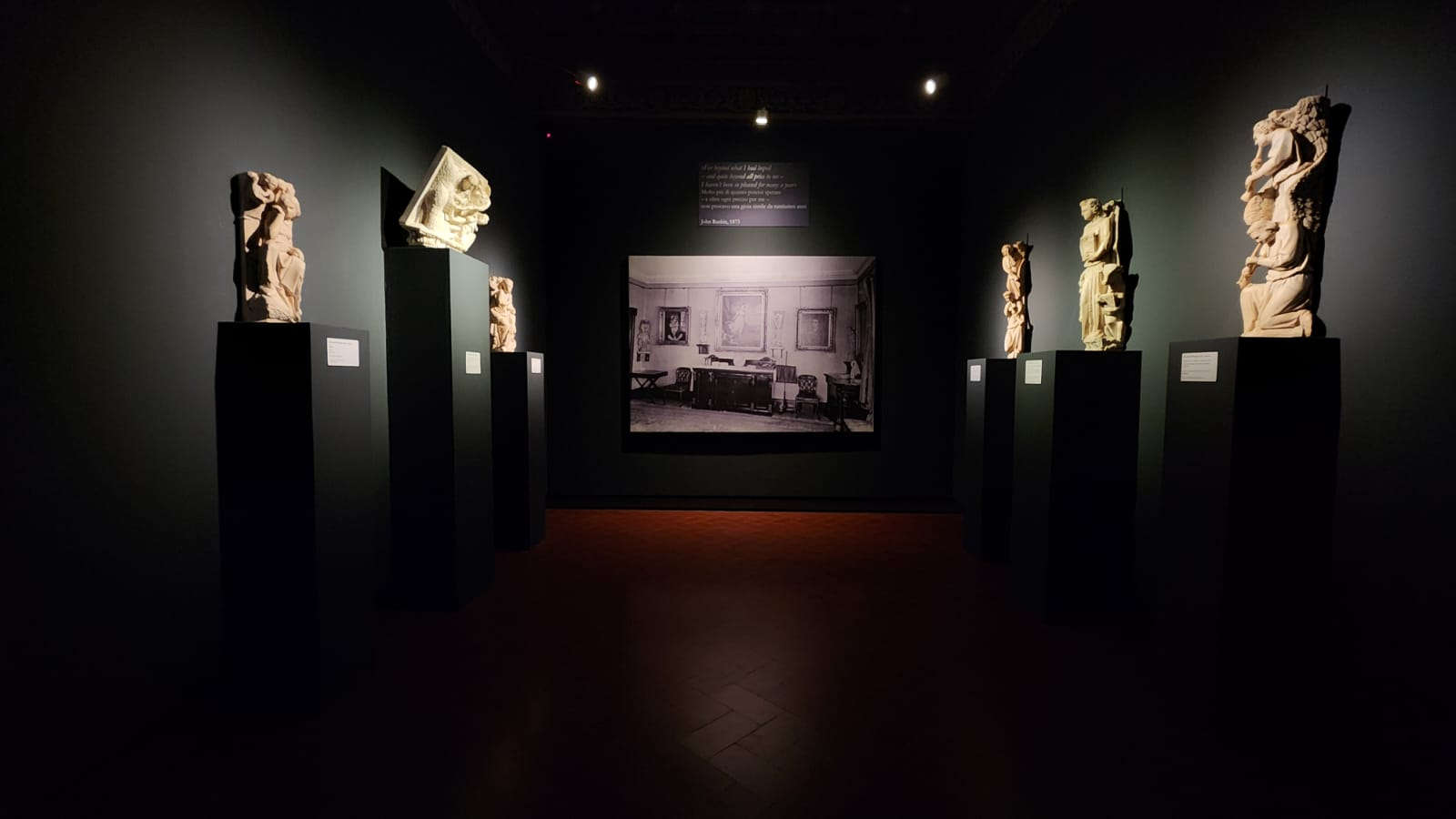
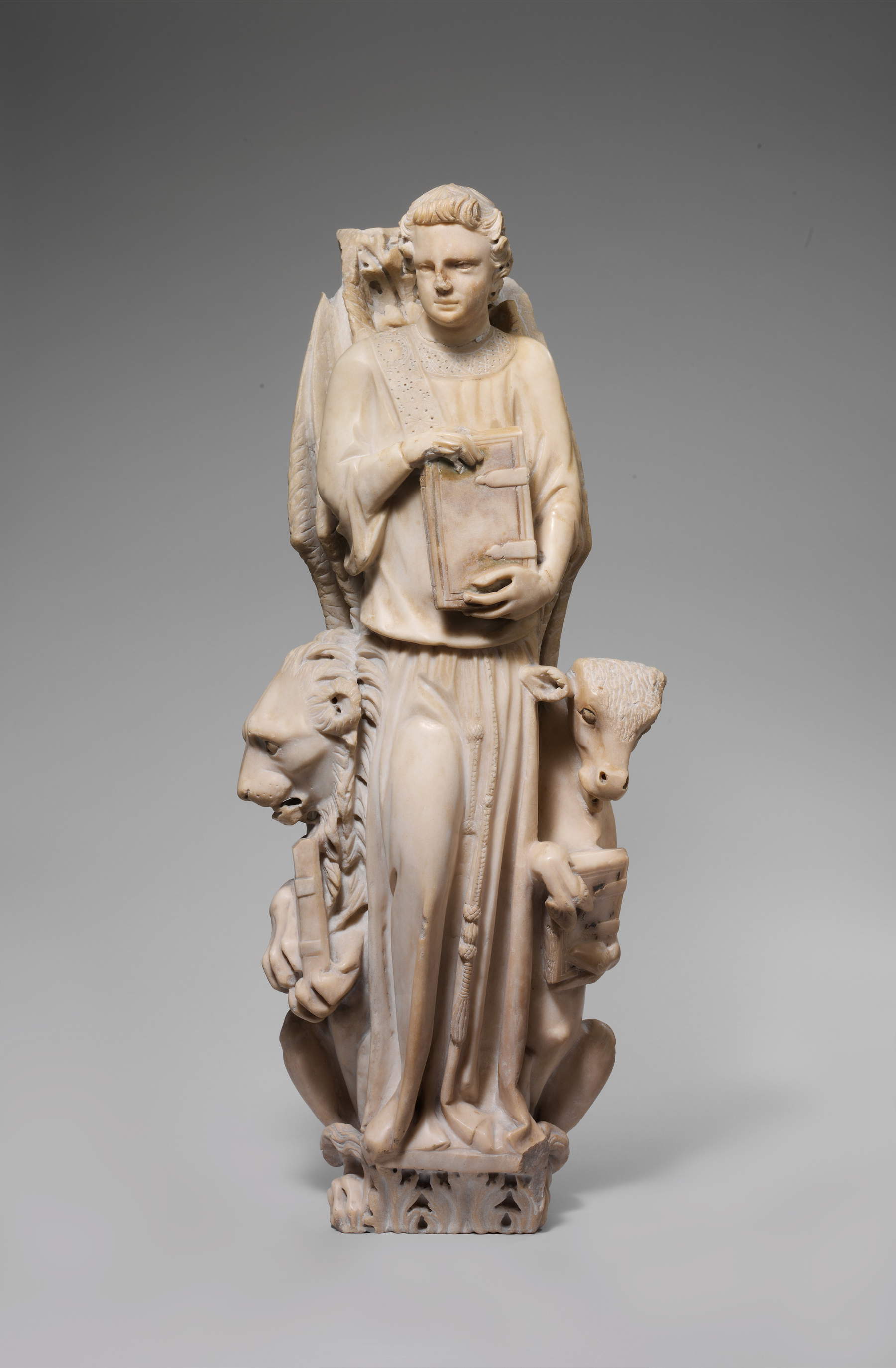
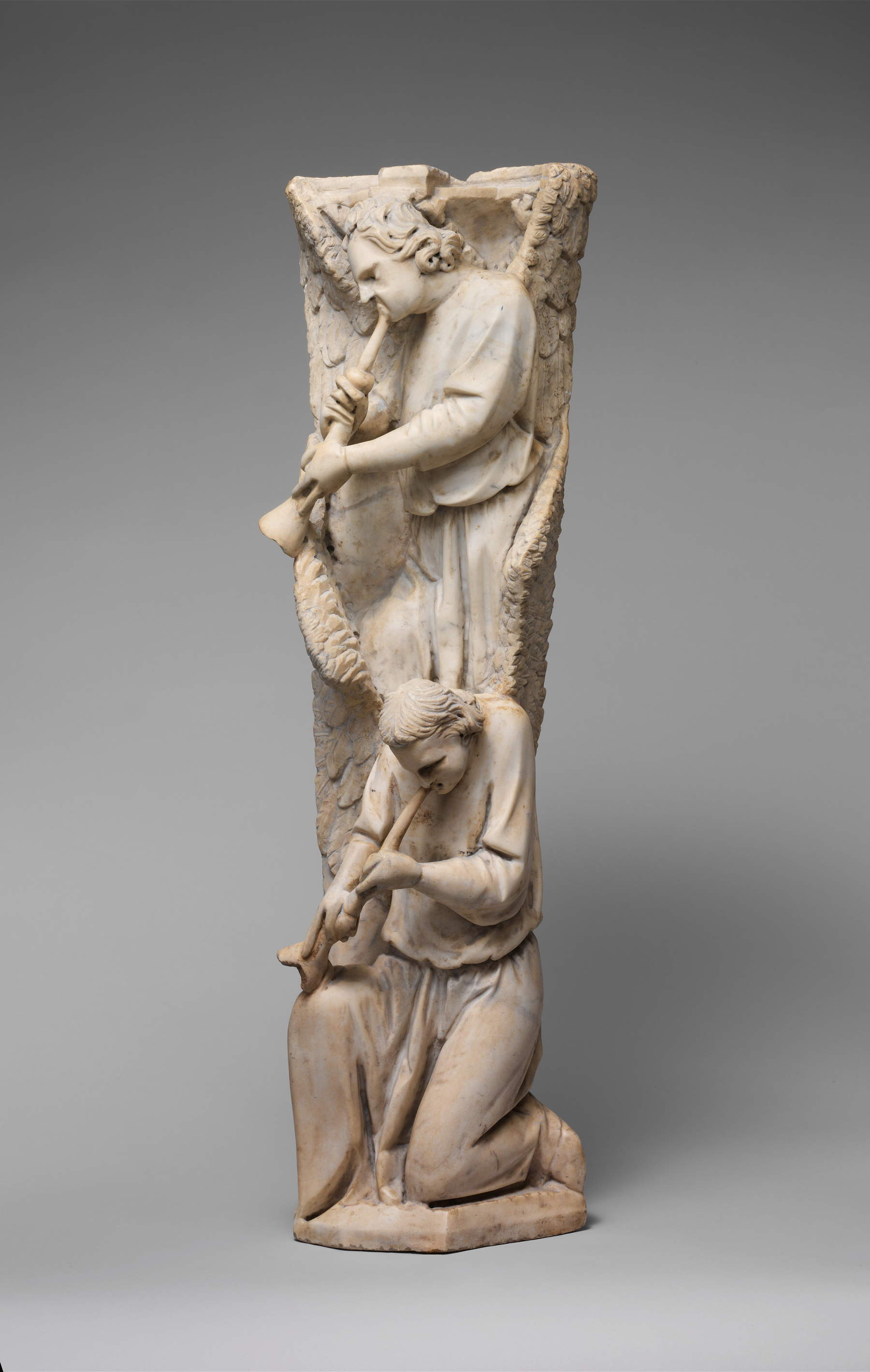
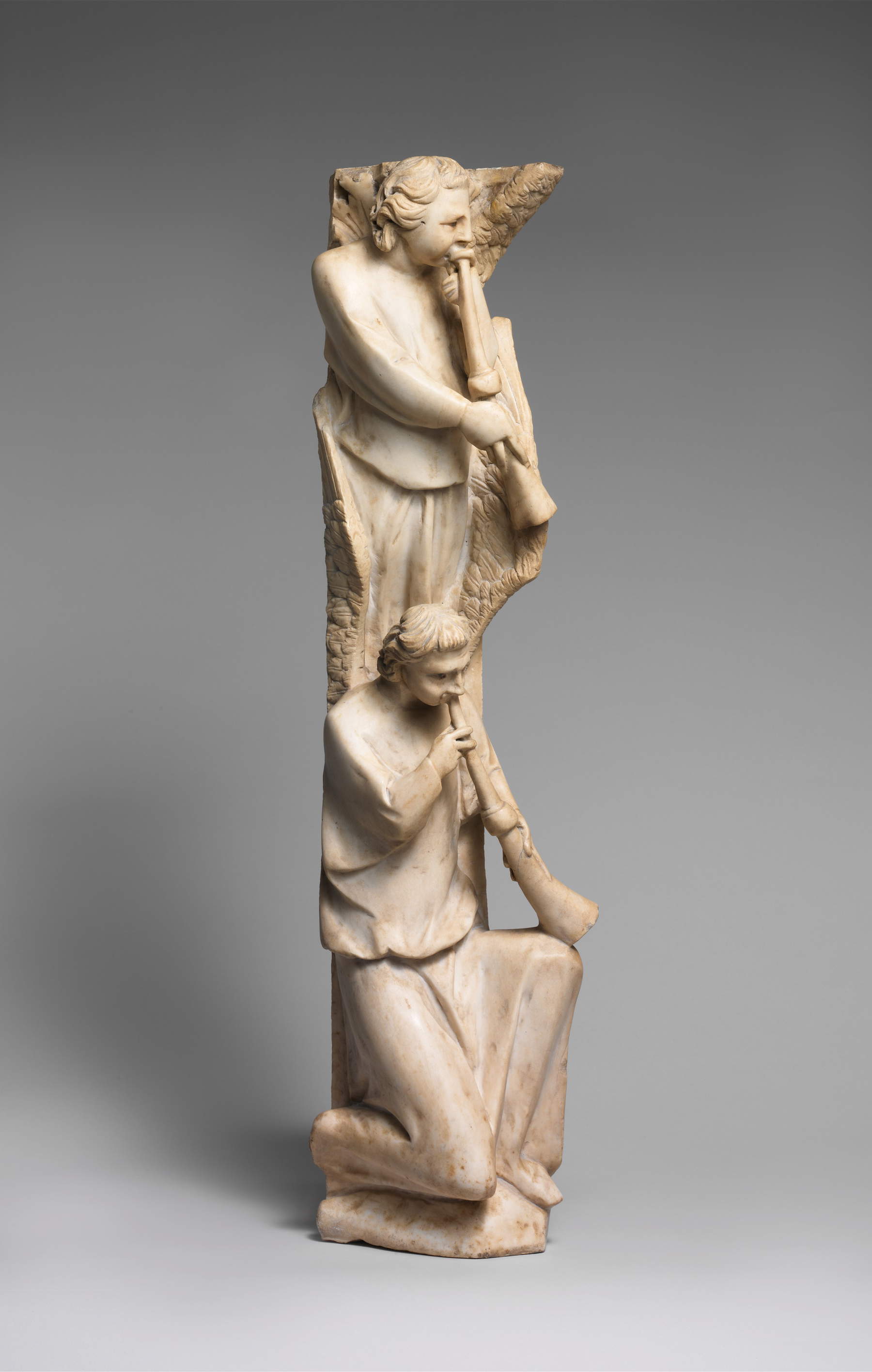
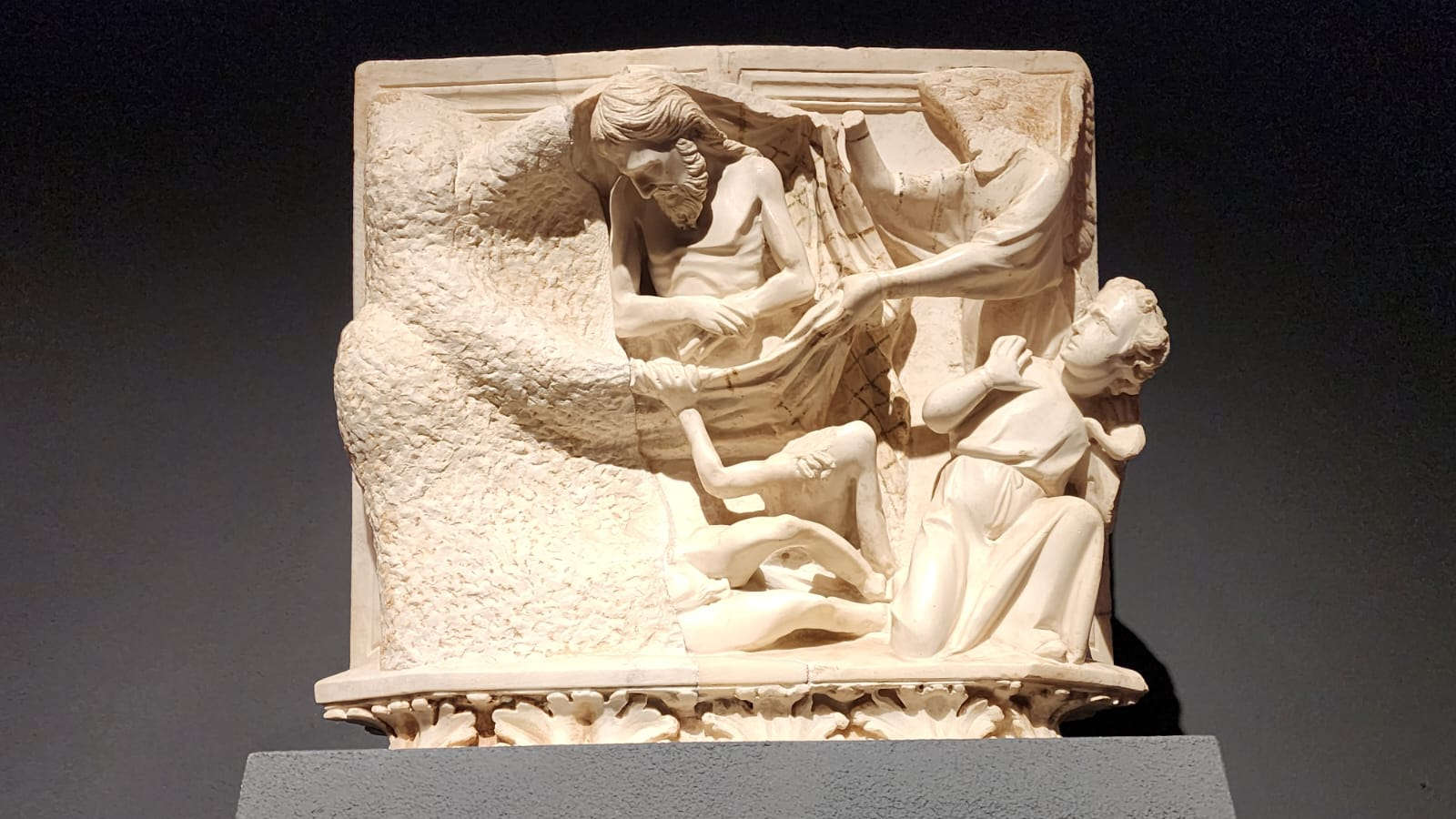
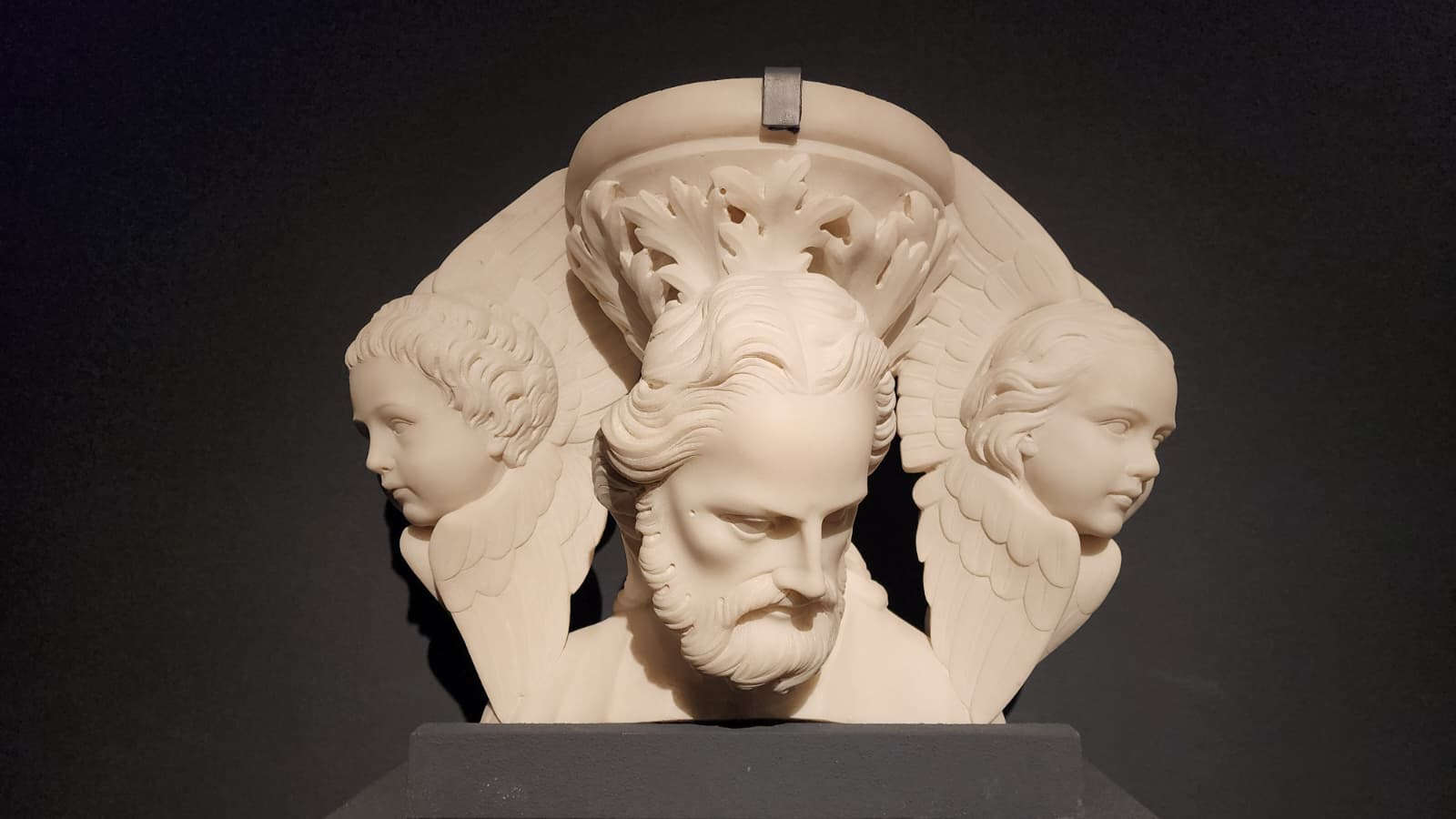
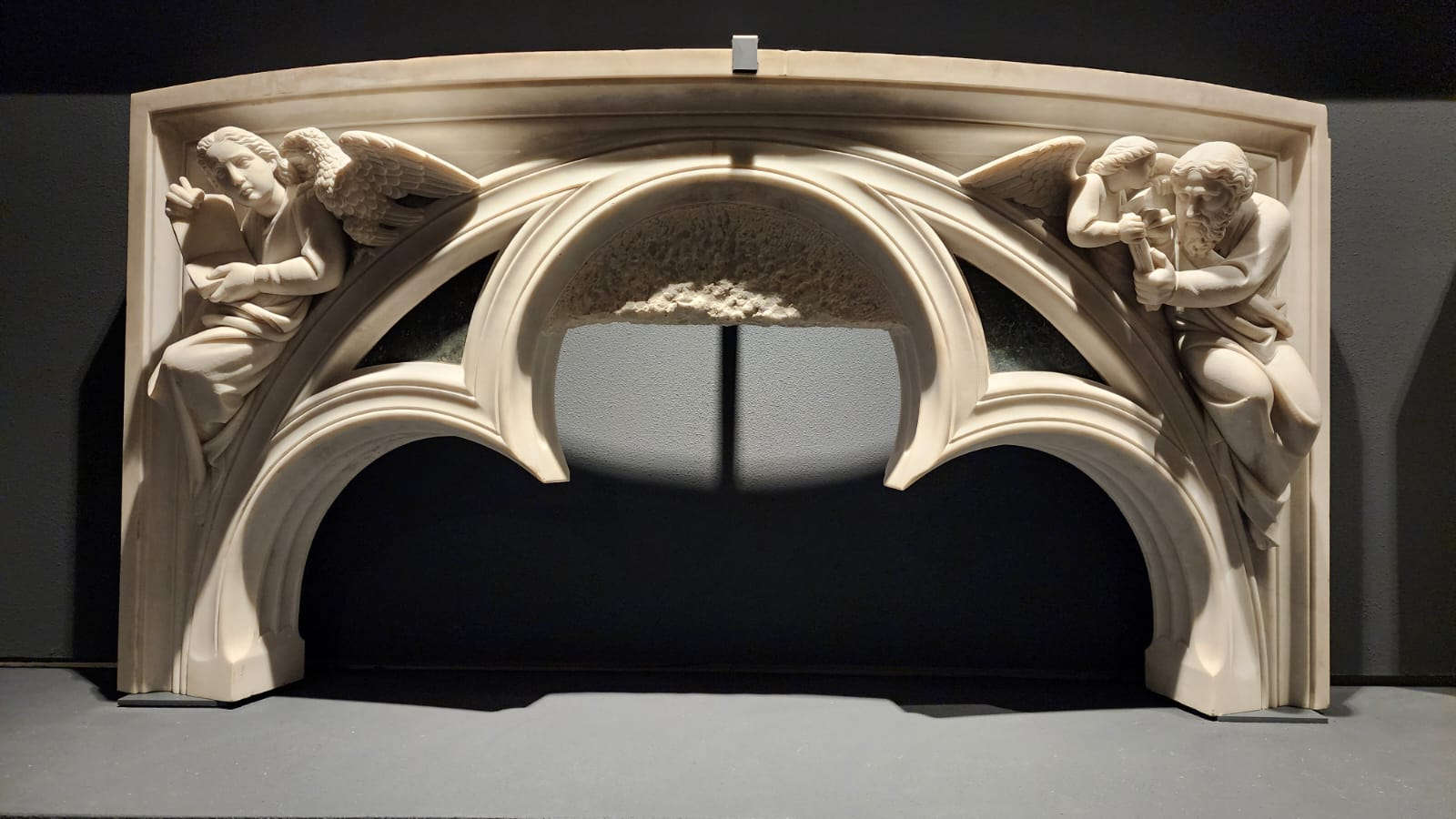
When there was the presentation to the press of the exhibition that the Opera della Primaziale of Pisa wanted to dedicate to the centenary of the relocation of Giovanni Pisano’s pulpit in the cathedral, the piece that most attracted the attentions of colleagues was undoubtedly the tetramorph lent by the Metropolitan Museum in New York. Meanwhile, because apparently the Metropolitan does not lend it out that frequently: the last time it left the halls of the American museum was for an exhibition in Detroit in 1938, so those who want to see this pulpit piece without having to take a ten-hour flight should hurry, because the exhibition closes in a few weeks and it will probably be another hundred years before the Met management decides to lend it to someone else. The same applies to the angel players on display next to it: they, too, travel little (one group last left the Met in 1990, and the other, if our records are correct, is in its first appearance in an exhibition). And then because Giovanni Pisano’s tetramorph is the perfect hinge between the two “volumes,” we might call them, of the exhibition. The first part is all about the nineteenth- and twentieth-century fortune of Giovanni Pisano: a fortune that has perhaps faded a little today, since it is now the contemporary custom to measure the response of artists by the number of exhibitions and publications that are dedicated to them, and the memory of Giovanni Pisano now tends to resurface only if one is a student, an enthusiast or a tourist (significant then that the title of the exhibition is Giovanni Pisano. Memory of a Sculptor: it almost sounds like a call to practice a discipline, a bit as if the two curators, Donata Levi and Emanuele Pellegrini, wanted to invite the public to perform an exercise). The second part is instead about the reconstruction of the pulpit, culminating in 1926 with its return to the cathedral.
It must be said that without Giovanni Pisano we would not have had one of the most original precursors of Renaissance sculpture. And the tetramorph is also perfect for explaining this transition, for before it came to the Metropolitan it had been the property of, among others, John Ruskin, who had bought it on the Florence antiques market around 1870. At that time there were no guardianship laws, an invention of the early twentieth century, which is why the rescue of the fragments of the past was essentially in the charge of the sensibilities of individuals. For those who were not equipped with this sensitivity, a piece of a pulpit executed by one of the greatest sculptors of the late thirteenth century was simply a commodity like any other: it so happened that tons of paintings and sculptures crossed the Alps or took the sea route and ended up mostly in England or America, feeding the collections of those who had this sensitivity to the past and exercised it, quite legitimately, to replenish their collections. Ruskin was clear about the value of Giovanni Pisano: for him he was the “Canova of the thirteenth century,” he was the sculptor to whom we owe “the grace of Ghiberti, the tenderness of Raphael, the majesty of Michelangelo.” And it is curious that Ruskin should have purchased the tetramorph and the two small pillars with the playing angels when the three sculptures had not yet been recognized as works by Giovanni Pisano: yet, Paul Tucker explains well in the exhibition catalog, the purchase of these marbles is a significant expression of the importance Ruskin attached to Two-Thirteenth Century Pisan sculpture and architecture. Put briefly, Ruskin believed that in Pisa the meeting of an art of the “Greek” spirit, that is, an art of thought, light, and study of the body, with one of the “Gothic” spirit, that is, an art devoted to a sense of color, devotion, and the bizarre, had taken place. The Tuscan school, for Ruskin, had been born in Pisa from the meeting of these two souls, first with Nicola Pisano, who was trained on the “truthfulness” and the“humanity” of “pagan” art, and then with Giovanni Pisano who would make even more his own that “desire to give more life and truthfulness.” To Giovanni, in particular, Ruskin attributed characteristics of softness, grace, exuberance, that is, Tucker explains, “qualities seemingly of second order but which encompassed a genealogical core that not only showed him to be the heir of his father but also an autonomous renewer of the future.” The comparison with Canova lies, then, in the extent of his revolution: just as the eighteenth-century Canova had imitated Greek grace “to the delight of the modern sensualist revolutionaries,” said Ruskin not without a mildly critical edge, so the thirteenth-century Canova had succeeded in the paradox of arriving at a “Gothic truth,” alive and brought into the presence of the devotional practices of his time.
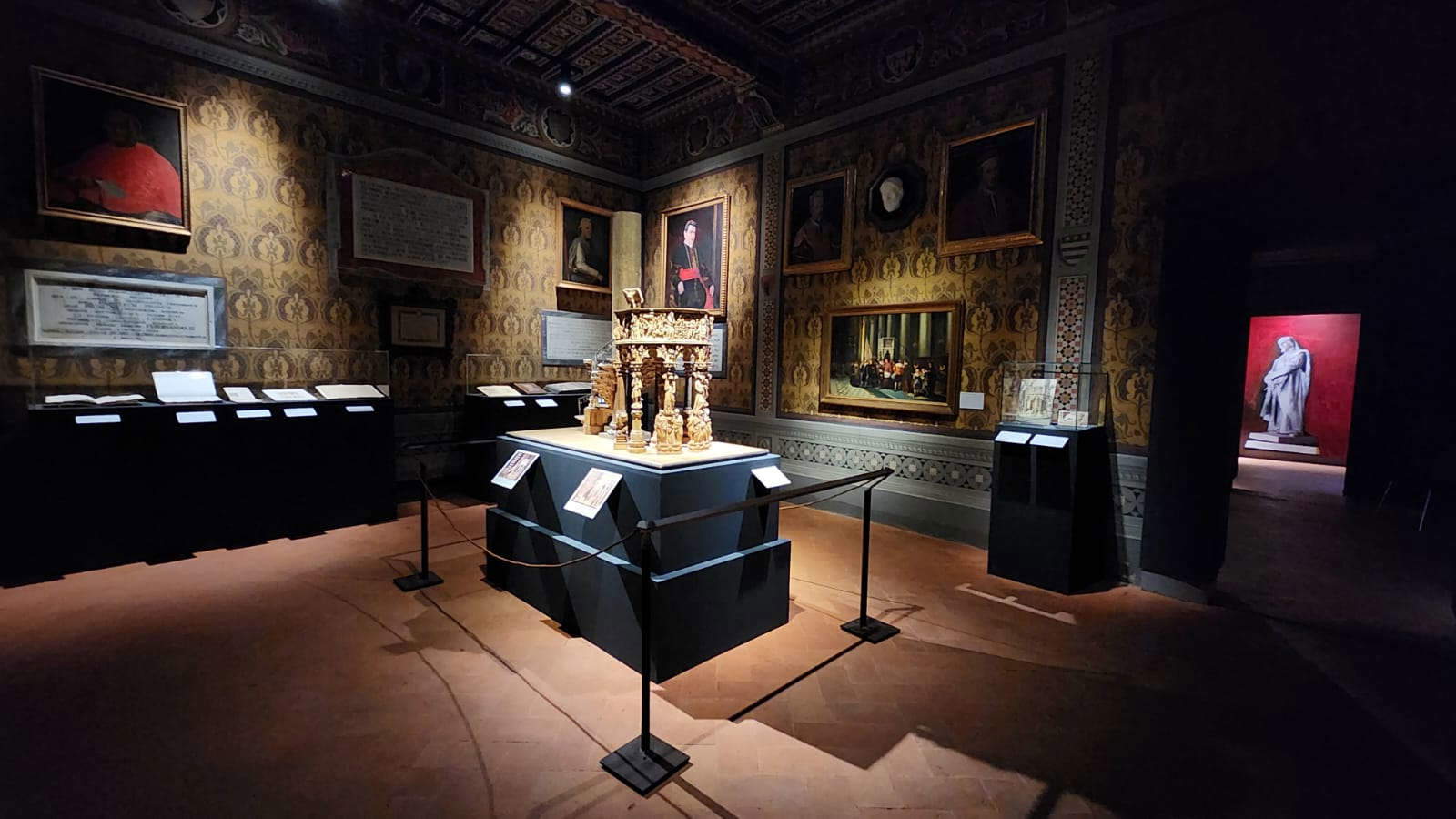
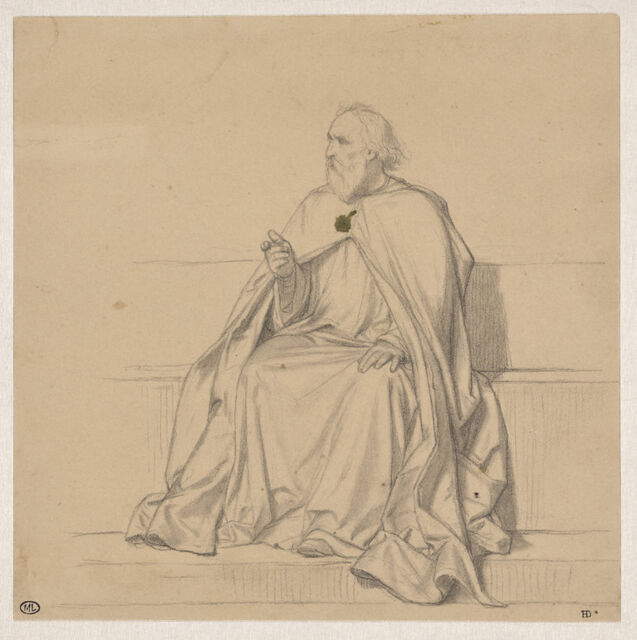
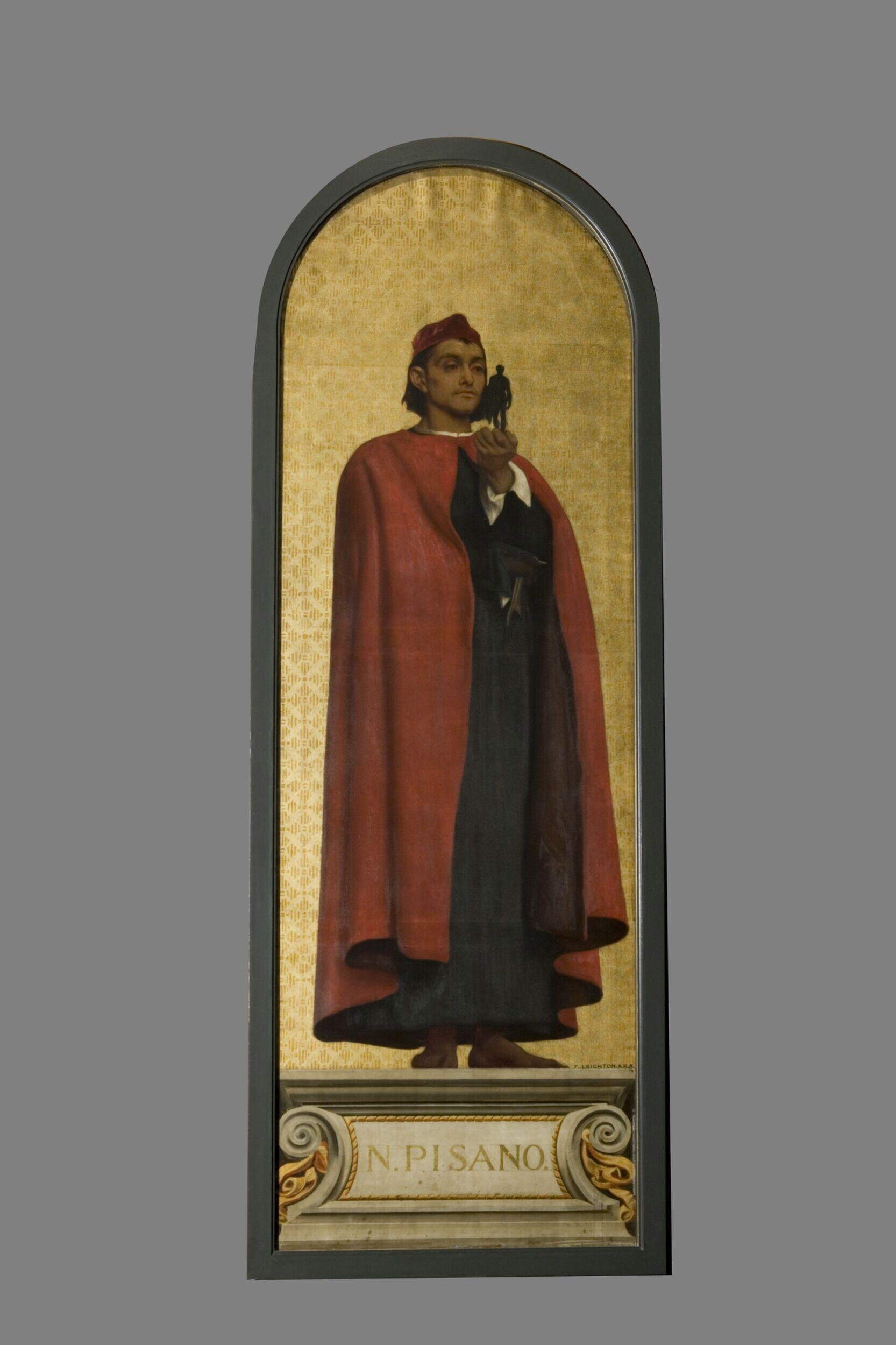
Even in the exhibition’s itinerary, in the chronology offered to visitors at the beginning of their visit, Ruskin’s purchase is considered a key juncture. Not so much because of the purchase itself, which could be considered one among many, especially in light of the fact that, at the time, those three pieces of marble were not known to be by Giovanni Pisano and to have come from the Pisa pulpit: if anything, because Ruskin was among the first critics (if not the first, certainly the most influential) to establish a kind of primacy of the Pisan school. A primacy that was the basis for the later fortunes of Giovanni Pisano, recounted in the exhibition at the Palazzo della Primaziale with a slow pace, proceeding by individual chapters: first, to welcome the public to the exhibition, the story of the monument to Giovanni Pisano, completed in 1875 by Salvino Salvini (precisely at the time when not only was the importance of the Pisan school being recognized in England, but the debate over the fate of the fragments of the pulpit had intensified) and ended up destroyed with the bombings of World War II. Then there is the chapter on the slow 19th-century rediscovery: first with the French (Ingres was one of the first to take an interest in the fragments of the dismembered pulpit, reproducing them in some of his drawings, and then Paul Delaroche would include Giovanni Pisano in the decoration of the hemicycle of the great hall of theÉcole des Beaux-Arts in Paris, the large painting executed between 1836 and 1841 that imagined all the greats of art history conversing in one place, a sort of modern school of Athens made with the painters and sculptors: an etching from Delaroche’s drawing is on display in Pisa, as well as his study of the figure of Giovanni Pisano), then with the English (Frederic Leighton’s preparatory study for the South Kensington Museum mosaic with thefull-figure image of Nicola Pisano), and then with artists of all nationalities who from the second half of the nineteenth century onward began to study and reproduce everything of Giovanni Pisano that could be found around.
Here it is: the room with the tetramorph and the two pillars by Giovanni Pisano, displayed together with two plaster casts of as many sibyls and a very curious fragmentary, unfinished lectern with a Christ in Pity, all material owned by the Primaziale but not given to see so frequently, comes at this point in the tour itinerary, that is, at the moment when the story of Giovanni Pisano’s fortunes proceeds in unison with the debate over the reconstruction of the Cathedral’s pulpit. It is worth reviewing its recent history, albeit in brief, beginning with the moment when the memory of the pulpit began to fade, namely the fire that, between October 24 and 25, 1595, caused enormous damage to the cathedral of Pisa, to the point that the pulpit, which was, however, only marginally affected by the disaster, was dismantled during restoration work, of which the Opera also took advantage to update, albeit with some delay, the building to the liturgical norms of the Council of Trent. The pulpit ended up forgotten for at least a couple of centuries, and some of its fragments were reused, as was not infrequently the case, as decorative elements. Then, at the beginning of the nineteenth century, the then conservator of the Monumental Cemetery, Carlo Lasinio, came up with the idea of bringing right into the Cemetery all the pieces of the pulpit that he had managed to recover here and there, especially among the many storerooms of the Opera del Duomo: He lacked the intent to read those pieces in a coherent way, since they served above all, Roberto Novello explains in the catalog, to qualify the collection of antiquities preserved there, but without a real plan of distribution (especially since several fragments had not been identified as fragments of the pulpit). Yet, even in its unawareness, it was an important move, since it contributed to the growth of Giovanni Pisano’s fortune and, above all, offered the basis for an organic reading of those fragments. A reading that would come in the mid-nineteenth century, when many began to wonder what had happened to that masterpiece and began to study it. In particular, the sculptor Giuseppe Fontana was responsible for the start of studies on the pulpit and the first attempts to recognize the surviving pieces: attempts that would lead him, in 1865, to make a recomposition model in plaster and wood, on a scale of 1:7, now displayed in the center of the room where the exhibition gives an account of the first research on the pulpit. “It was precisely the making of the model of the pulpit,” Novello, Pellegrini and Stefano Renzoni write in the work’s very rich file (in fact an essay not only on the model, but on the entire figure of Fontana), “that projected Fontana, and with him the Pisan institutions, into the international debate around its reconstruction.” The model had been striking both for the philological rigor that animated it (a rigor to be related, of course, to the knowledge of the time), and for its worthiness as an art object (even today it is probably the most photographed piece in the exhibition, although to our eyes it is fascinating above all as an unusual object): nevertheless, it would later be criticized in the early twentieth century, and then essentially forgotten, because of its unreliability, especially for some fanciful solutions (“macroscopic inaccuracies and naiveté,” the three scholars who signed the essay call them), starting with the small arches (later correctly arranged above the columns supporting the case), which Fontana had misunderstood for steps of’a staircase that would have been almost Baroque in taste, had it really been imagined as Fontana had reconstructed it, not to mention the fifteenth-century plinth arranged under the figures of the evangelists, the biggest of the anachronisms in the reconstruction.
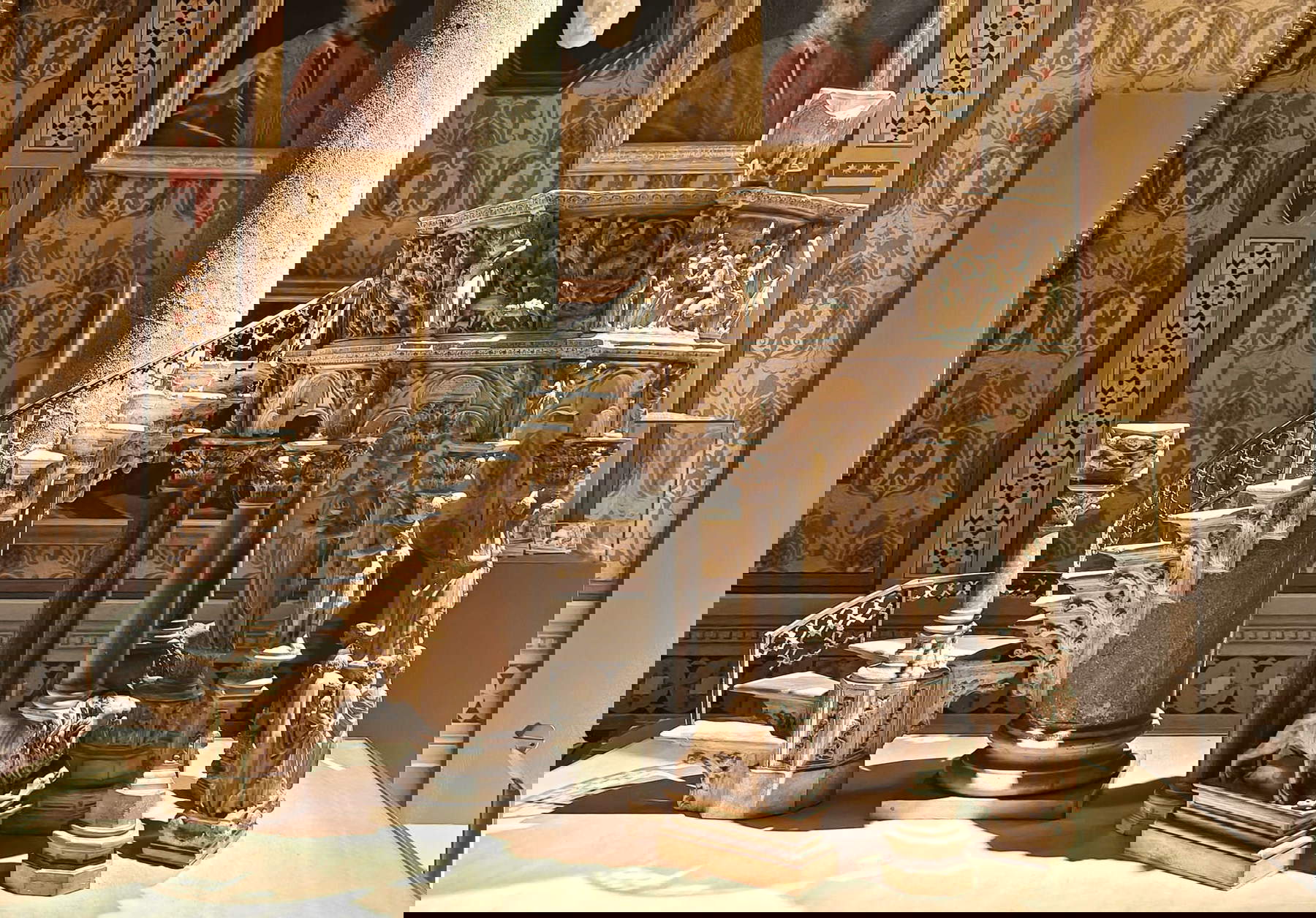
Fontana’s patient work had the merit, however, of significantly accelerating a debate that we must imagine was already very much felt and participated in: the room in which his model is exhibited also presents images of the other model, the full-scale one made by the moulder Giovanni Franchi for the South Kensington Museum in London (it is still there: the museum is now the Victoria&Albert) and drawings by Georges Rohault de Fleury, who was among the first to take an interest in the pulpit. As early as 1872, the Municipality of Pisa decided to begin reconstruction, entrusting Tito Sarrocchi, one of the leading Italian sculptors of the time, with the task of modeling the necessary missing pieces (some are on display in the next room), but the work would later come to a halt: probably weighed by the negative reception the new pieces had received once they arrived in Pisa. The final project, compiled by Peleo Bacci and exhibited in the visitor’s itinerary, would be approved only in 1910, while two factions had essentially been created (one that supported the idea of a pulpit without the figured columns, the other that instead affirmed the opposite and that, as one can imagine upon entering the Cathedral today, turned out to be the winner of the confrontation). Only in 1922, however, would the Opera del Duomo, directed at the time by Giuseppe Fascetti, arrive with the appropriation necessary for the recomposition, so that Giovanni Pisano would no longer be displayed in tatters in the “wretched hovels of a museum,” but would return in one piece to the place he deserved. It took another four years to complete the pulpit, and in March 1926 it was finished and rearranged in the cathedral, albeit far from its original location: the new arrangement, there where everyone still sees Giovanni Pisano’s pulpit, in the impossibility of recreating in detail the original context, was chosen for reasons of visibility, ease of access, lighting, and possibility of use for liturgical purposes.
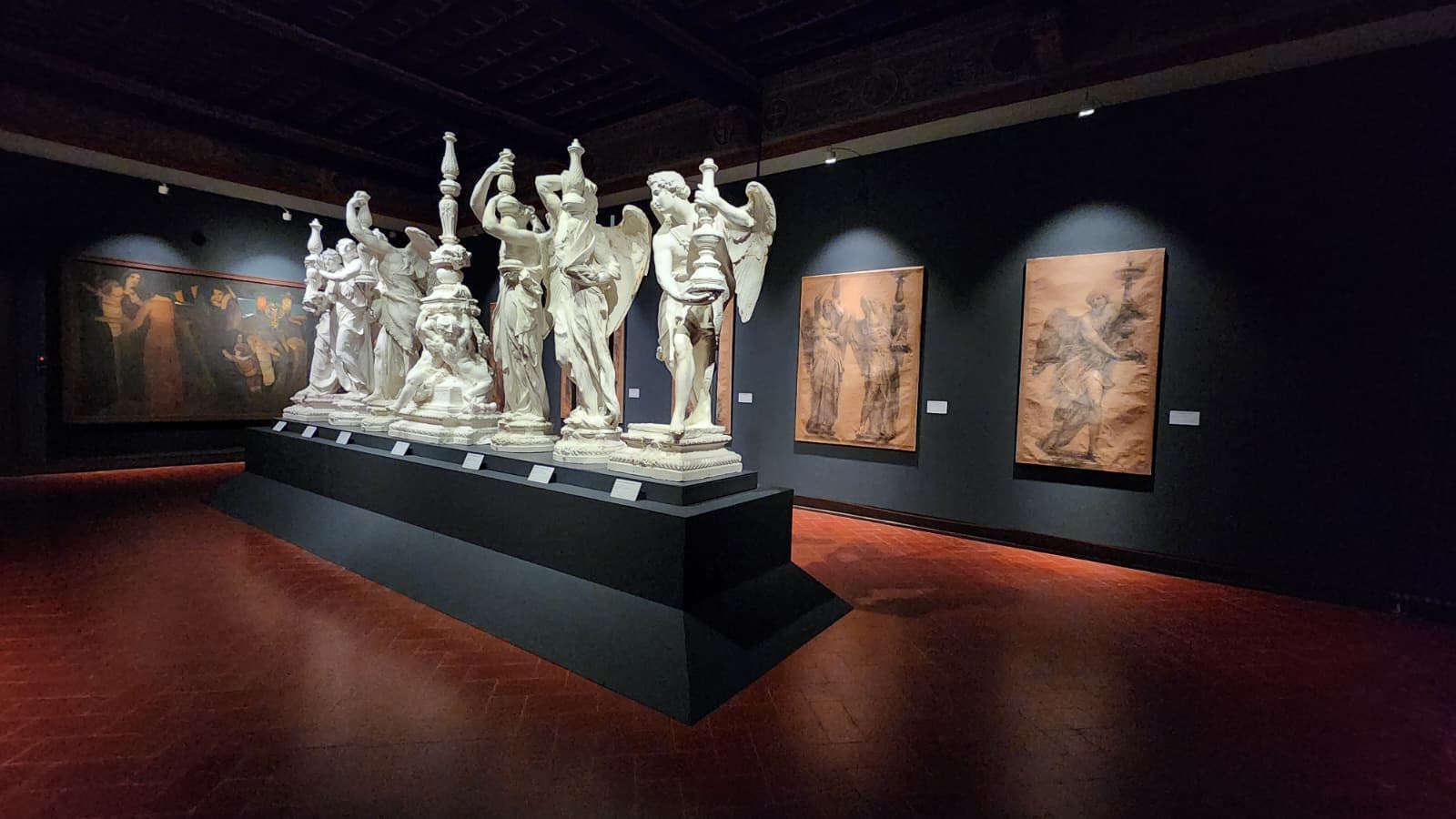
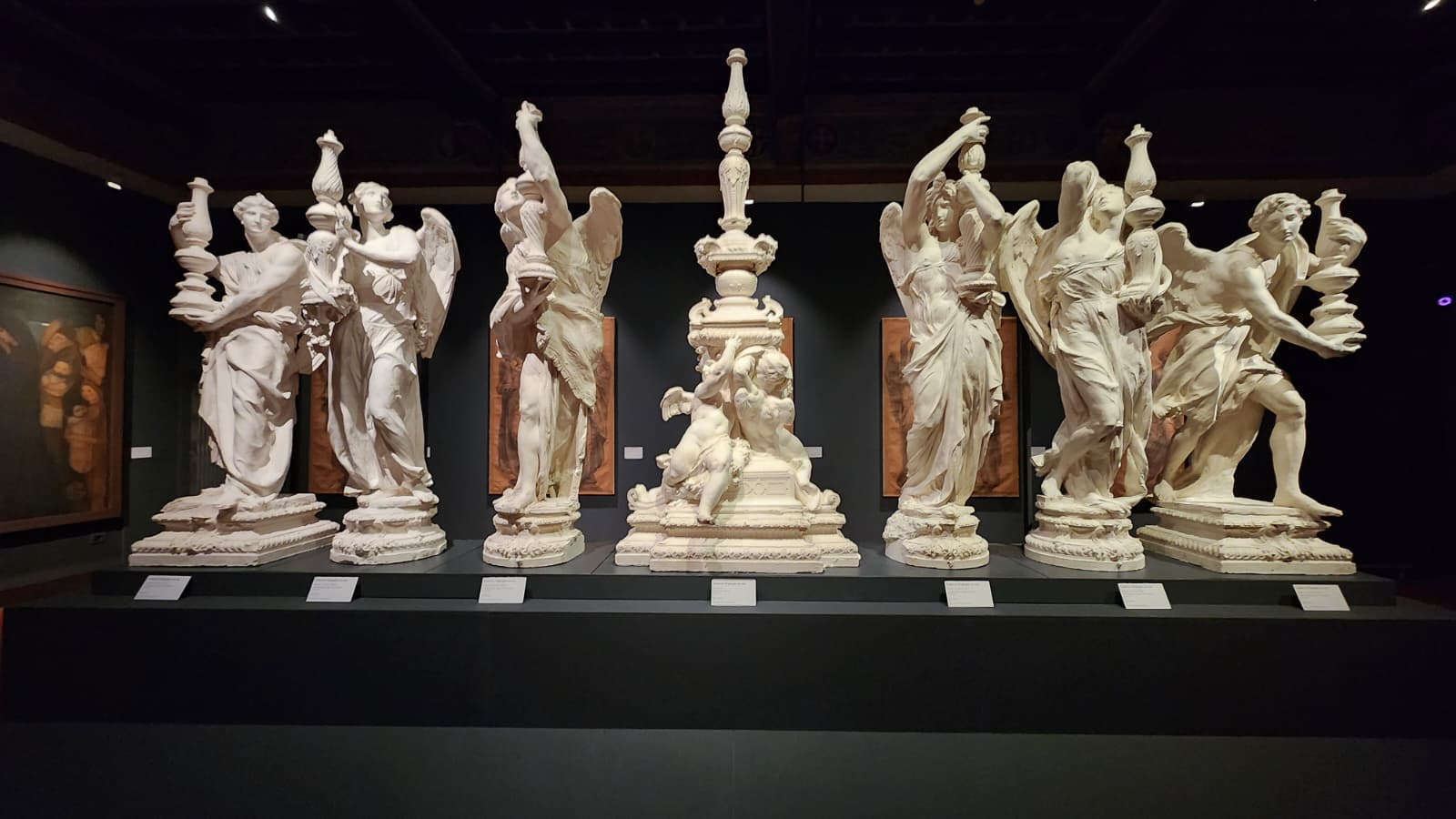
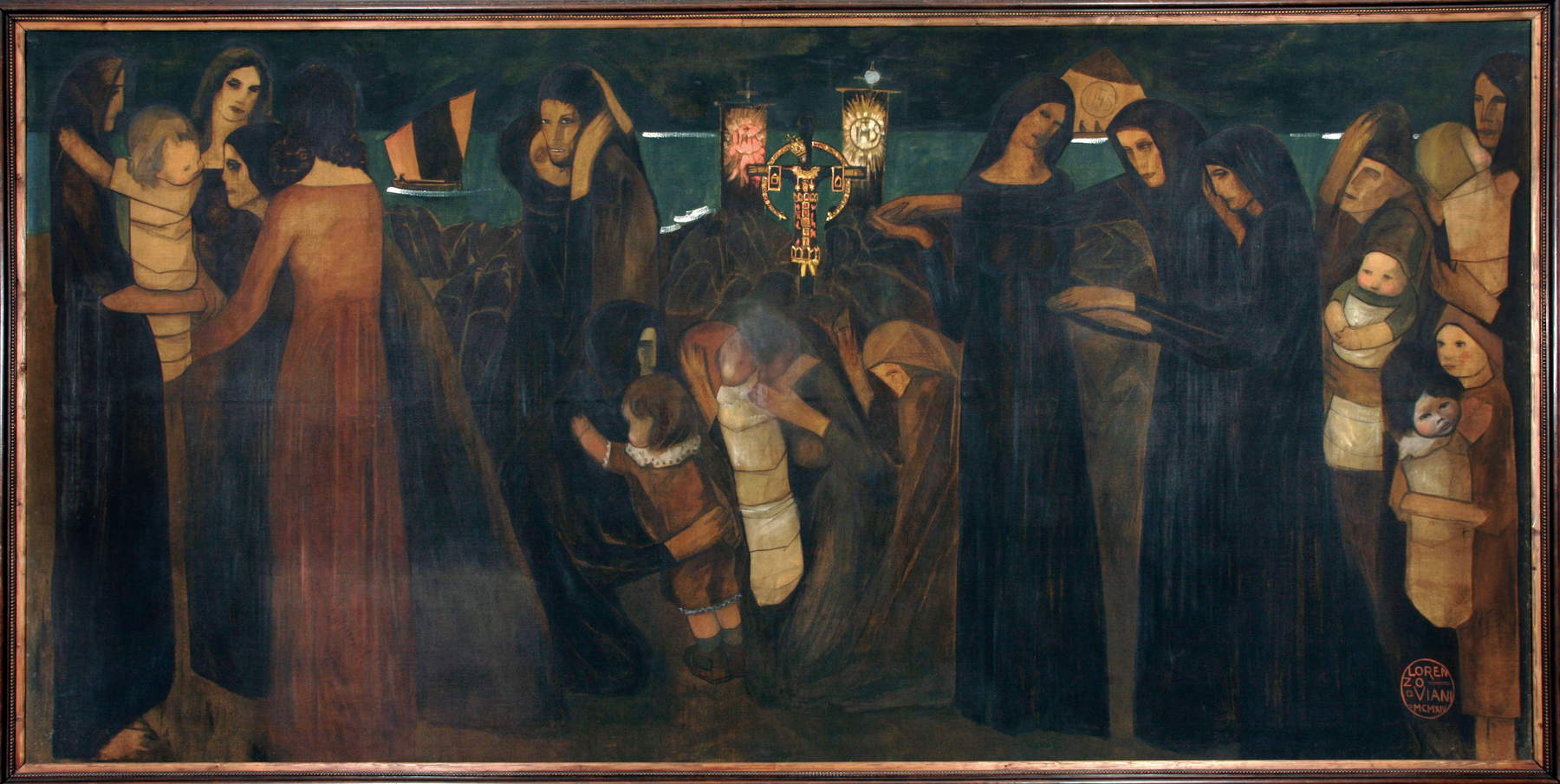
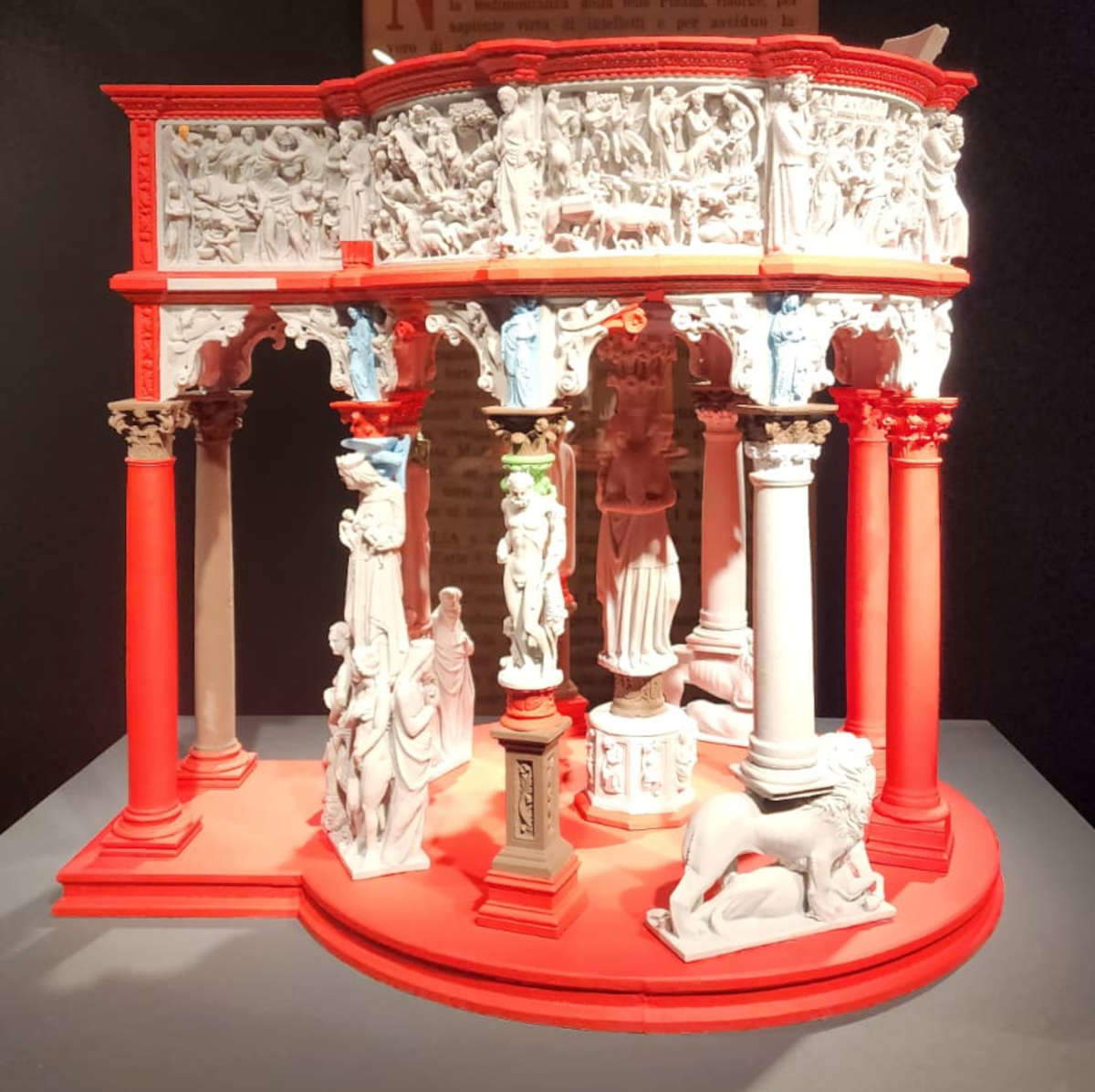
For the centennial exhibition, the curators have decided to tell the story in all details, even the side ones: there is, for example, an entire room devoted to the renovation of the Cathedral’s high altar, which is from the same years as Giovanni Pisano’s pulpit. On display then, in the center of the largest room of the exhibition, are the large plaster casts of the candle-bearing angels that Lodovico Pogliaghi, a sculptor who was also appointed to the commission set up in 1922 to complete the reconstruction of the pulpit, made precisely for the Cathedral altar. Behind the plaster casts, one can see a masterpiece by Lorenzo Viani, the Blessing of the Dead of the Sea, a work in which one wanted to see, even in the absence of direct references, a dialogue with Giovanni Pisano, although, one learns from Giovanni Casini’s essay in the catalog, not so monochord, since the great Viareggio artist, in his project of going beyond “the wall of the Renaissance” to illuminate himself with the “sun of our primitives,” operated a vigorous and heartfelt recovery of so much Due-Trecento, not only Giovanni’s. A work therefore that, in the overall economy of the exhibition, could perhaps have been mistaken for some of Viani’s other works, given that the Blessing is one of the mainstays of the Gamc in Viareggio (although it ended up a little penalized by the museum’s new layout, certainly tidier, but less inclined to emphasize the singularity of that extraordinary painting, one of the cornerstones of the production of Italy’s greatest expressionist), and yet functional in introducing the theme of the twentieth-century reception of Giovanni Pisano, which continues, in the same room and then in the conclusion, with the works of Galileo Chini, Henry Moore, Marino Marini, and on to the explicit tributes of contemporaries. One leaves not before seeing the tasty and highly intelligent model of the pulpit made in 3D printing, designed by Professors Pancani and Frassoni of the University of Florence, who propose to the exhibition audience theimage of the pulpit with different colors in order to show with extreme clarity which are the original elements, which are the integrations by Tito Sarrocchi that were nevertheless used in the recomposition, which are the pieces executed by Ludovico Pogliaghi, which are the pieces added in 1926 at the time of completion, which are the seventeenth-century integrations, and finally which are the ancient elements of doubtful provenance or those instead uncertain.
An exhibition like the one envisioned by Levi and Pellegrini ran the risk of being a purely documentary project. A risk, because document-only exhibitions, however interesting, can hardly be said to have the pace of those in which the object of the hypothesis is shown to the public’s face. Regardless of the fact that, behind the bureaucratic facade of the documents, one can feel, at least in this case, the throb of one of the most singular historical-artistic undertakings of the 20th century, an undertaking that has restored to its substantial integrity one of the pivots of medieval Italian art (today there is no school textbook that does not include a photograph of Giovanni Pisano’s pulpit, there is no high school student who has not devoted a few quarters of an hour to the result of the work of Giovanni Pisano’s pulpit, and there is no high school student who has not devoted a few hours of his attention to the work of the art historian), the exhibition is a risk.hour of his attention to the result of the labors of Fontana, of Sarrocchi, of Bacci, of Rohault de Fleury), and which had never been retraced in such a systematic and thorough manner in an exhibition (which, moreover, also has the merit of being accompanied by a thorough catalog, and with a very rich iconographic apparatus). Well: the risk has been set aside because the curators have not only told a story, but reconstructed a context, which is precisely what any self-respecting exhibition should do.
In the Palazzo della Primaziale in Pisa, therefore, a lively, comprehensive, even persuasive review is offered to the public in certain passages. Giovanni Pisano. Memory of a Sculptor is an intelligent exhibition: one rises from the rubble, one walks inside an era, one chases the gradual unveiling of Giovanni Pisano with the drawings of the artists and architects who first noticed his greatness, one measures oneself against a fragment of the history of tutelage, one sees returning to Pisa what can never return, one recognizes the product of a flame, a struggle, a conquest. When Ruskin acquired the pieces now at the Metropolitan, he was convinced, for some reason, that they came from the ancient baptismal font in Florence linked to the memory of Dante Alighieri. So much so that he had named them “The Dante marbles.” He could not know, nor would he ever know, that he had bought something much better.

The author of this article: Federico Giannini
Nato a Massa nel 1986, si è laureato nel 2010 in Informatica Umanistica all’Università di Pisa. Nel 2009 ha iniziato a lavorare nel settore della comunicazione su web, con particolare riferimento alla comunicazione per i beni culturali. Nel 2017 ha fondato con Ilaria Baratta la rivista Finestre sull’Arte. Dalla fondazione è direttore responsabile della rivista. Nel 2025 ha scritto il libro Vero, Falso, Fake. Credenze, errori e falsità nel mondo dell'arte (Giunti editore). Collabora e ha collaborato con diverse riviste, tra cui Art e Dossier e Left, e per la televisione è stato autore del documentario Le mani dell’arte (Rai 5) ed è stato tra i presentatori del programma Dorian – L’arte non invecchia (Rai 5). Al suo attivo anche docenze in materia di giornalismo culturale all'Università di Genova e all'Ordine dei Giornalisti, inoltre partecipa regolarmente come relatore e moderatore su temi di arte e cultura a numerosi convegni (tra gli altri: Lu.Bec. Lucca Beni Culturali, Ro.Me Exhibition, Con-Vivere Festival, TTG Travel Experience).
Warning: the translation into English of the original Italian article was created using automatic tools. We undertake to review all articles, but we do not guarantee the total absence of inaccuracies in the translation due to the program. You can find the original by clicking on the ITA button. If you find any mistake,please contact us.























 IT
IT FR
FR DE
DE ES
ES CN
CN


