



by Ilaria Baratta, Noemi Capoccia 09/02/2026



Categories: Interviews / Disclaimer
Antiquarian Fabrizio Moretti played an important role in getting the state to buy Antonello da Messina's Ecce Homo, which was to go to auction at Sotheby's: in fact, he was the intermediary in the negotiation. Here's how it went: we asked him a few questions. The interview is by Ilaria Baratta and Noemi Capoccia.

It had already hinted at a major private purchase negotiation that Antonello da Messina ’sEcce Homo had been withdrawn a few hours before theauction at Sotheby’s on Feb. 5, an auction that was shaping up to be one of the most notable this year, and indeed the tempera on panel painting was purchased by the Italian state. The news had already arrived a couple of days ago on social media via rumors from authoritative sources, such as the “Federico Zeri” Foundation of Bologna with a post on its Facebook page, then again the director of the National Gallery ofUmbria and the National Picture Gallery of Bologna on an interim basis, Costantino D’Orazio, with a post on his Facebook page that was later deleted, and finally the art historian official of the Brescia Superintendency Angelo Loda, who had also written on social that the cost of the operation would be about $12 million.

Then, in the morning of this morning, a patina of semi-officiality came with a post by Tomaso Montanari, a member of the technical-scientific committee of the Ministry of Culture (along with Mauro Agnoletti, Daniele Malfitana, Maria Cristina Terzaghi, and Italo Muntoni), who expressly pointed out that he was “among the two art historians on Mic’s technical committee that gave the go-ahead for the purchase a few weeks ago, prior to the auction,” stressing that it was “a privilege and a pleasure” for him. Again, Montanari let it be known that he proposed the Uffizi to the Ministry as the work’s destination. However, the final formalization came this afternoon when the Minister of Culture, Alessandro Giuli, declared and confirmed “the acquisition of the painting Ecce Homo by Antonello da Messina.” According to the minister, it was “an operation of the highest cultural level” that “represents a unicum in the artistic panorama of the Italian 15th century, a fundamental point in the strategy of expansion and enhancement of our cultural heritage, to be made available to Italian citizens and visitors from all over the world.” The wait for the official announcement of the purchase is due, as the minister stressed, to “respect for the authorities deputed to register the purchase contract.”


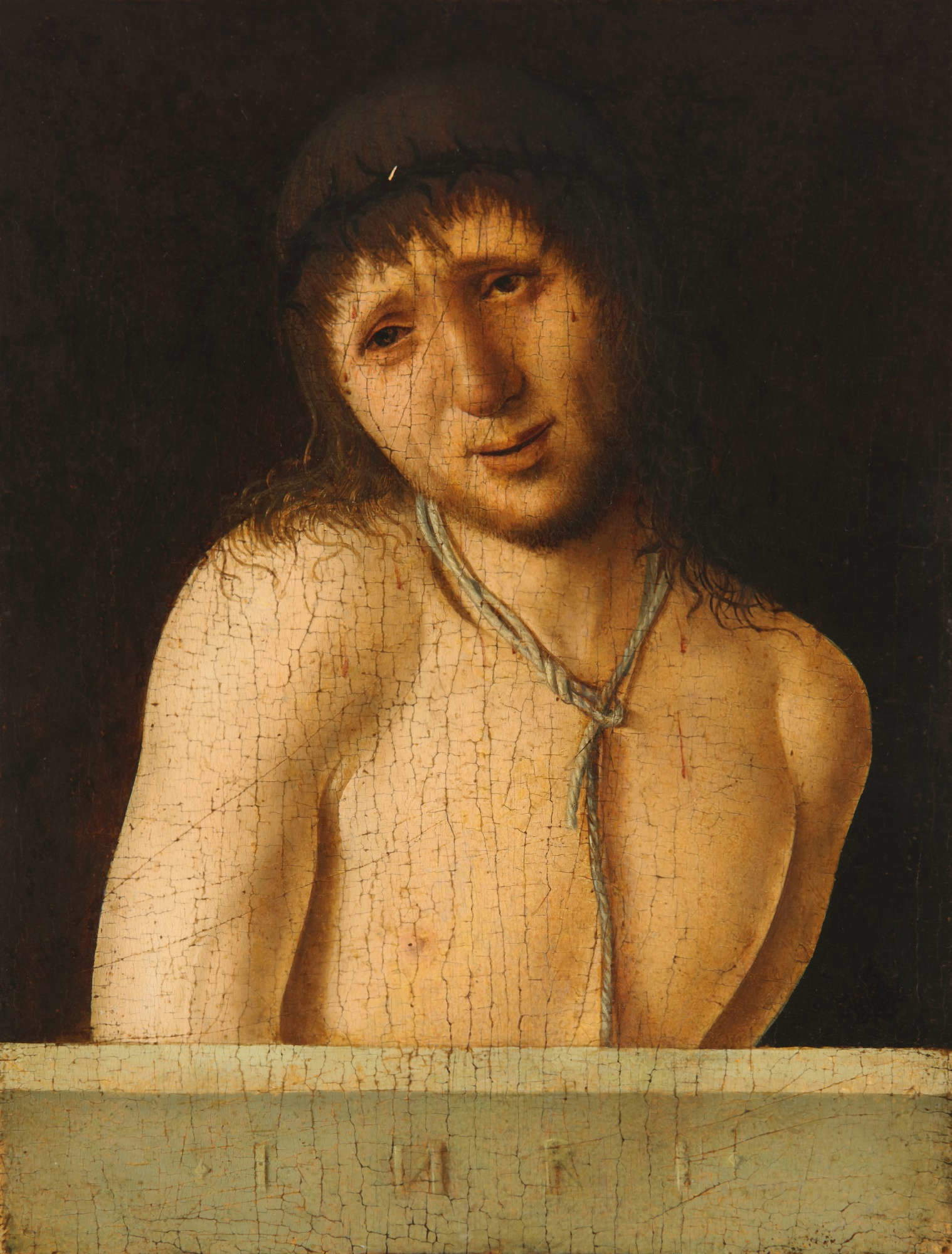
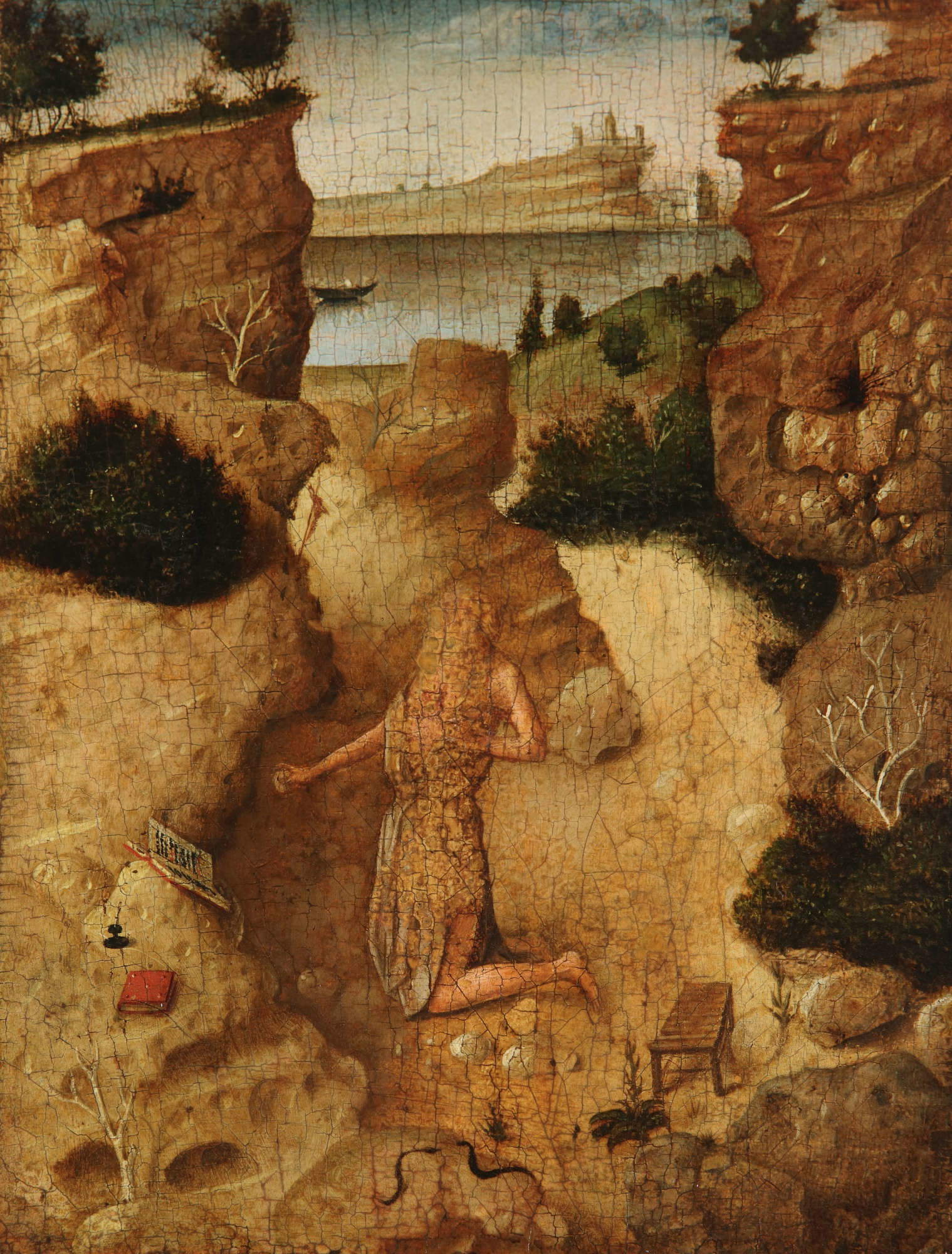
The work, which was about to go to auction at Sotheby’s with an estimate of between $10 million and $15 million, was purchased by the Italian state at the sum of $14.9 million, about 12.6 million euros. It is a small panel painted on both sides depicting on one side an Ecce Homo, a half-length Christ placed behind a parapet and facing the viewer frontally, and on the other a penitent Saint Jerome in a rocky and rugged landscape. A painting, however, that seemed intended for private devotion, given the double depiction and the small size of the work. We caught up with antiquarian Fabrizio Moretti, former secretary of the Florence Biennale Internazionale dell’Antiquariato, who played a specific role in the acquisition negotiations (he acted as an intermediary with the painting’s owner, a private collector, and the auction house), to ask him a few questions about the transaction.
When did the state begin to consider entering into negotiations for the purchase ofAntonello da Messina’sEcce Homo ?
I can’t know, I was contacted only ten days before the start of the sale to start the negotiations. I don’t know when they made the decision, that’s information you have to ask the members of the committee.
What was your specific role within the acquisition negotiations?
My specific role was to convince the client, the collector who owned the painting entrusted to Sotheby’s, to accept an out-of-auction offer. This was not an obvious choice, because it involved the risk of getting a lower figure than he could have obtained at auction. In fact, he accepted it in the knowledge of the value of the transaction. After many years, Italy would finally realize an important purchase, comparable to those of the great international museums, bringing back to the country a masterpiece of absolute importance. The collector is an extremely sensitive person, a patron. Although selling at a difficult time in his life, he has always supported restorations, young scholars and institutions in different countries. Understanding the spirit of the transaction, he decided to accept it. Sotheby’s also showed great responsibility, giving up a lot that could have gained considerable visibility at auction, with numerous potential competitors. I was able to bring both parties to an agreement, also assuming a role of guarantor in the relationship between Sotheby’s, the state and the collector. The latter, in fact, feared that once the work was withdrawn from the auction, the state might then decide not to proceed with the purchase. My task was therefore to negotiate the price between the parties and to accompany the entire process, working to ensure that a solid agreement was reached.
In your opinion, why did the state feel it necessary to proceed with the purchase, despite already owning an Ecce Homo attributed to Antonello da Messina?
This is not my question. I am not part of the committee that made that decision. However, I can answer it from my point of view. There are very few Antonellis. There are about forty around the world, and the work in question represented the last one in private hands. It also had an incredible history, having been attributed by the greatest art historian of the last century, Federico Zeri. Beyond the fact that there may be others, in my opinion the works of Antonello da Messina still remain extremely rare. For that matter, many important museums in Italy either do not have any at all, or keep specimens that do not reach particularly high levels of quality.
Why, in your opinion, has the state decided to invest such a large amount of money at this historical moment, considering that it rarely incurs such high expenses for the acquisition of works of art?
In my opinion, the state has finally realized that in order to acquire major works of art, it is necessary to allocate adequate resources, as is the case in other countries. France, England and even nations going through more serious financial difficulties than Italy continue to invest in art. After all, there are spending chapters that do not affect other areas. They are investments aimed at the protection and growth of cultural heritage. For example, France, at a particularly complex time, bought a Cimabue for 24 million euros and brought it back into its national heritage. It is a choice that indicates ambition and awareness of the strategic value of art. An ambition that already existed elsewhere as well, but in that case it was sustained to the end, precisely in order to defend the heritage. And when this will is there, the space for hesitation becomes minimal.
In your opinion, up to what economic threshold would it have been possible to go during the bidding stage?
I was not aware of the state’s limits; I did not own that number. As a dealer, I can say that if I had been the one to buy the painting, in time and after a restoration, I would have put it up for sale at 25 million euros.
In your opinion, since this is an exceptional acquisition, to what other major past purchases can the return of Antonello da Messina’sEcce Homoto a public collection be compared?
We can compare it with someone already mentioned of Cimabue, or with the last major acquisition of Chardin, again speaking of France. At the moment I am also thinking of England, which recently bought a magnificent painting by Poussin, paying several million pounds.
What changes, on a historical-critical and cultural level, when a work like Antonello da Messina’sEcce Homo becomes part of an Italian public collection, considering its original private devotional function and the absolute rarity of the artist’s corpus?
A painting of this magnitude enriches even a museum already rich in masterpieces like the Uffizi, where an extraordinary Antonello like this one is missing. It is an Antonello datable between 1460 and 1465, a period in which the artist absorbed the influence of Flemish painting with particular intensity. It is therefore a transitional phase in his production. I also consider it a painting with a romantic character. As mentioned, it was discovered by Federico Zeri, and could not find a more suitable place in Italy. Despite its small size, about 20 by 15 cm, it is a painting of universal strength and grandeur.
Has it already been decided what the work’s destination will be? In which museum will it be placed?
I don’t know. I hope it can go to the Uffizi: I am part of the scientific committee and its presence would be very important. However, I understand that, on a physiological level, Sicily might be more suitable.
Warning: the translation into English of the original Italian article was created using automatic tools. We undertake to review all articles, but we do not guarantee the total absence of inaccuracies in the translation due to the program. You can find the original by clicking on the ITA button. If you find any mistake,please contact us.