





A Lucrezia by Guido Reni of very high Genoese provenance, a fine product of the extreme phase of the Bolognese painter’s career, has re-emerged from oblivion and has been purchased by the Ministry of Culture for the National Gallery of Liguria in Genoa’s Palazzo Spinola, which will present it in the coming days. It had been exhibited at the 2025 edition of Modenantiquaria, at the stand of the young Genoese gallery Goldfinch Fine Arts of Clemente Zerbone and Luigi Pesce, which, although at its first participation in the high antiques fair, had already risen to everyone’s attention by bringing one of the surely most interesting paintings of the entire event to the show. The hope, a year ago, was that the painting could be purchased by someone who would be able to make it available to the public, possibly in Genoa, since it is a painting inextricably linked to the history of the city and, specifically, to the history of one of its greatest collectors. And so it was: with the deserving, intelligent, valuable purchase (we do not know the amount, but we know that it is five zeros) and with the entry of Lucretia into the public collections, now everyone can admire the fragment of a dispersed collection that resurfaces from the storms of history. One of the most spectacular collections of seventeenth-century Italy.
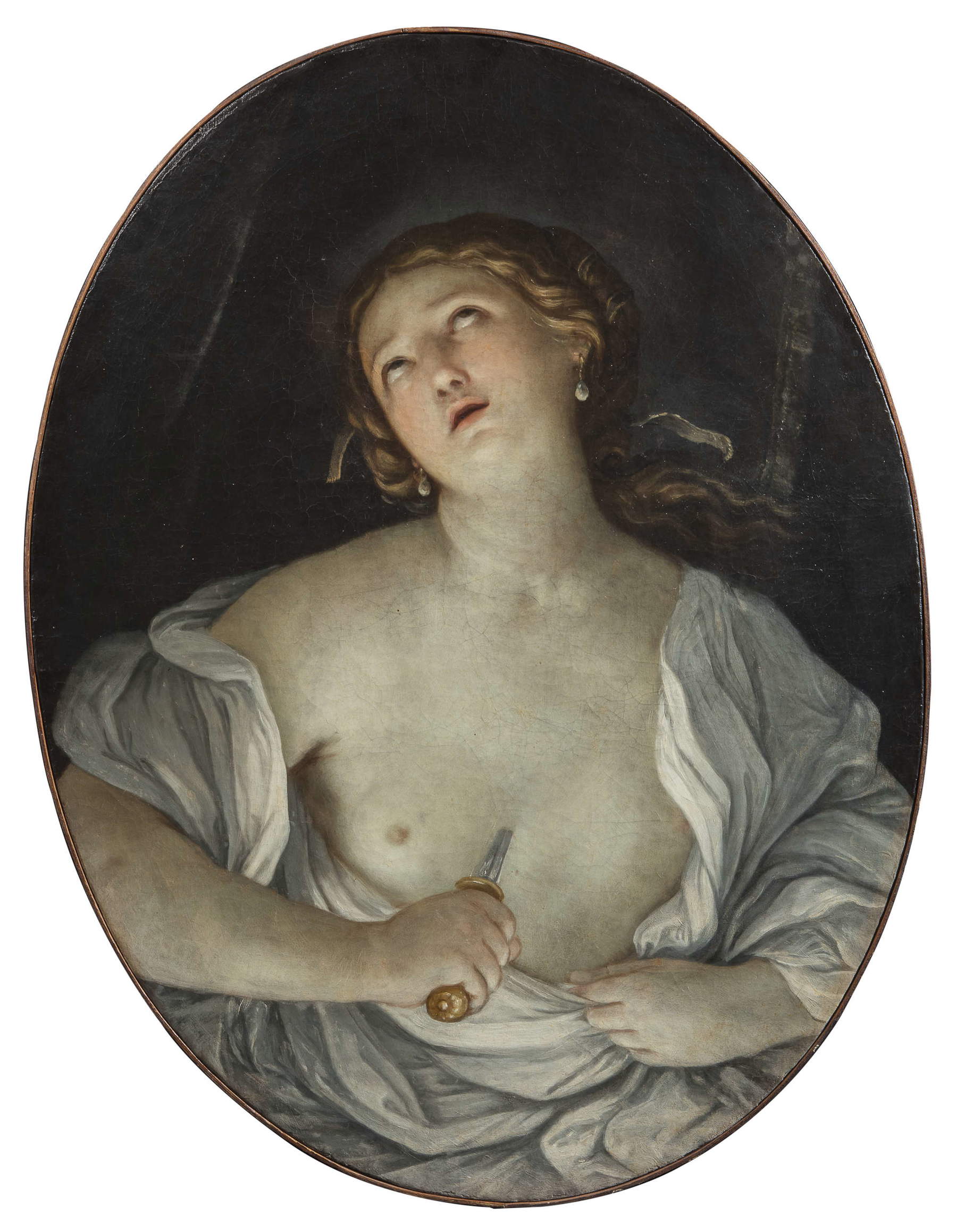
Lucrezia, one can see, is a work of great quality, a typical subject of the Rhenish production, a work with a noble history. Lucretia, the heroine of Roman history caught at the moment when she takes her own life with a dagger for the shame of the rape she suffered from Sextus Tarquinius, turns her eyes heavenward, assuring her soul to the gods: the expression of a woman about to lose her senses contrasting with the firm hand in holding the dagger, the open mouth as the last breath leaves her body, the diaphanous, pearly skin, the blade that does not even seem to scratch the flesh, so much so that not a rivulet of blood gushes from the wound Lucretia inflicts on her chest. These are all distinctive elements of Guido Reni’s heroines, recurring especially in his later years, when the Bolognese artist’s production is dotted with these strong women, Magdalene, Lucretia, ivory-skinned Cleopatre, caught now in flashes of ecstasy, now at the moment of extreme sacrifice, always looking for consolation to come from above, always reducing to the minimum anyabove, always minimizing every distraction (Magdalene’s iconographic attributes, Lucretia’s dagger, Cleopatra’s asp, even the blood) so that the eyes of those of us watching are captured not by the narrative force of the episode, but by the strength of mind of its protagonist, the Magdalene driven by faith to penance, the Lucretia and Cleopatra driven to suicide by a sense of honor.
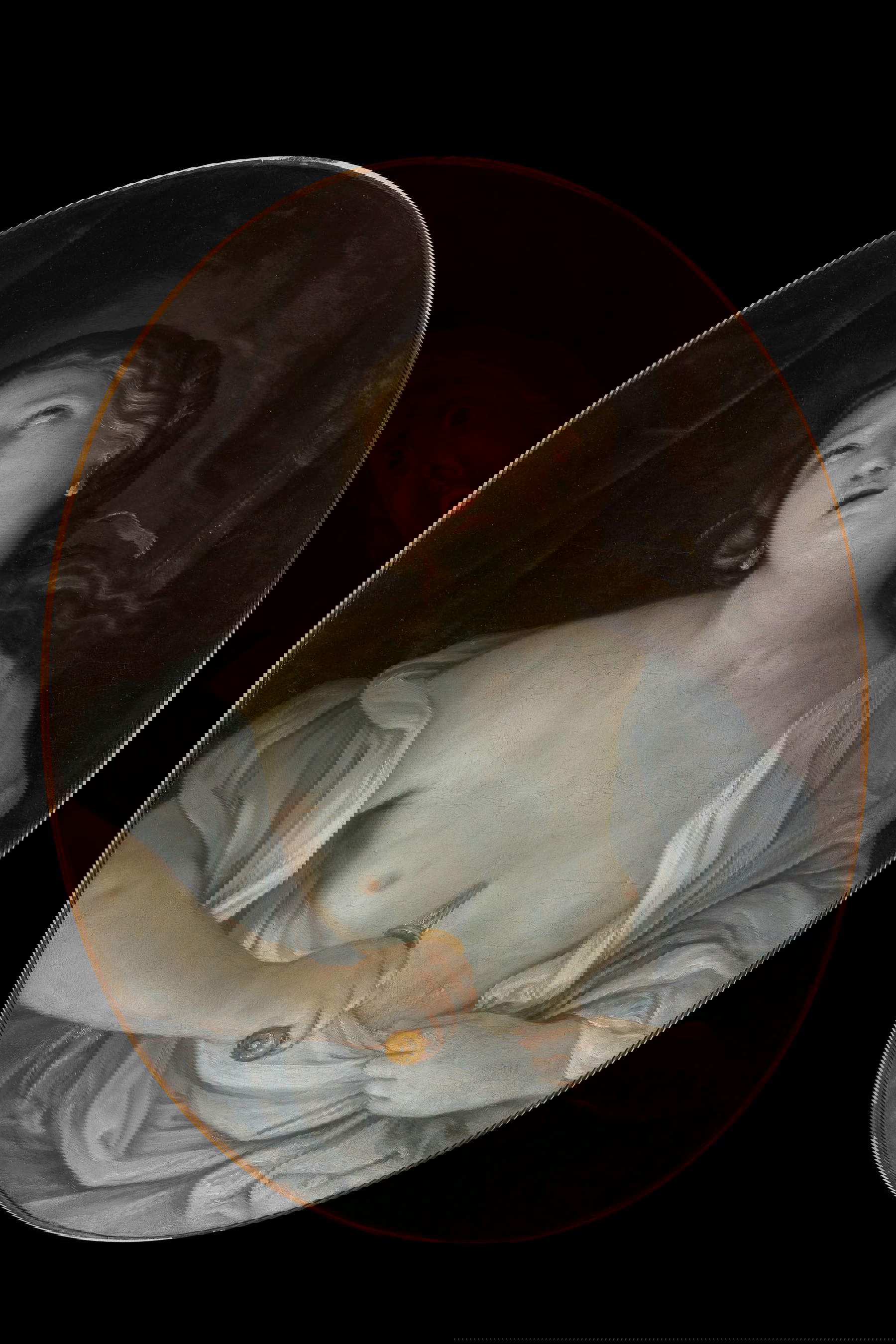
The painting can be dated to the late 1630s, around 1638 according to Lorenzo Pericolo, who has produced a detailed study of the painting, because of certain affinities the work has with the Salome in the Corsini Gallery in Rome, a work from 1638-1639 that can be compared to Lucretia mainly because of the similarities in the features of the two heroines. Dating, that to about 1638, was also proposed by Stephen Pepper in his 1988 monograph, where the work was listed as a product of the two-year period 1638-1639.
Both paintings are marked by a certain state of unfinishedness in the flesh tones, an element certainly not uncommon in the last phase of Guido Reni’s career, which sometimes allows a glimpse of the dark preparation beneath the painted surface: the Bolognese painter, especially near the outlines, worked with an extremely diluted paint, and just near the outlines this way of painting caused a kind of smearing in the definition of the forms, so much so that Pericolo speaks of “dirtiness,” understanding the term, however, with a positive meaning, in the sense that these features convey to the viewer the feeling that the embodiments are as if dirty, precisely because of their transparency. Guido Reni treats the surface with what the scholar considers a “breath of paint”: his brush skims the underlying layer of color, rather than blending. It is a light, very thin painting, with brushstrokes spread rapidly over each other, sometimes crossed, which has several parallels in Guido Reni’s art (one of these is another painting akin to the newly resurfaced Lucretia, namely the Lucretia owned by Genus Bononiae) and which touches here one of its most admirable peaks.
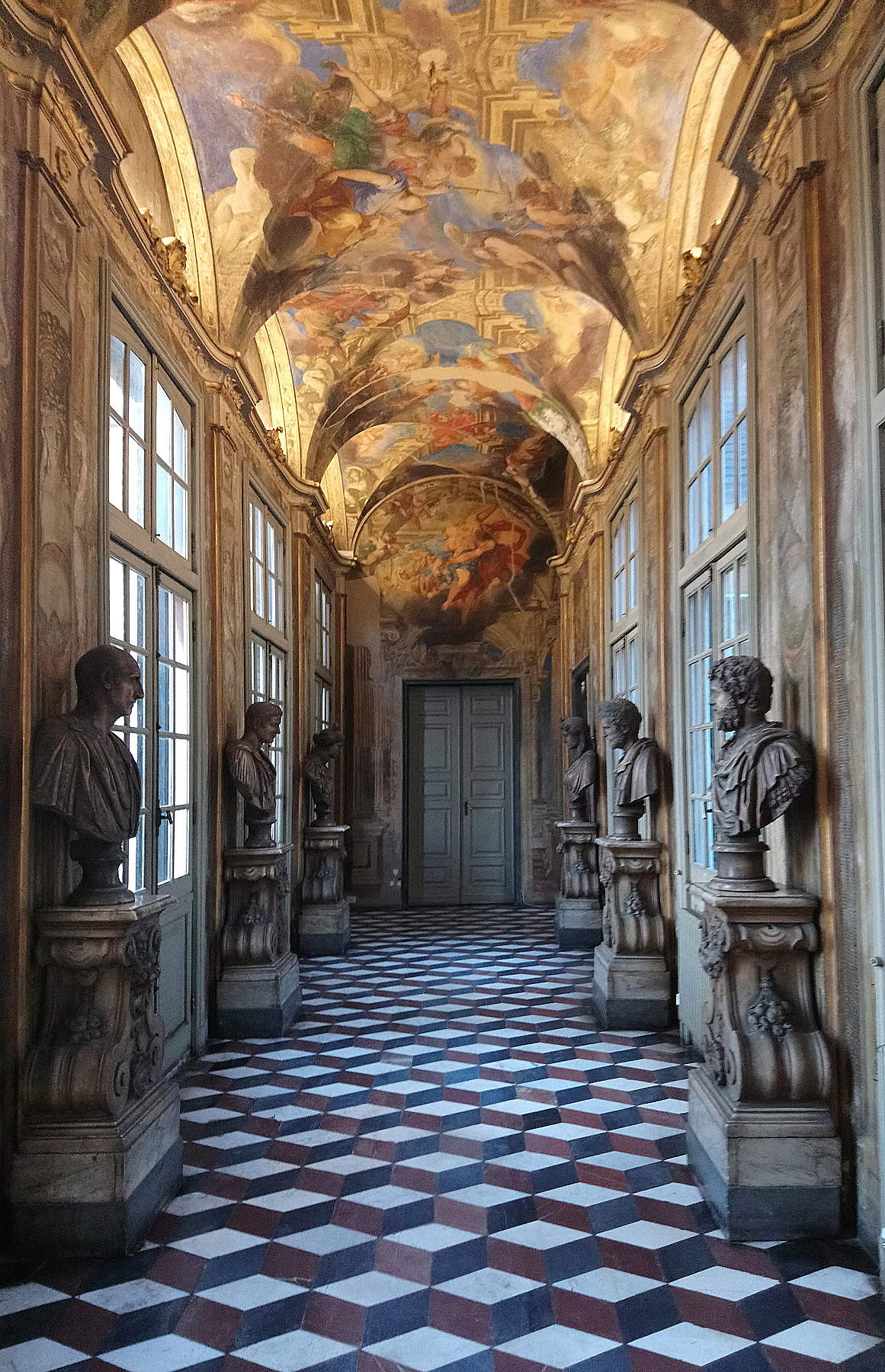
The Lucrezia now at Palazzo Spinola was mentioned as early as 1671 in the collection of the Balbi family in Genoa (it will be convenient to call it, therefore, “Lucrezia Balbi”): the first to record its presence was Jean-Baptiste Colbert, Marquis of Seignelay, son of the eponymous finance minister of King Louis XIV. On March 10, 1671, the marquis, then 22 years old, was in Genoa on his Grand Tour (interestingly, the expression “Grand Tour” first appears the previous year), and in his diary he notes of a visit to the palace of Francesco Maria Balbi, now known as Palazzo Balbi Senarega, the seat of the University of Genoa, located on today’s Via Balbi. In the manuscript diary, the young Seignelay also lists some works he saw in the palace, including a “Saint Jerome by Guido, painted in his first manner” and “two female figures, half-length, painted in his second manner” (“un Saint Jérôme du Guide, peint de sa première manière, et deux figures de femmes à demi-corps peintes de sa dernière”). There were other works by Guido Reni in Balbi’s collection, but the marquis’ attention was for some reason captured by these three. Seignelay did not report what the subject of the two female figures was, and the identity of the two women is not made explicit even in the 1688 inventory of Francesco Maria Balbi’s collections: the subjects are reported in Carlo Giuseppe Ratti’s Instruction of what can be seen of the most beautiful in Genoa , a 1760 work in which the placement of Guido Reni’s six works in the rooms of Palazzo Balbi Senarega is even reported. So here the St. Jerome with the angel and St. John the Baptist in the desert were in the Hall of Zephyrus and Flora, along with Caravaggio’s Conversion of Saul (purchased in the 17th century by Francesco Maria Balbi himself) now in the Odescalchi collection in Rome, the St. Jerome reading was in the center of’a side wall of the Hall of Apollo and the Muses, while in the loggia decorated by Valerio Castello with the Rape of Proserpine was a Lucretia mentioned as a “half-figure of Guido Reni’s most exquisite,” a further Lucretia (actually the Cleopatra that was a pendant to the Lucretia: Ratti had misunderstood the subject) and a “small painting of Saint Mary Magdalene borne to heaven by angels, a most precious little picture by Guido Reni.” These are the same paintings mentioned in Charles-Nicolas Cochin’s Voyage d’Italie of 1769 and correspond perfectly with the six paintings by Guido Reni recorded in the inventory of the previous century (where all subjects are listed except those of the two female half-busts).
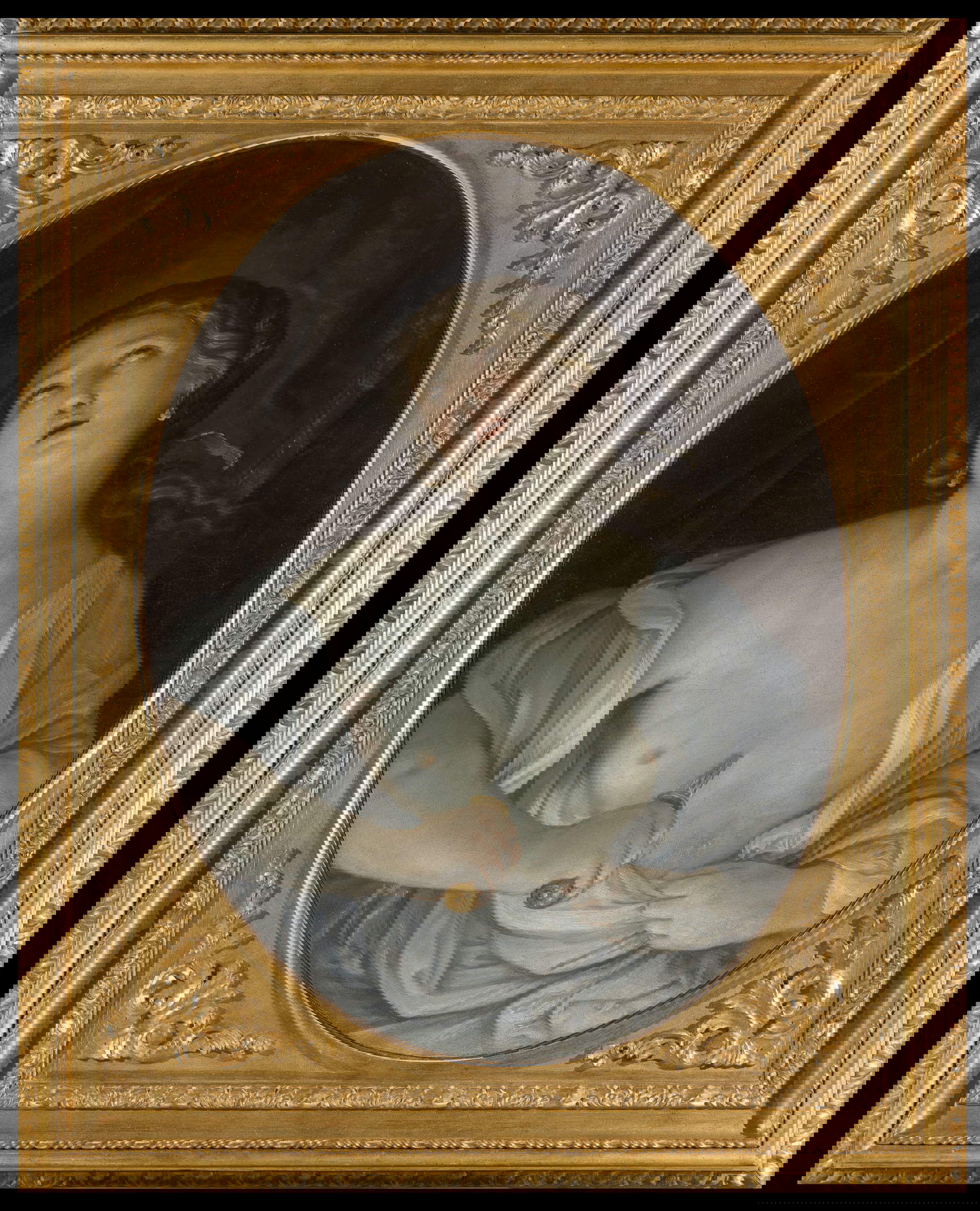
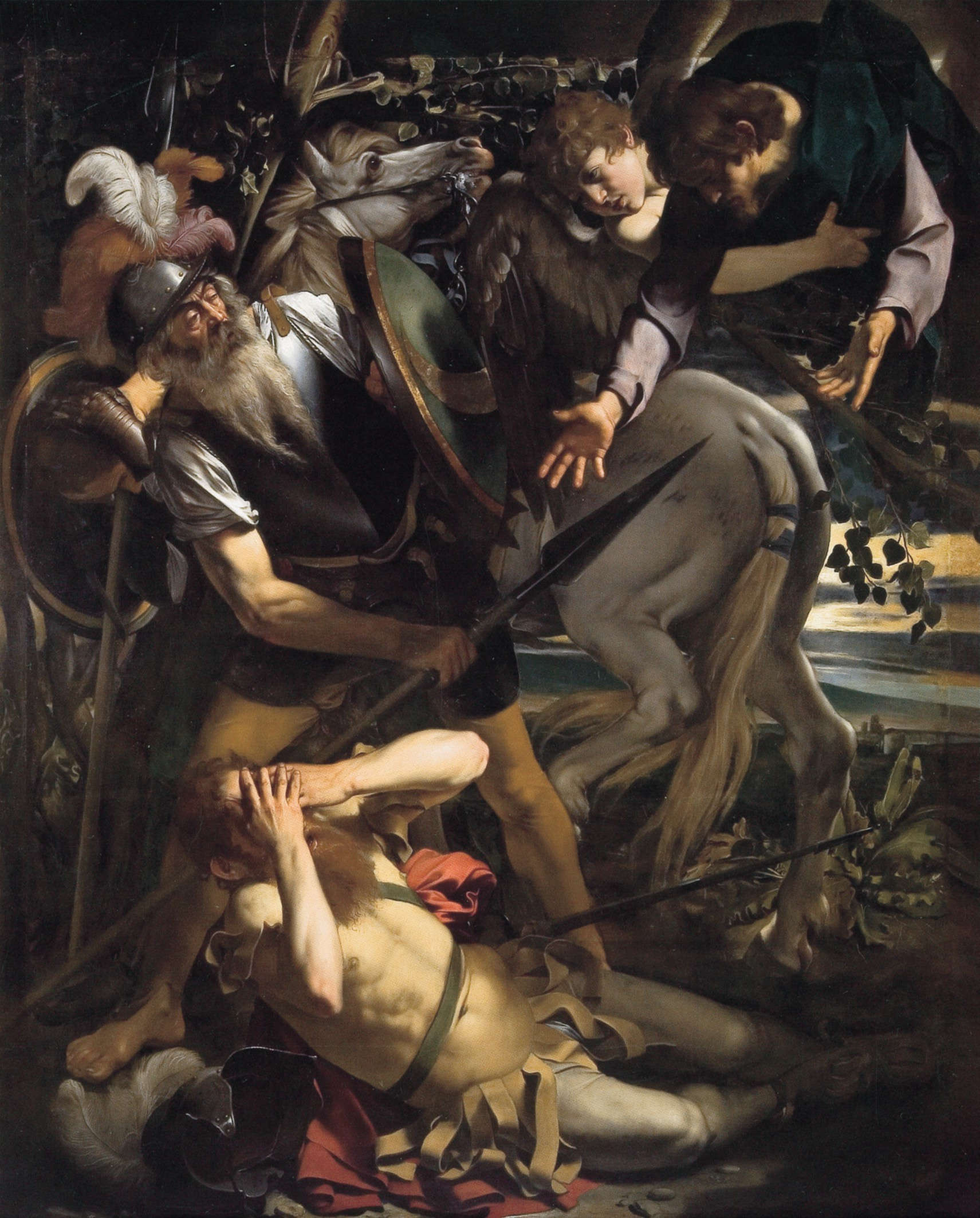
We do not know whether it was Francesco Maria Balbi himself who commissioned the paintings from Guido Reni, but the circumstance seems implausible: when Guido died in 1642, Francesco Maria was only twenty-three years old, and he inherited the family palace, built around 1618, only after the death of his uncle Pantaleo in 1644. It was following this date that he began his efforts to assemble one of the largest, richest, most lavish, and valuable collections not only in Genoa, but in all of Italy. It is far more likely that Francesco Maria acquired the two works later, under special circumstances: a letter dated March 22, 1647, sent by Cardinal Rinaldo d’Este to his brother, Francesco I, Duke of Modena, informs the latter of the sale due to debt, in Genoa, of all the works of art of the Almirante of Castile, Juan Alfonso Enríquez de Cabrera, who had died that year. Among the paintings owned by Cabrera were, as we learn from his inventories, a “una Cleopatra marco dorado ovado mano de Guido” (a Cleopatra with a gilded frame, oval, by the hand of Guido) and “una Lucreçia de mano de Guido con marco dorado” (a Lucrezia by the hand of Guido with a gilded frame). The two works were attributed the same value, which is why they must have been of the same format and quality: two pendants, in essence (the fact that one is mentioned as “oval” and the other is not may be a simple oversight). The presence, in the inventory of Cabrera’s possessions, of two works of identical subject matter to those later mentioned in the Balbi collection could be a simple coincidence, were it not for the fact that theAlmirante of Castile was the owner of some works that later actually ended up in Francesco Maria Balbi’s palace, above all precisely Caravaggio’s Conversion of Saul , and then the Temptations of St. Anthony by Pieter Brueghel the Younger now in a private collection and Jacopo Bassano’sAdoration of the Magi now in the National Gallery of Scotland. “It is impossible to ascertain whether Balbi acquired the paintings in 1647 or later,” Pericolo writes, “but their description is specific enough to convince us that they came from the Almirante’s collection. This is also true of Guido’s Lucretia and Cleopatra.” Reasonable, however, to believe that Francesco Maria Balbi came into possession of the paintings precisely on that occasion: everything leads one to believe, Piero Boccardo noted, that the paintings were part of the lot that “although, through passages not entirely clear, Francesco Maria Balbi chose or found himself assigned in substitution for sums of money that had been lent to him at the time, but against which solvency could not otherwise be guaranteed.”
Almirante, in turn, had not commissioned the paintings from Guido, but in all likelihood had obtained them through the intercession of the archbishop of Bologna, Girolamo Colonna (who was, moreover, Almirante’s nephew), to whom he wrote a letter in June 1641 expressing his desire to obtain some of Guido’s works for his own collection, since it was lacking. It can therefore be assumed that the prelate arranged to fulfill his relative’s wish, perhaps by arranging for Guido Reni’s paintings to be given to him as diplomatic gifts. Moreover, an inventory of Philip II Colonna’s collections, dated 1714-1716, mentions a Lucretia and a Cleopatra, identified as those now in the Bowes Museum in Barnard Castle and the Gibson House Museum in Boston: these are two copies of the Lucretia and Cleopatra that belonged to Francesco Maria Balbi. Thus, the fact that two copies of the paintings that later came to Balbi were kept in the Colonna family collections leads one to consider entirely plausible the hypothesis that, in order to satisfy the desire of the Almirante of Castile, Girolamo Colonna drew from the family collection and then had the two paintings replaced with two copies, executed by some artist from Guido Reni’sentourage , since they do not reach the level of the two originals.
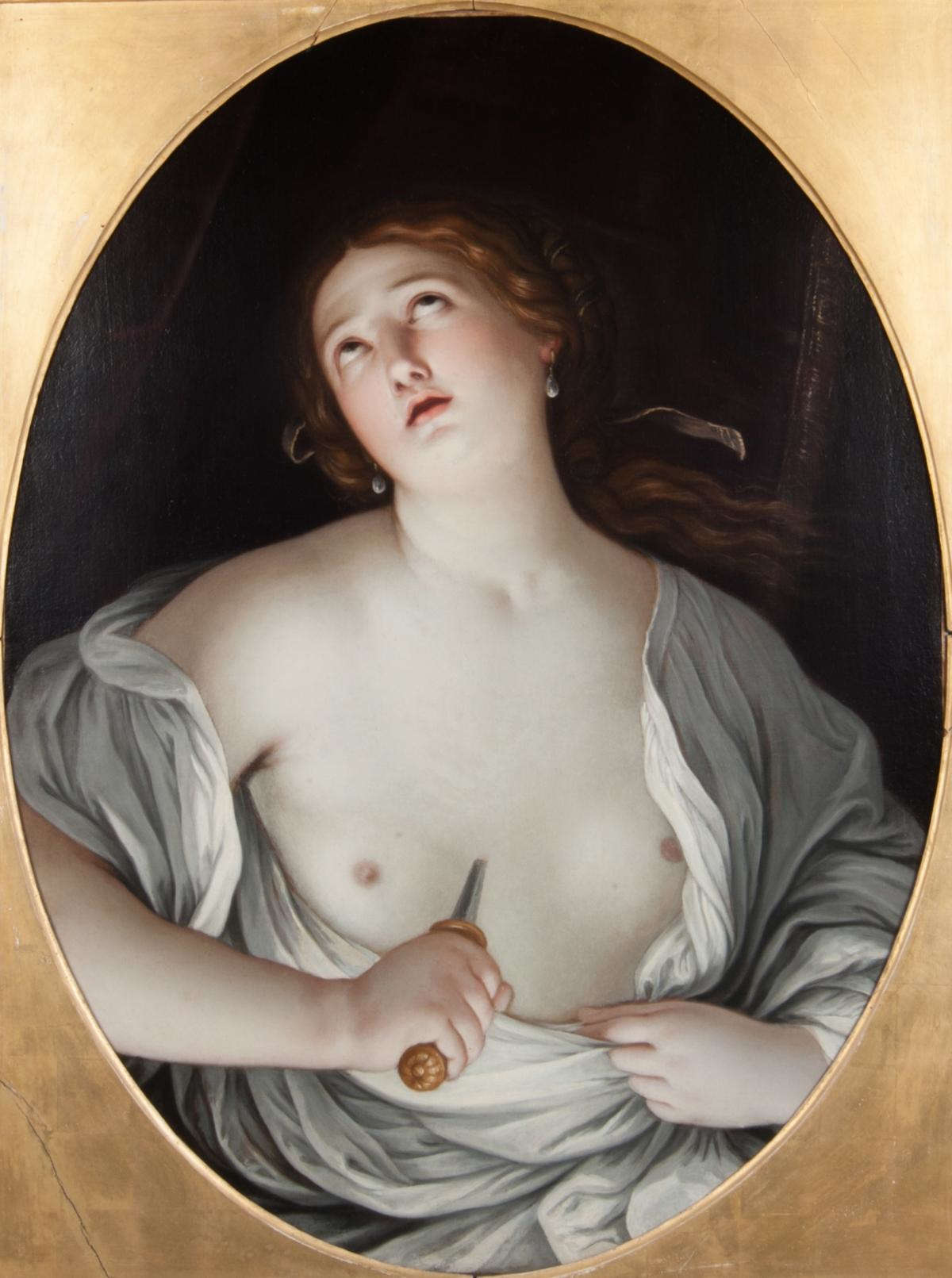
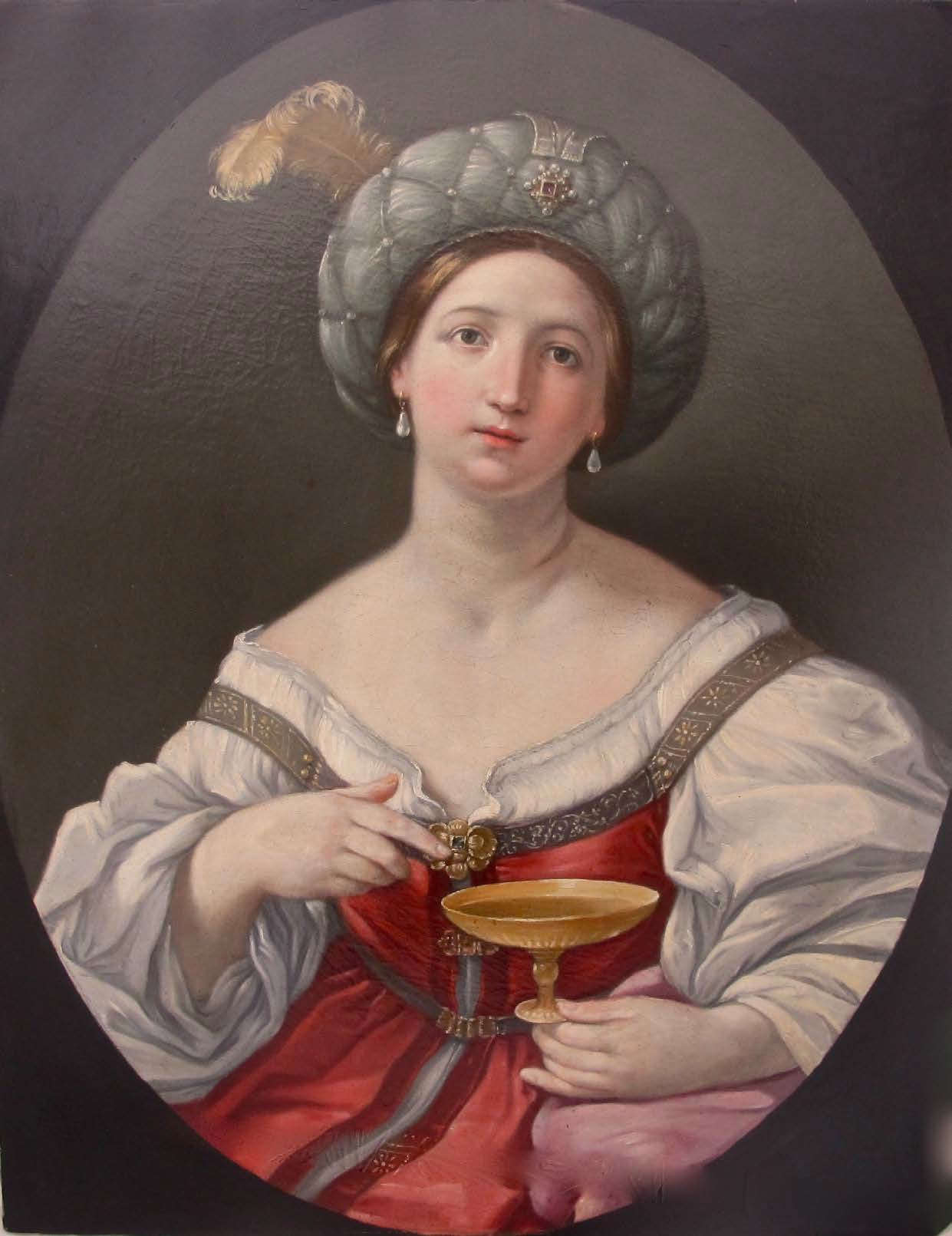
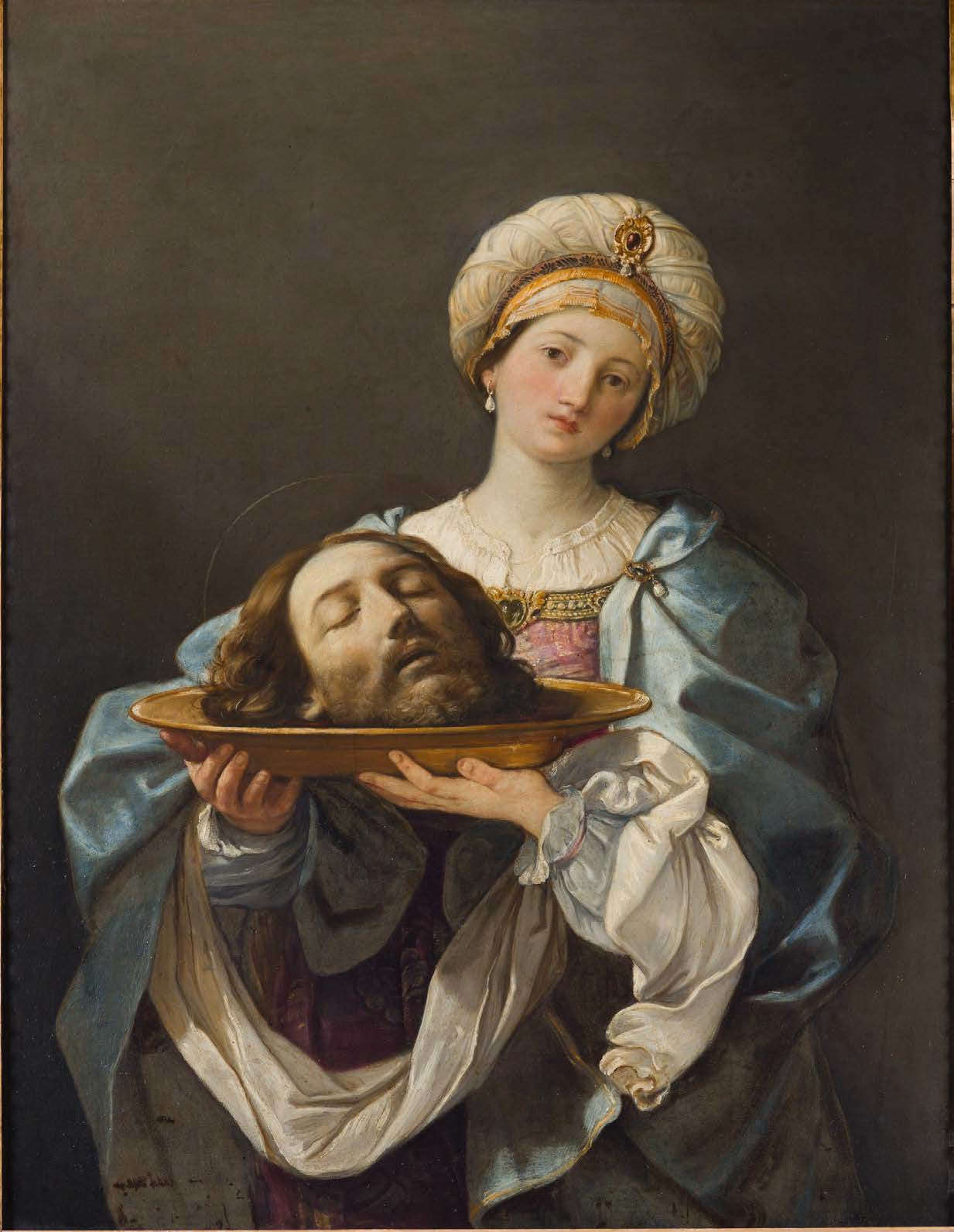
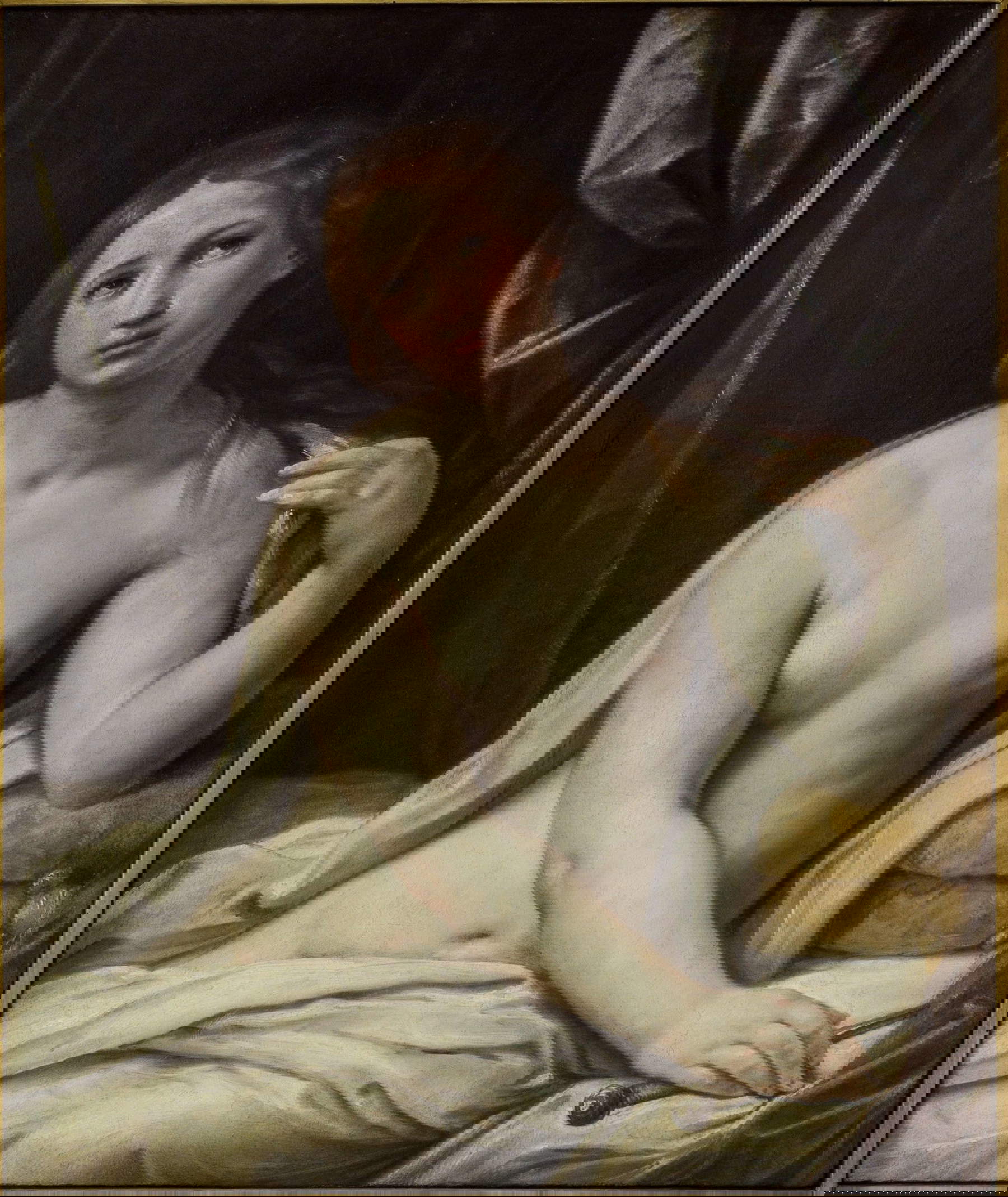
The Lucrezia Balbi can be said to mark a pinnacle of Guido Reni’s production in his later years, when his painting, where not marked by excessive states of unfinishedness (frequent in the last Guido Reni), was distinguished by that ethereal, light character, an impalpable painting, a painting of air and veils that enchanted collectors: the fact that Almirante Cabrera even felt compelled to write a letter asking the archbishop of Bologna for his intercession to obtain some paintings by Guido Reni is clear evidence of how much his work was valued, how much it was sought after in the marketplace, especially at a time when the artist, advanced in years and harassed by debts, worked discontinuously, often finishing his work in a perfunctory manner, probably suggesting that he did not yet have much of a living. Danger places Lucrezia Balbi among Guido’s “great late masterpieces” for its “visionary inspiration,” for its “dexterity,” and for the artist’s ability to have succeeded in “creating an almost portentous effect of relief,” given the risk of coming across as flat with such light painting.
In Genoa, then, now advances from the mists of history the fragment of one of the most significant collections of the seventeenth century, a picture gallery that, as we have seen, was admired by all: travelers who loved art and were in the Superba could not fail to visit it. Then, over the centuries, came the dispersion: torn apart the collection of Francesco Maria Balbi, the works ended up everywhere, some showing themselves to the eyes of the public in the halls of a museum, others still hidden inside a private collection. A fabric that was torn, that ended up torn into remnants that ended up in the four corners of the world. Guido Reni’s St. John the Baptist in the Desert , for example, is now at the Dulwich Picture Gallery in London, while St. Jerome with the Angel is at the Detroit Institute of Arts. The Lucrezia , on the other hand, never left Genoa: it always remained with the Balbi heirs and then came to its previous owner. And in Genoa it has remained, with the difference that it is now everyone’s heritage.


The author of this article: Federico Giannini
Nato a Massa nel 1986, si è laureato nel 2010 in Informatica Umanistica all’Università di Pisa. Nel 2009 ha iniziato a lavorare nel settore della comunicazione su web, con particolare riferimento alla comunicazione per i beni culturali. Nel 2017 ha fondato con Ilaria Baratta la rivista Finestre sull’Arte. Dalla fondazione è direttore responsabile della rivista. Ha scritto i libri Vero, Falso, Fake. Credenze, errori e falsità nel mondo dell'arte (Giunti editore, 2025) e Immagini del potere. Arte e propaganda da Augusto a Trump (Giunti editore, 2026). Collabora e ha collaborato con diverse riviste, tra cui Art e Dossier e Left, e per la televisione è stato autore del documentario Le mani dell’arte (Rai 5) ed è stato tra i presentatori del programma Dorian – L’arte non invecchia (Rai 5). Al suo attivo anche docenze in materia di giornalismo culturale all'Università di Genova e all'Ordine dei Giornalisti, inoltre partecipa regolarmente come relatore e moderatore su temi di arte e cultura a numerosi convegni (tra gli altri: Lu.Bec. Lucca Beni Culturali, Ro.Me Exhibition, Con-Vivere Festival, TTG Travel Experience).
Warning: the translation into English of the original Italian article was created using automatic tools. We undertake to review all articles, but we do not guarantee the total absence of inaccuracies in the translation due to the program. You can find the original by clicking on the ITA button. If you find any mistake,please contact us.
























 IT
IT FR
FR DE
DE ES
ES CN
CN


