





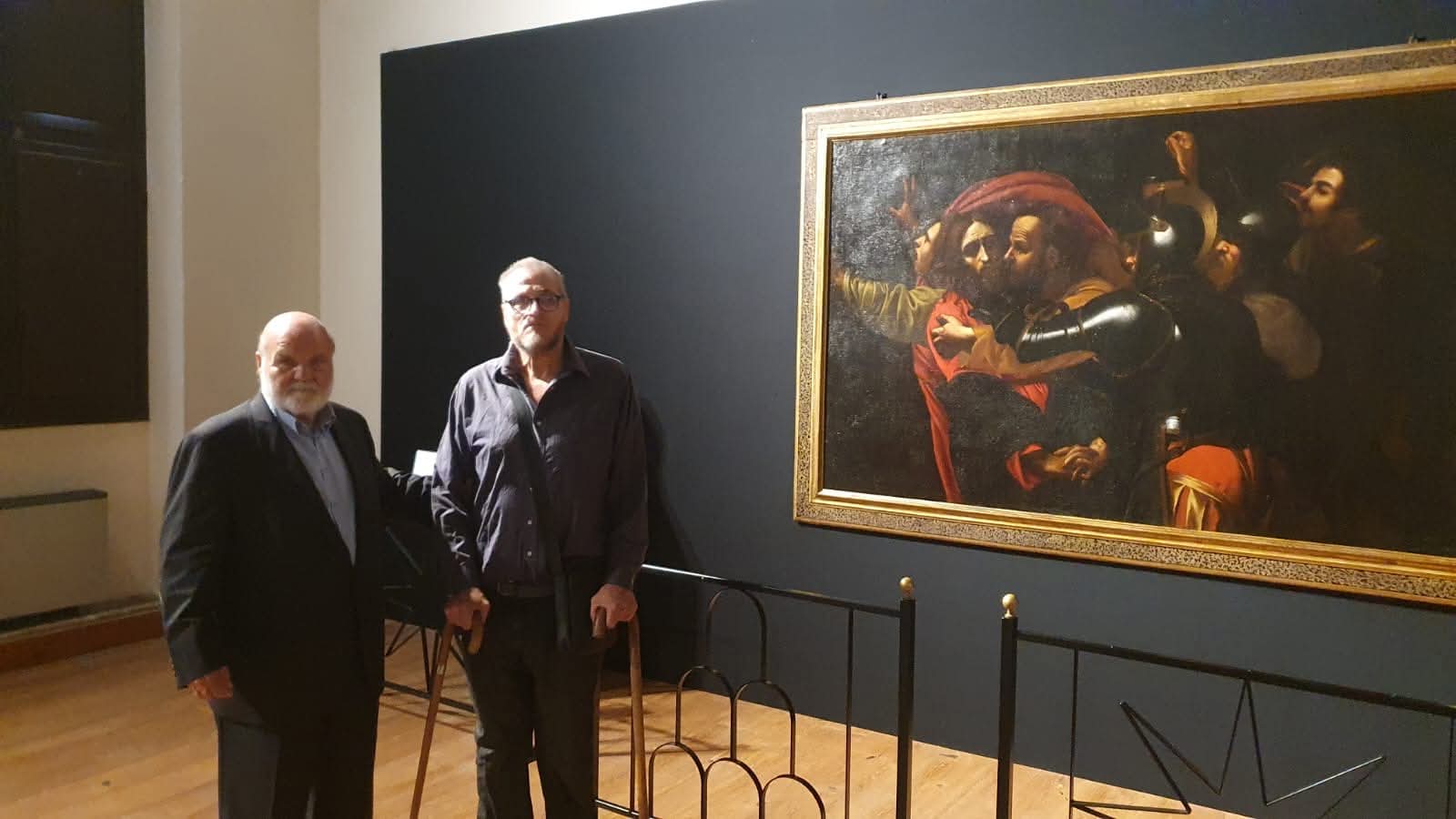
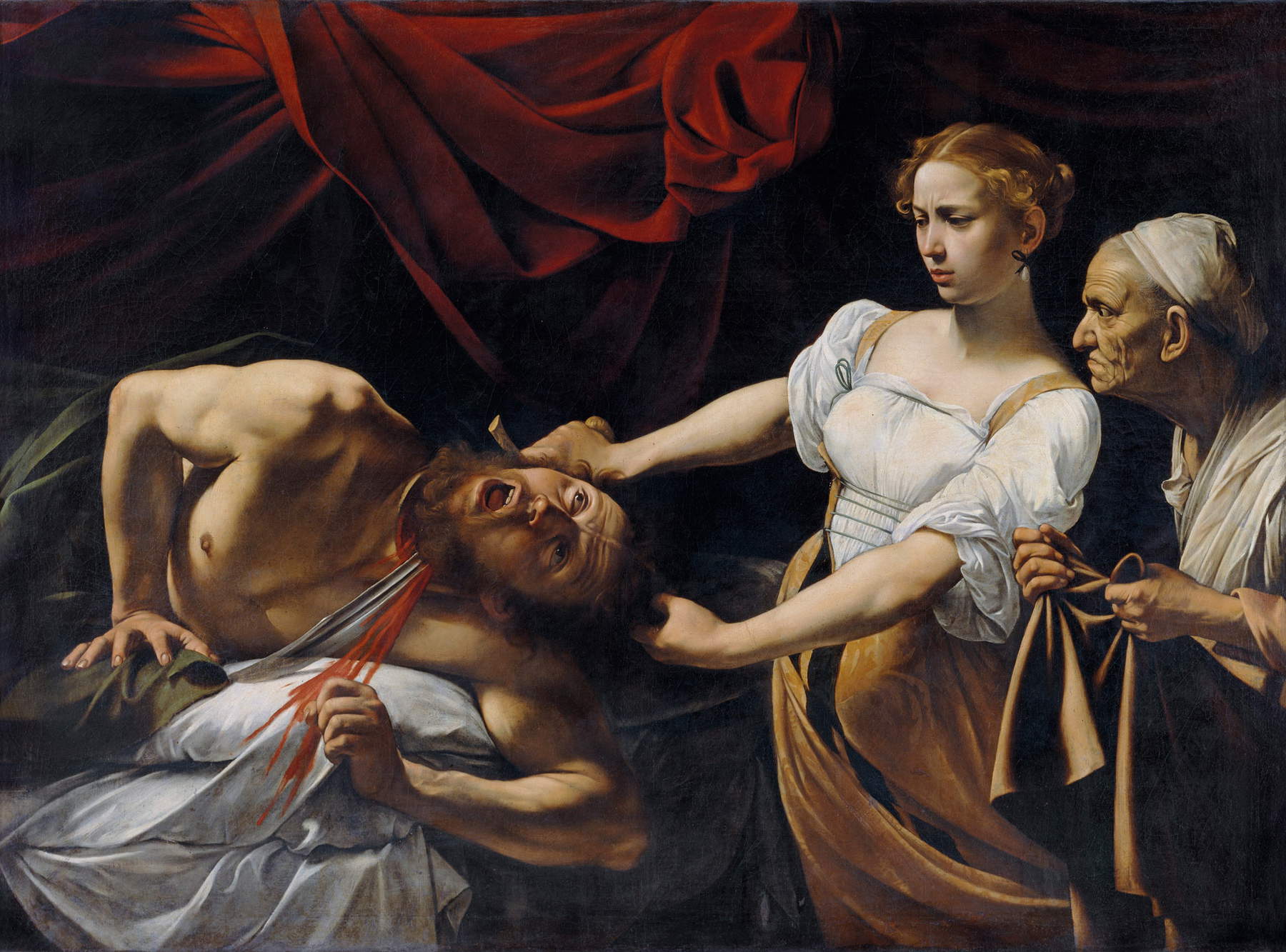
Since the interesting magazine Finestre sull’Arte has rightly wanted to expose to the general public the events that have unfortunately caused the painting known as the Taking of Christ, which my old friend Mario Bigetti discovered and verisimilarly attributed to the great Lombard master, to be excluded from comparison with Caravaggio’s other masterpieces, I would like to evoke the environment and the people who, more than fifty years ago, put me in contact with the last great Roman antiquarian. At that time the young Bigetti was already esteemed by the best scholars and experts who appreciated the passion with which he, trusting his intuition and risking his own pocket, filled his Gallery with valuable and unpublished works of art. Among Bigetti’s greatest admirers I must mention the brothers Mario and Pico Cellini, pioneers of restoration and discoverers of masterpieces such as, just to name the first ones that come to mind, Caravaggio’s Judith and Holofernes and Velázquez’s Portrait of Donna Olimpia Maidalchini.
As I had already mentioned in The Discovery of Magdalene Klein, my friendship with the Cellinis I inherited from my grandfather, Francesco Trombadori, who at the Academy of Fine Arts was a student of their father, Giuseppe, one of D’Annunzio’s favorite painters. Given the Cellini’s close ties with my uncle Antonello Trombadori as well, even though I was a teenager, as early as the 1970s I entered the circle of connoisseurs who gathered in Pico’s home-studio on Via Monte Zebio, while Mario, his older brother, lived surrounded by all sorts of artistic treasures on the adjacent Via Monte Asolone. The peculiarity that sealed the relationship with the Cellinis was that I, too, son of architect Vittorio De Feo and Donatella Trombadori, was born a “son and grandson of art” like them, who in addition to their painter father had their grandfather Hannibal, miniaturist to Pius IX, and their uncle Pio Cellini, a renowned goldsmith. Since Mario Cellini bought and sold antiquities, around 1975 I also brought him the late Franco Luccichenti, who at a favorable price bought his first antique painting from him.
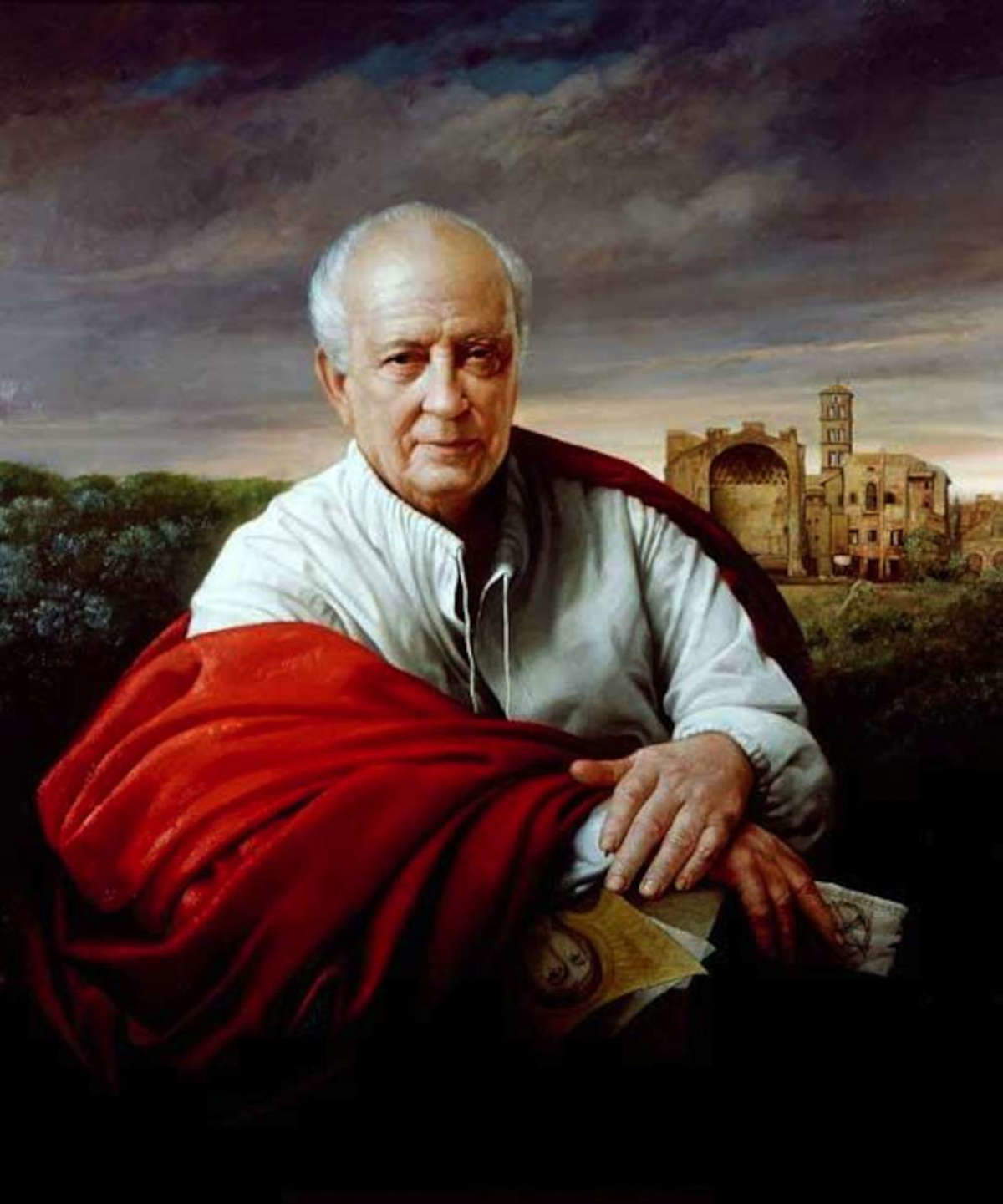
With Mario Cellini we used to beat the Babuino area weekly on the hunt for unseen masterpieces. Among his favorite galleries was Bigetti’s, frequented by both the great art connoisseurs and the future well-known critics of the 1990s who were making their bones. In Pico’s salon I met, among others, Federico Zeri, Margherita Guarducci, my friend, the pioneer of metallographic analysis, Guido Devoto, and Professor Antonio Giuliano, who deserves special remembrance because he saw in ancient art “that sense of the priceless” that still consoles me. I am also grateful to Antonia Nava, Pico’s wife, an expert on Baroque sculpture, and to Marini, whom Pico called together with Mario and me to participate in the discovery of Caravaggio’s Magdalena Klein.
Pico Cellini was born in Rome in 1906 and died there in 2000. He grew up in the studio of his father Giuseppe, who in 1888 had frescoed the Sciarra Gallery, which was restored (I was present) by Pico in the 1980s. Pico immediately chose the profession of restorer, so in 1941, when Bottai inaugurated the Institute of Restoration, he was already an expert urged to publish the results of his work by Roberto Longhi, who appreciated his judgments and “colorful and daring expressions.” Minister Bottai, on the recommendation of Giulio Carlo Argan, appointed as the Institute’s first director, Cesare Brandi who was Pico’s friend and peer, but the different approach to the subject complicated their relationship that nevertheless led to the foundation of the modern “science of restoration.”
It was in fact Pico himself who in 1936, after reading in Art News magazine about the use of X-rays on paintings, introduced them to Italy. He was pushed there also by his father, the conservator of the picture gallery of the Accademia di San Luca who, as Pico wrote, "was eager to investigate what remained of the original painting on the large panel attributed to Raphael exhibited there [...] Subsequently to give satisfaction to Roberto Longhi who had predicted in a St. Catherine attributed to Granacci a portrait executed by Raphael in the Florentine period, I also examined this painting under X-rays and the result was the Giovinetta col liocorno [...]. I recall these personal memories to corroborate how important the aid of scientific methods is. It should be made clear that at that time restoration and knowledge were entrusted to empiricism, to workshop secrets, and, as illustration and historiography, literary lucubrations of historians were mostly in vogue who, through comparisons with printed reproductions, quick notebook notes and, later, photographs, wrote comments sometimes pertinent and quite beautiful, but which ultimately translated a figurative work into a literary work."
Moreover, these writings by Pico make one reflect on the differences between the “eye” of a son of art like him and the theories of an official like Brandi, who unfortunately, in 1984, with other distinguished colleagues, mostly from Tuscany, stumbled upon Modigliani forgeries, no less shameless than the “patacche” foisted on their U.S. counterparts by counterfeiters and traffickers often recalled by the Cellini brothers. It was thus their father, Giuseppe, who passed on to Mario and Pico a love of art and the formulas of ancient preparations and colors, which enabled them to revise many attributions, carry out philologically correct restorations, and from their first trip in 1948, to unmask the glaring forgeries that came from Italy, endorsed by U.S. experts, to American museums. Pico’s specific background on archaeological materials enabled him to contradict his friend Zeri when he declared the Ludovisi Throne false, and to restore other famous and controversial finds such as, the Fibula Prenestina and the Capestrano Warrior, which he claimed were not fakes as is currently insinuated.
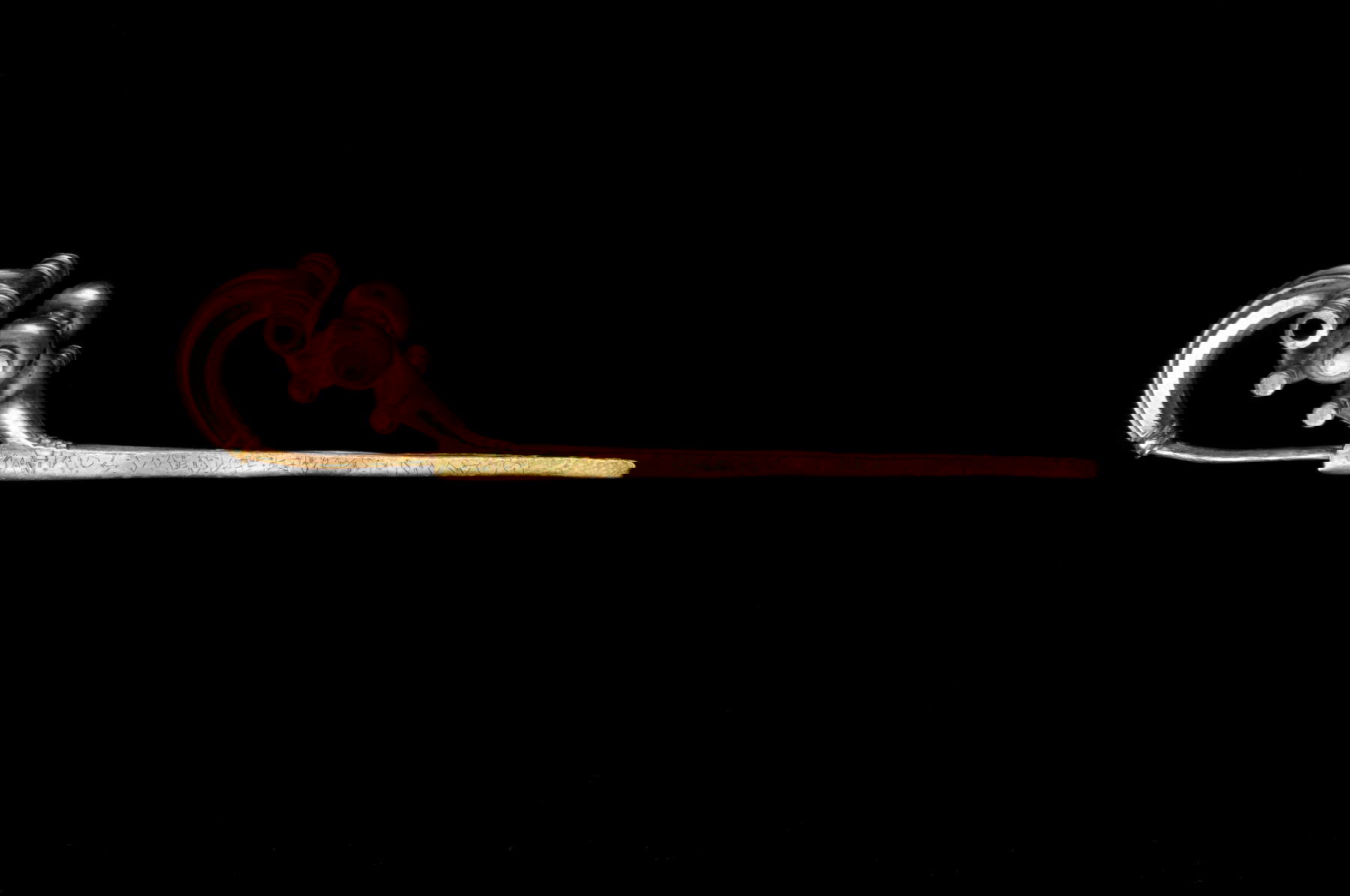
Since I myself identified several important finds in the deposits of the former Pigorini Museum, I was present when from the latest metallographic analyses the Fibula Prenestina, turned out to be authentic. And given that I was previously at Pico’s while he, sharing Margherita Guarducci’s studies and Devoto’s analysis, thought it to be a fake, I do not think the doubts will be resolved. But I am sure that the Cellini brothers, given their direct knowledge of the “workshop secrets” and “hand” of forgers of the caliber of Dossena and Pedrazzoni, knew a lot more about forgeries than the others.
The Cellinis often mentioned Alceo Dossena as a forger capable of sculpting “masterpieces” that well-known scholars and museum directors attributed to the greatest masters of the past without believing that they could have been commissioned from Dossena by antiquarian Alfredo Fasoli, who sold them to American museums hungry for fabulous and unseen masterpieces exported in defiance of our laws.
The scam lasted until 1928, when it was Dossena himself who claimed to be the author of the sculptures, which were flowing in increasing numbers and extraordinary to the US. The scandal came as a result of a broken agreement with antiquarians who were getting rich by buying his works cheaply. The dealers tried to hush up the scandal, but Dossena was nevertheless taken to court, where fellow Fascist hierarch and lawyer Roberto Farinacci, arguing that he was a victim of the antiquarians, had him acquitted for insufficient evidence. Then Dossena gained international fame and took to signing his works, which in 1955-1956, at the instigation of Pico Cellini, were also documented in a book and exhibited by his son, Walter Lusetti, at Palazzo Marignoli.
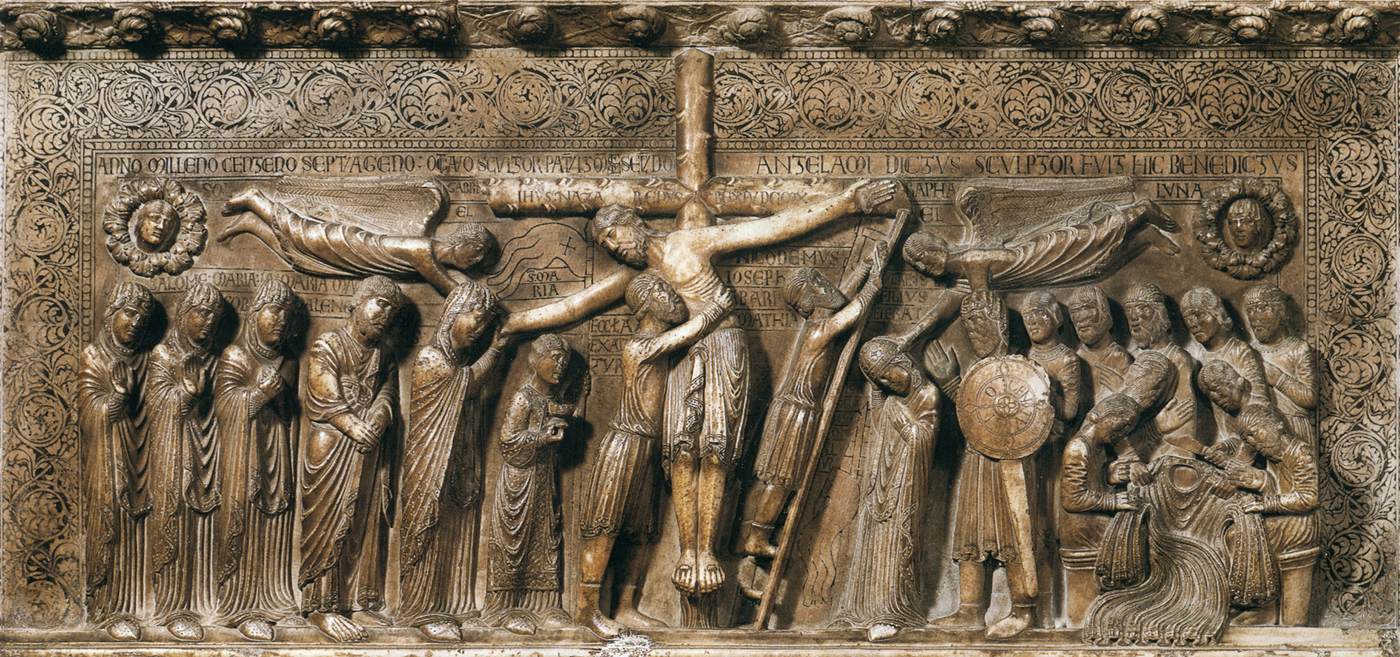
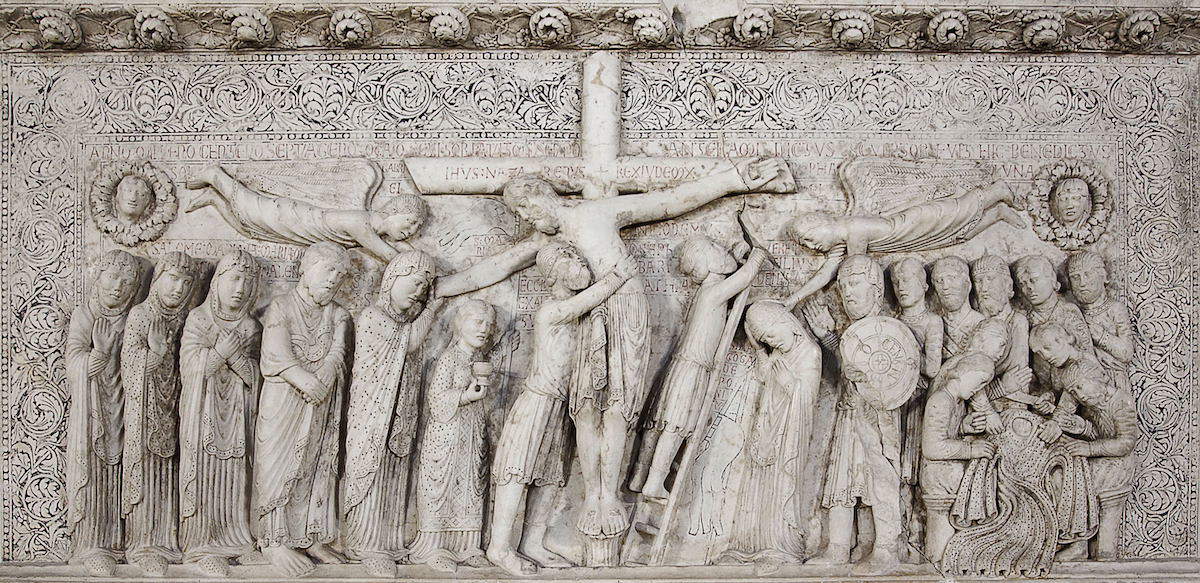
Also by Dossena is the Deposition from the Cross, from the parish church of Saint-Germain-en-Laye near Paris. The monumental marble high-relief that traces the one in Parma Cathedral, carved by Antelami in 1178, was donated to the parish by the family of Arnaud-Marie Duperrier, a sculptor and art dealer who had purchased it in Parma, where it was made in the Dossena-Rossi workshop between 1908 and 1912. The authorship was also confirmed by Pico’s major referent, Ludwig Pollak, former director of the Barracco Museum in Rome, who wrote about Dossena:
“Born in Cremona, class of 1878, taken in a foundling home because he was an illegitimate child, he became a stonemason and moved to Parma in 1908, where he debuted with his imitations (such as that of Benedetto Antelami’s Deposition from the Cross in the Duomo).”
Another striking case in which Pico recognized Dossena’s hand is the Diana, which was also the subject of an article by Antonio Cederna to which the superintendent of Bologna, Cesare Gnudi, responded in Il Mondo of June 22, 1954, writing that: "The Diana purchased in 1954 from the St. Louis Museum was exported to the United States on November 19, 1952, with a regular license from the Bologna Export Office, at the declared price of 80,000 lire and with the following statement by Prof. Paolo Enrico Arias, superintendent of Antiquities and commissioner of the Export Office: ’Pasticcio inferred from identifiable Etruscan prototypes around Veio sculptures.’" This documentation, which moreover included the Italian state’s rejection of the sculpture as a result of the Valle Giulia museum’s expert opinions, was sent to America, but despite this Pico could not easily convince the American experts of the rip-off they had made their museums take.
Pico said that the most sensational forgeries were intended for the American experts and the Nazi hierarchs who bought before him another sòla (for us Romans, “rip-off”) in an exotic little villa in Prati. He recounted that the Germans were pompously greeted by two maids dressed as odalisques who, seeing them interjected, said to them, “What can you do, we are Orientals!” And Pico replied, “You are, to the East of Frosinone!” Who knows if this sòla was among those destined even for Göring and Hitler, by the very skilled Gildo Pedrazzoni, whom Pico himself later, with great advantage for art, took from the Dossena workshop and enlisted in the restoration.
Besides Zeri, Marini and Brandi I mentioned Giuliano, Guarducci and Devoto because Mario and Pico Cellini also collected the so-called “minor arts”, including, for example, an unobtainable eagle from a Roman labarum, rings, engraved stones, cameos, the collection of ancient seals, including an unobtainable one from the Templars, and the very rare Sasanian silver cup that Pico, excitedly, showed me as soon as he bought it from an unsuspecting antiquarian, and which many years later I seemed to recognize in the Pigorini’s display cases.
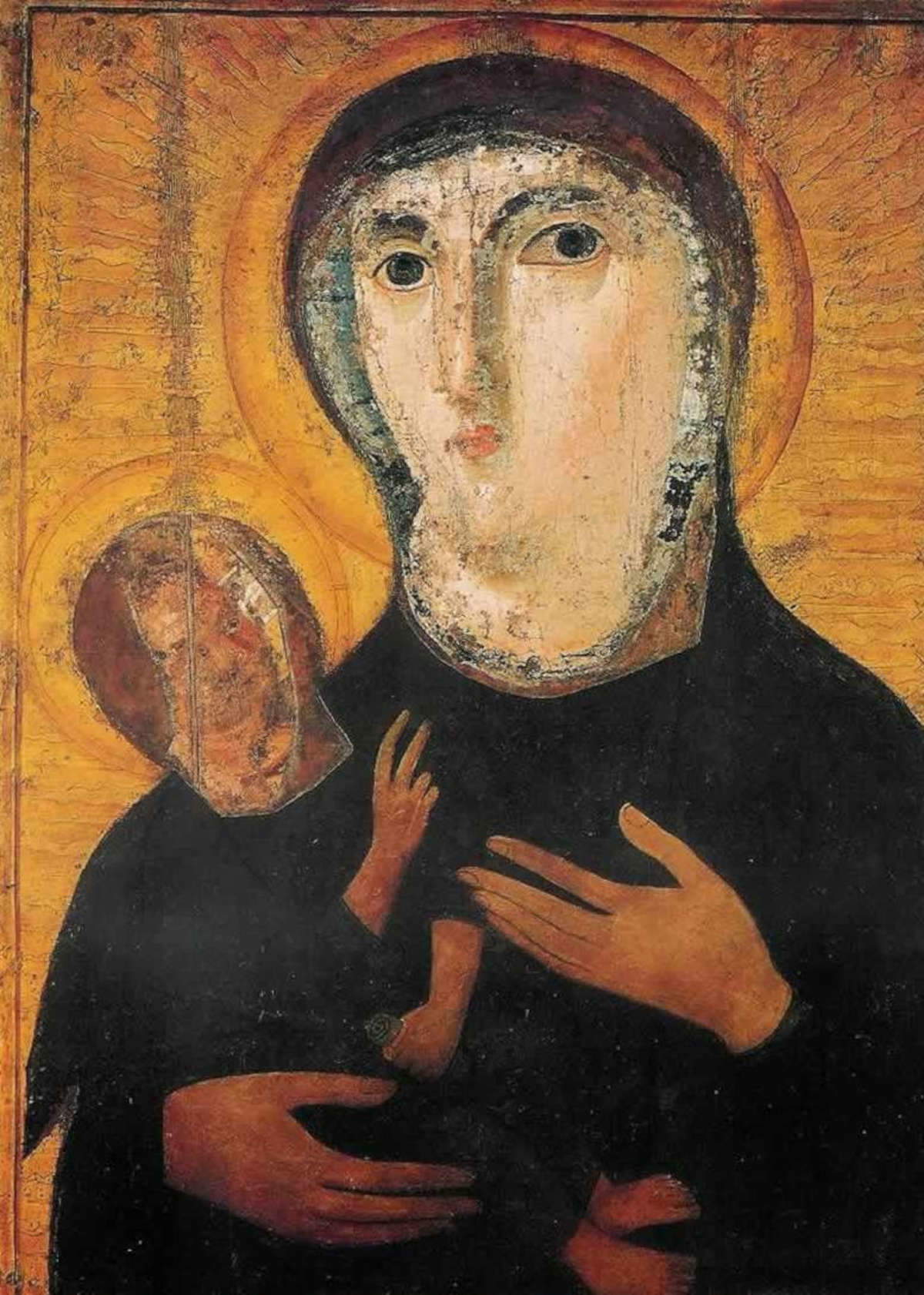
All these memorable data I heard from Pico Cellini but never saw him as involved as when he told of the restoration-discovery of one of the oldest and most suggestive images of the Madonna and Child dating from the fifth century, kept in Rome in the church of Santa Francesca Romana, and reproduced on the cover of his book: Fakes and Restorations Beyond Appearance (Guido Izzi Archives 1992), from which I have extracted the excerpts so far.

Warning: the translation into English of the original Italian article was created using automatic tools. We undertake to review all articles, but we do not guarantee the total absence of inaccuracies in the translation due to the program. You can find the original by clicking on the ITA button. If you find any mistake,please contact us.




























 IT
IT FR
FR DE
DE ES
ES CN
CN


